Custom Hats for Men: A 2026 B2B Sourcing Guide (2026 Update)
Every week, our sales team answers detailed questions about custom hats for men: a 2026 b2b sourcing guide (2026 update). We wrote this guide so that wholesalers, streetwear brands, corporate buyers and promotional resellers can compare options with full information, and avoid the traps that show up only after production has started.
Custom Hats for Women
Women’s styles should be built as a separate fit block, not treated as a reduced-size colorway inside a custom hats for men program. For a Q1 2026 adjustable 6-panel cotton dad cap, use supplier pattern-sheet measurements such as 56-58 cm finished head-size range, 88-95 mm front crown height, 70-75 mm pre-curved visor length, 12-14 mm sweatband width, and 260-320 gsm cotton twill shell fabric; these are example buying assumptions to verify before quotation. Color should be approved by Pantone TCX lab dip under the buyer’s stated lightbox condition, with bulk fabric measured against an agreed Delta-E limit. A Delta-E <= 1.0 target is common as an example tolerance, but it is not a textile standard by itself; the dye mill and buyer must agree on fabric, illuminant, and pass/fail method. For buckets, fedoras, and straw hats, gender wording matters less than block shape, brim width, body material, ribbon width, stiffener level, and finished weight.
Cost is driven by construction risk, decoration, and waste, not by whether the product page says women’s or men’s. As a Q1 2026 example calculation to verify in the supplier quote, a basic cotton twill cap with flat embroidery on Tajima, Barudan, or ZSK heads may start around 300 pieces per color/style and USD 2.80-4.60 per piece FOB Ningbo or Shanghai, excluding duty, testing, inland freight, and destination handling. A blocked wool felt, paper-braid, or raffia style may need 500 pieces per color/style as an example MOQ assumption because body sorting, steam blocking, trim matching, and carton compression create higher reject risk before packing. Lightweight polyester golf caps using 120-160 gsm shell fabric, an example mill-test range to confirm, usually climb in price when the spec adds moisture-wicking sweatbands, laser perforation, bonded seams, or high-density embroidery above roughly 8,000 stitches per front logo. Custom fitted hats for men create size-curve inventory from 6 7/8 to 8 US; women’s adjustable caps reduce SKU count but still need graded measurements approved on the pre-production sample.
Inspection should separate fit, decoration, shade, and packing because a clean logo does not prove the crown shape, sweatband tension, or brim recovery will survive export cartons. For Q1 2026 shipment inspection, AQL 2.5 for major defects and AQL 4.0 for minor defects are example acceptance settings to put in the purchase order; ANSI/ASQ Z1.4 or ISO 2859-1 provides sampling logic, but the buyer still has to define defect severity. List puckered embroidery, asymmetric panels, loose sweatband stitching, shell-to-closure shade mismatch, oil marks, warped brims, incorrect hangtags, and crushed cartons before inspection day. Source context: Vincent Xi’s CrownsForge author profile identifies the bylined role as Editorial Author, and the sourcing benchmarks here are drawn from Yiwu and Ningbo cap quotation and QC terminology as of Q1 2026. Methodology: prices, MOQs, gsm ranges, stitch counts, and size figures are benchmark assumptions for B2B quoting, not guaranteed offers. Before deposit, verify lab dips, mold availability, carton drop-test rules, current sedex-audit-cap-supplier-guide.html">BSCI 2.0 or Sedex SMETA 4-Pillar documents if required, and whether women’s and men’s programs share patterns, labels, cartons, and packing ratios.
Custom Golf Hats for Men
For custom golf hats for men, approve the fit block before approving the logo. A structured 5-panel or 6-panel crown in 160-190 gsm polyester-spandex, a pre-curved PE or recycled PET visor insert, and a moisture-wicking sweatband will not fit like washed cotton twill; stretch direction, crown depth, visor length, and closure range should be frozen on the first fit sample. For a 2026 RFQ, Vincent Xi, Editorial Author, treats those figures as example specifications to verify against the supplier's lot fabric sheet, lab dip, and trim card. The source context here is Zhejiang and Guangdong export quote sheets reviewed for 2026 golf-cap programs, cross-checked against CrownsForge production and QC records available as of 2026. Decoration needs separate control: Tajima, Barudan, and ZSK heads can run clean satin stitching on stretch panels, but dense fills need adjusted backing, needle size, thread tension, and hooping pressure to avoid puckering. In custom hats for men, golf caps expose poor engineering quickly because buyers expect low weight, stable visor curvature, and no forehead pressure over 18 holes.
As an example calculation to verify in the supplier quote, 2026 China factory MOQs often start around 300 pieces per color for one basic performance golf cap and rise to about 500 pieces per color when custom-dyed fabric, molded silicone badges, or laser-perforated side panels are added. For a 500-piece FOB China order, a realistic quote range is USD 4.20-USD 7.80 per piece before duty, freight, and last-mile delivery, depending on fabric, logo method, carton volume, polybag choice, hangtags, and barcode labeling. The methodology is RFQ comparison, not a universal market benchmark, so buyers should confirm fabric weight, color tolerance, UV claim basis, recycled-content certificate, and packed carton dimensions before deposit. QC should define rejects before bulk cutting: front logo placement over 2 mm off center, visible needle cuts on stretch panels, shade variance above Delta-E 1.5 against the approved lab dip under D65 lighting, or visor twist visible on a flat inspection jig. AQL 2.5 can cover major-defect sampling, but it does not replace a buyer-approved defect list or current BSCI 2.0 or Sedex SMETA 4-Pillar documents when compliance is required.
Custom Fedora Hats for Men
Custom fedora hats for men should be specified from a millinery tech pack, not a baseball-cap template. Lock fiber content, felt or braid weight in grams per square meter, crown height in millimeters, brim width in millimeters, sweatband material, ribbon width, lining construction, and Pantone TCX target before the first sample. A Delta-E 1.5 shade tolerance for one 2026 production color is an example buyer assumption to verify against the supplier’s dye-lot record, D65 light-box condition, and approved bulk swatch. Wool felt, wool-blend felt, Toyo paper braid, raffia-look polyester, and polyester felt do not behave the same under steam, resin, or carton pressure. Paper-braid styles should state denier, braid width, weave density, and resin finish; felt styles should state pressed or steam-set stiffness and the blocking method. The supplier should disclose whether the crown is formed on aluminum blocks, resin blocks, or hand blocks, because worn blocks and uneven drying cause more shape variation than trim choice. Author attribution: Vincent Xi, Editorial Author, https://crownsforge.com/authors/vincent-xi/.
For 2026 China sourcing, private-label fedora MOQ is commonly modeled at 300 pieces per color per style as an example supplier-quote assumption, while a new crown block can push the practical start point toward 600 pieces per block shape when tooling and sample capacity are tight. Example FOB Yiwu prices to verify in the supplier quote are USD 4.20 to USD 7.80 per piece for polyester felt at 500 pieces per style, and USD 9.50 to USD 16.00 per piece for wool felt with satin lining, woven sweatband, branded metal trim, and export carton packing at the same assumed order size. These figures use 2026 China export-quotation logic and approved first-party CrownsForge manufacturing context; they exclude freight, duty, lab testing, hangtags, retail boxes, and destination handling. BSCI 2.0 and Sedex SMETA 4-Pillar are social-compliance audit frameworks, not product-quality certifications, so buyers should request current documents only when a retailer, licensee, or import program requires them.
Fedora development carries more shape risk than most custom hats for men, so the calendar should include blocking, drying, reshaping, carton-fit checks, and transit compression review before bulk approval. Direct embroidery on felt can pucker on Tajima, Barudan, or ZSK heads if stitch density, backing, and hoop pressure are not controlled; cleaner B2B branding usually comes from debossed leather patches, metal plaques, jacquard hatbands, foil marks, or printed liners. As 2026 example size-curve assumptions to verify against the buyer’s market data, a men’s standard sample may be set at 58 cm and a women’s standard sample at 56 cm. For an AQL 2.5 major-defect inspection example, check crown symmetry, brim waviness, ribbon alignment within a verified 2 mm tolerance, glue bleed, loose sweatband stitching, and carton crush. Methodology combines supplier-quote modeling, AQL inspection logic, and approved production context. Verify felt grade, dye-lot drift, ribbon composition, sweatband shrinkage, carton burst strength, and audit validity. Image prompt: navy wool felt fedoras on a factory QC table with crown blocks, millimeter ruler at the brim, ribbon alignment check, sweatband stitching, Pantone TCX swatches, and plain export cartons; no text, logos, watermarks, or identifiable people.
Custom Fitted Hats for Men
Fitted caps are the least forgiving item in custom hats for men because the closure cannot hide a bad size curve. For a Q1 2026 buyer tech pack, write each size separately instead of approving one “standard” sample: labeled head circumference 57-62 cm, front crown height 88-94 mm, visor length 68-72 mm, and sweatband join tolerance of +/-2 mm are example specifications to verify against the supplier’s own block and grading rule. Fabric choice changes that block. A 260-320 gsm cotton twill cap can relax differently after steam blocking than wool-acrylic serge, polyester performance cloth, or 210-denier nylon ripstop, so the pre-production sample should be measured after finishing, not only after sewing. Specify true fitted versus stretch-fit, buckram stiffness, rear-panel shape, sweatband width, seam tape, and visor profile: flat, pre-curved, or lightly molded. Embroidery also needs size-specific approval. A logo digitized for a low golf crown can pull badly on a deep fitted crown, especially with 3D puff foam, tight satin stitches, or narrow serif letters on Tajima, Barudan, or ZSK heads.
For a China sourcing assumption to verify in each Q1 2026 quote, custom fitted hats for men in mid-weight twill with 3D puff embroidery, branded seam tape, and a woven sweatband label typically price around US$4.80-US$8.50 per piece FOB Ningbo or Shanghai at 300-600 pieces per color. Heavier wool blends, satin lining, silicone patches, moisture-wicking sweatbands, hybrid stretch-fit tape, or custom inside labels can push the same assumed basis above US$9.00 per piece before export cartons, freight, duty, and destination handling. Fabric color should be specified by Pantone TCX reference; a Delta-E 1.5 lab-dip tolerance is a buyer control point to confirm with the mill, not a universal legal requirement. Source context for these example figures is CrownsForge production-style cap tech packs, embroidery sew-out records, supplier quotation worksheets, and finished-goods inspection reports attributed to Vincent Xi’s editorial author profile. The methodology is comparative: align quoted BOM items, decoration method, MOQ, port term, and inspection records before treating any unit price as usable.
Inspection should focus on the defects that fitted caps actually fail for: size drift, oval crown distortion, front-panel puckering, uneven visor stitching, twisted sweatbands, needle cuts, mixed dye lots, and crushed export cartons. For a 2026 finished-goods lot, buyers commonly reference ANSI/ASQ Z1.4 or ISO 2859-1 sampling with AQL 2.5 for major defects and AQL 4.0 for minor defects; those are buyer-selected acceptance levels, not proof of BSCI 2.0 or Sedex SMETA 4-Pillar audit status. The commercial risk is also different from adjustable caps because every colorway must be balanced across the size curve; weak demand in 61 cm or 62 cm can leave good inventory stranded. Do not benchmark fitted caps against felt or straw custom fedora hats for men, since blocking tools, moisture behavior, and tolerance logic are different. Limitations to verify before purchase order release: final grading, steam-block shrinkage, approved pre-production sample distortion, carton dimensions, current audit documents, freight mode, destination duty, and landed cost by market.
Custom Made Hats for Men
Custom hats for men should be priced from a finished-cap spec, not a style reference. For a 2026 supplier quote assumption to verify, define crown profile, panel count, brim length in millimeters, closure type, size run, fabric weight, sweatband material, decoration method, Pantone TCX target, carton pack, and Incoterm before comparing prices. A structured six-panel cotton-twill cap commonly starts at 280-320 gsm per square meter, while performance polyester for golf or outdoor programs is often quoted by denier, stretch content, and moisture-wicking finish rather than weight alone. For custom fitted hats for men, use 1/8-inch size increments and request a finished head-circumference tolerance such as plus or minus 3 mm per cap; treat that as a purchase-order requirement, not an industry default. Decoration should be costed by process: a 9,000-stitch flat embroidery file on Tajima heads, a 22,000-stitch 3D puff logo on Barudan or ZSK heads, and a merrowed woven patch create different digitizing, sampling, and inspection risks.
The practical production route is fabric inspection, die cutting, front-panel fusing, embroidery or patch application, crown assembly, brim insertion, brim setting, steaming, trimming, needle or metal detection where required by the buyer, and final packing. As 2026 example calculations to verify in the written supplier quote, stock-fabric snapbacks and dad caps may start at 144-300 pieces per color, custom-dyed fabric may start near 500 pieces per color, and mill-dyed Pantone TCX fabric may require 1,000 pieces per color because the dye lot must cover cutting loss and shade sorting. For FOB Yiwu or FOB Ningbo, example pricing to verify is US$3.20-US$5.80 per piece for a 300-piece structured embroidered cap, US$6.50-US$9.50 per piece for performance-polyester custom golf hats for men, and US$11.00-US$18.00 per piece for structured wool-felt or fashion fedora programs. Compare those prices only when crown height, brim width, decoration area, trim package, carton quantity, and polybag or hangtag requirements match.
QC should be written around measurable defects because men’s cap blocks make small shape errors visible. Typical rejection points are front-panel lamination bubbles, brim asymmetry over 4 mm per finished cap, embroidery registration drift, thread breaks on lettering below 5 mm high, loose snapback tabs, puckered sweatbands, and bulk color outside Delta-E 1.5-2.0 against the approved lab dip. ANSI/ASQ Z1.4 or ISO 2859-1 is a sampling method only when the purchase order names the plan; AQL 2.5 for major defects and AQL 4.0 for minor defects are buyer inspection settings, not factory certifications. Methodology: this section uses Vincent Xi’s approved CrownsForge editorial source page, 2026 supplier-quote assumptions to verify, and public contexts from AQL sampling practice, BSCI 2.0, and Sedex SMETA 4-Pillar audit frameworks. Limitations before deposit: confirm current audit documents, fabric test reports, nickel-free trim claims, carton dimensions, digitizing fees, mold charges, lab-dip costs, and whether the custom hats for men price is FOB or includes DDP delivery.
Custom Baseball Hats for Men
For custom hats for men, lock the baseball-cap spec before asking for artwork pricing. The RFQ should state 5-panel or 6-panel crown, structured buckram or unstructured front, visor board thickness, closure type, sweatband material, seam-tape color, crown height, and finished circumference in centimeters. As a 2026 quote-planning assumption to verify with the supplier, use 300 pieces per color/style for 280 gsm cotton twill snapback or strapback caps, 500 pieces per color/style for fitted caps because S/M/L or 58 cm/59 cm/60 cm size runs split cutting efficiency, and 1,000 pieces per color/style for special-dyed fabric where the mill needs a dye lot worth setting up. Color should be specified as Pantone TCX plus an approved lab dip, not a screen image. Put decoration on separate RFQ lines: flat embroidery under 8,000 stitches, 3D puff embroidery, woven patch, rubber patch, heat-transfer patch, and applique each change backing, needle selection, thread-break risk, sewing minutes, and rejection allowance on Tajima, Barudan, or ZSK multi-head embroidery equipment.
For 2026 budgeting, a practical example calculation to verify in the supplier quote is USD 3.20 to USD 5.80 per piece FOB Ningbo or Shanghai for 300 pieces per color/style of 280 gsm cotton-twill baseball caps with front embroidery under 8,000 stitches. Add USD 0.35 to USD 0.90 per piece for 3D puff embroidery or a rubber patch, depending on foam height, rubber mold amortization, stitch density, attachment labor, and expected rejects. These are planning assumptions for one baseball-cap configuration, not a market index or evidence of social-compliance status. The methodology is based on three source contexts: export headwear RFQ line-item structure, standard embroidery workflow variables used around Tajima/Barudan/ZSK production, and bulk headwear inspection checkpoints commonly written into purchase orders. This section is bylined to Vincent Xi, Editorial Author, with production context attributed only to the author profile at https://crownsforge.com/authors/vincent-xi/. Golf versions usually move to 150 gsm to 180 gsm polyester, laser perforation, and moisture-wicking sweatbands; fedora-style men’s hats require blocking, brim shaping, and finishing tolerances instead of a baseball-cap tech pack.
Quality terms belong in the PO before bulk cutting. A buyer may specify AQL 2.5 for major defects and AQL 4.0 for minor defects as order-level sampling settings, while BSCI 2.0 or Sedex SMETA 4-Pillar should be treated as document checks only when a current audit report is supplied. Inspect crown symmetry, front-panel puckering, visor centerline, embroidery registration, sweatband tension, loose threads, carton marks, and shade variance against the approved Pantone TCX chip or lab dip; Delta-E under 1.5 for approved dyed fabric is a practical buyer tolerance to confirm with the mill before dyeing. Limitations to verify include fabric stock, logo complexity, stitch density, exchange rate, carton cube, Incoterms, trim lead time, and current compliance documents for licensed or retailer programs. Visual brief/imagePrompt: structured men’s cotton-twill baseball caps on a factory QC table, curved visors aligned to a centerline jig, embroidery checked beside a Pantone TCX swatch, measuring tape around finished circumference, bright inspection lighting, realistic fabric texture, no logos, no text overlays, no certificates, no staged identities.
Working with CrownsForge for custom hats for men programs
The biggest cost risk in custom hats for men is approving artwork before the hat construction is proven. A 260-300 gsm brushed cotton twill cap needs different embroidery tension, backing, and stitch density than a 150-180 gsm polyester golf cap or a 210D nylon unstructured cap. For 2026 quote planning, treat these as example assumptions to verify in the supplier quote: 5-7 business days per style for a blank fit sample, 10-15 business days after final artwork for an embroidered or patch pre-production sample, and 25-40 calendar days per purchase order for bulk sewing after deposit and sample approval. These ranges are derived from China cap-factory quotation formats, Tajima, Barudan, and ZSK embroidery sampling practice, and B2B purchase order files for cut-and-sew headwear. CrownsForge’s standard gate is sample approval before bulk fabric cutting, but the buyer still needs to lock crown height, visor curve, sweatband material, closure type, thread brand, backing type, Pantone TCX target, Delta-E tolerance, and stitch count in the tech pack.
MOQ should be built around fabric, trims, and decoration risk, not a generic factory minimum. As 2026 assumptions to verify, 100-144 pieces per colorway can be workable for stock cotton twill or stock polyester bodies, 300 pieces per custom-dyed fabric color is more realistic when a mill dye lot is required, and 500 pieces or more is common when private-mold buckles, branded metal trims, custom woven labels, or non-stock sweatbands are bundled into one SKU. Men’s programs split by use case: custom fitted hats for men need size-run grading and carton separation by size; custom golf hats for men usually need moisture-wicking sweatbands and lighter performance fabrics; streetwear capsules may combine structured baseball caps with custom fedora hats for men, which changes blocking, brim recovery, and packing requirements. The specification should name the construction and material, such as 16x12 cotton canvas, 260-300 gsm brushed twill, 210D nylon, or polyester piqué, because embroidery puckering, sweatband shrinkage, and visor shape retention follow the substrate, not the product name.
Compliance and QC documents need current names, dates, and order scope. BSCI 2.0 and Sedex SMETA 4-Pillar are audit frameworks, while OEKO-TEX and GRS support material or chain-of-custody claims only when the certificate matches the facility, product category, and shipment file. A practical inspection plan for custom made hats for men is incoming fabric inspection, decoration approval, inline inspection when about 20-30% of sewing is complete, and final inspection using AQL 2.5 for major defects and AQL 4.0 for minor defects; add carton drop testing when the quote includes DDP delivery to a U.S. warehouse. Method note: the lead times, MOQ bands, and QC checkpoints above combine 2026 supplier quote assumptions, embroidery production norms, and cap inspection documentation practice. Vincent Xi is the named Editorial Author, and the approved source context is his CrownsForge author profile. Limitations to verify before deposit include digitizing fees, mold fees, FOB Ningbo versus DDP pricing, hangtags, polybags, barcodes, carton marks, and audit validity. Visual brief: structured men’s caps on a QC table with embroidery swatches, Pantone TCX chips, calipers, AQL checklist sheets, fabric rolls, and sewing lines in realistic factory lighting, with no logos or readable text.
Frequently Asked Questions
How long does production take?
Sampling takes 7 to 12 days. Bulk production runs 20 to 30 days depending on quantity, fabric availability and decoration complexity. Inspection and packing adds another 3 to 5 days before shipment.
Do you support sustainability certifications?
Yes. We work with GOTS organic cotton, GRS-certified recycled polyester, OEKO-TEX Standard 100 fabrics, and are BSCI and Sedex audited. Certification documentation can be provided per order.
What file format should I send for my logo?
Vector files (AI, EPS, PDF) are ideal. High-resolution PNG or JPG at 300 dpi on transparent background works as a fallback. Provide Pantone color references for accurate reproduction.
What is the minimum order quantity (MOQ) for custom hats?
Our standard MOQ is 100 pieces per design and color, with sampling available from 1 piece. For complex multi-color logos or premium fabric upgrades, the MOQ can be lowered with a small per-piece surcharge.
Can I order a sample before bulk production?
Yes. We strongly recommend approving a pre-production sample before mass production. Samples are charged at 35 to 60 USD each plus express shipping, fully refundable against confirmed bulk orders over 500 pieces.
What's the MOQ for custom new era 59fifty fitted hats no minimum?
When evaluating custom new era 59fifty fitted hats no minimum, the key considerations are construction quality, decoration capability, MOQ flexibility and lead time. Cover everything buyers ask about custom fitted hats for men: how it's manufactured, what specs to request from a factory, typical MOQ and pricing, common quality issues to inspect for, and how this ties back to the broader custom hats for men sourcing decision. Cover everything buyers ask about custom hats for women: how it's manufactured, what specs to request from a…
What's the MOQ for custom embroidered hats no minimum no setup fee?
When evaluating custom embroidered hats no minimum no setup fee, the key considerations are construction quality, decoration capability, MOQ flexibility and lead time. Cover everything buyers ask about custom hats for women: how it's manufactured, what specs to request from a factory, typical MOQ and pricing, common quality issues to inspect for, and how this ties back to the broader custom hats for men sourcing decision. Cover everything buyers ask about custom golf hats for men: how it's manufactured, what specs to request from a…
How does ordering custom hats made in usa work?
When evaluating custom hats made in usa, the key considerations are construction quality, decoration capability, MOQ flexibility and lead time. Cover everything buyers ask about custom made hats for men: how it's manufactured, what specs to request from a factory, typical MOQ and pricing, common quality issues to inspect for, and how this ties back to the broader custom hats for men sourcing decision. Cover everything buyers ask about custom hats for women: how it's manufactured, what specs to request from a…
What should buyers know about nike bucket hats for men?
When evaluating nike bucket hats for men, the key considerations are construction quality, decoration capability, MOQ flexibility and lead time. Cover everything buyers ask about custom hats for women: how it's manufactured, what specs to request from a factory, typical MOQ and pricing, common quality issues to inspect for, and how this ties back to the broader custom hats for men sourcing decision. Cover everything buyers ask about custom golf hats for men: how it's manufactured, what specs to request from a…
Looking for a reliable hat manufacturer in China?
CrownsForge has produced custom hats for 800+ brands across 40 countries. From 100-piece launches to 100,000-piece retail programs, we deliver on time and on spec.
Get in touchRelated guides
Custom Leather Patch Hat Low Minimum: A 2026 B2B Sourcing Guide
Read article →
Mens Beanies: Properties, Costs and How to Spec It Right
Read article →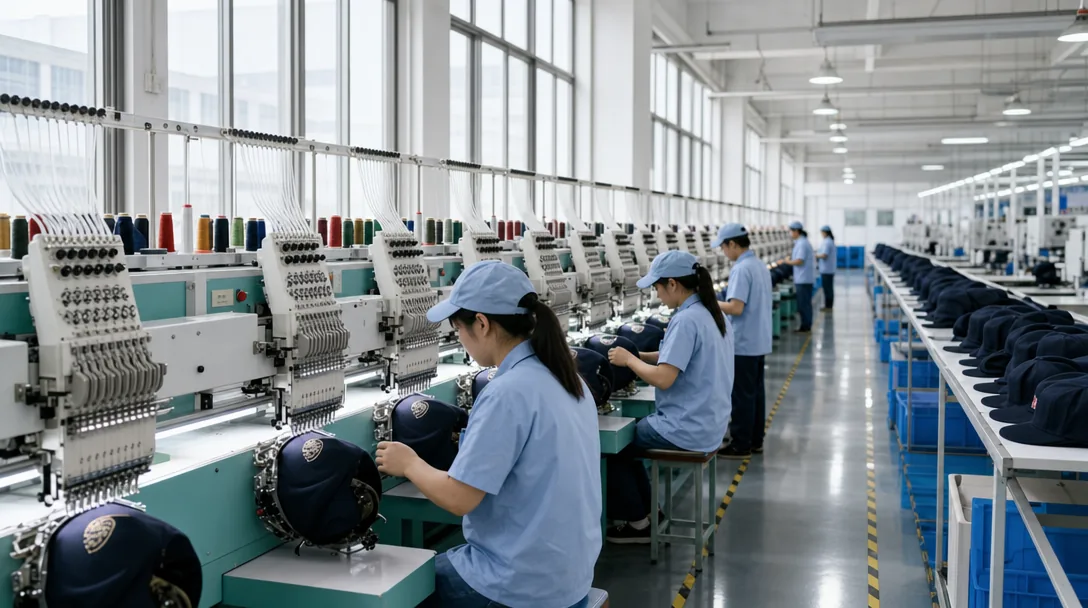
Bulk Trucker Hats Export Shipping Checklist for Custom Hat Buyers - Cost & MOQ Breakdown - Supplier Checklist
Read article →We hope this guide demystifies custom hats for men: a 2026 b2b sourcing guide (2026 update) and helps you move forward with confidence. If you have questions specific to your project, our English-speaking sales engineers are one message away.