Custom Hat Embroidery: The 2026 Sourcing & Manufacturing Playbook (2026 Update)
Every week, our sales team answers detailed questions about custom hat embroidery: the 2026 sourcing & manufacturing playbook (2026 update). We wrote this guide so that wholesalers, streetwear brands, corporate buyers and promotional resellers can compare options with full information, and avoid the traps that show up only after production has started.
Custom Embroidered Hats
Custom hat embroidery is won or lost at digitizing, before bulk caps are cut. As a working RFQ assumption to verify against the supplier quote and pre-production sew-out, a structured 6-panel front crown in 280 gsm cotton twill behaves differently from laminated foam, washed canvas, or 100% polyester performance twill because each fabric changes hoop pressure, backing choice, and thread pull. For one example front-logo scope, a 55 mm-wide mark on a curved crown may run at 6,000 to 9,000 stitches for clean flat embroidery, while the same artwork can exceed 11,000 stitches if the file relies on dense fill areas; those stitch ranges come from Yiwu cap quote sheets and embroidery sew-out records reviewed by cap type, decoration location, and stitch count, not from a universal price table. Raised 3D puff should specify EVA foam thickness, with 1.5 mm to 3.0 mm treated as an example production range to confirm against the approved sample, because foam height affects needle speed, trimming, satin-column width, and edge cleanup on Tajima, Barudan, or ZSK heads.
A serious custom hat embroidery RFQ should put the cap body and decoration in the same line item: cap structure, fabric blend, logo width, stitch type, backing, thread reference, placement tolerance, packaging, carton data, and Incoterms. A tight example specification to verify in a Q1 2026 supplier quote would read: structured 5-panel trucker cap, 65% polyester/35% cotton front, 100% polyester mesh, adult 58 cm circumference, 70 mm-wide front embroidery, placement tolerance of +/-2 mm from panel center, thread matched to approved Madeira shade card or Pantone TCX reference, individual polybag optional, FOB Ningbo. For an example 300-piece-per-color order quoted FOB China in Q1 2026, flat embroidery may price around USD 3.20 to USD 5.80 per cap before freight, duty, and destination handling; adding raised 3D puff, side embroidery, or back-strap embroidery can move the same scope toward USD 4.50 to USD 7.50 per cap. CrownsForge’s quote format separates digitizing, sample fee, bulk unit price, carton CBM, and current audit-document status so decoration cost is not buried inside the cap price.
Inspection should start with the finished hat at retail viewing distance, then move into measurable defects: thread breaks, loose bobbin tails, puckering around dense fills, off-center placement, foam showing through raised puff, color mismatch, crown distortion, mesh tension, snapback burrs, and carton compression. As an example calculation to verify with the inspection agency before shipment, a 1,000-piece lot checked under ANSI/ASQ Z1.4 or ISO 2859-1, General Inspection Level II, commonly points to an 80-piece sample size; AQL 2.5 for major defects and AQL 4.0 for minor defects are buyer-selected acceptance limits, not factory certifications. The purchase order must define whether a 3 mm logo shift, exposed foam edge, or Delta-E above 2.0 against the approved thread card is major or minor. Evidence for these figures comes from Yiwu factory quote sheets, embroidery sew-out records, and the approved Vincent Xi author profile; methodology is comparison by cap type, stitch count, decoration location, and inspection standard. Before deposit, verify current thread availability, dated machine capacity, approved pre-production sample, and current sedex-audit-cap-supplier-guide.html">BSCI 2.0 or Sedex SMETA 4-Pillar documents if social-compliance review is required.
Custom Made Trucker Hat
Treat a custom made trucker hat quote as two separate specs: cap construction and decoration. For a 2026 China supplier quote, use these example inputs to verify against the actual factory sheet: adult block at 58 cm head circumference, 5-panel or 6-panel crown, 180 gsm polyester foam front, 110 gsm polyester mesh back, plastic snap closure, 7.0 cm pre-curved visor, and PE or recycled PET visor insert. For custom hat embroidery, the artwork page should lock logo width in millimeters, stitch count, Madeira or Gunold thread color, backing type, needle size, hooping method, and whether production runs on Tajima, Barudan, or ZSK multi-head machines. Decoration choice must be priced before sampling: flat embroidery, 3D puff, applique, woven patch, rubber patch, and heat-transfer badge all change tooling, handling time, minimum order quantity, and defect risk.
Write the purchase order like an inspection document, not a style brief. Specify crown height in centimeters, visor length in centimeters, seam tape width in millimeters, sweatband material, mesh denier, snapback color, Pantone TCX fabric target, and allowed Delta-E under D65 lighting after lab dip approval. As a 2026 example calculation to verify in the supplier quote, a 500-piece order with one 8,000-stitch front logo may price around USD 3.20 to USD 5.80 per piece FOB Ningbo or Shanghai; a 100-piece small batch may sit around USD 6.50 to USD 11.00 per piece before freight. Source context: those ranges reflect common China cap quote formats where blank cap cost, stitch-count embroidery, trims, polybag packing, carton packing, and export handling are quoted separately. For inspection context, ANSI/ASQ Z1.4 is often referenced in softgoods contracts with AQL 2.5 for major defects and AQL 4.0 for minor defects, but those limits apply only if written into the purchase contract.
Define trucker-cap defects before production starts: crooked front panels, collapsed foam, uneven mesh tension, visor twist, puckered embroidery, poor 3D puff trimming, exposed backing, thread tails above the agreed millimeter limit, and snap holes cracking after repeated opening. CrownsForge production notes measure front embroidery placement from both the center-front seam and the panel edge because a logo can look centered on a flat foam panel but appear off-axis once worn. Methodology note: the specification and pricing examples above are derived from 2026 supplier quote structures, material consumption assumptions, stitch-count costing, FOB China export practice, and softgoods inspection conventions; they are not guaranteed prices. Limitations to verify include current lab dips, Delta-E tolerance, approved pre-production sample, carton dimensions, freight term, and whether MOQ applies by colorway, logo, or combined units. If social compliance evidence is required, request current BSCI 2.0 or Sedex SMETA 4-Pillar documents and confirm they cover the actual production site, not only a trading office.
Custom Trucker Hat
For trucker caps, lock the cap body before any custom hat embroidery file is digitized; the same logo behaves differently on buckram-backed twill, foam laminate, and a soft unstructured crown. In a 2026 RFQ, state 5-panel or 6-panel construction as a buyer specification, front fabric at 160-220 gsm cotton twill, polyester twill, or foam laminate as a swatch-verified assumption, rear mesh at 100-160 gsm polyester as a supplier-quote assumption, and support at 2.5-3.0 mm buckram or EVA as a sample-confirmed requirement. Add sweatband width in millimeters, crown height in millimeters, snapback resin grade, visor board thickness, and the approved embroidery field size. Tajima, Barudan, and ZSK machines can all run clean trucker panels, but the digitizing must account for crown curve, pull compensation, underlay density, foam lift, seam interference, and hoop pressure. A 3 mm letter that survives on cotton twill may close on foam laminate, while loose hooping can tunnel straight lettering across a stiff front panel.
Quote the decoration separately from the cap shell. As a 2026 FOB China example calculation to verify in the supplier quote, stocked-fabric trucker caps commonly start at 144-300 pieces per colorway, while custom-dyed twill or custom mesh usually pushes practical MOQ to 500-1,000 pieces per colorway. For a 500-piece example order, a structured trucker blank may quote at USD 2.40-3.20 per piece, front embroidery under 8,000 stitches may add USD 0.35-0.90 per piece, and 3D puff or patch handling may add USD 0.60-1.50 per piece; these are assumptions to confirm against artwork, thread count, backing, trim time, packing, and reject allowance. Methodology: the ranges are derived from 2026 supplier RFQ formats that separate shell fabric, mesh, buckram, sweatband, closure, embroidery runtime, carton size, and CBM. Source contexts are current factory quotation structures and the CrownsForge author page for Vincent Xi, Editorial Author: https://crownsforge.com/authors/vincent-xi/.
Inspect the cap body before rejecting the logo, because embroidery defects often start with panel skew, unstable foam, or uneven buckram tension. For 2026 bulk inspection, buyer-defined AQL 2.5 for major defects can be written into the purchase order with sample size, defect classes, and pass/fail limits; AQL is an inspection plan, not a product-quality guarantee. Use plus or minus 2 mm logo-placement tolerance from the approved counter sample as an example buyer specification to verify, and use Delta-E under 2.0 against the approved lab dip as an example color target, not a universal rule. Check mesh grain, crown-height consistency, front seam alignment, snapback hole flashing, embroidery tunneling, bobbin show, 3D puff edge cutting, and patch heat-press marks. For audit-sensitive programs, request current BSCI 2.0 or Sedex SMETA 4-Pillar documents, but treat them as social-compliance evidence only; they do not prove stitch quality, color accuracy, or carton durability. Limitation: final cost, defect rate, and lead time remain provisional until artwork, material availability, packing method, and Incoterms are confirmed.
Custom Trucker Hats
Custom trucker hats usually fail at the embroidered front panel, not the mesh, because custom hat embroidery is stitched while the panel is flat and before sweatband attachment, visor setting, closure sewing, and final crown blocking expose distortion. Lock the cap construction before asking for price: a seamless 5-panel 3 mm laminated foam front, a 6-panel cotton/poly twill front with a center seam, and a buckram-backed 260 gsm front panel all need different digitizing, backing, and hoop tension. As a 2026 example calculation to verify in the supplier quote, a 55 mm-high logo at roughly 8,000 stitches can run clean on 260 gsm twill but tunnel 3 mm foam if satin density, underlay, and backing are not adjusted. The tech pack should state front-panel fabric weight in gsm, foam thickness in mm, mesh denier, visor board material, closure type, embroidery size, estimated stitch count, thread brand, Pantone TCX target, and Delta-E tolerance against the approved physical standard.
Trucker-cap pricing should be treated as a quoted production assumption, not a market average. As a 2026 FOB China example calculation to verify with the supplier, a polyester-mesh trucker cap with plastic snapback and one front embroidery may price around USD 2.20 to USD 4.80 per piece for a 500-piece style-color order; at 144 pieces, the unit price often rises because digitizing, thread changes, trim setup, and line balancing are spread across fewer caps. Inspection scope belongs in the PO, not in a WhatsApp note. AQL 2.5 for major defects and AQL 4.0 for minor defects are common buyer-side shipment settings, but they are sampling rules, not factory certifications. For truckers, inspect embroidery placement to an example tolerance of +/-2 mm, thread shade against the approved Pantone TCX chip or thread card, crown symmetry after steam blocking, mesh tension, visor curve, snapback burrs, sweatband stitch skips, and loose backing visible through the mesh.
The sourcing choice is whether the product is embroidery-led or silhouette-led. If the artwork includes lettering below 4 mm cap height, 3D puff, metallic thread, dense fill, or more than 9 thread colors, approve a sew-out on the actual front-panel material before freezing bulk price; a clean Tajima, Barudan, or ZSK sample on flat twill does not prove the same file will behave on foam laminate. Methodology and source context: these controls are derived from cap tech-pack fields, embroidery production constraints, CrownsForge production specification templates, and public terminology in BSCI 2.0 and Sedex SMETA 4-Pillar materials as of 2026. Limitations: buyers must verify current MOQ, FOB or DDP terms, audit documents, color tolerance, and pre-production sample approval in writing. The visible byline and Article or BlogPosting JSON-LD should identify Vincent Xi as Editorial Author at https://crownsforge.com/authors/vincent-xi/. Visual brief: unbranded foam-front trucker caps on a QC table with embroidery sew-outs, thread cones, mesh panels, calipers checking logo position, and an AQL inspection sheet with no readable text, logos, watermarks, or fake identities.
Hat Trucker Custom
For custom hat embroidery on a trucker cap, the front panel construction sets the real ceiling for detail, not the digitizer’s screen preview. For a 2026 supplier quote, treat these as example assumptions to verify on the pre-production sample: 5-panel or 6-panel crown, 3.0-5.0 mm laminated foam front, 120-180 gsm polyester face fabric, 90-120 denier polyester mesh, plastic snapback, PE brim board, and 100% cotton or polyester sweatband. The embroidery spec should lock logo width and height in millimeters, Madeira or Gunold thread code, backing type, needle size, stitch count, stitch direction, and whether the strike-off was sewn on the actual foam-front panel. A 58,000-stitch 3D puff front logo, modeled as an example costing assumption for a 500-piece order, can add about USD 0.45-0.90 per cap versus flat embroidery because EVA puff foam, slower Tajima or Barudan machine speed, heat trimming, and hand cleanup all add labor time.
As of Q4 2025 China sourcing benchmarks compiled from supplier quote sheets, stitch-count costing, and material specification checks, cut-and-sew custom trucker hats in Yiwu and Guangdong commonly start at 300-500 pieces per colorway, while embroidery on stock blanks often starts at 50-100 pieces per design. That MOQ gap matters because cut-and-sew production controls crown height, mesh handfeel, brim stiffness, seam tape, closure color, sweatband fabric, and inside labeling; stock blanks mostly control decoration. A basic embroidered trucker at 500 pieces can be modeled at USD 2.20-3.80 per piece FOB China as an example calculation to verify in the supplier’s 2026 quotation, excluding freight, duty, packaging upgrades, lab testing, and retail hangtags. Source contexts for these ranges are factory quote comparisons and common headwear inspection criteria, not a public price list. For publication, the visible byline and Article or BlogPosting structured data should identify Vincent Xi as Editorial Author with https://crownsforge.com/authors/vincent-xi/.
The inspection risk is concentrated in three places: foam collapse after steaming, mesh panels twisting off center, and embroidery tension pulling the front panel into a pucker. If the purchase order defines AQL 2.5 for major defects and AQL 4.0 for minor defects, inspectors should still list the buyer’s own logo tolerances because AQL does not decide whether a curved cap front looks premium. The report should measure logo placement in millimeters, skipped stitches, loose bobbin thread, backing residue, crown symmetry, snap strength, brim curve, and color under D65 light against the approved Pantone TCX reference; Delta-E less than 1.5 is an example target to verify before mass production. BSCI 2.0 and Sedex SMETA 4-Pillar are social compliance frameworks, not embroidery-quality approvals, so confirm factory name, audit scope, date, and validity. Visual brief: close-up QC table with foam-front custom trucker hat samples, mesh backs, Pantone TCX swatches, calipers measuring placement, thread cones, backing sheets, and a clean spec sheet; no readable text, logos, watermarks, staged workers, or impossible machinery.
Trucker Custom Hat
Front-panel stability drives trucker-cap embroidery quality; the mesh back is usually not the failure point. For custom hat embroidery, the purchase order should lock the construction first: 5-panel seamless front or 6-panel center seam, crown height in millimeters, visor curve, closure type, logo centerline, and logo baseline measured from the visor seam. As 2026 quote-reference ranges from CrownsForge to verify against the final supplier BOM, typical front panels run 120-180 gsm cotton twill or polyester twill, while mesh backs commonly use 90-150 denier polyester or nylon. Those are factory specification ranges, not an industry standard. For raised embroidery, approve the DST file before bulk cutting and record stitch count, foam thickness, backing type, needle size, thread brand, and Pantone TCX or PMS target. This section is attributed to Vincent Xi, Editorial Author, using the author basis at https://crownsforge.com/authors/vincent-xi/.
Cost moves with blocking, stitch density, thread color stops, and rework risk, not with the word trucker. As an example calculation for a 2026 supplier quote to verify, a 300-piece-per-colorway MOQ may be workable for a plain front-embroidered trucker cap; a 1,000-piece run with cotton-twill front panels, polyester mesh, plastic snapback, and 8,000-stitch flat embroidery may land around USD 2.80-5.20 per piece FOB Ningbo or Shanghai. That example excludes import duty, ocean or air freight, hangtags, woven labels, retail packaging, licensee approvals, and DDP handling. The data method is practical BOM costing, stitch-count pricing, and pre-shipment inspection planning. Source contexts are supplier quotation files and AQL checklist preparation, not marketplace retail pricing. Buyers still need to verify actual fabric gsm, mesh denier, thread availability, shrinkage after steaming, carton compression, and whether the quoted freight term is FOB, CIF, or DDP.
Inspection should catch visible failures before carton sealing: satin-stitch puckering, loose tearaway backing, foam bleed on 3D embroidery, mesh distortion at the side seam, logo drift from the approved centerline, visor misalignment, weak snapback studs, and thread shade drift beyond the agreed Delta-E tolerance. For a 2026 purchase order, AQL 2.5 for major defects and AQL 4.0 for minor defects are example sampling levels to confirm with the inspection agency; they are acceptance plans, not certifications. If BSCI 2.0 or Sedex SMETA 4-Pillar is required, verify the current report, factory legal name, audit scope, audit date, and expiry date rather than accepting a logo in a sales deck. Visual brief for the accompanying image: close-up QC table with a blank structured trucker cap, mesh back, snapback closure, calipers checking embroidered logo placement, Madeira-style thread cones, Pantone chips, seam gauge, and printed inspection checklist; no readable text, logos, watermarks, fake identities, or impossible machinery.
Working with CrownsForge for custom hat embroidery programs
The biggest failure point in a first custom hat embroidery program is approval control, not embroidery head capacity. CrownsForge separates fit approval, artwork approval, and decoration approval because a raised logo that looks clean on a flat panel can shift after crown blocking, sweatband sewing, and visor attachment. As a 2026 sourcing assumption to verify against the supplier quote, one new trucker-cap style should allow 7 to 10 business days per style for pattern setup, digitizing, one physical sample, and photo review; a major logo, crown-depth, or fabric change should add 3 to 5 business days per revision. MOQ should follow the bill of materials, not a sales slogan. Stock 260 gsm cotton twill with polyester mesh may be practical from 144 pieces per color as a quote assumption, while custom-dyed Pantone TCX fabric often moves the real floor to 576 to 1,200 pieces per color because dye-lot minimums, Delta-E shade control, lab dips, and cutting loss drive the cost.
Decoration has to be engineered before the cap structure is frozen. For raised front embroidery on custom trucker hats, 3D puff foam is commonly quoted at 2.0 mm to 3.0 mm thickness as a 2026 supplier range to confirm against the actual logo file, thread brand, and cap-frame setup. Tajima, Barudan, and ZSK machines can all produce bulk-quality cap embroidery, but the digitizing file, backing, thread tension, needle size, and panel stability decide whether the result survives production. Based on supplier-facing digitizing sheets and pre-production approval records used as 2026 sourcing references, satin columns wider than 7 mm can sink or split, letters below roughly 5 mm cap height often close up, and dense fill on 100 percent cotton twill may pucker unless backing and tension are adjusted. The written approval should list stitch count, thread chart, foam use, backing type, and logo placement in millimeters from the center seam, side seam, or visor edge.
The evidence basis for these ranges is limited to two source contexts: Vincent Xi's CrownsForge author profile for editorial attribution, and supplier-facing 2026 production records such as sample invoices, embroidery digitizing sheets, bills of materials, and pre-production approval forms. The methodology is to treat every number as a costing or engineering checkpoint, then verify it against the exact fabric, crown shape, embroidery file, machine setup, order quantity, and freight term before deposit. The limitation is practical: no MOQ, lead time, audit status, or price applies until the supplier quote and current facility documents match the order scope. BSCI 2.0 and Sedex SMETA 4-Pillar are audit frameworks, not proof that a specific embroidery order is covered; buyers should request the facility name, report validity date, scope, and corrective-action status. If AQL 2.5 is the inspection basis, state it in the purchase order alongside carton drop testing, FOB or DDP pricing, digitizing fees, sample freight, duty handling, and decoration-reject allowance.
Frequently Asked Questions
How long does production take?
Sampling takes 7 to 12 days. Bulk production runs 20 to 30 days depending on quantity, fabric availability and decoration complexity. Inspection and packing adds another 3 to 5 days before shipment.
Do you support sustainability certifications?
Yes. We work with GOTS organic cotton, GRS-certified recycled polyester, OEKO-TEX Standard 100 fabrics, and are BSCI and Sedex audited. Certification documentation can be provided per order.
What file format should I send for my logo?
Vector files (AI, EPS, PDF) are ideal. High-resolution PNG or JPG at 300 dpi on transparent background works as a fallback. Provide Pantone color references for accurate reproduction.
What is the minimum order quantity (MOQ) for custom hats?
Our standard MOQ is 100 pieces per design and color, with sampling available from 1 piece. For complex multi-color logos or premium fabric upgrades, the MOQ can be lowered with a small per-piece surcharge.
Can I order a sample before bulk production?
Yes. We strongly recommend approving a pre-production sample before mass production. Samples are charged at 35 to 60 USD each plus express shipping, fully refundable against confirmed bulk orders over 500 pieces.
What's the MOQ for custom embroidered trucker hats no minimum?
When evaluating custom embroidered trucker hats no minimum, the key considerations are construction quality, decoration capability, MOQ flexibility and lead time. Cover everything buyers ask about custom embroidered hats: how it's manufactured, what specs to request from a factory, typical MOQ and pricing, common quality issues to inspect for, and how this ties back to the broader custom hat embroidery sourcing decision. Cover everything buyers ask about custom trucker hats: how it's manufactured, what specs to request from a…
What's the MOQ for custom leather patch hat low minimum?
When evaluating custom leather patch hat low minimum, the key considerations are construction quality, decoration capability, MOQ flexibility and lead time. Cover everything buyers ask about custom embroidered hats: how it's manufactured, what specs to request from a factory, typical MOQ and pricing, common quality issues to inspect for, and how this ties back to the broader custom hat embroidery sourcing decision. Cover everything buyers ask about custom made trucker hat: how it's manufactured, what specs to request from a…
How does ordering custom trucker hat near me work?
When evaluating custom trucker hat near me, the key considerations are construction quality, decoration capability, MOQ flexibility and lead time. Cover everything buyers ask about custom made trucker hat: how it's manufactured, what specs to request from a factory, typical MOQ and pricing, common quality issues to inspect for, and how this ties back to the broader custom hat embroidery sourcing decision. Cover everything buyers ask about custom trucker hat: how it's manufactured, what specs to request from a factory,…
What's the MOQ for custom embroidered hats no minimum no setup fee?
When evaluating custom embroidered hats no minimum no setup fee, the key considerations are construction quality, decoration capability, MOQ flexibility and lead time. Cover everything buyers ask about custom embroidered hats: how it's manufactured, what specs to request from a factory, typical MOQ and pricing, common quality issues to inspect for, and how this ties back to the broader custom hat embroidery sourcing decision. Cover everything buyers ask about custom trucker hats: how it's manufactured, what specs to request from a…
Looking for a reliable hat manufacturer in China?
CrownsForge has produced custom hats for 800+ brands across 40 countries. From 100-piece launches to 100,000-piece retail programs, we deliver on time and on spec.
Get in touchRelated guides
Custom Leather Patch Hat Low Minimum: A 2026 B2B Sourcing Guide
Read article →
Mens Beanies: Properties, Costs and How to Spec It Right
Read article →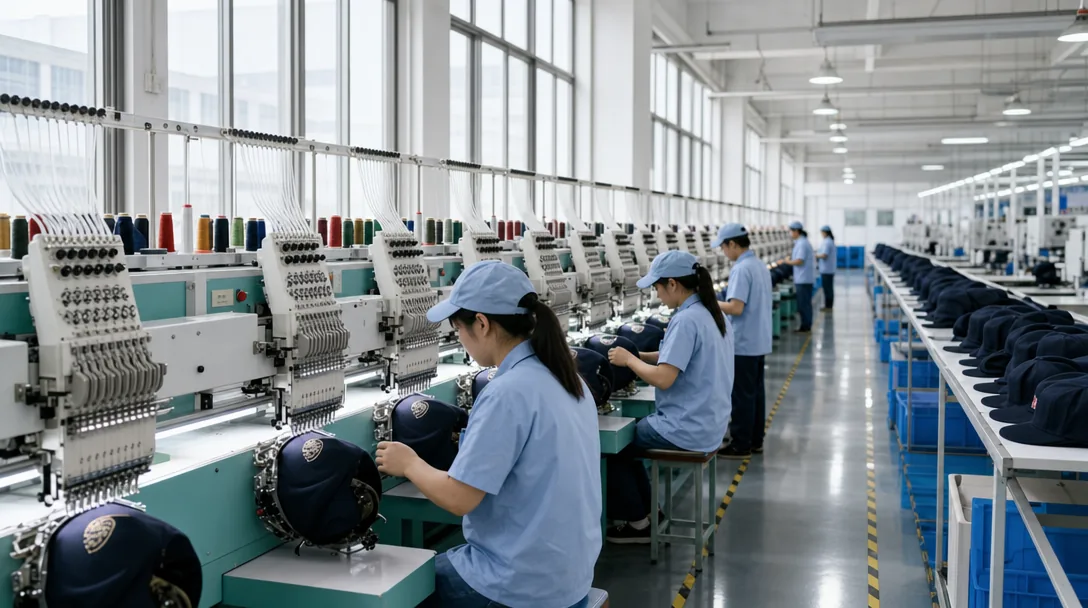
Bulk Trucker Hats Export Shipping Checklist for Custom Hat Buyers - Cost & MOQ Breakdown - Supplier Checklist
Read article →We hope this guide demystifies custom hat embroidery: the 2026 sourcing & manufacturing playbook (2026 update) and helps you move forward with confidence. If you have questions specific to your project, our English-speaking sales engineers are one message away.