Custom Golf Hats: A Manufacturer's Guide to Performance Headwear - Cost & MOQ Breakdown - Cost & MOQ Breakdown (2026 Update)
For brand owners, wholesalers and procurement teams entering the custom headwear category, custom golf hats: a manufacturer's guide to performance headwear - cost & moq breakdown - cost & moq breakdown (2026 update) is one of the highest-leverage decisions you will make. Get it right and your unit economics, retail story and reorder cycle all improve. Get it wrong and you carry the cost for years.
The golf-specific silhouettes that dominate retail and tournament programs
Pre-curved performance caps still take most retail and tournament volume because they fit the broadest age range and keep sizing simple at check-in. The spec that actually works is a 6-panel low- or mid-crown body in 120-160 gsm polyester microfiber or 88/12 poly-spandex, with fused buckram on the front two panels, laser-perforated side panels, and a moisture-wicking sweatband in Coolmax-type yarn or brushed polyester terry. Buyers who try oversized streetwear crowns for golf usually come back to cleaner profiles: they sit better under a cart roof, pack better in tournament gift bags, and generate fewer returns from older players. For custom golf hats in this lane, micro hook-and-loop and lightweight TPU snap closures outperform fitted sizing for event programs because staff can issue one size faster and the closure survives repeated adjustment better than low-grade elastic or thin PP snaps.
Decoration has to respect the fabric. On thin performance fronts, flat embroidery, twill applique, and silicone heat transfer hold shape better than aggressive 3D puff, which tends to torque the panel once the cap sees humidity, sweat salt, and bag compression. On Tajima or Barudan heads, I would keep center-front densities around 0.38-0.42 mm spacing on lightweight poly shells and watch pull compensation carefully; otherwise the seam starts grinning and the logo tunnels. The 5-panel golf silhouette has also earned real shelf space in pro shops because the uninterrupted front panel gives cleaner branding, especially for resort logos and private-label club merchandise. China FOB for a tournament-grade cap usually lands around $3.20-$5.80 at 300-500 pieces, while 5-panel or rope variants often push MOQ to 144-200 pieces per colorway once you add matched rope, custom inner taping, woven labels, and Pantone TCX-controlled trims.
Why golf demands performance fabric (not cotton twill)
Cotton twill is a poor baseline for modern custom golf hats because golf exposes every weakness in the fabric. A brushed 260-300 gsm cotton twill crown absorbs sweat into the yarn, traps heat under the front panel, and tends to show salt rings and UV fading after a few rounds in 28-35°C conditions. On the course, players are wearing a cap for 4-6 hours with repeated perspiration at the forehead, not for a 30-minute streetwear fit check. Once the sweatband saturates, cotton gets heavier, the buckram softens, and the crown starts losing shape by the back nine. That is exactly why better golf programs move to 100-150 gsm microfiber polyester or an 88/12 to 92/8 polyester-spandex woven shell. Those constructions are hydrophobic, dry materially faster than cotton, and keep the cap looking clean enough for the clubhouse instead of turning into a damp, stained souvenir. The right fabric also makes production cleaner and the finished hat more stable in use. Most well-built custom golf hats use 75D-150D woven polyester, often paired with laser-perforated side or rear panels, because it gives better airflow without sacrificing embroidery control. Heavy cotton is more likely to pucker around dense logo fills, especially on low-profile fronts, while stable performance polyester runs more consistently on Tajima or Barudan heads when stitch density, underlay, and panel tension are set correctly. Sweat management matters just as much as shell fabric: a moisture-wicking jersey or micro-mesh sweatband will outperform standard brushed cotton tape in both drying speed and comfort. Buyers should also ask for measurable data, not just a soft hand-feel sample—AATCC colorfastness, crocking results, and a realistic dyed-fabric tolerance such as Delta-E below 1.5 to the approved lab dip. If a factory keeps steering tournament or resort caps back to heavy cotton, it is usually protecting a cheaper BOM rather than the golfer’s wear experience.
Performance fabric is not only about comfort; it directly affects how long the cap still looks sellable after repeated wear. Golf hats spend hours under high UV, sunscreen contact, hand oils, and frequent doffing between holes or at the practice range. A lightweight performance weave in the 100-150 gsm range recovers better after handling, resists visible sweat mapping, and holds cleaner seam lines than a heavier cotton twill shell. In production, that matters because a hat that leaves the line crisp but loses its face after two washes becomes a reorder problem. Our standard practice is to treat golf headwear as technical apparel, not as a generic promo cap with a curved brim. That means matching shell fabric, sweatband, closure, and decoration method to heat, moisture, and repeated outdoor exposure. Decoration choices are also narrower than many buyers expect. If the design calls for sublimation on white polyester, color control has to be tighter because bright athletic shades reveal drift immediately; Pantone approval alone is not enough without strike-off review under D65 light. For dyed performance fabrics, consistent shade matching across crown panels and closure components is more important than chasing an ultra-cheap unit cost, because even minor variation looks obvious on clean, minimalist golf styling. In practical terms, custom golf hats perform best when the fabric spec is written like a garment spec: fiber content, gsm, denier, sweatband construction, UV or moisture-management finish, and acceptable color tolerance. That level of specificity prevents the common factory shortcut of swapping in heavier cotton or lower-grade polyester that feels fine at packing but fails on the course.
UPF sun protection for golf programs
Set UPF 50+ at tech-pack stage or you will end up arguing over lab reports after sampling. For custom golf hats, most stock performance shells do not hit that mark reliably across every color and construction. A 100% polyester woven at 110-140 gsm can test anywhere from roughly UPF 25 to 40 under AATCC 183 depending on yarn denier, cover factor, dye depth, and whether the fabric is dry or sweat-saturated. Dark navy and black microfiber twill usually outperform white, stone, or pastel peach-finish poly by a wide margin, and a closed woven crown will always beat a trucker build with mesh side panels. Buyers supplying Arizona, Florida, Queensland, and resort pro-shop programs increasingly want documented results to AS/NZS 4399 or AATCC 183, not a mill quotation or generic “sun-safe” claim. One approved shell also does not automatically validate the full range: change from a six-panel structured cap to perforated side panels or a rope silhouette, and you may be looking at a different test outcome.
The most common factory mistake is specifying only the front crown fabric and ignoring the weakest component in the cap. Side mesh, laser-perforated panels, contrast underbrims, and stretch sweatbands can drag down the effective rating of the whole hat even if the main shell passed at UPF 50+. On lightweight golf styles, that level usually comes from tighter filament construction, higher denier yarns such as 75D x 150D microfiber, or a mill-applied UV-absorbing finish; laminated backings can work too, but they usually cost breathability and hand feel. Dense Tajima or Barudan front-fill embroidery does not materially improve UV protection, so that should never be presented as a compliance solution. Testing is manageable if you control SKUs: SGS, Intertek, or Bureau Veritas commonly charge $300-$500 per AS/NZS 4399 submission, and each material-color combination can require its own file. On a $6.20-$9.80 FOB custom golf hat, that extra $400 spread over 144 pieces changes the margin fast, so the smart buy is to certify one or two core shells and keep artwork variable while locking the BOM to the lab report.
Moisture-wicking sweatband: the detail buyers don't notice until summer
The sweatband decides whether custom golf hats still feel wearable on the back nine. A brushed cotton twill band can look fine at sample approval, then fail in real conditions: 30–35°C, 70–85% RH, four hours of sun, and constant perspiration. Once cotton reaches saturation, it holds moisture at the forehead, adds noticeable weight, and leaves salt mapping that can shadow through white, stone, or pastel crowns. The better spec is a moisture-wicking knit sweatband at 140–180 gsm, usually 92/8 or 95/5 polyester-spandex, with 12–18% stretch and solid recovery. That construction pulls sweat off the skin, spreads it across a larger surface area, and dries materially faster than cotton, especially when paired with 75D–150D polyester microfiber, mini-ripstop, or laser-perforated performance shells in the 110–140 gsm range. Buyers should also stop accepting vague callouts like “sports sweatband.” A usable tech pack should state fiber content, gsm tolerance, stretch ratio, and colorfastness grade—ideally 4 or above for crocking and perspiration. If the band is sublimated or custom dyed to match a Pantone TCX reference, ask for shade approval under D65 lighting and watch for dye migration onto the front panel after moisture exposure. In production, I would rather invest in that spec than in another 3,000 stitches on the logo. Summer complaints on custom golf hats are rarely about whether embroidery ran on Tajima or Barudan heads; they are about forehead heat, slippage, and how wet the cap still feels by hole 12.
The cost delta is too small to treat moisture management as optional. On a structured 6-panel cap, upgrading from a standard cotton sweatband to a wicking knit typically adds $0.15–$0.25 per piece at 3,000–10,000 units FOB China. If you add custom jacquard branding, heat-transfer logos, or an antimicrobial finish, that usually moves the upcharge to $0.28–$0.40. For resort shops, club tournaments, and licensed event programs, that is cheap insurance compared with returns, wear complaints, or dead repeat business. The mistake I see is pairing a technical sweatband with the wrong shell—putting a 160 gsm wicking band inside a heavy 260 gsm cotton chino body defeats the point because the crown still traps heat and slows evaporation. The better build is a coordinated one: lighter buckram, minimal seam taping at the forehead, and performance fabric that can actually vent. Our standard QC at CrownsForge for this area is straightforward and practical: moisture rub test for crocking, stretch-recovery check after 20 extension cycles, and visual inspection for salt marking and dye bleed after drying. If the order is color-critical, add a simple Delta-E check against the approved sweatband standard before cutting bulk. Buyers may skim past the sweatband line on the spec sheet, but end users notice it fast in summer. On custom golf hats, this is a small component with outsized impact on comfort, perceived quality, and reorder rates.
Rope hats: why this silhouette became the golf hero category
Rope hats became golf’s hero silhouette because they outperform most cap shapes at first-glance recognition. The braided cord, usually 3-5 mm polypropylene or cotton-poly rope stitched at the crown-to-visor seam, creates a hard horizontal break that makes front logos read cleaner from roughly 2-3 meters than they do on a washed dad cap or low-profile twill six-panel. That matters in pro shops, tournament photography, and short-form video where the hat is seen head-on for a second. Buyers sourcing custom golf hats are usually not chasing nostalgia; they are buying a safer retail bet. A rope cap sits in the middle of the market: more premium than a basic 6-panel brushed cotton cap, less polarizing than a flat-brim snapback, and easier to merchandise across club, collegiate, and resort programs. The rope also adds a visible color hit at very low cost—typically $0.08-$0.18 per cap—without adding a new panel seam, extra pattern pieces, or meaningful sewing minutes.
The category only became a true core golf program once materials caught up with the silhouette. Ten years ago, rope hats were still heavily tied to foam fronts and bulky cotton shells; the better current builds use 140-180 gsm polyester-spandex, microfiber peach-finish polyester, or 75D-160D performance nylon with laser-cut side vents, perforated rear panels, and moisture-wicking sweatbands made from 30-40 denier polyester mesh. For mainstream U.S. fit, the safest spec is a structured 5-panel or high-front 6-panel crown with buckram, crown height around 8.5-9.0 cm, and a pre-curved visor instead of a full flat bill. Decoration has to respect rope placement: taller fronts can handle 3D puff embroidery on Tajima or Barudan heads, while lower profiles usually run cleaner with flat embroidery, TPU patches, or woven labels. From a factory standpoint, rope hats are efficient only when rope alignment, visor symmetry, and front-panel stability are controlled after embroidery and steaming; if the rope line is off by more than 2-3 mm, the defect is obvious immediately. That is why good rope-style custom golf hats feel engineered rather than merely styled.
Tournament + club merchandise compliance and timing
Event timing is where tournament buyers get burned, and the mistake is usually trusting a factory ex-date instead of the in-hands date. For PGA section events, member-guests, and sponsor-driven charity tournaments, 90 to 120 days from tech-pack approval to delivered goods is the realistic window for custom golf hats if you want one embroidery sew-out, one pre-production sample, bulk production, and ocean freight with customs clearance. A genuine rush program is closer to 30 to 45 days door-to-door, but the constraints are severe: stock 75D to 150D polyester or performance twill only, limited closures, no second strike-off, and air freight from East China to the U.S. typically at $6.50 to $9.00 per kg. If the tournament date is fixed, work backward from the warehouse receipt date, not from the vessel ETD. In practice, even a five-day slip at artwork approval can force a shipment from ocean to air and add $0.70 to $1.40 per cap on a 2,000-piece order, depending on carton density and destination.
Sponsor compliance on golf programs is mostly brand control executed with discipline. Color standards should be locked before sampling, especially on heathered micro-pique, lightweight poly-spandex, and fine-gauge performance fabrics where outdoor light exposes shade shift fast. For crown fabric, approve lab dips against Pantone TCX and hold key sponsor colors to Delta-E under 1.5; beyond that, navy starts reading purple and dark green can flatten toward black in midday sun. Embroidery needs separate control because white underlay can lift a fill and dense satin borders can visually darken neighboring thread. That is why the sew-out should be approved on the actual shell fabric, not on scrap canvas. For execution, require signed vector art, a measured PPS, and written logo placement tolerances of +/- 2 mm on front and side locations. If player gifts, volunteer caps, and pro-shop inventory run together, confirm carton marks and ratio packs before sewing starts; a perfect cap in the wrong assortment is still a failed delivery.
Club retail calendars are just as unforgiving. If a pro shop wants floor stock by April, January ordering is normal; March ordering usually means compressed approvals, trimmed trim options, or premium freight. MOQ is where many programs get misquoted. A stock six-panel performance style may open at 144 pieces per color, but a retail-grade custom golf hats program with laser-perf side panels, antimicrobial sweatband, molded silicone patch, woven flag label, and branded seam tape is more realistically 300 to 500 pieces per style-color. Decoration feasibility also needs an honest factory read. Small serif sponsor logos can run clean on Tajima or Barudan cap frames, but only if the digitizing accounts for crown curvature, buckram stiffness, pull compensation, and stitch density on structured fronts. For tournament or club drops, final inspection should be set to AQL 2.5, with shade banding, logo position, and thread trims called out on the QC checklist; mixed embroidery quality inside the same event delivery is the kind of avoidable failure buyers remember for years.
Working with CrownsForge on golf programs
The biggest advantage in a golf program is not one hero fabric; it is having a controlled polyester library that already behaves predictably in cutting, sublimation, and long-hour wear. For custom golf hats, we usually build from 100% performance polyester in the 110 to 160 gsm range, plus selected poly-spandex blends when the buyer wants more recovery on low-profile silhouettes. Typical options include mechanical-stretch microfiber, 75D interlock, mini ripstop, and laser-perforated side panels, all color-matched against Pantone TCX with practical mill tolerance around Delta-E 1.0 to 1.5. That matters because golf collections often mix headwear with polos or outerwear, and polyester lots that drift even slightly will look off under retail lighting. Our standard practice is to keep rope-hat tooling, visor curves, and crown patterns on file once approved, which saves a surprising amount of setup time on repeat programs and keeps panel shape consistent from 300 pieces to 10,000-plus units.
UPF claims should be documented, not guessed from fabric handfeel. A serious golf hat manufacturer will send shell fabrics to a third-party lab such as SGS or Intertek for UPF 50+ verification, then track whether perforation, mesh insertion, or heavy enzyme washes change the result. That is especially relevant for custom golf hats with logo because buyers often want breathable side panels without losing sun-protection language on packaging or hangtags. Moisture-wicking sweatbands are usually the baseline on decent custom golf caps now, and we treat them as a standard option rather than an upgrade: common specs are polyester warp-knit or brushed tricot bands with wicking finish, about 180 to 220 gsm, sometimes with antimicrobial treatment if the destination market accepts the chemistry. For decoration, low-profile crowns need restraint; oversized 3D embroidery on a shallow front buckles fast, so we normally optimize with flatter tatami fills, lighter underlay, woven patches, TPU badges, or silicone heat transfers depending on the fabric tension and target price.
Lead time is one of the first filters in wholesale golf hats, because launch calendars are tight around tournament seasons and pro-shop resets. A realistic sample window is 7 to 12 days after artwork, closure spec, and fabric direction are locked, assuming one round of revisions and normal logo complexity on Tajima or Barudan heads. Bulk production typically runs 25 to 32 days ex-factory for approved styles, with FOB Yiwu terms being the cleanest structure for most importers who already control forwarders. On costing, a straightforward 6-panel performance custom golf hat with a moisture-wicking sweatband and flat embroidery usually lands around $3.20 to $5.80 FOB at 500 to 1,000 pieces, while rope styles, welded appliques, perforated panels, or premium snapback hardware can push it into the $5.90 to $8.50 range. MOQ is usually driven less by sewing capacity than by fabric and trim practicality; 144 to 300 pieces per color is workable on repeats, but brand-new builds with special ropes, molded badges, or custom closures often need 500-plus to stay efficient.
Frequently Asked Questions
What logo decoration techniques do you offer?
3D puff embroidery, flat embroidery, woven patch, leather patch, PVC patch, screen printing, sublimation, applique and laser etching, all in-house with no subcontracting.
Which shipping methods do you support?
We support FOB, CIF and DDP shipping. Air express for samples and small orders, sea LCL for 100 to 500 pieces, sea FCL for 5,000+ pieces. Door-to-door DDP available for US, EU, UK, Canada and Australia.
Do you support sustainability certifications?
Yes. We work with GOTS organic cotton, GRS-certified recycled polyester, OEKO-TEX Standard 100 fabrics, and are BSCI and Sedex audited. Certification documentation can be provided per order.
What file format should I send for my logo?
Vector files (AI, EPS, PDF) are ideal. High-resolution PNG or JPG at 300 dpi on transparent background works as a fallback. Provide Pantone color references for accurate reproduction.
How long does production take?
Sampling takes 7 to 12 days. Bulk production runs 20 to 30 days depending on quantity, fabric availability and decoration complexity. Inspection and packing adds another 3 to 5 days before shipment.
What's the MOQ for custom embroidered baseball caps no minimum?
When evaluating custom embroidered baseball caps no minimum, the key considerations are construction quality, decoration capability, MOQ flexibility and lead time. Performance baseball cap with curved brim, 5-panel low-profile golf cap, rope hat with rope detail above the brim, performance bucket hat, and visor. Each has a specific use case — driving range, tournament play, club merchandise programs and pro-shop retail. Standard cotton twill absorbs perspiration and stays heavy. Golf demands moisture-wicking polyester (typically…
How does ordering baseball cap custom logo work?
When evaluating baseball cap custom logo, the key considerations are construction quality, decoration capability, MOQ flexibility and lead time. Performance baseball cap with curved brim, 5-panel low-profile golf cap, rope hat with rope detail above the brim, performance bucket hat, and visor. Each has a specific use case — driving range, tournament play, club merchandise programs and pro-shop retail. Standard cotton sweatband saturates within 9 holes of summer play; polyester-elastane wicking sweatband moves…
How does ordering custom baseball team hats work?
When evaluating custom baseball team hats, the key considerations are construction quality, decoration capability, MOQ flexibility and lead time. Performance baseball cap with curved brim, 5-panel low-profile golf cap, rope hat with rope detail above the brim, performance bucket hat, and visor. Each has a specific use case — driving range, tournament play, club merchandise programs and pro-shop retail. Rope hats (a 5-panel or 6-panel cap with decorative rope above the brim, often in contrast color) became the golf…
What's the MOQ for custom logo hats no minimum?
When evaluating custom logo hats no minimum, the key considerations are construction quality, decoration capability, MOQ flexibility and lead time. Rope hats (a 5-panel or 6-panel cap with decorative rope above the brim, often in contrast color) became the golf cap of the 2020s. Originally a fishing/outdoor silhouette adopted by Imperial, Melin and Branded Bills. We produce equivalents at MOQ 100 pieces. Performance baseball cap with curved brim, 5-panel low-profile golf cap, rope hat with rope detail above the brim,…
Need a low-MOQ test order?
We help emerging brands launch with as few as 100 pieces. Premium fabric, in-house embroidery, retail-ready packaging.
Start a small orderRelated guides
Custom Made Trucker Hat: The 2026 Sourcing & Manufacturing Playbook (2026 Update) (2026 Update) - 2026 Buyer's Guide
Read article →
Performance & Athletic Caps: Moisture-Wicking, UPF and Buyer Specs (2026 Update) - 2026 Buyer's Guide
Read article →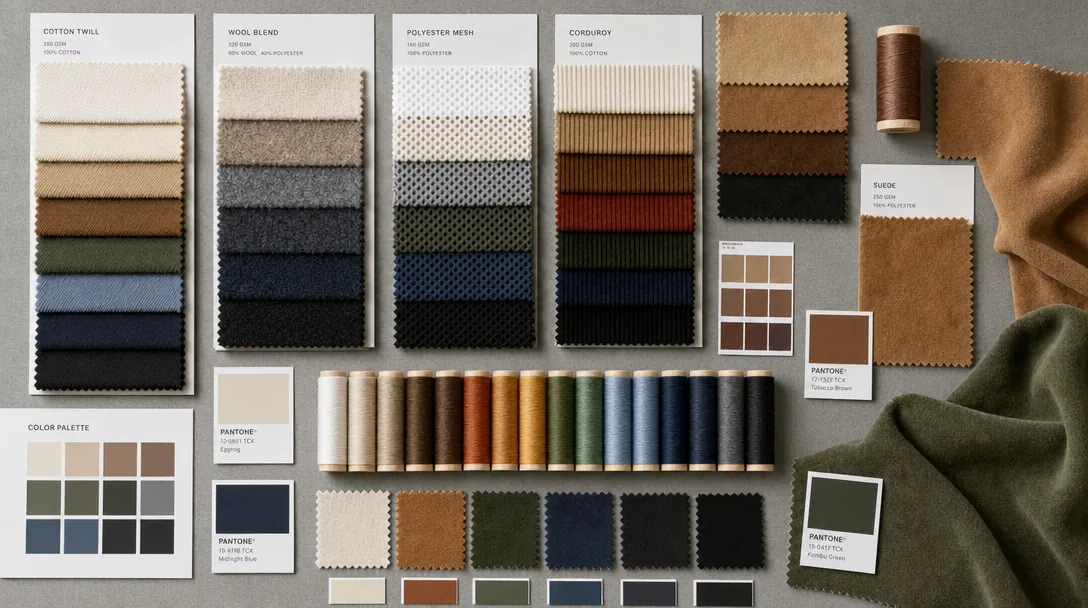
Corduroy Hat Men's: Properties, Costs and How to Spec It Right (2026 Update)
Read article →If you are ready to take the next step on custom golf hats: a manufacturer's guide to performance headwear - cost & moq breakdown - cost & moq breakdown (2026 update), our team can put a tailored quotation and digital mock-up in your inbox within 24 hours. Send the inquiry form on our contact page or message us directly on WhatsApp.