
Corduroy Hat Men's: Properties, Costs and How to Spec It Right (2026 Update)
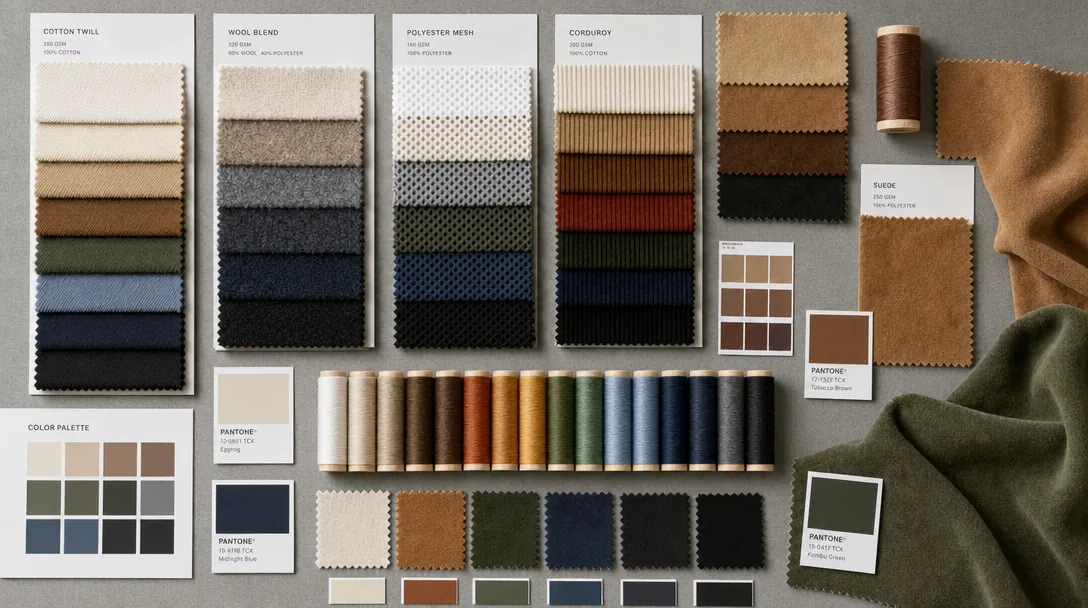
Corduroy Hat Men's: Properties, Costs and How to Spec It Right (2026 Update) is one of the most-asked questions we receive from international buyers, and for good reason. With dozens of factories competing for your order and an alphabet soup of technical terms in every supplier quote, even experienced importers can feel lost. This guide consolidates what we have learned producing custom hats for clients in 40+ countries.
Bucket Hat Women
For bucket hat women programs, fabric specification matters more than the silhouette sketch. In corduroy, the practical window is usually 8-wale to 14-wale cotton or cotton-elastane at 220 to 280 gsm; under 220 gsm, the brim loses shape after steam pressing, and over 300 gsm, the crown join and brim edge become too bulky for clean topstitching. If the style is being developed alongside a corduroy hat men's range, keep both on the same mill lot, same wale count, and same finishing route. On dark olive, navy, and chocolate, a dye-lot shift can move past Delta-E 1.5 to 2.0 quickly, and that is visible when the two programs sit side by side at retail. Women’s bucket fits generally land at 56 to 58 cm finished circumference with a 5.5 to 6.0 cm brim; many men’s specs run 58 to 60 cm with a 6.0 to 6.5 cm brim. That 0.5 cm difference sounds minor on paper but changes face framing, brim drop, and long-wear comfort once the hat is on for more than a fitting sample.
A tech pack for corduroy buckets should spell out crown height, side-wall angle, brim width tolerance, wale direction by panel, sweatband material, SPI, needle size, eyelet finish, and whether the fabric is piece dyed, pigment dyed, or enzyme washed. Embroidery needs separate callouts: on Tajima or Barudan heads, dense fills tend to tunnel across the ribs, so stitch density often has to come down 10 to 15 percent, backed by 70 to 100 gsm cutaway or a firm fusible. In China, cut-and-sew MOQ is commonly 300 to 500 pieces per colorway, while stock-body bucket programs may start around 144. Current FOB pricing for a plain custom bucket usually sits at $2.80 to $4.60; add lining, woven labels, metal eyelets, seam taping, or a branded sweatband and the realistic range moves to $5.20 to $6.50. Inspection is where weak factories get exposed: mismatched wale direction, brim waviness after wash or pressing, off-center crowns, puckered side-band seams, and inconsistent brim stiffness from low-grade nonwoven fusing are the recurring failures. Set final inspection at AQL 2.5, but also hold head opening and brim width to ±0.5 cm, verify brim stitch-row count, and re-measure after pressing because corduroy can torque under heat if the grain was cut carelessly.
Camouflage Bucket Hat
Print control is what separates a camouflage bucket hat that reads licensed-grade from one that looks like off-market surplus, and the mistakes usually start in fabric approval, not stitching. Stock programs are commonly built in 100% cotton twill at 200–240 gsm; if the hat is meant for outdoor use, a 60/40 cotton-nylon ripstop in the 205–220 gsm range gives materially better tear strength and dries faster after laundering. For woodland, digital, or Multicam-inspired layouts, do not approve from a phone photo. Require strike-offs viewed under both D65 and TL84, call out a Delta-E tolerance of 1.5–2.0 to the master, and specify print method up front: reactive print for better washfastness on cotton, pigment print only if you accept a drier hand and slightly weaker crocking performance. Keep post-wash shrinkage within 3% in both warp and weft; once it runs higher, the brim starts corkscrewing and the side seams stop matching cleanly.
Construction is straightforward, but the tolerance stack is not. Most factories cut a 4-panel or 6-panel crown with a 2.25-2.75 inch brim, 6-8 rows of topstitching at 7-9 SPI, and either self-fabric edge turn or brim binding depending on the target price and shape retention requirement. FOB China for a basic printed twill version with woven main label, care label, and standard sweatband typically sits around $2.20-$3.50 at 300-500 pcs per pattern; add custom allover print, enzyme wash, metal eyelets, chin cord with cord lock, or custom packaging and you are usually at $3.90-$5.40. Buyers benchmarking against a corduroy hat men's program should not expect the same cost logic: 8-wale or 11-wale cotton corduroy at 280-320 gsm brings higher marker loss, nap-direction restrictions, and slower pressing, so the sewing minutes may look similar while the factory risk is not.
Inspection should focus on the defects that survive inline checking and only become obvious after the shipment lands: pattern mismatch at side seams, brim torque after wash, skipped topstitching, loose eyelets, and crocking on dark olive or black grounds. I would hold production to AQL 2.5 major and 4.0 minor, measure brim width and crown height to within plus/minus 0.25 inch, and test colorfastness to rubbing and perspiration if the product is for team retail or outdoor distribution. If there is embroidery over camouflage, ask what heads the factory runs—Tajima, Barudan, or ZSK—and what backing they specify; lightweight twill can tunnel badly if the digitizing and cutaway choice are wrong. Our standard practice is to wash-test pilot lots before bulk cutting, because uneven shrinkage exposes bad pattern pairing immediately. The same rule applies to corduroy hat men's development: if the tech pack is vague on wale, gsm, nap direction, and wash standard, the factory will make those calls for you.
Organic Cotton Newborn Hat
The real risk in an organic cotton newborn hat is not styling but contamination, compliance, and seam comfort. Specify GOTS- or OCS-certified combed cotton jersey or interlock at 180-220 gsm for a soft pull-on cap, or 240-280 gsm for a cuffed beanie that needs recovery without elastane. I would call for ring-spun 30/1 or 40/1 compact yarn, pH 4.0-7.5, and finished shrinkage no worse than 5% in both warp and weft after 3 home-laundry cycles at 40°C. Infant programs should be tested to OEKO-TEX Standard 100 Product Class I or equivalent, with azo-free dyes, no intentionally added formaldehyde, and extractable heavy metals within Class I limits. Keep the same color-control discipline used on a corduroy hat men's order: approved lab dip against Pantone TCX, Delta-E 1.0 max under D65, and body/cuff shade continuity checked after wash, not only in greige or pre-sew stage.
Construction specs need to be tighter than most promotional headwear because babies react to seam bulk fast. Call out 4-thread overlock with balanced tension, coverstitch stretch recovery, flat seams or outward-facing seams, no metal trims, no bartack burrs, no exposed overlock tails, and no loose internal thread ends above 3 mm. Finished tolerances should stay within +/-0.5 cm on opening and crown depth, fabric weight within +/-5%, and skew or torque after wash under 5%. Decoration should stay soft: side-seam woven labels with heat-cut edges are risky unless folded and enclosed, while water-based print or a printed care label is usually safer than embroidery with a hard backing. Inspect at minimum to AQL 2.5, but add 100% needle detection, lot traceability by dye lot and sewing date, and a separate infant safety checklist covering detachable parts, sharp contamination, odor, and handfeel. If a supplier cannot hold these basics, they usually will not manage the tighter nap direction, wale alignment, and panel shade matching required later in a corduroy hat men's program.
Cost is driven more by certified fabric availability and paperwork than by cut-and-sew minutes. In China, stocked organic shades can make 300-500 pcs per color workable, but knit-to-order certified fabric usually pushes the practical MOQ to around 1,000 pcs per color because mills do not want to run short lots through scouring, dyeing, and certification traceability. A plain single-layer organic cotton newborn hat at 3,000 pcs generally lands around $0.85-$1.40 FOB in 2026 using standard approved shades. Move to GOTS-certified fabric, custom Pantone match, fold cuff construction, printed care label, and plastic-free packing such as FSC paper belly bands, and FOB typically rises to $1.60-$2.40. The hidden cost is admin: chain-of-custody checks, scope certificate matching, transaction certificates, and file retention can add $150-$400 per low-volume order before sewing starts. Ask for current sedex-audit-cap-supplier-guide.html">BSCI 2.0 or Sedex SMETA 4-Pillar audit status, mill scope certificates, and wash-test records tied to the actual lot, not a recycled PDF from last season.
Beanies for Men
Beanies are where buyers get sloppy because they assume a knit cap can piggyback on a woven cap spec. It cannot. If a beanie sits in the same assortment as a corduroy hat men's style, write it as a separate BOM with its own yarn, gauge, and performance standards. A sellable cuffed beanie is usually built on 7GG or 12GG machines in 2x1 rib or single jersey, using 2-end or 3-end acrylic, cotton/acrylic, or 100% cotton yarns. Your sheet should state fiber content, yarn count in Nm, machine gauge, finished weight, body height, relaxed opening, cuff depth, and stretch recovery after 20 extension cycles. Adult retail weights usually fall around 85-110 g/pc for cotton and 95-140 g/pc for heavier winter ribs, depending on gauge and ply. Also call out crown construction: linked, fully fashioned, or cut-and-sew. That one line affects top bulk, labor minutes, and how the hat sits on the head after ten wears, not just how it looks in the approval sample.
Color is where returns start. Yarn-dyed beanies will not read the same as piece-dyed corduroy under D65 or TL84, even if both are called the same Pantone in email. For any corduroy hat men's program with matching knits, use Pantone TCX references for the beanie, approve lab dips, and set a Delta-E tolerance of 1.5-2.0 in a light box, not by phone photos. MOQ is usually driven by yarn booking and trim setup, not machine time: 300-500 pcs/color is workable for stock acrylic with a woven label, while custom-dyed yarn, jacquard logos, reflective yarn, or recycled blends often push to 800-1,200 pcs/color. In East China, a basic acrylic beanie at 500 pcs typically runs $1.35-$2.20 FOB; cotton is closer to $1.90-$3.30; heavier ribs with an embroidery patch or leatherette label usually land at $2.70-$4.90 FOB after trim loss and extra handling.
Failures are usually subtle and expensive: dropped stitches, barre, shade banding between dye lots, skewed cuff folds, crown-point imbalance, yarn hairiness, and embroidery puckering on soft ribs. Embroidery is the usual offender because knitwear reacts nothing like a buckram-backed cap panel. On Tajima or Barudan heads, dense files can over-pull a 7GG rib immediately; keep stitch spacing around 0.35-0.40 mm on soft acrylic, define backing type, needle size, and maximum logo width before sampling, and watch heat carefully on patches because excessive press temperature will glaze acrylic and kill the hand feel. QC should be written to AQL 2.5 with measurement and performance checks, not just visual sorting: relaxed and stretched opening, body height, cuff depth, crown symmetry, seam security at the linking point, crocking, perspiration fastness, and recovery after repeated stretch. Our standard practice is to align carton compression limits, needle control, carton marks, and BSCI 2.0 or Sedex SMETA 4-Pillar documentation across the beanie and corduroy hat men's shipment so inspection and booking do not split into two different standards.
Corduroy Hat Wholesale
The biggest wholesale mistake is buying corduroy as if it were one fabric. For a corduroy hat men's program, the spec has to start with wale count, fabric weight, and crown construction, because those three variables drive logo clarity, panel bulk, and sewing yield. In Zhejiang, most workable cap-grade corduroy runs 230 to 310 gsm in 100% cotton or cotton-rich blends, with 14W as the safest middle ground for 5-panel and 6-panel caps. It keeps the ribs visible at retail but does not stack too much thickness into the front seam or embroidery field. Finer 16W to 21W reads cleaner and more fashion-forward; coarser 8W to 11W gives stronger texture but needs more care on panel shaping and stitch definition. A serious tech pack should also lock fused front-panel backing at 30D or 50D non-woven, crown type as structured, semi-structured, or unstructured, visor insert as PE board rather than paper board, stitch density at 7 to 9 SPI, and shade tolerance at Delta-E 1.5 maximum against an approved Pantone TCX bulk standard.
Corduroy exposes weak execution fast, especially once embroidery and pressing start. The nap will push stitch edges off line unless the file is digitized for ribbed ground fabric; on Tajima or Barudan heads that usually means lower fill density, stronger underlay, and more edge compensation than you would use on brushed twill. If the factory only approves strike-offs on paper backing or flat cotton, the bulk result is not credible. You should also specify rib direction across panels, crown height, visor length, sweatband composition, eyelet finish, closure type, and top-button material, because small omissions become visible defects on corduroy. In 2026, stock-fabric MOQ is commonly 144 to 300 pieces per color, while custom-dyed corduroy, logo metalwork, or bespoke trims usually move the threshold to 500 to 1,000 pieces. A standard unstructured corduroy hat men's cap usually lands around $2.90 to $4.80 FOB China at 300 to 500 units; premium builds with woven labels, interior taping, satin lining, and custom hardware are more realistically $5.30 to $7.80 FOB.
QC has to target the defects corduroy exaggerates: pile direction mismatch, panel shading, seam grin, visor asymmetry, and rib crushing around the hoop. A cap can match the lab dip and still fail visually if panels were cut against inconsistent nap, especially in dark shades such as navy, forest, and chocolate where light hits the pile unevenly. For bulk inspection, I would hold a corduroy hat men's order at AQL 2.5 major and 4.0 minor, with measurement tolerances of plus or minus 0.5 cm on crown circumference and plus or minus 0.3 cm on visor length, plus checks on embroidery registration, sweatband join position, and clasp function. Steam shaping is another common failure point; too much heat collapses the ribs and leaves the crown glossy and cheap-looking. At CrownsForge, finished caps are checked under angled light rather than only overhead factory lighting, because that is where pile damage and shade variance show up first. Carton spec matters too: crown supports, 5-ply export cartons, and 10 to 20 g desiccant per carton are cheap insurance for humid-season FOB consolidation or long DDP transit.
Wholesale Hat Manufacturers Usa
Most buyers using the search term wholesale hat manufacturers USA for a corduroy hat men's program are not comparing true cut-and-sew factories against each other. A lot of “U.S. manufacturers” are domestic decorators or sample rooms buying imported blanks, pre-cut panels, or sewn shells from China, Vietnam, or Bangladesh, then doing embroidery, labeling, and packing stateside. That model is not inherently bad, but it changes unit economics, lead time, and origin language. If domestic production matters, ask whether pattern development, spreading, cutting, sewing, embroidery, finishing, and packing happen in one U.S. facility. If the answer is no, you are buying a hybrid supply chain. Expect 2-4 week turns for stock blanks with U.S. decoration, versus 6-10 weeks for genuine domestic cut-and-sew, and a much higher labor component on every style revision.
The fabric callout is where weak RFQs usually fail. “Corduroy” tells a factory almost nothing. For a commercial corduroy hat men's style, specify wale count, fiber content, finished weight, and nap direction. The usable range is typically 8- to 14-wale at 220-300 gsm; 100% cotton gives a cleaner heritage hand, while 97/3 cotton-spandex helps the crown recover after pressing and reduces bagging on side panels. Your tech pack should also lock in crown height in mm, visor length, PE board thickness, front-panel buckram yes/no, sweatband material, closure, stitch count, seam taping, eyelet finish, and Pantone TCX references for shell, underbill, and trims. Nap direction control is mandatory: if neighboring panels are cut against the nap, the cap can read a half-shade off under retail LED even when the dye lot is approved. Our standard practice is to hold shrinkage below 3%, dry/wet crocking at grade 4 minimum, and branded color matching to Delta-E under 1.5.
Embroidery on corduroy is where cheap sampling shows immediately. Dense fills can sink into the ribs, tunnel across the wale, or distort the front panel unless the supplier is running properly tuned Tajima, Barudan, or ZSK cap frames and adjusts underlay, density, and pull compensation for the fabric structure. A flat woven patch, satin-border applique, or low-density 3D puff often performs better than a heavy fill on 10-wale cotton. On pricing, stock-based U.S. customization usually starts around 144-288 units per color, while actual domestic cut-and-sew generally wants 500 units or more per style-color to keep waste and setup costs under control. Real ex works pricing for a mid-grade men’s corduroy cap is usually $8.50-$16.00 each in the U.S., with embroidery, woven labels, interior taping, and special closures adding another $1.20-$3.50. Final inspection should be written to AQL 2.5, with checkpoints for nap shading, broken wales at seam joins, visor centerline drift, eyelet puckering, embroidery registration, and head-size tolerance within ±0.5 cm.
Working with CrownsForge for corduroy hat men's programs
The make-or-break issue in a corduroy hat men's program is sample translation, not sewing capacity. If the factory does not understand how 8-wale, 11-wale, or 14-wale cotton corduroy behaves once it is fused, curved, and topstitched into a six-panel crown, you burn two or three sample rounds fixing predictable failures: front panels collapsing after hooping, visor topstitch drifting because the ribs pull the seam, and embroidery losing edge definition as the pile swallows fine detail. A workable factory timeline for a basic sample in stocked 100% cotton corduroy, typically 270 to 320 gsm, is 5 to 7 working days. Add custom piece-dyeing, braided rope, laser-engraved metal buckle, printed seam tape, or applique over embroidery, and 7 to 10 working days is more realistic because lab dips, trim strike-offs, and decoration setup become the constraint. Our standard practice is to push buyers toward a pilot run before scale: stocked fabric can start around 48 pieces per color, while custom-dyed corduroy usually needs 300 to 500 meters per shade to keep the mill quote sane. For a first order, 144 pieces at roughly FOB Ningbo $4.20 to $6.80 per cap tells you far more about fit consistency and reorder risk than forcing 2,000 units before the spec is stable.
Decoration is where most corduroy hat men's orders go sideways, because wale direction, pile height, and stitch penetration matter more than buyers assume from a screen proof. Fine-wale fabric can take flat embroidery cleanly on Tajima or Barudan heads, but only if the digitizer reduces underlay, opens satin columns, limits dense fills, and compensates for pile push; otherwise the logo sinks and the edges fuzz out after one steam press. Wide-wale corduroy is less forgiving. 3D puff is usually safe only for simple block forms with 3 to 4 mm foam and generous spacing; try small counters or thin strokes and the foam breaks the edge, leaving a soft, uneven read from arm's length. For logos with tight detail, woven patches, felt applique, or twill badges with satin edge are usually better engineering choices than trying to force embroidery to do what the substrate will not support. Buyers should write measurable controls into the PO: logo placement within +/-2 mm, visor length within +/-3 mm, crown height within +/-3 mm, and color approval to Pantone TCX or coated reference under D65 lighting. Because corduroy shows panel-to-panel shading quickly, bulk fabric should be lot-separated, checked to an agreed Delta-E tolerance, and held through AQL 2.5 final inspection for shade matching, seam puckering, closure pull test, logo legibility, and carton drop integrity; serious importers should also verify BSCI 2.0 or Sedex SMETA 4-Pillar status, needle-control logs, and restricted-substance controls on dyes, backings, and sweatband prints before repeating volume.
Frequently Asked Questions
How long does production take?
Sampling takes 7 to 12 days. Bulk production runs 20 to 30 days depending on quantity, fabric availability and decoration complexity. Inspection and packing adds another 3 to 5 days before shipment.
Can I order a sample before bulk production?
Yes. We strongly recommend approving a pre-production sample before mass production. Samples are charged at 35 to 60 USD each plus express shipping, fully refundable against confirmed bulk orders over 500 pieces.
What is the minimum order quantity (MOQ) for custom hats?
Our standard MOQ is 100 pieces per design and color, with sampling available from 1 piece. For complex multi-color logos or premium fabric upgrades, the MOQ can be lowered with a small per-piece surcharge.
Do you support sustainability certifications?
Yes. We work with GOTS organic cotton, GRS-certified recycled polyester, OEKO-TEX Standard 100 fabrics, and are BSCI and Sedex audited. Certification documentation can be provided per order.
What logo decoration techniques do you offer?
3D puff embroidery, flat embroidery, woven patch, leather patch, PVC patch, screen printing, sublimation, applique and laser etching, all in-house with no subcontracting.
What should buyers know about organic cotton hat?
When evaluating organic cotton hat, the key considerations are construction quality, decoration capability, MOQ flexibility and lead time. Cover everything buyers ask about organic cotton newborn hat: how it's manufactured, what specs to request from a factory, typical MOQ and pricing, common quality issues to inspect for, and how this ties back to the broader corduroy hat men's sourcing decision. Cover everything buyers ask about bucket hat women: how it's manufactured, what specs to request from a factory,…
What should buyers know about cotton beanie men?
When evaluating cotton beanie men, the key considerations are construction quality, decoration capability, MOQ flexibility and lead time. Cover everything buyers ask about organic cotton newborn hat: how it's manufactured, what specs to request from a factory, typical MOQ and pricing, common quality issues to inspect for, and how this ties back to the broader corduroy hat men's sourcing decision. Cover everything buyers ask about bucket hat women: how it's manufactured, what specs to request from a factory,…
What should buyers know about men's corduroy bucket hat?
When evaluating men's corduroy bucket hat, the key considerations are construction quality, decoration capability, MOQ flexibility and lead time. Cover everything buyers ask about bucket hat women: how it's manufactured, what specs to request from a factory, typical MOQ and pricing, common quality issues to inspect for, and how this ties back to the broader corduroy hat men's sourcing decision. Cover everything buyers ask about camouflage bucket hat: how it's manufactured, what specs to request from a factory,…
What should buyers know about organic cotton men's shirts?
When evaluating organic cotton men's shirts, the key considerations are construction quality, decoration capability, MOQ flexibility and lead time. Cover everything buyers ask about organic cotton newborn hat: how it's manufactured, what specs to request from a factory, typical MOQ and pricing, common quality issues to inspect for, and how this ties back to the broader corduroy hat men's sourcing decision. Cover everything buyers ask about bucket hat women: how it's manufactured, what specs to request from a factory,…
Need a low-MOQ test order?
We help emerging brands launch with as few as 100 pieces. Premium fabric, in-house embroidery, retail-ready packaging.
Start a small orderRelated guides
Slouchy Beanie: Properties, Costs and How to Spec It Right
Read article →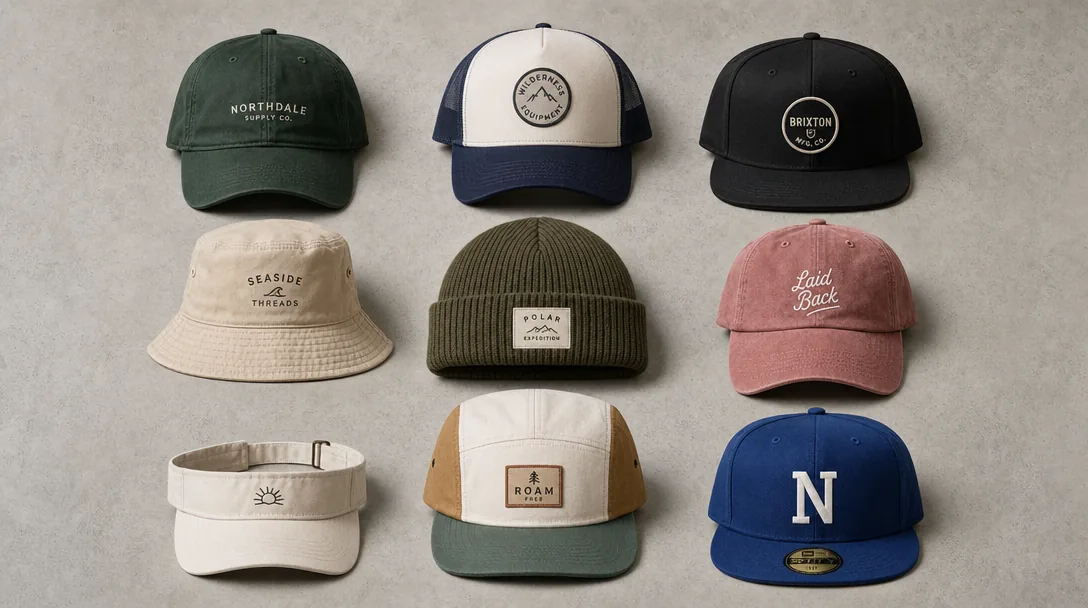
Launching a Hat Brand: Marketing Playbook for the First 12 Months
Read article →
Embroidery Hats Machine: When to Use It, Costs, and What to Ask Your Factory
Read article →Sourcing custom hats does not have to be complicated. With the right manufacturing partner, clear specifications and a small upfront investment in sampling, you can launch a retail-quality product in 30 to 45 days.