
Custom Golf Hats: A Manufacturer's Guide to Performance Headwear - Cost & MOQ Breakdown - Cost & MOQ Breakdown (2026 Update) - 2026 Buyer's Guide
Custom Golf Hats: A Manufacturer's Guide to Performance Headwear - Cost & MOQ Breakdown - Cost & MOQ Breakdown (2026 Update) - 2026 Buyer's Guide is one of the most-asked questions we receive from international buyers, and for good reason. With dozens of factories competing for your order and an alphabet soup of technical terms in every supplier quote, even experienced importers can feel lost. This guide consolidates what we have learned producing custom hats for clients in 40+ countries.
The golf-specific silhouettes that dominate retail and tournament programs
The pre-curved performance cap still drives the most volume in custom golf hats because it covers the widest range of tournament giveaways, club shops, and private-label resort programs with the lowest sizing risk. The repeat-order spec is usually a 6-panel, low-to-mid profile shape in 92/8 polyester-spandex or 100% recycled polyester at 140-180 gsm, with laser-perforated side panels, a 30-35 mm moisture-management sweatband, and a micro hook-and-loop or snapback closure instead of a bulky plastic strap. On the factory floor, crown structure decides whether the logo holds up or falls apart: a lightly structured front panel runs cleanly for flat embroidery or 2-3 mm 3D puff on Tajima or Barudan heads, while a fully unstructured crown often distorts satin columns and knocks club crests off registration. Once the artwork gets past roughly 75-90 mm wide, TPU patches, welded silicone badges, or high-density heat transfers usually outperform dense fill embroidery because they reduce panel drag, cut stitch count, and prevent the puckering that shows up after sweat, heat, and repeated bag or cart-seat compression. The next real split is between seamless-front 5-panels and rope hats, and they serve different programs. A true 5-panel custom golf hat gives one uninterrupted front field, so oversized sponsor marks, sublimated appliques, and large flat embroidery are not broken by a center seam; that matters for resort capsules, range staff uniforms, and younger-member assortments where the silhouette leans closer to streetwear. Rope hats remain the safer retail bet for pro shops because the shape reads as golf immediately; the commercial sweet spot is a semi-structured crown, slight pre-curve visor, braided polyester rope, and a poly-nylon or performance twill shell in the 120-160 gsm range. Color control is where many otherwise decent hats fail: if the rope, visor edge, and sandwich peak drift more than Delta-E 1.5-2.0 from the approved Pantone TCX standard, the cap looks mismatched under daylight even when the embroidery is technically clean.
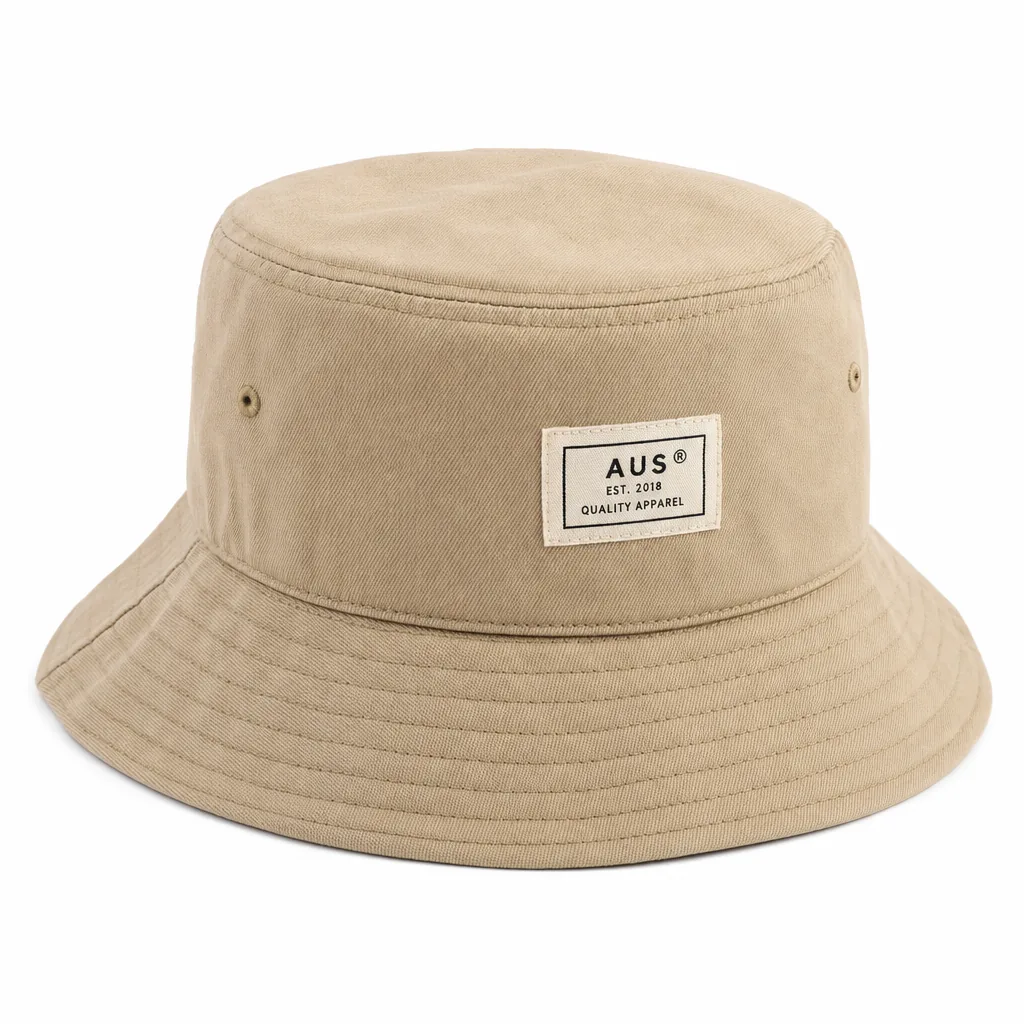
Bucket hats and visors are smaller categories, but serious custom golf hats programs should treat them as functional tools, not novelty add-ons. Performance buckets move best in high-UV markets, caddie uniforms, women’s resort retail, and summer tournament packs, where the buyer is selling shade and comfort more than front-panel branding. The golf-ready build is usually lightweight polyester or nylon under 150 gsm, with mesh side ventilation or embroidered eyelets, a sweatband that can actually absorb and release moisture, and a brim insert stiff enough to hold its line without dropping into the player’s sightline. Cheap fashion buckets miss on exactly those points: soft brims collapse after packing, crown ventilation is cosmetic, and the hat feels hotter by the back nine. Visors still earn shelf space because they fit ponytails, feel cooler in humid climates, and usually land at a lower FOB—about $1.80-$3.20 versus $2.60-$5.50 for a full cap, depending on fabric, closure, MOQ, and decoration method. The weak points are practical, not cosmetic, so inspection should follow AQL 2.5 with attention on brim symmetry, hook-and-loop cycle life, sweatband absorbency, and seam slippage where the side panels join the band. At CrownsForge, our standard is to test closure adhesion after repeated open-close cycles and check curvature consistency carton by carton, because visors that look acceptable in the sample room often fail only after a full round in heat and sweat.
Why golf demands performance fabric (not cotton twill)
Cotton twill is the wrong baseline for serious custom golf hats because it behaves like a sponge once the round gets hot. A standard 240–280 gsm brushed cotton twill crown can absorb perspiration, darken visibly at the front panel, and gain enough moisture weight that the cap feels heavier by the back nine. On the factory floor, we see this most clearly in summer reorder claims: buyers love the look of cotton at sampling stage, then complain after wear testing in 30–35°C conditions with high humidity. For golf, a 100–150 gsm polyester microfiber or lightweight mechanical-stretch woven performs better because it moves sweat off the forehead instead of holding it in the fabric structure. That matters on a four-hour round, where players want the cap to stay stable, dry quickly after sweat exposure, and avoid the soggy brim edge you often get with cotton constructions.
The fabric physics are straightforward. Performance polyester uses finer denier yarns and a capillary finish to wick moisture from the sweatband side to the outer face, where it can evaporate through the panel instead of pooling at the seam tape. A good custom golf hat normally pairs that shell with a moisture-management sweatband—often 30–40 mm polyester spacer mesh or microfiber knit—rather than standard cotton sheeting. For custom golf hats with logo, this also affects decoration planning: dense embroidery on a thin performance shell needs proper backing and lower stitch counts, or the panel will pucker. Our standard practice is to test embroidery on actual production fabric, not stock twill, especially when the front panel is under 130 gsm and the buyer wants a raised logo on a structured crown.
Dry time is the other reason cotton loses on the course. After an 18-hole round, a polyester performance cap can often air-dry in roughly 20–35 minutes under warm conditions, while cotton twill may stay damp well past an hour depending on finish and crown construction. That faster recovery matters for resorts, club shops, and wholesale golf hats programs selling repeat-wear product rather than one-event merch. If you are sourcing from a golf hat manufacturer, ask for shell gsm, yarn type, sweatband material, and colorfastness results, not just a nice handfeel. We usually spec performance shades against Pantone TCX and hold bulk color within a practical Delta-E tolerance, because sunscreen, sweat, and UV exposure will punish cheap dyeing faster on the fairway than in almost any other cap category.
UPF sun protection for golf programs
Most custom golf hats already block a fair amount of UV, but buyers routinely mistake fabric coverage for a defensible UPF claim. A tight 120-160 gsm polyester twill, microfiber, or micro piqué can test around UPF 30-40 in its greige or dyed state, especially in darker shades, and that is usually fine for scramble giveaways or basic pro-shop replenishment. The problem starts when sales copy says UPF 50+. At that point, the hat stops being just a merch item and becomes a compliance item: you need the exact mill fabric code, composition, gsm, color, and finish locked before bulk, then a lab report on the finished construction. On the factory floor, sewing is rarely the weak point; undocumented substitutions are. Change the shell from navy to white, add laser-perforated side panels, swap woven twill for a 92/8 polyester-spandex stretch, or alter mesh denier, and the original UPF report may no longer support the production lot.
The stricter programs come from high-UV markets and liability-sensitive buyers: Australia, Arizona, Florida, Hawaii, resort operators, and junior golf academies. Those customers commonly ask for AS/NZS 4399 or AATCC 183 data from SGS, Intertek, or Bureau Veritas before approving bulk. Expect roughly $300-$500 per SKU for testing, and remember that SKU scope is narrower than many teams assume: color, panel material, finish, and even ventilation layout can trigger re-testing. The surcharge on UPF 50+ fabric itself is usually modest, about $0.18-$0.45 per hat at mid-volume, but the testing fee punishes small runs. A $400 report adds about $2.78 per cap on 144 pieces and only $0.69 on 576. That is why disciplined development matters with custom golf hats: freeze shell fabric, mesh content, sweatband fiber, and Pantone-approved shade before sampling, then hold bulk color within an agreed Delta-E tolerance under D65 light-box review so the certification sample actually matches production.
Moisture-wicking sweatband: the detail buyers don't notice until summer
The sweatband is the first component golfers judge and the last one many buyers spec correctly. A standard 100% cotton twill band absorbs sweat quickly, but in 30 to 34°C conditions with 70% or higher humidity, it stays wet long enough to feel clammy by the back nine. For custom golf hats, the safer baseline is a moisture-wicking knit at 140 to 180 gsm, typically 85/15 to 92/8 polyester-elastane or a mechanically stretched polyester tricot. That construction pulls moisture off the skin, spreads it across a wider surface area, and dries materially faster inside the crown. On the factory floor, that upgrade delivers more real performance than cosmetic add-ons like seam tape prints, contrast eyelets, or oversized sandwich brims that look technical but do nothing once the round gets hot. Build quality matters as much as fiber content. The best-performing bands use a brushed polyester face for skin comfort, controlled stretch so the band recovers after wear, and a clean front-seam join that does not create pressure on the forehead. Thick foam-backed bands are a bad golf spec in my view: they feel premium in a fitting room, then trap heat and slow evaporation over 18 holes. When the shell is white microfiber, lightweight performance poly, or a 92/8 poly-spandex blend, buyers should also lock in perspiration colorfastness and crocking standards, because dark sweatbands can bleed onto light front panels surprisingly fast. A practical QC target is commercial shade consistency within Delta-E 1.5 to 2.0, plus sweat and rub fastness checks before bulk sewing starts.
The cost difference is too small to treat as an optional upgrade. In China production, a stock moisture-wicking sweatband usually adds about $0.15 to $0.25 per cap against basic cotton, and MOQ normally stays flat if the factory is pulling from an existing black, white, or heather program. The MOQ problem starts when buyers request Pantone TCX custom dyeing, knitted jacquard branding, antimicrobial chemistry, or non-standard band widths; then the trim mill may require 1,000 to 3,000 meters, which can distort unit economics on small runs. For most resort, tournament, and pro-shop programs, it is smarter to keep the band stock and spend development budget on fit and shell fabric instead. This is also one of the few hidden trims that directly affects reorder rates. Buyers of custom golf hats with logo often spend too much time debating crown profile, closure hardware, or embroidery stitch count, while summer wear complaints come from sweat retention, forehead irritation, and dye transfer. A serious factory should check seam flatness at the front join, verify attachment tension around the full circumference, and inspect sweatband stitching under AQL 2.5 so there are no wavering edges or hard spots against the skin. At CrownsForge, our standard practice is to review shade continuity, perspiration fastness, and wear comfort at pre-production stage, because a sweatband failure is obvious within one round and far more damaging than a minor visual trim miss.
Rope hats: why this silhouette became the golf hero category
Rope hats became the hero SKU in golf because they lift perceived retail value without forcing a premium construction cost. A basic sandwich-visor cap still reads promotional; a rope silhouette reads pro shop, especially in stores targeting a $32 to $48 retail. The spec that actually moves is usually a structured 5-panel crown with a full center seam, 55 to 58 cm stock fit range, a taller front profile than a washed dad cap, and a braided polyester rope set 6 to 8 mm above the visor stitch line. That rope is doing real visual work: it creates a clean break above the brim, so a modest 4,000 to 6,500-stitch front logo looks intentional instead of undersized. For buyers developing custom golf hats, that detail often improves shelf appeal more than piling on extra trims like contrast taping or woven labels. The silhouette also matches how golf product is worn now: on-course, range, clubhouse, and off-course with everyday sportswear. Strong programs have largely moved out of heavy brushed cotton twill and into 110 to 140 gsm performance polyester, 92/8 poly-spandex, or lightweight dobby with laser-perforated side and rear panels for airflow. Better rope hats usually pair those shells with a moisture-wicking sweatband, a black or dark gray undervisor to cut glare, and either a snapback or low-profile micro hook-and-loop closure. Decoration has to be handled more carefully than on a relaxed six-panel cap. On Tajima or Barudan embroidery heads, the taller face and center seam can cause dense satin columns to break or tunnel unless the logo is re-digitized with edge-run underlay, lower fill density, and proper pull compensation. A file that sews clean on a dad cap often needs a separate version for rope-style custom golf hats.
The reason the category keeps growing is simple: the economics still work. In China, MOQ is commonly 100 pieces per colorway on a stock-shell program, while fully custom builds with specified fabric, rope color, closure, internal taping, and private labeling usually start at 300 to 500 pieces. Realistic FOB pricing for custom golf hats in this silhouette generally lands around $4.20 to $7.80 per piece, depending on fabric weight, perforation method, closure type, and decoration choice such as flat embroidery, 3D puff embroidery, TPU patch, or molded silicone badge. Move into specialty recycled fabrics, welded patch applications, or seam-sealed details and the price can pass $8.50 quickly, especially when reject risk rises on more technical panels. Cheap rope hats get exposed in QC faster than buyers expect. Rope color mismatch is obvious; once shade drift moves much beyond Delta-E 1.5 against the crown or visor accent, the cap starts looking pieced together. Visor consistency is just as important, because a curve variance of 5 to 7 mm across one carton will break the wall presentation at retail. The better factories lock body color to Pantone TCX approvals, check crown height and visor symmetry during inline inspection, and hold final shipment to AQL 2.5. That is why the silhouette works so well for tournament merch, resort private label, and smaller brands testing new headwear programs: it feels elevated to the golfer, but the sourcing math stays manageable if the factory controls the details people notice the moment they pick up the cap.
Tournament + club merchandise compliance and timing
For tournament merchandise, the ship date dictates the buying strategy; chasing a lower unit price and missing the event is the expensive mistake. A realistic window for custom golf hats is 90 to 120 days before in-hand date, especially if the cap spec includes laser-perforated side panels, welded seam tape, molded silicone patches, woven wrap labels, or retail belly bands. Sixty days is already tight once you account for fabric booking, embroidery digitizing, sample revision, export carton approval, and freight. On the factory floor, the delays usually come from soft specs, not production capacity: an incomplete BOM, unresolved Pantone callouts, missing packaging dielines, or a late Incoterm change can easily burn 5 to 7 days per approval round. A basic 6-panel performance cap in 92% polyester / 8% spandex with flat embroidery can move faster, but tournament orders rarely stay basic once sponsor logos, side embroidery, and pro-shop packaging are added. The technical failures that derail tournament and club programs are usually preventable. Freeze color against Pantone TCX or coated references before sampling, and hold visible crown and visor panels to Delta-E below 1.5; on white, stone, navy, and seasonal pastels, buyers will notice drift immediately between sample and bulk. Fabric choice also changes decoration behavior: a 140 to 180 gsm moisture-wicking microfiber does not embroider like recycled poly twill or a lightweight 4-way stretch woven, so small crest logos often need lighter underlay, adjusted edge-walk, and reduced fill density on Tajima or Barudan heads to avoid puckering on unstructured fronts. The right approval stack is a lab dip, embroidery strike-off, thread card, and pre-production sample made in bulk fabric, followed by final inspection at AQL 2.5 with carton assortment and trim verification. One wrong size sticker, off-shade visor sandwich, or mispacked closure style is enough to create tournament-day complaints and club-store returns.
Club retail runs on a different clock than one-off events, and late ordering usually shows up as missed sell-through in the pro shop. If the core selling season is May through September, January is the practical purchase point for spring floor sets of custom golf hats; by March, there is rarely enough margin left for line review, revised samples, bulk cutting, and low-risk ocean freight. FOB Ningbo to the U.S. West Coast typically lands in 22 to 30 days port-to-port, then still needs drayage, customs clearance, and final delivery. DDP air can recover time, but it commonly adds about $1.20 to $2.80 per cap depending on carton density, chargeable weight, and destination ZIP. That premium is painful, but not as painful as inventory arriving after the member-guest or opening tournament, when full-price sales are strongest. MOQ discipline matters just as much as timing. A clean stock-shape program often starts at 144 to 288 pieces per colorway, but premium trims push the real floor higher: custom interior seam tape, metal logo closures, dyed-to-match rope, molded silicone branding, and low-volume stretch fabrics often make 500 pieces the practical MOQ once trim suppliers, dye lots, and wastage are priced honestly. Clubs expecting replenishment should lock repeat fabric reservations, approved embroidery files, closure specs, and carton ratios on the first PO rather than rebuilding the project each season. Our standard practice is to archive the PPS, thread card, packaging spec, and assortment breakdown from run one, because that removes an entire approval cycle on reorders and cuts the risk of shade drift or packing inconsistency when the second shipment has to move fast.
Working with CrownsForge on golf programs
Fabric spec drives sell-through on custom golf hats more than any sketch deck. The safest baseline is a 110-160 gsm performance shell: stable enough to hold a low-profile golf crown, but still quick-drying after sweat, dew, or a light rain delay. In production, the cleanest results usually come from 100% microfiber polyester twill, mechanical-stretch woven poly, or a 92/8 poly-spandex blend when the buyer wants a softer hand on an unstructured 5-panel or rope silhouette. Color approval also needs to be contractual, not casual. For dyed textile lots, the reference should be Pantone TCX; for branding-led trim colors, Pantone Coated is more practical. Bulk should then be checked against sealed swatches with Delta-E under 1.5 on crown fabric and under 2.0 on secondary parts like rope, visor sandwich, and rear closure tabs. Our standard practice is to keep approved golf cap patterns on file because repeat orders fail in predictable ways: rope placement creeps upward, front panels ripple after embroidery, and crowns lose shape after master-carton compression if the buckram and panel geometry are not balanced early.
Decoration is where most custom golf hats get overdesigned and then underperform on the sewing floor. A golf silhouette has a lower front rise than a fashion snapback, so logo size, seam placement, stitch density, and front-panel backing have to be engineered together. On Tajima or Barudan heads, 3D puff is reliable for block letters and simple icons, but once satin columns get much below 4.5-5.0 mm, edge distortion and collapse become common. Fine crests, script logos, and sponsor marks usually sew cleaner in flat embroidery, welded TPU patches, or thin heat-transfer applications, especially on lightweight poly shells that tend to tunnel under dense fills. The commercial side should be just as specific: a workable MOQ is usually 144 pieces per colorway for standard builds, while laser-perforated side panels, molded TPU logos, branded seam tape, or custom metal closures push the efficient range closer to 300-500 pieces per style. Sample lead time is typically 7-12 days after artwork, rope spec, visor curve, and closure are signed off; bulk production usually runs 25-32 days ex-factory. Final release should be inspected at AQL 2.5 with checkpoints on crown symmetry, visor curvature tolerance, embroidery registration, sweatband attachment, and shade variation panel to panel.
Frequently Asked Questions
How long does production take?
Sampling takes 7 to 12 days. Bulk production runs 20 to 30 days depending on quantity, fabric availability and decoration complexity. Inspection and packing adds another 3 to 5 days before shipment.
Can I order a sample before bulk production?
Yes. We strongly recommend approving a pre-production sample before mass production. Samples are charged at 35 to 60 USD each plus express shipping, fully refundable against confirmed bulk orders over 500 pieces.
What file format should I send for my logo?
Vector files (AI, EPS, PDF) are ideal. High-resolution PNG or JPG at 300 dpi on transparent background works as a fallback. Provide Pantone color references for accurate reproduction.
Do you support sustainability certifications?
Yes. We work with GOTS organic cotton, GRS-certified recycled polyester, OEKO-TEX Standard 100 fabrics, and are BSCI and Sedex audited. Certification documentation can be provided per order.
What logo decoration techniques do you offer?
3D puff embroidery, flat embroidery, woven patch, leather patch, PVC patch, screen printing, sublimation, applique and laser etching, all in-house with no subcontracting.
What's the MOQ for custom embroidered baseball caps no minimum?
When evaluating custom embroidered baseball caps no minimum, the key considerations are construction quality, decoration capability, MOQ flexibility and lead time. Performance baseball cap with curved brim, 5-panel low-profile golf cap, rope hat with rope detail above the brim, performance bucket hat, and visor. Each has a specific use case — driving range, tournament play, club merchandise programs and pro-shop retail. Standard cotton twill absorbs perspiration and stays heavy. Golf demands moisture-wicking polyester (typically…
How does ordering baseball cap custom logo work?
When evaluating baseball cap custom logo, the key considerations are construction quality, decoration capability, MOQ flexibility and lead time. Performance baseball cap with curved brim, 5-panel low-profile golf cap, rope hat with rope detail above the brim, performance bucket hat, and visor. Each has a specific use case — driving range, tournament play, club merchandise programs and pro-shop retail. Standard cotton sweatband saturates within 9 holes of summer play; polyester-elastane wicking sweatband moves…
How does ordering custom baseball team hats work?
When evaluating custom baseball team hats, the key considerations are construction quality, decoration capability, MOQ flexibility and lead time. Performance baseball cap with curved brim, 5-panel low-profile golf cap, rope hat with rope detail above the brim, performance bucket hat, and visor. Each has a specific use case — driving range, tournament play, club merchandise programs and pro-shop retail. Rope hats (a 5-panel or 6-panel cap with decorative rope above the brim, often in contrast color) became the golf…
What's the MOQ for custom logo hats no minimum?
When evaluating custom logo hats no minimum, the key considerations are construction quality, decoration capability, MOQ flexibility and lead time. Rope hats (a 5-panel or 6-panel cap with decorative rope above the brim, often in contrast color) became the golf cap of the 2020s. Originally a fishing/outdoor silhouette adopted by Imperial, Melin and Branded Bills. We produce equivalents at MOQ 100 pieces. Performance baseball cap with curved brim, 5-panel low-profile golf cap, rope hat with rope detail above the brim,…
Looking for a reliable hat manufacturer in China?
CrownsForge has produced custom hats for 800+ brands across 40 countries. From 100-piece launches to 100,000-piece retail programs, we deliver on time and on spec.
Get in touchRelated guides
Compliance Documentation Checklist for First Hat Import to US/EU (2026 Update)
Read article →
Ball Caps for Men: A 2026 Sourcing Playbook for International Buyers - Cost & MOQ Breakdown
Read article →
BSCI vs Sedex vs WRAP vs WCA: Compliance Audit Standards Compared (2026 Update) (2026 Update) (2026 Update)
Read article →Sourcing custom hats does not have to be complicated. With the right manufacturing partner, clear specifications and a small upfront investment in sampling, you can launch a retail-quality product in 30 to 45 days.