
Custom Golf Hats: A Manufacturer's Guide to Performance Headwear - Cost & MOQ Breakdown - Cost & MOQ Breakdown - 2026 Buyer's Guide - 2026 Buyer's Guide
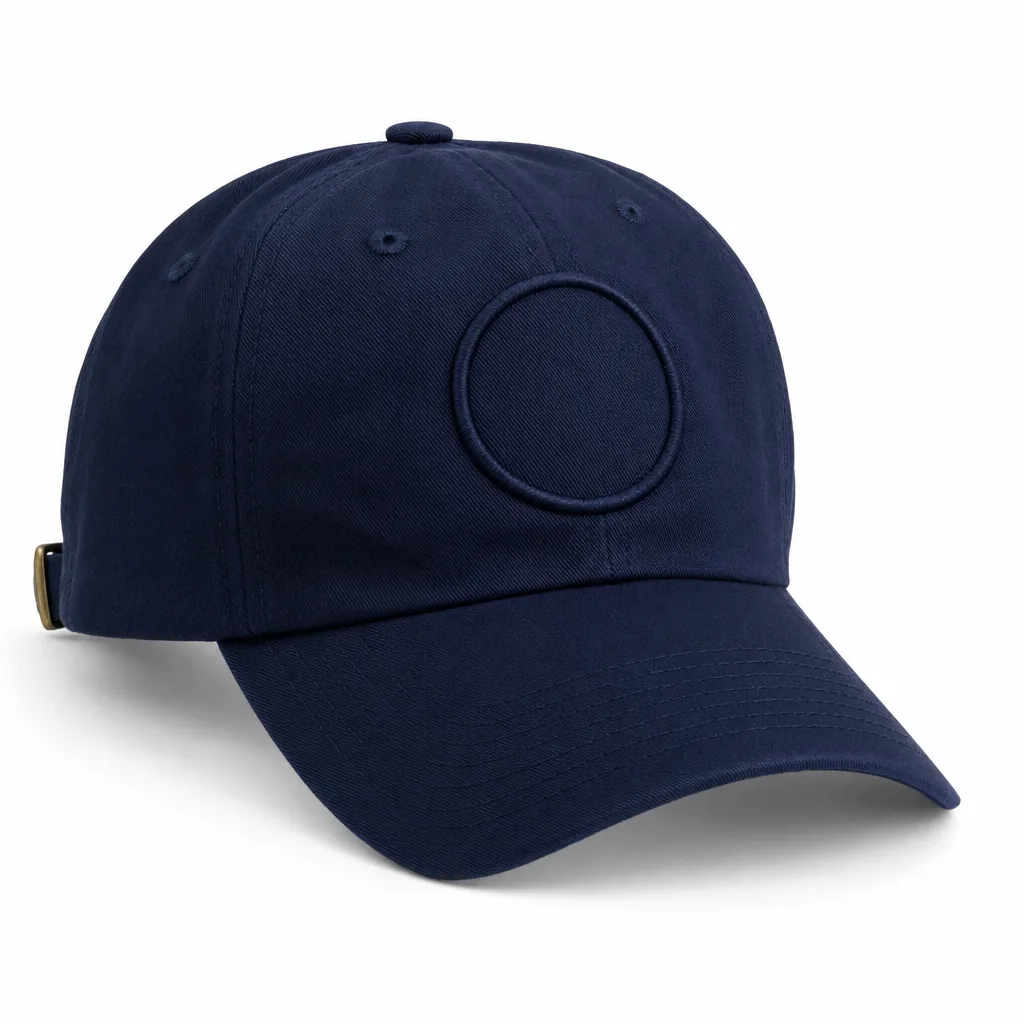
Every week, our sales team answers detailed questions about custom golf hats: a manufacturer's guide to performance headwear - cost & moq breakdown - cost & moq breakdown - 2026 buyer's guide - 2026 buyer's guide. We wrote this guide so that wholesalers, streetwear brands, corporate buyers and promotional resellers can compare options with full information, and avoid the traps that show up only after production has started.
The golf-specific silhouettes that dominate retail and tournament programs
The volume leader is still the structured performance cap: a pre-curved 6-panel or seam-forward 5-panel built in 140-180 gsm polyester-spandex, or 75D/72F recycled polyester with mechanical stretch. It dominates retail floors and tournament programs because it fits the widest range of head shapes while keeping the front panel stable enough for branding that does not pucker after wear. For custom golf hats, that front-panel stability is the difference between a clean 6,000-8,000 stitch logo and visible tunneling. On the factory floor, that means matching the crown to the right buckram weight, usually 0.6-0.8 mm for structured golf caps, and controlling sweatband feed so the lower crown does not distort during sewing. The specs that consistently sell are laser-perforated side or rear panels, a 30-35 mm moisture-wicking sweatband in poly terry or coolmax-style knit, UPF 50+ tested shell fabric, and closures that feel retail-grade rather than promotional: low-profile hook-and-loop, TPU snap, or a matte metal buckle with tuck strap. Commercially, this is the safest silhouette to launch, with MOQs typically 144-300 pieces per colorway and FOB pricing around $3.20-$5.80 depending on fabric source, logo count, and trim complexity.
The faster-moving pro-shop shapes are the low-profile 5-panel and the rope cap, because both feel current without drifting into streetwear silhouettes that many golf accounts still reject. A low-profile 5-panel gives a flatter front billboard for flat embroidery, 3D embroidery with restrained foam height, chain stitch, molded TPU badges, or sublimated woven patches, but it is less forgiving in production than buyers assume. A panel skew of 2-3 mm, a soft center front, or uneven crown height is obvious once the cap is on a pro-shop wall. Rope caps add a 3-5 mm braided cord above the visor, usually polyester or cotton-poly, and that small trim detail reliably lifts perceived value for club merchandise, member-guest events, and sponsored tournament gifting. The added cost is modest but real: FOB usually sits around $3.90-$6.50 at 200-500 pieces because the rope attachment adds labor, visor alignment tolerance gets tighter, and color approval becomes stricter. Better programs match rope, shell, and closure trims within Delta-E 1.5-2.0 under D65 lighting, then hold finished inspection at AQL 2.5 because crooked rope placement, off-shade trim, and waviness at the seam are defects buyers spot immediately on custom golf hats.
Why golf demands performance fabric (not cotton twill)
Cotton twill is the wrong starting point for golf because it behaves like a sponge once the round gets hot. A brushed cotton twill in the 220-280 gsm range will absorb sweat, darken visibly, and hold that moisture against the forehead; by the back nine, the cap is heavier, the hand feel turns clammy, and the front panels start to lose crispness as the buckram softens. By comparison, a 110-140 gsm performance polyester shell retains far less moisture and dries materially faster in humid conditions above 70% RH. That difference is not academic. In custom golf hats, thermoregulation comes before decoration: if the hat traps heat and stays wet, the customer remembers discomfort long before they notice a clean logo execution. The better baseline is performance apparel fabric, not promo-cap fabric. Most solid golf programs use 100% polyester microfiber, mechanical-stretch polyester, or a 92/8 poly-spandex weave, usually around 115-135 gsm, then pair it with a moisture-management sweatband and laser-perforated or micro-mesh side panels. The result is lower retained weight through 18 holes, faster evaporation, and better crown recovery after repeated heat-and-humidity exposure. Performance fabric also gives more stable embroidery results when the spec is engineered correctly: cotton swells and relaxes with sweat cycles, which can shift panel tension and make front logos pucker, especially on unstructured caps. On lightweight shells, a 6,000-8,000 stitch logo often needs underlay adjustment and backing selection verified on Tajima or Barudan heads before bulk, because not every technical weave can carry dense embroidery without tunneling.
Golf headwear also needs to survive sun, perspiration salts, and repeated cleaning, which is where cotton usually falls behind. Buyers should spec the fabric like activewear: colorfastness to perspiration, crocking resistance, UV stability, and dimensional change after wash matter more than whether the swatch feels soft in the hand. A practical benchmark for premium custom golf hats is shade approval to Pantone TCX or coated reference within Delta-E 1.5-2.0 where the dye process allows it, shrinkage below 3%, and consistent crown recovery after humidity and low-heat drying tests. If those basics are not controlled, sweat marks show early, the crown goes tired-looking fast, and pro-shop sell-through suffers because the hat stops looking premium after a few rounds. The cost gap is usually too small to justify taking that risk. In current factory pricing, a basic cotton cap body may be only $0.20-$0.40 cheaper than a decent performance polyester shell, but that saving disappears quickly if you get complaints about sweat staining, misshapen crowns, or washed-out color. Our standard practice is to lock the shell fabric, sweatband construction, and decoration method before pre-production, then confirm the build against wash and wear criteria rather than approving on appearance alone. For buyers sourcing custom golf hats, that discipline is the real dividing line between course-ready product and an ordinary baseball cap wearing a golf logo.
UPF sun protection for golf programs
UPF on custom golf hats is not something you infer from “polyester” on a spec sheet; it has to be tied to a test report for the exact fabric, color, and construction. A 140-180 gsm tightly woven performance polyester or fine-gauge microfiber may reach UPF 30+ on its own, especially in navy, black, or forest, but UPF 50+ usually comes from a specific mill control: UV-absorbing finish, higher filament density, or a pre-qualified laminated performance shell. The weak point is rarely the front panel. It is the comfort engineering buyers ask for later—laser-perforated side panels, 50D-75D vent zones, stretch mesh inserts, and oversized rear openings—which can drag a compliant shell below target. For Australia, New Zealand, or high-UV U.S. markets like Arizona, Florida, and Hawaii, I would not approve a sun-protection claim without a named lab report to AATCC 183 or AS/NZS 4399 from SGS, Intertek, or Bureau Veritas. Testing is straightforward, but buyers often underestimate how granular it gets. Budget roughly $300-$500 per fabric-color-construction submission, because white, heather gray, and navy can post materially different UV transmission results even under the same style number. Embroidery has almost no meaningful effect on UPF, but wear comfort still matters on the course: a black undervisor reduces reflected glare, a 30-40 mm sweatband in 120-150 gsm moisture-wicking polyester mesh helps evaporative cooling, and poorly mapped vents can create hot spots by the back nine. Our standard practice is to pull historical mill data first and only commission fresh third-party testing when the PO requires the finished hats to carry a documented UPF claim.
Once UPF 50+ is written into the purchase spec, cost and MOQ usually tighten immediately. A standard recycled-polyester golf cap with flat or 3D embroidery may price around $4.20-$6.80 FOB China at 300 pieces, but certified UPF 50+ fabric, lot traceability, and third-party verification typically add $0.35-$0.90 per cap before freight. If the shell must be dyed to a custom Pantone TCX and then finished or revalidated for UV performance, the workable minimum often moves from 300 units to 800-1,200 pieces per color because the mill needs volume to justify the finishing run and lab allocation. Buyers who manage this well usually lock one approved shell fabric across multiple custom golf hats programs and vary only logos, closures, woven labels, or sandwich piping. The real risk is not an obvious factory miss; it is a quiet substitution after approval. If a supplier says “sun safe” but cannot produce the fabric report, finish details, and production-lot linkage, treat it as unverified marketing language. Serious programs tie the approved shell back to the bulk lot, control shade within an agreed Delta-E tolerance, and inspect finished caps to AQL 2.5 so lighter mesh, lower-gsm side panels, or unapproved vent layouts do not slip into production. On the factory floor, most UV claim failures come from those small construction changes, not from the original lab sample. Documentation is what protects the buyer when the goods ship.
Moisture-wicking sweatband: the detail buyers don't notice until summer
The sweatband is usually the first component to fail in summer, not the crown shell. A 100% cotton twill or brushed-cotton band can feel fine at sample approval, then collapse in real play once temperatures pass 86°F and the wearer is walking 18 holes with sunscreen, sweat, and repeated head movement. Cotton absorbs fast, releases slowly, and stays clammy against the forehead; that is when complaints start showing up in reorder notes: salt rings on white and stone colors, odor retention, skin abrasion at the front panel seam, and a cap that feels noticeably heavier by the back nine. For custom golf hats, I would spec a knitted polyester-elastane sweatband at 92/8 or 95/5, typically 180-220 gsm, with a hydrophilic wicking finish and quick-dry treatment rather than a basic silicone softener. In wear trials, that upgrade does more for perceived comfort than adding extra laser perforations or adjusting visor curvature by 2-3 mm, because moisture control at the skin line is what players actually feel first.
The cost premium is small enough that skipping it is usually false economy: about $0.15-$0.25 per cap at bulk volume, rising if the band is custom-dyed to a Pantone TCX target, knit from finer denier yarns, or held within Delta-E 1.5 against the crown fabric. On custom golf hats in the $3.80-$6.50 FOB range, that saving disappears quickly if resort shops report sweat staining, or if a tournament order gets hit with returns after one hot-weather event. The bigger problem is quotation language that says “performance fabric” on the shell while the inside build is still standard cotton. If you want a cap that performs in July, the tech pack needs to call out the sweatband clearly: fiber blend, gsm, finish, width, seam construction, stitch density, and colorfastness standard. At CrownsForge, sweatband sewing is checked at AQL 2.5 with special focus on puckering, back-join bulk, skipped stitches, and migration after wash testing, because poor sweatband assembly is one of the most common hidden defects in summer headwear.
Rope hats: why this silhouette became the golf hero category
Rope hats became the breakout shape in golf because they solve a specific merchandising problem: they look technical enough for the course, but they do not read like a softball team cap at retail. The winning body is usually a structured 5-panel or high-profile semi-structured 6-panel with a broad, seam-stable front wall and a braided polyester rope set about 6-8 mm above the visor join, typically 3-5 mm in diameter. That detail is small, but on a crowded shelf or a mobile product grid it gives sharper silhouette recognition than a plain sandwich visor. For custom golf hats, that matters because click-through is often won by shape before decoration is even judged. The rope body also gives decorators more usable real estate: 3D puff embroidery, flat stitch logos, TPU heat-transfer badges, and woven patches all sit cleaner on this crown than on low-profile baseball blocks where the center seam can split or distort artwork. The commercial reason rope hats keep winning is that customers will pay a premium for a cap that looks polished without becoming fragile. A basic brushed chino twill dad hat at 220-240 gsm does not hold the same retail posture after packing. Rope programs perform better in shells like 120-160 gsm polyester-spandex, recycled poly micro-ripstop, or 70D-160D nylon taslon, backed with medium-to-firm buckram and a PE visor with a controlled pre-curve. The rope itself adds very little cost; crown memory, sweatband absorbency, and panel recovery are what separate a true golf build from a fashion cap with a rope added. If the front buckram collapses or the shell rebounds poorly after carton compression, the cap arrives with a broken profile, and that defeats the whole reason the silhouette commands higher ASPs in the first place.
MOQ stays practical if the spec is disciplined. For custom golf hats in rope silhouettes, 100 pcs per colorway is realistic when the buyer stays on stocked fabrics, standard snapback or webbing-strap closures, and existing rope trims matched to Pantone TCX within a Delta-E tolerance around 1.5-2.0. Once you ask for custom-dyed rope, metal logo hardware, specialty moisture-wicking bands, or proprietary shell fabric, most factories will push to 300 pcs per color and longer lead times because trim matching and shade approval become the bottleneck, not sewing capacity. In our standard practice, rope caps also need tighter pre-production checks on rope placement, visor curve symmetry, and front-panel height because even a 2-3 mm drift is obvious on this silhouette. Ex-factory pricing in China usually lands around $4.20-$7.80 per piece at 100-300 pcs, with landed cost moving materially once you add premium trims. A clean stock-fabric build with flat embroidery and a plastic snap can sit near the low end; a performance version with laser-cut side vents, branded seam tape, HD silicone patch, antimicrobial sweatband, and upgraded closure hardware can push above $8.00 before freight. Buyers often obsess over the rope color, but that is rarely the real cost driver. The bigger split is between a standard cap body dressed up with a rope and a genuine performance package built for golf: better shell recovery, lower sweat retention, cleaner embroidery registration, and more consistent crown retention after transit and AQL 2.5 inspection.
Tournament + club merchandise compliance and timing
Approvals, not sewing capacity, usually decide whether tournament custom golf hats land on time. For PGA section events, member-guests, and sponsor-heavy charity scrambles, the practical lock date is 90 to 120 days before in-hands because artwork clearance, club crest authorization, and sponsor color signoff can consume 15 to 30 days before bulk even gets on the line. The cleanest programs arrive with editable AI or EPS files, Pantone Solid Coated references for logos, Pantone TCX or an approved fabric swatch for cap bodies, and a placement sheet listing logo size and location in millimeters. When a buyer submits a web JPEG and asks for “the same navy as last year,” the factory loses time on redraws, thread substitutions, and lab-dip arguments that should never happen in production. On the floor, embroidery is normally matched against Madeira Polyneon or Gunold Poly charts, then checked under D65 lighting; serious club programs typically hold logo color to Delta-E below 2.0, and stricter crest work below 1.5. That level of control matters because a cap can pass on its own and still look wrong next to staff uniforms, tee gifts, tent graphics, or sponsor backdrop walls.
Club retail runs on a longer and less forgiving calendar than event merch. If a private club or resort wants May-through-September pro-shop inventory, January is the realistic PO window for custom golf hats, especially when the assortment includes perforated performance polyester around 110 to 140 gsm, structured 5-panel rope caps, and cotton-nylon blends in the 180 to 220 gsm range. A simple 500-piece order with one body color and front embroidery can often ship ex-factory in 35 to 45 days after approvals; a three-color program with side embroidery, woven labels, branded seam tape, hangtags, and UPC labeling is usually 50 to 60 days before freight. The failures I see are rarely dramatic—they are small compliance misses that become expensive late: sponsor marks below minimum width, metallic thread requirements on heritage crests, or tournament rules that prohibit oversized side branding. For resale or tournament issue, require a full pre-production sample showing crown height, visor curve, closure spec, and artwork placement in millimeters, then book a final inspection to AQL 2.5 with barcode verification if retail packing applies. Miss that sequence, and the fix is usually ugly: airfreighting 8 to 12 cartons a week before tee-off at a cost that can wipe out the margin on the entire run.
Working with CrownsForge on golf programs
The fastest way to keep a golf program out of trouble is to lock the material platform before anyone argues about logo size, closure trim, or rope color. For custom golf hats, I’d narrow the library to three proven lanes: 110-120 gsm mechanical-stretch microfiber for hot-weather sell-through, 140-160 gsm polyester interlock when you need a softer hand and cleaner front panel, or a 75D/144F woven shell with light PU backing or C0 DWR for early tee times and light mist. Golf buyers notice color drift faster than fashion buyers because optic white, cool gray, and navy get judged outdoors, not under office lights. A practical control point is Pantone TCX approval plus face-fabric Delta-E under 1.5, with lab dips signed before cutting and a shade band held against the previous PO. Pattern control matters just as much as fabric. On five-panel rope styles, a 2-3 mm rope-line movement is enough to make replenishment orders look mismatched at retail, especially beside a prior delivery on peg display. That is why the crown pattern, rope diameter, braid placement, bill curve, and closure spec need to be frozen at salesman-sample stage, not adjusted during bulk pre-production. Our standard practice is to approve a full spec pack with crown height, visor length, sweatband construction, and seam-tape callouts before booking fabric, because custom rope colors, branded seam tape, or special-dyed shells can move an efficient MOQ from 144-300 pieces per color to 500-1,000 pieces and add 5-7 days to procurement.
Decoration failures on custom golf hats usually come from bad engineering, not bad artwork. Low-profile golf crowns give you less vertical real estate than a trucker or high-profile snapback, so logos that run well on cotton twill often pucker on 120 gsm polyester unless the file is re-digitized for the cap. On Tajima, Barudan, or ZSK heads, that typically means narrower columns, reduced stitch density, cleaner edge-walk, and underlay tuned to the shell and backing; otherwise you get tunneling, distortion, or visible needle cuts on slick microfiber. As a rule, small wordmarks under 55 mm wide and satin-heavy outlines should be tested on production-equivalent fronts before approval, especially on unstructured or lightly fused panels. When embroidery adds too much stiffness, the cleaner options are HD woven patches, micro-injected TPU badges, or thin heat-transfer films that sit flatter and preserve crown shape. Timing is predictable if approvals stay disciplined: 7-12 days for sample development including lab dip, decoration strike-off, and fit comments, then about 25-32 days ex-factory for bulk after deposit and sample signoff. In real buying terms, a standard six-panel performance cap in stock fabric usually lands around $3.10-$4.80 FOB at 300-500 pieces, while rope-forward custom golf hats with premium moisture-wicking sweatband, molded TPU branding, retail packing, and AQL 2.5 final inspection typically land closer to $5.20-$7.40 FOB. If the factory also needs sedex-audit-cap-supplier-guide.html">BSCI 2.0 or Sedex SMETA 4-Pillar-compliant booking windows, build that into your launch calendar instead of treating it as a last-minute paperwork step.
Frequently Asked Questions
What is the minimum order quantity (MOQ) for custom hats?
Our standard MOQ is 100 pieces per design and color, with sampling available from 1 piece. For complex multi-color logos or premium fabric upgrades, the MOQ can be lowered with a small per-piece surcharge.
Which shipping methods do you support?
We support FOB, CIF and DDP shipping. Air express for samples and small orders, sea LCL for 100 to 500 pieces, sea FCL for 5,000+ pieces. Door-to-door DDP available for US, EU, UK, Canada and Australia.
Do you support sustainability certifications?
Yes. We work with GOTS organic cotton, GRS-certified recycled polyester, OEKO-TEX Standard 100 fabrics, and are BSCI and Sedex audited. Certification documentation can be provided per order.
Can I order a sample before bulk production?
Yes. We strongly recommend approving a pre-production sample before mass production. Samples are charged at 35 to 60 USD each plus express shipping, fully refundable against confirmed bulk orders over 500 pieces.
What file format should I send for my logo?
Vector files (AI, EPS, PDF) are ideal. High-resolution PNG or JPG at 300 dpi on transparent background works as a fallback. Provide Pantone color references for accurate reproduction.
What's the MOQ for custom embroidered baseball caps no minimum?
When evaluating custom embroidered baseball caps no minimum, the key considerations are construction quality, decoration capability, MOQ flexibility and lead time. Performance baseball cap with curved brim, 5-panel low-profile golf cap, rope hat with rope detail above the brim, performance bucket hat, and visor. Each has a specific use case — driving range, tournament play, club merchandise programs and pro-shop retail. Standard cotton twill absorbs perspiration and stays heavy. Golf demands moisture-wicking polyester (typically…
How does ordering baseball cap custom logo work?
When evaluating baseball cap custom logo, the key considerations are construction quality, decoration capability, MOQ flexibility and lead time. Performance baseball cap with curved brim, 5-panel low-profile golf cap, rope hat with rope detail above the brim, performance bucket hat, and visor. Each has a specific use case — driving range, tournament play, club merchandise programs and pro-shop retail. Standard cotton sweatband saturates within 9 holes of summer play; polyester-elastane wicking sweatband moves…
How does ordering custom baseball team hats work?
When evaluating custom baseball team hats, the key considerations are construction quality, decoration capability, MOQ flexibility and lead time. Performance baseball cap with curved brim, 5-panel low-profile golf cap, rope hat with rope detail above the brim, performance bucket hat, and visor. Each has a specific use case — driving range, tournament play, club merchandise programs and pro-shop retail. Rope hats (a 5-panel or 6-panel cap with decorative rope above the brim, often in contrast color) became the golf…
What's the MOQ for custom logo hats no minimum?
When evaluating custom logo hats no minimum, the key considerations are construction quality, decoration capability, MOQ flexibility and lead time. Rope hats (a 5-panel or 6-panel cap with decorative rope above the brim, often in contrast color) became the golf cap of the 2020s. Originally a fishing/outdoor silhouette adopted by Imperial, Melin and Branded Bills. We produce equivalents at MOQ 100 pieces. Performance baseball cap with curved brim, 5-panel low-profile golf cap, rope hat with rope detail above the brim,…
Need a low-MOQ test order?
We help emerging brands launch with as few as 100 pieces. Premium fabric, in-house embroidery, retail-ready packaging.
Start a small orderRelated guides
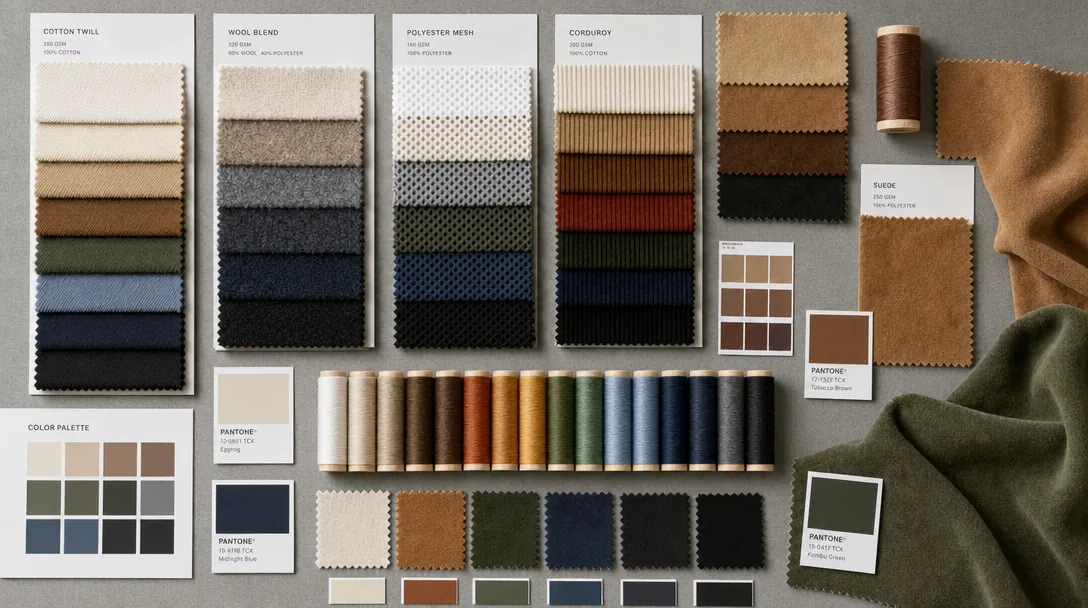
Camouflage Bucket Hat: Properties, Costs and How to Spec It Right (2026 Update)
Read article →
Refreshing a Hat Collection: A Repeat-Order Playbook for Established Brands
Read article →
Embroidery Hats Machine: When to Use It, Costs, and What to Ask Your Factory - Cost & MOQ Breakdown
Read article →We hope this guide demystifies custom golf hats: a manufacturer's guide to performance headwear - cost & moq breakdown - cost & moq breakdown - 2026 buyer's guide - 2026 buyer's guide and helps you move forward with confidence. If you have questions specific to your project, our English-speaking sales engineers are one message away.