
Custom Golf Hats: A Manufacturer's Guide to Performance Headwear (2026 Update)
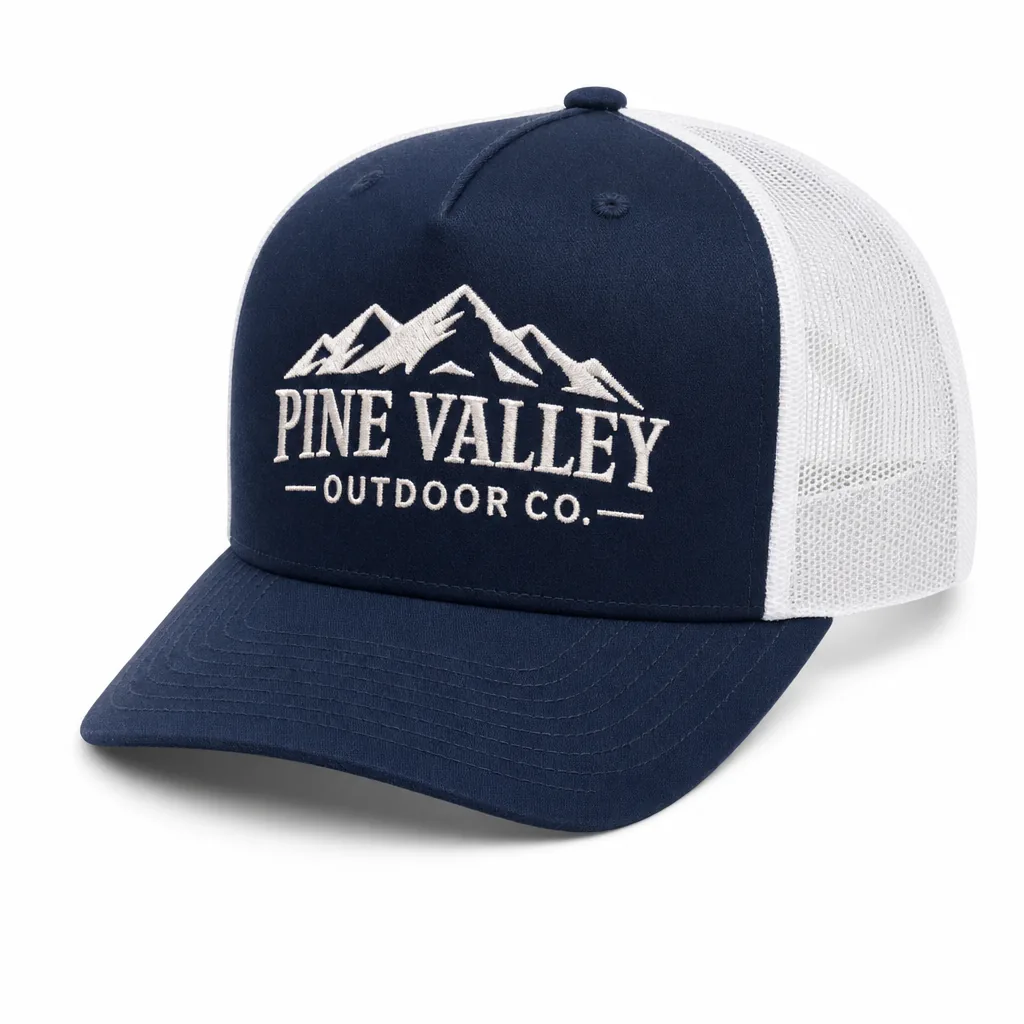
Custom Golf Hats: A Manufacturer's Guide to Performance Headwear (2026 Update) is one of the most-asked questions we receive from international buyers, and for good reason. With dozens of factories competing for your order and an alphabet soup of technical terms in every supplier quote, even experienced importers can feel lost. This guide consolidates what we have learned producing custom hats for clients in 40+ countries.
The golf-specific silhouettes that dominate retail and tournament programs
The volume driver in custom golf hats is still the mid-crown 6-panel performance cap because it balances two non-negotiables: a logo that reads clean at 10 feet and all-day comfort after four to five hours on course. The commercial spec is usually a pre-curved visor, 58 cm base fit, and a usable adjustment span of about 55–62 cm through micro hook-and-loop, TPU snap, or a slim rubberized strapback. Fabric should be functional, not generic: 120–150 gsm polyester microfiber, or a 90/10 to 92/8 poly-spandex shell with laser-perforated side and rear panels for airflow. Sweatbands matter more than buyers think; a 3–5 mm moisture-management band with quick-dry mesh facing will outperform cheap polyester terry, which salts out, stiffens, and smells after repeated summer rounds. For decoration, front panels need enough structure to support a 6,000–10,000 stitch logo on Tajima or Barudan heads without over-buckramming the crown into a rigid promo shape. Execution tolerance is where factories separate themselves. On golf caps, visor centering should hold within 2–3 mm, front embroidery should track on-axis to the button, and side panel perforation needs clean spacing or the cap looks off immediately under retail lighting. Buyers will often accept a closure that feels slightly basic before they accept a crooked brim, crown twist, or logo drift. If the target is pro-shop or tournament sell-through, I would rather spend an extra $0.18–$0.35 per piece on better shell fabric and cleaner sweatband construction than waste that money on unnecessary trim.
The cleaner retail silhouette is the 5-panel low-profile cap, particularly for resort shops, corporate outings, and tournament programs where photography, shelf presentation, and sponsor placement all matter. A seamless front panel gives better registration for silicone heat transfers, HD woven patches, and fine satin-stitch embroidery because you are not digitizing around a center seam; that alone can cut decoration rejects by a few percentage points on detailed logos. The look is more contemporary than a bulky athletic crown: lower profile, shorter visual height, and a neater face that merchandises well next to premium polos and lightweight outerwear. For this shape, I would usually spec lightweight peached polyester, matte nylon taslan around 105–140 gsm, or washed cotton twill in the 220–260 gsm range if the program wants a softer hand. Rope hats are still commercially relevant, but only when the fabric package is disciplined. The versions that keep selling use tonal or low-contrast 3–4 mm rope, restrained left-front embroidery, and washed twill, peached poly, or crisp nylon rather than shiny promo-grade fabric. Loud rope colors, oversized crests, and high-crown throwback blocks age fast in golf retail. Bucket hats and visors remain support silhouettes, not the backbone of a line: recycled nylon buckets at 90–120 gsm for sun coverage, and visors mainly for women’s events, caddie programs, and hot-weather tournaments. At CrownsForge, the most stable assortment is one core performance cap, one cleaner lifestyle silhouette, and one sun-play option; anything beyond that usually adds SKU complexity faster than it adds sell-through.
Why golf demands performance fabric (not cotton twill)
UV and washing are where low-grade fabric fails. Golf hats sit in direct sun for four to six hours, then get hand-washed in hotel sinks or run through light laundry cycles, so the shell needs colorfastness, dimensional stability, and enough body to support laser perforation or bonded eyelets without collapse. Polyester gives more room to engineer the hand feel: mesh side panels, laser-cut vents, or polyester-spandex blends can soften the touch without bringing back cotton’s moisture retention. For color-critical custom golf hats, we lab dip to Pantone TCX and hold bulk Delta-E under 1.5; for dark shades, we also check perspiration fastness and crocking before cutting. The real failure mode is in wear, not on the hanger, which is why performance fabric is the right starting point.
UPF sun protection for golf programs
UPF should be written into the material spec, not treated as a hangtag claim. A basic polyester twill cap may land around UPF 20-30 just from cover factor, but serious golf programs in Arizona, Florida, Australia, and the Gulf increasingly require a documented UPF 50+ result on the finished hat. For custom golf hats, that usually means a tight-weave microfiber polyester or recycled PET shell at roughly 115-145 gsm, built with 75D-100D filament yarns and, where needed, a mill-applied UV absorber package. The catch is that ventilation features change the result fast. Laser-perforated side panels, trucker mesh, oversized eyelets, and loosely woven heather fabrics can pull protection down well below the base fabric’s lab number. Color also matters: black, navy, and dark green generally test higher than white, stone, or pastel shades because they transmit less UV through the fabric matrix. If the hat is for caddie teams, course staff, or junior tournament crews spending four to six hours outdoors, you need to balance airflow against actual surface coverage, not assume a lightweight summer shell will still deliver UPF 50+ once the crown is opened up.
The most common sourcing mistake is testing the wrong sample. UPF claims should be tied to the exact material set and finished construction, not borrowed from a raw fabric certificate. If the final custom golf hats use contrast panels, mesh inserts, sublimated side pieces, or perforation, the solid crown fabric’s report is no longer enough. Send the actual shell fabrics and final colorway to SGS, Intertek, or Bureau Veritas for AS/NZS 4399 or AATCC 183 testing; in China, lab costs typically run $300-$500 per SKU, and any material, shade, or panel-layout change can trigger a retest. At CrownsForge, the safest approach is to lock one approved shell across multiple logo programs, then control bulk color within Delta-E 1.5 to the approved Pantone TCX reference before cutting. Functional details still matter after certification: a black underbrim reduces glare off fairways and sand, a 25-30 mm moisture-wicking sweatband improves wear time, and a laminated front panel helps the cap hold shape after repeated use. None of those trims create UV protection; the shell construction does.
Moisture-wicking sweatband: the detail buyers don't notice until summer
Most summer wear complaints start at the sweatband, not the crown fabric. A brushed cotton twill band may look premium at sample stage, but on a course sitting at 86-95°F with relative humidity above 70%, it can saturate by the ninth hole, trap salt, and push moisture back onto the forehead. For custom golf hats, the practical spec is usually a warp-knit or circular-knit wicking band in 92/8 or 95/5 polyester-spandex, typically 180-220 gsm, with a brushed skin side and a channel or pique face that moves sweat laterally before it evaporates. Width is not cosmetic either: 32-35 mm is the working range on structured golf caps, while 28-30 mm bands save a few cents but reduce contact area and feel clammy faster under steady sun exposure. The sweatband also has to match the rest of the cap build. A high-performing band inside a heavy 280-300 gsm acrylic-wool crown is a bad system; heat stays trapped and the wearer still feels wet. Pair that same band with a 120-160 gsm poly-spandex shell, laser-perforated side panels, or micro-perf back panels, and the cap will dry between shots instead of staying dark through all 18 holes. On the factory floor, this is why experienced buyers ask for the sweatband spec on the BOM, not just "moisture-wicking" on a tech pack. Fiber content, gsm, width, stretch-recovery, and approved supplier should all be locked before bulk cutting if the program is expected to repeat cleanly across seasons.
The cost increase is too small to justify cutting this corner on summer programs. In bulk production, a dependable moisture-wicking sweatband usually adds about $0.15-$0.28 per cap, depending on width, jacquard branding, yarn-dyed versus piece-dyed construction, and whether the color requires a separate MOQ at the trim mill. That is cheaper than reworking a pro-shop or resort order after players report forehead staining, visible sweat rings, or yellowing on light shades. White, stone, glacier gray, and pale khaki custom golf hats are the most unforgiving because buyers read dye migration as a cap failure, even when the issue started in the sweatband dye lot. QC needs to go beyond generic colorfastness language. Perspiration fastness should meet ISO 105-E04 grade 4 minimum, and shade tolerance should stay within Delta-E 1.5-2.0 against the approved Pantone TPX or TCX reference, especially when the sweatband edge is partially visible at the front seam. I would also want stitch attachment checked for roping and seam bulk, because a wicking band that curls or twists after sewing loses skin contact where it matters most. At CrownsForge, standard control is to lock fiber content, gsm, width, and supplier at BOM stage; factories that substitute spot-market sweatbands between runs usually create more warranty noise than they save in trim cost.
Rope hats: why this silhouette became the golf hero category
Rope hats became the hero silhouette because they make branding read expensive without requiring luxury construction. A structured 5-panel or semi-structured 6-panel crown gives 10 to 18 mm more usable front height than a soft dad cap, which matters when a golf logo needs to stay legible from a tee box, driving range bay, or pro-shop wall. On custom golf hats, that extra vertical space lets you run 3D puff, flat satin stitch, or a woven label without the art collapsing into the bill curve. The rope itself is not decoration; it is a visual divider, typically a 3 to 4 mm braided polyester cord set about 6 to 8 mm above the visor seam, and it makes even simple one-color marks look deliberate. That is why the category moved so quickly away from generic sandwich-brim caps. Once resort shops and tournament buyers saw rope profiles outperform basic brushed-cotton caps at retail, the silhouette stopped being a novelty and became the default first sample in many custom golf hats programs.
The build quality decides whether a rope hat feels like clubhouse merchandise or giveaway stock. Better factories use 140 to 180 gsm performance poly twill, 92/8 poly-spandex micro-ripstop, or 105 to 130 gsm nylon Taslon, paired with medium buckram so the front panel stands up but does not feel like a rigid trucker cap. The rope should be heat-cut and caught into the side seams before crown closing; glued rope is a cost-down shortcut that starts lifting after sweat, UV exposure, and carton compression. Decoration also needs discipline. If copy drops below 4 mm cap height or includes fine serif detail, standard flat embroidery will blur, even on Tajima or Barudan heads, so a woven patch or tighter digitizing is usually the safer spec. Commercially, rope styles hit the sweet spot because they deliver a premium look at workable MOQs: 100 to 144 pieces per colorway is common, and a solid FOB China target at 300 pieces is about $4.20 to $6.80 with moisture-wicking sweatband, laser eyelets, and 5,000 to 7,000 front stitches. Color control matters more than buyers expect; if rope, shell fabric, and thread drift beyond roughly Delta-E 1.5 against the approved Pantone reference, the cap reads cheap immediately.
Tournament + club merchandise compliance and timing
Approvals, not sewing, are what break tournament schedules. For custom golf hats tied to member-guests, charity scrambles, or sectional tour dates, 90 to 120 days from tech-pack approval to U.S. warehouse receipt is the safe planning window; 45 to 60 days is only realistic when the shell fabric is in stock, the artwork is clean vector, and decoration is limited to one embroidery location. A 3D puff strike-off usually needs 7 to 10 calendar days after digitizing, and longer if the logo has serif detail, satin columns below 2.5 mm, or layered fills that need tuning on Tajima or Barudan heads to avoid edge collapse and push-pull distortion. In practice, crest revisions and color approvals cause more slippage than factory capacity. If a club wants the hats to match existing polos, flags, or clubhouse graphics, lock Pantone TCX references at the start and define acceptable tolerance in writing. On lightweight performance polyester, expecting better than Delta-E 1.5 to 2.0 across crown fabric, sandwich trim, closure tape, and undervisor is usually unrealistic because those parts often come from different mills and dye lots.
Retail and resort programs move slower because assortment, packaging, and compliance create extra approval gates. If a pro shop needs floor stock by May, a January PO is standard, especially when the line mixes 110 to 140 gsm woven polyester, laser-perforated side panels, brushed cotton twill, and poly-spandex heather bodies with different MOQ and replenishment behavior. The common buying mistake is spreading volume across too many weak SKUs; two deep styles usually outperform six shallow ones, because reorders on custom golf hats only work when fabric and trim are reserved early. Lock hangtags, UPC placement, main labels, sweatband print, and carton assortments before bulk cutting. A packaging correction that looks trivial on a PDF becomes expensive after 24-pack or 48-pack inner cartons are sealed for domestic distribution or 3PL intake.
Compliance is where first-time buyers lose weeks. Tournament committees focus on logo appearance, but clubs, resorts, and multi-unit operators increasingly ask for sedex-audit-cap-supplier-guide.html">BSCI 2.0 or Sedex SMETA 4-Pillar audit status, AZO-free dye declarations, needle control logs, and inline plus final inspection to AQL 2.5. If the hats will enter U.S. retail or a 3PL network, confirm country-of-origin labels, fiber content, carton marks, polybag suffocation warnings, and routing-guide requirements before production release, not after the vessel booking. One trim mistake can force costly rework: replacing a woven loop label or interior seam tape after sewing means opening finished goods and touching thousands of units by hand. Our standard practice is to split tournament and retail demand into separate POs by ex-factory date, because event inventory should not be held behind broader shop assortments, replenishment colors, or a packaging compliance hold.
Working with CrownsForge on golf programs
The quickest way to derail custom golf hats is to spec them like cheap promo caps. Golf programs live or die on thermal comfort, recovery, and silhouette retention, so the base fabric should usually be 100% polyester microfiber at 110–160 gsm or a 92/8 to 96/4 poly-spandex shell when the buyer wants stretch and rebound after repeated wear. Cotton twill absorbs sweat, dries slowly, and shows salt far faster under summer play. Ventilation is not just “add perforation”: on laser-perf styles, a 3.0–3.5 mm hole with controlled pitch across side and rear panels gives measurable airflow without weakening the crown or exposing seam tape. Rope styles are even less forgiving. If front-panel height, rope diameter, visor curve, and buckram stiffness are not locked before sampling, the sample room can lose 1–2 weeks chasing shape drift between prototypes. At CrownsForge, we keep approved rope-hat blocks and visor profiles on file so repeat developments start from a known geometry rather than a fresh guess.
Sweat management and decoration have to be engineered as one system. A moisture-wicking sweatband should be baseline on custom golf hats, typically brushed polyester or a poly-cotton band with hydrophilic finish, while foam-backed bands only make sense when extra absorption outweighs added bulk. On white and pale interiors, salt-ring visibility, dye crocking, and forehead staining are common failure points, so wear testing and wash checks matter more than a mill’s marketing sheet. Decoration has the same practical limits: high-density 3D embroidery works on structured six-panel crowns, but on lower-profile golf caps it can distort the panel, pull seam lines, and throw off stitch registration by the 30th piece on Tajima, Barudan, or ZSK heads. In those builds, tatami fill, lighter underlay, flat embroidery, molded TPU, or silicone heat transfer usually produces a cleaner retail finish.
UPF should be verified on the finished cap, not borrowed from a fabric datasheet. Perforation layout, lining choice, seam construction, and dye depth can shift the result enough that third-party testing on the final build is the only defensible approach; in practice, UPF 30+ is common for value programs, while premium green-grass and resort accounts usually target UPF 50+. Color control is just as unforgiving because golf headwear has to sit beside polos, quarter-zips, and outerwear at retail. We lock Pantone TCX references early and hold Delta-E to roughly 1.0–1.5 on core navies, blacks, and licensed team shades. Lead time is normally 7–12 days for samples and 25–32 days ex-factory for bulk once artwork, closure, visor board, and decoration method are frozen. The real cost driver on repeat programs is revision creep, which is why BOM, labeling, packout, and inspection criteria should be locked before cutting, then checked to AQL 2.5 with special attention to crown symmetry, visor curvature, embroidery registration, and sweatband attachment strength.
Frequently Asked Questions
Can I order a sample before bulk production?
Yes. We strongly recommend approving a pre-production sample before mass production. Samples are charged at 35 to 60 USD each plus express shipping, fully refundable against confirmed bulk orders over 500 pieces.
How long does production take?
Sampling takes 7 to 12 days. Bulk production runs 20 to 30 days depending on quantity, fabric availability and decoration complexity. Inspection and packing adds another 3 to 5 days before shipment.
Do you support sustainability certifications?
Yes. We work with GOTS organic cotton, GRS-certified recycled polyester, OEKO-TEX Standard 100 fabrics, and are BSCI and Sedex audited. Certification documentation can be provided per order.
What is the minimum order quantity (MOQ) for custom hats?
Our standard MOQ is 100 pieces per design and color, with sampling available from 1 piece. For complex multi-color logos or premium fabric upgrades, the MOQ can be lowered with a small per-piece surcharge.
What logo decoration techniques do you offer?
3D puff embroidery, flat embroidery, woven patch, leather patch, PVC patch, screen printing, sublimation, applique and laser etching, all in-house with no subcontracting.
What's the MOQ for custom embroidered baseball caps no minimum?
When evaluating custom embroidered baseball caps no minimum, the key considerations are construction quality, decoration capability, MOQ flexibility and lead time. Performance baseball cap with curved brim, 5-panel low-profile golf cap, rope hat with rope detail above the brim, performance bucket hat, and visor. Each has a specific use case — driving range, tournament play, club merchandise programs and pro-shop retail. Standard cotton twill absorbs perspiration and stays heavy. Golf demands moisture-wicking polyester (typically…
How does ordering baseball cap custom logo work?
When evaluating baseball cap custom logo, the key considerations are construction quality, decoration capability, MOQ flexibility and lead time. Performance baseball cap with curved brim, 5-panel low-profile golf cap, rope hat with rope detail above the brim, performance bucket hat, and visor. Each has a specific use case — driving range, tournament play, club merchandise programs and pro-shop retail. Standard cotton sweatband saturates within 9 holes of summer play; polyester-elastane wicking sweatband moves…
How does ordering custom baseball team hats work?
When evaluating custom baseball team hats, the key considerations are construction quality, decoration capability, MOQ flexibility and lead time. Performance baseball cap with curved brim, 5-panel low-profile golf cap, rope hat with rope detail above the brim, performance bucket hat, and visor. Each has a specific use case — driving range, tournament play, club merchandise programs and pro-shop retail. Rope hats (a 5-panel or 6-panel cap with decorative rope above the brim, often in contrast color) became the golf…
What's the MOQ for custom logo hats no minimum?
When evaluating custom logo hats no minimum, the key considerations are construction quality, decoration capability, MOQ flexibility and lead time. Rope hats (a 5-panel or 6-panel cap with decorative rope above the brim, often in contrast color) became the golf cap of the 2020s. Originally a fishing/outdoor silhouette adopted by Imperial, Melin and Branded Bills. We produce equivalents at MOQ 100 pieces. Performance baseball cap with curved brim, 5-panel low-profile golf cap, rope hat with rope detail above the brim,…
Looking for a reliable hat manufacturer in China?
CrownsForge has produced custom hats for 800+ brands across 40 countries. From 100-piece launches to 100,000-piece retail programs, we deliver on time and on spec.
Get in touchRelated guides
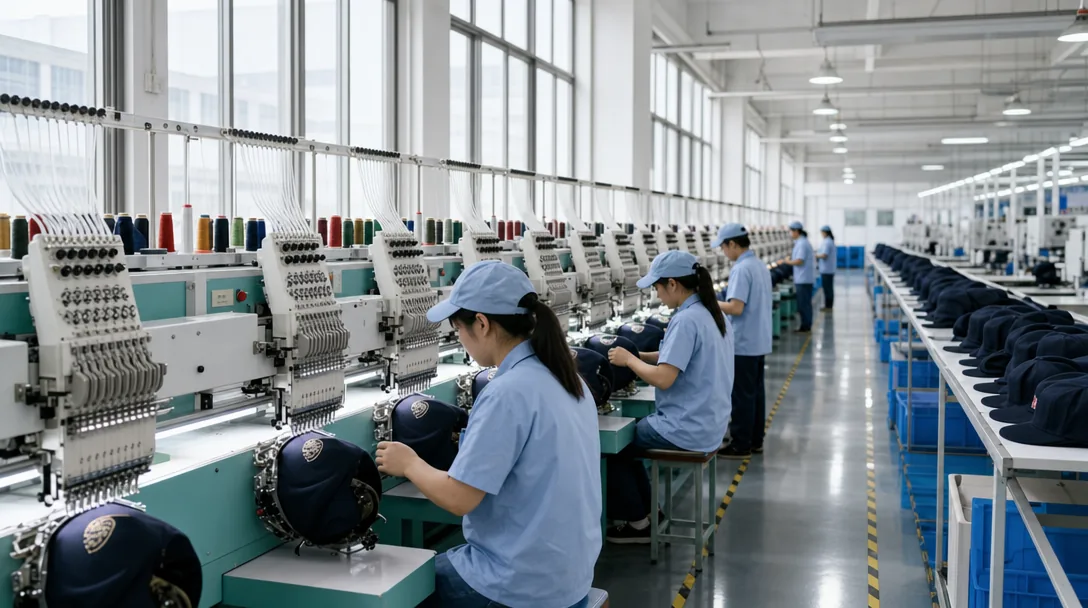
Bulk Trucker Hats Reorder Planning Guide for Custom Hat Buyers
Read article →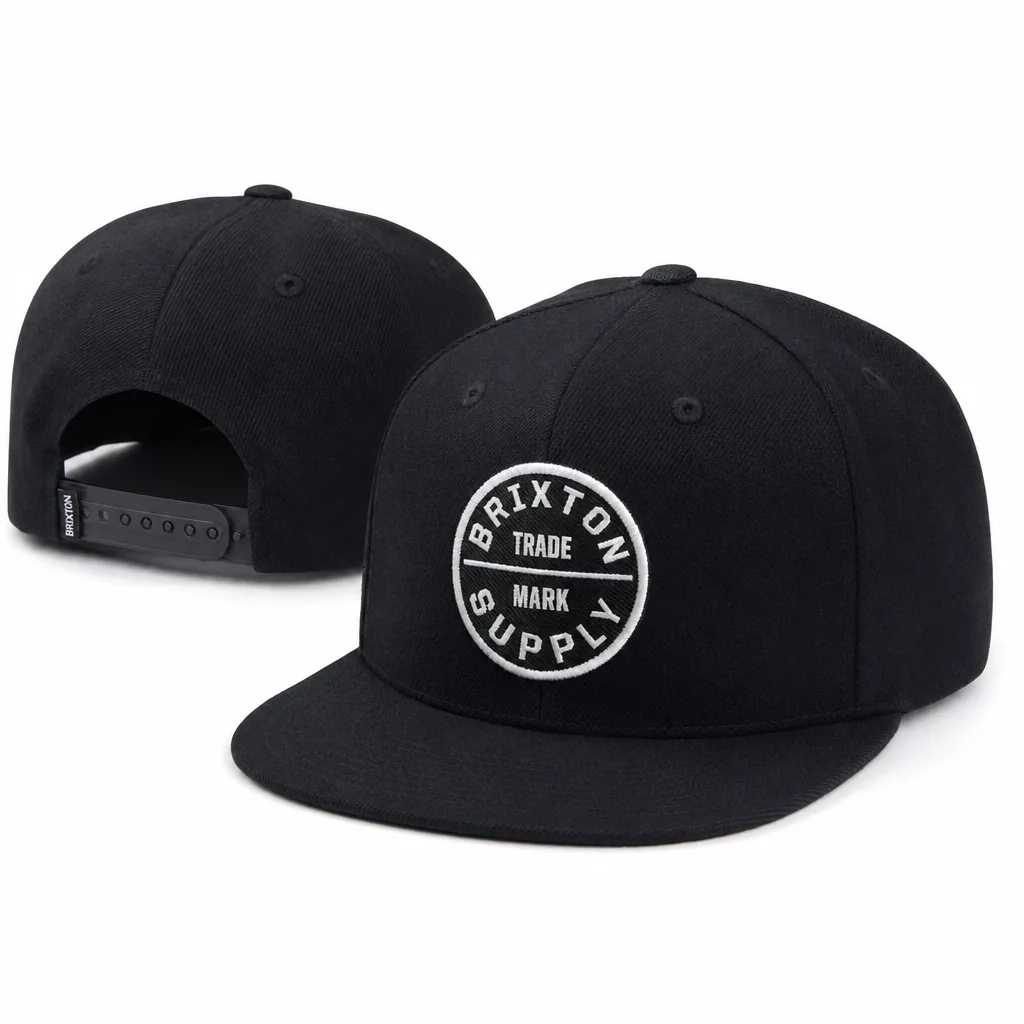
Baseball Hats For Men Export Shipping Checklist for Custom Hat Buyers
Read article →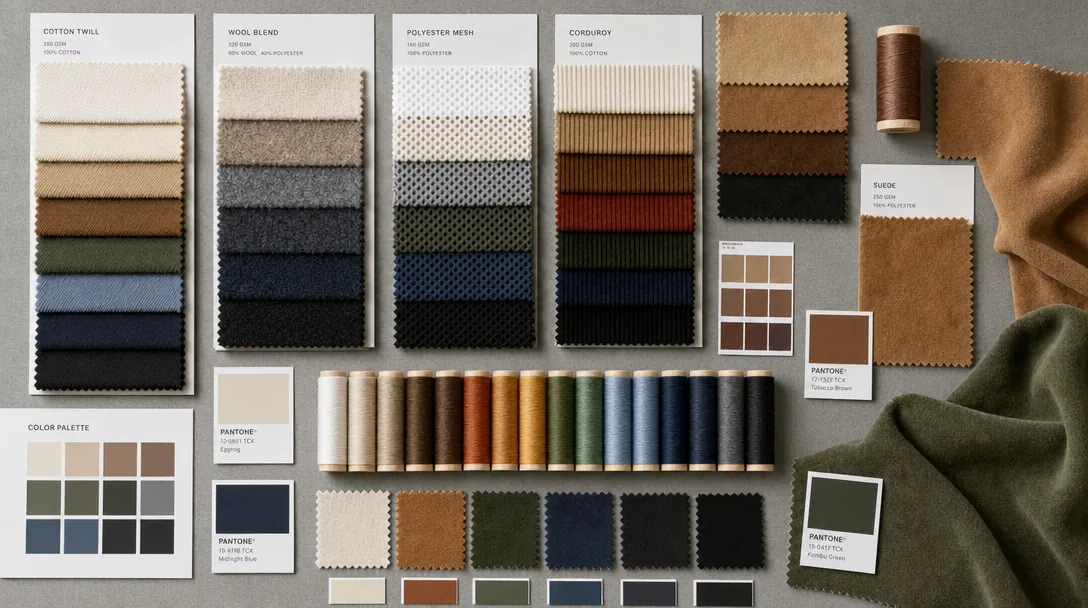
Wholesale Hats Suppliers: Properties, Costs and How to Spec It Right
Read article →We hope this guide demystifies custom golf hats: a manufacturer's guide to performance headwear (2026 update) and helps you move forward with confidence. If you have questions specific to your project, our English-speaking sales engineers are one message away.