
Custom Flat Brim Snapback Bulk: A 2026 B2B Sourcing Guide
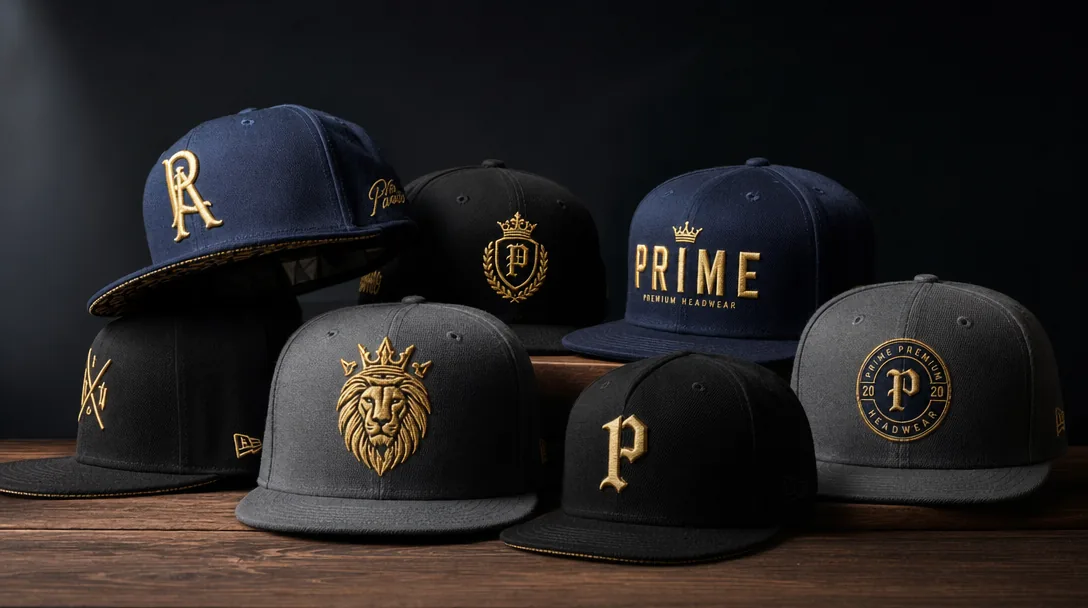
Custom Flat Brim Snapback Bulk: A 2026 B2B Sourcing Guide is one of the most-asked questions we receive from international buyers, and for good reason. With dozens of factories competing for your order and an alphabet soup of technical terms in every supplier quote, even experienced importers can feel lost. This guide consolidates what we have learned producing custom hats for clients in 40+ countries.
Custom Sun Visor Cap Bulk
A real custom sun visor cap bulk order starts with the shell, not the logo. Most factories build it from 100% polyester twill, nylon, or recycled polyester, then add a foam or laminated PE brim insert if the buyer wants shape retention. For a clean retail look, ask for 280–320 gsm crown fabric, 6–8 rows of topstitching on the visor, colorfastness at level 4 or better, and Pantone TCX matching with a Delta-E target under 2.0. If you’re comparing it to custom flat brim snapback bulk programs, the sun visor is usually easier to construct but less forgiving on edge finishing because the open-top design exposes stitching, sweatband alignment, and strap attachment. Our standard practice is to confirm visor curvature, binding tape width, and closure type before cutting, because changing those late almost always creates shade mismatch or fit drift across the lot.
For MOQ, most decent factories will quote 300–500 pieces per color/style for a custom sun visor cap bulk run, with better pricing at 1,000+ units. In China, you’ll often see ex-factory pricing around $2.10–$3.80 for basic printed polyester, $3.90–$5.60 for embroidered or woven-patch versions, and $0.20–$0.60 extra for recycled materials, moisture-wicking sweatbands, or custom visor shapes. Buyers who also source custom dad hat low minimum, custom bucket hat small batch, or unstructured dad hat wholesale should know the real cost driver is not the cap body alone; it is artwork complexity, needle count, patch type, and packing spec. If you need custom fitted cap no minimum, expect a different supply chain entirely, because fitted caps require size sets, more grading control, and tighter QC on band tension than a one-size visor.
The failures I see most often are cheap brim inserts that warp in heat, sloppy bias binding at the visor edge, weak closure stitching, and artwork placed too close to the sweatband where it gets distorted during sewing. Inspect the first sample for symmetry left to right, visor angle consistency, stitch density, thread tension, and whether the inner tape covers raw edges cleanly; for bulk production, use AQL 2.5 with special attention to major defects like broken stitches, skipped embroidery, and contamination marks. If the order is for retail or team resale, ask for carton compression tests and pre-shipment photos of every colorway, because sun visors are easy to approve visually yet still fail in transit. In a broader sourcing plan, a custom sun visor cap bulk program is a useful low-complexity companion to custom flat brim snapback bulk buying: it can fill a lighter seasonal price point, but it should be handled with the same tech-pack discipline, trim approval, and factory audit standard, ideally sedex-audit-cap-supplier-guide.html">BSCI 2.0 or Sedex SMETA 4-Pillar if compliance matters to your buyer.
Custom Dad Hat Low Minimum
Low-minimum dad hats are viable because the construction is simpler than a structured 6-panel snapback, but buyers still need to lock the spec sheet down like a full-scale program. A proper custom dad hat low minimum order should define crown profile, panel count, fabric weight, visor board, closure, sweatband, and embroidery limits before sampling starts. Most factories in Zhejiang will default to a 6-panel unstructured body in 100% cotton twill at 220–260 gsm, with a pre-curved PE visor insert around 1.5–2.0 mm and a self-fabric strap, brass buckle, or tuck strap. If you want washed pigment dye, brushed chino twill, recycled polyester, or corduroy, ask for actual fabric composition, yarn count, and shrinkage tolerance after wash; otherwise shade variation can exceed Delta-E 1.5 between body and strap. For logo application, low MOQ works best with front flat embroidery under 8,000 stitches, woven label, or DTF heat transfer. Once you ask for side embroidery, inside taping print, custom metal buckle, and Pantone-matched eyelets, the economics start looking closer to custom flat brim snapback bulk than buyers expect.
Real MOQ for a dad hat is usually 48–144 pieces per colorway, not the fantasy 12 pieces some trading companies quote before they quietly mix production with other orders. At factory level, 100 pieces in one color with one embroidery file is a practical floor; 48 pieces can work if the fabric is stock greige or stock dyed and the decoration setup is simple on Tajima or Barudan heads. In 2026, a plain chino twill dad hat at 100 pieces typically lands around $2.10–$3.40 FOB China with basic front embroidery, while washed cotton, enzyme wash, custom tape, and buckle branding can push it to $3.80–$5.20. Sampling usually runs $35–$75 per style plus courier, and digitizing is often another $15–$30 unless the order converts. Compared with unstructured dad hat wholesale, low-minimum custom work costs more per unit because cutting loss, embroidery setup, and in-line QC are spread over fewer pieces. Buyers comparing adjacent programs like custom fitted cap no minimum, custom bucket hat small batch, or custom sun visor cap bulk should ask for per-style tooling and trim charges separately, otherwise mixed-cap quotations become impossible to benchmark fairly.
The quality failures on low-minimum dad hats are boring but expensive: off-center embroidery, visor skew, uneven top button placement, loose back-strap stitching, and crown puckering after wash. I tell buyers to inspect against a simple AQL 2.5 standard with measurable checkpoints: logo centering tolerance within plus or minus 2 mm from front seam, brim symmetry within 3 mm side-to-side, stitch density consistent across all panels, and closure pull strength that does not tear the body fabric under normal adjustment. On washed hats, check seam grin and needle cutting around the eyelets, especially on lighter 14–16 wale cord or low-twist cotton twill. Sweatbands should sit flat with no twisting at the rear overlap, and internal seam taping should not expose raw overlock tails. Our standard practice at CrownsForge is to treat low-minimum dad hats as a decision gateway: if a buyer cannot hold alignment, color, and trim consistency on a 100-piece dad hat run, they are not ready to scale into custom flat brim snapback bulk where buckram shape, brim board rigidity, and snapback fit consistency are far less forgiving.
Custom Bucket Hat Small Batch
A custom bucket hat small batch is usually built from the same core pipeline as a custom flat brim snapback bulk order, just with a different cut-and-sew workflow and lower marker efficiency. Most factories use 100% cotton twill at 200–260 gsm for casual fashion styles, 8–12 oz washed denim for heavier looks, or nylon taslan if the buyer wants a sun-protection angle. The important specs to lock down are crown depth, brim width, stitch density, sweatband type, eyelet placement, and whether the brim is reinforced with nonwoven or foam. For embroidery, ask for Tajima or Barudan digitizing with stitch count targets, not just a logo file. If you need print, specify Pantone TCX or Pantone C matching and set a Delta-E tolerance of under 2.0 on bulk approval, because small-batch dye lots drift fast. A good factory will also tell you whether the pattern is made as a one-piece top crown or a segmented panel construction, since that affects fit and tooling cost.
For MOQ, the market norm is 100–300 pieces per colorway for custom bucket hat small batch, with sampling at 1–3 pieces and a development fee that usually lands around USD 25–80 per style depending on complexity. Factory pricing is typically USD 2.20–4.80 FOB for basic cotton twill buckets, USD 3.80–6.50 for washed or lined versions, and more if you add woven labels, adjustable chin cords, or all-over print. Buyers often compare this with custom dad hat low minimum or unstructured dad hat wholesale programs, but bucket hats are less forgiving on labor because the brim needs consistent topstitch spacing and the crown seam has to sit flat after steaming. If you’re trying to build a seasonal assortment, it is often smarter to bundle a bucket style with a custom sun visor cap bulk run so your freight and sampling costs are spread across more units, instead of treating each item as a stand-alone project.
The quality issues I inspect first are brim waviness, skipped topstitching, off-center artwork, and poor seam alignment at the crown join. On small runs, the biggest problem is inconsistency between pilot sample and bulk because factories may switch sewing lines or substitute fabric lots; you want a sealed pre-production sample, a fabric swatch approval, and a bulk tolerance sheet with ±0.5 cm on crown height and brim width. Ask for AQL 2.5 inspection on critical defects, especially if the bucket has reversible construction, lining, or printed panels, because those steps create more hidden defects than a basic custom fitted cap no minimum order. In sourcing terms, the bucket hat is a useful test order: if the factory can hold shape, stitch quality, and color control on a small batch, they usually have the discipline to handle a larger custom flat brim snapback bulk program without drifting on spec or delivery.
Custom Fitted Cap No Minimum
A true custom fitted cap no minimum is usually not “no minimum” in the factory sense; it is a low-run program built from stock crown blocks, standard sweatbands, and shared components, then finished with your logo, size labeling, and packaging. If a supplier says they can do it from a fully cut-and-sew pattern with custom buckram, proprietary crown height, and molded size tape at zero MOQ, they are usually hiding the cost in tooling or charging a premium that wipes out the benefit. For a practical order, ask for six-panel or five-panel construction, crown height in millimeters, brim curve spec, front panel structure, and whether the cap uses laminated buckram or foam-backed front panels. On embroidered jobs, request a stitch count estimate, thread brand, and color match against Pantone TCX for fabric and Pantone TPX or thread charts for embroidery. In our standard practice, low-MOQ fitted programs are usually produced on Tajima or Barudan heads with pre-cut components, which keeps setup time under control and avoids expensive knife tooling.
Typical pricing for a custom fitted cap no minimum is usually $5.80 to $9.50 FOB China for simple embroidery, and $9.50 to $14.00 FOB for heavier decoration, woven labels, or appliqué, assuming 200 to 500 pieces. If you need special dyeing, garment washing, or premium wool-blend fabric at 280 to 320 gsm, expect the number to climb fast. The buyer should specify size run clearly, such as 7 1/4, 7 3/8, and 7 1/2, plus tolerance on circumference, because a 3 mm miss can turn into a return problem. Common quality failures are uneven brim shape, inconsistent crown symmetry, puckering around the front embroidery, sweatband twisting, and size inconsistency across cartons. For inspection, I would use AQL 2.5 for general defects and check at least one cap per size per carton for circumference, seam skip, thread tension, and color shade banding under D65 light.
This is where the broader custom flat brim snapback bulk decision matters: if your sales channel needs streetwear positioning, a flat brim snapback is easier to standardize, easier to stack in cartons, and cheaper to decorate at scale than a fitted cap with multiple sizes. Buyers who want flexibility often mix programs, such as custom sun visor cap bulk for golf or tennis events, custom dad hat low minimum for retail tests, custom bucket hat small batch for seasonal drops, and unstructured dad hat wholesale for softer lifestyle accounts. The rule is simple: use fitted caps when the brand needs a clean, size-specific fit and the sell-through justifies more SKUs; use snapbacks when you want lower risk, fewer size complaints, and better landed-cost control. If you are comparing both, ask for freight-ready carton counts, CBM per 100 units, and whether the factory can hold color within Delta-E 1.5 to 2.0 across repeat orders, because consistency is what separates a workable bulk program from a one-off sample that looks good only on the table.
Foam Front Trucker Hat Custom
Foam front trucker hats are built around a 5-panel or 6-panel crown with a laminated EVA or PE foam front, usually 2.5–4.0 mm thick, then paired with a polyester mesh back and a pre-curved or flat PE board brim. The front panel is heat-laminated first, then embroidered, screen printed, or patched before final assembly, because once the foam is crushed by sewing, the surface never recovers cleanly. For a real factory spec, ask for crown height in centimeters, foam thickness, mesh weight in gsm, brim board thickness, and closure type, usually plastic snapback or adjustable Velcro. If you are comparing this to a custom flat brim snapback bulk order, the main difference is structural: foam fronts look louder and sell well for promos and sports events, but they hold shape differently than a structured cotton-twill snapback with buckram backing.
MOQs for foam front truckers usually start around 300–500 pcs per colorway for production-grade orders, though a custom dad hat low minimum or custom bucket hat small batch run can sometimes start lower because those patterns use less tooling and fewer assembly steps. Pricing in 2026 typically lands around USD 2.20–3.60 FOB Yiwu for 500 pcs with one-color embroidery, and USD 3.80–5.20 if you add 3D puff, woven labels, or a stitched rope detail; one-off sampling is usually USD 35–80 depending on digitizing and patch setup. CrownsForge’s standard practice is to quote separately for the foam lamination, embroidery, and packing inserts, because factories often hide cost in “all-in” pricing and then downgrade the foam density or swap in thinner mesh. If you are also sourcing a custom sun visor cap bulk or custom fitted cap no minimum program, use the foam trucker as your volume benchmark and compare actual material specs, not just sample appearance.
The failures I inspect first are obvious once you have handled a few thousand units: foam memory loss after packing, embroidery sinking into the front panel, crooked mesh seam alignment, weak snap tabs, and color mismatch on the front fabric versus mesh binding. Require Pantone TCX references, and for logo color set a Delta-E target under 2.0 if the artwork is brand-critical; anything looser becomes a debate at inspection. For QC, I would use AQL 2.5 for major defects and make sure the factory checks seam allowance, stitch density, brim symmetry, and crown balance with the hat worn on a head form, not just laid flat on a table. If your broader program includes an unstructured dad hat wholesale line or a custom flat brim snapback bulk collection, keep the foam trucker in the same fabric and trim family where possible so you can consolidate trims, reduce shade risk, and avoid juggling too many closure and brim-board variants across the order book.
Blank Flat Bill Snapback Wholesale
Blank flat bill snapback wholesale starts with the shell, and the shell quality decides everything downstream. For a normal 6-panel style, I’d ask the factory for 100% cotton twill or brushed poly-cotton at 260–300 gsm, buckram-backed front panels, eight-row visor stitching, and a 3 mm thick PE or EVA visor board if you want a firm, true flat profile. The better factories use a high-crown block, pre-curved only at the binding stage if requested, then finish with a plastic snap closure and matching underbill. For custom flat brim snapback bulk orders, the cleanest spec sheet includes crown height, visor length, front panel backing, sweatband material, thread count, and whether the logo will be flat embroidery, 3D puff, or patch application. If the buyer skips those details, factories fill in the gaps with whatever they have in stock, and the result is usually inconsistent fit or a visor that warps after steaming.
Typical wholesale MOQs for blank flat bill snapback programs sit around 300–500 pieces per colorway from a serious factory, with 1,000+ pieces getting you better fabric allocation and lower unit cost. In Yiwu and nearby Zhejiang production, a basic unbranded cap might land around USD 1.35–2.20 FOB depending on fabric, closure, and packing, while a slightly heavier build with custom labels, woven taping, and matched thread usually moves into the USD 2.20–3.40 range. Buyers should inspect for crown symmetry, visor stiffness, snap alignment, sweatband stitching, and color consistency by Pantone TCX, not by eye under warehouse lighting. The common defects are wavy topstitching, off-center closures, loose seam ends inside the crown, and visor boards that crack after one bend; those are the same problems that push a project away from true custom flat brim snapback bulk and into rework. If your line also includes a custom sun visor cap bulk program or a custom dad hat low minimum test drop, keep the spec logic separate, because flat brims need much tighter structure control than an unstructured dad hat wholesale order.
For sourcing decisions, the real question is whether you want a pure blank program or a base style that can support decoration later. A blank flat bill snapback is usually the lowest-risk starting point for streetwear and promo buyers because it gives you predictable panel geometry for embroidery and patches, but it is less forgiving than a custom bucket hat small batch or a custom fitted cap no minimum program where the fit tolerance can be looser. Ask for pre-production samples, then approve against a measured spec sheet: front panel height to within ±2 mm, visor width within ±1.5 mm, and color delta-E under 2.0 for repeat orders. If the factory can’t hold AQL 2.5 on stitching, labeling, and closure function, the order is not ready for scale. In practice, the buyers who get the best result treat the blank cap as a production platform, not a commodity, which is why the final custom flat brim snapback bulk order usually performs better when the factory has done both blank stock and decorated runs on the same machine line, preferably with Tajima, Barudan, or ZSK embroidery heads for downstream branding.
Working with CrownsForge for custom flat brim snapback bulk programs
For custom flat brim snapback bulk programs, the real risk is not the carton price; it is whether the factory can hold shape, stitch quality, and color consistency once the order moves from sample to production. Our standard sampling lead time is 7 to 10 days for a basic 5-panel or 6-panel snapback with embroidered logo, and 10 to 14 days if you need a woven label, 3D puff, or a complex multicolor front. MOQ is flexible by construction: 100 to 300 pieces for repeat clients on stock fabrics, but if you need a custom mill-dyed crown, matching undervisor, and branded taping, a realistic first run is 300 to 500 pieces. The buyers who get burned usually try to compare this against a custom dad hat low minimum or unstructured dad hat wholesale quote, but flat brim snapbacks are a different build entirely, with stiffer buckram, higher crown height, and more risk in panel alignment.
We do in-house decoration instead of outsourcing the critical steps, because that is where quality falls apart. Embroidery is programmed on Tajima, Barudan, and ZSK heads, and we check stitch density, pull compensation, and cap framing before production starts. For logos with fine text, I usually advise 75/11 or 80/12 needles, 40-weight thread, and a satin width that does not collapse after steam pressing; for PVC patches, we verify mold edges and adhesion at 60 to 70 degrees Celsius before attachment. If the order is a mix program, we can separate SKUs for a custom sun visor cap bulk promo line, a custom bucket hat small batch test, or a custom fitted cap no minimum development run, but the snapback line stays on its own QC lane so the closure, visor curve, and eyelet spacing do not drift.
Compliance is where first-time importers either de-risk the deal or create expensive problems at customs and retail review. CrownsForge keeps its production aligned with BSCI 2.0 and Sedex SMETA 4-Pillar expectations, and we can provide material declarations for azo-free dyes, REACH-conscious trims, and carton labeling that matches the packing list exactly. For order management, we run a simple gate system: artwork confirmation, pre-production sample signoff, bulk fabric inspection, inline QC at AQL 2.5, then final inspection before booking freight. That workflow matters on custom flat brim snapback bulk orders because a 2 mm visor warp or a 0.5 Delta-E shade shift becomes obvious once the hats are stacked in retail trays. Buyers scaling from a small test order to 5,000 pieces usually care less about rhetoric than whether the factory can keep the same pantone, pattern block, and trim spec from sample to second production lot without improvising.
Frequently Asked Questions
How long does production take?
Sampling takes 7 to 12 days. Bulk production runs 20 to 30 days depending on quantity, fabric availability and decoration complexity. Inspection and packing adds another 3 to 5 days before shipment.
Can I order a sample before bulk production?
Yes. We strongly recommend approving a pre-production sample before mass production. Samples are charged at 35 to 60 USD each plus express shipping, fully refundable against confirmed bulk orders over 500 pieces.
Do you support sustainability certifications?
Yes. We work with GOTS organic cotton, GRS-certified recycled polyester, OEKO-TEX Standard 100 fabrics, and are BSCI and Sedex audited. Certification documentation can be provided per order.
What logo decoration techniques do you offer?
3D puff embroidery, flat embroidery, woven patch, leather patch, PVC patch, screen printing, sublimation, applique and laser etching, all in-house with no subcontracting.
What file format should I send for my logo?
Vector files (AI, EPS, PDF) are ideal. High-resolution PNG or JPG at 300 dpi on transparent background works as a fallback. Provide Pantone color references for accurate reproduction.
What's the MOQ for custom leather patch hat low minimum?
When evaluating custom leather patch hat low minimum, the key considerations are construction quality, decoration capability, MOQ flexibility and lead time. Cover everything buyers ask about custom dad hat low minimum: how it's manufactured, what specs to request from a factory, typical MOQ and pricing, common quality issues to inspect for, and how this ties back to the broader custom flat brim snapback bulk sourcing decision. Cover everything buyers ask about custom bucket hat small batch: how it's manufactured, what specs to…
What should I know about custom rope hat wholesale bulk?
When evaluating custom rope hat wholesale bulk, the key considerations are construction quality, decoration capability, MOQ flexibility and lead time. Cover everything buyers ask about custom dad hat low minimum: how it's manufactured, what specs to request from a factory, typical MOQ and pricing, common quality issues to inspect for, and how this ties back to the broader custom flat brim snapback bulk sourcing decision. Cover everything buyers ask about custom bucket hat small batch: how it's manufactured, what specs to…
What should I know about custom corduroy dad hat bulk?
When evaluating custom corduroy dad hat bulk, the key considerations are construction quality, decoration capability, MOQ flexibility and lead time. Cover everything buyers ask about custom dad hat low minimum: how it's manufactured, what specs to request from a factory, typical MOQ and pricing, common quality issues to inspect for, and how this ties back to the broader custom flat brim snapback bulk sourcing decision. Cover everything buyers ask about custom bucket hat small batch: how it's manufactured, what specs to…
How does ordering custom flat brim hat work?
When evaluating custom flat brim hat, the key considerations are construction quality, decoration capability, MOQ flexibility and lead time. Cover everything buyers ask about custom dad hat low minimum: how it's manufactured, what specs to request from a factory, typical MOQ and pricing, common quality issues to inspect for, and how this ties back to the broader custom flat brim snapback bulk sourcing decision. Cover everything buyers ask about custom bucket hat small batch: how it's manufactured, what specs to…
Looking for a reliable hat manufacturer in China?
CrownsForge has produced custom hats for 800+ brands across 40 countries. From 100-piece launches to 100,000-piece retail programs, we deliver on time and on spec.
Get in touchRelated guides
Custom Knit Beanie No Minimum: A 2026 B2B Sourcing Guide
Read article →Custom Corduroy Dad Hat Bulk: A 2026 B2B Sourcing Guide
Read article →
Organic Cotton Newborn Hat: Properties, Costs and How to Spec It Right
Read article →We hope this guide demystifies custom flat brim snapback bulk: a 2026 b2b sourcing guide and helps you move forward with confidence. If you have questions specific to your project, our English-speaking sales engineers are one message away.