
Custom Embroidered Hat: The 2026 Sourcing & Manufacturing Playbook - Cost & MOQ Breakdown
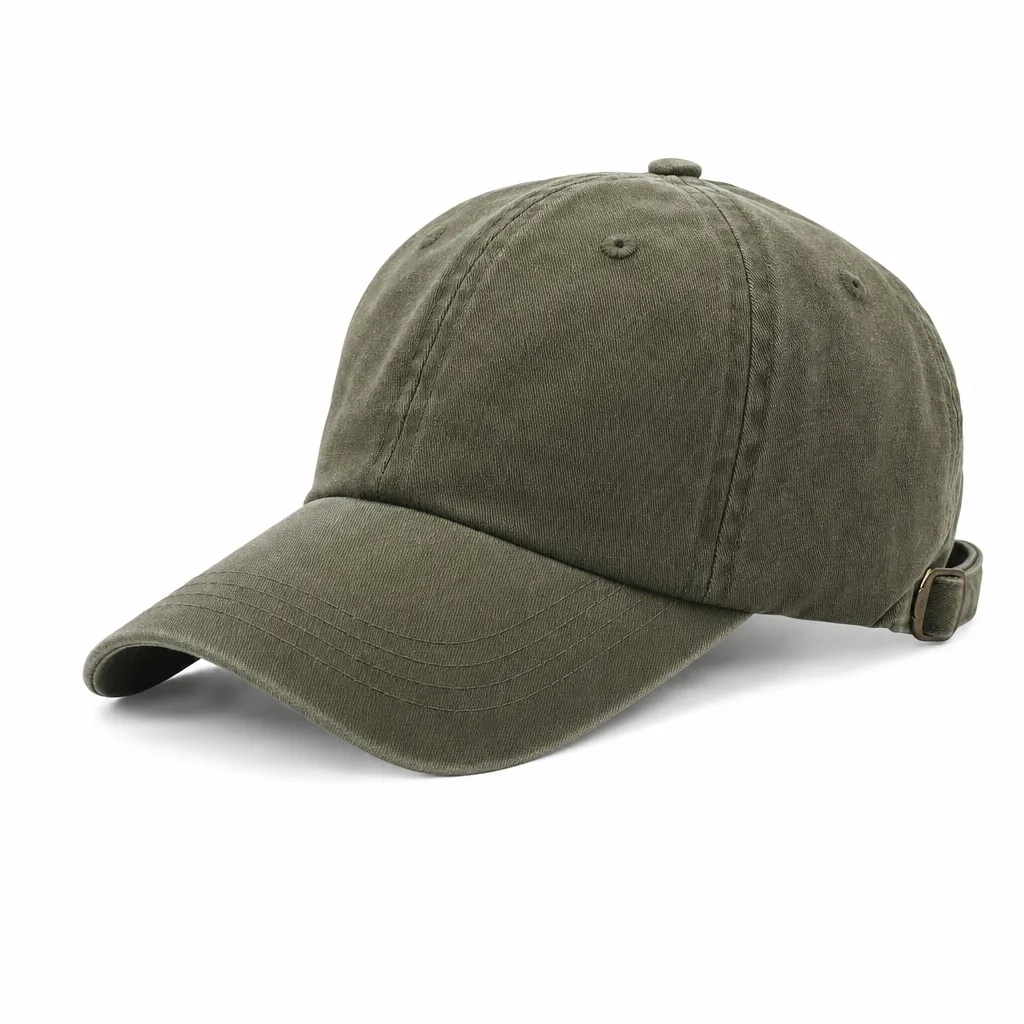
Custom Embroidered Hat: The 2026 Sourcing & Manufacturing Playbook - Cost & MOQ Breakdown is one of the most-asked questions we receive from international buyers, and for good reason. With dozens of factories competing for your order and an alphabet soup of technical terms in every supplier quote, even experienced importers can feel lost. This guide consolidates what we have learned producing custom hats for clients in 40+ countries.
Custom Embroidered Hats
A custom embroidered hat goes wrong when embroidery is treated as decoration instead of an engineering input. The logo file decides crown stability, fabric choice, backing, underlay, pull compensation, and whether embroidery runs on flat panels before assembly or on finished caps after sewing. A 260 gsm brushed cotton twill 6-panel can carry a denser fill with tighter top-thread tension; a trucker with a 5 mm EVA foam front and 100% polyester mesh cannot. Push a foam-front design past the right stitch density and you will see crown collapse, needle cuts in the foam, or ugly tunneling across satin columns. Standard practice on the factory floor should be digitizing first, then a sew-out on the actual shell fabric, using the same machine class planned for bulk production, whether that is Tajima, Barudan, or ZSK multi-head equipment. Approving a PDF mockup without a physical strike-off is how buyers end up arguing over a logo that was never technically viable on that cap body. The spec sheet needs to lock more than artwork. Profile, panel count, visor curve, closure, shell fabric composition, sweatband, eyelets, seam tape, embroidery placement, target stitch count, backing type, thread finish, and exact color references all affect output. Fabric should be matched to Pantone TCX, logo colors to Pantone Solid Coated, and if brand color is sensitive, require lab dips within Delta-E 1.0-1.5 under D65 lighting. For embroidery approval, ask the factory to note thread brand and code, underlay type, backing weight, and needle size on the pre-production strike-off. That level of control matters because a 6,000-stitch front logo on cotton twill behaves very differently from a 15,000-stitch design with 3D puff on acrylic or poly twill, even when the art looks identical on screen.
MOQ and price are set by cap construction and stitch complexity, not by the words custom embroidered hat. For a stock 6-panel baseball shape using available twill colors, 100-144 pieces per colorway is workable at many factories. The minute you move into custom-dyed fabric, camo printing, contrast seam tape, proprietary metal trims, or a new crown block, the practical MOQ usually shifts to 300-500 pieces per style because the factory has to spread sampling time, material loss, and setup over more units. In Yiwu and the surrounding cap supply chain, a basic cotton twill cap with front flat embroidery typically lands around $2.20-$3.80 FOB China at 300 pieces. A foam-front trucker with polyester mesh, plastic snapback, and front embroidery is more often $2.60-$4.50 FOB. Add 3D puff, metallic thread, side and back hits, appliqué, or woven labels, and another $0.35-$0.80 per cap is a normal uplift. The cost driver buyers underestimate most is stitch count and machine time. Front flat embroidery under about 8,000 stitches sits in one pricing band; once a design reaches 12,000-18,000 stitches, includes color changes, or requires tighter registration over seams, the run speed drops and rejection risk rises. That is where you need process control, not just final inspection. Final QC at AQL 2.5 is standard, but embroidery-heavy orders should also have first-off approval plus in-line checks every 10%-15% of output to catch thread breaks, head-to-head tension drift, misregistration, and color inconsistency before hundreds of caps are affected. At CrownsForge, we also flag crown distortion, needle heat marks on synthetics, and loose bobbin buildup around dense fills, because those are the defects buyers notice immediately even when a shipment technically passes count-based inspection.
Custom Hat Embroidery
Embroidery quality is decided at digitizing, not at final inspection. For a custom embroidered hat, I do not release bulk until the factory confirms logo size in millimeters, stitch count band, thread spec, backing, and the exact cap construction, because a 6-panel brushed cotton twill dad cap reacts very differently from a foam-front trucker running on a 270-degree cap frame. A proper cap file is digitized for curved panels with center-walk or edge-run underlay, pull compensation, push-pull offsets, and stitch angles that avoid the center seam; dropping a flat-garment file onto a cap is how you get pinched satin columns, fill tunneling, seam strike, and crown distortion. Buyers should also ask whether the run is planned on Tajima, Barudan, or ZSK heads, whether the logo is sewn pre-seam on flat panels or post-seam on finished crowns, and what needle sequence is being used for color changes on multi-head production.
Cost moves more with stitch density and cap body than most buyers expect. In Yiwu, a stocked blank program for a custom embroidered hat usually starts at 144 to 300 pieces per colorway, while a true cut-and-sew order with custom fabric, inside taping, woven label, and closure development is more realistically 300 to 500 pieces per style and color. As a workable FOB China range, a standard 6-panel cotton twill cap with one front logo in the 5,000 to 8,000 stitch band typically lands at $2.20 to $3.60 at 300 pieces; a structured trucker with foam front, mesh back, snapback closure, and mixed 3D puff plus flat embroidery is more often $3.40 to $5.80. Digitizing usually costs $20 to $60 per logo, and once the front design climbs past roughly 12,000 to 15,000 stitches, machine time, thread trims, needle heat, and rejection risk all rise sharply, so competent factories quote by stitch band rather than pretending embroidery is a flat add-on.
Inspection should target the defects that actually trigger claims: color misregistration, thread breaks, reverse-side trimming issues, puckering around dense fills, seam strikes, and logo placement drifting more than 2 to 3 mm off center. On a custom embroidered hat with 3D puff, verify that the foam is fully covered at the top edges, the satin columns are not splitting, and the backing is not telegraphing through lighter shells such as 8 oz cotton twill or brushed chino. AQL 2.5 is a sensible final standard, but embroidery-heavy styles also need a first-off approval and inline checks, because one bad tape file or tension setting can repeat across 12 or 15 heads before the line is stopped. Thread matters as well: 120D/2 polyester generally outperforms rayon for wash durability and lightfastness, and if a brand is matching to Pantone TCX or coated references, a realistic color-control target is Delta-E under 2.0 rather than a vague visual approval.
Custom Hat Trucker
The front panel determines whether a trucker-style custom embroidered hat looks retail-grade or collapses into a promo piece. Standard construction is straightforward: 5-panel or 6-panel crown, cotton twill or polyester front, 60-120 gsm polyester mesh, PE visor insert, and PVC snap closure. What changes the result is the substrate under the embroidery. On tall 5-panel truckers, dense front art over about 10,000-12,000 stitches will tunnel or sink fast if foam is under 3 mm or the buckram is too soft. That is why front logos are usually embroidered pre-assembly on flat Tajima, Barudan, or ZSK machines, while side and back hits go on cap frames after sewing. Buyers who only approve artwork and ignore foam thickness, buckram stiffness, crown structure, and mesh denier usually get preventable quality problems. Trucker caps stay cost-efficient because they deliver a large visual embroidery area without the material cost of wool-blend fitteds or heavier brushed cotton 6-panels. In Yiwu and Dongguan, a stock-material trucker with one front embroidery location typically lands around $2.10-$3.40 FOB China at 300 pieces. Add printed seam tape, custom visor sandwich, two extra embroidery locations, specialty mesh, or a molded private-label closure, and the same hat moves into the $4.20-$6.50 FOB range. MOQ is usually 144-300 pieces per colorway with stock fabrics, but custom-dyed front panels, exclusive trims, or private closure tooling normally push minimums to 500-1,000 pieces. If the product is for retail, lock crown profile, visor curve, sweatband content, stitch-count allowance, Pantone TCX references, and front-panel shade tolerance such as Delta-E under 1.5 before sampling starts.
Most trucker-cap failures are obvious if the inspection team checks measurements and construction instead of giving the shipment a quick visual pass. The defects that matter are warped visors, inconsistent crown height, mesh puckering at the side seams, embroidery drifting more than 3 mm off center, skipped stitches on foam fronts, and snapback posts that do not engage cleanly. On lower-denier mesh, I also watch for needle cuts around the side panels; once that happens, the cap may pass packing but fail in wear. Other repeat issues are top-button shade mismatch, thread tails trapped under the sweatband, and visor stitch lines wandering 1-2 mm off edge, especially when production lines are trying to recover delayed output. AQL 2.5 is the right final inspection level for this category only if the factory is measuring actual specs against the approved sample, not just counting visible defects. That means checking head opening, visor length, crown symmetry, logo placement, and color consistency on the front panels under the agreed standard. Our standard practice is to confirm those points during inline and final inspection because truckers can hide production drift until the cartons are opened. My view is direct: a trucker is a strong platform when the goal is bold branding, broad fit tolerance, and controlled FOB cost, but it is the wrong choice for ultra-fine embroidery detail, cold-weather assortments, or any custom embroidered hat that needs a premium wool handfeel.
Custom Made Trucker Hat
A custom made trucker hat lives or dies on the front panel, not the artwork. The commercial baseline is still a 5-panel high-profile build with a 100% polyester foam front, 2.5-3.0 mm EVA or sponge backing, 70-100D polyester or nylon mesh on the rear, a pre-curved PE visor board, and a 7-hole PVC snap closure. That recipe remains dominant because it gives enough rigidity for 3D puff embroidery without the front collapsing after hooping or transport. If you are sourcing a custom embroidered hat in trucker format, freeze the construction before sampling: crown height, front substrate, foam thickness, mesh denier, visor stitch rows, sweatband composition, closure finish, and whether the front takes eyelets. Leave any of that vague and the second sample often comes back as a different hat. Color matching is also harder on truckers than buyers expect because foam, mesh, and embroidery thread absorb light differently. Black polyester foam, black nylon mesh, and black rayon thread rarely look identical under 4000K retail lighting unless the factory controls each component separately. A serious tech pack should reference Pantone TCX or TPG for soft materials, specify acceptable Delta-E tolerance—1.5 for dyed fabric is realistic, 2.0 for embroidery thread is normal—and call out tonal expectations for underbill, seam tape, and snap color. Our standard practice is to approve strike-offs and material swatches together, because a trucker with good logo digitizing can still look off if the mesh shifts charcoal while the front panel holds true black.
Most trucker failures start with lazy specifications, not bad operators. “Black mesh, logo front” tells the factory almost nothing about profile, hand feel, or embroidery behavior. A usable spec sheet should lock panel count, finished crown height in centimeters, visor profile, brim stitch rows, sandwich brim yes or no, sweatband width, back opening depth, seam tape color, snap color, logo size in millimeters, stitch-count range, and puff height—usually 2.0-3.0 mm for stable 3D work on foam fronts. For fine text or narrow satin columns, ask for a sew-out on the intended machine family; Tajima, Barudan, and ZSK heads handle underlay, pull compensation, and run speed differently enough to change edge sharpness and foam cut-through on the same digitized file. Pricing and MOQ move fast once you leave stock materials. With stock black or white mesh, standard snaps, and front flat embroidery only, MOQ is commonly 144-288 pieces per colorway, and recent China FOB pricing is roughly $2.20-$3.40 at 300 pieces depending on stitch count and carton pack-out. Add 3D puff plus a side hit, custom woven labels, printed internal seam tape, dyed mesh, or molded TPU/rubber patches, and the practical MOQ rises to 300-500 pieces with FOB more in the $4.10-$6.80 range. Bulk inspection should focus on silhouette and post-embroidery deformation: front panel standing square, visor symmetry, no crown twist, no tunneling, no foam exposure, and no mesh puckering at the sweatband join. AQL 2.5 is a sensible baseline, but truckers deserve an extra top-of-carton visual check because profile inconsistency is easy to miss in folded packing.
Custom Trucker Hat
The shell determines whether a trucker cap can carry premium embroidery or only survive as a giveaway. For commercial orders, the reliable baseline is still a 5-panel or 6-panel build with a foam-backed or buckram-supported front, polyester mesh back, PE visor board, cotton or poly-cotton sweatband, and PP snap closure. That spec is serviceable at the low end, but retail programs should lock the front body down harder: 210-260 gsm cotton twill, 250-300 gsm brushed canvas, or 180-220 gsm recycled polyester, paired with 75D or 100D mesh that recovers after carton compression instead of staying crushed. On a proper custom embroidered hat, front logos should be embroidered on the cut panel before crown assembly, not after the cap is closed. Running pre-assembly on Tajima or Barudan multi-head machines gives cleaner satin edges, more stable small lettering, and fewer hoop marks on foam fronts. After embroidery clears in-line QC, the cap moves through crown sewing, visor insertion, sweatband closing, top button setting, trimming, steaming, and blocking, where weak front structure usually shows up immediately as twisting or collapse.
A usable trucker quote starts with a real tech pack, not a mood board. The factory needs panel count, crown profile, front fabric and gsm, mesh denier and color, visor curve, closure type, sweatband composition, visor stitch rows, seam tape artwork, label positions, logo size in millimeters, stitch-count target, backing type, and any 3D puff height requirement. For color control, dyed fabric should be held to Delta-E below 1.5 against approved lab dips; embroidery thread is normally approved visually under D65 because polyester sheen can shift even when the shade is technically within tolerance. In China, realistic MOQ is 144-300 pieces per colorway if you stay with stock mesh and stock snaps, but custom-dyed fabric, printed seam tape, molded patches, or proprietary trims usually push the floor to 500-1,000 pieces. FOB pricing is typically $2.20-$3.80 for promo-grade builds, $3.80-$6.50 for solid retail custom embroidered hat programs, and $6.50-$9.50 once you add recycled materials, appliqué, woven labels, or embroidery above about 10,000 stitches.
Margins usually disappear at inspection, because trucker defects often stay hidden until the carton is opened and the crown relaxes. The first checkpoints are front-panel symmetry, foam lamination stability, buckram straightness, mesh tension, snap alignment, visor curvature, sweatband join bulk, seam tape cleanliness, and loose trims inside the crown. Embroidery failures are predictable on this silhouette: registration drift, exposed underlay, needle cuts on foam fronts, puckering around dense fills, and small text filling in when operators run Tajima, Barudan, or ZSK heads too fast without retuning tension for mesh-backed panels. AQL 2.5 works for most bulk orders, but licensed sports, streetwear, and premium retail usually need tighter visual tolerances—around 3 mm for logo centering and 5 mm for visor-to-crown alignment. That is the real sourcing lesson: a cheap trucker shell makes even good digitizing look second-rate, while the right body spec and QC standard protect reorder consistency on every custom embroidered hat run.
Custom Trucker Hats
The front panel decides whether a trucker reads retail or giveaway. Promo-grade 5-panel foam truckers usually use 3 to 4 mm polyester foam laminated to tricot, and that tall crown looks right only when the foam density is consistent and the embroidery file is restrained; overload the stitch count and the panel tunnels, ripples, or caves in after packing. For a retail-spec custom embroidered hat, I would rather build on 210 to 260 gsm cotton twill with hard buckram, or 230 to 280 gsm poly-cotton twill when crocking and wash fastness matter more than hand feel. Mesh is the other weak point. Cheap 20 x 16 polyester mesh with uneven denier yarn tends to snag, whiten at stress points, and stay crushed after carton compression. A better trucker uses 75D to 100D polyester mesh with cleaner yarn regularity and better rebound after 24 hours under load. Digitizing has to match the crown geometry, especially on a seam-free 5-panel front where buyers always want the largest possible logo. On Tajima, Barudan, or ZSK heads, 3D puff embroidery is safest when satin columns stay above roughly 2.5 mm width; text under 4 mm should be forced to flat stitching or the counters close and the edges go soft. Good files also need real push-pull compensation, lighter underlay, and density control tuned for foam or hard buckram, not a generic baseball-cap setup. If the artwork includes long fills, gradients, fine serif text, or distressed details, direct embroidery is usually the wrong choice on a trucker front; a woven patch, screen-printed twill patch, or heat-applied transfer often holds the artwork cleaner and lowers rejection during inline QC.
The tech pack needs to eliminate factory guesswork. Specify panel count, crown height, profile, front fabric composition and gsm, mesh denier, visor curve, PE insert thickness, snapback resin color, sweatband content, seam tape color, button material, logo position, max embroidery size in millimeters, stitch count range, backing, and Pantone TCX references for every visible component. If you want raised embroidery, call out 2 mm or 3 mm EVA puff, the exact coverage area, minimum satin width, and which small elements must convert to flat stitching. MOQ stays reasonable at 144 to 300 pieces per colorway when you use stock foam, stock mesh, and standard PP snap closures. Move into dyed-to-match shell fabric, custom mesh shades, molded patches, woven labels, or branded inside tape, and most factories will push minimums to 500 to 1,000 pieces per style. For 2026 FOB China, a trucker-style custom embroidered hat typically lands around $2.20 to $3.40 at 300 to 500 pieces for promo construction, $3.80 to $5.80 for retail-grade builds with cleaner embroidery and better crown retention, and $6.50 to $8.20 with appliqué, chain stitch, specialty mesh, or private-label trims. Inspection should run at AQL 2.5, with special attention on panel warping, seam alignment, logo centering, visor symmetry, snap pull strength, and mesh recovery after compressed packing. The common failures are predictable: excessive stitch density causes front-panel waviness, weak buckram lets the crown collapse, and separately sourced twill and mesh can drift beyond Delta-E 1.5 under D65 light. Compared with a brushed cotton baseball cap, a trucker is cheaper and visually louder, but far less forgiving when the materials or digitizing are even slightly off.
Working with CrownsForge for custom embroidered hat programs
Most custom embroidered hat failures start in pre-production, not on the embroidery floor. If the tech pack is loose, the approved sample and the bulk run drift fast: crown height changes by 3 to 5 mm, buckram softens under logo density, visor curve opens up after packing, and small serif text fills in once the cap is pressed and bagged. The spec needs to be locked before production digitizing: 5-panel or 6-panel construction, low/mid/high profile, crown depth, visor radius, closure type, shell fabric in gsm, buckram stiffness, sweatband composition, seam tape width, thread brand, stitch-count range, backing, and Pantone TCX references for shell, tape, labels, and even outer cartons if retail compliance matters. On embroidery, machine brand is secondary to cap-frame stability, hooping discipline, and file setup, but Tajima and Barudan heads are still the reliable benchmark for 2.2 to 2.8 mm text, tight satin columns, and 3 mm EVA puff that does not mushroom or crack at the edge. In practice, a stock-body sample with approved digitizing is usually 5 to 7 working days; add custom fabric sourcing, silicone patches, appliqué, or mixed flat-plus-puff decoration and the real sample window becomes 10 to 14 working days.
MOQ and cost follow trim complexity, not whatever headline number gets a quote moving. A basic 6-panel brushed cotton twill custom embroidered hat with a stock snapback or hook-and-loop closure can realistically open at 144 pieces per colorway, but once you add dyed-to-match mesh, printed seam tape, woven interior branding, custom visor board, or a private-mold silicone patch, the workable MOQ usually moves to 300 to 500 pieces per style. FOB Ningbo on a simple 100% cotton cap with front flat embroidery is commonly $3.20 to $5.80 at that level; a trucker build using 12x12 chino twill front panels, 100% polyester mesh back panels, snap closure, and two or three embroidery locations is more often $4.60 to $8.50. The adders look small until they stack: 3D puff typically adds $0.18 to $0.35, metallic thread $0.08 to $0.20, woven interior taping $0.12 to $0.28, and patch or appliqué attachment $0.25 to $0.90 depending on setup and stitch count.
After pilot orders, factory controls matter more than saving another $0.15 per cap. Buyers should ask for current sedex-audit-cap-supplier-guide.html">BSCI 2.0 or Sedex SMETA 4-Pillar audit reports, needle-control records, metal-detection procedure where required, and a written final inspection standard at AQL 2.5 covering workmanship, assortment ratio, carton marks, and carton-drop checks. The production flow should be rigid and documented: feasibility review, quotation, digital mockup, sample payment, physical sample approval, PPS signoff, in-line inspection, final QC, packing approval, and shipping-document verification under FOB, CIF, or DDP terms. For color-sensitive programs, trims and shell fabrics should be checked against approved standards with a practical Delta-E tolerance, especially on black, navy, olive, and fashion shades where twill, mesh, sweatband knit, and seam tape rarely dye identically. That discipline is what keeps a 5,000 to 20,000 unit reorder consistent instead of turning a custom embroidered hat program into chargebacks for mismatched shades, skewed logos, or carton assortments nobody locked before bulk production.
Frequently Asked Questions
What file format should I send for my logo?
Vector files (AI, EPS, PDF) are ideal. High-resolution PNG or JPG at 300 dpi on transparent background works as a fallback. Provide Pantone color references for accurate reproduction.
Which shipping methods do you support?
We support FOB, CIF and DDP shipping. Air express for samples and small orders, sea LCL for 100 to 500 pieces, sea FCL for 5,000+ pieces. Door-to-door DDP available for US, EU, UK, Canada and Australia.
Can I order a sample before bulk production?
Yes. We strongly recommend approving a pre-production sample before mass production. Samples are charged at 35 to 60 USD each plus express shipping, fully refundable against confirmed bulk orders over 500 pieces.
What logo decoration techniques do you offer?
3D puff embroidery, flat embroidery, woven patch, leather patch, PVC patch, screen printing, sublimation, applique and laser etching, all in-house with no subcontracting.
What is the minimum order quantity (MOQ) for custom hats?
Our standard MOQ is 100 pieces per design and color, with sampling available from 1 piece. For complex multi-color logos or premium fabric upgrades, the MOQ can be lowered with a small per-piece surcharge.
How does ordering custom embroidered hats near me work?
When evaluating custom embroidered hats near me, the key considerations are construction quality, decoration capability, MOQ flexibility and lead time. Cover everything buyers ask about custom embroidered hats: how it's manufactured, what specs to request from a factory, typical MOQ and pricing, common quality issues to inspect for, and how this ties back to the broader custom embroidered hat sourcing decision. Cover everything buyers ask about custom trucker hats: how it's manufactured, what specs to request from a…
How does ordering custom hat embroidery near me work?
When evaluating custom hat embroidery near me, the key considerations are construction quality, decoration capability, MOQ flexibility and lead time. Cover everything buyers ask about custom hat embroidery: how it's manufactured, what specs to request from a factory, typical MOQ and pricing, common quality issues to inspect for, and how this ties back to the broader custom embroidered hat sourcing decision. Cover everything buyers ask about custom embroidered hats: how it's manufactured, what specs to request from a…
What's the MOQ for custom logo hats no minimum?
When evaluating custom logo hats no minimum, the key considerations are construction quality, decoration capability, MOQ flexibility and lead time. Cover everything buyers ask about custom embroidered hats: how it's manufactured, what specs to request from a factory, typical MOQ and pricing, common quality issues to inspect for, and how this ties back to the broader custom embroidered hat sourcing decision. Cover everything buyers ask about custom trucker hats: how it's manufactured, what specs to request from a…
What should I know about bulk custom trucker hats?
When evaluating bulk custom trucker hats, the key considerations are construction quality, decoration capability, MOQ flexibility and lead time. Cover everything buyers ask about custom trucker hats: how it's manufactured, what specs to request from a factory, typical MOQ and pricing, common quality issues to inspect for, and how this ties back to the broader custom embroidered hat sourcing decision. Cover everything buyers ask about custom embroidered hats: how it's manufactured, what specs to request from a…
Ready to start your custom hat project?
Send us your tech-pack, sketch or even just an inspiration photo. We will respond with a detailed quotation and digital mock-up within 24 hours.
Request a free quoteRelated guides
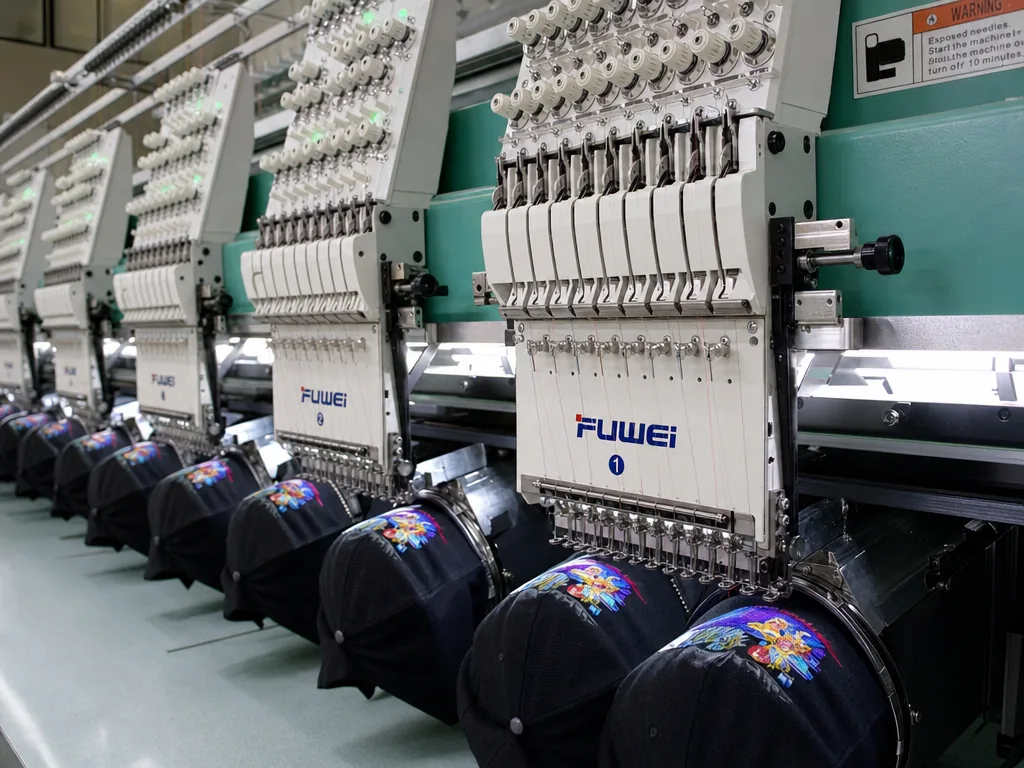
Embroidery Stitch Count & Thread Density: A Cost-and-Quality Reference - 2026 Buyer's Guide
Read article →
FOB vs CIF vs DDP: Incoterms Compared for Hat Imports - Cost & MOQ Breakdown
Read article →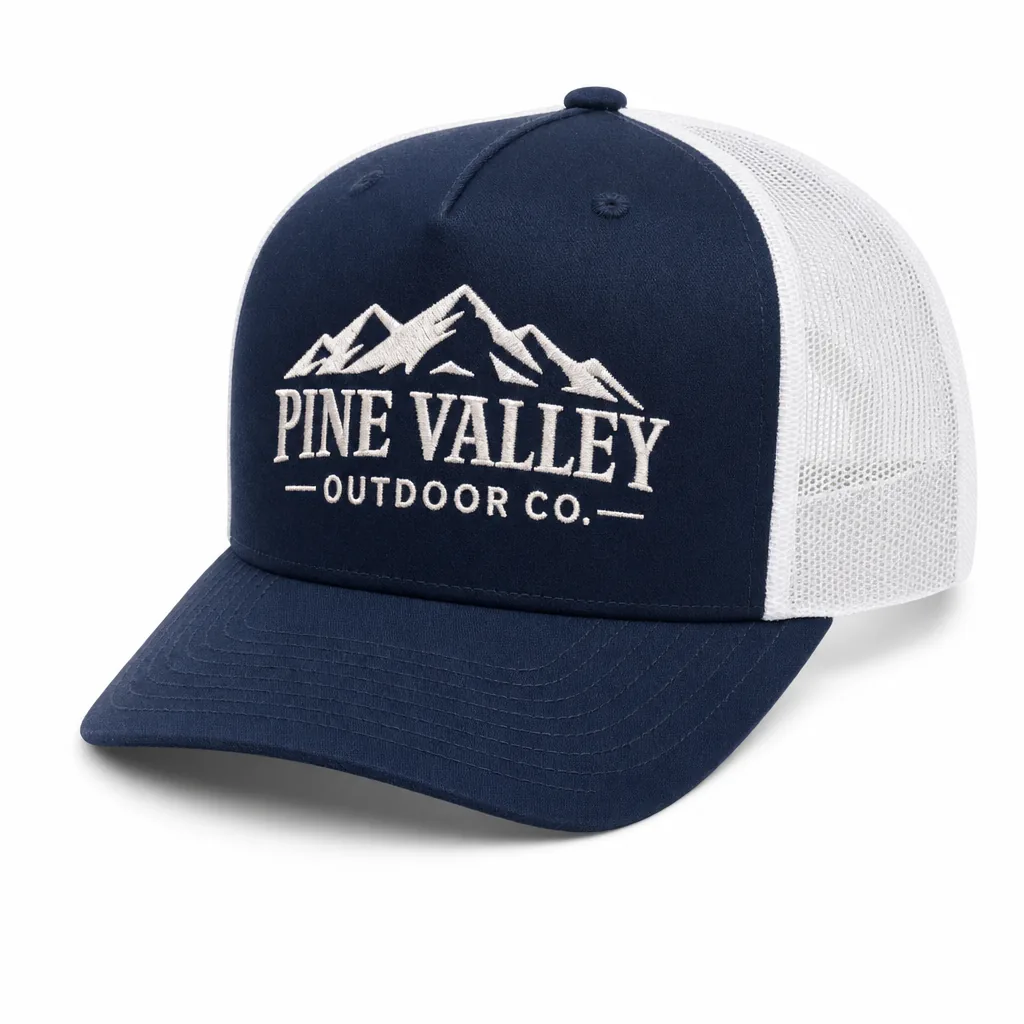
Wholesale Trucker Hats with Custom Logo: A Complete Bulk Sourcing Playbook
Read article →If you are ready to take the next step on custom embroidered hat: the 2026 sourcing & manufacturing playbook - cost & moq breakdown, our team can put a tailored quotation and digital mock-up in your inbox within 24 hours. Send the inquiry form on our contact page or message us directly on WhatsApp.