
How to Choose a Custom Baseball Cap Manufacturer in China — 2026 Buyer's Guide
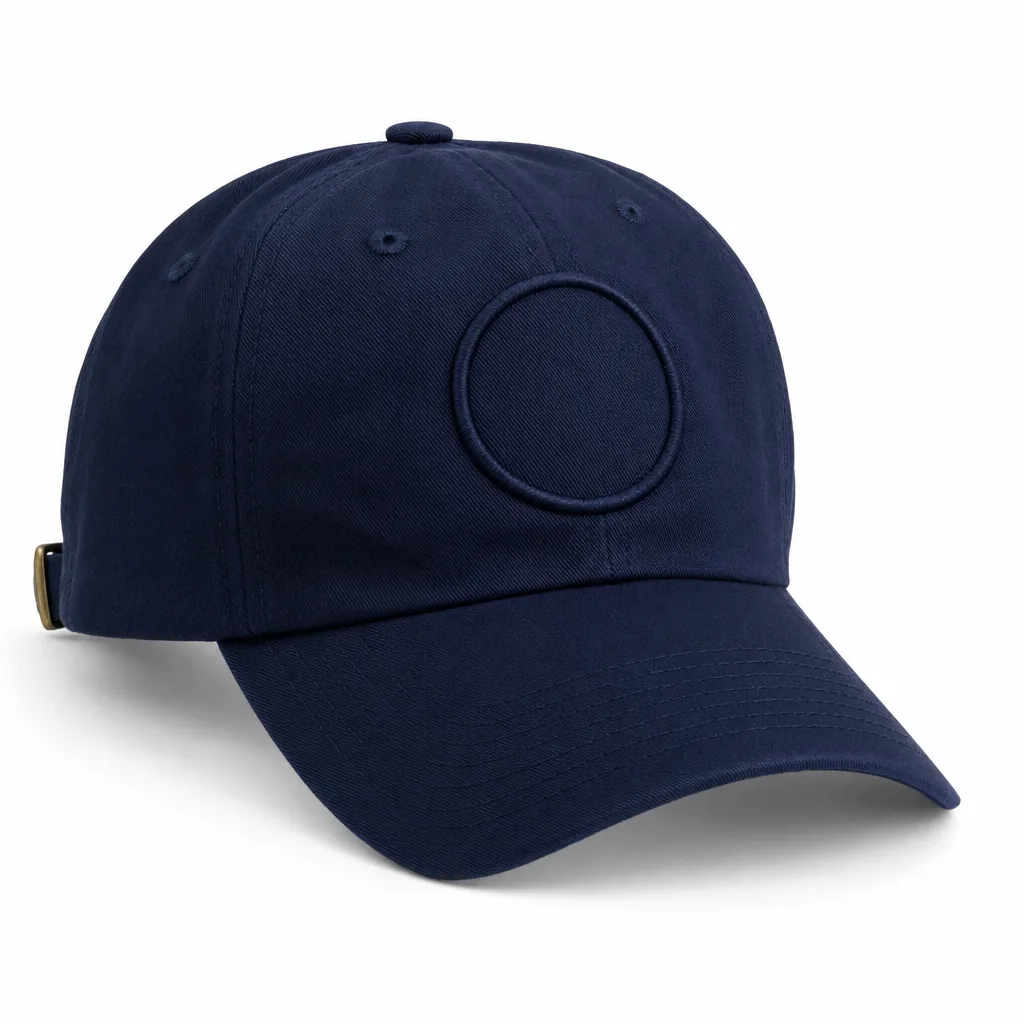
Every week, our sales team answers detailed questions about how to choose a custom baseball cap manufacturer in china — 2026 buyer's guide. We wrote this guide so that wholesalers, streetwear brands, corporate buyers and promotional resellers can compare options with full information, and avoid the traps that show up only after production has started.
Why China still dominates global custom hat manufacturing
China still dominates custom cap production because the supply chain is built for speed and for small-to-mid wholesale runs, not just giant container orders. In Yiwu, Dongyang, and the wider Zhejiang corridor, you can source blank panels, buckram, sweatbands, sandwich visors, hook-and-loop, woven labels, and packaging within the same industrial radius. That matters when a buyer needs a wholesale custom baseball cap with a specific crown height, visor curve, and Pantone TCX match, because every delay between trim, embroidery, and sewing adds cost. Guangzhou brings a different advantage: faster access to accessories, garment trims, and export-oriented trading infrastructure, which is useful when SKUs change every week. A serious custom baseball cap manufacturer in this ecosystem is usually not buying from one distant supplier and hoping for the best; it is managing multiple upstream factories and keeping the lead time tight enough to support seasonal drops, promo deadlines, and replenishment orders without a full redesign of the production plan.
The real edge is vertical integration. A strong China hat factory will control or tightly coordinate pattern making, fabric cutting, embroidery digitizing, sewing, washing, shaping, and final packing, so quality issues are caught before the caps leave the line. That reduces the classic failure points: misaligned crown seams, dense stitch fields that pucker 100% cotton twill, or unstable thread tension on 3D puff logos. Factories that invest in Tajima, Barudan, or ZSK embroidery heads usually do it because precision and repeatability matter more than machine brand loyalty. The better OEM cap manufacturer will also run test strikes for stitch density, underlay, and thread sheen before bulk approval, especially on brushed cotton, acrylic wool blends, or recycled polyester. CrownsForge’s standard practice is to lock in embroidery specs and trim cards before cutting bulk fabric, because changing thread count after production starts is where avoidable waste and shade variation usually appear.
Minimum order quantity is where China keeps winning for international wholesalers. A private label cap factory in the right cluster can often accept 200 to 500 pieces per colorway for repeat programs, and larger mills can support 1,000-piece runs with mixed colors if the construction is standard. That flexibility is why wholesale baseball caps China remains competitive for streetwear brands, sports distributors, and promotional resellers that need several SKUs without carrying a warehouse of dead stock. Costs are still driven by material choice and finishing: a basic 6-panel cotton twill cap might land in the low single-digit FOB range, while structured brushed cotton with woven patch, custom taping, and premium embroidery can move materially higher. Buyers should also check compliance, not just price. sedex-audit-cap-supplier-guide.html">BSCI 2.0, Sedex SMETA 4-Pillar, and AQL 2.5 inspection discipline matter if the order is going into retail, licensed sports, or corporate channels where one bad shipment is more expensive than a slightly higher unit cost upfront.
The 7 criteria of a trustworthy custom cap factory
The first thing I look at is audit history, not the showroom samples. A real custom baseball cap manufacturer in China should be able to show recent BSCI 2.0, Sedex SMETA 4-Pillar, or WCA results, plus corrective-action records from the last 12 months. That matters more than a logo on the wall because it tells you whether the factory can survive an unannounced social audit, handle wage records, and keep subcontracting under control. If you are buying wholesale baseball caps China for retail or licensed programs, ask for the audit report date, scope, and whether critical findings were closed on time. A clean report from 2022 is stale; a mediocre report with verified fixes from this quarter is more useful. A trustworthy OEM cap manufacturer should also be willing to explain how they track needle logs, fire exits, chemical storage, and worker attendance without dodging basic questions.
In-house embroidery is the next filter, and it separates a true private label cap factory from a trader pretending to be one. If the factory controls its own Tajima, Barudan, or ZSK heads, it can match thread density, underlay, and pull compensation before production starts instead of after a 5,000-piece mistake. For structured caps, I want to see sampled stitch files, cap frame compatibility, and at least one pre-production approval with Pantone TCX targets and Delta-E expectations documented. Our standard practice at CrownsForge is to quote sample lead time separately from bulk lead time, because a serious wholesale custom baseball cap order usually needs 5 to 10 days for a first sample and 20 to 35 days for repeat bulk, depending on fabric and decoration. If a China hat factory claims it can turn everything in 48 hours, it is usually cutting corners or outsourcing.
The last three criteria are delivery discipline, communication, and after-sales policy, because even a technically strong custom baseball cap manufacturer can still be a bad supplier if it misses dates or disappears after shipment. Ask for an on-time-delivery rate based on the last 6 or 12 months, not a vague promise; anything under 92 percent should raise questions unless the factory is transparent about capacity swings. I also watch how fast they answer pattern corrections, carton marks, and label approvals: a good team can confirm a spec change within one business day and catch contradictions before cutting. After-sales policy should be specific: replacement rules for embroidery defects, bill-of-lading errors, short-shipped cartons, and color mismatch beyond an agreed Delta-E threshold. If the supplier will not state who pays for rework, reshipment, or freight claims, that is a warning sign, not a negotiation detail.
MOQ, pricing and what really drives the unit cost
MOQ is usually set by fabric and decoration, not by the sales pitch. A cotton twill 6-panel with standard curved visor can be built on a lower MOQ than a wool blend, because wool blends need tighter shade control, longer lead times for loom-dyed material, and more risk on color matching. On the factory floor, the biggest cost swing comes from logo method: 3D puff embroidery uses more thread, extra backing, and slower machine time on Tajima or Barudan heads; woven patches are cheaper at volume but add cut-and-sew labor; leather patches and PVC badges look premium, but tooling, die-cutting, and heat-seal application push the price up fast. A private label cap factory will usually quote the body separately from trim, then add cost for back closure type, whether that is snapback, Velcro, self-fabric strap, or metal buckle. For a wholesale custom baseball cap, that closure decision alone can move unit cost by $0.20 to $0.80 depending on hardware and labor.
Packaging and compliance are the hidden line items that many buyers underestimate when comparing wholesale baseball caps China quotes. A bulk polybag and master carton is the cheapest setup; individual hangtags, barcode stickers, silica gel, tissue paper, and custom printed boxes can add $0.30 to $1.20 per cap before freight. Certifications also matter: BSCI 2.0 or Sedex SMETA 4-Pillar audits do not directly change sewing cost, but they affect which China hat factory is eligible for larger retail programs, and audited plants usually carry higher overhead. If you need a custom baseball cap manufacturer for chain stores or licensed sports programs, ask for the exact fabric spec, thread count, and color tolerance up front, ideally with Pantone TCX targets and a Delta-E limit for bulk approval. Our standard practice is to quote FOB with a clear breakdown for fabric, embroidery, trim, packing, and testing, because the cheapest OEM cap manufacturer on paper is often not the cheapest once samples, rework, and freight are counted.
Sampling: how to make pre-production samples pay off
A serious custom baseball cap manufacturer should never skip PPS, because the pre-production sample is where most margin-killing mistakes show up before bulk cutting starts. I treat PPS approval as a gate, not a courtesy: crown height, visor curve, underbill color, seam alignment, and logo placement all need sign-off against the tech-pack before fabric is released to production. A decent China hat factory will also verify the measurement sheet against the physical sample, not just the drawing. If the buyer is vague about tolerances, problems get buried until 5,000 units are already in process. For wholesale baseball caps China orders, the sample stage should also lock in construction details like 6-panel or 5-panel patterning, buckram strength, sweatband width, and closure type, because those choices affect fit and unit cost more than most buyers expect.
Reading a tech-pack properly is not optional. The documents need to be specific enough that a private label cap factory can make the same hat twice without guessing: flat sketch, construction notes, labeled panel count, stitch map, embroidery size in millimeters, and point-of-measure tolerances. Pantone references should be written as TCX or C numbers, not loose color names, because dye lots drift and screen vendors interpret words differently. On cotton twill and brushed chino, I want the fabric GSM listed, usually 260 to 300 gsm for a structured cap, plus whether the mill finish is enzyme-washed or piece-dyed. Stitch density matters too: a front logo that looks clean at 0.35 mm stitch spacing may bulge at 0.28 mm on a dense twill. A disciplined OEM cap manufacturer will catch that before sending the sample for approval.
If the PPS looks right but the numbers are wrong, do not approve it. I have seen wholesale custom baseball cap orders fail because the sample used 280 gsm fabric while bulk landed at 240 gsm, which changes handfeel, drape, and seam stability enough to matter in retail. The same goes for embroidery thread count, visor board thickness, and sweatband material; these should be verified against the tech-pack and the approved sample, not assumed from conversation. Our standard practice is to keep one signed PPS in the file, one sealed control sample in the QC room, and one reference sample with the buyer. That makes later disputes much easier to resolve when bulk inspection shows a color shift above Delta-E 2.0, a stitch count mismatch, or a closure substitution that was never approved.
Shipping FOB, EXW, DDP — choosing the right Incoterm
FOB is usually the cleanest starting point for a custom baseball cap manufacturer because it separates factory cost from freight cost without making either side guess too much. For small launches, air-express makes sense when you need 100 to 500 caps fast, the sample approval is still moving, or the order is too light to fill a carton efficiently. In practice, a 200-cap shipment by DHL or UPS from a China hat factory to the U.S. can land at roughly $4 to $8 per cap in freight before duty, which looks expensive until you compare it with lost selling time. EXW only works if your team already has a freight forwarder in China and can handle pickup, export docs, and carton reweighing without delays. For most buyers of wholesale custom baseball cap orders, FOB gives better control over the handoff point and fewer surprises when the factory is actually ready to load.
Sea freight starts to win once the order is heavy enough to tolerate a 3 to 5 week transit and you are no longer paying premium rates for speed. A 20'GP usually makes sense when the order is around 3 to 5 CBM or more, which often means 1,500 to 3,000 caps depending on packing style and carton density. Below that, consolidation is often smarter: combine multiple SKUs, repeat runs, or even split a production batch with other wholesale baseball caps China shipments so you are not paying for half-empty containers. The math matters more than the label. An OEM cap manufacturer can quote FOB on a per-carton basis, but if you are moving mixed colors, embroidery runs, and hangtag inserts, the real cost sits in cubic meters, not pieces. A private label cap factory that knows carton optimization will usually save more than a cheaper sewing quote.
DDP is useful when the buyer wants one landed number and no internal logistics work, but it is the most dangerous Incoterm if the supplier does not understand destination taxes, brokerage, and compliance. For an importer testing a new market, DDP can be fine on a small wholesale custom baseball cap run because it eliminates customs friction and lets you compare landed cost against local sourcing. The catch is that weak DDP quotes often hide under-declared values, poor duty classification, or thin margin on freight, which later turns into delays or surprise surcharges. My rule is simple: use FOB for serious repeat buying, EXW only with a strong freight team, and DDP only when the shipment is small, the paperwork is clean, and the China hat factory has a real shipping partner instead of a broker guessing at the last minute. That is how you keep the buying process predictable without paying for convenience you do not need.
Red flags when sourcing custom hats
The fastest way to separate a real custom baseball cap manufacturer from a broker is to ask for a live video factory tour and watch how they answer. A genuine China hat factory can show you needle heads running, panel cutting, sweatband stitching, and warehouse stock in real time; a middleman usually offers edited clips, recycled photos, or a video taken in another workshop. If they claim to be an OEM cap manufacturer or private label cap factory but cannot point the camera at the embroidery line, the QC table, and the packing area on the same call, treat that as a warning sign. I also watch for vague answers about machinery. If a supplier says they can do “all kinds of caps” but cannot name the equipment, such as Tajima, Barudan, or ZSK embroidery heads, they probably do not control production tightly enough to manage consistent wholesale custom baseball cap orders.
MOQs are another filter. A serious supplier will give a clear number, a clear tolerance for color and size variation, and a clear rule for reorders. When a supplier says the minimum is “flexible” but changes the price after every sample revision, that usually means they are pricing around risk instead of running a stable wholesale baseball caps China line. I expect a straight answer like 300 pieces per color for a 6-panel dad cap, 500 pieces for a structured snapback, and a small surcharge for Pantone-matched embroidery threads or custom inner labels. If they will not put the MOQ in writing, they may not actually have the fabric, trims, or finishing capacity to fulfill it. Unbranded sample packaging is a smaller issue, but it still matters: a real OEM cap manufacturer usually ships samples with traceable tags, fabric swatches, and a spec sheet, not loose caps stuffed in a plain bag with no version control.
Missing test reports are where cheap quoting turns into expensive problems. A legitimate supplier should be able to show colorfastness, formaldehyde, azo dye, and fiber-content documents when relevant, plus basic in-house QC records tied to AQL 2.5 inspection. If they cannot produce recent lab reports, they are asking you to absorb the risk of bleeding dyes, unstable shrinkage, or a logo that looks right on approval but fails after one wash. For imported programs, I also want to see whether the mill or finishing house has worked to BSCI 2.0 or Sedex SMETA 4-Pillar standards, because that tells you something about process discipline even before shipment. A custom baseball cap manufacturer that skips these basics is rarely just “busy.” More often, they are selling from a shallow supply chain, which is exactly how you end up with late shipments, inconsistent panels, and cartons that fail at destination inspection.
Working with CrownsForge for fast, low-risk hat production
If you are comparing a custom baseball cap manufacturer in China, the real filter is not price per piece, it is how they control the first sample and the first bulk run. CrownsForge’s standard lead time is 7 days for sampling and about 25 days for bulk production, which is workable only if the factory already has a stable trim supply, digitizing workflow, and sewing capacity reserved for your order. For wholesale baseball caps China buyers, that matters more than a low MOQ on paper, because late lab dips, weak crown structure, or inconsistent stitching usually show up after the PO is signed. An OEM cap manufacturer should be able to explain panel count, buckram weight, sweatband spec, visor curve, and closure options without guessing. If they cannot, the order risk moves from the factory to your side fast.
The low-risk part is the communication layer. English-speaking project managers reduce the usual back-and-forth on art approvals, Pantone TCX matching, and logo placement, especially when a private label cap factory is handling multiple SKUs at once. A good China hat factory will translate buyer comments into production terms: embroidery density, thread color sequence, topstitch spacing, and packaging format. That is where most wholesale custom baseball cap orders get delayed, not in sewing itself but in unclear approvals and revisions. When the PM can read tech packs and spot problems in the sample stage, you avoid rework on 3,000 or 10,000 units. For licensed sports goods or promo programs, that also helps keep timelines predictable when the same cap needs multiple colorways or size runs.
The inspection policy is what separates a real factory operation from a trading setup. A 100% inspection process means every cap is checked for stitching defects, panel alignment, dirty marks, loose threads, logo distortion, wrong labeling, and carton packing errors before shipment. That is stricter than relying only on AQL 2.5 random sampling, and it is especially useful for wholesale custom baseball cap programs where one bad batch can create chargebacks or delayed receiving. In practice, this should be paired with clear in-line checks on embroidery heads, seam consistency, and final packing counts, so the bulk order does not drift from the approved sample. If the manufacturer can show that discipline across sampling, bulk production, and final packing, the risk profile drops sharply for importers who need a dependable OEM cap manufacturer rather than a cheap quote.
Frequently Asked Questions
How long does production take?
Sampling takes 7 to 12 days. Bulk production runs 20 to 30 days depending on quantity, fabric availability and decoration complexity. Inspection and packing adds another 3 to 5 days before shipment.
Do you support sustainability certifications?
Yes. We work with GOTS organic cotton, GRS-certified recycled polyester, OEKO-TEX Standard 100 fabrics, and are BSCI and Sedex audited. Certification documentation can be provided per order.
What is the minimum order quantity (MOQ) for custom hats?
Our standard MOQ is 100 pieces per design and color, with sampling available from 1 piece. For complex multi-color logos or premium fabric upgrades, the MOQ can be lowered with a small per-piece surcharge.
What logo decoration techniques do you offer?
3D puff embroidery, flat embroidery, woven patch, leather patch, PVC patch, screen printing, sublimation, applique and laser etching, all in-house with no subcontracting.
Can I order a sample before bulk production?
Yes. We strongly recommend approving a pre-production sample before mass production. Samples are charged at 35 to 60 USD each plus express shipping, fully refundable against confirmed bulk orders over 500 pieces.
What's the MOQ for custom embroidered baseball caps no minimum?
When evaluating custom embroidered baseball caps no minimum, the key considerations are construction quality, decoration capability, MOQ flexibility and lead time. Discuss Yiwu / Dongyang / Guangzhou clusters, vertically-integrated supply chains, embroidery technology investment, and competitive MOQs for international wholesalers. Audit history, BSCI / Sedex / WCA compliance, in-house embroidery, sample lead time, on-time-delivery rate, communication quality, and after-sales policy.
How does ordering etsy custom embroidered hat work?
When evaluating etsy custom embroidered hat, the key considerations are construction quality, decoration capability, MOQ flexibility and lead time. Discuss Yiwu / Dongyang / Guangzhou clusters, vertically-integrated supply chains, embroidery technology investment, and competitive MOQs for international wholesalers. Audit history, BSCI / Sedex / WCA compliance, in-house embroidery, sample lead time, on-time-delivery rate, communication quality, and after-sales policy.
What should I know about wholesale baseball caps made in usa?
When evaluating wholesale baseball caps made in usa, the key considerations are construction quality, decoration capability, MOQ flexibility and lead time. Discuss Yiwu / Dongyang / Guangzhou clusters, vertically-integrated supply chains, embroidery technology investment, and competitive MOQs for international wholesalers. Audit history, BSCI / Sedex / WCA compliance, in-house embroidery, sample lead time, on-time-delivery rate, communication quality, and after-sales policy.
How do I find a reliable wholesale hat manufacturers usa?
When evaluating wholesale hat manufacturers usa, the key considerations are construction quality, decoration capability, MOQ flexibility and lead time. Discuss Yiwu / Dongyang / Guangzhou clusters, vertically-integrated supply chains, embroidery technology investment, and competitive MOQs for international wholesalers. Audit history, BSCI / Sedex / WCA compliance, in-house embroidery, sample lead time, on-time-delivery rate, communication quality, and after-sales policy.
Ready to start your custom hat project?
Send us your tech-pack, sketch or even just an inspiration photo. We will respond with a detailed quotation and digital mock-up within 24 hours.
Request a free quoteRelated guides
Sports Team Caps & Uniform Headwear: Bulk Manufacturing for Clubs and Schools
Read article →
Custom Snapback Hats: The Streetwear Brand's Guide to Premium Production
Read article →
Kids' & Children's Cap Manufacturing: CPSIA Compliance and Sizing
Read article →Sourcing custom hats does not have to be complicated. With the right manufacturing partner, clear specifications and a small upfront investment in sampling, you can launch a retail-quality product in 30 to 45 days.