
Kids' & Children's Cap Manufacturing: CPSIA Compliance and Sizing
For brand owners, wholesalers and procurement teams entering the custom headwear category, kids' & children's cap manufacturing: cpsia compliance and sizing is one of the highest-leverage decisions you will make. Get it right and your unit economics, retail story and reorder cycle all improve. Get it wrong and you carry the cost for years.
Sizing tiers for kids' headwear
Sizing is not cosmetic in kids’ headwear; it changes the whole pattern set, sweatband length, and closure system. For an infant cap manufacturer, the 38-44 cm range usually needs a shorter front crown, softer seam finishes, and a narrower inner circumference so the cap sits above the ears without pressure points. Toddler hat custom work at 46-50 cm often uses lighter buckram or no hard front structure at all, because a stiff front panel will stand up weirdly on a small head and fail the fit test. By the time you move into kids’ 52-56 cm and youth 54-58 cm, you can use more conventional baseball cap geometry, but the grading still has to account for head growth, hair volume, and back closure travel.
The tooling changes by tier more than most buyers expect. A kids custom cap manufacturer cannot just shrink an adult block and call it done; the panel dies, brim board length, stitch pitch, and tape widths all need separate calibration. On the production floor, the infant and toddler molds usually get shorter crown panels, smaller eyelet placement, and softer visors with thinner PE board or compressed EVA so the front doesn’t overhang the face. For a kids baseball cap wholesale program, I usually recommend keeping the same fabric across the range but changing the sewing templates, because mixing materials across sizes creates shade variation and inconsistent shrink behavior after washing.
Fit control matters for childrens hat compliance as much as labeling. If the cap is marked 46-50 cm, the measured internal circumference has to stay within a tight tolerance after seam bulk is added; otherwise you end up with a cpsia compliant cap that still fails practical wear testing. Our standard practice is to sample each size tier separately, then check against the intended age band and the actual tape measurement, not just the spec sheet. For a serious children’s line, I’d grade four blocks only: infant, toddler, kids, and youth, then confirm the final fit against AQL 2.5 sampling so the closure range, crown depth, and front panel height all stay consistent from the first carton to the last.
CPSIA lead and phthalate testing — when required
If the cap is intended for children 12 and under and sold in the US, CPSIA testing is not optional; it is the entry ticket. For a kids custom cap manufacturer, the first mistake is assuming an adult blank with a smaller circumference is automatically safe. It is not. The law looks at the product’s intended use, marketing, labeling, and sizing. A cpsia compliant cap has to clear the lead limits at both the surface-coating level and the substrate level: 90 ppm for accessible surface coatings and 100 ppm for the underlying material. In practice, that means checking printed logos, rubber patches, coated brims, metal buckles, eyelets, and any adhesive film, not just the fabric panel itself.
Phthalates are the other trap, especially on molded components that show up in kids baseball cap wholesale programs with PVC badges, soft-touch prints, or plastic adjusters. The six regulated phthalates must each stay at or below 1000 ppm. I have seen otherwise clean caps fail because a subcontractor used a cheap plastic snapback component with unknown resin history. For childrens hat compliance, the safest route is to lock down a bill of materials with tested trims and keep the same supplier lot through production. If the order includes a toddler hat custom style, the tolerances are tighter in practice because small parts, detachable decorations, and soft vinyl prints are more likely to get flagged by buyers before they even reach a lab.
An infant cap manufacturer has even less room for error, because buyers often layer CPSIA with additional retailer requirements like CPSA tracking labels, third-party test reports, and traceable batch coding. The right workflow is to test the finished cap as sold, not just the fabric roll, because ink, embroidery backing, heat-transfer film, and sewn labels can change the result. Our standard practice is to sample from production, not pre-production prototypes, and to keep the same decoration method on the test article and the bulk order. If a program is moving from youth sizes into 12-and-under, I would treat it as a new compliance event, not a size tweak. That is the difference between a smooth launch and a rejected carton at intake.
Small-parts inspection: what passes, what fails
For kids under 3, small-parts inspection is not negotiable: if a component fits through the 31.7 mm small-parts cylinder, it fails. On an infant cap, that means no loose decorative beads, no hard rhinestones, no detachable woven patches with plastic backers, and no accessories that can be pulled off with a basic tug test. As an infant cap manufacturer, we treat that cylinder test as a pre-production gate, not a final inspection item. If the trim can come off in one piece, assume it will get flagged during childrens hat compliance review, even if the rest of the cap looks clean and well-made.
Plastic snap closures are another common mistake on cpsia compliant cap programs for 0-36 months. A rigid snap can create both a small-parts issue and a choking hazard if it breaks under load, which is why the safer construction is Velcro, a soft fabric strap, or fully sewn elastic depending on the age range. For toddler hat custom jobs, I usually push buyers toward a sewn self-fabric strap with hook-and-loop closure only when the target age is clearly 2T and up, because you still need to consider seam strength, edge stiffness, and whether the closure leaves a dangling tail that a child can grab. On a kids custom cap manufacturer line, the closure choice matters as much as the crown fabric.
The practical rule is simple: if you can remove it without tools, assume compliance reviewers will try to remove it too. For kids baseball cap wholesale programs, we spec low-risk construction from the start: embroidered logos instead of glued badges, sewn eyelets instead of metal grommets where possible, and trim that cannot be separated from the panel without destroying the garment. CrownsForge’s standard practice on small-child orders is to run a pre-shipment pull check on every trim component and keep the design file locked to age grade, because one “cute” detachable piece can turn a valid cpsia compliant cap into a rejected lot.
EU REACH and toy safety standards for kids' caps
In the EU, most children’s caps sit under REACH first, not toy law. That means the real compliance work is on chemicals in dyes, prints, coatings, metal trims, and any applied decoration. For a cpsia compliant cap sold into Europe, I still check the same problem points I’d check for U.S. kids’ apparel: azo dyes in dark fabrics, formaldehyde residue on finishes, nickel release from snaps, and phthalates in PVC patches or molded labels. Embroidered logos, sewn-on patches, woven labels, and fabric straps are treated as textile components, so they need REACH substance control, not “toy” testing. A kids custom cap manufacturer that skips trim testing is usually gambling on the subcomponents, not the finished hat.
EN 71 only becomes relevant when the cap behaves like a toy or has a clear play feature. The classic example is a hat with animal ears, horns, or appliqués that are meant to be handled, squeezed, or detached during play; once there’s a structural play function, the compliance burden changes fast. Then you have to think about small parts, torque and tension on attachments, sharp points, strangulation risk from cords, and whether the item can pass the mechanical and physical tests under EN 71-1. That is a very different conversation from standard childrens hat compliance. For a toddler hat custom program, I would treat any decorative 3D element as suspect until the attachment method, stitch count, backing patch, and pull strength have been verified in test samples.
The practical mistake I see in kids baseball cap wholesale programs is assuming one test report covers every age grade and every decoration. It does not. A 4-panel cotton twill cap with flat embroidery and a Velcro back may be straightforward, but once you add molded badges, detachable faux-fur ears, or a chin cord, you need to re-check both the chemical and mechanical profile. Our standard practice is to separate trim approval from body-fabric approval, then test the full decorated sample after production styling is frozen. For an infant cap manufacturer, that discipline matters even more because the construction choices are tighter: softer seams, no loose components, lower-profile closures, and zero reliance on decorative parts that can become EN 71 issues later.
Decoration techniques safe for kids' caps
Flat embroidery is the safest default for a cpsia compliant cap because once the stitch is locked down, there is nothing loose for a child to peel, lick, or swallow. For a kids custom cap manufacturer, that matters more than style arguments. On children’s hats, I prefer low-profile embroidery with trimmed jump stitches, no backing burrs, and no dense satin columns sitting directly on a soft crown seam. A good production line will run embroidery on Tajima, Barudan, or ZSK heads, then do a snag test and a finger-sweep inspection before trim. For childrens hat compliance, the issue is not whether embroidery looks clean on a mockup; it is whether the edge control holds up after 20 to 30 wash cycles and rough handling by a 4-year-old.
PVC patches are where people get lazy and fail audits. If you use them on kids baseball cap wholesale programs, they need phthalate testing to CPSIA limits, and the compound should be documented with an actual test report, not just a supplier promise. I have seen soft PVC patches come back with acceptable color but fail on plasticizer content because the factory used an off-spec resin blend. For an infant cap manufacturer, I would usually push PU or woven labels instead, because they are easier to document and less likely to create a compliance problem in a toddler hat custom order. If a buyer insists on PVC, request third-party lab results for phthalates and heavy metals before production starts, not after shipment.
Heat-transfer decoration is only acceptable for the under-3 segment when the transfer uses water-based ink and a child-safe adhesive system; solvent-based inks are the wrong choice for a cpsia compliant cap because they can leave stronger odor, harder hand feel, and more migration risk when the cap sits against skin. Sublimation is usually fine because the dye is driven into polyester fibers, so there is no thick surface film to crack or peel, but it only works on light-colored polyester crowns and panels. Our standard practice is to keep decoration low and flexible for younger age grades: embroidery for most logos, screened or transferred graphics only when the ink system is documented, and no hard embellishment near the crown edge where a child can grab it.
What a kids'-cap buyer's compliance pack contains
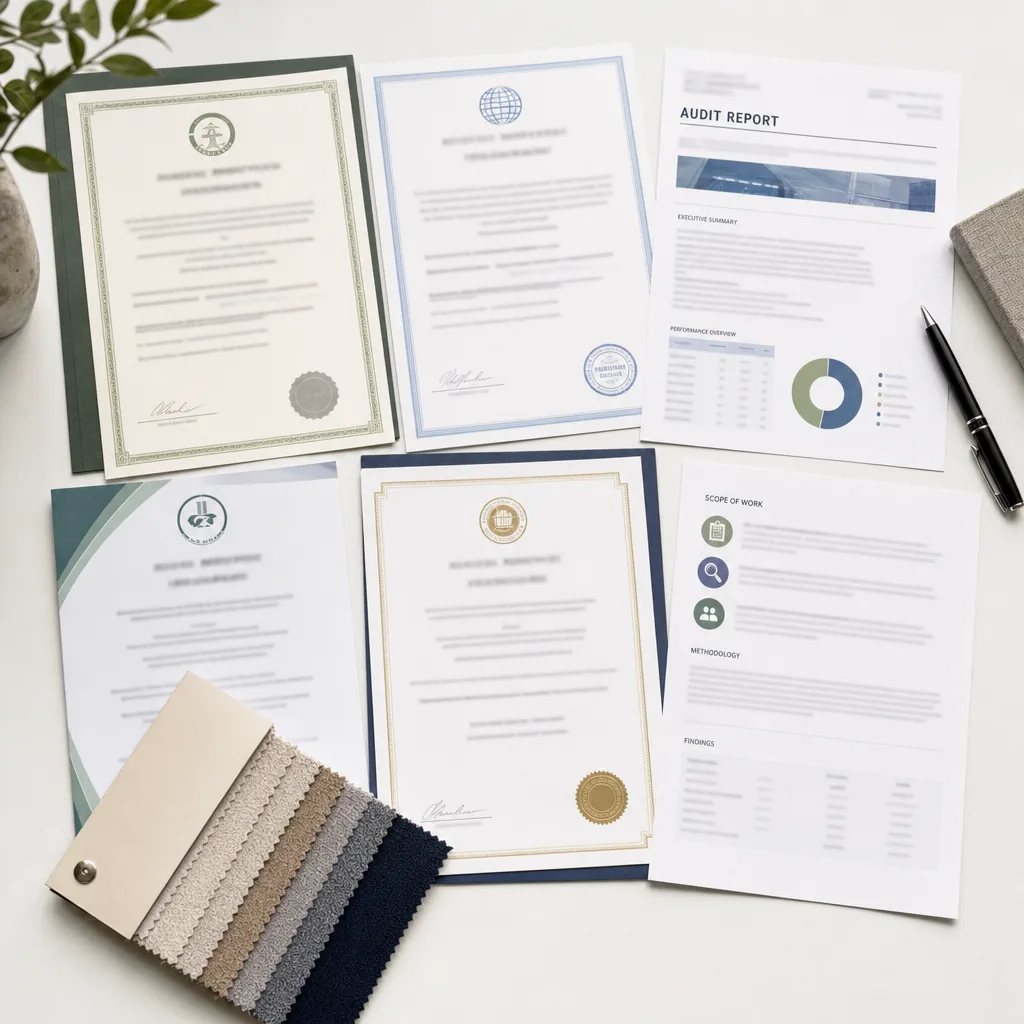
A proper compliance pack for a cpsia compliant cap starts with a current third-party test report, and by current I mean dated within the last 12 months, not a file copied from last season. For kids custom cap manufacturer work, I want the report to show the exact lot or style tested, the fabric composition, trim package, and if applicable any coatings, prints, or heat-transfer materials that could affect lead, phthalates, or flammability results. In practice, the buyer should check that the lab is CPSC-accepted and that the report matches the actual production materials, because a 100% cotton shell with a polyester sandwich bill is not the same test profile as a brushed twill cap with PVC patching. For kids baseball cap wholesale programs, this is where a lot of suppliers get sloppy: they hand over a passing report from a different colorway or a different brim construction, and that does not hold up in a recall review.
The small-parts inspection certificate matters just as much, especially for toddler and infant SKUs where the risk is not theoretical. A toddler hat custom order with a plastic snapback, metal buckle, sewn-on badge, or removable pom-pom needs a documented small-parts check, plus a production control note showing that no detachable component falls into the CPSIA small-parts cylinder under abuse testing. For an infant cap manufacturer, I would also expect the buyer file to include fabric content label confirmation with fiber percentages and country of origin format aligned to U.S. textile labeling practice, because a loose guess like “cotton blend” is not enough for childrens hat compliance. On factory-side records, we keep the label artwork, BOM, and approved sample photos together so the shipping carton, sewn-in label, and hangtag all match the same SKU and size range.
The social audit piece is separate from product safety but still belongs in the pack, and serious importers ask for a current sedex-audit-cap-supplier-guide.html">BSCI or Sedex SMETA 4-Pillar report before they place repeat orders. That tells you whether the factory has document control, working-hour records, and traceability discipline, which directly affects whether the cpsia compliant cap paperwork will stay clean through repeat production. Tracking-label compliance is the last item and it is non-negotiable: the cap must carry the manufacturer identity and production date, usually as a sewn-in label or permanent sticker, with enough detail to trace the batch back to the month and line. If a kids custom cap manufacturer cannot show that linkage, the paper file is weak no matter how good the test report looks. In real purchasing, that tracking label is what lets customs, retailers, and safety teams connect a returned cap to a specific run instead of treating the whole style as one undifferentiated lot.
Frequently Asked Questions
What file format should I send for my logo?
Vector files (AI, EPS, PDF) are ideal. High-resolution PNG or JPG at 300 dpi on transparent background works as a fallback. Provide Pantone color references for accurate reproduction.
Which shipping methods do you support?
We support FOB, CIF and DDP shipping. Air express for samples and small orders, sea LCL for 100 to 500 pieces, sea FCL for 5,000+ pieces. Door-to-door DDP available for US, EU, UK, Canada and Australia.
What logo decoration techniques do you offer?
3D puff embroidery, flat embroidery, woven patch, leather patch, PVC patch, screen printing, sublimation, applique and laser etching, all in-house with no subcontracting.
Do you support sustainability certifications?
Yes. We work with GOTS organic cotton, GRS-certified recycled polyester, OEKO-TEX Standard 100 fabrics, and are BSCI and Sedex audited. Certification documentation can be provided per order.
Can I order a sample before bulk production?
Yes. We strongly recommend approving a pre-production sample before mass production. Samples are charged at 35 to 60 USD each plus express shipping, fully refundable against confirmed bulk orders over 500 pieces.
What's the MOQ for custom embroidered baseball caps no minimum?
When evaluating custom embroidered baseball caps no minimum, the key considerations are construction quality, decoration capability, MOQ flexibility and lead time. Anything that can fit through a 31.7 mm small-parts cylinder fails for kids under 3. That means: no decorative beads, no detachable patches, no plastic snap closures on infant caps. Use Velcro or fabric strap. EU treats kids' apparel under REACH; toys (with structural play function) under EN 71. Embroidered logos, sewn-on patches, fabric straps — all REACH. Hats with…
How does ordering high quality custom baseball caps work?
When evaluating high quality custom baseball caps, the key considerations are construction quality, decoration capability, MOQ flexibility and lead time. Anything that can fit through a 31.7 mm small-parts cylinder fails for kids under 3. That means: no decorative beads, no detachable patches, no plastic snap closures on infant caps. Use Velcro or fabric strap. Infant (0-12 months, 38-44 cm), toddler (1-3 years, 46-50 cm), kids (4-12 years, 52-56 cm), youth (12-16 years, 54-58 cm). Manufacturing tooling differs at each tier.
How does ordering baseball cap with custom logo work?
When evaluating baseball cap with custom logo, the key considerations are construction quality, decoration capability, MOQ flexibility and lead time. CPSIA test report (current, under 12 months old), small-parts inspection certificate, fabric content label confirmation, BSCI/Sedex social audit, tracking-label compliance (CPSIA requires manufacturer + production date on the cap). Infant (0-12 months, 38-44 cm), toddler (1-3 years, 46-50 cm), kids (4-12 years, 52-56 cm), youth (12-16 years, 54-58 cm). Manufacturing tooling…
What's the MOQ for custom hat embroidery no minimum?
When evaluating custom hat embroidery no minimum, the key considerations are construction quality, decoration capability, MOQ flexibility and lead time. Flat embroidery is universally safe. PVC patches must be phthalate-tested. Heat-transfer print must use water-based ink (not solvent-based) for the under-3 segment. Sublimation is fine. Infant (0-12 months, 38-44 cm), toddler (1-3 years, 46-50 cm), kids (4-12 years, 52-56 cm), youth (12-16 years, 54-58 cm). Manufacturing tooling differs at each tier.
Ready to start your custom hat project?
Send us your tech-pack, sketch or even just an inspiration photo. We will respond with a detailed quotation and digital mock-up within 24 hours.
Request a free quoteRelated guides
Promotional Hat Pricing Tiers: What $2, $4 and $7 Each Get You
Read article →
Promotional Caps & Corporate Gifts: Bulk Custom Hats for Brand Events
Read article →
How to Vet a China Hat Manufacturer Before You Wire the Deposit
Read article →If you are ready to take the next step on kids' & children's cap manufacturing: cpsia compliance and sizing, our team can put a tailored quotation and digital mock-up in your inbox within 24 hours. Send the inquiry form on our contact page or message us directly on WhatsApp.