How to Vet a China Hat Manufacturer Before You Wire the Deposit
Every week, our sales team answers detailed questions about how to vet a china hat manufacturer before you wire the deposit. We wrote this guide so that wholesalers, streetwear brands, corporate buyers and promotional resellers can compare options with full information, and avoid the traps that show up only after production has started.
Business license verification (5 minutes, free)
The fastest way to vet hat manufacturer china is to start with the Chinese government registry, not the salesperson’s PDF. Use 国家企业信用信息公示系统 and match the legal Chinese company name exactly against the quotation, invoice header, and bank account name. If those three do not line up, stop. I also check the registered capital, year founded, and the business scope line by line. For a real headwear factory, the scope should include textile, garment, cap, embroidery, or related manufacturing; if it only says trading, consulting, or e-commerce, you are probably dealing with a middleman even if the website says “factory.”
A proper due diligence cap factory check takes five minutes and costs nothing. On the registry page, look for basic risk signals: abnormal operations, administrative penalties, equity pledges, or repeated changes to the legal representative and address. A shop that was founded last year with very low registered capital and no manufacturing scope is a different risk profile from a firm that has been operating for 8 to 12 years with stable filings. For supplier verification headwear, I care less about how polished the website looks and more about whether the legal entity has the right to manufacture what it is selling.
This step will not prove production capacity, but it will filter out the weakest candidates before you send a deposit. I treat it as the first layer before a trade assurance hat manufacturer claim, third-party factory video, or an actual audit hat supplier review. If the registry shows a clean legal entity, then move on to factory photos, machine brands like Tajima or Barudan, and tax/invoice consistency. If the registry does not support the story, do not rationalize it away just because the price is low. In headwear sourcing, cheap mistakes usually start with a weak company record, not with the embroidery thread.
Audit history: what should be on file?
A real factory should have a current sedex-audit-cap-supplier-guide.html">BSCI 2.0 or Sedex SMETA 4-Pillar audit on file, not a promise that “the auditor is coming next month.” When you vet hat manufacturer china, ask for the full report ID, audit date, scope, and factory name exactly as it appears on the certificate. Then verify it directly with the certifying body or platform. A screen grab is not enough; I want the document number, the issuing body, and the expiry window. In practice, a clean report tells you the factory has at least basic controls on wages, working hours, fire safety, chemical handling, and subcontracting. If they cannot produce that within minutes, treat it as a soft-fail in supplier verification headwear.
For due diligence cap factory work, I also check whether the audit scope matches the actual production site. A lot of trading companies will show a valid report from a different address, a parent company, or a packaging workshop that never stitches a panel. The report should match the legal entity, the street address, and the capacity you’re buying from. If the factory is claiming they can handle 50,000 pcs per month but the audit lists 18 sewing machines and 2 embroidery heads, that mismatch matters. It is the same logic I use when I audit hat supplier records: the paper should line up with the floor, not with the sales deck.
If they say they are “trade assurance hat manufacturer” compliant, treat that as platform protection, not proof of manufacturing depth. Trade assurance can help with payment discipline, but it does not replace a real social compliance file or a proper audit hat supplier record. For a serious buyer, ask for the last corrective action plan, any major non-conformities, and evidence of closure on fire exits, needle controls, and overtime records. A factory that is transparent will usually share redacted pages, photos of the corrective work, and the re-audit outcome. One that gets defensive is usually telling you what you need to know before you wire the deposit.
Video factory tour: what to look for
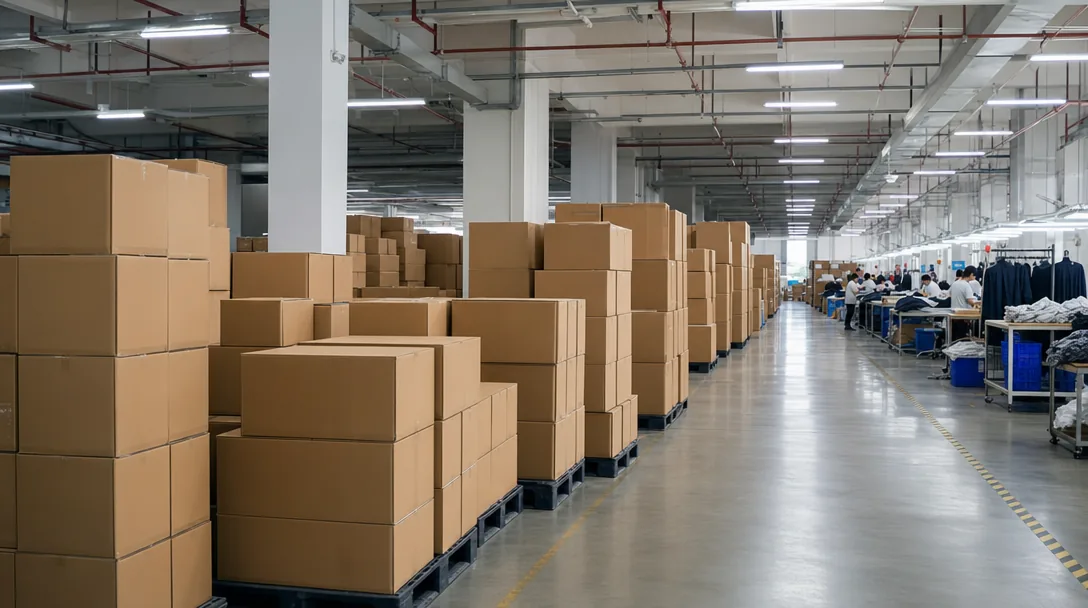
If you want to vet hat manufacturer china operations properly, insist on a live factory tour, not a polished pre-recorded video with no timestamps. A real tour should move in one continuous shot from cutting to sewing to embroidery to QC to packing, with the camera stopping long enough to show active workstations and a current date on a whiteboard or order sheet. I pay attention to whether fabric rolls are labeled by style, color, and lot number, because a factory that can’t keep track of 300 gsm brushed cotton twill, polyester mesh, or 50D lining in storage usually struggles when the order reaches production. For due diligence cap factory checks, this is the fastest way to separate a real manufacturer from a trading office filming someone else’s workshop.
In embroidery, look for machines actually running, not just powered on. Tajima, Barudan, or ZSK heads should be stitching live samples, with trim threads, backing, and thread cones in use; a dead line with clean needles and no operator nearby is a red flag. Good supplier verification headwear also means you can see how the factory handles cutting tables, sewing lines, and edge finishing: stacked panels should be routed by size and style, not dumped in mixed bins. The best sign is boring discipline — workers at their stations, semi-finished caps moving in sequence, QC staff checking panel symmetry, and packed cartons labeled with PO numbers, color codes, and carton counts. That kind of order matters more than any sales pitch.
A serious audit hat supplier review also checks the basics that usually get hidden in edited videos: posted safety signage, fire extinguishers, aisle markings, needle control bins, and clear packing areas with no cross-contamination between approved goods and offcuts. Ask the guide to pan across the QC table and show measurement tools, stitch-count checks, and rejected pieces; if they refuse, the camera work is doing the same job as a trade show handshake. For a trade assurance hat manufacturer, a live tour should let you confirm that what you see matches what you’ll receive in a sample set and on the commercial invoice. If the factory cannot show uninterrupted production flow, clean inventory discipline, and real people solving real defects, you do not have enough evidence to wire a deposit.
Sample evaluation: what physical and functional checks?
When you vet hat manufacturer china, start with measurements you can actually hold a caliper to, not with the sales deck. For retail-grade six-panel caps, I want embroidery or topstitching at 12 SPI minimum on visible seams, with no skipped stitches at stress points like the crown-to-brim junction. Brim flatness matters more than most buyers think: on a structured cap, I allow no more than 2 mm warp across the full arc when checked on a flat plate. If the sample rocks, the molding or board insertion is sloppy, and that problem usually gets worse at production speed. This is the level of detail you need for due diligence cap factory checks, because a nice photo sample can hide weak construction.
For a proper verify hat supplier china review, the sweatband and lining tell you whether the line is built for wash durability or just for a one-time presentation sample. I check sweatband attachment by hand first, then after a wash cycle at 30°C; if the binding peels, puckers, or separates at the seam, the adhesive or stitch bite is wrong. Color control is equally non-negotiable: match the approved reference within Delta-E 3 under D65 light, and compare both the shell fabric and thread color, since a lot of factories only hit the cap body and miss the trim. On a real audit hat supplier visit, I also check thread tension consistency, eyelet punching, and whether the front panel keeps its shape after compression shipping.
Supplier verification headwear is not just about a clean sample room; it is about whether the factory can repeat the same result under load. A good trade assurance hat manufacturer should be able to show you QC records from inline checks, final AQL 2.5 inspection reports, and rework logs for rejected lots, not just one golden sample. If the factory claims to run embroidery on Tajima, Barudan, or ZSK heads, ask for stitch-out photos on the actual fabric weight you plan to buy, because 100% cotton twill at 260 gsm behaves differently from washed chino or acrylic wool blends. If they cannot explain how they control brim tolerance, stitch density, and post-wash deformation, you have not finished the vet hat manufacturer china process yet; you have only found a seller.
Payment terms: 30% deposit / 70% balance is standard. Be wary of any variation
For a real cap program, 30% deposit and 70% balance after inspection and before shipment is the market-standard structure. If a factory pushes 50% to 100% upfront, wants full payment before sample approval, or asks you to wire money to a private personal account, Hong Kong shell with no production link, or a third-party payment route, stop. That is not normal working capital discipline; it is a risk signal. When you vet hat manufacturer china options, payment terms tell you a lot about whether the supplier actually carries yarn, fabric, thread, and labor risk in-house or is just flipping quotes from subcontractors.
PayPal-only is another bad sign for B2B headwear. Legit factories in Yiwu, Fujian, and Guangdong normally use bank-to-bank transfer to a company account under the factory’s registered legal name, with the invoice, PI, and beneficiary details matching exactly. For supplier verification headwear, I always check the company name on the business license, export license if applicable, and bank beneficiary line before any deposit leaves the buyer’s account. If the supplier claims to be a trade assurance hat manufacturer but cannot show a consistent company name across quotation, proforma invoice, and bank account, that’s a due diligence cap factory failure, not a paperwork issue.
If a seller insists on “sample payment” being nonrefundable but refuses to commit to a clear bulk price, MOQ, lead time, and QC standard, they are shifting all the risk to you. A proper audit hat supplier conversation should cover where the deposit goes, what production milestone it funds, and how balance payment is released against packing list, final photos, or third-party inspection under AQL 2.5. On serious orders, our standard practice is bank transfer only, company account only, with payment tied to confirmed specs, not vague promises. If the payment structure feels improvised, you have probably found a broker, not a factory.
Third-party inspection: when worth the $300
If you are trying to vet hat manufacturer china on a $10,000-plus order, a Final Random Inspection from SGS, Bureau Veritas, Intertek, or QIMA is not a luxury; it is cheap insurance. $280 to $350 usually buys you an inspector on-site in Yiwu, Dongguan, or wherever the caps are being packed, with a 24-hour report that actually tells you whether the cartons are ready to ship or full of problems. I have seen buyers save a container from disaster because the inspector caught a bad embroidery density, mixed sizes in polybags, and a color drift over Delta-E 2.0 on the crown panels before the balance payment was released. That is the kind of due diligence cap factory work that prevents dispute emails later.
A proper inspection is not just counting boxes. For headwear, the inspector should check AQL 2.5 for major defects and usually AQL 4.0 for minor ones, then sample across sizes, colorways, and carton positions so the factory cannot hide rejects in the middle of the stack. If you want to verify hat supplier china status seriously, tell the inspector to measure brim shape, panel symmetry, stitch count per inch, logo placement tolerance, sweatband alignment, and carton drop damage. On structured 6-panel caps, we also check buckram consistency, thread tension on Tajima or Barudan embroidery, and whether the back closure matches the approved spec, because those are the defects that turn into chargebacks.
The smartest buyers use supplier verification headwear as a gate, not an afterthought: pre-production sample approval, midline checks if the order is large, then a final random inspection before wiring the last payment. Trade assurance hat manufacturer platforms are useful for recordkeeping, but they do not replace a third-party audit hat supplier report with photos, measurements, and defect classification. CrownsForge’s standard practice is to let the inspector open random cartons, not staged samples, because staged cartons tell you nothing about the actual shipment. If the factory pushes back on third-party inspection, that is usually the clearest signal you need to walk away, even if the price looks good on paper.
Frequently Asked Questions
What file format should I send for my logo?
Vector files (AI, EPS, PDF) are ideal. High-resolution PNG or JPG at 300 dpi on transparent background works as a fallback. Provide Pantone color references for accurate reproduction.
What logo decoration techniques do you offer?
3D puff embroidery, flat embroidery, woven patch, leather patch, PVC patch, screen printing, sublimation, applique and laser etching, all in-house with no subcontracting.
Can I order a sample before bulk production?
Yes. We strongly recommend approving a pre-production sample before mass production. Samples are charged at 35 to 60 USD each plus express shipping, fully refundable against confirmed bulk orders over 500 pieces.
What is the minimum order quantity (MOQ) for custom hats?
Our standard MOQ is 100 pieces per design and color, with sampling available from 1 piece. For complex multi-color logos or premium fabric upgrades, the MOQ can be lowered with a small per-piece surcharge.
Which shipping methods do you support?
We support FOB, CIF and DDP shipping. Air express for samples and small orders, sea LCL for 100 to 500 pieces, sea FCL for 5,000+ pieces. Door-to-door DDP available for US, EU, UK, Canada and Australia.
How does ordering custom trucker hat bar work?
When evaluating custom trucker hat bar, the key considerations are construction quality, decoration capability, MOQ flexibility and lead time. Look up the supplier on the Chinese government's business registration site (国家企业信用信息公示系统). Confirm legal name, registered capital, year founded, scope of business includes textile/garment manufacturing. A real manufacturer has at least a current BSCI or Sedex SMETA report. Ask for the report ID and verify via the certifying body. 'Coming next month' is a soft-fail.
What should I know about wholesale custom baseball cap?
When evaluating wholesale custom baseball cap, the key considerations are construction quality, decoration capability, MOQ flexibility and lead time. Look up the supplier on the Chinese government's business registration site (国家企业信用信息公示系统). Confirm legal name, registered capital, year founded, scope of business includes textile/garment manufacturing. A real manufacturer has at least a current BSCI or Sedex SMETA report. Ask for the report ID and verify via the certifying body. 'Coming next month' is a soft-fail.
How does ordering custom dad hat embroidery work?
When evaluating custom dad hat embroidery, the key considerations are construction quality, decoration capability, MOQ flexibility and lead time. Live tour (not pre-recorded), walk through cutting / sewing / embroidery / QC / packing. Look for actual workers at workstations, organized fabric inventory, posted safety signage. Look up the supplier on the Chinese government's business registration site (国家企业信用信息公示系统). Confirm legal name, registered capital, year founded, scope of business includes textile/garment…
How does ordering custom baseball cap motorcycle helmet work?
When evaluating custom baseball cap motorcycle helmet, the key considerations are construction quality, decoration capability, MOQ flexibility and lead time. Look up the supplier on the Chinese government's business registration site (国家企业信用信息公示系统). Confirm legal name, registered capital, year founded, scope of business includes textile/garment manufacturing. A real manufacturer has at least a current BSCI or Sedex SMETA report. Ask for the report ID and verify via the certifying body. 'Coming next month' is a soft-fail.
Ready to start your custom hat project?
Send us your tech-pack, sketch or even just an inspiration photo. We will respond with a detailed quotation and digital mock-up within 24 hours.
Request a free quoteRelated guides
What's in a Cap Tech-Pack: A Specification Template for Buyers
Read article →
5-panel Hat Men: A 2026 B2B Sourcing Guide
Read article →
Custom Made Trucker Hat: The 2026 Sourcing & Manufacturing Playbook
Read article →Sourcing custom hats does not have to be complicated. With the right manufacturing partner, clear specifications and a small upfront investment in sampling, you can launch a retail-quality product in 30 to 45 days.