
Promotional Hat Pricing Tiers: What $2, $4 and $7 Each Get You
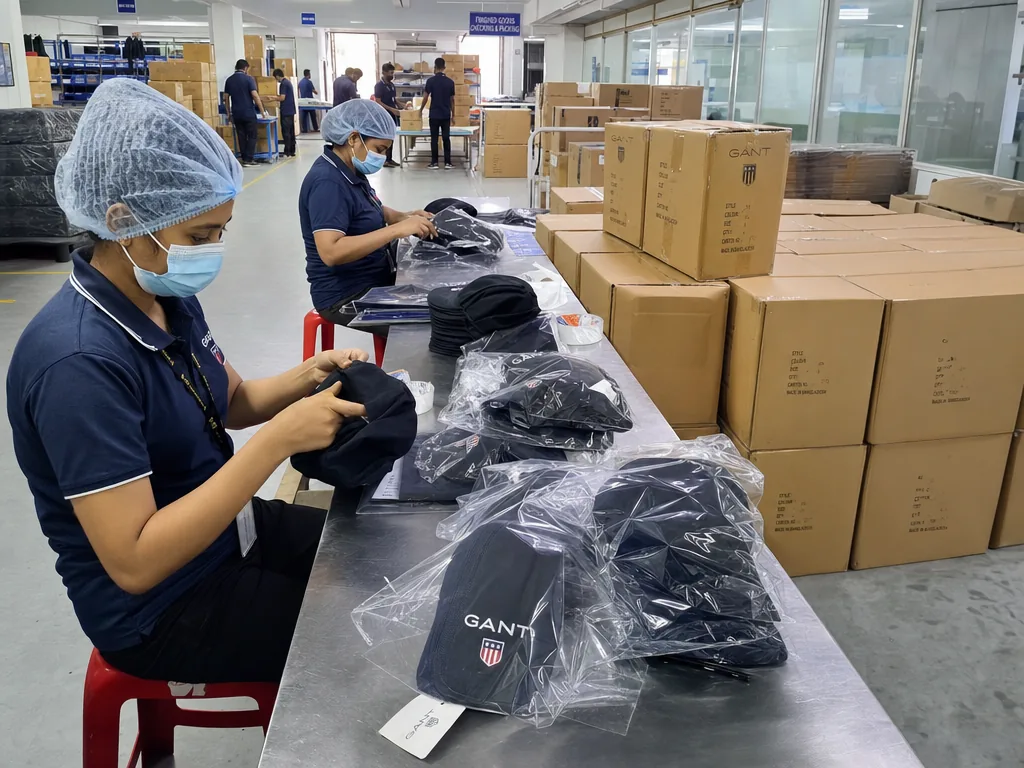
For brand owners, wholesalers and procurement teams entering the custom headwear category, promotional hat pricing tiers: what $2, $4 and $7 each get you is one of the highest-leverage decisions you will make. Get it right and your unit economics, retail story and reorder cycle all improve. Get it wrong and you carry the cost for years.
The $2 tier: how it's possible and what it sacrifices
At the $2 tier, promotional cap pricing is only possible when the spec is stripped to the bones: 100% polyester foam-front trucker, 5-panel construction, partial buckram, single-color 1 cm flat embroidery, no sweatband upgrade, and polybag-only packing. That combination keeps labor down because the crown holds its shape with minimal handling, and the decoration is small enough to run quickly on a Tajima or Barudan head without slowing the line. In practice, these cheap promotional hats are built for one job: put a logo on a head for a short campaign, not survive years of wear. Once you ask for a woven label, inner taping, or carton inserts, the math breaks immediately.
The sacrifice is mostly in handfeel, fit consistency, and durability. Foam-front polyester panels are light and easy to print or embroider, but they do not breathe well, and the front foam can crease if the carton is crushed. Partial buckram gives enough structure for the front two panels, yet the side and back panels stay soft, so the cap can look a little collapsed compared with better bulk promotional caps. With no sweatband upgrade, you are relying on the raw seam tape and base fabric, which is why low cost custom caps at this level often feel coarse on the forehead after a few hours in heat.
This tier only makes sense at MOQ 1000+ because the setup cost is spread over volume; a promotional hat manufacturer is not making margin on material, they are making it on repeatable production and low defect rates. If the logo is simple and the color count stays at one, the line can move fast and keep waste low, which is the whole point of wholesale promotional caps at this price. The tradeoff is clear: you get the cheapest acceptable carrier for a brand mark, but not a retail-grade product, and you should budget for higher variation in crown height, stitch tension, and foam compression than you would at $4 or $7.
The $4 tier: where most promotional programs land
At the $4 tier, you are usually buying the workhorse spec for bulk promotional caps: a cotton-poly 6-panel structured crown, decent shape retention, and embroidery that is still clean enough to survive a sales meeting or stadium giveaway. In real factory terms, this is where promotional cap pricing stops looking like a throwaway and starts paying for construction details—buckram front panels, stitched eyelets, a midweight crown around 260–300 gsm, and either flat embroidery or 3D puff embroidery capped at roughly 8,000 stitches before the price starts creeping. The difference between cheap promotional hats and something usable is not subtle here; a bad panel layout or loose stitch density shows up immediately on the front panel.
Most wholesale promotional caps at this level use a polyester sweatband because it keeps the cost down and handles sweat better than plain cotton tape in hot-weather use. A plastic snap closure is standard because it is fast on the assembly line and forgiving across head sizes, which matters when you are packing mixed-size giveaways for events. From a promotional hat manufacturer standpoint, this tier is also where color matching becomes more disciplined: if you need Pantone TCX accuracy on the fabric or embroidery thread, you can usually get close, but not without paying attention to thread brand, backing, and underlay. For low cost custom caps, this is the sweet spot where the cap still looks intentional instead of disposable.
Packaging is part of the cost stack, even if buyers tend to ignore it. A polybag with a hangtag adds labor, material, and QC handling, and it is one reason the same cap can move from a true $3.20 factory quote to a $4.00 landed program once you account for insert card, barcode label, and carton packing. When we build this class of promotional cap pricing for large runs, the practical expectation is a clean AQL 2.5 inspection level, not luxury finishing: trim tails controlled, embroidery registration acceptable, and crown symmetry within normal production tolerance. That is usually enough for bulk promotional caps that need to look good in a box and hold up through a six-month campaign, which is really what most buyers are paying for at this tier.
The $7 tier: premium retail-grade promotional
At the $7 tier, promotional cap pricing starts to look like a real retail program instead of a throwaway giveaway. You are usually talking about a 6-panel structured cap in 100% cotton twill around 270 to 300 gsm, or a wool blend if the buyer wants a colder-weather hand feel and deeper color. The front treatment is where the money goes: either a leather patch with clean edge burnishing and stitched border, or premium 3D puff embroidery built on a dense fill stitch file with proper underlay so the logo does not collapse after washing. On good bulk promotional caps, the crown shape, visor curve, and stitch density are controlled tightly; on cheap promotional hats, that same design would look soft, flat, and crooked by comparison.
The trim package is what separates these from low cost custom caps. A moisture-wicking sweatband, usually polyester tricot or brushed poly with a laminate backing, matters if the wearer is in heat or under stage lights; otherwise sweat rings show up fast on cotton. Closures at this tier are normally a brass buckle with a tuck-in strap or a metal snap, and both should be matched to the cap color instead of using whatever is cheapest in stock. A serious promotional hat manufacturer will also spec individual polybags and a printed hangtag, which adds labor and packaging cost but makes the product ready for retail shelves, team stores, or premium event gifting without rework.
In real factory terms, this tier usually sits around $3.20 to $4.80 EXW depending on logo complexity, trim sourcing, and order quantity, then rises once you add folded cartons, barcode stickers, or carton drop testing for export. The difference between usable wholesale promotional caps and a disappointing run is often in color control and finishing: Pantone TCX matching should stay within a practical Delta-E of about 2.0 to 3.0 on dyed twill, and the embroidery should be checked after steaming because thread shrink can distort the crown shape. If the buyer wants promotional cap pricing that feels justified, this is the tier where the cap can actually compete with retail stock instead of looking like a giveaway from a trade show table.
What changes the per-piece cost the most
Fabric grade moves the needle more than anything else because the raw cloth is the biggest single variable before labor even starts. A $2 cap usually means 100% polyester twill around 160–180 gsm, sometimes recycled in appearance but not in spec, with a basic 6-panel structure and a stiff buckram front. At the $4 level, you are usually into brushed cotton twill, washed cotton, or mid-weight polyester-cotton blends with better hand feel, cleaner stitching, and more consistent dye lots. By $7, you can specify heavier cotton twill, canvas, corduroy, or structured performance fabrics with tighter tolerances and better sweatband materials. In actual promotional cap pricing, that fabric jump is why cheap promotional hats can look fine in photos but fail once you start checking crown shape, shrinkage, and seam stability after heat or humidity.
Decoration complexity is the second major cost driver because every extra action on the front panel, side, or back adds machine time and reject risk. A flat embroidery logo with 5,000 stitches on a Tajima or Barudan head is cheap compared with 3D puff, applique, woven patch, rubber badge, or multi-location decoration. Once you move from one-color embroidery to 3-5 thread changes, or add a woven label plus back embroidery, the cost climbs fast. Color count matters after that because each thread change means setup time, machine downtime, and more trim labor; the same applies to print methods where Pantone TCX matching and delta-E control add handling. For bulk promotional caps, every extra decoration step can add $0.20 to $1.20 per piece depending on complexity and order size.
Packaging and quantity come last, but they still change the landed number enough to matter. A loose bulk pack in cartons is the cheapest, while individual polybags, barcode stickers, size labels, header cards, and retail inserts can add $0.08 to $0.45 per unit before freight. Order quantity only really starts to help after 500 pcs because setup costs for cutting, embroidery digitizing, sewing line balancing, and QC are spread over more units; below that, you are paying a premium for low cost custom caps in the form of labor inefficiency. In practice, a promotional hat manufacturer will usually price 300 pcs much closer to 500 pcs than buyers expect, while 1,000+ pcs gives real savings on thread waste, trimming, carton loading, and AQL 2.5 inspection labor. That is why wholesale promotional caps get cheaper in steps, not smoothly.
When to choose $2 vs $7 — and when to mix
For conference giveaways and trade-show handouts, the $2 to $3 tier is usually enough if the job is simple: 100% polyester twill or brushed cotton, flat embroidery or one-color screen print, plastic snapback, and a basic woven or printed label. At that price point, you are buying speed and volume, not refinement. Cheap promotional hats in this band are typically built to survive one event cycle, maybe two, and the spec sheet is where the compromises show up: thinner sweatband, less structured front panels, looser stitching tolerances, and decoration that needs to stay under 5,000 stitches to keep labor under control. For bulk promotional caps, that is acceptable when the real goal is visibility, not merchandise value. From a promotional hat manufacturer’s standpoint, this is the tier where buyers should focus on one clear logo placement and avoid multi-step decoration that drives up reject rates.
Once you move to customer gifts, dealer incentives, or ambassador kits, $5 to $7 changes the signal completely. You can specify 280-320 gsm cotton twill, buckram-supported front panels, higher-density embroidery, custom taping, and a better closure like a brushed-metal buckle or PVC strap. That extra spend buys cleaner edge finish, more consistent crown shape, and less distortion after washing or shipping. In promotional hat pricing terms, this is the range where the cap stops feeling disposable and starts feeling like brand merch people keep. Wholesale promotional caps in this band also tolerate tighter color control, so you can hit Pantone TCX targets more reliably and keep Delta-E under 2.0 on repeat orders. If you are comparing low cost custom caps against mid-tier pieces, the difference is usually not just decoration; it is pattern accuracy, sweatband quality, and how well the visor holds its curve after production.
The practical move is to mix tiers inside one program instead of forcing everything into one SKU. A common structure is $2 caps for traffic-heavy events, $4 mid-tier for staff and reseller samples, and $7 pieces for VIPs, press kits, or top customers. That keeps promotional cap pricing aligned with audience value without blowing the budget on everyone who walks past a booth. On the factory side, mixed programs are easier to control if you keep the shell fabric, panel count, and base shape consistent, then vary only the decoration level and finishing hardware. Our standard practice is to separate the program into clear production lanes so the cheap promotional hats do not contaminate QC on the premium run; otherwise AQL 2.5 inspection gets messy fast. Buyers who plan this way usually get better fill rates, fewer last-minute substitutions, and a much cleaner margin profile across the whole campaign.
The hidden cost: setup, sampling, freight
The first mistake buyers make with promotional cap pricing is treating the unit quote like the full number. It never is. On embroidery jobs, digitizing is typically $40 for a clean 3,000- to 6,000-stitch logo, and if the artwork has bad gradients or tiny text, the file still needs cleanup before a Tajima or Barudan head can sew it without thread breaks. Screen-print jobs add their own setup: about $30 per color for plates or screens, plus ink matching if you are chasing Pantone TCX closely enough that Delta-E matters. For cheap promotional hats, that overhead can erase the apparent savings fast, especially on small MOQs where fixed costs are spread over only 100 to 300 pieces. A promotional hat manufacturer will usually quote the cap body separately from these setup items, so you have to ask for landed cost, not just FOB unit price.
Sampling is the next place buyers lose money because they compare bulk promotional caps without accounting for a pre-production run. A realistic sample cost is $40 to $80 depending on fabric, trim, and whether the factory has to build a new pattern or just pull a stock mold. If the sample needs revisions, you may pay again for corrected thread density, visor shape, or closure placement. For low cost custom caps, that sample is not optional—it is the only way to catch problems like crooked center seams, underfilled buckram fronts, or embroidery pull on 100% cotton twill before the main order runs. Good factories will also quote a test sample on the same machine set you will use in production, because a sample sewn on one head and bulk produced on another often hides tension issues.
Freight is where promotional cap pricing can swing more than people expect. Air freight for caps usually lands around $0.20 to $1.50 per piece depending on carton density, route, and season; sea freight is much cheaper at roughly $0.05 to $0.15 per cap, but only if you have enough volume to fill cartons efficiently and wait for transit. Add origin charges, destination handling, customs clearance, and inland trucking if you are not buying EXW. On a 1,000-piece order, a $0.60 freight difference is $600 straight into your landed cost, which can wipe out the advantage of a cheaper factory quote. The right way to compare wholesale promotional caps is to total setup, sample, production, freight, and duty together, then divide by finished units. Otherwise the cheapest quote is often just the most incomplete one.
Frequently Asked Questions
What logo decoration techniques do you offer?
3D puff embroidery, flat embroidery, woven patch, leather patch, PVC patch, screen printing, sublimation, applique and laser etching, all in-house with no subcontracting.
Which shipping methods do you support?
We support FOB, CIF and DDP shipping. Air express for samples and small orders, sea LCL for 100 to 500 pieces, sea FCL for 5,000+ pieces. Door-to-door DDP available for US, EU, UK, Canada and Australia.
Can I order a sample before bulk production?
Yes. We strongly recommend approving a pre-production sample before mass production. Samples are charged at 35 to 60 USD each plus express shipping, fully refundable against confirmed bulk orders over 500 pieces.
Do you support sustainability certifications?
Yes. We work with GOTS organic cotton, GRS-certified recycled polyester, OEKO-TEX Standard 100 fabrics, and are BSCI and Sedex audited. Certification documentation can be provided per order.
How long does production take?
Sampling takes 7 to 12 days. Bulk production runs 20 to 30 days depending on quantity, fabric availability and decoration complexity. Inspection and packing adds another 3 to 5 days before shipment.
What should I know about bulk custom trucker hats?
When evaluating bulk custom trucker hats, the key considerations are construction quality, decoration capability, MOQ flexibility and lead time. 100% polyester foam-front trucker, 5-panel construction with partial buckram, single-color 1cm flat embroidery, no sweatband upgrade, polybag-only packaging. MOQ 1000+. Cotton-poly 6-panel structured, 3D puff or flat embroidery (up to 8000 stitches), polyester sweatband, plastic snap closure, polybag with hangtag.
How do I find a reliable custom hat manufacturer usa?
When evaluating custom hat manufacturer usa, the key considerations are construction quality, decoration capability, MOQ flexibility and lead time. 100% polyester foam-front trucker, 5-panel construction with partial buckram, single-color 1cm flat embroidery, no sweatband upgrade, polybag-only packaging. MOQ 1000+. Cotton-poly 6-panel structured, 3D puff or flat embroidery (up to 8000 stitches), polyester sweatband, plastic snap closure, polybag with hangtag.
How does ordering custom made trucker hat work?
When evaluating custom made trucker hat, the key considerations are construction quality, decoration capability, MOQ flexibility and lead time. 100% polyester foam-front trucker, 5-panel construction with partial buckram, single-color 1cm flat embroidery, no sweatband upgrade, polybag-only packaging. MOQ 1000+. Cotton-poly 6-panel structured, 3D puff or flat embroidery (up to 8000 stitches), polyester sweatband, plastic snap closure, polybag with hangtag.
How much does cheap baseball hats in bulk typically cost?
When evaluating cheap baseball hats in bulk, the key considerations are construction quality, decoration capability, MOQ flexibility and lead time. 100% polyester foam-front trucker, 5-panel construction with partial buckram, single-color 1cm flat embroidery, no sweatband upgrade, polybag-only packaging. MOQ 1000+. Cotton-poly 6-panel structured, 3D puff or flat embroidery (up to 8000 stitches), polyester sweatband, plastic snap closure, polybag with hangtag.
Ready to start your custom hat project?
Send us your tech-pack, sketch or even just an inspiration photo. We will respond with a detailed quotation and digital mock-up within 24 hours.
Request a free quoteRelated guides
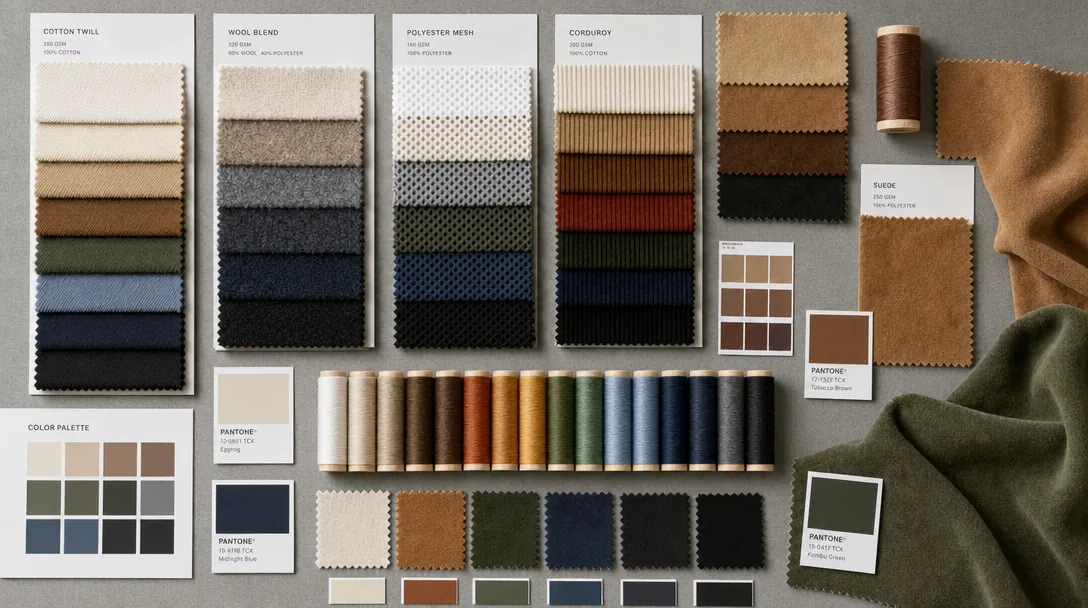
Cotton Beanie: Properties, Costs and How to Spec It Right
Read article →
How to Vet a China Hat Manufacturer Before You Wire the Deposit
Read article →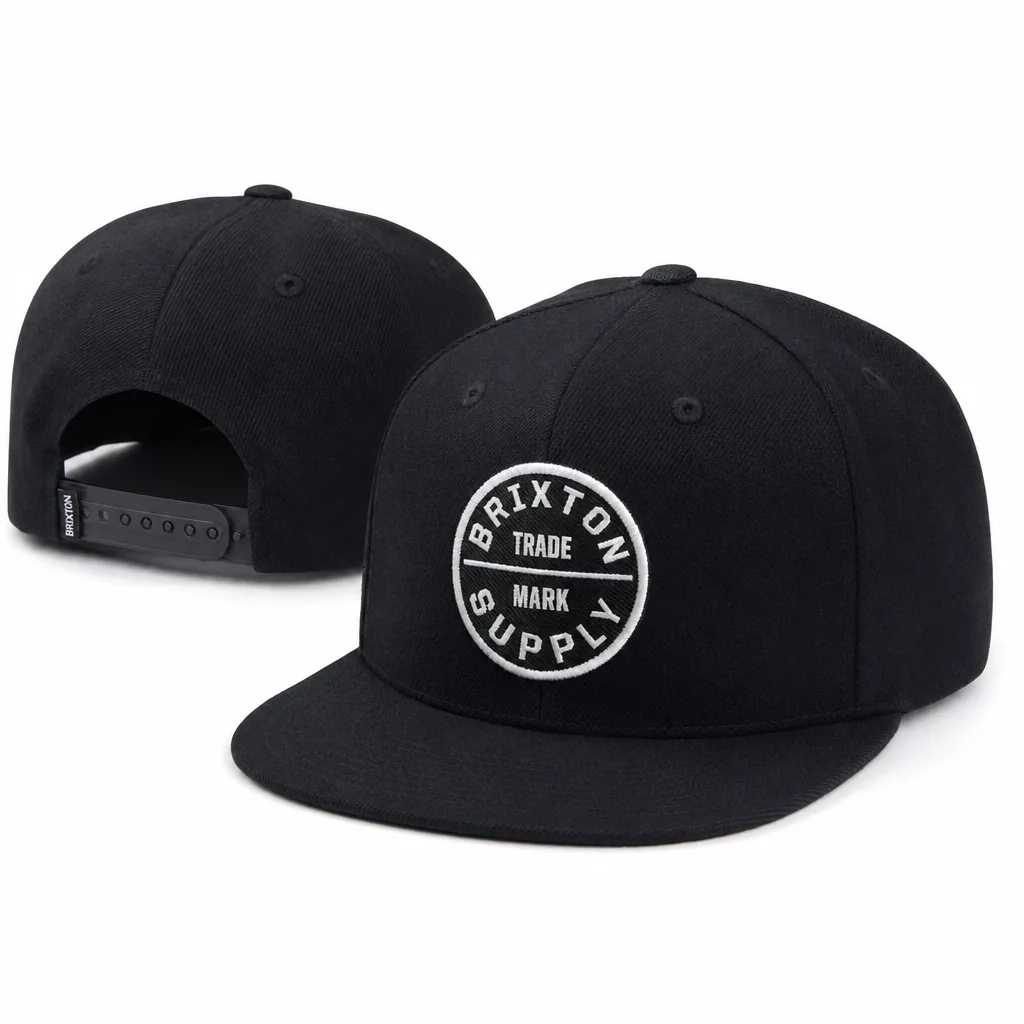
Custom Snapback Hats: The Streetwear Brand's Guide to Premium Production
Read article →We hope this guide demystifies promotional hat pricing tiers: what $2, $4 and $7 each get you and helps you move forward with confidence. If you have questions specific to your project, our English-speaking sales engineers are one message away.