
Sports Team Caps & Uniform Headwear: Bulk Manufacturing for Clubs and Schools
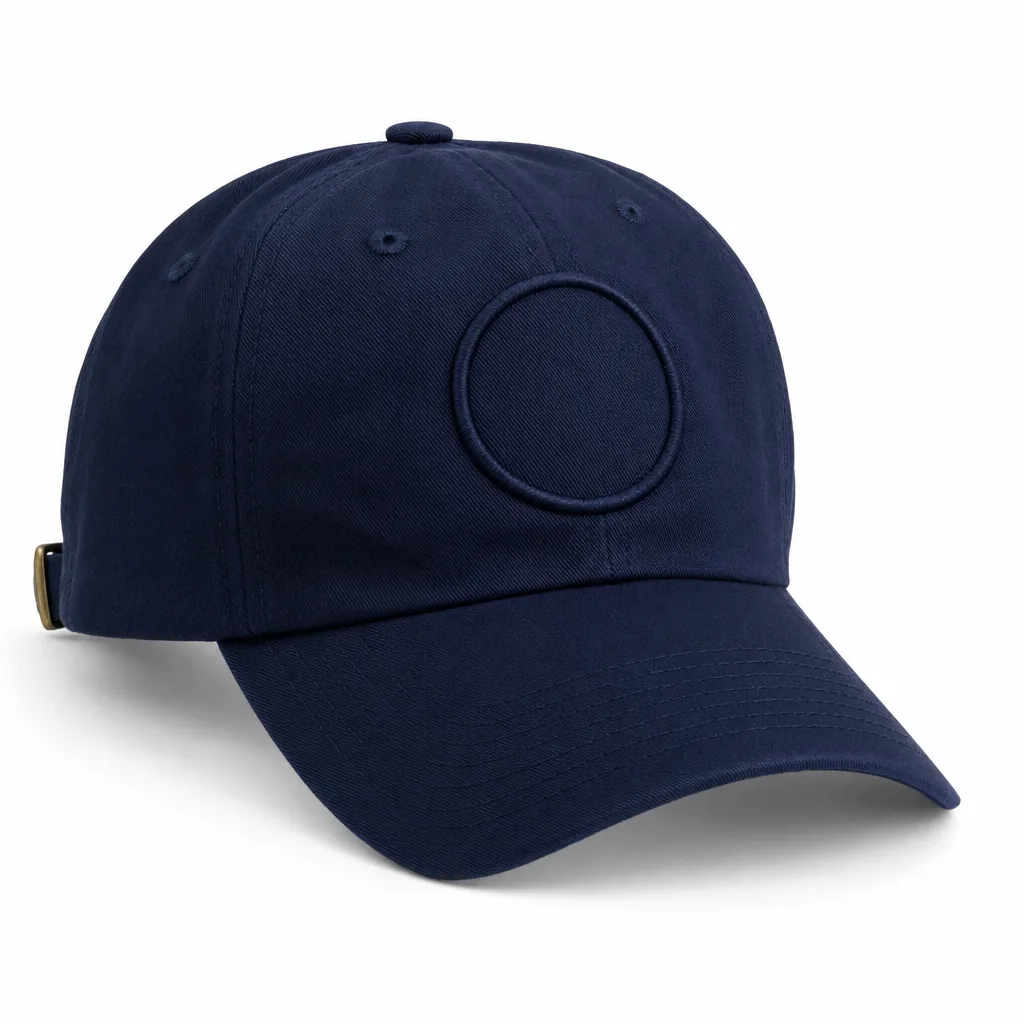
For brand owners, wholesalers and procurement teams entering the custom headwear category, sports team caps & uniform headwear: bulk manufacturing for clubs and schools is one of the highest-leverage decisions you will make. Get it right and your unit economics, retail story and reorder cycle all improve. Get it wrong and you carry the cost for years.
Why teams need a specialist manufacturer
Teams do not buy headwear the way they buy blank promo caps. A proper sports team cap has to match the same navy, cardinal, or forest green every season, even when the fabric mill changes dye lots. That means working to Pantone TCX references, checking Delta-E against approved lab dips, and locking down crown fabric, visor underlay, and thread colors before production starts. For school athletics and club programs, that consistency matters more than a one-off cheap price. If the hat color drifts by 1.5 to 2.0 Delta-E between reorders, the whole set looks mismatched under stadium lights and on camera. A real athletic cap supplier also understands profile control, sweatband choice, and structured versus unstructured builds, because sports team hats have to look uniform from the stands, not just pass a product photo.
Fast reorder is where most general hat vendors fall apart. Clubs need the same embroidery file, the same sizing block, and the same trim spec available six months later when a tournament order comes back or a school adds a new roster. A school cap manufacturer should keep digitized files in-house on Tajima, Barudan, or ZSK heads, then archive stitch counts, backing type, and panel placement so repeat orders do not need to be re-engineered. On larger club cap bulk programs, the practical target is a 15 to 20 day repeat cycle after fabric is confirmed, with rush programs possible only if the factory already has the correct shell fabric in stock. Without that setup, reorders turn into sample rebuilds, which wastes time and creates color drift, logo shift, and fit changes.
Individualization is another reason teams need a specialist. Coaches want player names, jersey numbers, conference patches, or side embroidery for captain and varsity distinctions, but those details cannot wreck the clean team look. The better approach is to separate base production from personalization: keep the front logo identical, then add names with controlled placement, usually 6 to 8 mm above the back arch or on the left panel, depending on the cap structure. For sports team caps, the factory also has to decide whether to use flat embroidery, 3D puff, woven labels, or heat-applied patches based on washability and budget. On a real bulk program, extra individualization typically adds $0.35 to $1.20 per piece depending on stitch count and setup, which is manageable if the manufacturer knows how to batch and sort without mixing sizes or player names.
Fabric specs for athletic caps
For athletic caps, 100% polyester is still the workhorse because it holds shape under sweat, sun, and repeated wash cycles better than cotton twill. I’d specify 150 to 180 gsm for a standard six-panel crown, with a wicking finish or mechanical micro-perforation if the team is playing in hot climates. For sports team caps, the fabric handfeel matters less than recovery and colorfastness: a decent polyester should hold a minimum colorfastness rating of 4 on the gray scale after laundering, and dye lots need to stay within Delta-E 1.5 to 2.0 if you want the front panel and visor to look uniform across a club cap bulk order. Cheap fabric will pill at the sweatband edge and lose structure after a few weeks of use.
Mesh ventilation panels are not just for looks; they control heat buildup and reduce moisture retention in the crown. A proper athletic cap supplier will usually use polyester mesh around 75 to 110 gsm with a tighter gauge on the front-facing panels so the cap still carries embroidery cleanly. For team uniform hats, I prefer the mesh to be color-matched to the body fabric, because off-tone black or navy mesh looks sloppy under stadium lighting. If the cap needs to survive school sports schedules, ask for reinforced seam tape at the front panel join and a sweatband made from polyester/spandex terry or Coolmax-type knit. That combination dries faster and does not sour as quickly as cotton terry when kids leave caps in locker bags.
UV protection is one of those specs buyers forget to write down until the first outdoor season. For a school cap manufacturer or sports team hats program, the fabric should be tested for UPF 30 minimum, and UPF 50+ is the safer call for baseball, golf, and field sports. Darker colors usually perform better, but the real variable is weave density and finish; a loose mesh without UV treatment will not protect much even if the cap looks technically correct. On our standard practice for outdoor orders, we also check shrinkage at 40°C wash and verify that the visor board does not warp from heat exposure, because bad interlining can make an otherwise solid cap unusable after a few practices.
Color matching across multiple SKUs
Color matching across multiple SKUs is where most bulk programs get sloppy. A club may approve one navy on a cap, another on a jersey, and a third on shorts, then wonder why the whole set looks off under daylight and stadium LEDs. For sports team caps, we work from Pantone TCX or Pantone C references first, then convert that into fabric-specific targets by base material, dye class, and finishing process. Cotton twill, washed cotton, polyester mesh, and brushed performance poly all hold color differently, so the same lab dip code will not read the same once it is cut and sewn.
The practical way to control this is dye-lot discipline, not wishful thinking. Every incoming lot should be checked against a master standard under D65 lighting, then measured with a spectrophotometer and kept within a realistic Delta-E window; for most school and club programs, I would target Delta-E under 1.5 for key panels and under 2.0 for secondary components. As a school cap manufacturer, we also lock the crown, visor, sweatband, and embroidery thread together in the same color approval package, because a bright red undervisor can make a clean hat look mismatched even if the shell is close.
For club cap bulk and wider uniform programs, the bigger issue is production sequencing. If the cap factory dyes or sources hats in a different week than the jersey and short run, minor shade drift is almost guaranteed, especially on dark navy, forest green, maroon, and heather tones. Our standard practice is to freeze all approved lab dips, keep the same supplier base where possible, and request pre-production strike-offs for embroidery thread on Tajima or Barudan heads before cutting full lots. That keeps sports team hats, team uniform hats, and the rest of the kit reading as one system instead of three separate products from the same athletic cap supplier.
Personalization at scale
Player numbers, names, sponsor logos, and season patches all look simple on a mockup, but at scale they turn into a file-control problem. For sports team caps, the cleanest workflow is to lock artwork into a single production pack: vector logo files, a name list in CSV, Pantone TCX references for thread matching, and a placement chart measured in millimeters from center front, side seam, and brim stitch line. If you skip that discipline, you get inconsistent left-right alignment, wrong jersey numbers, and sponsor marks drifting out of the safe area. On embroidery, I usually specify a minimum stroke of 1.2 mm for satin columns and avoid tiny text below 4 mm cap height, because anything smaller starts closing up on structured front panels. The same rule applies to heat transfer patches and woven labels: if the design is too busy, simplify it before you approve bulk.
The manufacturing method should match the graphic, not the other way around. Names and numbers are usually best as flat embroidery or stitched appliqué on club cap bulk orders, while sponsor logos with small type may need woven patches, 3D embroidery for short text, or TPU transfers if the order quantity is too low to justify a new sew-out. On curved crowns, thread density matters; a Tajima or Barudan head can hold registration well, but only if the digitizing is balanced and the underlay is set for the fabric weight. For school cap manufacturer programs, I prefer to separate seasonal elements like tournament patches or graduation marks into removable components, because that reduces SKU waste when a season ends. AQC should check for thread tension, patch edge lift, and color drift under D65 light, especially when the client wants exact PMS-to-thread matching rather than a close visual match.
At production level, personalization works best when you group the order by variable fields: same base cap, then split by player name, number, and sponsor set. That allows an athletic cap supplier to keep one sewing route, one trim code, and one inspection standard instead of rebuilding the line for each variation. For sports team hats, the practical cost adders are straightforward: 12 to 25 cents per embroidered name, 20 to 45 cents for a small number, and 30 to 80 cents for a sew-on patch depending on size and stitch count. Season-specific patches are cheap only when you keep them under 50 mm and approve the die line early; otherwise, setup costs can eat the margin on a 300-piece run. Our standard practice is to freeze all variable data before bulk cutting, then run a first-off sample against AQL 2.5 so the club does not discover a bad name spell on the last carton.
MOQ flexibility for school orders
School and club programs should not be forced into 500-piece MOQs just to get acceptable quality. For most educational orders, a practical starting point is 48 to 100 pcs per colorway, especially when the same crown shape and fabric are kept across sizes. A good school cap manufacturer will split the order by embroidery position or patch type rather than by full SKU, so you can run one navy cotton twill body with different front logos for varsity, junior varsity, and alumni without blowing up the price. For sports team caps, that flexibility matters because many schools need to test fit, approval, and budget before committing to a larger replenishment run.
The real cost driver is not the low MOQ itself, it is how many times the factory has to change thread charts, backing, or heat-transfer settings. On a Barudan or Tajima multi-head line, one logo change can be cheap; five separate constructions can turn a small club cap bulk order into a headache. Our standard practice is to keep materials standardized — 100% cotton twill around 260 to 280 gsm, polyester mesh at 150 to 180 gsm, or brushed chino with a consistent wash — and then vary only the decoration. That is how team uniform hats stay affordable for booster clubs, PTAs, and community leagues without dropping into inconsistent workmanship.
For buyers comparing athletic cap supplier quotes, ask whether sampling and final production can share the same spec sheet, thread library, and Pantone TCX target. If the school insists on exact colors, the factory should quote against Delta-E tolerance, not vague “close enough” language; for most embroidery, Delta-E under 2.0 is realistic if the yarn set is available. Lower MOQ tiers usually carry a 10 to 18 percent unit premium versus 300+ pcs, but that is still better than overbuying inventory that sits in a locker room. For sports team hats used in seasonal programs, a controlled low-MOQ run is often the smarter purchasing decision.
Sample, approve, produce: timeline for season launch
Work backward from the first game or school launch date, not from the PO date. For sports team caps, the real bottleneck is usually artwork approval and pre-production sampling, not cutting fabric. A clean timeline is 35 to 55 calendar days after final specs: 3 to 5 days for digitizing and artwork corrections, 7 to 10 days for sample making, 2 to 4 days for courier transit, and 3 to 7 days for approval changes. If the project needs custom woven labels, special visor inserts, or a new crown shape, add another week. A school cap manufacturer that promises 15-day bulk delivery without a prior sample is usually skipping checks that show up later as thread breaks, shade mismatch, or fit complaints on the field.
The sample stage should be treated like a gate, not a formality. We normally compare crown height, panel symmetry, visor curve, and logo placement against a signed spec sheet, using Pantone TCX or PMS for color control and accepting embroidery variation only within a practical Delta-E range. For team uniform hats going to multiple age groups, I always recommend testing at least two size runs or closure settings, because youth and adult head circumference can differ by 2 to 3 cm. If the cap uses structured buckram, sandwich piping, or high-density 3D embroidery, the sample must be worn and photographed from multiple angles before approval. Club cap bulk orders fail most often when someone approves from a flat desk photo instead of checking the fit on real heads.
Once the sample is approved, production should be scheduled around capacity, not optimism. A typical athletic cap supplier will need 10 to 18 days for fabric cutting, embroidery on Tajima, Barudan, or ZSK heads, sewing, shaping, trimming, and final inspection, then another 5 to 12 days for packing and shipping depending on FOB or DDP routing. For sports team hats with a hard season deadline, I advise locking the approval at least 6 weeks before launch and the final freight booking 2 to 3 weeks before dispatch. That leaves room for AQL 2.5 inspection, carton count checks, and one round of rework if a thread lot, buckle, or sweatband shipment arrives off-spec.
Frequently Asked Questions
Can I order a sample before bulk production?
Yes. We strongly recommend approving a pre-production sample before mass production. Samples are charged at 35 to 60 USD each plus express shipping, fully refundable against confirmed bulk orders over 500 pieces.
Which shipping methods do you support?
We support FOB, CIF and DDP shipping. Air express for samples and small orders, sea LCL for 100 to 500 pieces, sea FCL for 5,000+ pieces. Door-to-door DDP available for US, EU, UK, Canada and Australia.
What is the minimum order quantity (MOQ) for custom hats?
Our standard MOQ is 100 pieces per design and color, with sampling available from 1 piece. For complex multi-color logos or premium fabric upgrades, the MOQ can be lowered with a small per-piece surcharge.
What logo decoration techniques do you offer?
3D puff embroidery, flat embroidery, woven patch, leather patch, PVC patch, screen printing, sublimation, applique and laser etching, all in-house with no subcontracting.
How long does production take?
Sampling takes 7 to 12 days. Bulk production runs 20 to 30 days depending on quantity, fabric availability and decoration complexity. Inspection and packing adds another 3 to 5 days before shipment.
How much does cheap custom hats in bulk typically cost?
When evaluating cheap custom hats in bulk, the key considerations are construction quality, decoration capability, MOQ flexibility and lead time. Repeatable color matching across seasons, fast reorder, individualization options. Moisture-wicking polyester, mesh ventilation panels, UV protection.
How does ordering custom beanie cap work?
When evaluating custom beanie cap, the key considerations are construction quality, decoration capability, MOQ flexibility and lead time. Repeatable color matching across seasons, fast reorder, individualization options. Moisture-wicking polyester, mesh ventilation panels, UV protection.
What should buyers know about nike bucket hats for men?
When evaluating nike bucket hats for men, the key considerations are construction quality, decoration capability, MOQ flexibility and lead time. Repeatable color matching across seasons, fast reorder, individualization options. Moisture-wicking polyester, mesh ventilation panels, UV protection.
What should buyers know about cool bucket hats for guys?
When evaluating cool bucket hats for guys, the key considerations are construction quality, decoration capability, MOQ flexibility and lead time. Repeatable color matching across seasons, fast reorder, individualization options. Moisture-wicking polyester, mesh ventilation panels, UV protection.
Need a low-MOQ test order?
We help emerging brands launch with as few as 100 pieces. Premium fabric, in-house embroidery, retail-ready packaging.
Start a small orderRelated guides
Custom Embroidered Patches: When to Use It, Costs, and What to Ask Your Factory
Read article →Custom Made Trucker Hat: The 2026 Sourcing & Manufacturing Playbook
Read article →How to Choose a Custom Baseball Cap Manufacturer in China — 2026 Buyer's Guide
Read article →Sourcing custom hats does not have to be complicated. With the right manufacturing partner, clear specifications and a small upfront investment in sampling, you can launch a retail-quality product in 30 to 45 days.