
What's in a Cap Tech-Pack: A Specification Template for Buyers - Cost & MOQ Breakdown - Supplier Checklist

Every week, our sales team answers detailed questions about what's in a cap tech-pack: a specification template for buyers - cost & moq breakdown - supplier checklist. We wrote this guide so that wholesalers, streetwear brands, corporate buyers and promotional resellers can compare options with full information, and avoid the traps that show up only after production has started.
Why a tech-pack saves you weeks of email back-and-forth
The fastest way to lose two weeks on a cap order is to brief in adjectives instead of tolerances. “Premium 6-panel snapback with front embroidery” does not tell the sample room the crown depth, panel shape, buckram stiffness, visor length, visor curve, seam tape color, underbill material, eyelet diameter, sweatband composition, snapback gauge, or label placement. A proper cap tech pack template converts buyer intent into measurable factory instructions, so merchandising, pattern making, embroidery digitizing, purchasing, and QC are not guessing from WhatsApp screenshots and half-marked Illustrator files. One unclear detail can create three separate delays: a revised embroidery tape, a new cutting marker, and a trim reorder. On a real production line, those are not quick “small changes”; they compete with booked Tajima, Barudan, or ZSK embroidery capacity and push the sample back in the queue.
The document saves time because it locks the specifications operators actually measure. A usable cap spec should list panel count, finished crown depth in cm, visor length and thickness, sandwich width, fabric construction, fabric weight in gsm, closure material, sweatband type, and decoration method. For embroidery, include logo size in mm, flat or 3D puff, puff height, estimated stitch count, backing type, thread brand or Pantone TCX reference, and placement tolerance; ±2 mm is realistic for most front logos, while side embroidery often needs more allowance because of panel curvature. For brand colors, define Delta-E tolerance before sampling. I normally push below Delta-E 1.5 for hero colors and allow 2.0–2.5 for non-critical trims. With those fields completed, first sample lead time often drops from 14 calendar days to 7–9 because digitizing and panel cutting can start without clarification loops.
Commercial details belong in the same file, not in a separate email after the sample is approved. State target FOB price, MOQ by colorway, carton packout, barcode and hangtag position, polybag requirements, country-of-origin label, care label wording, compliance needs, and inspection standard such as AQL 2.5 general inspection. If the tech pack does not specify matte nylon snap, recycled polyester sweatband, custom woven label, branded seam tape, or individual retail polybag with suffocation warning, many factories will sample with house trims simply to keep moving. Those substitutions can shift bulk cost by $0.18–$0.65 per cap, especially below 1,000 pieces per color. The goal is not a prettier PDF; it is to make the supplier quote, sample, approve, and inspect the same hat, reducing three or four revision rounds to one.
The seven sections of a complete cap tech-pack
The backbone of any cap tech pack template is the spec drawing, because the sample room cuts to measurements, not inspiration images. Include front, left, right, back, top, underside of visor, and interior views, then dimension the points that control fit and profile: crown height 115 mm, visor length 70 mm, visor width 180 mm, sweatband width 30 mm, back opening width, strap width 20 mm, and top button diameter 12 mm. Call out panel count, seam map, and profile class—low, mid, or high—on the same page. A 5-panel camper, a 6-panel structured baseball cap, and an unstructured dad cap may share one logo file, but they do not share the same pattern, buckram spec, or sewing sequence. If profile is not defined, most factories will default to their house block, and that usually creates a crown 8-12 mm taller than the approved design. Materials and color are where buyers either lock cost or lose control. “Cotton twill” is not a purchasing spec; “100% cotton 3/1 twill, 270 gsm, reactive dyed, enzyme washed” is. For performance programs, write the actual substrate: 120-160 gsm polyester microfiber, 105-140 gsm nylon taslon, or brushed polyester, with denier, finish, and moisture-management treatment listed. Tie every visible component to a color standard—Pantone TCX for dyed fabric, Pantone C for print ink—and define tolerance, typically Delta-E ≤1.5 for licensed or fashion-sensitive orders and ≤2.0 for promotional runs. Break color by crown panels, visor top, underbill, button, eyelets, closure, sweatband, seam tape, and label ground. Shade variation between dye lots is still a routine cause of AQL 2.5 failure at final inspection.
Decoration and construction need to read like factory instructions. Specify method, size, exact placement, and production limits: front 3D puff embroidery with 5 mm EVA foam, 9,000-12,000 stitches; left-side flat embroidery at 4,500 stitches; back woven label 50 x 12 mm; or plastisol print matched to Pantone C. Add the technical constraints that prevent avoidable revisions: maximum satin stitch width, minimum text height of 4 mm, pull compensation, backing type, and logo centering tolerance of ±2 mm from crown center. On Tajima, Barudan, or ZSK heads, those details directly affect digitizing time, thread trims, and whether the first sample sews cleanly or puckers. The final section of a complete cap tech pack template should cover construction details, trims, labeling, and pack-out, because that is where hidden MOQ and handling cost usually appear. Construction should state 6 panels, fused PE buckram on front 2 panels, 8 rows of visor stitching at 5 mm pitch, self-fabric strap with brass buckle, 6 embroidered eyelets, 25 mm moisture-wicking sweatband, woven seam tape, and recycled HDPE visor insert if required. Then finish the commercial details: main label size and fold, care label content, country-of-origin wording, barcode symbology, polybag thickness, carton dimensions, and units per carton. Our standard practice is to flag trim MOQ early, since custom woven labels often require 3,000 pieces, FSC paper hangtags can add 7-10 days, and retail-ready packing with tissue, size sticker, PET cap clip, and individual polybag typically adds $0.18-$0.45 per cap while cutting packing efficiency by 15%-25%.
Tech sketches: front, side, back, optional underbrim
Photos belong in the reference column, not in the master drawing file. A usable cap tech pack template needs scaled vector sketches in AI, EPS, or editable PDF, with front, left side, right side, back, and underbrim views shown as flat technical drawings. Mark the center-front seam, panel break lines, eyelet diameter and position, top button diameter, sweatband join, back opening shape, closure hardware, visor stitch rows, seam tape, binding, and sandwich piping. For a 6-panel structured snapback, draw the buckram coverage area and crown height profile; for an unstructured dad cap, show the collapsed low-profile crown, not a generic baseball cap outline. These details drive the pattern block, fusing selection, sewing sequence, and embroidery hooping. If the front panel break is drawn 6 mm off-center, a Tajima, Barudan, or ZSK embroidery setup can look wrong even when the digitized logo file is technically correct.
Every measurement should point to a visible construction point, not float beside the sketch. At minimum, call out crown height, crown depth, front panel width, brim length from crown seam to tip, visor width at the widest point, visor stitch row count and spacing, back opening width, closure strap length, and finished head circumference. For fitted caps, grade sizes clearly—56 cm, 58 cm, 60 cm, or U.S. 7, 7 1/4, 7 1/2—with a tolerance such as ±5 mm on circumference. For adjustable caps, state the real fit range, for example 56–60 cm, instead of “adult size.” Brim length must say whether it is measured along the curved centerline or as a straight chord; on a pre-curved dad cap, those two readings can differ by 3–6 mm. On low-profile A-frames, golf caps, and rope caps, a 5 mm crown or visor error changes the silhouette enough to trigger a legitimate sample rejection.
Treat the underbrim as optional only when it is plain self-fabric with no contrast color, print, embroidery, label, seam tape artwork, sandwich trim, or color blocking. If there is undervisor decoration, add a separate bottom-view sketch with artwork centerline, distance from the visor edge, Pantone TCX or thread color, and placement tolerance. For embroidery and woven patches, ±2 mm is practical; for heat-transfer logos, ±1.5 mm is achievable when the visor fixture is stable and the fabric does not stretch. Also specify grain direction and nap: brushed cotton twill, 8-wale corduroy, suede microfiber, and 600D polyester reflect light differently when cut off-grain. CrownsForge’s standard practice is to reject JPEG-only sketches for production review because compressed images hide notch points, stitch paths, and seam intersections. Clean vector sketches usually eliminate one sample revision, saving about $35–$80 per style and 5–7 calendar days.
Fabric and color spec: GSM, weave, Pantone references
The fabric line in a cap tech pack template has to pin the factory to one exact construction, not a vague family. “100% cotton twill” is an argument waiting to happen; a 3/1 twill at 260 gsm behaves very differently from a 2/1 twill at 220 gsm once you add fused buckram, a 4-row visor stitch, and a 10,000-stitch front logo. Write the shell spec the way the mill, cutter, and QC team will read it: fiber content, weave, yarn count, density, weight tolerance, and finish. A workable callout is: “Shell: 100% cotton 3/1 twill, 16s x 12s, 108 x 56, 260 gsm ±5%, reactive dyed, enzyme washed.” For synthetics, list denier and finish as well: “Front panel/visor: 100% polyester microfiber, 75D/72F, 140 gsm ±5%, C0 DWR; rear: 100% polyester mesh, 120 gsm.” If you do not state tolerance, one supplier will buy 245 gsm and another 275 gsm and both will claim they followed spec.
Break out every material zone separately: crown shell, underbill, visor insert, sweatband, seam tape, eyelets, and closure. On a structured 6-panel, the visor insert is not a minor trim; 1.8 mm HDPE, recycled PE, and paperboard do not hold the same curve after a 30-day ocean transit at high humidity. Underbill fabric and shade should be explicit because black undervisors are routinely substituted to save a few cents, and that changes the visual balance of the cap in e-commerce photography. If the front artwork is 3D puff embroidery running on Tajima or Barudan heads, avoid lightweight 180-200 gsm cotton twill; it tunnels under high stitch density and distorts panel shape. In practice, 240-280 gsm cotton twill or a 300-320 gsm wool blend gives cleaner registration and less puckering. Our standard practice is to lock fabric approval to the pre-production sample, not the fit sample, because “equivalent stock” substitutions usually appear between those two stages.
Color control fails more cap programs than sewing does. Use Pantone Fashion, Home + Interiors TCX for textile references, not Pantone C paper chips, and tie the color to the substrate: “Match shell to Pantone 19-3921 TCX on 100% cotton 3/1 twill.” The same Pantone target will read differently on cotton twill, polyester taslon, and wool melton because luster, hairiness, and dye uptake shift reflectance. Add objective approval language: “Bulk color to match approved cutting under D65 lighting; physical swatch supersedes digital artwork.” If brand color is critical, specify lab-dip tolerance at Delta-E ≤1.0 to 1.5; for promo-grade orders, ≤2.0 is more realistic. Fabric choice also sets MOQ and cost before sewing starts: stock black or navy twill can work at 144-300 pcs per color, while custom piece-dyed fabric often needs 300-500 meters, roughly 900-1,400 caps after marker loss. If a supplier quotes identical FOB for stock twill and a custom TCX match at 300 pcs, they are either blending risk into price or planning a near-match from inventory.
Decoration spec: technique, placement, dimensions, color count
Decoration is where a cap order stops being subjective. In a cap tech pack template, every decoration line should specify four things up front: technique, exact placement, finished size, and any construction condition the machine operator cannot guess from the art file. “Front logo embroidery” is not a spec. “Front center, 3D puff embroidery, 50 mm W x 30 mm H, 2.0 mm EVA foam, satin column minimum 2.5 mm, no element narrower than 1.2 mm, center seam must not cross text” is usable on the floor. If a logo uses more than one method, split it by position and process: front center puff-plus-flat embroidery, left panel woven patch, rear arch flat embroidery. That avoids one of the most common sampling errors, where the digitizer prices and programs the whole job as a single technique. Technique has to match cap construction, or the spec is wrong even if the artwork is right. A 3D puff logo that runs clean on a structured 6-panel with buckram and 80/20 acrylic-wool will distort on a washed 270 gsm cotton twill dad cap with no front support. For patches, call out the edge and attachment method precisely: merrowed edge with single-needle lockstitch, laser-cut twill with zigzag tackdown, or TPU patch heat-applied at 145-155°C for 12-15 seconds. Sequins, metallic thread, chain stitch, and reflective film should be explicitly allowed or prohibited because each changes MOQ, yield loss, and machine setup time. Our standard practice is to reject any decoration brief that relies on mockup arrows alone; it guarantees preventable revisions.
Placement should be measured from physical cap landmarks, not eyeballed from a JPEG. For front decoration, state whether the artwork is centered on the front seam or intentionally offset to protect fine details from seam deflection. For side embroidery, give two coordinates in millimeters: distance up from the bottom panel edge and distance forward from the rear seam. For back decoration, specify whether it is straight, curved, or arched, and whether the bottom of the design sits 8-12 mm above the closure. Include a simple placement diagram and a tolerance of ±2 mm; once drift reaches 3 mm, buyers usually notice it immediately at inline and final inspection, and it should be failed under AQL 2.5 if the logo looks visibly off-balance. Dimensions and color count should be tied to what the cap can physically carry. A structured baseball cap can usually handle a front embroidery width of 100-120 mm, but a low-profile unstructured dad cap is cleaner at 55-70 mm; pushing larger often causes tunneling and crown collapse. List thread colors by Pantone reference, using Pantone Solid Coated for print-led brand colors and Pantone TCX when matching textiles and trims, and require thread-card approval for brand-sensitive programs. If available, add estimated stitch count from digitizing because 5,000 stitches and 12,000 stitches are different jobs in both risk and cost. On Tajima, Barudan, and ZSK heads, front logos under about 8,000 stitches are routine at roughly 700-750 rpm; dense fills above 10,000 usually need heavier underlay and slower speeds around 550-600 rpm to control puckering. Nearest-thread substitution, metallic-thread use, and patch edge type should be stated clearly, since those decisions typically move cost by $0.08-$0.45 per cap depending on volume.
Packaging and label spec: polybag, hangtag, sticker, carton
Packaging instructions in a cap tech pack template need to be dimensional, not descriptive. “Standard polybag” tells the factory nothing about fit, venting, or compliance. For most adult 6-panel caps, a 28 x 28 cm or 30 x 30 cm bag is fine, but high-crown truckers, rope caps, and wool caps with raised 3D embroidery usually need 32 x 32 cm to avoid pressure marks on the front panel. Call out resin type and thickness in proper units: OPP for crisp retail presentation, or LDPE if you want softer hand and better puncture resistance, typically 0.03 to 0.05 mm (30 to 50 microns). If the cap has buckram structure and a pre-curved visor, require either a needle vent or two 6 mm air holes; otherwise trapped air during sealing can warp the crown, especially after 30 to 40 days in ocean transit. Also specify flap style, adhesive position, recycle mark such as LDPE 4, country-of-origin print, and exact suffocation warning copy by market.
Labels and outer packing should be locked before pre-production sample approval, because they cause more shipment delays than most buyers expect. For hangtags, specify flat size, stock, finish, color tolerance, and attachment point. A workable retail spec is 50 x 90 mm on 350 gsm C2S with matte lamination, Pantone Solid Coated references, and Delta-E tolerance of 2.0 to 2.5 against the approved proof for visible brand colors. State whether the tag is attached by 7-inch nylon kimble through the back closure, cotton string through an eyelet, or a plastic J-hook at the sweatband seam. For brim stickers, define diameter, material, adhesive grade, and removability; 45 to 51 mm is standard for metallic size stickers, while hologram or authentication labels are better placed under the visor or on the polybag to avoid adhesive shadowing on fabric. Carton specs should read like a warehouse SOP. List units per inner and master carton, carton dimensions, flute or ply construction, and maximum gross weight. In practice, 24 or 48 pcs per 5-ply master works for structured caps, while 72 pcs is realistic for soft unstructured dad caps; foam truckers often need reduced counts to protect the front panel. Keep gross weight below 12 to 14 kg to reduce handling claims and stay aligned with common ergonomic expectations reviewed in sedex-audit-cap-supplier-guide.html">BSCI 2.0 and Sedex SMETA 4-Pillar audits. Add carton marks, PO number, SKU range, carton numbering such as 1/20, and whether UPC, FNSKU, or retailer routing labels are factory-applied. If shipping DDP or through humid lanes, specify desiccant quantity, pallet pattern, and stretch-wrap standard so freight prep is not left to the forwarder’s guesswork.
Frequently Asked Questions
Do you support sustainability certifications?
Yes. We work with GOTS organic cotton, GRS-certified recycled polyester, OEKO-TEX Standard 100 fabrics, and are BSCI and Sedex audited. Certification documentation can be provided per order.
Can I order a sample before bulk production?
Yes. We strongly recommend approving a pre-production sample before mass production. Samples are charged at 35 to 60 USD each plus express shipping, fully refundable against confirmed bulk orders over 500 pieces.
What is the minimum order quantity (MOQ) for custom hats?
Our standard MOQ is 100 pieces per design and color, with sampling available from 1 piece. For complex multi-color logos or premium fabric upgrades, the MOQ can be lowered with a small per-piece surcharge.
How long does production take?
Sampling takes 7 to 12 days. Bulk production runs 20 to 30 days depending on quantity, fabric availability and decoration complexity. Inspection and packing adds another 3 to 5 days before shipment.
What logo decoration techniques do you offer?
3D puff embroidery, flat embroidery, woven patch, leather patch, PVC patch, screen printing, sublimation, applique and laser etching, all in-house with no subcontracting.
How does ordering custom patch trucker hat work?
When evaluating custom patch trucker hat, the key considerations are construction quality, decoration capability, MOQ flexibility and lead time. Technique (3D puff / flat embroidery / patch), placement (front center, side, back), dimensions (e.g. 5cm wide × 3cm tall), stitch count if known, color count and Pantone references. Without a tech-pack, your factory invents details that contradict your assumptions. With one, sampling lead time drops from 14 days to 7 and revision rounds drop from 4 to 1.
How does ordering baseball cap custom work?
When evaluating baseball cap custom, the key considerations are construction quality, decoration capability, MOQ flexibility and lead time. Without a tech-pack, your factory invents details that contradict your assumptions. With one, sampling lead time drops from 14 days to 7 and revision rounds drop from 4 to 1. Tech sketches, fabric spec, color spec, decoration spec, construction spec (panels, closure, eyelets, sweatband), packaging spec, label/hangtag spec.
How does ordering custom baseball cap motorcycle helmet work?
When evaluating custom baseball cap motorcycle helmet, the key considerations are construction quality, decoration capability, MOQ flexibility and lead time. Without a tech-pack, your factory invents details that contradict your assumptions. With one, sampling lead time drops from 14 days to 7 and revision rounds drop from 4 to 1. Tech sketches, fabric spec, color spec, decoration spec, construction spec (panels, closure, eyelets, sweatband), packaging spec, label/hangtag spec.
How does ordering custom bucket hat embroidered work?
When evaluating custom bucket hat embroidered, the key considerations are construction quality, decoration capability, MOQ flexibility and lead time. Without a tech-pack, your factory invents details that contradict your assumptions. With one, sampling lead time drops from 14 days to 7 and revision rounds drop from 4 to 1. Tech sketches, fabric spec, color spec, decoration spec, construction spec (panels, closure, eyelets, sweatband), packaging spec, label/hangtag spec.
Ready to start your custom hat project?
Send us your tech-pack, sketch or even just an inspiration photo. We will respond with a detailed quotation and digital mock-up within 24 hours.
Request a free quoteRelated guides
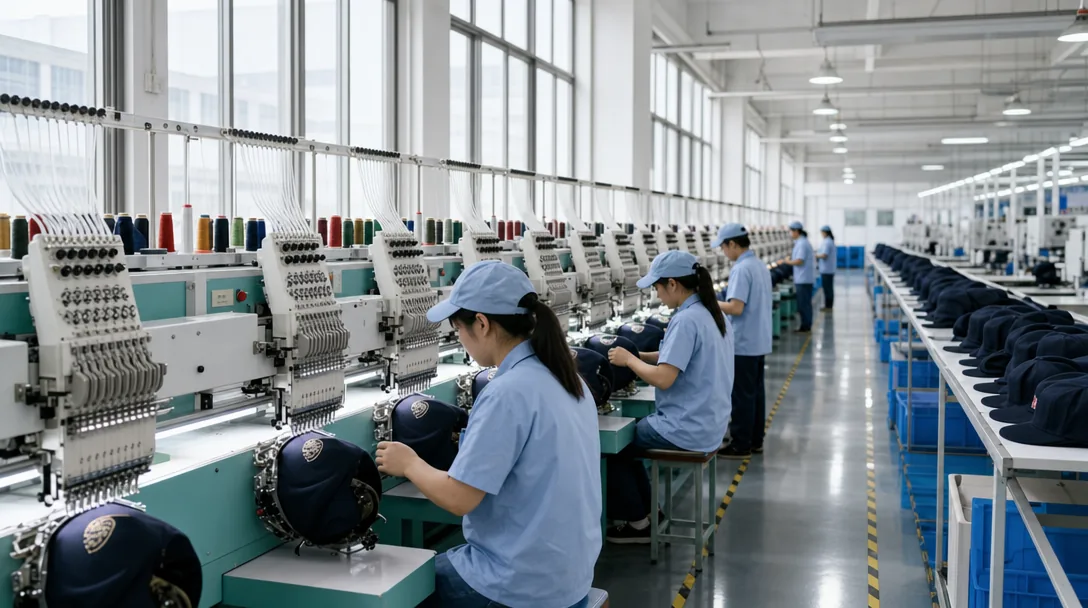
Ball Caps for Women: A 2026 Sourcing Playbook for International Buyers
Read article →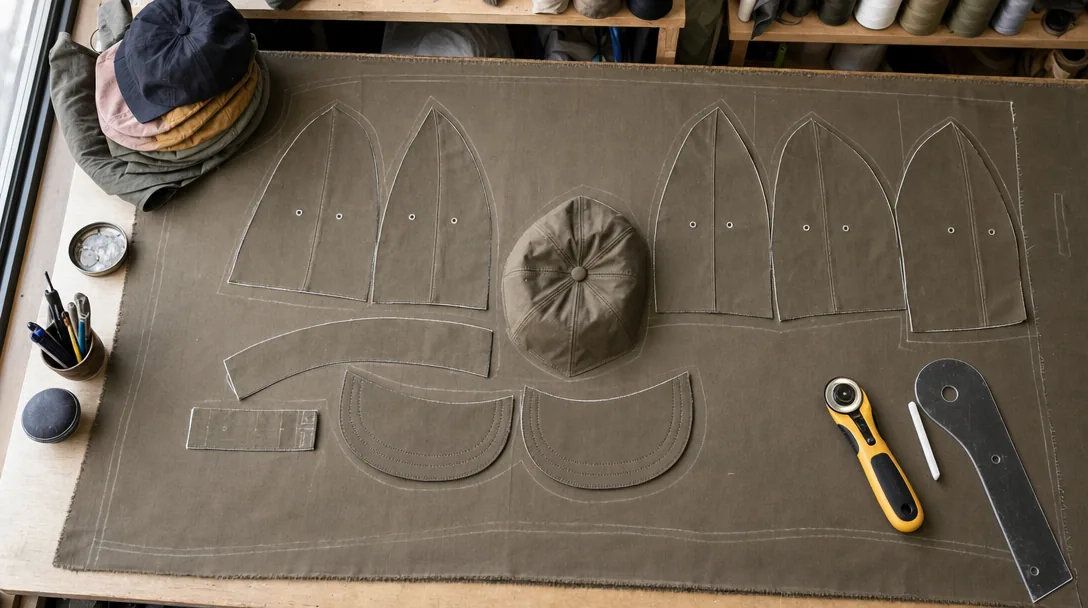
5-Panel vs 6-Panel Caps: Construction, Use Cases and Cost Compared
Read article →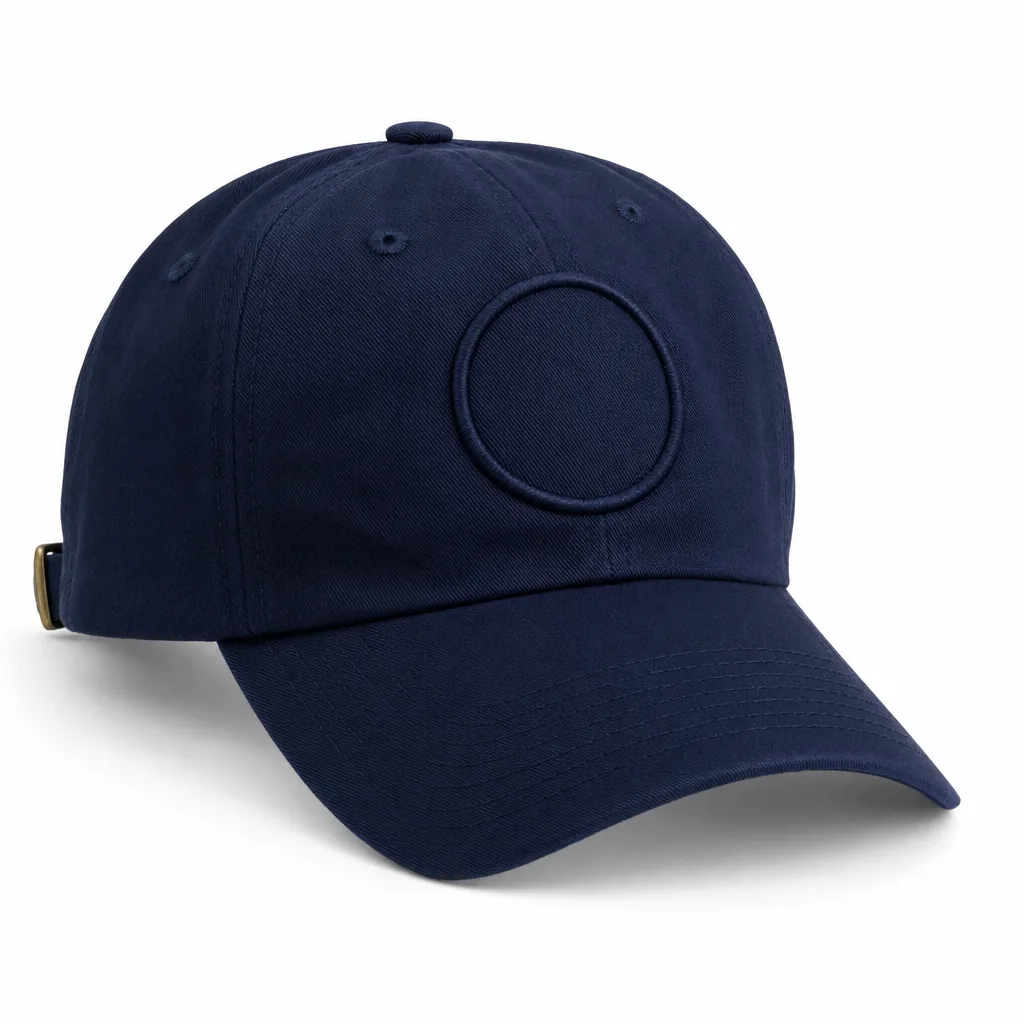
Custom Made Trucker Hat: The 2026 Sourcing & Manufacturing Playbook (2026 Update) (2026 Update) - 2026 Buyer's Guide - 2026 Buyer's Guide
Read article →Sourcing custom hats does not have to be complicated. With the right manufacturing partner, clear specifications and a small upfront investment in sampling, you can launch a retail-quality product in 30 to 45 days.