
Custom Made Trucker Hat: The 2026 Sourcing & Manufacturing Playbook (2026 Update) (2026 Update) - 2026 Buyer's Guide - 2026 Buyer's Guide
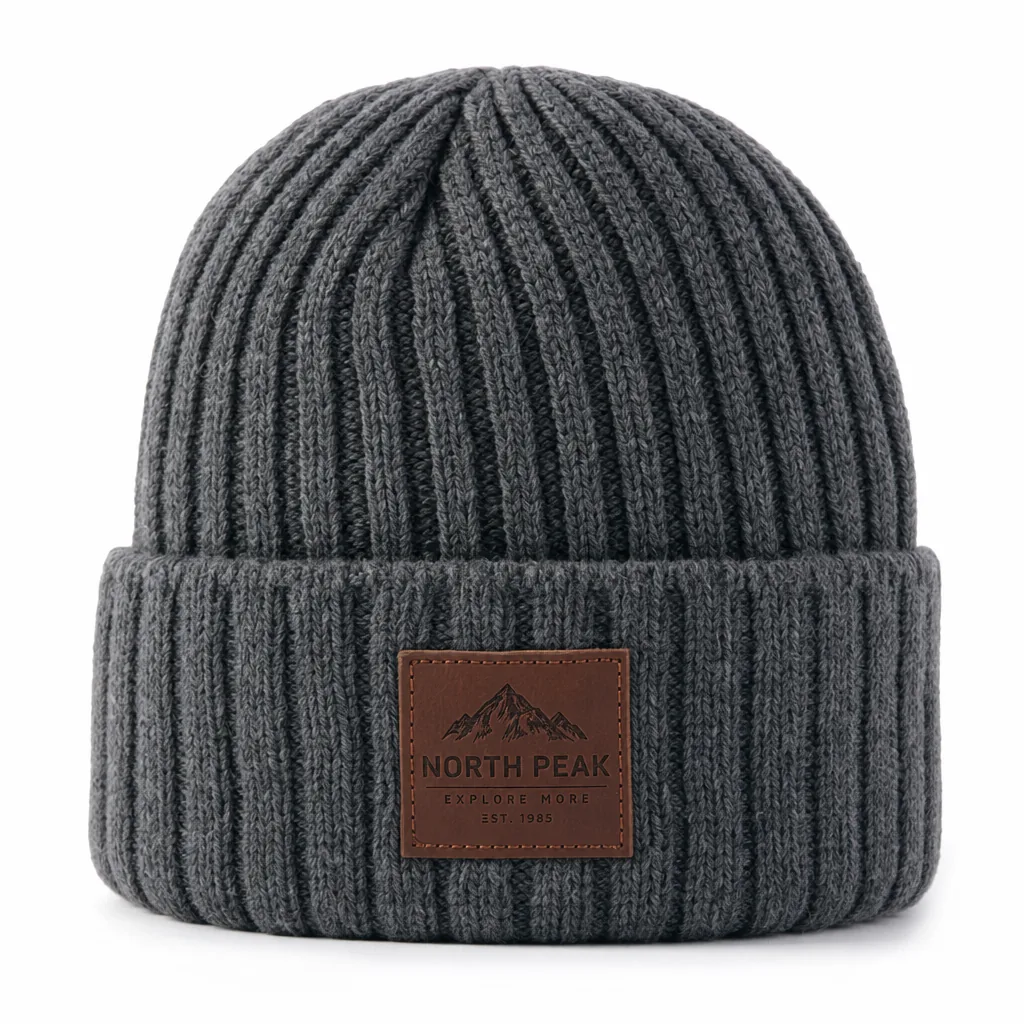
Custom Made Trucker Hat: The 2026 Sourcing & Manufacturing Playbook (2026 Update) (2026 Update) - 2026 Buyer's Guide - 2026 Buyer's Guide is one of the most-asked questions we receive from international buyers, and for good reason. With dozens of factories competing for your order and an alphabet soup of technical terms in every supplier quote, even experienced importers can feel lost. This guide consolidates what we have learned producing custom hats for clients in 40+ countries.
Custom Embroidered Hats
Embroidery only works on a custom made trucker hat when the file is digitized for cap geometry, not auto-converted from a flat AI or PNG. The front panel should be embroidered before assembly on a flat frame; once the crown is closed, the center seam and crown curve will distort columns, pull satin edges, and expose registration errors. On most 5-panel and 6-panel truckers, the clean embroidery area is about 110-125 mm wide by 55-60 mm high, with seam position usually becoming the limiting factor before crown height does. Factories running Tajima, Barudan, or ZSK multi-heads will typically use 40 wt polyester thread, a 75/11 or 80/12 needle, and backing matched to the panel build—light twill, buckram-backed cotton, or 2-4 mm EVA foam all behave differently under the same stitch file. If the logo includes gradients, keylines under 1.0 mm, or text below roughly 4 mm cap height, simplify it early; otherwise you invite thread breaks, muddy fills, and unreadable small copy.
The spec sheet matters more than the rendering. Lock the front fabric first: cotton twill usually lands around 260-320 gsm, polyester twill 180-240 gsm, while foam-front truckers need different density and underlay because the loft changes stitch sink and edge definition. Then freeze mesh type, snapback resin, sweatband content, visor sandwich color, and thread colors to Pantone C or TCX references; for dyed trims, a bulk tolerance of Delta-E under 2.0 is realistic if the factory is controlling lots properly. Buyers should request stitch count, fill density, underlay type, backing spec, logo size in millimeters, and placement tolerance—3 mm off-center is already visible on a trucker front. In 2026, a basic embroidered custom made trucker hat generally costs about $2.20-$4.80 FOB China at 144-300 pcs per colorway, with 3D puff, metallic thread, tackle twill, or applique adding roughly $0.25-$0.90 per cap; digitizing normally runs $20-$60 per logo unless the order volume absorbs it.
Most embroidery failures are easy to catch if inspection is done before packing: registration drift, puckering from excessive stitch density, missed stitches across the center seam, loose jump threads inside the crown, backing left ragged, and needle cuts in the mesh. AQL 2.5 is a sensible baseline for general retail, but licensed sports and chain-store programs usually tighten visual criteria on centering, thread sheen, and consistency across dozens of cartons. Inspect both sides of the embroidery, not just the face. Bobbin nests should not protrude, oil marks around the sew-out are not acceptable, visor topstitch should stay straight after embroidery, and crown shape should still recover after packing pressure. Our standard practice at CrownsForge is to approve a pre-production sew-out against the actual panel construction, because an overbuilt logo can collapse the front crown even when the stitching itself looks clean. That is the real cost issue: bad embroidery does not just create rejects, it changes crown shape, raises rework, and erodes margin on the full custom made trucker hat program.
Custom Hat Embroidery
Embroidery is where a custom made trucker hat either looks engineered or looks cheap, and the difference starts before the first needle drop. A competent factory does not just digitize an AI file into DST and run production; it builds the file around the actual crown structure, front-panel stiffness, and seam position. A 5-panel trucker with 3-5 mm EVA foam and laminated polyester behaves nothing like a 6-panel 12 oz cotton twill crown with hard buckram. On foam fronts, the needle penetrates, rebounds, and shifts fills more aggressively, so small text, tight satin borders, and layered color blocks lose edge definition fast even on Tajima TMEZ, Barudan BEKY, or ZSK Sprint cap frames. In practice, I do not approve lettering below 4 mm on foam unless it is redrawn, opened up, or converted from fill to run stitch. Pull compensation, underlay type, stitch angle, and density have to be tested on the real shell, not guessed from a screen.
A usable embroidery spec should lock down measurable production points: logo size in mm, placement tolerance, stitch-count range, thread brand and sheen, backing weight, underlay structure, puff height, and color tolerance against Pantone C or TCX with an agreed Delta-E window of 2.0-3.0. In Yiwu, a front logo around 5,000-8,000 stitches typically adds $0.18-$0.45 per cap at 300-500 pieces, while clean 3D puff usually lands at $0.35-$0.80 depending on foam coverage, column width, and whether the artwork needs manual pathing to avoid foam exposure. Physical sew-out approval matters more than any digital mockup; our standard practice is to review the sample on matching fabric with a ruler, seam reference, and Pantone chip because registration drift, puckering, and crushed foam show up immediately in thread. For inspection, do not stop at loose trims and off-center logos. Check AQL 2.5 samples for bobbin show-through, top-thread tension variation across heads, weak satin edge coverage, visor-seam tunneling, and needle cuts on lightweight foam, especially when the order is split across multiple lines.
Custom Trucker Hat
The make-or-break decision on a custom made trucker hat is crown architecture, not the logo treatment. A high-profile 5-panel with a seamless foam front is still the cleanest platform for 3D puff because the digitizing can run without crossing a center seam; once you switch to a 6-panel crown, that seam becomes a hard constraint and flat embroidery, woven patches, or screen-printed twill usually perform better. On factory specs, I’d expect front foam at 2.5-3.0 mm, buckram in the 160-220 gsm range for structured fronts, polyester mesh around 140D-210D, and a PE visor insert at 1.8-2.2 mm. Those numbers are not academic: they determine needle penetration, crown rebound, brim memory, and whether a Tajima or Barudan head will leave you with crisp edges or visible puckering. Sweatband construction matters too; a 180-220 gsm brushed poly sweatband will wear differently from a thin non-brushed band, especially in promo and team programs where the cap gets repeated use. If the tech pack is vague, the quote is fiction. A usable spec sheet should define crown height in centimeters, bill length and curve, panel materials, mesh denier, closure type, sweatband build, seam tape, top button, underbill color, and assembly standard—typically 6-8 stitches per inch on major seams. Color should be locked to Pantone TCX or Pantone C depending on substrate, with separate approvals for shell, mesh, snap, seam tape, and embroidery thread; on branded orders, I’d hold shade variation to Delta-E under 1.5 against the approved standard. MOQ for real cut-and-sew is commonly 144-300 pieces per colorway, but once you require custom-dyed fabric, proprietary mesh, or molded PVC and rubber trims, 500+ is more realistic. Current FOB China pricing is usually $2.20-$3.40 for a standard foam-front/poly-mesh build with flat embroidery, $3.60-$5.40 with 3D puff or applique, and $5.80-$8.80 when you add rope, suede or microfiber brims, printed seam tape, woven labels, and individual retail packaging.
Most failures on a custom made trucker hat come from construction drift, not from choosing the wrong decoration method. The defects that repeatedly trigger claims are off-center crown shape, visor torque, mesh tearing at seam joins, snapback color mismatch, foam-front collapse after embroidery, and logo registration drifting off the visual centerline. Logo placement should be controlled to within +/-2 mm, and brim symmetry needs to be checked on a flat table, not judged by eye off the sewing line. Digitizing is another hidden variable buyers underestimate: satin borders that cross a seam or bridge over foam need proper underlay, pull compensation, and density control, otherwise even a good operator on Tajima, Barudan, or ZSK heads will fight thread breaks and edge distortion. For 3D puff, I usually prefer lower-density fills and cleaner travel paths rather than trying to brute-force loft with excessive stitch count. Inspection terms should be written into the PO before bulk starts. AQL 2.5 is the practical baseline for trucker hats, but I’d add explicit checkpoints for logo location, crown symmetry, visor curvature, closure function, carton compression, and thread cleanup because those are where shipments get rejected. For workwear, sports licensing, and promotional channels, ask for perspiration and crocking tests on the sweatband, repeated flex testing on the PE bill insert, and pull testing on snap posts. CrownsForge’s normal control point is inline plus final inspection, backed by audit-ready records when the buyer requires sedex-audit-cap-supplier-guide.html">BSCI 2.0 or Sedex SMETA 4-Pillar sourcing. If the factory cannot keep trim lots consistent from sample to bulk, or cannot maintain the same embroidery quality after the sample room moves to production heads, the cheapest FOB price will be erased by rework, chargebacks, and missed launch dates.
Custom Trucker Hats
Front-panel construction is where a custom made trucker hat either looks retail-ready or instantly reads as giveaway merch. The two real paths are foam-front or fabric-front, and they behave very differently in production. A common promo spec is a structured 5-panel crown with 3 to 5 mm EVA or PU foam laminated to 210D polyester, polyester mesh around 80 to 110 gsm, a pre-curved PE visor insert, and a 7-hole PVC snapback. That build is cheap, stable in transit, and friendly to flat embroidery, but low-density foam telegraphs every packing mistake: carton compression leaves washboarding across the face, and poor lamination causes delamination at the crown seam after wear. If you want a cleaner retail silhouette, push crown height to 11 to 12 cm and specify higher-density foam with tighter lamination; if you want vintage handfeel, move to brushed cotton twill or washed canvas at 180 to 220 gsm on the front and accept that 3D puff embroidery will lose edge definition compared with foam.
The production sequence is not a detail; it determines whether the logo survives bulk sewing. A competent line stabilizes the front panel first, runs embroidery or patch application flat on Tajima, Barudan, or ZSK heads, then closes crown, visor, sweatband, top button, and closure. On foam fronts, underlay, pull compensation, and stitch density need to be tuned so letters do not sink or wobble; for small text under 4 mm height, woven patches usually outperform direct embroidery. Print has its own failure modes: screen print on foam is low cost but can crack after compressed pack-out, and heat transfer often shows silvering once applied over crown curvature. Our standard practice is to treat print-on-foam as higher risk unless pack-out includes inner crown support and lower carton stacking pressure.
A usable spec sheet for a custom made trucker hat needs measurable tolerances, not mood-board language. Lock panel count, crown height, visor length and curve, seam allowance at 6 to 8 mm, sweatband material, closure type, mesh composition, artwork size in millimeters, and logo method. For embroidery, specify thread as 120D/2 polyester if the hat will live outdoors; rayon still looks brighter at first, but polyester wins on colorfastness and abrasion. If you are matching black front fabric, black mesh, and a black snap, write an acceptable shade tolerance into the PO—ideally Delta-E under 1.5 to 2.0 under D65 light—because mixed-material black is where factories get exposed. In 2026, a basic foam-front trucker with flat embroidery typically lands around $2.10 to $3.40 FOB Ningbo or Shanghai at 300 to 500 pieces, while premium builds with suede visor, molded metal trim, branded seam tape, or HD embroidery are more realistically $4.20 to $6.80. Inspect at AQL 2.5, but add cap-specific checkpoints: crown symmetry, embroidery centering within +/-3 mm, mesh tearing at seam bites, visor matching, sweatband puckering, and top-button wrap quality. If the order is for licensed retail, confirm BSCI 2.0 or Sedex SMETA 4-Pillar before bulk booking, not after cutting starts.
Hat Trucker Custom
Most trucker-cap problems are engineered in at the spec stage, not on the sewing line. Buyers fixate on the logo and leave the cap body vague, then wonder why the finished custom made trucker hat crushes in transit or wears out at the mesh. Lock the architecture first: 5-panel foam trucker for a clean billboard front, or 6-panel seamed crown if you want a more contoured fit. Specify front foam at 3.0-5.0 mm, mesh at 90-120 gsm, face-panel support as buckram or PE backing, visor length 7.0-7.5 cm, and a PP snapback with 7 holes. If the silhouette matters, also call out crown height in centimeters, underbill material, seam tape color, sweatband blend such as 65/35 poly-cotton, and top-button material. Those are not cosmetic footnotes; they control handfeel, recovery after packing, and how the cap sits on shelf. A cheap open-hole mesh may save $0.08-$0.12 per piece, but it bags out faster and shows color inconsistency lot to lot.
Decoration has to suit the substrate. Foam-front truckers do not run like brushed cotton dad caps, so ask what embroidery heads are actually on the floor: Tajima, Barudan, and ZSK all handle foam differently depending on digitizing and thread path. For 3D puff, 2.5-3.0 mm EVA underlay is standard, but stitch density must usually be reduced to avoid tunneling, panel ripple, and visor-facing distortion. Flat embroidery gives the cleanest retail result when the front panel is properly stabilized; woven patches are more forgiving on lower-cost bodies because they mask minor face-panel waviness. For color control, freeze Pantone TCX references for fabric and Madeira or Gunold thread equivalents, then set tolerance at Delta-E 1.5-2.0 under D65 lighting. Repeat orders drift fast when mesh, foam, and thread come from different mills.
The commercial side is where a trucker program either stays profitable or starts bleeding claims. A pre-production sample must use the exact bulk mesh, snap, sweatband, and decoration method; substituted sample materials are a reliable predictor of bulk failure. MOQ for a true cut-and-sew custom made trucker hat is usually 144-300 pieces per colorway, while stock-body programs can start at 48-100 pieces. In 2026, China FOB pricing is typically $2.10-$3.40 for a stock body with one front embroidery, and $3.60-$5.80 for full custom with custom seam tape, woven labels, upgraded mesh, and one main logo. Add roughly $0.18-$0.45 for woven patches and $0.25-$0.60 for silicone transfers. Final inspection should be run at AQL 2.5 major and 4.0 minor, with hard checkpoints on logo centering within 3 mm, visor symmetry, snap strength, sweatband join security, and crown recovery after carton compression. For retail or licensed programs, add carton drop testing, needle detection, and compliance confirmation up front for BSCI 2.0 or Sedex SMETA 4-Pillar.
Trucker Custom Hat
Spec the front structure, mesh, and decoration as separate line items or your custom made trucker hat will drift between sample and bulk. The safest retail base is still a 5-panel high-profile trucker because the uninterrupted front field takes cleaner embroidery; a 6-panel version looks more like a baseball cap, but large logos can break across the center seam and telegraph puckering. For the crown front, workable fabrics are usually 190-260 gsm cotton twill, 210-230 gsm poly-cotton canvas, or foam-backed polyester when price matters more than handfeel. Mesh is normally 100% polyester at 40-60 gsm, often around an 18 x 14 construction, paired with a PE snapback in black, white, or matched stock color. If the hat is headed to retail, not a one-day promo event, lock down buckram weight, sweatband fiber content, visor insert type, seam tape, crown height, visor curve, and Pantone TCX references before sampling. On dyed fabric, Delta-E under 1.5 is a realistic factory control point, especially when multiple colorways need to sit together on shelf.
Unit cost is driven less by the word trucker and more by setup loss, trim count, and decoration risk. A clean custom made trucker hat with stock mesh, stock snap, and one-location flat embroidery is commonly viable at 144-300 pcs per colorway from Yiwu or Dongguan; 50-100 pcs can be done, but the factory usually has to recover inefficiency through higher sampling or logo setup charges. At 300 pcs, FOB China is typically $2.20-$4.20 for standard cotton/poly builds and $3.80-$6.50 for better brushed cotton, heavier canvas, or recycled polyester shells. Rope trim, underbill print, woven loop labels, TPU patches, or faux leather patches usually add about $0.25-$1.20 per cap depending on attachment method and MOQ. Decoration is where defects show up first: 3D embroidery on Tajima, Barudan, or ZSK heads needs a firm front panel, proper underlay, and the right backing or you get tunneling and edge collapse; foam-front screen print will crack fast if curing temperature or dwell time is rushed.
The expensive failures are rarely exotic; they are basic floor-control misses that should have been caught in-line. On trucker caps, watch for embroidery drifting more than 2 mm off center, twisted mesh trapped in the rear binding, visor sandwich misalignment, uneven crown height, and snap closures that fracture after cold transit. AQL 2.5 is the minimum sensible inspection level for retail programs, with checks on measurements, stitch density, loose trims, needle damage, panel shading, logo placement, and closure function. Foam-front styles need extra discipline at digitizing because weak pull compensation or the wrong backing can flatten 3D embroidery after carton compression. Our standard practice is to verify needle control, run carton drop tests, confirm azo-free dyestuffs where required, and review current BSCI 2.0 or Sedex SMETA 4-Pillar records before production for licensed or mass-retail channels. The cheapest custom made trucker hat quote usually cuts inspection depth, mesh consistency, or experienced digitizing first, and that saving comes back later as claims, chargebacks, or dead stock.
Working with CrownsForge for custom made trucker hat programs
The biggest risk in a custom made trucker hat program is weak sample control, not sewing capacity. A workable calendar is usually 5 to 7 working days for a blank prototype and 7 to 12 working days for a fully decorated salesman sample, but that only holds if the tech pack is complete on day one: Pantone TCX references, crown height, visor curve, front panel width, logo size and placement, closure type, label map, and master carton pack-out. Most slippage comes from preventable back-and-forth, especially when buyers approve from photos alone. On foam-front truckers, a 3 mm logo shift, uneven brim curve, or excessive embroidery pull on the center seam will change the whole face of the cap. Mesh color is another common miss; if black or navy polyester mesh drifts beyond Delta-E 1.5 against the approved standard, it will read wrong in bulk even when the sample looked acceptable on screen. A physical counter sample catches those problems earlier than a rushed pre-production signoff.
The sample also needs to be built on the actual production shell, not a shortcut body made only to accelerate approvals. That means matching the same foam thickness, buckram stiffness, sweatband construction, visor board, and mesh denier planned for bulk production, because end-customer complaints usually come from fit, crown collapse, or a soft brim, not from minor cosmetic imperfections at sample stage. In practice, standard MOQs for a custom made trucker hat are about 144 to 300 pieces per colorway for a basic 5-panel or 6-panel build, while real FOB efficiency usually starts around 500 to 1,000 pieces once you add private-label trims. A straightforward stock-fabric cap may land around $2.80 to $3.60 FOB China, but once you stack 3 mm EVA puff embroidery, woven labels, printed seam tape, underbill print, custom snapback molds, and retail packaging, the cost moves quickly into the $4.90 to $6.50 range. The smarter sequence is to lock silhouette, fit, and color first, then add expensive trims on the second run.
Execution discipline is what separates a reliable factory from a sourcing middleman. In-house embroidery on Tajima, Barudan, or ZSK heads gives tighter control over stitch density, underlay, and foam height than subcontracting, especially on 3D puff where satin columns collapse fast if the digitizing is wrong. A factory running serious trucker programs should also be able to handle woven patches, TPU or silicone badges, foam screen print, sublimated front panels, heat-transfer inside labels, and brim-edge branding without rebuilding the workflow for each style. Quality control should be documented, not verbal: BSCI 2.0 or Sedex SMETA 4-Pillar audit records, azo-free dye compliance, REACH awareness on trims, inline inspection at roughly 20% completion, and final random inspection to AQL 2.5. Our standard practice is to simplify larger runs by keeping one shell fabric and one mesh specification across colorways, for example 245 gsm cotton twill with 75D or 100D polyester mesh, because that reduces shade variation, lowers cutting waste, and shortens sewing changeover time.
Frequently Asked Questions
What is the minimum order quantity (MOQ) for custom hats?
Our standard MOQ is 100 pieces per design and color, with sampling available from 1 piece. For complex multi-color logos or premium fabric upgrades, the MOQ can be lowered with a small per-piece surcharge.
Do you support sustainability certifications?
Yes. We work with GOTS organic cotton, GRS-certified recycled polyester, OEKO-TEX Standard 100 fabrics, and are BSCI and Sedex audited. Certification documentation can be provided per order.
What file format should I send for my logo?
Vector files (AI, EPS, PDF) are ideal. High-resolution PNG or JPG at 300 dpi on transparent background works as a fallback. Provide Pantone color references for accurate reproduction.
How long does production take?
Sampling takes 7 to 12 days. Bulk production runs 20 to 30 days depending on quantity, fabric availability and decoration complexity. Inspection and packing adds another 3 to 5 days before shipment.
Can I order a sample before bulk production?
Yes. We strongly recommend approving a pre-production sample before mass production. Samples are charged at 35 to 60 USD each plus express shipping, fully refundable against confirmed bulk orders over 500 pieces.
How does ordering custom hat trucker work?
When evaluating custom hat trucker, the key considerations are construction quality, decoration capability, MOQ flexibility and lead time. Cover everything buyers ask about custom embroidered hats: how it's manufactured, what specs to request from a factory, typical MOQ and pricing, common quality issues to inspect for, and how this ties back to the broader custom made trucker hat sourcing decision. Cover everything buyers ask about custom hat embroidery: how it's manufactured, what specs to request from a…
How does ordering custom embroidered trucker hats work?
When evaluating custom embroidered trucker hats, the key considerations are construction quality, decoration capability, MOQ flexibility and lead time. Cover everything buyers ask about custom embroidered hats: how it's manufactured, what specs to request from a factory, typical MOQ and pricing, common quality issues to inspect for, and how this ties back to the broader custom made trucker hat sourcing decision. Cover everything buyers ask about custom trucker hats: how it's manufactured, what specs to request from a…
How does ordering custom made hats for men work?
When evaluating custom made hats for men, the key considerations are construction quality, decoration capability, MOQ flexibility and lead time. Cover everything buyers ask about custom embroidered hats: how it's manufactured, what specs to request from a factory, typical MOQ and pricing, common quality issues to inspect for, and how this ties back to the broader custom made trucker hat sourcing decision. Cover everything buyers ask about custom trucker hats: how it's manufactured, what specs to request from a…
How does ordering high quality custom trucker hats work?
When evaluating high quality custom trucker hats, the key considerations are construction quality, decoration capability, MOQ flexibility and lead time. Cover everything buyers ask about custom embroidered hats: how it's manufactured, what specs to request from a factory, typical MOQ and pricing, common quality issues to inspect for, and how this ties back to the broader custom made trucker hat sourcing decision. Cover everything buyers ask about custom trucker hats: how it's manufactured, what specs to request from a…
Looking for a reliable hat manufacturer in China?
CrownsForge has produced custom hats for 800+ brands across 40 countries. From 100-piece launches to 100,000-piece retail programs, we deliver on time and on spec.
Get in touchRelated guides
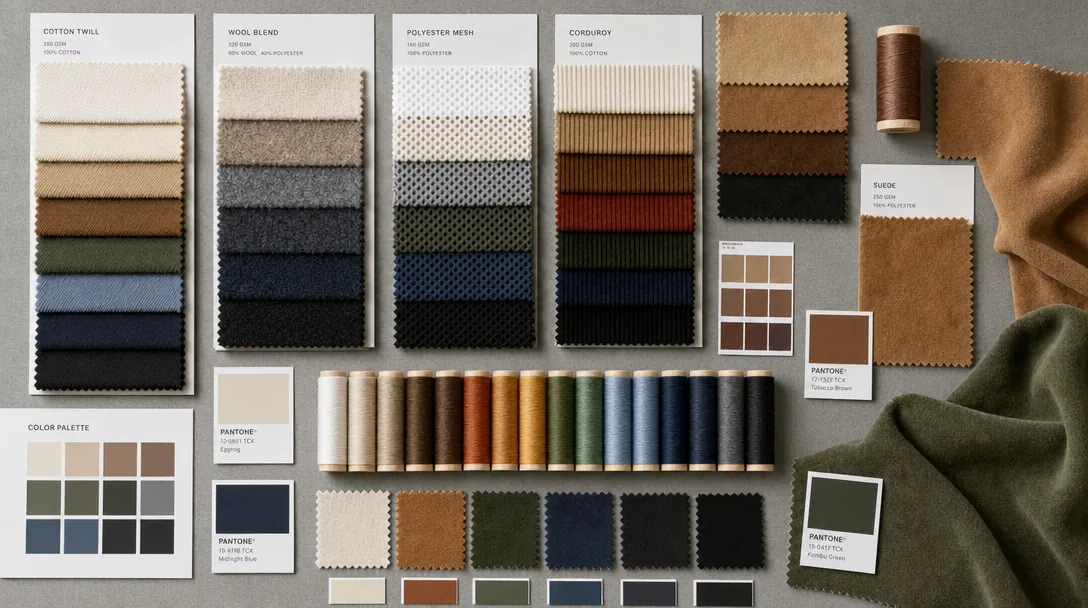
Bucket Hat Corduroy Reorder Planning Guide for Custom Hat Buyers
Read article →
Laser Perforated Performance Cap Custom: A 2026 B2B Sourcing Guide
Read article →
Custom Made Trucker Hat: The 2026 Sourcing & Manufacturing Playbook - Supplier Checklist (2026 Update)
Read article →If you are ready to take the next step on custom made trucker hat: the 2026 sourcing & manufacturing playbook (2026 update) (2026 update) - 2026 buyer's guide - 2026 buyer's guide, our team can put a tailored quotation and digital mock-up in your inbox within 24 hours. Send the inquiry form on our contact page or message us directly on WhatsApp.