
Custom Made Trucker Hat: The 2026 Sourcing & Manufacturing Playbook - Supplier Checklist (2026 Update)
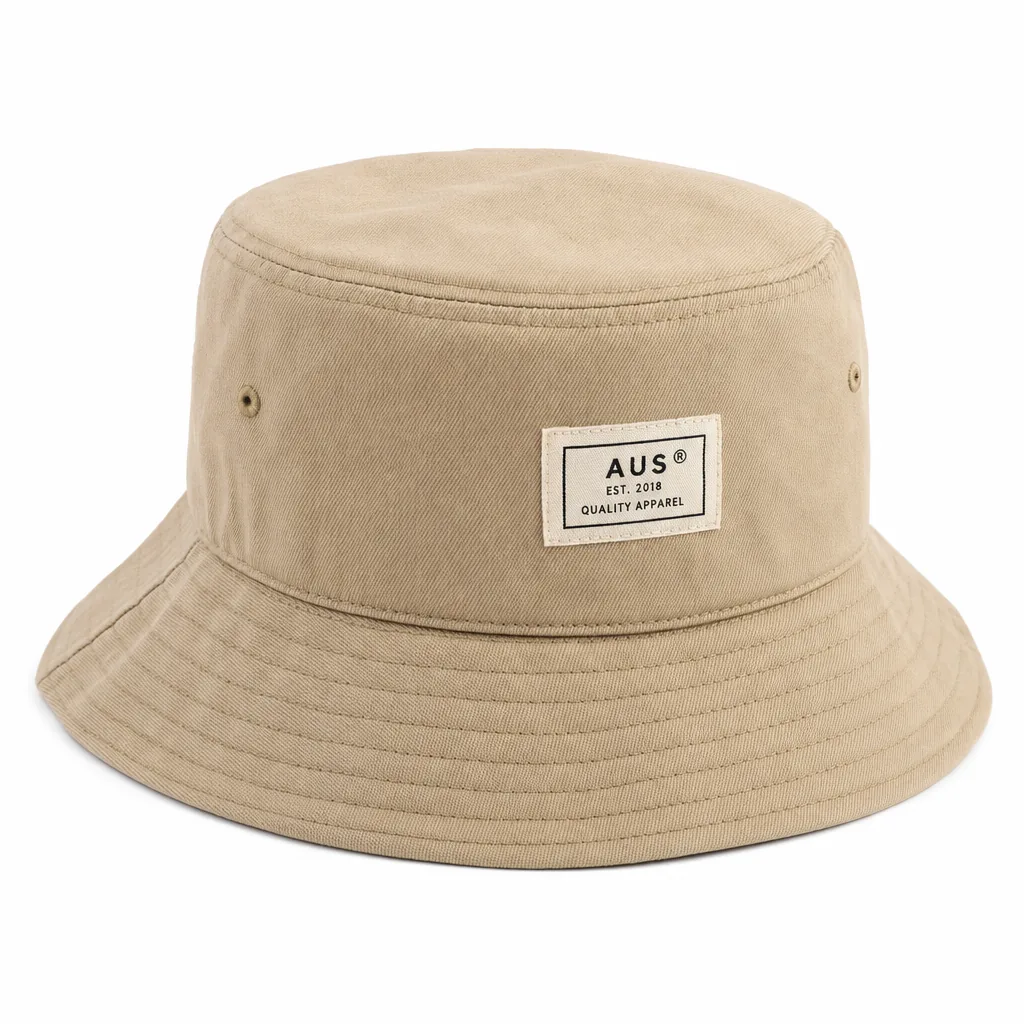
Every week, our sales team answers detailed questions about custom made trucker hat: the 2026 sourcing & manufacturing playbook - supplier checklist (2026 update). We wrote this guide so that wholesalers, streetwear brands, corporate buyers and promotional resellers can compare options with full information, and avoid the traps that show up only after production has started.
Custom Embroidered Hats
Embroidery is still the lowest-risk decoration method on a custom made trucker hat, but the logo quality is decided by the front-panel construction long before the machine starts. A 5-panel foam-front trucker with 3 to 5 mm laminated polyester foam sews nothing like a 6-panel cotton twill crown backed with 0.35 to 0.45 mm buckram, and a factory that treats both the same will give you tunneling, seam pinch, or soft letter edges. Cap embroidery needs a dedicated digitized file for Tajima, Barudan, or ZSK cap frames, not a flat-garment conversion. I expect the supplier to state pull compensation, center-walk or double-zigzag underlay, satin density, thread brand, needle size, backing weight, and the usable embroidery field after seam allowance and crown curvature reduce the art area. For 3D puff, specify EVA at 2 mm, 3 mm, or 4 mm in the PO; on low-profile crowns, 4 mm often overbuilds the column and causes split satin, edge collapse, and unreadable small text below 4 mm cap height. If brand color matters, call out Pantone TCX or Pantone Solid Coated references and accept a production Delta-E window of about 1.5 to 2.0 under D65 lighting, which is realistic for polyester thread rather than lab-perfect theory.
Embroidery pricing is usually misquoted because buyers focus on logo width instead of machine time. What actually moves FOB is stitch count, density, color changes, thread trims, appliqué handling, cap loading losses, and whether the logo crosses the center seam. A usable RFQ for a custom made trucker hat should lock panel count, crown height, visor curve, shell fabric weight, mesh composition such as 100% polyester 140 to 180 denier, snapback or hook-and-loop closure, sweatband material, seam tape color, embroidery locations, estimated stitch count per hit, and packing format. In 2026 China sourcing, a stock-body trucker with one front flat embroidery usually lands around 144 to 300 pieces per colorway, while a genuine cut-and-sew program with custom pattern, internal labels, branded taping, and retail packaging is more often 300 to 500 pieces per style. FOB is commonly about $2.20 to $4.20 for a basic foam-front mesh-back cap with one front logo, then climbs to roughly $4.80 to $7.50 once you add 3D puff, side hits, woven flag labels, printed seam tape, hangtags, and individual polybagging.
Inspection is where embroidery margins are protected. The repeat failures are registration drift, crown puckering, thread breaks, needle cuts through foam, loose trims, uneven puff height, and center-seam distortion that makes clean artwork look crooked. Mesh side and rear hits need separate scrutiny because bad hooping on polyester mesh can crack filaments, leave wave distortion, or permanently stretch the panel. AQL 2.5 final inspection is a fair baseline, but embroidery-heavy orders also need in-line approval after the first 20 to 30 caps from each setup, especially on 12-head or 15-head machines where one bad tension setting multiplies defects across the whole run. I also check inside finishing: backing trimmed clean, no bobbin nests scratching the forehead, no foam debris, and the sweatband join covering abrasive stitch areas. Our standard practice is to treat embroidery stability as a supplier capability issue, not a decoration add-on, because saving $0.30 FOB means nothing if the logos arrive soft, off-center, or inconsistent from carton to carton.
Custom Hat Embroidery
Embroidery is the make-or-break process on a custom made trucker hat because a 5-panel foam front, laminated with 2.5 to 3.0 mm EVA and backed by polyester mesh, reacts nothing like brushed cotton twill or chino. The main control point is the digitizing, not the artwork file. If the DST or DSB file is built badly for a Tajima, Barudan, or ZSK multi-head run, the floor team will fight thread breaks, tunneling, and crown distortion all day. A usable embroidery spec should lock down finished logo size in millimeters, stitch type by zone, target stitch count, underlay method, thread brand and ticket number, Pantone reference, backing weight, 3D puff areas, and whether any element crosses the center seam. On foam fronts, I start warning buyers once the front logo moves past roughly 12,000 to 15,000 stitches; above that, dense fills often crush the foam, pull the panel off grain, and leave visible puckering at the top curve. Small details that look clean on screen usually fail first in production. Text below about 4 mm cap height, counters inside letters like R or A, and outlines under 0.7 mm rarely stay sharp once the machine speed climbs to 650 to 800 rpm in bulk. For 3D puff, satin columns generally need at least 2.5 mm width to cover the EVA cleanly, and any sharp corner should be softened in the digitizing or you will see foam exposure on the edges. Our standard practice is to separate foam-front settings from buckram-front settings for hooping pressure, upper thread tension, and underlay density, because one “universal” setup is exactly how factories create inconsistent crowns across a 3,000-piece order.
Embroidery cost on a custom made trucker hat is driven by machine time and reject risk more than logo size. In China, flat front embroidery on a volume order typically adds about $0.28 to $0.80 per cap, while 3D puff is more often $0.60 to $1.20 because EVA placement, slower machine speed, and higher fallout all increase real factory cost. MOQ is usually 144 to 300 pieces per colorway for a fresh setup, although some factories will take 48 to 96 pieces if the shell fabric, mesh, sweatband, and snapback closure are already running on the same line. Buyers should ask whether the quote includes digitizing, tape revision, per-1,000-stitch surcharges, applique or patch application, and rework liability if the first bulk run does not match the sealed sample. Thread color also needs formal approval against Pantone TCX or Pantone Solid Coated, because last-minute thread lot substitutions can create visible shade drift carton to carton. QC should focus on what embroidery does to the cap body, not only whether the logo looks sharp from the front. For bulk inspection, AQL 2.5 is standard, and I would check logo placement tolerance, seam-crossing stability, crown symmetry, backing cleanliness, inside thread trimming, and panel deformation after embroidery and final sewing. On a 5-panel style, a left-right shift of even 2 to 3 mm is obvious at retail, especially on centered wordmarks. Review bulk under D65 light and compare it to the sealed sample for thread shade, edge definition, and silhouette; Delta-E drift in thread is less common than panel warpage, but both show up in real shipments. The bigger failure mode is usually heavy fill or aggressive underlay dragging the front panel so the hat sits twisted, which then hurts packing efficiency and raises reject rates long before the buyer notices it in photos.
Custom Trucker Hat
A custom made trucker hat is decided at the spec stage, not when the logo file arrives. Start with panel architecture: a 5-panel crown gives a flat uninterrupted embroidery field for 3D puff, woven patches, and TPU badges, while a 6-panel build fits more head shapes but puts a center seam exactly where puff foam likes to split or tunnel. A usable tech pack should lock the shell in numbers, not adjectives: front panel height in mm, crown depth, visor length and curve, buckram or foam backing type, front fabric weight, mesh denier, sweatband composition, snapback gauge, seam tape width, button wrap, and underbill material. If you only write “high quality cotton” or “matching mesh,” the line supervisor will make those decisions for you. Color control needs the same discipline. Call out Pantone TCX or coated references by component, then set a tolerance—Delta-E under 1.5 for licensed programs is realistic, under 2.0 for standard retail is workable. Also note decoration compatibility before sampling: flat embroidery under 8,000 stitches behaves very differently from 4 to 6 mm 3D puff, sublimated applique, or a heat-applied rubber patch. Most preventable failures in a custom made trucker hat trace back to a vague BOM that leaves the factory room to substitute softer fronts, lighter mesh, or a cheaper visor insert.
The build sequence tells you whether the supplier actually understands shape retention. Front panels are cut first, then fused if the face fabric is too soft, embroidered before assembly on Tajima, Barudan, or ZSK heads, sewn to side and back mesh, attached to the visor, sweatband-set, top-buttoned, and steam-formed on aluminum molds. For a retail-ready custom made trucker hat, I would usually spec a 260 to 320 gsm cotton twill or poly-cotton front, 70D to 100D polyester mesh, a PE visor insert around 1.8 to 2.2 mm, and a sweatband with at least 35% cotton if comfort matters. Those numbers are not cosmetic; drop below them and you start seeing collapsing fronts, weak puff definition, and visor memory that drifts after carton pressure. Pricing in China still separates promo from shelf-ready product very clearly. Stock-material MOQ is commonly 144 to 300 pieces per colorway, but dyed-to-order twill, custom mesh shades, or nonstandard visor profiles often push MOQ to 500 to 1,000 pieces. In 2026, basic promo builds usually land around $2.20 to $3.40 FOB China at 300 pieces, while retail-grade hats with heavier twill, cleaner taping, woven labels, better forming control, and multi-location decoration are more realistically $4.20 to $7.80 FOB. Inspection should sit at AQL 2.5 with checkpoints for visor symmetry, center-seam drift, mesh puckering, snap retention, puff height consistency, and shade matching across twill, seam tape, button, and visor sandwich.
Custom Trucker Hats
The part that decides whether a custom made trucker hat feels cheap or sells through is the front-panel architecture, not the mesh back. A vague spec here is why bulk caps come in with a drifting center seam, weak front rise, or embroidery that tunnels even though the artwork looked clean on the proof. In production, most builds fall into two usable lanes: a promo 5-panel foam-front using 3-5 mm laminated polyester foam with 120-160 gsm tricot backing, or a retail-grade shell using 210-260 gsm cotton twill, 8-10 oz brushed canvas, or a cotton/poly blend that holds size better after heat and handling. Lock the construction sheet before sampling: crown height, front rise, side-wall angle, visor width and curl, PE visor insert thickness, buckram or foam structure, seam tape color, sweatband fiber content, mesh denier, hole size, top button fabric, and closure spec. A nominal 58 cm circumference tells you very little by itself; the same measurement can wear completely differently once the front panel angle and visor geometry shift by a few millimeters. Decoration has to be matched to that shell from day one, especially on foam fronts. Flat embroidery, 3D puff, woven patch, screen-print patch, sublimated patch, and molded TPU all load the panel differently, and dense fills will pucker fast if the digitizing was tested on flat fabric instead of a finished cap body. Ask what the supplier actually runs—Tajima, Barudan, or ZSK cap frames—how many needles they plan to dedicate, and whether they approve satin columns and fill density on the live cap, not only on strike-offs. Good tech packs call out logo size in millimeters, thread brand, underlay, stitch type, foam height for puff, and a maximum stitch count per panel. Our standard practice is to freeze shell material, backing, machine setup, and artwork placement before sample approval, because “same logo” means nothing once the cap body, stabilizer, or cap frame changes.
MOQ for a custom made trucker hat may be quoted at 144-300 pieces per colorway, but real costing stabilizes closer to 500-1,000 pieces once you add Pantone-matched shell fabric, custom inside labels, branded seam tape, sandwich visor details, or more than one decoration position. In the current South China market, a basic 5-panel foam-front cap with polyester mesh, PVC snap, and one-location embroidery usually lands around $2.20-$3.40 FOB China at 300-500 pieces. A better retail build in 210-260 gsm twill with woven label, branded internal taping, cleaner sweatband finish, and two decoration techniques is more typically $3.80-$6.50 FOB. If pricing drops well below that range, the savings usually come from lighter fabric weight, softer buckram, lower stitch density, downgraded mesh, thinner visor inserts, or cartons packed too loosely to protect crown shape in transit. The bulk failures that matter are usually repetitive control issues, not dramatic one-off rejects. On final inspection, check front-panel symmetry, center seam alignment to visor midpoint, visor arc consistency, embroidery registration, puckering in dense fill areas, mesh shade variation under D65 light, sweatband stitch security, button wrap tension, and snap pull strength. If brand color is critical, define Delta-E tolerances before bulk: under 1.5 is strong control for key trims, while under 2.0 is more realistic across textile lots. The tech pack should also lock visor length and width tolerance, artwork placement by millimeter, carton pack-out ratio, and final inspection at AQL 2.5. Then verify whether the factory holds current sedex-audit-cap-supplier-guide.html">BSCI 2.0 or Sedex SMETA 4-Pillar audit status and whether embroidery or sewing is subcontracted, because repeatability from PPS to bulk is what separates a reliable cap supplier from a trader with a good sample room.
Hat Trucker Custom
A reliable custom made trucker hat program is decided by cap architecture long before artwork goes into digitizing. The standard factory shortcut is a 5-panel high-crown body with a 2.5 to 3.0 mm EVA-laminated foam front, 100% polyester mesh back, PE insert visor, and injection PP snap, but that build is not decoration-neutral. Foam fronts react poorly to dense satin fills and badly digitized 3D puff; a 260 to 320 gsm cotton twill front with 0.35 to 0.45 mm buckram holds cleaner under flat embroidery, woven patches, and small copy below 5 mm letter height. TPU and molded rubber patches create a different risk: too much dwell time or platen pressure during heat application will flatten the crown and leave a visible press box, especially on taller 11 to 12 cm crowns. If the buyer leaves crown depth, front backing, visor board, mesh denier, and closure grade unspecified, the sample may still look acceptable, but bulk consistency usually drifts because the factory starts substituting from available stock components.
The tech pack needs manufacturing tolerances, not mood-board language. Specify 5-panel or 6-panel construction, finished crown depth in centimeters, visor length and brim arc, front fabric weight in gsm, mesh yarn denier, sweatband composition, underbill color, button wrap, seam tape print, and snap resin grade. Call out Pantone TCX or TPX references for every dyed component and define color tolerance by Delta-E: under 1.5 for premium retail programs and under 2.0 for standard promotional runs. Logo placement should be controlled to +/-2 mm, visor symmetry to +/-3 mm, and embroidery file type should be tied to stitch count, foam height, thread brand, and minimum stroke width. Our standard practice is to reject vague decoration notes like “raised embroidery” unless the buyer confirms puff thickness, satin column width, and whether the logo runs on Tajima, Barudan, or ZSK heads, because weak digitizing is what causes exposed foam, sinking columns, and registration drift.
MOQ and FOB cost on a custom made trucker hat are driven more by material and trim complexity than by sewing minutes. A stock-color build with standard white mesh, black PP snap, and flat embroidery can usually run at 144 to 300 pieces per colorway, with 2026 FOB pricing around $2.10 to $3.20 in Yiwu for promo-grade execution. Once you move into custom-dyed twill, Pantone-matched mesh, branded seam tape, woven flag labels, inside transfer print, sandwich visor, and a molded TPU patch, the realistic MOQ shifts to 500 to 1,000 pieces per style-color because the supplier now has lab dips, trim setup, and higher scrap exposure. Streetwear-grade programs using 250 to 320 gsm brushed cotton twill, softer-hand mesh, cleaner edge binding, and multi-process decoration typically land around $3.80 to $6.50 FOB; TPU patches usually add $0.28 to $0.60, metallic thread adds $0.15 to $0.35, and a custom snap mold is often $120 to $250. Quality control should be written around predictable failure points: AQL 2.5 for majors, logo centering within +/-2 mm, no warped visor profile, no cracked snap tabs, no exposed mesh edge, and carton packing that prevents brim memory loss during 30- to 40-day ocean transit.
Trucker Custom Hat
A custom made trucker hat fails fast when the front crown, mesh back, visor, and closure are specified like unrelated trims. The front panel material drives everything downstream: 10 oz cotton twill or brushed chino at roughly 240 to 280 gsm gives a stable base for structured embroidery, while polyester twill at 180 to 220 gsm and 3 to 5 mm foam-laminated fronts behave very differently once you add buckram, fusing, and steam blocking. On a 5-panel high-profile trucker, crown height should be written in centimeters, not “standard fit”; 11.5 to 12.5 cm carries a large 3D logo cleanly, while a 10.5 cm crown usually collapses visually under the same artwork. Mesh also needs real specs. Polyester or nylon mesh between 70 and 120 gsm is common, but hole size, stiffness, and rebound matter more than the headline weight because cheap mesh puckers at the side seam after visor joining and sweatband insertion. Decoration has to be locked with the cap architecture before sampling, not after the art team finishes the logo. Tajima, Barudan, and ZSK heads can run crisp satin borders on a firm buckram front, but foam trucker fronts punish bad digitizing: text under 3 mm, narrow knockout spaces, or fill densities tighter than about 0.40 mm stitch spacing will sink, tunnel, or ripple. When artwork has fine outlines or small registration text, a woven patch or molded TPU patch is usually more reliable than direct embroidery. Buyers should also call out visor curve, panel count, sweatband composition, seam tape color, top button, and closure type at the same time, because changing from a PE snapback to a woven strap, or from a slight curve to a 3.5-inch pre-curve, often forces a new pattern, a new punch file, and another fit round.
Most RFQs for a custom made trucker hat are still too vague to price or control properly. “5-panel mesh cap with logo” is not a usable factory brief. A workable spec pack should list crown height, visor length, visor board material, curve radius, front panel fabric, mesh denier or gsm, sweatband fiber blend, seam tape width, snap grade, needle count, and pack-out per carton. Color standards need the same discipline: Pantone TCX for dyed textiles, Pantone Solid Coated for printed trims, and an agreed Delta-E tolerance of 1.0 to 1.5 where brand matching matters. Without that, the front twill, button wrap, seam tape, and underbill drift between dye lots even when each component looks acceptable on its own. In Zhejiang and Guangdong, MOQ is typically 144 to 300 pieces per colorway with stock mesh and stock PE snaps, but custom-dyed fabric, branded closures, or private-mold silicone and TPU badges usually push the practical minimum to 500 to 1,000 units. Cost and QC should be written with the same realism as the spec sheet. At 300 to 500 pieces, a straightforward FOB China trucker with stock polyester mesh, standard PE snap, and flat embroidery usually sits around $2.20 to $3.90; add suede visor wraps, multi-position embroidery, printed seam tape, woven labels, or molded patches and the range moves closer to $4.80 to $7.20. The failure points are predictable: brim twist, asymmetrical crown blocking, puckered mesh seams, off-center decoration, cracked visor board after carton compression, weak snap teeth, and abrasive embroidery backing at the forehead. AQL 2.5 is the sensible inspection level for bulk, but only if tolerances are pre-written—logo placement within +/-3 mm, crown symmetry within 5 mm, and closure durability of at least 50 open-close cycles. At CrownsForge, audited systems like BSCI 2.0 or Sedex SMETA 4-Pillar matter less as paperwork than as indicators that raw-material traceability, inline QC, and carton drop testing are actually happening before final inspection.
Working with CrownsForge for custom made trucker hat programs
For a custom made trucker hat program, the first risk to control is sampling speed versus revision accuracy. Our standard practice is a 5 to 7 working day lead time for a first proto after artwork, Pantone references, logo size, and closure specs are locked, and 3 to 4 working days for a second revision if the changes are limited to embroidery density, patch size, brim curve, or mesh color. We usually set MOQ at 144 pieces per colorway for straightforward builds, but can go down to 72 pieces for a trial run when the body is based on stock silhouettes such as 5-panel foam front, 6-panel cotton twill front with polyester mesh back, or snapback trucker profiles using existing molds. That matters to first-time buyers because the real cost jump is not fabric alone; it is setup across digitizing, screen prep, patch dies, and carton assortment, which can add $80 to $250 per style before bulk cutting starts. For scale-up brands ordering custom trucker hats across multiple SKUs, the workflow gets tighter when the tech pack is complete. We ask for crown height, visor length, seam tape copy, interior label placement, stitch-per-inch target, and Pantone TCX or coated references for front panel, mesh, sweatband, and button. A missing callout on any of those points is usually what causes preventable re-sampling. On the factory floor, a clean handoff means we can run a structured pre-production package with BOM confirmation, strike-off approval, and fit review before issuing the PO to cutting and sewing. That is how a custom trucker hat moves from concept to approved pre-production sample without the usual confusion over shape, color tolerance, or logo placement.
Decoration capability is where many suppliers overpromise, especially on mixed-media trucker hat custom programs. In-house we separate the artwork by process before sampling: flat embroidery for clean linework, 3D puff for satin columns above 2.5 millimeters, woven patches for fine text below 3 millimeters, TPU or silicone badges for molded branding, and screen print or heat transfer for foam fronts that cannot carry dense stitch counts without puckering. On Tajima and Barudan heads, we usually target a balanced embroidery file around 0.35 to 0.4 millimeter stitch spacing depending on twill, canvas, or brushed cotton substrate; push it tighter than that and thread breaks start rising, especially around structured buckram-supported fronts. That is the kind of detail that decides whether a hat trucker custom sample looks retail-ready or like a rushed promo cap. Material and build choices also change the unit economics more than buyers expect. A basic custom made trucker hat in cotton twill plus 100 percent polyester mesh may land around $2.60 to $4.20 FOB China at 300 to 500 pieces, while a premium version with recycled poly mesh, suede brim, printed seam tape, woven flag label, and molded rubber patch can move into the $4.80 to $7.50 range before freight. We normally spec sweatbands in 180 to 220 gsm cotton or poly-cotton, mesh around 120 to 140 gsm equivalent, and snap closures in standard PP unless a brand wants higher-grade ABS for colder-weather durability. For buyers comparing custom trucker hat quotes, the useful question is not just price per piece but which decoration method, fabric weight, and trim assumptions are actually included in that number.
Compliance and order management are what keep a trucker custom hat order from becoming expensive dead stock. For social and operational audits, buyers typically ask for BSCI 2.0 or Sedex SMETA 4-Pillar, and for chemical control they often want REACH alignment, California Proposition 65 screening on prints and plastics, and azo-free dyestuff declarations for dyed cotton components. On color-critical programs, we work to an agreed Delta-E tolerance, commonly under 1.5 to 2.0 against approved lab dips or Pantone standards, because mesh, brim fabric, and embroidery thread do not reflect light the same way. Bulk inspection should not be a vague promise either; AQL 2.5 is the normal export benchmark for headwear, with carton drop checks, needle control records, logo position measurement, and closure function testing documented before balance payment. Order management becomes much easier when every stage has an approval gate. A typical flow is tech pack review, quotation with construction notes, digital mockup, sample order, pre-production sample approval, bulk material booking, inline inspection, final inspection, and shipment release under FOB, CIF, or DDP terms depending on the buyer’s channel. Lead time for bulk is usually 25 to 35 days after sample signoff and deposit for standard bodies, but add 7 to 12 days if the trucker hat custom program uses special-dyed fabrics, custom metal trims, or branded retail packaging with low carton tolerance. For first-time importers, that structure reduces surprises; for mature brands, it creates a repeatable calendar they can actually forecast against.
Frequently Asked Questions
What is the minimum order quantity (MOQ) for custom hats?
Our standard MOQ is 100 pieces per design and color, with sampling available from 1 piece. For complex multi-color logos or premium fabric upgrades, the MOQ can be lowered with a small per-piece surcharge.
How long does production take?
Sampling takes 7 to 12 days. Bulk production runs 20 to 30 days depending on quantity, fabric availability and decoration complexity. Inspection and packing adds another 3 to 5 days before shipment.
Do you support sustainability certifications?
Yes. We work with GOTS organic cotton, GRS-certified recycled polyester, OEKO-TEX Standard 100 fabrics, and are BSCI and Sedex audited. Certification documentation can be provided per order.
Which shipping methods do you support?
We support FOB, CIF and DDP shipping. Air express for samples and small orders, sea LCL for 100 to 500 pieces, sea FCL for 5,000+ pieces. Door-to-door DDP available for US, EU, UK, Canada and Australia.
What file format should I send for my logo?
Vector files (AI, EPS, PDF) are ideal. High-resolution PNG or JPG at 300 dpi on transparent background works as a fallback. Provide Pantone color references for accurate reproduction.
How does ordering custom hat trucker work?
When evaluating custom hat trucker, the key considerations are construction quality, decoration capability, MOQ flexibility and lead time. Cover everything buyers ask about custom embroidered hats: how it's manufactured, what specs to request from a factory, typical MOQ and pricing, common quality issues to inspect for, and how this ties back to the broader custom made trucker hat sourcing decision. Cover everything buyers ask about custom hat embroidery: how it's manufactured, what specs to request from a…
How does ordering custom embroidered trucker hats work?
When evaluating custom embroidered trucker hats, the key considerations are construction quality, decoration capability, MOQ flexibility and lead time. Cover everything buyers ask about custom embroidered hats: how it's manufactured, what specs to request from a factory, typical MOQ and pricing, common quality issues to inspect for, and how this ties back to the broader custom made trucker hat sourcing decision. Cover everything buyers ask about custom trucker hats: how it's manufactured, what specs to request from a…
How does ordering custom made hats for men work?
When evaluating custom made hats for men, the key considerations are construction quality, decoration capability, MOQ flexibility and lead time. Cover everything buyers ask about custom embroidered hats: how it's manufactured, what specs to request from a factory, typical MOQ and pricing, common quality issues to inspect for, and how this ties back to the broader custom made trucker hat sourcing decision. Cover everything buyers ask about custom trucker hats: how it's manufactured, what specs to request from a…
How does ordering high quality custom trucker hats work?
When evaluating high quality custom trucker hats, the key considerations are construction quality, decoration capability, MOQ flexibility and lead time. Cover everything buyers ask about custom embroidered hats: how it's manufactured, what specs to request from a factory, typical MOQ and pricing, common quality issues to inspect for, and how this ties back to the broader custom made trucker hat sourcing decision. Cover everything buyers ask about custom trucker hats: how it's manufactured, what specs to request from a…
Looking for a reliable hat manufacturer in China?
CrownsForge has produced custom hats for 800+ brands across 40 countries. From 100-piece launches to 100,000-piece retail programs, we deliver on time and on spec.
Get in touchRelated guides
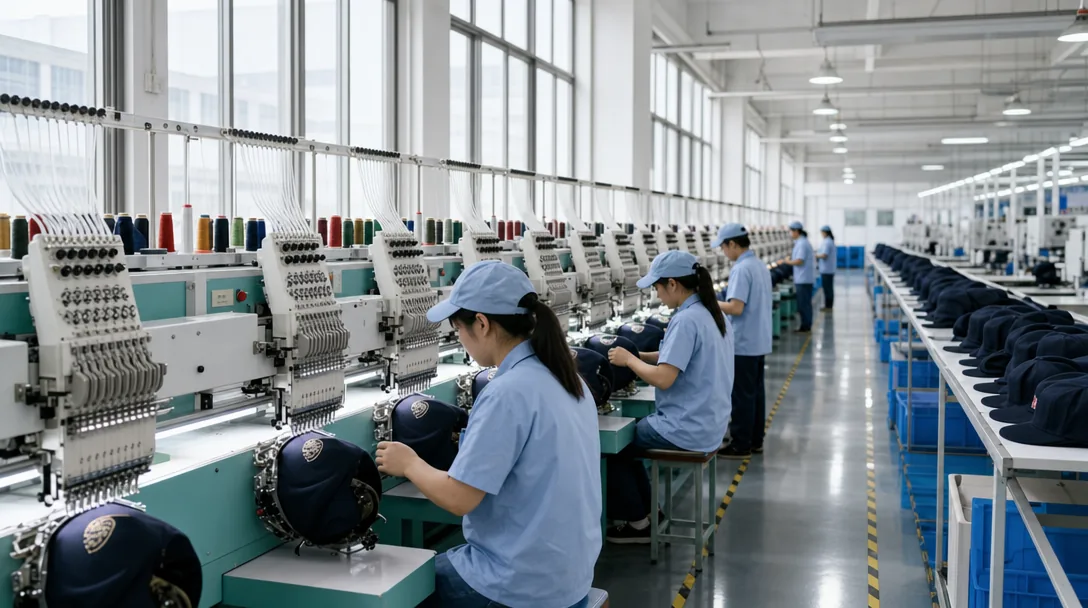
Ball Caps for Women: A 2026 Sourcing Playbook for International Buyers
Read article →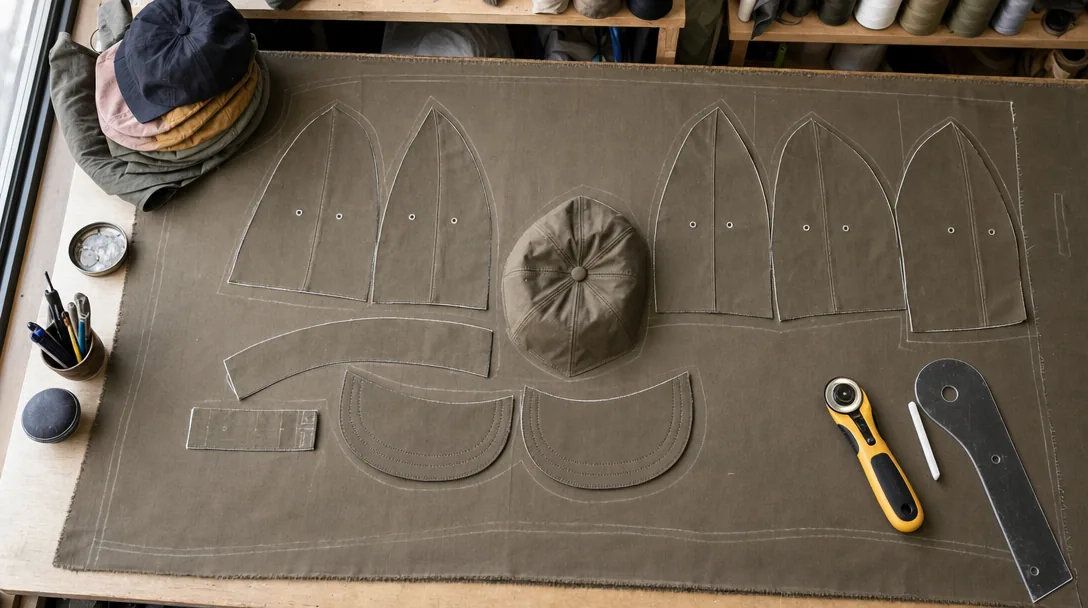
5-Panel vs 6-Panel Caps: Construction, Use Cases and Cost Compared
Read article →Bulk Trucker Hats Fabric And Trim Spec Guide for Custom Hat Buyers
Read article →Sourcing custom hats does not have to be complicated. With the right manufacturing partner, clear specifications and a small upfront investment in sampling, you can launch a retail-quality product in 30 to 45 days.