
What's in a Cap Tech-Pack: A Specification Template for Buyers - Cost & MOQ Breakdown - 2026 Buyer's Guide - 2026 Buyer's Guide - Cost & MOQ Breakdown
Every week, our sales team answers detailed questions about what's in a cap tech-pack: a specification template for buyers - cost & moq breakdown - 2026 buyer's guide - 2026 buyer's guide - cost & moq breakdown. We wrote this guide so that wholesalers, streetwear brands, corporate buyers and promotional resellers can compare options with full information, and avoid the traps that show up only after production has started.
Why a tech-pack saves you weeks of email back-and-forth
The slowest part of cap development is not cutting fabric or running embroidery; it is making the sample room guess what the buyer left blank. Two reference photos and “make it similar” do not tell a pattern maker the crown height, panel shape, visor radius, buckram stiffness, sweatband width, seam tape color, eyelet method, closure hardware, embroidery placement, or carton pack. Those missing points turn the first prototype into a paid conversation, not an approval sample. A usable cap tech pack template converts preference into factory language: 58 cm sample size, 16.5 cm front panel height, 7-row visor stitching, 2.2 mm medium-firm buckram, 180 gsm cotton twill, Pantone 19-4006 TCX, and logo centerline 38 mm above the visor seam. That is the difference between a mood board and a production file. The mood board shows style direction; the tech pack gives the pattern maker, digitizer, and sewing line enough numbers to build the cap intentionally on the first pass.
In our standard CrownsForge workflow, a manufacturer-ready tech pack typically cuts sampling from about 14 calendar days to 7 because pattern making, embroidery digitizing, and trim sourcing can move at the same time. The digitizer can build Tajima, Barudan, or ZSK files once the logo width, stitch type, Madeira or Gunold thread color, backing, 3D puff foam height, and maximum stitch count are fixed. The materials team can quote 10 oz cotton canvas, 320D nylon ripstop, nylon taslan, recycled polyester twill, brushed cotton, or 100% polyester trucker mesh without waiting for six scattered email replies. The sample sewer can select the correct crown block, visor board, sweatband, eyelets, and back closure before cutting the first panel. Without a clear custom cap spec sheet, every department pauses for small questions, and those questions never arrive in a neat sequence. With a proper cap design specification, the first revision is usually a 5 mm logo shift, a crown tension correction, or a visor curve adjustment, not a full rebuild.
The cost damage appears before bulk production even starts. Three or four sample rounds can burn $120 to $240 in sample charges, plus $35 to $70 per DHL or FedEx shipment, while FOB pricing stays unstable because the factory is costing a moving target. A flat 6,000-stitch front embroidery is not the same operation as a 14,000-stitch 3D puff logo on a structured six-panel cap; an antique brass buckle with sewn eyelet does not price like a plastic snapback, hook-and-loop tape, or nylon webbing with matte black hardware. A strong cap tech pack template should lock artwork, graded measurements, fabric weight, trims, color standards, packing method, and inspection tolerances: ±2 mm embroidery placement, ±0.5 cm head circumference, Delta-E under 1.5 for lab dips, and AQL 2.5 for final inspection. Buyers who define these controls early usually reduce revisions from four rounds to one because the factory is no longer interpreting taste through email; it is checking the sample against an agreed technical file.
The seven sections of a complete cap tech-pack
A usable cap tech pack template has seven non-negotiable blocks: technical drawings, finished measurements, materials, color standards, decoration files, construction/trims, and packaging/compliance. Start with factory views, not campaign photos: front, left side, back, top, underside of visor, sweatband/inside crown, and closure close-up. For a 6-panel structured snapback, call out the actual finished dimensions: 16.5 cm center-front crown height, 7.2 cm visor length, 18 visor stitch rows, 30 mm sweatband, 10 mm seam allowance, 14 mm top button, eyelet diameter and placement, back opening width, and closure height. Put tolerances beside every measurement: ±3 mm on crown height and visor length, ±2 mm on sweatband width, ±1 stitch row on visor quilting, and no more than 5 mm variation in brim curve against the approved counter sample. If the drawing only says “mid profile” or “standard brim,” the sample room will decide for you, and the sewing line will repeat that decision across 5,000 pieces.
The material and color pages must describe production inputs precisely enough for purchasing and cutting. Do not write “premium cotton” or “performance fabric”; specify 280 gsm cotton twill, 150D recycled polyester ripstop, nylon taslan with PU coating, 12-wale cotton corduroy, 50/50 wool-acrylic melton, or 180–220 gsm polyester trucker mesh. Include composition, gsm, weave, stretch percentage, shrinkage after wash, colorfastness target, and whether the fabric is stock, piece-dyed, yarn-dyed, or lab-dip approved. Color standards should list Pantone TCX or TPX references for shell, under-visor, sandwich brim, embroidery thread, snapback, taping, woven label, care label print, hangtag cord, and polybag sticker. For brand-critical retail orders, keep Delta-E under 1.5 under D65 lighting; for low-cost promotional caps, Delta-E 2.0–2.5 is usually the realistic ceiling. Two “black” twills can pass in roll form and still look mismatched once panels, visors, and buttons are sewn together.
Decoration, construction, and packaging specs are where avoidable claims usually begin. For embroidery, state artwork size in millimeters, placement from center seam or visor edge, thread brand, backing, stitch type, density, and maximum stitch count; a 55 mm front logo at about 9,000 stitches runs clean on Tajima, Barudan, or ZSK heads, while 3 mm lettering on brushed cotton needs opened columns and reduced density. Patch pages should define woven, PVC, silicone, leather deboss, chenille, or felt appliqué; include border type, thickness, color references, heat-press or stitch attachment, and pull-test requirement. Construction must list profile, panel count, structured or unstructured front, buckram or foam weight, visor board type, closure, eyelets, taping, sweatband, seam allowance, and workmanship limits such as no loose thread over 3 mm. Packing should specify 25 caps per inner carton, 100 per master carton, 60 x 45 x 38 cm carton, under 14 kg gross weight, crown inserts, silica gel, barcode position, COO label, and care-label wording. At CrownsForge, these points are tied to AQL 2.5 inspection so QC can reject measurable defects, not debate “bad shape” after shipment.
Tech sketches: front, side, back, optional underbrim
Scaled vector sketches are the control document in a cap tech pack template, not artwork for presentation. Provide front, left, right, back, and underbrim views; add a top view for 5-panel campers, 7-panel truckers, rope caps, runners, cycling caps, and any crown with asymmetrical panel geometry. Use Adobe Illustrator, CorelDRAW, Gerber, Optitex, or another vector CAD export with locked scale, visible seam lines, and named layers for shell fabric, trims, stitching, and decoration. A flattened JPG or Canva mockup cannot drive pattern correction, embroidery placement, or final inspection. Every critical point needs millimeter callouts: crown height, panel width at band line, visor length, rear opening width, strap length, patch size, eyelet diameter and position, and logo distance from fixed seams. State the construction precisely: unstructured 6-panel dad cap, structured snapback with medium buckram, foam-front trucker, 5-panel camper, nylon runner, or low-profile performance cap. Those choices affect cutting dies, blocking molds, buckram height, sweatband length, fusing temperature, and Tajima or Barudan hooping. If the sketch only says “baseball cap,” the sample room will use factory defaults, and a 3 mm logo drift becomes an opinion instead of a defect.
Draw the sewing operation, not only the silhouette. Mark center-front seam, side seams, rear arch binding, sweatband join, crown tape, top button, metal or sewn eyelets, bartacks, sandwich piping, rope position, woven label fold direction, and closure type: plastic snap, brass buckle, hook-and-loop, nylon clip, tuck strap, or elastic. If the visor needs six stitch rows, show six rows and specify spacing; 6–7 mm is common on structured snapbacks, while 5–6 mm looks cleaner on 260–300 gsm cotton twill dad caps. Call out stitch type where it changes cost or appearance: single-needle topstitch, double-needle chain stitch, zigzag, coverstitch for elastic sweatbands, edge stitch around patches, or lockstitch density at 8–10 stitches per inch. Decoration should be shown at 1:1 scale for flat embroidery, 3D puff, appliqué, woven patches, silicone badges, heat transfers, visor prints, and underbrim labels. For Tajima, Barudan, or ZSK embroidery, specify centerline, maximum artwork boundary, distance from seam, thread count target, and whether decoration is done pre-assembly, post-assembly, or after crown closing.
Put measurement arrows directly on the sketches, even if the tech pack has a separate spec table. Define crown depth by method: button to lower sweatband edge over the front panel, or vertical apex to band line; on soft unstructured caps those readings can differ by 8–15 mm. Mark visor length from the center-front seam to the edge, usually 68–72 mm on dad caps and 75–80 mm on snapbacks, with a realistic pressed tolerance of ±3 mm. Specify visor curve numerically, either arc height on a flat table or mold radius; “slightly curved” will not survive sampling. Show front logo height above visor seam, side logo distance from panel seam, rear embroidery height above closure, and underbrim print direction from the wearer’s perspective. Tie Pantone TCX or TPX references to each panel and trim, and set practical color tolerance such as Delta-E under 1.5 for dyed fabric or under 2.0 for printed underbrims. Our standard practice at CrownsForge is to stop sketch review when seam lines or measurement arrows are missing, because the file cannot support PP sample approval or AQL 2.5 inspection.
Fabric and color spec: GSM, weave, Pantone references
Fabric is where a cap tech pack template stops being a mood board and becomes a production instruction. Do not write “cotton twill” or “premium canvas”; specify fiber content, weave, weight, finish, and tolerance. A normal 6-panel baseball cap in 100% cotton 3/1 twill sits around 260–320 gsm with a realistic ±5% fabric-weight tolerance. Brushed cotton twill at 280–300 gsm is right for unstructured dad caps, but it loses panel memory, so it is a poor choice for a tall A-frame crown unless the front panel uses firmer buckram. Heavy cotton canvas at 340–420 gsm gives a clean embroidery face, but it can make low-profile caps bulky at the seams. Wool-blend snapback fabric is commonly 50/50 wool-acrylic or 80/20 acrylic-wool at 360–430 gsm. For recycled polyester or nylon, specify denier and construction, such as 150D plain weave, 300D ripstop, or 210D nylon taslon, plus PU or TPU coating weight if water resistance is required.
Color must be controlled with textile standards, not artwork values copied from Illustrator. Use Pantone TCX, CSI, Archroma, or an approved physical swatch for shell fabric, under-visor, sweatband, taping, sandwich edge, top button, eyelet thread, closure, and embroidery thread; Pantone PMS Coated is for ink on coated paper, not dyed cotton. A usable line item reads: shell fabric Pantone 19-4013 TCX Dark Navy, under-visor Pantone 17-0535 TCX Green Olive, black 100% cotton twill sweatband, self-fabric top button, eyelets matched to shell. A PDF color callout is not enough because one monitor can make navy read purple and another can push olive brown. Our standard practice at CrownsForge is to approve lab dips under D65 and TL84 light boxes, then hold bulk solid fabric to Delta-E 1.0–1.5 where the dye process allows. Melange yarns, pigment dye, garment wash, enzyme wash, acid wash, and snow wash need wider written tolerances, usually Delta-E 2.0–3.0 or an approved shade band.
MOQ and cost change fast when the fabric moves from stock to custom. Stock 280 gsm cotton twill in black, navy, khaki, white, red, and gray can usually run at 100–300 pieces per color if the crown, visor, and closure are standard. Custom-dyed cotton often starts at 300–500 pieces per color; coated recycled polyester, nylon blends, corduroy, and wool-acrylic snapback fabric commonly require 800–1,000 pieces because mills and dye houses will not break batch minimums. The fabric spec should also state shrinkage after wash, colorfastness, and finish: reactive dyed, pigment dyed, brushed, peach finish, pre-washed, C6 or C0 water-repellent. For export production, I would not accept less than ISO 105 rubbing fastness grade 3–4 dry and 2–3 wet, especially on black or dark navy sweatbands. Stock cotton twill may add $0.85–$1.20 per cap; heavy canvas, coated ripstop, corduroy, or wool blend can reach $1.50–$2.40 before cutting loss, shade sorting, and rejected panels are counted.
Decoration spec: technique, placement, dimensions, color count
Decoration rejects more first samples than fabric because buyers judge the logo at arm’s length, not by a lab report. In a cap tech pack template, the decoration field should read like a production ticket: technique, substrate, exact position, finished dimensions, color references, file name, tolerance, and approval standard. Name the process precisely—direct flat embroidery, 3D puff, chain stitch, felt appliqué, woven patch, sublimated twill patch, debossed leather patch, PVC patch, silicone transfer, or heat transfer. For embroidery, state direct-to-cap versus patch and thread type. 120D polyester is our default for sweat, UV, and wash resistance; rayon has better sheen but fuzzes faster; metallic thread needs simplified artwork and wider open areas. Structured fronts normally run on Tajima or Barudan cap frames; ZSK heads hold registration better on dense multi-color marks but do not rescue poor digitizing. For 3D puff, specify foam thickness and color, stitch direction, and satin column width, usually 3.0–8.0 mm. Tiny counters, 1 mm gaps, and thin serif fonts often close after foam expansion, so provide AI/PDF vector art and an approved DST or EMB file, never a 300 px JPG from a website.
Placement must be tied to cap construction, not described as “front center.” Write measurements like: “front logo centered across front two panels, bottom edge 18 mm above visor seam, finished size 50 mm W × 30 mm H,” or “left side mark centered vertically on panel, leading edge 35 mm from rear seam, finished size 28 mm W.” Back decoration needs its own line because hooping changes by closure: above plastic snapback, above metal buckle, on fabric strap, on rear arch, or split around a ponytail opening. A six-panel center seam can distort 2 mm lettering; a five-panel camper, foam trucker, or seamless front panel gives a flatter embroidery field. Do not carry one embroidered logo from cotton twill into polyester mesh unless the artwork is intentionally broken into zones. Put tolerances on the hat specification sheet: ±2 mm for placement, ±5% for finished embroidery size, and maximum 1.0 mm visible skew on front logos after blocking. For retail consistency, seal one gold sample and require inline checks every 50–100 pieces before final AQL 2.5 inspection.
Color count, stitch count, and patch construction change cost too much to leave in a WeChat or email thread. List embroidery colors by Madeira, Gunold, or Coats code; Pantone TCX or Pantone Coated should be treated as a target only because thread reflects differently from dyed fabric or printed paper. For strict licensed programs, set Delta-E ≤2.0 under D65 lighting for printed patches and fabric panels, while embroidery should be approved from a physical thread card or sewn strike-off. A clean 50 × 30 mm flat logo usually runs 4,000–7,000 stitches and adds about $0.18–$0.45 per cap at 1,000 pieces; dense 3D puff often reaches 8,000–12,000 stitches and adds $0.45–$0.90 because machine speed drops, trims increase, and foam cleanup adds labor. Patch specs need separate fields for finished size, edge, backing, attachment, and tolerance. Write “woven patch, 60 mm W, merrowed edge, polyester backing, sew-down with tone-on-tone thread, ±1.5 mm placement tolerance,” not “logo patch.” Re-digitizing typically costs $25–$80 per logo and can change pull compensation, density, and letter weight even when the artwork is identical.
Packaging and label spec: polybag, hangtag, sticker, carton
Packaging must be locked in the cap tech pack template before the first salesman sample, because it changes FOB cost, carton cube, barcode compliance, and crown recovery after 30–45 days in a container. For each polybag, specify material, flat size, gauge, venting, closure, print, and warning text. A normal adult cap uses 28 x 35 cm or 30 x 40 cm clear LDPE/OPP at 0.03–0.05 mm, with a 5 mm vent hole and resealable adhesive flap for retail replenishment. Standard clear bags add about US$0.025–0.06 per cap; recycled PE, FSC paper sleeves, or compostable PLA usually land at US$0.08–0.16 and often need 3,000–5,000 pcs MOQ per bag size. For U.S., EU, and marketplace orders, define suffocation-warning wording and font height, country-of-origin text, SKU, EAN/UPC format, FNSKU if needed, and whether the barcode goes on a bag sticker, joker label, or hangtag. For structured snapbacks, foam truckers, and high-profile 5-panels, add crown tissue or a die-cut insert when carton height exceeds 55–60 cm; US$0.03–0.07 per cap is cheaper than collapsed front panels at final inspection.
Treat hangtags, brim stickers, joker labels, size strips, and care labels as production trims, not afterthoughts from the marketing team. A usable hangtag spec lists finished size, paper weight, coating, hole diameter, string or pin material, barcode type, attachment point, and color standard. A reliable baseline is 50 x 90 mm, 300–400 gsm C2S art card, matte lamination, 4 mm punched hole, black cotton string, attached through the rear closure so the sweatband has no needle scar. Basic hangtags cost about US$0.05–0.18 per set; foil stamping, embossing, spot UV, soft-touch lamination, PMS ink drawdown, or FSC-certified stock can push the trim above US$0.25 with 1,000–3,000 pcs MOQ per design. For visor stickers, define diameter, foil color, adhesive grade, emboss height, and placement tolerance: for example, 45 mm gold foil sticker centered on the upper visor, front edge offset 35 mm, tolerance ±3 mm. On suede, pigment-dyed cotton, brushed twill, and printed undervisor fabric, require a 24-hour test at 40°C and 60% RH: no pigment lift, oil halo, curling, or glue residue.
Carton packing should be specified by dimension, board grade, flute type, piece count, and sealing method; “standard export carton” is not a factory instruction. A common cap carton is 5-ply K=K or A=B flute, about 60 x 45 x 38 cm, packed at 144 pcs for unstructured dad caps, 96 pcs for structured baseball caps, and 72 pcs for foam-front truckers or caps with tall 3D embroidery. Keep gross weight below 16 kg where possible; above that, express couriers apply more surcharges, lower rows crush faster, and third-party warehouses report more handling damage. Carton marks should match the packing list exactly: PO number, style code, color, size if applicable, quantity, carton number, gross/net weight, measurements, destination, and “Made in China” when required by the broker or retailer routing guide. At CrownsForge, packaging is checked during final inspection under AQL 2.5 for major defects and AQL 4.0 for minor defects. Wrong barcode, missing warning, loose hangtag, sticker placement outside tolerance, weak tape, wet board, crushed crowns, wrong carton count, or shipping marks that do not match documents are release blockers, not paperwork errors.
Frequently Asked Questions
How long does production take?
Sampling takes 7 to 12 days. Bulk production runs 20 to 30 days depending on quantity, fabric availability and decoration complexity. Inspection and packing adds another 3 to 5 days before shipment.
Do you support sustainability certifications?
Yes. We work with GOTS organic cotton, GRS-certified recycled polyester, OEKO-TEX Standard 100 fabrics, and are BSCI and Sedex audited. Certification documentation can be provided per order.
What file format should I send for my logo?
Vector files (AI, EPS, PDF) are ideal. High-resolution PNG or JPG at 300 dpi on transparent background works as a fallback. Provide Pantone color references for accurate reproduction.
What is the minimum order quantity (MOQ) for custom hats?
Our standard MOQ is 100 pieces per design and color, with sampling available from 1 piece. For complex multi-color logos or premium fabric upgrades, the MOQ can be lowered with a small per-piece surcharge.
Can I order a sample before bulk production?
Yes. We strongly recommend approving a pre-production sample before mass production. Samples are charged at 35 to 60 USD each plus express shipping, fully refundable against confirmed bulk orders over 500 pieces.
How does ordering custom patch trucker hat work?
When evaluating custom patch trucker hat, the key considerations are construction quality, decoration capability, MOQ flexibility and lead time. Technique (3D puff / flat embroidery / patch), placement (front center, side, back), dimensions (e.g. 5cm wide × 3cm tall), stitch count if known, color count and Pantone references. Without a tech-pack, your factory invents details that contradict your assumptions. With one, sampling lead time drops from 14 days to 7 and revision rounds drop from 4 to 1.
How does ordering baseball cap custom work?
When evaluating baseball cap custom, the key considerations are construction quality, decoration capability, MOQ flexibility and lead time. Without a tech-pack, your factory invents details that contradict your assumptions. With one, sampling lead time drops from 14 days to 7 and revision rounds drop from 4 to 1. Tech sketches, fabric spec, color spec, decoration spec, construction spec (panels, closure, eyelets, sweatband), packaging spec, label/hangtag spec.
How does ordering custom baseball cap motorcycle helmet work?
When evaluating custom baseball cap motorcycle helmet, the key considerations are construction quality, decoration capability, MOQ flexibility and lead time. Without a tech-pack, your factory invents details that contradict your assumptions. With one, sampling lead time drops from 14 days to 7 and revision rounds drop from 4 to 1. Tech sketches, fabric spec, color spec, decoration spec, construction spec (panels, closure, eyelets, sweatband), packaging spec, label/hangtag spec.
How does ordering custom bucket hat embroidered work?
When evaluating custom bucket hat embroidered, the key considerations are construction quality, decoration capability, MOQ flexibility and lead time. Without a tech-pack, your factory invents details that contradict your assumptions. With one, sampling lead time drops from 14 days to 7 and revision rounds drop from 4 to 1. Tech sketches, fabric spec, color spec, decoration spec, construction spec (panels, closure, eyelets, sweatband), packaging spec, label/hangtag spec.
Looking for a reliable hat manufacturer in China?
CrownsForge has produced custom hats for 800+ brands across 40 countries. From 100-piece launches to 100,000-piece retail programs, we deliver on time and on spec.
Get in touchRelated guides
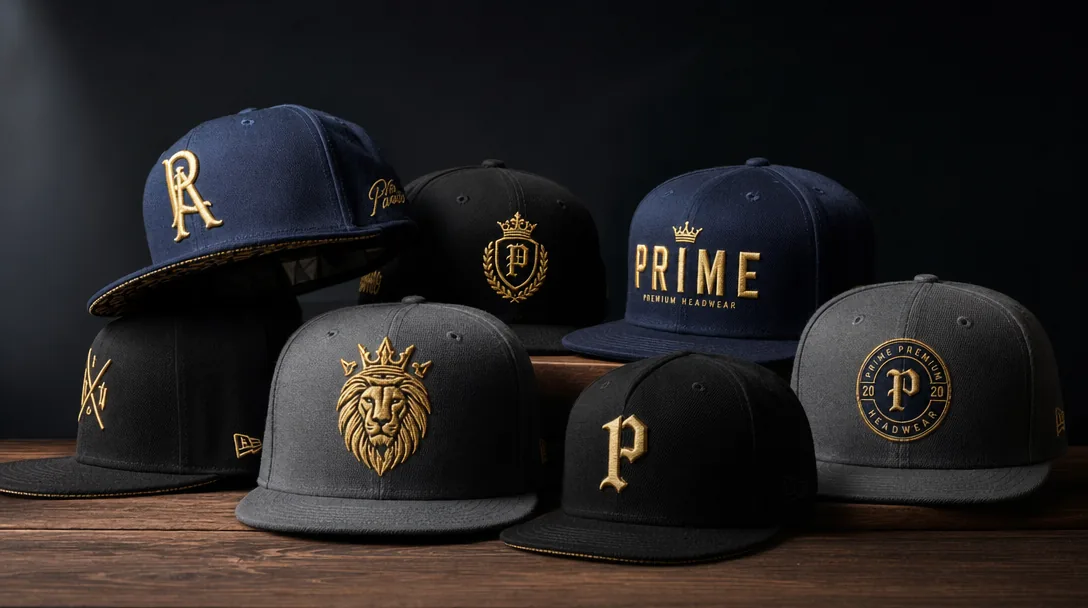
Custom Leather Patch Hat Low Minimum: A 2026 B2B Sourcing Guide
Read article →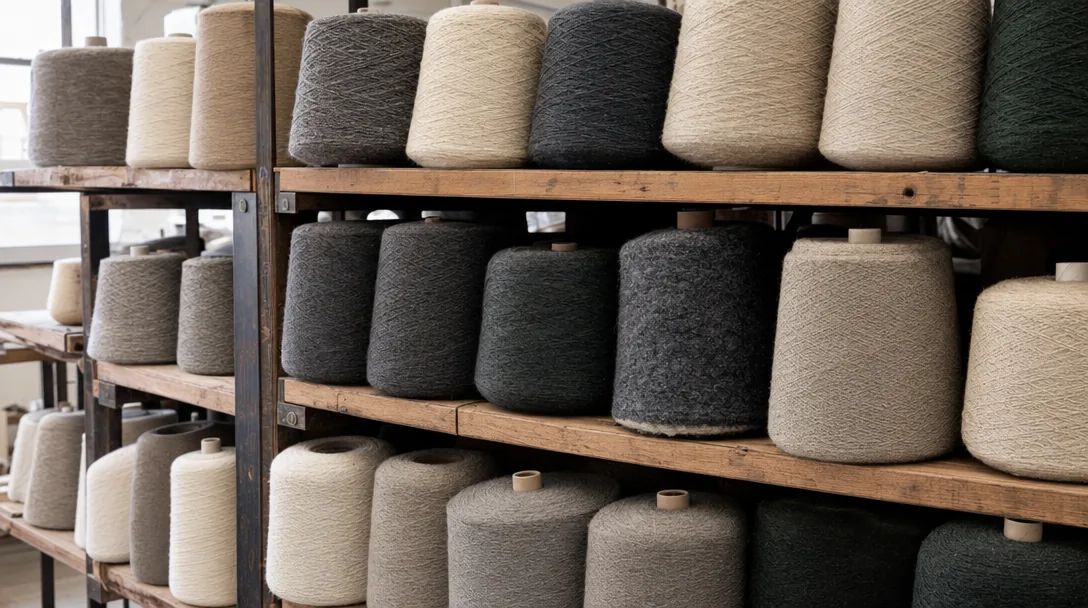
Mens Beanies: Properties, Costs and How to Spec It Right
Read article →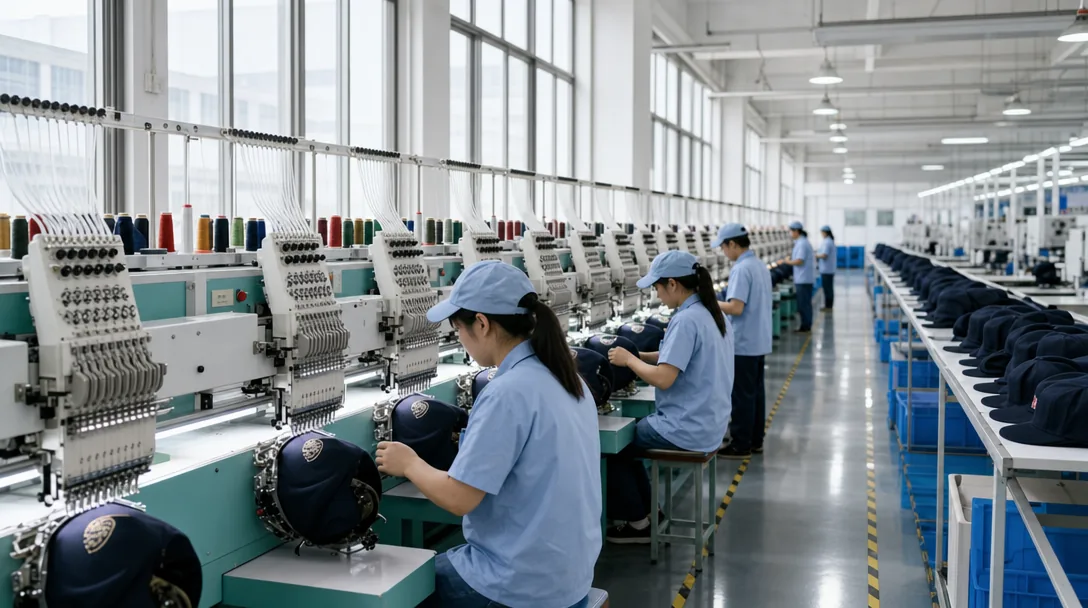
Bulk Trucker Hats Export Shipping Checklist for Custom Hat Buyers - Cost & MOQ Breakdown - Supplier Checklist
Read article →We hope this guide demystifies what's in a cap tech-pack: a specification template for buyers - cost & moq breakdown - 2026 buyer's guide - 2026 buyer's guide - cost & moq breakdown and helps you move forward with confidence. If you have questions specific to your project, our English-speaking sales engineers are one message away.