
What's in a Cap Tech-Pack: A Specification Template for Buyers (2026 Update) - Cost & MOQ Breakdown - 2026 Buyer's Guide
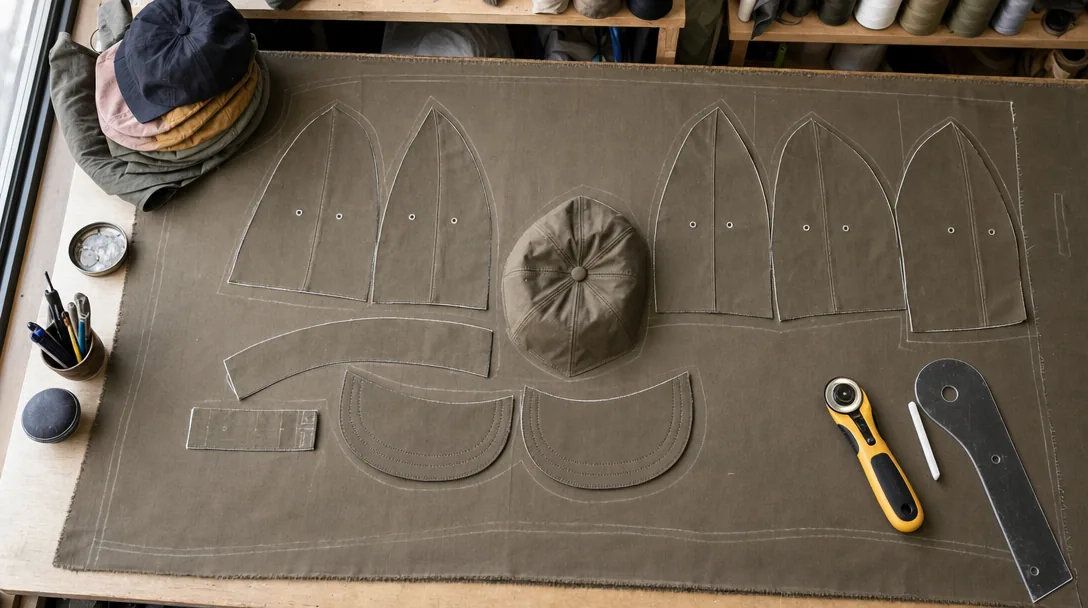
What's in a Cap Tech-Pack: A Specification Template for Buyers (2026 Update) - Cost & MOQ Breakdown - 2026 Buyer's Guide is one of the most-asked questions we receive from international buyers, and for good reason. With dozens of factories competing for your order and an alphabet soup of technical terms in every supplier quote, even experienced importers can feel lost. This guide consolidates what we have learned producing custom hats for clients in 40+ countries.
Why a tech-pack saves you weeks of email back-and-forth
A cap tech pack template saves time because it converts “looks like this” into factory instructions the sample room can cut, sew, and inspect. The minimum useful spec is not “black 5-panel with embroidery”; it is 16-3915 TCX cotton twill at 280 gsm, unstructured crown, 5-panel camper construction, 7.0 cm pre-curved visor, 1.6 mm PE visor board, 58 cm standard fit, 12 mm seam tape, cotton sweatband, self-fabric strap with antique brass slider, and a 52 mm wide front embroidery placed 38 mm above the visor seam. Those details remove the first 8–12 clarification emails. The slow part is rarely stitching the sample; it is deciding whether the front panel needs buckram, whether the brim curve is shallow or baseball-style, whether the buyer expects Delta-E under 1.5 or accepts normal bulk tolerance around Delta-E 2.0–3.0, and whether the artwork is usable for Tajima, Barudan, or ZSK digitizing without redrawing.
The cost penalty for missing specs is measurable. A structured cap sample from China typically costs USD 45–90 including embroidery setup, then another USD 25–45 by DHL, FedEx, or UPS; two unnecessary resamples can burn USD 140–270 and 14–25 calendar days before sales photos or buyer approvals are ready. A complete cap tech pack template also makes MOQ and pricing honest from the first quote. Stock 280 gsm cotton twill dad caps may run at 144–300 pcs per color, while custom-dyed fabric, molded PVC patches, jacquard webbing, non-stock Pantone snaps, or plated buckles usually push practical MOQ to 500–1,000 pcs. Our standard practice at CrownsForge is to check fabric availability, trim MOQ, stitch count, packing method, and AQL 2.5 inspection target before pricing. A 10,000-stitch flat embroidery often adds USD 0.18–0.35 per cap; dense 3D puff can add USD 0.45–0.80 because slower thread coverage reduces multi-head output.
The seven sections of a complete cap tech-pack
Most sampling delays start because the supplier receives artwork, not a usable cap tech pack template. The first two sections must freeze shape, fit, and materials before anyone quotes, digitizes, or books fabric. Section one is the visual specification: front, left, right, back, top, underbill, and inside views, each with numbered callouts linked to the BOM. Put the engineering details on the drawing, not in a separate email chain: panel count, crown profile, seam layout, visor curvature, button, eyelets, closure, contrast stitching, and any sandwich brim or rope detail. Never combine silhouettes on one page. A 6-panel unstructured dad cap, a 5-panel foam trucker, and a high-profile fitted use different pattern blocks, sewing operations, and fabric yields; in practice that can move FOB cost by $0.30 to $0.80 per piece and shift MOQ by several hundred units depending on fabric availability. Section two is sizing and materials, which is where off-spec bulk production usually begins. State target size and tolerance in production terms: adult OSFM 58 cm nominal, youth 54 to 56 cm, XL 60 to 62 cm, with workable tolerances such as ±0.5 cm on opening circumference and ±0.3 cm on visor width. Then specify every material by composition, construction, and weight: 100% cotton twill 260 gsm, brushed chino 16 x 12, recycled polyester microfiber 120 gsm, or 210D nylon taslon. Call out buckram grade, front-panel backing, sweatband content, undervisor fabric, closure strap, and hook-and-loop quality. For color, use Pantone TCX for textiles and Pantone Solid Coated for printed components, with realistic tolerance targets like Delta-E below 1.5 on shell fabric and below 2.0 across embroidery thread lots. If the cap uses pigment wash, enzyme wash, or distressing, lock the process and acceptable shade range; a heavier wash can add $0.20 to $0.45 per cap and noticeably change hand feel and fit.
Sections three and four decide whether the sample matches the buyer’s intent or the factory’s assumptions. Decoration must define method, exact placement, finished size, stitch count, backing, thread brand or equivalent, and operation sequence. “Front embroidery” is not a specification; “flat embroidery, front center, 120 mm width, 8,500 to 9,500 stitches, Madeira Polyneon 40 wt, cutaway backing” is. For 3D puff, note foam thickness and artwork limits: 2 mm EVA gives cleaner edges on most logos, while 3 mm only works for bold block letters with enough stroke width to run consistently on Tajima, Barudan, or ZSK heads. For woven patches, TPU badges, screen prints, or heat transfers, state dimensions, edge finish, attachment method, and temperature window so the line does not warp the crown or glaze the fabric. The last three sections should reduce claims, rework, and freight surprises. Construction needs measurable specs: structured or unstructured crown, profile height in centimeters, visor board material, stitch rows, eyelet type, sweatband width, seam tape, closure hardware, and CTQ points tied to inspection. A usable line item looks like this: 6-panel structured crown, 11.5 cm medium profile, fused buckram on front two panels, pre-curved PE visor, 8 rows visor stitching, sewn eyelets, 32 mm cotton twill sweatband, matte black plastic snap, visor symmetry within 3 mm at AQL 2.5. Then lock packaging, labels, and compliance together: individual polybag or not, crown support, nested or fully shaped packing, carton count, carton dimensions, and gross weight below 16 kg where possible. Our standard practice is to flag that fully shaped truckers can increase cubic volume by 20% to 30% versus nested packing, which matters more under DDP than saving $0.06 on unit packing. Finish with main label, care/content label, country-of-origin mark, barcode position, hangtag size, needle policy, and required audit or certification evidence such as sedex-audit-cap-supplier-guide.html">BSCI 2.0, Sedex SMETA 4-Pillar, GRS, or FSC.
Tech sketches: front, side, back, optional underbrim
The sketch page is where a cap tech pack template either controls production or creates arguments at sample review. Use 1:1 vector drawings in AI, PDF, or DXF format, not lifestyle photos, AI renderings, or screenshots from a Shopify mockup. For a structured 5-panel, 6-panel, camper, dad cap, snapback, or trucker, show front, left side, right side if asymmetric, back, top, and optional underbrim views. Mark panel breaks, crown seams, dart positions, eyelets, visor stitch rows, sweatband join, taping, closure type, woven label placement, and inside branding. If the front is seamless buckram, say so; if a center seam runs under the embroidery, show it clearly. That one detail changes hooping, backing, and stitch direction on Tajima, Barudan, or ZSK heads. Embroidery artwork must be boxed on the sketch with exact placement, such as “center front, 58 mm wide, 38 mm high, bottom edge 42 mm above visor seam,” not left floating as a logo file.
Measurement points belong on the sketch itself, with arrows and tolerance, because separate measurement tables are often misread by pattern makers. Crown depth should be taken from the crown apex or top button down to the lower edge at center front; mid-profile baseball caps usually run 16.0–17.5 cm, while shallow dad caps are closer to 14.0–15.5 cm. Visor length is measured from the center-front crown seam to the visor tip, commonly 7.0–7.5 cm for standard adult caps, and visor width is measured edge to edge at the widest point. Define curve by mold or radius, not by words like “medium curve.” A 7 cm visor pressed on a 95 mm radius mold looks very different from the same visor hand-curved after packing. Our standard practice at CrownsForge is to mark visor stitch count and spacing directly on the drawing, for example 6 rows at 5 mm spacing or 8 rows at 4 mm, because it affects seam balance, operator time, and puckering risk.
The underbrim view is not optional for streetwear, golf, and licensed sports work; it is where many expensive sample mistakes hide. Show whether the undervisor is self-fabric, contrast cotton twill, green TCX-matched undervisor, printed polyester, suede microfiber, or mesh-laminated material. Call out sandwich piping, edge binding, visor insert thickness, and construction type: flat brim with 2.0 mm PE board, pre-curved brim with 1.8 mm recycled PP insert, or soft foam-supported visor for performance caps. If a print wraps under the visor, include grain direction, artwork rotation, and bleed allowance, normally 3–5 mm beyond the cut line. Put tolerances beside the measurements: ±0.3 cm for crown height and visor length, ±0.5 cm for circumference after blocking, and ±2 mm for logo placement on approved production. Photos can support the sketch, but they cannot replace it; lens distortion hides seam geometry. A proper drawing lets the cutting master, sewing line leader, embroidery digitizer, and AQL 2.5 inspector judge the same specification without guessing.
Fabric and color spec: GSM, weave, Pantone references
Weave, yarn size, and finishing are just as important as gsm because they decide abrasion resistance, stitch clarity, shrinkage, and how the crown behaves after blocking. A 2/1 or 3/1 twill hides minor seam puckering better than plain canvas; canvas gives a flatter screen-print surface but exposes seam grin on curved panels. For performance caps, “polyester” is not enough. Specify something the mill can quote: “100% recycled polyester micro ripstop, 75D x 75D, 145 gsm ±5%, C0 DWR, moisture-wicking finish, UPF 50+ if tested.” Separate every support material: shell fabric, buckram weight or thickness, visor board type, sweatband composition, undervisor fabric, seam tape, closure webbing, snapback resin, and elastic content. These are the first items factories substitute when the target FOB drops by $0.20–$0.40. Our standard practice at CrownsForge is to verify incoming rolls against the mill report for gsm, width, handfeel, and dye lot before cutting, because mixed lots are one of the fastest ways to fail a reorder against an approved salesman sample.
Color needs a Pantone reference plus a physical standard, especially for licensed sports, streetwear capsules, and replenishment programs. For textiles, Pantone FHI TCX is more useful than coated-paper PMS, so write “Pantone 19-3921 TCX, buyer swatch supplied, Delta-E ≤1.5 under D65” for premium or licensed work; Delta-E ≤2.0 is usually realistic for promotional caps. Call out each component separately: crown panels, visor top, undervisor, sandwich stripe, eyelets, top button, sweatband, taping, embroidery thread, woven label ground, snapback, buckle strap, cord, and plastic adjuster. “Match body” is not a specification when shell fabric, grosgrain tape, polyester thread, and closures come from different suppliers with different dye systems. Approval conditions should be written into the hat specification sheet: D65 light box, 45-degree viewing angle, approved lab dip or bulk swatch, dry and wet crocking targets, and shade continuity across panels and brim. Tight shade control usually adds $0.08–$0.20 per cap and may push dyed-fabric MOQ to 80–150 meters per color, but that is cheaper than rejecting 3,000 finished caps for missing a team color.
Decoration spec: technique, placement, dimensions, color count
The decoration line in a cap tech pack template should be written as production data, not creative direction. Name the exact process first: flat embroidery, 3D puff embroidery, appliqué, woven patch, printed twill patch, chenille, PVC badge, silicone heat transfer, sublimated under-visor, or mixed media. Then identify the base material, because a logo that runs cleanly on 280 gsm cotton twill may pucker on 160 gsm foam trucker fronts or sink into washed canvas. For embroidery, list finished size, stitch estimate, digitizing file type, and thread type. A 50 mm × 30 mm flat front logo normally lands around 4,000–7,000 stitches; a dense sports crest can exceed 12,000 stitches and require slower running on Tajima, Barudan, or ZSK heads to prevent needle breaks. For 3D puff, state foam height, typically 2 mm or 3 mm, and avoid letters under 6 mm high or internal gaps below 1.2 mm. For patches, specify woven versus embroidered, 75D or 150D polyester yarn, backing, edge finish, thickness, and attachment method: merrowed, heat-cut, satin border, zigzag stitch, lockstitch, or heat press.
Placement must be measured from cap construction points, not guessed from a flat mockup. Use front center, left panel, right panel, back arch, closure strap, sweatband label, visor top, or under-visor, then give a center point or bounding box. A usable spec reads: “flat embroidery on front two panels, 50 mm W × 30 mm H, bottom edge 42 mm above visor seam, centered on crown centerline, rotation 0°.” A side logo might read: “28 mm W, center point 65 mm behind front panel seam and 30 mm above visor seam.” These details matter because buckram tension, curved panels, seam allowances, and hoop clearance limit where decoration can physically sit. On structured 6-panel caps, we normally keep critical embroidery at least 8–10 mm away from heavy seams to reduce thread breaks and distortion. CrownsForge’s standard practice is to approve ruler photos on the pre-production sample before bulk digitizing, especially for side-panel marks, arched back embroidery, and visor decoration.
Color count affects price, speed, and inspection, so lock it before quotation. List thread or print colors by Pantone TCX, Pantone Coated, or real thread references such as Madeira Polyneon, Gunold, or Isacord; “navy/red/white” is not a production spec. A clean entry is: “flat embroidery, 4 colors: Pantone 19-4052 TCX Classic Blue, 11-0601 TCX White, 18-1664 TCX Fiery Red, 13-0858 TCX Vibrant Yellow; match to approved thread card, Delta-E ≤1.5 where achievable.” Also state matte polyester, rayon, metallic, recycled polyester, glow thread, or tonal thread. Metallic thread can slow embroidery output by 15–30% and raises rejection risk on letters below 7 mm. A 6-color logo can cost more than a 2-color logo at the same stitch count because every color stop adds trimming, operator handling, and QC time. Add stitch-density limits, no-sew zones near seams, and registration tolerance, usually ±1 mm for layered embroidery or ±2 mm for patches and heat transfers.
Packaging and label spec: polybag, hangtag, sticker, carton
Packaging is not a “factory standard” line item; it is a costed, inspected component that belongs in the cap tech pack template next to fabric, trims, and logo execution. For a structured 6-panel cap, specify one cap per 28 x 28 cm LDPE or OPP bag, 0.03–0.05 mm thickness; flat-brim snapbacks, high-crown truckers, and foam fronts usually need 30 x 30 cm bags plus a cardboard crown insert or visor support. State open-mouth, self-seal, or heat-seal, and require two 5–8 mm vent holes if the goods will move by ocean freight through humid lanes. For EU or UK orders, include PE-LDPE recycle code 4 or PP code 5, minimum 6 mm print height, plus market-specific suffocation warnings. If sustainability is part of the brief, write “30% PCR PE” or “50% PCR PE,” not “eco bag.” Printed polybags should list ink color, artwork position, and tolerance; Delta-E under 2.0 is realistic for black or white on virgin film, while recycled film often needs looser approval because the base film shifts gray or yellow.
Hangtags, brim stickers, woven labels, and carton stickers need placement rules, not just PDF artwork. A workable hangtag spec would read: 50 x 90 mm, 350 gsm C1S card, matte lamination, CMYK plus 1 Pantone C spot color, 3 mm drill hole, UPC-A barcode at 80–100% magnification, attached by clear kimble through back closure. For premium fashion caps, a cotton string loop through the rear eyelet looks cleaner but adds labor and can leave pressure marks on brushed cotton, suede, melton wool, or enzyme-washed twill. Brand color should be defined by Pantone TCX for fabric-matched labels and Pantone C for printed paper; Delta-E 3.0–4.0 is normal for offset tags unless you pay for drawdowns and tighter press control. Brim stickers should call out diameter or shape, adhesive type, finish, and exact location: for example, 48 mm round foil sticker, top visor center, 20 mm from visor tip. At 1,000 pcs, basic hangtags usually run $0.05–$0.12 each, brim stickers $0.01–$0.03, with foil, embossing, soft-touch, hologram, or QR serialization adding cost and lead time.
Carton specs should protect crown shape before optimizing cubic meters. Standard curved-brim baseball caps can often pack 100 pcs per export carton, but 3D puff embroidery, wool blends, suede, foam truckers, and flat-brim snapbacks should be limited to 50–75 pcs to avoid crushed front panels and warped visors. Define carton size, packing direction, units per inner bundle, net weight, gross weight, board grade, carton marks, and barcode labels. Keep gross weight around 12–14 kg for hand-loaded cartons; once cartons exceed 16 kg, corner crush and rough handling damage show up more often during LCL transfers and mixed-container unloading. A practical export carton is 5-ply corrugate, K=A or equivalent, with one-color side marks showing PO number, style, color, size, quantity, country of origin, and sequence such as 1/24. If Amazon FNSKU, retailer UCC-128, or warehouse routing labels are required, specify label size and which carton face they must sit on. At CrownsForge, the packaging matrix is checked during inline QC and final AQL 2.5 inspection so the packing line and inspector use the same counts, ratios, and markings.
Frequently Asked Questions
What logo decoration techniques do you offer?
3D puff embroidery, flat embroidery, woven patch, leather patch, PVC patch, screen printing, sublimation, applique and laser etching, all in-house with no subcontracting.
What file format should I send for my logo?
Vector files (AI, EPS, PDF) are ideal. High-resolution PNG or JPG at 300 dpi on transparent background works as a fallback. Provide Pantone color references for accurate reproduction.
Can I order a sample before bulk production?
Yes. We strongly recommend approving a pre-production sample before mass production. Samples are charged at 35 to 60 USD each plus express shipping, fully refundable against confirmed bulk orders over 500 pieces.
How long does production take?
Sampling takes 7 to 12 days. Bulk production runs 20 to 30 days depending on quantity, fabric availability and decoration complexity. Inspection and packing adds another 3 to 5 days before shipment.
Do you support sustainability certifications?
Yes. We work with GOTS organic cotton, GRS-certified recycled polyester, OEKO-TEX Standard 100 fabrics, and are BSCI and Sedex audited. Certification documentation can be provided per order.
How does ordering custom patch trucker hat work?
When evaluating custom patch trucker hat, the key considerations are construction quality, decoration capability, MOQ flexibility and lead time. Technique (3D puff / flat embroidery / patch), placement (front center, side, back), dimensions (e.g. 5cm wide × 3cm tall), stitch count if known, color count and Pantone references. Without a tech-pack, your factory invents details that contradict your assumptions. With one, sampling lead time drops from 14 days to 7 and revision rounds drop from 4 to 1.
How does ordering baseball cap custom work?
When evaluating baseball cap custom, the key considerations are construction quality, decoration capability, MOQ flexibility and lead time. Without a tech-pack, your factory invents details that contradict your assumptions. With one, sampling lead time drops from 14 days to 7 and revision rounds drop from 4 to 1. Tech sketches, fabric spec, color spec, decoration spec, construction spec (panels, closure, eyelets, sweatband), packaging spec, label/hangtag spec.
How does ordering custom baseball cap motorcycle helmet work?
When evaluating custom baseball cap motorcycle helmet, the key considerations are construction quality, decoration capability, MOQ flexibility and lead time. Without a tech-pack, your factory invents details that contradict your assumptions. With one, sampling lead time drops from 14 days to 7 and revision rounds drop from 4 to 1. Tech sketches, fabric spec, color spec, decoration spec, construction spec (panels, closure, eyelets, sweatband), packaging spec, label/hangtag spec.
How does ordering custom bucket hat embroidered work?
When evaluating custom bucket hat embroidered, the key considerations are construction quality, decoration capability, MOQ flexibility and lead time. Without a tech-pack, your factory invents details that contradict your assumptions. With one, sampling lead time drops from 14 days to 7 and revision rounds drop from 4 to 1. Tech sketches, fabric spec, color spec, decoration spec, construction spec (panels, closure, eyelets, sweatband), packaging spec, label/hangtag spec.
Ready to start your custom hat project?
Send us your tech-pack, sketch or even just an inspiration photo. We will respond with a detailed quotation and digital mock-up within 24 hours.
Request a free quoteRelated guides
Embroidery Hats Machine: When to Use It, Costs, and What to Ask Your Factory (2026 Update)
Read article →
Custom Logo Hats: When to Use It, Costs, and What to Ask Your Factory (2026 Update)
Read article →
Custom Hat Embroidery: The 2026 Sourcing & Manufacturing Playbook
Read article →Sourcing custom hats does not have to be complicated. With the right manufacturing partner, clear specifications and a small upfront investment in sampling, you can launch a retail-quality product in 30 to 45 days.