
Bulk Trucker Hats Fabric And Trim Spec Guide for Custom Hat Buyers (2026 Update)
Every week, our sales team answers detailed questions about bulk trucker hats fabric and trim spec guide for custom hat buyers (2026 update). We wrote this guide so that wholesalers, streetwear brands, corporate buyers and promotional resellers can compare options with full information, and avoid the traps that show up only after production has started.
Why bulk trucker hats fabric and trim spec guide needs a separate sourcing plan
A bulk trucker hats fabric and trim spec guide needs a separate sourcing plan because a trucker is not one fabric order; it is a mixed-component build with different lead times, failure modes, and test points. A typical cap combines a 3 mm PU foam front laminated to 100–120 gsm polyester tricot or a 210–260 gsm cotton twill front with buckram, plus 45–65 gsm mesh in 70D to 100D nylon or polyester, a PE or PP snap closure, and a 1.5–1.8 mm HDPE visor insert. Those parts are rarely sourced from one mill. The mesh may be stock black from one supplier, the laminated foam from another, and the snap from an injection molder with a 3,000–5,000 piece color MOQ. If you approve only the silhouette and logo, you miss where truckers actually go wrong: foam crushing after compression packing, mesh yellowing from high heat-setting, visor warpage after 35–40 days in humid container transit, and tunneling when dense embroidery hits unstable laminated fronts. The cost spread between two truckers that look nearly identical in a mockup is usually driven by the trim stack, not the panel count. A stock 5-panel foam trucker with white mesh, black 9-row visor stitching, standard black PE snap, and a pre-curved stock insert can be $0.45–$1.20 cheaper than a 6-panel twill-front build with recycled mesh, woven patch, custom seam tape, and Pantone-matched closure. Custom color on trims typically adds 3–5 working days and forces lab dips or molded color chips; custom-dyed twill is more like 7–12 days, longer if the buyer wants Delta-E under 1.5 against a Pantone TCX or coated reference. Our standard practice at CrownsForge is to lock crown profile, front-panel construction, mesh denier, visor sandwich, closure resin, and sweatband spec before sampling, because late substitutions on truckers create more rejects than on ordinary baseball caps.
Decoration and compliance make the sourcing logic even more separate. Embroidery pricing on truckers is not just about stitch count; it depends on what the needle is hitting. A 9,000-stitch flat logo on a Barudan or Tajima head might add only $0.18–$0.30 on a stable twill front, but the same file on 3 mm foam laminate usually needs heavier underlay, topping film, lower machine speed, and a higher reject rate from strike-through or panel distortion. For 3D puff, crown height, foam density, satin column width, and buckram stiffness all matter; if the front panel cannot support the file, you get rippling above the eyelets and inconsistent loft from cap to cap. Visor trim is another hidden reject driver: contrast sandwich piping, sublimated undervisors, edge binding, and bill labels each add handling time and raise the chance of asymmetry at final shaping. Compliance is also more fragmented than on a basic brushed cotton cap because the mesh, foam adhesive, sweatband, snap, visor board, and labels often come from different vendors with different paperwork quality. For U.S. and EU orders, I would not release bulk without azo-free declarations, REACH SVHC screening where applicable, and colorfastness of at least grade 4 on sweat-contact parts. If recycled content is claimed, it has to be component-specific; recycled polyester mesh does not make the snap, visor board, or sweatband recycled. Final inspection should still run at AQL 2.5, but truckers need extra checks for snap engagement force, visor symmetry, crown recovery after carton compression, and mesh shade consistency under D65 lighting. That is why a serious bulk trucker hats fabric and trim spec guide treats sourcing as an engineered bill of materials, not a simple cap quote.
Factory capability checks before quoting
The fastest way to screen a hat supplier before quoting is to verify what they actually control in-house. For a serious bulk trucker hats fabric and trim spec guide, embroidery and decoration capability should be checked before artwork pricing, because that is where weak factories start hiding subcontracting risk. Ask what machines they run—Tajima, Barudan, or ZSK—how many cap heads are live, whether they use 270-degree cap frames, and whether digitizing is done internally in Wilcom rather than sent to a freelancer overnight. A capable shop should be able to show clean 3D puff on 2.5-3.0 mm EVA foam, satin columns with proper edge walk underlay, and side embroidery under 4 mm letter height without thread breaks, flagging, or obvious push-pull distortion. Request macro photos from previous production orders, not showroom samples: center-front logos, eyelets, seam crossings, and side hits will tell you immediately whether the operator and digitizer know cap construction. If they offer woven patches, TPU badges, or sublimated emblems, lock down the attachment method—heat press, lockstitch sew-down, zigzag, or merrow edge application—because that changes cost by about $0.08-$0.35 per cap and materially affects edge lift, wash performance, and run speed.
Accurate quoting on trucker hats lives or dies on material literacy. A factory should be able to specify the entire bill of materials without guessing: front panel fabric, mesh type, buckram gsm, visor insert thickness, sweatband construction, seam tape width, closure spec, and packing density. A standard structured trucker is typically built with 240-280 gsm cotton twill or 10 oz brushed canvas on the front panels, 75-120 gsm polyester mesh at roughly 18-30 holes per inch on the back, 45-60 gsm laminated buckram, a 1.8-2.0 mm PE visor board, 20 mm seam tape, and a 32 mm poly-cotton sweatband. If they cannot explain the build difference between a foam-front 5-panel trucker and a 6-panel hard-buckram trucker, the quote is guesswork. The same applies to trims: a single-row snapback, double-row snapback, hook-and-loop closure, nylon webbing clip, or metal buckle each changes unit cost, back-opening tolerance, and carton cube. Before releasing a price, CrownsForge standard practice is to confirm crown height, visor curve, Pantone TCX references, sample lead time, audit status, and final inspection level at AQL 2.5; if a supplier cannot return those points line by line within 24-48 hours, expect revisions after sampling.
Sample-room discipline and compliance are the last checks, but they are often the most predictive of whether the quote will hold in production. A reliable factory should have dedicated sample makers, a trim library with labeled snap colors and sweatband options, and BOM sheets tied to prior POs so approved materials are not quietly substituted. Ask whether they review lab dips or fabric swatches under D65 lighting and what color tolerance they work to. For dyed shell fabrics, Delta-E under 1.5 is a realistic control target; for printed labels, heat transfers, and woven badges, under 2.0 is usually achievable. That matters because color drift between pre-production sample and bulk is one of the most common causes of rework on licensed or retail programs. Then check the paperwork that actually protects repeatability: sedex-audit-cap-supplier-guide.html">BSCI 2.0 or Sedex SMETA 4-Pillar audit reports, needle policy, inline QC records, and finished-goods inspection reports. If the factory is shipping e-commerce packs, ask whether they run carton drop testing and edge-crush standards. Those are not admin details. They determine whether a 3,000-piece reorder lands with the same crown shape, snap color, mesh handfeel, and embroidery registration as the approved sample.
MOQ, pricing and sample approval
MOQ is where weak trucker-hat quotes get exposed. For a true custom program, the only price breaks that matter are usually 144, 300, 500, and 1,000 pieces per style-colorway; offers at 24 or 48 pieces are normally sample-run economics disguised as production pricing, with digitizing, line setup, and handling buried in the unit cost. A structured 5-panel trucker using 230-260 gsm cotton twill, 100% polyester mesh, 1.8-2.0 mm PE visor board, standard buckram, and a stock PP snapback typically lands around $3.10-$4.60 FOB Ningbo or Shanghai at 144 pieces with one front flat embroidery location. At 500 pieces, the same cap is more honestly $2.05-$3.20 FOB if stitch count stays under roughly 8,000-10,000 stitches and there is no custom trim tooling. Seemingly minor spec changes move cost fast: sandwich visor usually adds $0.06-$0.12, moisture-wicking sweatband adds $0.08-$0.18, 10 mm foam front adds about $0.05-$0.10, and recycled rPET mesh can add $0.12-$0.35 depending on yarn denier and certification. Separate setup charges from unit price or supplier comparisons become meaningless. Embroidery digitizing generally runs $25-$60 per file; woven patch setup is more often $45-$90; PVC badge, molded metal emblem, or custom embossed snap tooling usually falls in the $80-$200 range before unit cost. Any usable bulk trucker hats fabric and trim spec guide should also force clarity on what the quoted quantity actually means: shipped acceptable goods, or planned production before rejects and overruns. In a well-run factory, 3%-5% extra cutting is normal to absorb embroidery defects, fabric shading, broken snaps, or sewing damage, but the invoice should reflect final accepted units after inspection. If the quote does not state FOB port, carton packout, overrun tolerance, payment term, and whether third-party inspection is included, it is not complete enough for sourcing decisions. At CrownsForge, our standard practice is to write all five points directly on the PI so there is no argument when bulk is ready.
PPS approval is where buyers either control the program or create an expensive dispute later. Before bulk cutting, the pre-production sample should freeze at least five variables in writing: Pantone reference, fabric construction, decoration file version, trim placement, and packing method. Use Pantone TCX for dyed fabric and Pantone Solid Coated for printed, woven, or molded graphic elements, then set tolerance by material instead of pretending one standard fits everything. On cotton twill, a lab dip within Delta-E 1.5 under D65 light is achievable; on white mesh, mélange polyester, or heather yarns, Delta-E 2.0-2.5 is more realistic because lot variation shows immediately across panels. Phone photos are worthless for approval. The signed spec sheet should lock crown height, visor curve, button color, seam tape artwork, snap style, back opening width, inner label content, and carton assortment so QA can inspect against objective criteria at AQL 2.5. Decoration approval needs the same factory-floor discipline. For 3D puff embroidery, specify foam thickness, pull compensation, underlay type, thread brand, and target density; with 2 mm EVA foam, a front logo often runs around 0.35-0.45 mm density, while standard flat fill on Tajima, Barudan, or ZSK heads is more often 0.40-0.50 mm depending on thread weight, twill stability, and backing. Retail trims alter cost more than new buyers expect: moving from a stock snap to a custom embossed closure, then adding woven flag label, printed seam tape, hangtag, barcode sticker, and individual polybag, can add roughly $0.35-$1.10 per cap. Normal timing is 5-7 days for digitizing and PPS, 7-12 days for fabric and trim sourcing if stock mesh is available, and 22-35 days for bulk production after approval. Add another 3-7 days if the program includes custom dyeing, molded trims, or a BSCI/Sedex-compliant third-party final inspection before ex-factory release.
Quality inspection and shipping risk
The costliest failures on trucker hats show up after assembly, so inspection language belongs in the PO, not in WeChat screenshots or a vague “match sample” note. In a usable bulk trucker hats fabric and trim spec guide, I would lock final random inspection to ANSI/ASQ Z1.4, General Level II, AQL 2.5 major and 4.0 minor, with critical defects at zero acceptance. On caps, critical means wrong logo revision, wrong Pantone TCX or coated reference, metal burrs on snap or eyelets, broken needle contamination, mildew, smoke or solvent odor, and mixed color-size assortments inside sealed cartons. Tolerances also need to be cap-specific: crown height ±0.5 cm, visor length ±0.3 cm, head opening circumference ±0.5 cm, panel symmetry within 0.3 cm, and top button centering within 0.2 cm. If the spec does not freeze front panel substrate, mesh gsm or denier, brim board thickness, sweatband width, seam tape construction, snapback resin grade, and closure tooth count, inspectors are judging from memory instead of measurable standards.
Color and embroidery drift is where approved samples stop resembling bulk. Foam front panels, cotton twill, and polyester mesh throw light differently, so approvals should be made under D65 lighting with Delta-E below 1.5 on front-facing panels and below 2.0 on secondary trims. Dark twill, seam tape, and sweatbands should hit at least grade 4 for dry crocking, wet crocking, and perspiration fastness; anything lower turns into stained foreheads, returned promo inventory, or retailer debit notes. On Tajima, Barudan, and ZSK cap frames, structured fronts usually run clean at roughly 0.38-0.45 mm stitch spacing, depending on foam density, underlay, and stitch angle. Inspectors should check registration drift between thread colors, loose jump trims, thread breaks, bobbin show, backing adhesion, and puckering at the lower front panel where over-dense fills distort the brim line.
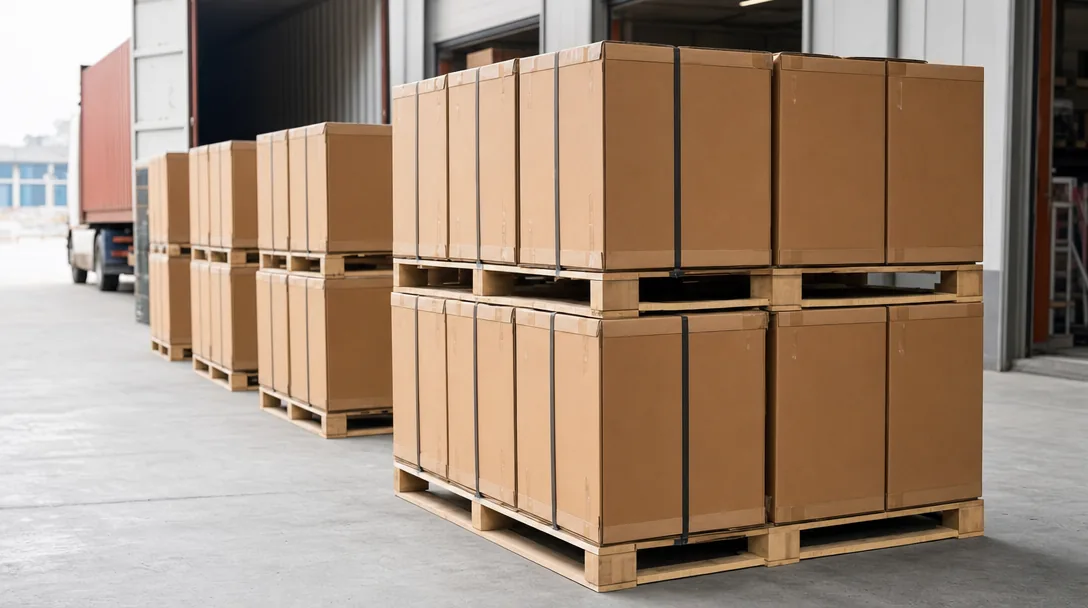
Shipping risk is usually created by paperwork and packing discipline, not by the vessel crossing the Pacific. Carton markings should be approved before packing starts: PO, style number, color, carton sequence, quantity, gross and net weight, dimensions in cm, country of origin, and destination-specific label format. Many retailer programs also require SSCC-18 labels, lot codes, and scan-verified inner packs. For structured trucker hats, 5-ply export cartons are the floor, but 7-ply is safer for high-crown profiles, long-haul LCL, or rainy-season loading in South China. Pack brim-to-brim, usually 25-50 pcs per carton depending on crown height, cap stiffness, and insert usage, with carton gross weight capped around 10-12 kg to reduce compression damage. Add 1-2 desiccant bags per master carton and lock the reorder file to approved sample photos, Pantone references, bill curve profile, trim supplier codes, carton pack-out, and final inspection report; at CrownsForge, that record is what keeps shipment two from drifting further than shipment one.
Buyer checklist for the next RFQ
A usable RFQ should let two competent factories land within 3-5% of each other on the same hat. Send a tech pack with front, side, back, top, and inside views, all key dimensions in millimeters, and tolerance where fit matters: crown height, visor length and width, front opening, back arc, snap length, sweatband width, seam-tape width, and top-button diameter. For trucker caps, the front panel build is a cost driver, not a styling footnote. Call out whether you want 2.5-3.0 mm polyester foam laminated to tricot, 220-260 gsm brushed cotton twill, 7 oz cotton canvas, or 180-200 gsm recycled polyester; these sew, hold shape, and embroider very differently. Mesh must be specified the same way: polyester trucker mesh, nylon hex mesh, or soft athletic mesh, ideally with denier, hole size, or an approved swatch code. If your bulk trucker hats fabric and trim spec guide just says “standard mesh,” expect mixed quotations and inconsistent hand feel. Color control needs to be written component by component, because caps often fail visual approval on trims rather than fabric. List Pantone TCX or solid-coated references for shell, mesh, underbill, visor sandwich, button, eyelets, snap closure, sweatband, seam tape, woven label ground, and embroidery thread, then state acceptable shade tolerance. In production, a practical standard is Delta-E under 1.5 for molded trims and thread-matched parts, and under 2.0 for dyed fabric lots; anything tighter raises lab-dip time and rejection risk. Also define material content and performance where it affects wear: sweatband composition, closure resin type, visor insert material, and whether fabrics need colorfastness to crocking or perspiration. Our standard practice is to reject RFQs that omit visor insert type, because PE board, recycled PE, and paperboard change shape retention, moisture response, and cost by more than most buyers assume.
Most quotation errors come from decoration and bill details, because buyers leave machine time open to interpretation. Submit artwork in AI, EPS, or layered PDF and state finished size by placement in millimeters. For embroidery, specify method and complexity: flat embroidery, 3D puff with 2 mm or 3 mm EVA, appliqué, woven patch, merrow border, laser-cut edge, or TPU badge. A 6,000-stitch front logo with three color changes runs very differently from a 12,000-stitch layered design with satin outlines on Tajima or Barudan heads; on bulk orders, that gap can move cost by $0.18-$0.45 per cap. If finish matters, call out thread brand or equivalent, such as Madeira Polyneon 40 wt, underlay expectations, satin column width, and backing requirement like tear-away versus soft mesh cover. Those details affect thread breaks, cap run speed, and edge cleanliness. Commercial terms should be fixed in the first RFQ email, not after sampling starts. State quantity by colorway, adult versus youth split, requested overrun tolerance, Incoterm, destination ZIP code, target ex-factory date, and packaging format. On 5,000 caps shipping DDP to a U.S. commercial address, landed freight can swing roughly $0.35-$0.80 per piece depending on carton cube, peak season, and tariff treatment, so you cannot compare factory prices unless freight assumptions match. Packing specs should include units per polybag, units per inner and master carton, carton dimensions, burst strength, barcode symbology, country-of-origin label text, hangtag attachment, suffocation warning, and any retailer-specific insert. If compliance is required, write it plainly: CPSIA, REACH, California Proposition 65, azo-free dyes, AQL 2.5 final inspection, BSCI 2.0, or Sedex SMETA 4-Pillar. That level of detail is what makes a bulk trucker hats fabric and trim spec guide commercially useful rather than just descriptive.
Working with CrownsForge
The part buyers usually underestimate is not the embroidery or the mesh color; it is spec freeze discipline before digitizing, marker making, and trim purchasing start. A usable bulk trucker hats fabric and trim spec guide has to lock every component in measurable terms, not vague notes like “same as approved sample.” That means front panel fabric by fiber content and weight, such as 100% cotton twill at 240-280 gsm or foam-backed polyester at 5 mm; mesh by material and denier, often 100% polyester 70D to 100D; PE visor board thickness, commonly 1.5-1.8 mm; sweatband composition, snap closure resin grade, seam tape wording, top button diameter, and carton pack ratio. Our standard practice at CrownsForge is to convert appearance comments into tolerances: crown height ±3 mm, bill length ±2 mm, visor curve radius, panel alignment at the front seam, and top button centering within 2 mm. Color control has to be written for the substrate, not just the shade. If the front is Pantone 19-4052 TCX on brushed cotton twill and the back mesh is dyed polyester, you will not get identical reflectance, so the target should be Delta-E under 1.5 on like-for-like fabric and under 2.0 across mixed materials. That matters fast when one trucker body is split across 6-12 SKUs and multiple destinations. A loose note on visor stiffness or mesh tone can force rework on every build, especially if one country needs fiber-content labels sewn into the sweatband while another needs sticker-free retail presentation. The buyers who avoid delays are the ones who issue one line-by-line BOM tied to the PO, artwork code, packing method, and revision date so nobody is guessing at the cutting table or in trim sourcing.
Sampling is where factory capability becomes obvious, because decoration has to survive production conditions, not just look clean on one carefully tuned sample. A 3 mm EVA puff under 3D embroidery behaves completely differently on a foam-front trucker than on 270 gsm cotton twill, and bad digitizing will tunnel the fabric, crush the puff, or twist the crown. The right sequence is strike-offs first for each decoration type—flat embroidery, 3D puff, woven patch, PVC patch, underbrim screen print—then a pre-production sample made with the actual backing, thread spec, needle size, and machine speed. On Tajima, Barudan, or ZSK heads, embroidery approved at 450 rpm can still fail at 700-850 rpm, which is where bulk production usually runs. That is why stitch density, underlay, edge definition, and crown distortion all need signoff at production settings. Good samples still turn into claims if QC and packing are weak. Incoming inspection should check fabric gsm, mesh denier, shade-lot continuity, visor board thickness, snap function, and logo trim count before cutting. Inline QC needs to monitor embroidery registration, visor symmetry, seam slippage, needle damage, and crown profile drift, then final inspection should run to AQL 2.5 unless the buyer specifies tighter. High-profile foam truckers are especially vulnerable to crushing, so pack-out often needs nested loading limits, inner crown support, and carton heights matched to ocean versus air transit. Cost also moves with trim complexity: at 3,000 pieces, a stock-body trucker with basic embroidery may land around $2.10-$2.80 FOB, while a printed sandwich bill, woven flag label, molded rubber patch, custom seam tape, and branded inside taping can add roughly $0.45-$1.20 per cap before freight. On export orders, carton marks, HS code, COO labeling, and BSCI 2.0 or Sedex SMETA 4-Pillar records need to line up with the PO before cargo is booked.
Frequently Asked Questions
How long does production take?
Sampling takes 7 to 12 days. Bulk production runs 20 to 30 days depending on quantity, fabric availability and decoration complexity. Inspection and packing adds another 3 to 5 days before shipment.
Do you support sustainability certifications?
Yes. We work with GOTS organic cotton, GRS-certified recycled polyester, OEKO-TEX Standard 100 fabrics, and are BSCI and Sedex audited. Certification documentation can be provided per order.
What file format should I send for my logo?
Vector files (AI, EPS, PDF) are ideal. High-resolution PNG or JPG at 300 dpi on transparent background works as a fallback. Provide Pantone color references for accurate reproduction.
What is the minimum order quantity (MOQ) for custom hats?
Our standard MOQ is 100 pieces per design and color, with sampling available from 1 piece. For complex multi-color logos or premium fabric upgrades, the MOQ can be lowered with a small per-piece surcharge.
Can I order a sample before bulk production?
Yes. We strongly recommend approving a pre-production sample before mass production. Samples are charged at 35 to 60 USD each plus express shipping, fully refundable against confirmed bulk orders over 500 pieces.
How does ordering custom embroidered trucker hat work?
When evaluating custom embroidered trucker hat, the key considerations are construction quality, decoration capability, MOQ flexibility and lead time. Explain the buyer intent behind bulk trucker hats fabric and trim spec guide, when it differs from generic hat sourcing, and what decisions affect cost, lead time and compliance. Describe how CrownsForge manages bulk trucker hats fabric and trim spec guide programs with sampling, decoration, QC and export coordination.
What should I know about custom trucker hats bulk?
When evaluating custom trucker hats bulk, the key considerations are construction quality, decoration capability, MOQ flexibility and lead time. Explain the buyer intent behind bulk trucker hats fabric and trim spec guide, when it differs from generic hat sourcing, and what decisions affect cost, lead time and compliance. Describe how CrownsForge manages bulk trucker hats fabric and trim spec guide programs with sampling, decoration, QC and export coordination.
What's the MOQ for custom embroidered trucker hats no minimum?
When evaluating custom embroidered trucker hats no minimum, the key considerations are construction quality, decoration capability, MOQ flexibility and lead time. Explain the buyer intent behind bulk trucker hats fabric and trim spec guide, when it differs from generic hat sourcing, and what decisions affect cost, lead time and compliance. Describe how CrownsForge manages bulk trucker hats fabric and trim spec guide programs with sampling, decoration, QC and export coordination.
What should I know about custom rope hat wholesale bulk?
When evaluating custom rope hat wholesale bulk, the key considerations are construction quality, decoration capability, MOQ flexibility and lead time. Explain the buyer intent behind bulk trucker hats fabric and trim spec guide, when it differs from generic hat sourcing, and what decisions affect cost, lead time and compliance. Describe how CrownsForge manages bulk trucker hats fabric and trim spec guide programs with sampling, decoration, QC and export coordination.
Looking for a reliable hat manufacturer in China?
CrownsForge has produced custom hats for 800+ brands across 40 countries. From 100-piece launches to 100,000-piece retail programs, we deliver on time and on spec.
Get in touchRelated guides
Custom Leather Patch Hat Low Minimum: A 2026 B2B Sourcing Guide
Read article →
Mens Beanies: Properties, Costs and How to Spec It Right
Read article →
Bulk Trucker Hats Export Shipping Checklist for Custom Hat Buyers - Cost & MOQ Breakdown - Supplier Checklist
Read article →We hope this guide demystifies bulk trucker hats fabric and trim spec guide for custom hat buyers (2026 update) and helps you move forward with confidence. If you have questions specific to your project, our English-speaking sales engineers are one message away.