
Bulk Trucker Hats Fabric And Trim Spec Guide for Custom Hat Buyers - 2026 Buyer's Guide
Every week, our sales team answers detailed questions about bulk trucker hats fabric and trim spec guide for custom hat buyers - 2026 buyer's guide. We wrote this guide so that wholesalers, streetwear brands, corporate buyers and promotional resellers can compare options with full information, and avoid the traps that show up only after production has started.
Why bulk trucker hats fabric and trim spec guide needs a separate sourcing plan
A bulk trucker hats fabric and trim spec guide needs its own sourcing plan because one “5-panel foam trucker” can be a $2.40 promo cap or a retailer-controlled compliance item. For giveaway programs, stock 2-3 mm polyester foam, 100-120 gsm mesh, a 7-hole PE snap, and a 5,000-7,000 stitch flat logo may be enough after Pantone visual approval. For licensed sports, youth, recycled-content, or retail programs, the file becomes technical: Pantone TCX lab dips with Delta-E under 1.5, foam lamination peel checks, steam-blocking shrinkage on cotton twill, and 150D or 180D polyester mesh tested for stretch recovery. Trims change both risk and lead time. Metal eyelets, buckles, clips, and rivets may require nickel release, low-lead, or CPSIA reports; youth caps need tracking labels and phthalate documentation. These approvals usually add 7-18 days before cutting, so they belong before deposit and salesman sample signoff, not after bulk fabric arrives.
Raised embroidery exposes weak sourcing faster than almost any other detail on a trucker cap. A logo that runs cleanly on brushed cotton twill can sink, pucker, or cup the front panel when the same digitizing file is stitched on laminated foam. For 3D puff on Tajima, Barudan, or ZSK heads, I check satin edge registration, underlay stability, pull compensation, foam height after trimming, needle heat marks, and whether the crown folds inward after steam. Cost should be built component by component, not priced from the word “trucker.” A stock-mesh 5-panel with flat embroidery commonly lands around $2.20-$3.40 FOB China at 500-1,000 pieces. Add 3D puff, woven side label, branded seam tape, custom-dyed mesh, printed taping, retail polybag, or molded logo snap, and the same silhouette moves to $4.20-$6.80. MOQ planning matters: stock mesh and snaps can work at 300-500 pieces, while custom dyeing, GRS/RCS recycled claims, and molded closures usually start at 1,000-3,000 pieces.
QC for trucker hats should target known failure points instead of copying a generic cap purchase order. Our standard practice at CrownsForge is AQL 2.5 for major defects and AQL 4.0 for minor defects, with added checks for bill symmetry within 3 mm, crown height tolerance, front-panel lamination strength, mesh tension, snapback cracking after repeated closure cycles, and embroidery puckering after steam. Retail packing adds another sourcing layer: 5-ply export cartons, GS1 barcode scan validation, 76 cm carton drop testing, silica gel or kraft liners for humid routes, and fabric moisture content below 12% before carton sealing to reduce foam delamination during ocean freight. For compliance-sensitive orders, verify sedex-audit-cap-supplier-guide.html">BSCI 2.0 or Sedex SMETA 4-Pillar audit validity, restricted-substance test scope, CPSIA files, and recycled polyester transaction certificates before money moves. Document checks after production are too late; that is how buyers receive well-sewn hats that still cannot enter a retailer distribution center.
Factory capability checks before quoting
Check decoration capacity first, because a weak trucker-hat supplier usually fails after deposit, not at quotation. “We have embroidery” is not a capability statement. Ask for the installed count of Tajima, Barudan, or ZSK cap heads, cap-frame model, average clean daily output, and the proven height limit for 3D puff on 4–5 mm foam fronts. A usable quote should state embroidery field size, stitch-count bands, thread brand such as Madeira, Gunold, or Coats, minimum letter height, backing type, and digitizing assumptions, including 0.3–0.5 mm pull compensation on foam panels. Patch pricing must be separated from application cost: woven patches usually add $0.45–$0.90, embroidered $0.70–$1.40, chenille $1.20–$2.20, PVC $0.90–$1.80, and debossed leather $1.50–$3.20 depending on size, mold charge, and MOQ. Require recent production photos on the same crown height and visor curve. Flat mockups and AI renders hide puckering, thread sinkage, foam dents, and a patch sitting 3 mm off center.
A serious bulk trucker hats fabric and trim spec guide should force measurable material descriptions, not trade phrases like “premium cotton” or “high-quality mesh.” Front panels need composition, weave, weight, and thickness: 260–320 gsm cotton twill, brushed chino twill, 4–5 mm laminated polyester foam, nylon ripstop, or recycled polyester supported by GRS transaction certificates if the claim appears on hangtags or retail packaging. Mesh should be quoted by yarn denier, hand feel, and recovery after compression. Thin 100D polyester mesh may pass a showroom check but collapses under 500-piece carton pressure; 150D–180D mesh holds rear-crown shape better after ocean freight and pallet stacking. Construction also changes cost and defect risk. A 5-panel foam trucker is fast and forgiving, while a 6-panel structured cap needs buckram, seam tape, accurate top-button centering, and tighter panel symmetry. Price closures as separate trims: plastic snapback, hook-and-loop, metal buckle, woven strap, or elastic Flexfit-style band. Confirm rope trim, sandwich bill, contrast underbill, custom taping, printed sweatband, and branded seam labels as included items or add-ons.
Before issuing a PO, test sample discipline and compliance readiness as hard as unit price. A credible sample room should deliver salesman samples in 7–12 days using Pantone TCX references, physical thread cards, and written color tolerance: Delta-E under 1.5 for solid fabric matches and under 2.0 for mesh, heather yarns, or garment-washed lots. At CrownsForge, the pre-production record fixes crown height, visor length, circumference, panel width, seam allowance, sweatband width, closure length, top-button position, and embroidery placement before bulk cutting. Retail, sports licensing, and corporate programs should request BSCI 2.0, Sedex SMETA 4-Pillar, WRAP, ISO 9001, and relevant material test reports before final negotiation. The factory should identify production risks without being coached: foam thickness variance, heat-press temperature for patches, needle marks on nylon, carton compression, nickel release on metal trims, color migration, and AQL 2.5 inspection checkpoints. That answer tells you whether the supplier controls variables or only forwards your artwork to the sewing floor.
MOQ, pricing and sample approval
MOQ must be tied to the construction, not used as a slogan on a quote sheet. For bulk trucker hats, 144 pcs is realistic only when the buyer accepts stock components: foam or 10 oz cotton twill front panels, stock 100D polyester mesh, black/white/gray plastic snapback, standard 28–32 mm sweatband, and available thread colors. The moment you specify custom mesh dyeing, a woven side flag, branded sweatband, sandwich visor, contrast undervisor, or a crown height that requires a different cutting die, 300 pcs becomes the practical floor. If front fabric, mesh, or binding tape must hit a Pantone TCX target from dyeing, budget for 500–1,000 pcs because lab dips, dye-vat minimums, and shade-band control start controlling the schedule and price. A proper bulk trucker hats fabric and trim spec guide should make the quote separate body fabric, mesh, decoration, trims, packaging, and freight terms. A basic 5-panel foam trucker is usually $3.60–$4.20 FOB Ningbo or Shanghai; a structured cotton-twill trucker with buckram, custom sweatband, woven rear label, contrast visor, and clean inside taping is more realistically $5.80–$7.40 before freight, duty, and U.S. inland delivery.
Tooling and artwork charges need to be visible before anyone argues about unit price, especially on 300–600 pc runs. Embroidery digitizing is normally $35–$80 per logo; woven patch artwork and loom setup run $45–$120; PVC or rubber patch molds are usually $80–$180 depending on size, color count, raised edges, and debossed texture. A printed visor adds about $0.25–$0.60 per cap, while embroidery or appliqué on the bill can add $0.40–$1.20 because the operator must slow the Tajima, Barudan, or ZSK machine and control visor distortion during hooping. Packaging belongs on the same cost sheet, not as an afterthought: bulk polybag $0.03–$0.06, individual retail polybag with suffocation warning $0.08–$0.14, barcode label $0.02–$0.05, and hangtag with string $0.06–$0.18. Lock these details before PPS approval. Changing snap color, label placement, visor fabric, or carton pack after the signed sample is a revision with cost and lead-time impact, not a harmless factory favor.
PPS approval is where future chargebacks are either prevented or baked into the order. The pre-production sample must confirm crown height, panel symmetry, visor curve, seam allowance, mesh tension, embroidery placement, stitch density, snapback color, care-label content, barcode position, and master-carton packing before bulk cutting starts. For embroidered trucker hats, satin columns usually need 0.35–0.45 mm density, fill stitches 0.40–0.50 mm, and backing matched to the substrate: tearaway for stable twill, cutaway or heat film for foam fronts that collapse under needle pressure. A DST file that looks clean on screen can still pucker if pull compensation is ignored or 12,000 stitches are forced into a 55 mm logo. Written tolerance matters: Delta-E under 2.0 is practical for dyed fabric under D65 light, while embroidery thread matching may need 1.5–2.5 depending on Madeira, Gunold, or local stock availability. Our standard PPS file at CrownsForge includes a trim card, thread codes, measurement sheet, D65 photos, signed sample tag, and AQL 2.5 final-inspection checkpoints.
Quality inspection and shipping risk
Most trucker hat defects are locked in before the cartons are taped: foam gsm substituted, mesh tension drifting after cutting, embroidery re-hooped without checking center, or a different snapback lot issued to the sewing line. For a 5,000-piece PO, I want inline inspection at 20–30% completion and a pre-carton audit after finishing. Control points should include crown height within ±3 mm, visor centerline deviation under 2 mm, sweatband stitching at 8–10 SPI, no skipped bar-tacks at the rear opening, mesh stretch compared against the approved swatch, and snap closures opened/closed 10 cycles without whitening, cracking, or loose teeth. Final inspection should use ANSI/ASQ Z1.4, General Inspection Level II, with AQL 2.5 for major defects and 4.0 for minor unless the licensee manual is stricter. On a 3,200-piece lot, the normal sample is 125 pieces; 8 major defects rejects the lot. Majors include 3D puff embroidery off-center by more than 3 mm, oil stains on white foam, exposed buckram, warped visors from over-steaming, broken snaps, and Pantone TCX shade variance beyond Delta-E 2.0–2.5 under D65 lighting. A usable bulk trucker hats fabric and trim spec guide keeps the approved sample, shade band, DST file, thread chart, mesh swatch, snap card, label proof, and trim card at the QC table, not buried in email.
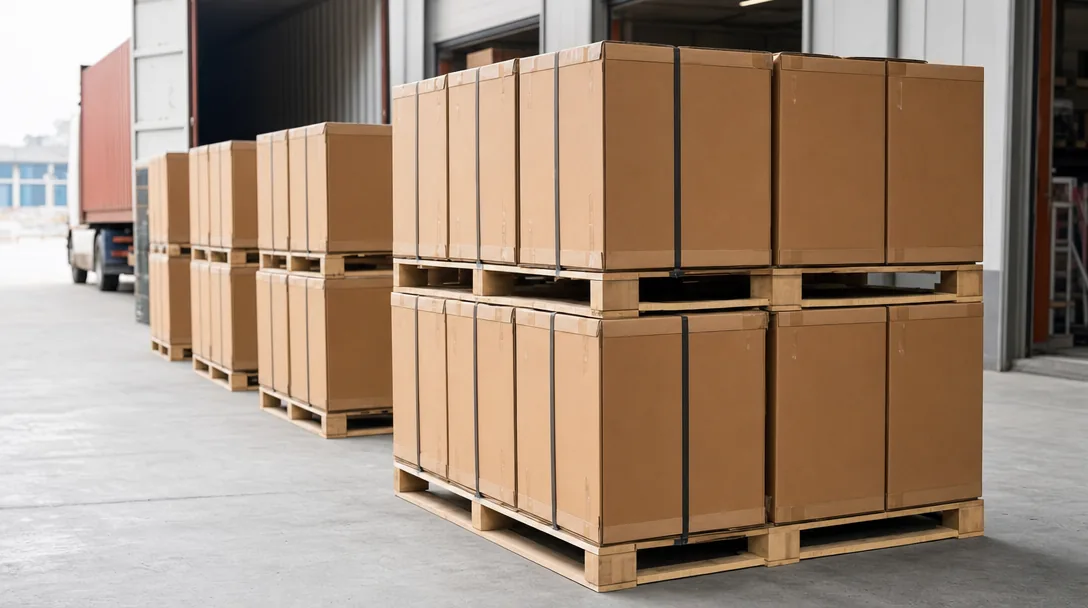
Carton specification is quality control, not a shipping afterthought, because trucker hats are light, bulky, and easily crushed. Standard adult truckers often pack 100 or 144 pieces per export carton around 58 x 48 x 38 cm, but high-crown foam fronts, rope trims, sandwich visors, or deep pre-curved bills should drop to 72 or 96 pieces with alternating stacks. If the route includes LCL freight, Amazon redistribution, club-store DCs, or multiple warehouse touches, specify 5-ply K=A or K=K corrugated board and request edge-crush test data when cartons exceed 12 kg gross weight or are stacked above 1.8 m. Tight individual polybags look tidy but can trap moisture, press bill curves flat, and mark foam panels; breathable bulk poly, tissue separators, and crown supports usually protect shape better. Carton marks should show PO number, style code, color, size ratio if used, quantity, gross/net weight, dimensions, country of origin, and sequence numbering such as 1/80. For ocean transit above 30 days, especially to the U.S. Gulf, UK winter warehouses, or humid EU inland hubs, check carton moisture below 12%, keep paper hangtags bagged, add carton-level silica gel, and perform a 60–76 cm drop test before release.
Choose the shipping term by claim control, not by the cheapest freight quote. FOB Ningbo or Shanghai is usually cleaner when the buyer has a forwarder, cargo insurance, customs broker, and consolidation plan for licensed sports programs or multi-style streetwear drops. DDP can make sense for 300–1,000-piece branded runs needing one landed cost, but it often hides duty classification, last-mile handling, remote-area fees, and who owns the problem when cartons arrive crushed or short. Trim choices also change inspection and logistics risk. In 2026 China production, 3D puff embroidery on Tajima, Barudan, or ZSK heads typically adds $0.20–$0.45 per cap depending on stitch count, foam waste, registration time, and rework rate. Woven labels commonly carry a $35–$80 setup charge and 1,000–3,000-piece MOQ; printed seam tape adds alignment labor; heavier K=K cartons raise chargeable CBM even when the cap cost is unchanged. Below 500 pieces, expect stock mesh, stock snaps, and limited dye options. Above 2,000–3,000 pieces, Pantone-matched plastic snaps, custom-dyed mesh, and bulk trim purchasing become realistic. For reorders, keep the tech pack, QC report, packing photos, carton label template, yarn codes, DST file, and approved trims together, or the repeat order becomes another sampling risk.
Buyer checklist for the next RFQ
A costable RFQ starts with construction, not a lifestyle mockup. State 5-panel or 6-panel, high/mid/low profile, structured front with 75–90 gsm buckram or unstructured, flat visor or pre-curved visor, closure type, and fit target such as adult 58 cm or youth 54–56 cm. Specify crown fabric by composition, finish, and weight: 100% cotton twill 260–280 gsm, recycled polyester twill 210–230 gsm with GRS claim if needed, nylon taslan 150–170 gsm, 210D ripstop, 3–5 mm foam front, or 8-wale corduroy. For the back, define polyester or nylon mesh, 100D versus 150D yarn, soft or stiff handfeel, standard diamond mesh or wide-hole athletic mesh, and whether mesh color matches the crown or visor. Use Pantone TCX/TPX references for every visible part: front panels, mesh, visor top, undervisor, button, eyelets, sweatband, stitching, snap, woven label ground, and patch edge. A practical bulk trucker hats fabric and trim spec guide should also include quantity by colorway, any size split, target price basis such as FOB Ningbo/Shanghai or DDP Los Angeles, and the required in-hand date.
Decoration must be quoted from production artwork, because “embroidered logo on front” can mean a $0.35 hit or a $2.20 hit depending on stitch count, backing, and patch work. Send AI, EPS, or PDF vector files with fonts outlined, plus a JPG/PNG placement mockup showing logo width, height, and distance from the visor seam in millimeters. Name the method: flat embroidery, 3D puff, mixed flat/puff, applique, chenille patch, woven patch, debossed leather patch, PVC patch, sublimated patch, or heat-transfer print. If you already have Tajima DST, Barudan DSB, or ZSK files, include them; if not, provide finished size, Madeira rayon/poly thread references or Pantone approximations, backing requirement, and maximum stitch density expectation. Flag production risks before sampling: text below 4 mm high, satin strokes under 0.8 mm, gradients, tight negative space, puff bridges, and embroidery crossing panel or visor seams. List trim treatments separately—sandwich visor, contrast stitch rows, visor embroidery, woven visor label, undervisor print, custom snap, branded sweatband, printed seam tape—because these usually add $0.20–$1.10 per cap and often drive more rejects than fabric choice.
Compliance, packing, and inspection terms belong in the RFQ before price is locked. State whether the order requires BSCI 2.0, Sedex SMETA 4-Pillar, Disney FAMA, GRS transaction certificates, OEKO-TEX Standard 100, CPSIA tracking labels, or California Prop 65 review; certified yarn, approved trims, and audit scope can add 5–15 working days. Define inspection level and tolerances, normally AQL 2.5 for major defects and AQL 4.0 for minor defects, with critical checkpoints: logo placement ±2 mm, panel color Delta-E under 1.0–1.5 against approved lab dip, visor curve consistency, mesh tension, snap pull strength, seam puckering, sweatband alignment, loose thread limit, odor, and carton drop test for retail programs. At CrownsForge, we will not issue a final production quote without the packing spec: polybag or no polybag, hangtag, UPC/EAN/FNSKU label, carton mark layout, units per carton, gross weight limit, destination address, shipping term, and launch deadline. The clean RFQ bundle is a tech pack, artwork, Pantone list, fabric and trim list, quantity breakdown, compliance requirements, packaging instructions, reference photos, destination, and final delivery date.
Working with CrownsForge
CrownsForge treats the bulk trucker hats fabric and trim spec guide as the order’s control document, not a PDF attached after price negotiation. Lock the cap body first: front-panel fiber content, weave, weight, lamination, and hand feel. Real specs read like 10 oz cotton twill, 280–320 gsm T/C canvas, 600D polyester Oxford, brushed cotton, or 3–4 mm foam-laminated polyester for economy five-panel programs. Mesh should never be written as only “nylon mesh.” State polyester or nylon yarn, denier, opening size, stretch recovery, hand feel, and shade tolerance. Stock black or white mesh normally stays within Delta-E 2.0; custom-dyed mesh should be approved to Pantone TCX with a realistic Delta-E 1.5–2.0 target. Closures also need engineering detail: snapback resin grade, strap length, tooth count, hole pitch, and color. Metal buckles need plating type, prong shape, and strap width. Sweatbands should define width, fiber content, absorbency, and whether they are cotton twill, polyester, or moisture-wicking. Visors require PE or recycled board thickness, stitch rows, curve profile, and under-visor fabric because 2.0 mm and 2.5 mm boards sew, block, and pack differently.
Decoration has to be proven on the approved hat structure before bulk cutting, because failures usually happen where artwork meets foam, buckram, seams, and mesh tension. A 3D puff logo that looks clean on firm buckram can collapse into a foam front, drift over a five-panel center seam, or pucker if pull compensation is wrong. For Tajima, Barudan, or ZSK embroidery, the production file should list stitch count, Madeira rayon or polyester thread color, underlay, density, backing, needle size, and running speed. A standard flat front logo is often 5,000–12,000 stitches; 3D puff usually needs 550–700 spm, controlled foam thickness, clean tear-away, and a higher thread-break allowance. Strike-offs must be sewn on the approved front-panel fabric, not spare shop cloth. Woven patches, PVC patches, leather labels, heat transfers, and sublimated under-visors need border type, adhesive film, heat-press temperature, dwell time, pressure, rub or wash resistance, and placement tolerance, typically ±2 mm for front logos. Hidden trims add up fast: rope, sandwich trim, printed taping, private-label sweatbands, under-visor printing, and branded closures can add $0.40–$1.20 per cap before freight.
Inspection and export planning should be tied to the approved PP sample, purchase order, trim card, and packing plan, not scattered email comments. A workable QC flow for bulk trucker hats is shade checking before cutting, inline inspection after embroidery or patch application, assembly checks before blocking, and final inspection to AQL 2.5 for major defects and AQL 4.0 for minor defects unless the retailer requires tighter limits. Inspectors should measure crown height, visor width, bill curve, seam balance, logo placement, snapback function, loose threads, stains, panel twisting, and carton labeling. Needle detection is mandatory for kids’ caps, licensed sports programs, and many chain-store orders. Keep approved strike-offs, Pantone references, trim cards, and QC photos in the order file so a reorder six or twelve months later does not become a different hat. Logistics belongs in the same discipline: HS code, carton dimensions, polybag warning text, silica gel or moisture-control packs, carton marks, Amazon FNSKU or 3PL labels, and FOB Ningbo/Shanghai versus DDP assumptions must be confirmed before cutting. A clean spec guide prevents the late-stage argument over whether a shipment is “close enough.”
Frequently Asked Questions
How long does production take?
Sampling takes 7 to 12 days. Bulk production runs 20 to 30 days depending on quantity, fabric availability and decoration complexity. Inspection and packing adds another 3 to 5 days before shipment.
Do you support sustainability certifications?
Yes. We work with GOTS organic cotton, GRS-certified recycled polyester, OEKO-TEX Standard 100 fabrics, and are BSCI and Sedex audited. Certification documentation can be provided per order.
What file format should I send for my logo?
Vector files (AI, EPS, PDF) are ideal. High-resolution PNG or JPG at 300 dpi on transparent background works as a fallback. Provide Pantone color references for accurate reproduction.
What is the minimum order quantity (MOQ) for custom hats?
Our standard MOQ is 100 pieces per design and color, with sampling available from 1 piece. For complex multi-color logos or premium fabric upgrades, the MOQ can be lowered with a small per-piece surcharge.
Can I order a sample before bulk production?
Yes. We strongly recommend approving a pre-production sample before mass production. Samples are charged at 35 to 60 USD each plus express shipping, fully refundable against confirmed bulk orders over 500 pieces.
How does ordering custom embroidered trucker hat work?
When evaluating custom embroidered trucker hat, the key considerations are construction quality, decoration capability, MOQ flexibility and lead time. Explain the buyer intent behind bulk trucker hats fabric and trim spec guide, when it differs from generic hat sourcing, and what decisions affect cost, lead time and compliance. Describe how CrownsForge manages bulk trucker hats fabric and trim spec guide programs with sampling, decoration, QC and export coordination.
What should I know about custom trucker hats bulk?
When evaluating custom trucker hats bulk, the key considerations are construction quality, decoration capability, MOQ flexibility and lead time. Explain the buyer intent behind bulk trucker hats fabric and trim spec guide, when it differs from generic hat sourcing, and what decisions affect cost, lead time and compliance. Describe how CrownsForge manages bulk trucker hats fabric and trim spec guide programs with sampling, decoration, QC and export coordination.
What's the MOQ for custom embroidered trucker hats no minimum?
When evaluating custom embroidered trucker hats no minimum, the key considerations are construction quality, decoration capability, MOQ flexibility and lead time. Explain the buyer intent behind bulk trucker hats fabric and trim spec guide, when it differs from generic hat sourcing, and what decisions affect cost, lead time and compliance. Describe how CrownsForge manages bulk trucker hats fabric and trim spec guide programs with sampling, decoration, QC and export coordination.
What should I know about custom rope hat wholesale bulk?
When evaluating custom rope hat wholesale bulk, the key considerations are construction quality, decoration capability, MOQ flexibility and lead time. Explain the buyer intent behind bulk trucker hats fabric and trim spec guide, when it differs from generic hat sourcing, and what decisions affect cost, lead time and compliance. Describe how CrownsForge manages bulk trucker hats fabric and trim spec guide programs with sampling, decoration, QC and export coordination.
Looking for a reliable hat manufacturer in China?
CrownsForge has produced custom hats for 800+ brands across 40 countries. From 100-piece launches to 100,000-piece retail programs, we deliver on time and on spec.
Get in touchRelated guides
Custom Leather Patch Hat Low Minimum: A 2026 B2B Sourcing Guide
Read article →
Mens Beanies: Properties, Costs and How to Spec It Right
Read article →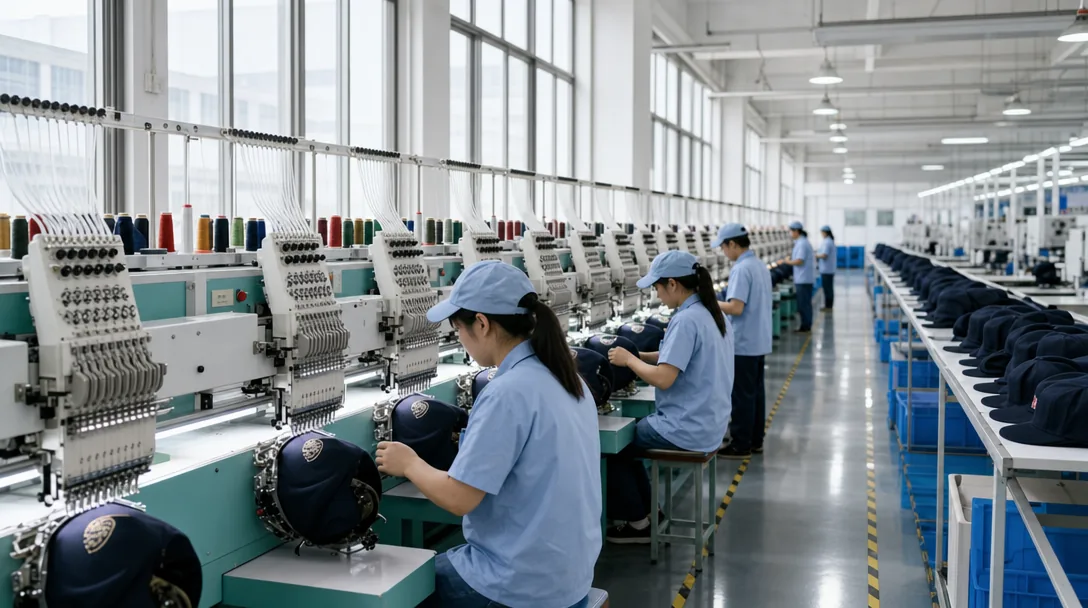
Bulk Trucker Hats Export Shipping Checklist for Custom Hat Buyers - Cost & MOQ Breakdown - Supplier Checklist
Read article →We hope this guide demystifies bulk trucker hats fabric and trim spec guide for custom hat buyers - 2026 buyer's guide and helps you move forward with confidence. If you have questions specific to your project, our English-speaking sales engineers are one message away.