
Bulk Trucker Hats Export Shipping Checklist for Custom Hat Buyers - 2026 Buyer's Guide
Every week, our sales team answers detailed questions about bulk trucker hats export shipping checklist for custom hat buyers - 2026 buyer's guide. We wrote this guide so that wholesalers, streetwear brands, corporate buyers and promotional resellers can compare options with full information, and avoid the traps that show up only after production has started.
Why bulk trucker hats export shipping checklist needs a separate sourcing plan
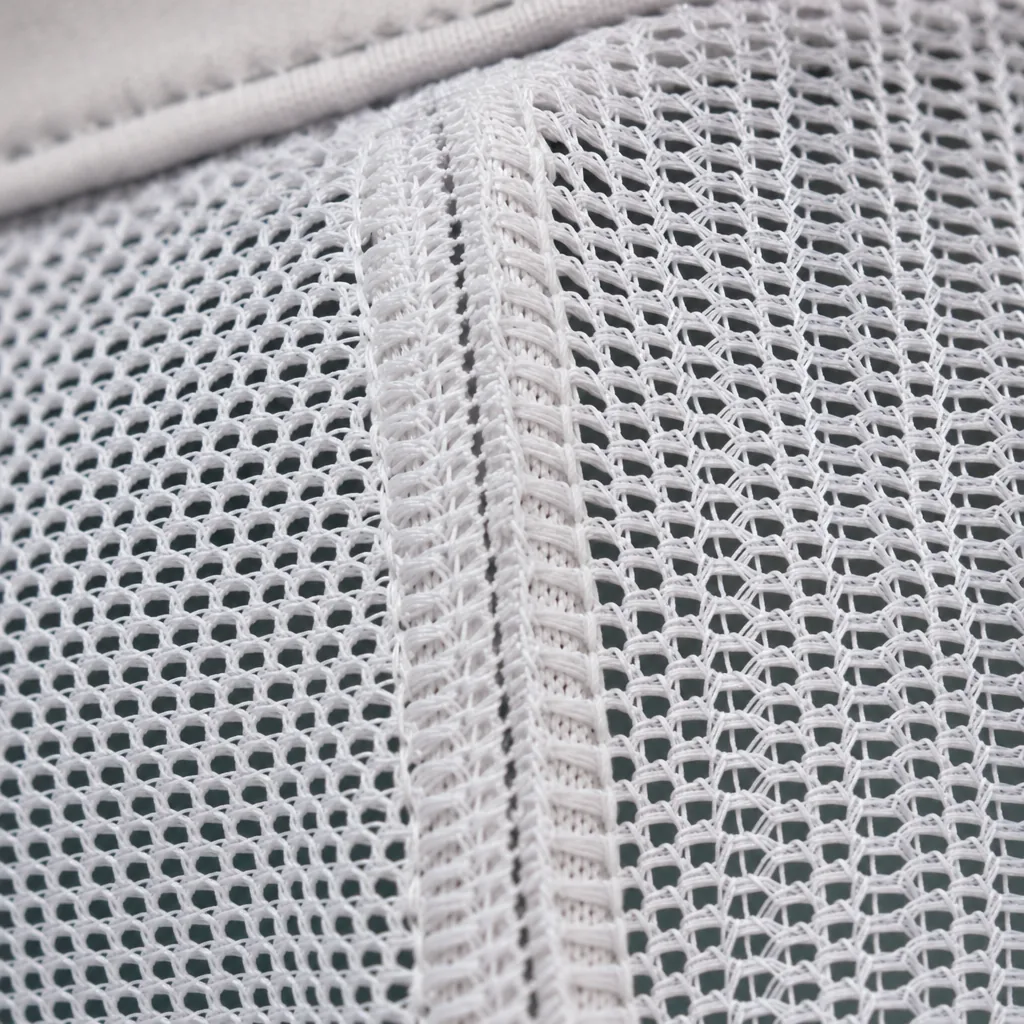
A separate sourcing plan becomes mandatory as soon as trucker caps move from sample approval to freight math, because structured mesh caps do not cube out like low-profile cotton twill baseball caps. The tall crown, polyester mesh back, and pre-curved PE visor create non-compressible dead space, and if you force compression you get visor twist, front-panel collapse, or mesh creasing that shows up at destination. In practice, a 40HQ that may load roughly 130,000 to 150,000 unstructured caps often lands closer to 95,000 to 120,000 structured trucker hats, depending on crown height, visor curve, and whether packing uses nested orientation, tissue interleaves, or individual shapers. That volume gap is big enough to shift a PO from efficient FCL planning into expensive LCL spillover. A good bulk trucker hats export shipping checklist therefore starts with carton engineering: lock master carton dimensions, confirm whether pack-out is 24, 48, or 72 pieces per carton, and pressure-test whether foam or buckram front panels need an inner support to survive stacking loads without exceeding carton compression limits.
Buyers get into trouble when they approve the hat like generic headwear and ask for final CBM only after embroidery, trims, and packing are already frozen. That sequence is backwards. A 3D puff embroidery file run on Tajima or Barudan heads, a braided rope across the visor seam, a woven patch, or a thicker moisture-wicking sweatband can reduce nesting efficiency enough to increase carton count by 5 to 12 percent. On a 10,000-piece order, that can mean several extra cubic meters, higher destination handling fees, and a larger damage-claim surface if front panels arrive crushed. The same sourcing plan also has to lock export compliance data before booking: cotton twill or PU foam front, polyester or RPET mesh, PP or HDPE snap closure, country-of-origin marking, polybag suffocation warning, and carton marks all need to match the commercial invoice and packing list. For branded programs, define thread brand, ticket size, and color tolerance up front; on repeat orders with critical shades, keeping embroidery color within Delta-E 1.5 against the approved Pantone TCX standard is realistic, but only if that requirement is written before bulk production starts.
The reason the bulk trucker hats export shipping checklist needs its own sourcing workflow is that shipping risk, compliance risk, and quality risk all sit in the same decisions at PO stage. HS code review, needle-control records, labeling method, and final inspection criteria are not paperwork afterthoughts; they affect lead time, carton count, and claim defensibility. Promotional-grade orders often run at AQL 2.5 major and 4.0 minor, while retail programs usually tighten visual tolerances around crown symmetry, seam puckering, visor curvature, mesh snagging, and embroidery registration. Those stricter standards often justify low-cost preventive measures such as a $0.05 to $0.08 crown insert, stronger inner carton dividers, or an extra 5 to 9 days for retail-ready labeling and barcode application. Our standard practice is to treat decoration method, pack density, inspection standard, and export documents as one locked decision set, because trying to correct any of them after cutting, embroidery, and packing have started is exactly how trucker hat shipments go over budget or get held at destination.
Factory capability checks before quoting
Do not ask for a price until the factory proves it can build your exact trucker cap without farming out the difficult operations. In any serious bulk trucker hats export shipping checklist, capability comes before FOB. Ask for current production evidence: Tajima, Barudan, or ZSK multi-head embroidery lines; recent 5-panel and 6-panel structured foam trucker runs; and close-up photos that show they can hold 3 mm text height, clean satin edges, and consistent column stitches on curved fronts. If the style needs 3D puff, the supplier should specify EVA foam thickness—usually 2 mm to 3 mm for truckers—plus how they adjust stitch density, underlay, and compensation for push-pull distortion on buckram-backed front panels. If you need a front patch, side embroidery, and rear arch text on one cap, require proof from one completed order, not a collage of unrelated samples. A real factory will discuss needle count, crown profile, registration, and placement tolerance around +/-2 mm across 500 to 5,000 pieces; a trader usually falls back on MOQ, target price, and vague promises.
Material detail is the second hard filter, because “cotton twill,” “mesh,” and “snapback” are not usable quoting data. A factory that understands truckers should define front panel fabric like 100% cotton twill at 240-280 gsm, brushed canvas at 300 gsm, or a 65/35 poly-cotton blend, then pair it with 50D-75D polyester mesh or nylon mesh and explain how the crown keeps shape after compression packing. They should also state buckram grade, sweatband composition, seam tape width, visor insert material such as PE, and head-circumference tolerance, typically within +/-0.5 cm. Closure quality matters more than many buyers realize: cheap PP snaps can fracture after cold-container exposure, while POM or heavier-gauge PE snaps survive repeated adjustment better. On color-critical orders, ask whether embroidery thread is matched to Pantone TCX or coated references and what Delta-E tolerance they will accept. On retail or licensed programs, the stronger factories inspect visor symmetry, top-button centering, panel alignment, and brim curvature inline, then confirm final shipment quality against AQL 2.5 instead of discovering defects at the end.
The quickest way to expose a weak supplier is to pressure-test the sample room and compliance process before comparing cents per cap. A capable sample room should handle pattern correction, embroidery digitizing, laser-cut patch preparation, and a pre-production sample in 5-7 working days for a standard trucker, with every revision logged in one tech pack covering trim card, carton marks, barcode placement, packing ratio, and closure specification. Ask who approves strike-offs, whether PP samples use actual bulk fabric and mesh rather than substitute stock, and how changes to visor curve, crown height, or patch position are recorded and signed off. Compliance also affects shipping reliability: request current sedex-audit-cap-supplier-guide.html">BSCI 2.0 or Sedex SMETA 4-Pillar audit reports, confirm whether subcontracted embroidery, washing, or printing is declared in scope, and check whether the team can speak clearly about carton dimensions, needle control, metal detection if applicable, and export carton drop resistance. Our standard practice is that a factory’s technical questions during sampling tell you more about shipment risk than its opening quote ever will.
MOQ, pricing and sample approval
MOQ on trucker caps is driven by material yield and line changeover, not by a sales spreadsheet. For most export programs, 144 pieces per colorway is the true floor where a factory can justify opening foam, mesh, sweatband tape, snap closures, embroidery files, and carton marks without burying waste into the unit cost. FOB pricing usually becomes predictable at 300 to 500 pieces, because 5 mm PE foam fronts, 60 to 80 gsm polyester mesh, 1.2 to 1.5 cm sweatbands, and standard PP snapbacks can be bought and cut with decent utilization. For a basic 5-panel trucker with one front flat embroidery, expect a realistic FOB China range of $2.20 to $3.50 at 300 pieces, depending on stitch count, fabric hand, and whether the front panel is foam-backed polyester or cotton twill laminated to foam. Once you add dyed-to-match underbill, printed seam tape, woven flag label, inside brand label, hangtag, barcode sticker, and individual polybag with suffocation warning, that same hat typically moves to $4.30 to $6.90 FOB. The expensive mistakes happen in the “small” add-ons buyers treat as trivial. A braided rope across the visor, metallic thread, woven patch loom setup, molded silicone transfer, or custom snap color can add only $0.08 to $0.35 each on paper, but stacked across 500 pieces they materially change the landed margin. That is why a usable bulk trucker hats export shipping checklist has to lock trim, packaging, and carton assumptions before anyone argues over a headline unit price. If the quote does not state embroidery stitch count, patch method, closure resin type, insert cards, carton pack ratio, and whether the factory is quoting FOB Ningbo or FOB Shanghai, you are not comparing prices; you are comparing omissions.
Sampling usually slips in decoration approval, not in sewing. A clean front logo on Tajima, Barudan, or ZSK heads may carry only a $25 to $60 digitizing charge, but 3D puff, appliqué, side hit, and back arch layouts often push setup to $80 to $120 because pull compensation, foam height, underlay, and test runs must be tuned to the actual front panel build. The substrate matters more than buyers assume: excessive stitch density on foam causes tunneling and panel collapse, while loose satin borders on brushed twill create edge wobble and visible gaps. Thread shades can be matched closely through Madeira or Gunold charts, but fabric, underbill, binding, labels, and taping should be approved against Pantone TCX references with a written tolerance. For piece-dyed fabric, Delta-E below 1.5 is realistic; exact parity across embroidery thread, woven yarn, and heat-transfer ink is not. PPS approval should freeze the full bill of materials, not just the visible logo. That means front fabric content, mesh denier, underbill color, closure spec, sweatband composition, seam tape artwork, label placement, barcode position, carton dimensions, and any retailer rules such as FNSKU placement or drop-test packaging. Our standard practice is to treat the approved PPS, trim card, and sealed sample as the production gate, because once those are signed, 300 to 500 pieces normally run in 18 to 28 days. If custom trims, BSCI-audited subcontractors, holiday congestion, or Amazon-style packaging validation are involved, 30 to 40 days is the safer promise. Buyers who approve PPS with vague notes like “match sample as close as possible” are usually the same buyers paying for remakes, air freight, or claim settlements later.
Quality inspection and shipping risk
Late inspection is where trucker cap programs usually fail. A practical bulk trucker hats export shipping checklist books final random inspection only when at least 80% of units are fully packed, sealing ratio is stable, and export cartons are on the floor; inspecting while sewing is still running only gives you a moving target. For most U.S. buyers, AQL 2.5 for major defects and 4.0 for minor is still standard, but the real control point is a written defect glossary locked before cutting. I would define major defects as front panel skew over 3 mm, top button off-center over 2 mm, bill warpage visible on a flat table, snapback tooth cracks, seam opening over 3 mm, embroidery registration drift over 1.5 mm, and oil marks or needle damage on visible panels. Minor defects should also be measurable: loose thread tails over 20 mm, mesh distortion, uneven topstitch spacing, and slight visor asymmetry. Measurement tolerance needs to be point-by-point on the spec sheet, not buried in email: crown height plus or minus 3 mm, visor length plus or minus 2 mm, cap opening circumference plus or minus 5 mm, and left-right side panel deviation under 2 mm when checked flat. If the supplier cannot show in-line measurement logs, broken-needle records, metal detection status when required, and carton packing checks by ratio, the final inspection is only documenting loss after labor, booking, and freight are already committed.
Most post-landing disputes are not caused by crushed cartons; they come from color inconsistency, embroidery faults, and weak transit packing that passed under factory lighting. For cotton twill fronts with polyester mesh backs, approve bulk color against a sealed Pantone TCX reference or signed lab dip under D65 light, and if the program will reorder, specify a Delta-E tolerance in writing; for retail chains, keeping the front-panel fabric under Delta-E 1.5 is a realistic standard, while 2.0 to 2.5 is more common on promotional runs. Dark shades paired with white mesh should be tested for crocking, perspiration, and light fastness before vessel departure, because 25 to 40 days on water plus destination humidity will expose weak dye fixation quickly. Embroidery needs more than a quick visual pass: inspectors should check random units for birdnesting, bobbin show, thread breaks, puckering around satin columns, center-front logo slant, and backing trim consistency, and the approved digitizing file, stitch count, thread brand, and signed sew-out from Tajima, Barudan, or ZSK heads should stay in the reorder file. Shipping risk starts with carton engineering, not freight rate: use a 5-ply export carton sized to prevent crown crush, print clear shipping marks and carton sequence, keep outer-carton weight under 15 kg for parcel-style DDP channels, and verify gross weight, net weight, dimensions, destination code, and carton count against the booking sheet before release.
Buyer checklist for the next RFQ
A usable bulk trucker hats export shipping checklist starts with a real tech pack, not a logo JPEG and a target FOB price. If you want a quote that still holds after sampling, specify the cap construction in measurable terms: 5-panel foam trucker or 6-panel structured twill crown, finished crown height in millimeters, visor length and curve, closure type, front panel material, mesh specification, and decoration method by position. Spell out the front substrate exactly—3 mm EVA-backed foam, 210 gsm brushed cotton twill, or 250 gsm polyester—and define the mesh as well, such as 100% polyester 18 x 16 trucker mesh or nylon mesh with denier called out. Include front, side, back, inside, and underbill references, then mark seam tape color, sweatband composition, top button, undervisor color, and closure choice, whether that is a 7-hole PP snap, hook-and-loop, or metal buckle. For embroidery, send vector artwork in AI or EPS, logo size in millimeters, and flag any text below 4.5 mm height; that is the point where satin columns close up and small counters start failing on Tajima, Barudan, and ZSK heads.
Color, decoration, and cost drivers need the same level of discipline. List Pantone Solid Coated or Pantone TCX codes for every visible component—front panel, mesh, visor top, undervisor, button, seam tape, sweatband, and closure—and if you are matching a previous production run, send an approved cap or physical swatch. Phone photos are useless when the acceptance target is Delta-E 1.5 to 2.0 under controlled light. State decoration by location and method: flat embroidery, 3D puff, woven patch, PVC patch, screen print, sublimated patch, or heat transfer, and note any metallic thread, applique, glow yarn, or edge printing that changes setup time. Separate every chargeable extra in the RFQ before quoting: digitizing, sample fees, custom visor mold charges, sandwich brim, private label sets, barcode stickers, and individual polybags. On 3,000 to 10,000 piece orders, those “small” omissions routinely move the actual unit price by $0.18 to $0.65 per cap after first revision.
Lock the commercial, packing, and compliance rules into the RFQ before asking for a final number. State quantity by color, destination port or ZIP code, requested Incoterm, ex-factory window, and delivery deadline; “ASAP” means nothing when one buyer expects FOB Ningbo in 35 days and another expects DDP Los Angeles in 18. Add the carton standards that change freight cost immediately: master carton dimensions, maximum carton weight, inner pack quantity, nested versus face-out packing, carton marks, FNSKU labels, suffocation warnings, and any drop-test or retailer routing requirements. A carton packed at 144 trucker caps may look efficient on factory floor loading, but it can blow up courier dimensional weight and erase the savings. Compliance and quality tolerances should be just as explicit. If the program needs CPSIA, REACH, California Proposition 65, azo-free dyes, or phthalate limits for PVC trims, say so before sampling, not after bulk cutting. If your supply base is audit-controlled, write BSCI 2.0, Sedex SMETA 4-Pillar, or equivalent expectations into the RFQ. Then define measurable inspection points: embroidery centering tolerance, visor symmetry, panel alignment, stitch density consistency, loose-thread allowance, color shade band, and final inspection level such as AQL 2.5 major and 4.0 minor. Our standard practice is to treat that one-page specification sheet as more valuable than squeezing another $0.03 off unit price, because the real losses come from relabeling, rework, split shipments, and emergency airfreight caused by missing instructions.
Working with CrownsForge
A workable bulk trucker hats export shipping checklist begins when the sample is sealed, not when freight is booked. Trucker hats expose sloppiness fast: front-panel tension shifts after stitching, polyester mesh can recover unevenly after packing pressure, and a visor that looks acceptable on a tech pack can come out 6 to 8 mm off in arc once the board and stitching are set. The control sequence should be fixed in writing: artwork approval, physical prototype, then a sealed pre-production sample matched to the final BOM, color card, and packing method. At that stage, lock tolerances that can actually be inspected on the line: crown height within ±3 mm, logo position within ±2 mm from center front, bill length within ±2 mm, snapback closure retention, and mesh shade against the approved Pantone TCX or coated reference with a practical Delta-E of 1.5 to 2.0. If embroidery is involved, run the strike-off on the real substrate—108x58 cotton twill, brushed chino, 3 mm EVA foam front, or 600D polyester—not on a substitute swatch, because pull compensation, underlay, and foam density behave differently on Tajima, Barudan, or ZSK heads.
Decoration and shipping controls should be separated, because that is where most custom cap programs lose both time and margin. If one PO includes 3D puff embroidery, flat embroidery, woven patches, sublimated taping, and printed underbrims, approve each process on its own record with thread brand, stitch count, backing spec, puff thickness, patch edge finish, heat-press temperature window, and acceptable seam crossing. Lettering below roughly 4.5 mm on a center seam often fills in unless the digitizing is adjusted for the crown profile and backing combination, and foam-front truckers are especially unforgiving when peel strength is tested only on flat lab swatches instead of finished panels. That same discipline should carry into shipment release: finished goods should pass inline and final inspection at AQL 2.5, with checkpoints on visor symmetry, top-button torque, sweatband joins, seam slippage, loose trims, needle detection, barcode readability, and carton crush resistance. CrownsForge typically verifies carton dimensions, gross and net weights, SKU split, country-of-origin labeling, HS code alignment, and consistency across packing list, commercial invoice, and booking data before handoff, because last-minute changes to carton marks, FOB Ningbo terms, or DDP 3PL labels routinely add $0.03 to $0.07 per cap at origin and much more once the goods land.
Frequently Asked Questions
What is the minimum order quantity (MOQ) for custom hats?
Our standard MOQ is 100 pieces per design and color, with sampling available from 1 piece. For complex multi-color logos or premium fabric upgrades, the MOQ can be lowered with a small per-piece surcharge.
Which shipping methods do you support?
We support FOB, CIF and DDP shipping. Air express for samples and small orders, sea LCL for 100 to 500 pieces, sea FCL for 5,000+ pieces. Door-to-door DDP available for US, EU, UK, Canada and Australia.
Do you support sustainability certifications?
Yes. We work with GOTS organic cotton, GRS-certified recycled polyester, OEKO-TEX Standard 100 fabrics, and are BSCI and Sedex audited. Certification documentation can be provided per order.
Can I order a sample before bulk production?
Yes. We strongly recommend approving a pre-production sample before mass production. Samples are charged at 35 to 60 USD each plus express shipping, fully refundable against confirmed bulk orders over 500 pieces.
What file format should I send for my logo?
Vector files (AI, EPS, PDF) are ideal. High-resolution PNG or JPG at 300 dpi on transparent background works as a fallback. Provide Pantone color references for accurate reproduction.
How does ordering custom embroidered trucker hat work?
When evaluating custom embroidered trucker hat, the key considerations are construction quality, decoration capability, MOQ flexibility and lead time. Explain the buyer intent behind bulk trucker hats export shipping checklist, when it differs from generic hat sourcing, and what decisions affect cost, lead time and compliance. Describe how CrownsForge manages bulk trucker hats export shipping checklist programs with sampling, decoration, QC and export coordination.
What should I know about custom trucker hats bulk?
When evaluating custom trucker hats bulk, the key considerations are construction quality, decoration capability, MOQ flexibility and lead time. Explain the buyer intent behind bulk trucker hats export shipping checklist, when it differs from generic hat sourcing, and what decisions affect cost, lead time and compliance. Describe how CrownsForge manages bulk trucker hats export shipping checklist programs with sampling, decoration, QC and export coordination.
What's the MOQ for custom embroidered trucker hats no minimum?
When evaluating custom embroidered trucker hats no minimum, the key considerations are construction quality, decoration capability, MOQ flexibility and lead time. Explain the buyer intent behind bulk trucker hats export shipping checklist, when it differs from generic hat sourcing, and what decisions affect cost, lead time and compliance. Describe how CrownsForge manages bulk trucker hats export shipping checklist programs with sampling, decoration, QC and export coordination.
What should I know about custom rope hat wholesale bulk?
When evaluating custom rope hat wholesale bulk, the key considerations are construction quality, decoration capability, MOQ flexibility and lead time. Explain the buyer intent behind bulk trucker hats export shipping checklist, when it differs from generic hat sourcing, and what decisions affect cost, lead time and compliance. Describe how CrownsForge manages bulk trucker hats export shipping checklist programs with sampling, decoration, QC and export coordination.
What is the best shipping method for hats?
In general, you can safely package most hats inside cardboard boxes. You should wrap them in a protective layer or place enough packing material inside to protect the hat from any residue that leaks onto the box. Most hats have a hard brim, visor, bill, or crown that must retain its shape during shipping.
What size box is needed to ship a hat?
Down. So this is the 1686. All right perfect for your dozen hats dozen plus. So this one here this is the 2488. And this one here of course to ship out the higher quantity.
How much does an average hat weigh?
The typical weight of a baseball cap ranges from 3 to 4 ounces (about 85 to 113 grams). This can vary slightly depending on the materials used, the design of the cap, and any added features like embellishments or mesh backs. The weight of a baseball cap can affect your comfort and performance.
How are baseball caps shipped?
For baseball caps, a box around 8x8x4 inches usually works well. Next, use protective materials like tissue paper, bubble wrap, and packing peanuts or air cushions. If you're just starting out, dollar stores are a good place to find these items.
Need a low-MOQ test order?
We help emerging brands launch with as few as 100 pieces. Premium fabric, in-house embroidery, retail-ready packaging.
Start a small orderRelated guides
Camouflage Bucket Hat: Properties, Costs and How to Spec It Right (2026 Update)
Read article →
Refreshing a Hat Collection: A Repeat-Order Playbook for Established Brands
Read article →
Embroidery Hats Machine: When to Use It, Costs, and What to Ask Your Factory - Cost & MOQ Breakdown
Read article →We hope this guide demystifies bulk trucker hats export shipping checklist for custom hat buyers - 2026 buyer's guide and helps you move forward with confidence. If you have questions specific to your project, our English-speaking sales engineers are one message away.