
Baseball Hats Men's: A Vertical-Specific Sourcing Guide - Supplier Checklist
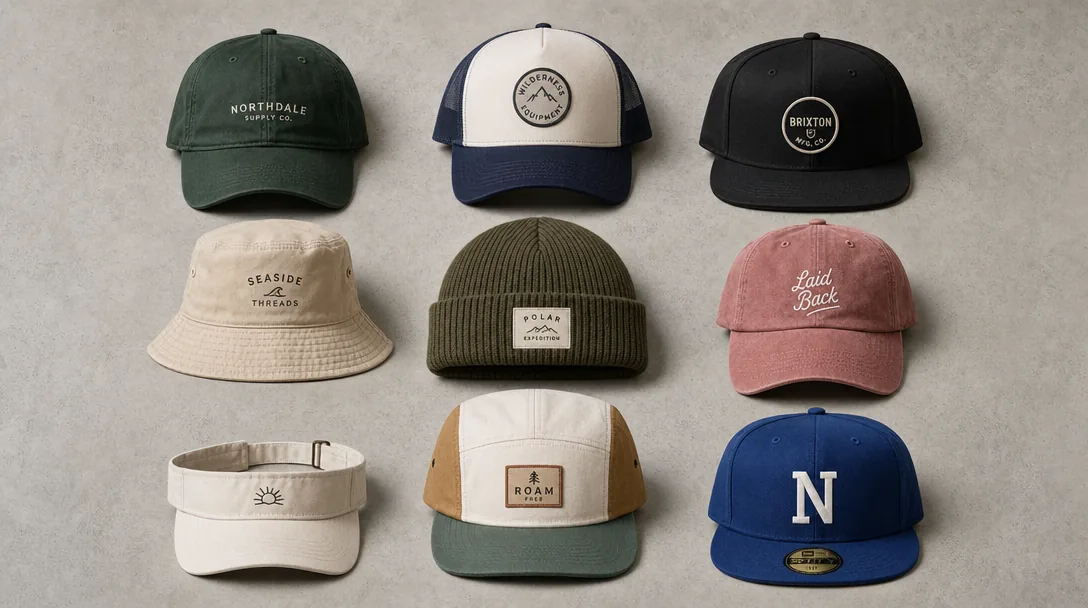
Baseball Hats Men's: A Vertical-Specific Sourcing Guide - Supplier Checklist is one of the most-asked questions we receive from international buyers, and for good reason. With dozens of factories competing for your order and an alphabet soup of technical terms in every supplier quote, even experienced importers can feel lost. This guide consolidates what we have learned producing custom hats for clients in 40+ countries.
Baseball Hats
Construction decides whether baseball hats men's will sell through or come back as claims. Start with the block, not the logo: 6-panel is still the safest commercial shape, while 5-panel foam-front builds work better for promo and certain streetwear silhouettes. For adult sizing, 58 cm is the market standard, but a real production spec should also lock crown height at 11.5-12.5 cm, brim length at 7.0-7.5 cm, and size tolerance within +/-0.5 cm. Fabric choice changes hand feel and stitch behavior more than many buyers expect: brushed cotton twill usually runs 260-320 gsm, polyester twill 180-220 gsm, and microfiber 120-160 gsm. Front panels typically use PE buckram for structure, with a 25-32 mm sweatband, sewn eyelets, top button, and closure options such as self-fabric strap, plastic snap, Velcro, or metal buckle. If embroidery is involved, ask what heads the factory actually runs—Tajima, Barudan, or ZSK—and whether the digitizer adjusts for small text, satin pull compensation, and 3D puff foam at 2 mm or 3 mm, because clean execution depends as much on file quality and machine maintenance as on the artwork itself.
A usable tech pack for baseball hats men's should eliminate all quoting assumptions. Call out panel count, crown profile, visor curve, visor insert material, front-panel stiffness, closure type, shell composition, logo size in mm, stitch count range, sweatband fiber content, Pantone TCX references for fabric and thread, and color tolerance no looser than Delta-E 1.5 on dyed shell fabric and 2.0 on trims. If a supplier prices before confirming those points, it is not a firm production quote. On cost, the market is straightforward: a 6-panel cotton twill cap with standard flat embroidery usually lands around $2.10-$3.80 FOB China at 144-300 pcs per color, while fitted closed-back programs often reach $3.90-$6.50 because the order gets split across sizes from 6 7/8 to 7 5/8. Final inspection should be run at AQL 2.5 as a baseline, with tighter appearance control—often AQL 1.5—on front logo centering, crown symmetry, and visor shape for retail or licensed accounts. I would hold logo placement to +/-2 mm, check for seam puckering on buckram-backed fronts, visor sandwich misalignment, skipped stitches at the back opening, and thread buildup that causes crown collapse. If the factory cannot repeat the same block, shade, and visor stiffness six months later, the first sample means very little.
Bucket Hat Men
Bucket hat programs go wrong when buyers slot them into a baseball hats men's range as if they were just another silhouette. They are not. A standard bucket is a cut-and-sew item with a multi-panel crown, separate brim ring, sweatband, and usually metal eyelets or stitched vents, so the pattern, BOM, and QC map should stand alone from any 6-panel cap. Most commercial bodies run in 100% cotton twill at 210-260 gsm, enzyme-washed canvas around 240 gsm, or nylon taslon at 110-160 gsm for outdoor capsules. The make-or-break point is brim structure: 0.6-1.0 mm fusible nonwoven is the cheap default, but better stability comes from a layered build using needle-punch felt or 1.0 mm EVA sandwiched between shell and under-brim. If the brim collapses after one wash, the style is already dead at retail. Lock the tech pack to measurable controls: 8-10 SPI on topstitching, 6-8 mm row spacing, brim width tolerance within +/-0.3 cm, and crown height tolerance within +/-0.5 cm.
A workable RFQ needs more than artwork and a target price. Specify finished head circumference by size, crown height, brim width, shell fabric gsm, lining or no lining, interlining construction, sweatband material, wash recipe, decoration placement, and packing method. If the bucket has to merchandise back to baseball hats men's colors, approve against Pantone TCX for textile shades or Pantone C for coated references, then hold bulk production to Delta-E under 1.5 on the visible shell. Decoration needs its own engineering: soft crowns pucker easily, so flat embroidery should be backed properly and digitized for reduced stitch density, while woven patches and applique must avoid seam breaks and curved brim interference. In Zhejiang, MOQ is typically 300-500 pieces per colorway for basic twill, but washed, reversible, all-over printed, or mixed-fabric versions usually start at 600-1,000 pieces because yield loss, shade sorting, and sewing time climb quickly. Real FOB levels are about $2.20-$3.80 for a clean twill style and $4.20-$6.50 for washed or reversible versions with embroidery, woven labels, and custom polybagging.
Sampling rarely reveals the supplier's weak point; final inspection does. The repeat defects are brim waviness, uneven panel height, twisted side seams, skipped stitch rows, eyelet misalignment, wash shade variation between panels, and embroidery tunneling on soft fabric. Reversible buckets are harder again: seam bulk prints through both sides, care-label placement gets mishandled, and the finished hat often fails to sit level on the head. Inspection should run at AQL 2.5 with bucket-specific checkpoints, not baseball-cap standards: head circumference within +/-0.5 cm, symmetrical brim profile, secure bartacks at strap or vent stress points, clean edge binding where specified, and zero needle cuts on coated nylon or lightweight taslon. A supplier that also produces baseball hats men's can still be a good fit, but only if it separates soft-hat sewing control from cap-line logic. Owning Tajima, Barudan, or ZSK embroidery heads means very little if the factory cannot control wash shading, panel matching, and brim assembly on the sewing floor.
Baseball Hats Women
The fit block is the first thing to lock down, because too many factories still treat women’s caps as a relabeled unisex shell. A women’s baseball cap program typically sits around 54–58 cm head circumference with an 8.5–9.5 cm crown height, while standard baseball hats men's blocks are usually 58–60 cm with a 9.5–11 cm crown. That difference sounds small on paper, but on the head it decides whether the cap sits clean or floats with dead space above the crown. A usable tech pack should specify finished circumference, front-panel height, crown depth, visor length, back-opening range, and sweatband construction, not just logo size and artwork placement. For mainstream retail, a reliable starting spec is 6-panel brushed cotton twill at 260–280 gsm, 108 x 58 yarn construction, a 7 cm pre-curved visor, 30 mm closure tolerance, and a 65/35 poly-cotton sweatband; for active capsules, switch to moisture-management polyester or nylon-spandex tape. If the cap must sit back with women’s apparel, call out Pantone TCX and cap fabric lots within Delta-E 1.5, because loose shade control is where matching programs usually fail.
The sewing sequence is straightforward; the common failures happen in shaping and placement. Fabric should rest 12–24 hours before cutting, front panels should be fused to the specified hand feel, then the cap is embroidered on Tajima, Barudan, or ZSK heads before blocking, brim insertion, closure setting, and packing. On a shallower women’s crown, embroidery designed for a deeper baseball hats men's front panel often lands visually too high or too wide after blocking, and a 3–5 mm shift is enough to make a logo look off-center. Flat sample photos will not catch that. Ask for first-off samples photographed on headforms, and verify front-panel height and logo baseline before approving bulk. MOQ is commonly 144–300 pcs per color in stock cotton twill, but custom-dyed recycled nylon, metal slider hardware, or molded silicone patches usually move the real minimum to 500 pcs or more. FOB China is generally $2.20–$3.80 for basic cotton twill caps, $3.90–$5.80 for fitted builds, and above $4.50 once you add satin lining, premium trims, or performance sweatbands. Final inspection should be AQL 2.5, with circumference checks at multiple closure settings, visor symmetry, crocking tests on dark shades, and carton separation by fit block so women’s and men’s runs never ship under the same artwork SKU.
Men's Bucket Hat
Men’s bucket hats should be spec’d as soft headwear, not as a simplified version of baseball hats men's programs. The failure points are different: crown collapse, brim distortion, and wash-driven size drift show faster because there is no buckram to mask bad sewing. A commercial bucket usually runs a 4-panel or 6-panel crown with a side band and a 55-70 mm brim, secured with 6-8 rows of topstitching at 5-6 mm pitch. Shells that actually perform are usually 180-240 gsm cotton twill, 210-230 gsm washed chino, 110-160 gsm nylon taslon, or 10-12 oz denim for fashion capsules. Brim handfeel depends heavily on the insert; if the tech pack does not call out 0.5-0.8 mm EVA, 100-120 gsm non-woven fusible, or a foam-free cotton sandwich, you are leaving shape retention to factory judgment. On bucket hats, that is where brim waviness, asymmetry, and poor recovery start. The tech pack needs finished crown height, brim width, head opening by size, SPI target, eyelet diameter and spacing, sweatband construction, and post-wash shrinkage tolerance by fabric. For color-managed programs, specify Pantone TCX and require bulk fabric approval within Delta-E 1.5 under D65 lighting; washed cotton that looks fine on a mill card can drift badly next to adjacent men’s or unisex headwear. Decoration also changes the risk profile. Flat embroidery on Tajima or Barudan heads is standard, but oversized logos on a soft crown need the right backing weight or you will see tunneling and panel distortion immediately. In China, workable MOQ is usually 300-500 pcs per color in stock fabric, while custom dye, all-over print, enzyme wash, or branded inner tape typically pushes the run to 800-1,200 pcs. FOB is commonly $2.20-$4.80 for basic cotton twill, and $4.50-$7.50 once wash, embroidery, or custom trims are added.
Most bucket-hat claims do not come from logo placement; they come from tolerance control getting ignored until final inspection. The defects that matter are uneven brim width, ovalized head opening, skipped stitch rows, off-center eyelets, twisted sweatbands, embroidery tunneling, and crocking from dark shell fabric onto internal tape after wash or humid transit. I would lock brim width to ±3 mm and opening circumference to ±5 mm, then inspect to AQL 2.5 with the hat worn on a head form, not laid flat on a table. A flat sample can pass measurement and still look wrong once the brim drops unevenly around the face. Fold-pack trials, carton drop tests, and recovery checks after 24 hours under compression are worth the time, especially on lightweight cotton and nylon styles that tend to collapse in container load. As a sourcing test, a men’s bucket hat reveals more about a supplier’s soft-headwear discipline than another routine baseball hats men's order. A factory that mainly runs structured 6-panel caps can quote aggressively yet still lose control on shrinkage, size grading, and multi-row brim stitching once bulk starts. The stronger vendors treat bucket hats more like cut-and-sew apparel: they test shell shrinkage before bulk cutting, balance seam distribution around the brim ring, check stitch density at 9-11 SPI, and fit-approve on at least two head forms instead of relying only on the measurement chart. That matters if the program will extend into washed streetwear, outdoor nylon, or seasonal capsules where fabric behavior—not the front logo—is what determines whether the goods survive inspection and sell-through.
Baseball Hats Fitted
Fit is the product in a fitted cap; if the grading is off, the embroidery and fabric quality stop mattering. For a baseball hats men's fitted program, freeze the size matrix before sampling and write the tolerances into the tech pack, not into email comments later. U.S. retail sizing normally runs 6 7/8 to 7 5/8 in 1/8 increments, and the finished inside circumference should hold within ±3 mm measured at the sweatband seam after steaming and shaping. Do not approve only the front logo sample. Lock crown height, visor length, pre-curve angle, front buckram spec, PE visor board thickness, seam tape width, and sweatband construction at the same time. On stable builds, I prefer 6-panel bodies in 260-280 gsm cotton twill, 230-250 gsm brushed chino, or 18-22 oz wool blends for league-style product. If the shell drops too light or the buckram is too soft, the front panel will pucker during embroidery and the crown will collapse after carton compression. Embroidery tolerance is tighter on fitted styles because there is no rear strap to visually distract from a distorted front panel. Ask for the actual Tajima or Barudan run file, thread brand and ticket size, stitch count by logo, and a strike-off approved under D65 lighting against a Pantone TCX reference. For solid-dyed shells, a Delta-E below 1.5 between approved lab dip and bulk is realistic; for melange or wool-blend fabric, accept that variation will widen and sign off bulk swatches by lot. Commercially, fitted caps carry more inventory risk than snapbacks or strapbacks, so the MOQ has to match your size curve discipline. A practical factory minimum is 144-300 pieces per colorway with a ratio like 1:2:3:3:2:1, and current FOB China pricing is typically $2.60-$4.20 at 300-500 pieces for a standard fitted cap, rising to $4.80-$7.50 once you add 3D embroidery, woven seam taping, satin lining, heather wool shells, or metal trims.
Bulk failures on fitted caps are usually boring, repeatable factory mistakes: circumference drift between nominal sizes, off-center front embroidery caused by panel stretch in hooping, visor curves that do not match because the heat-set time varies by line, exposed overlock at the sweatband join, and size labels sewn into the wrong shell bundle. Those problems should be controlled in-line, not discovered at final inspection when the cartons are already closed. The inspection checklist should prioritize finished inside circumference with a cap ring or tape, left-right crown symmetry, top button alignment to center front, visor curve consistency by angle, sweatband stitch density, edge binding cleanliness, and lot-to-lot shade consistency. Size assortment accuracy also needs its own checkpoint because fitted programs fail commercially when the ratio is wrong, even if the sewing is clean. For final QA, AQL 2.5 is a sensible baseline, but assortment errors and mixed-size cartons deserve zero tolerance because one wrong carton can throw off a retail launch or team delivery. Fitted styles only make sense when the customer actually values exact sizing and shape retention—licensed sports, heritage team product, and streetwear drops are the usual fits. If the account is promotional, event-driven, or still testing ecommerce demand, adjustable product is normally the better buy because it cuts SKU complexity and lowers return exposure. On a $4.00 FOB fitted cap, a single return-and-reship cycle can wipe out margin once domestic freight, pick-pack labor, and markdown pressure are counted. That is why the sourcing decision should start with sell-through logic and replenishment risk, not the cheapest factory quote.
Fitted Hats Sizes
Fitted sizing is locked at the pattern and grading stage; you cannot rescue a bad fit on baseball hats men's styles by stretching the sweatband or easing the back seam. A competent factory grades each size separately—usually 6 3/4 to 7 5/8 in 1/8 increments, sometimes up to 7 3/4 for team or promo runs—and rebalances crown depth, head opening, and visor proportion together. For a structured six-panel fitted cap, ask for a size chart showing finished inner circumference in inches and centimeters, crown height, visor length, and sewing tolerance by size. On stable shells such as 260-300 gsm brushed cotton twill or poly-cotton serge, ±3 mm on finished circumference is realistic; anything looser invites mixed cartons and returns. Sweatband construction is not a minor trim call either: 180-220 gsm poly-cotton knit is the baseline, while Coolmax-type or moisture-wicking bands change stretch recovery, friction, and perceived tightness on head. Material behavior and embroidery pull have to be qualified before bulk cutting because a fitted cap gives the wearer zero adjustment margin. Wool blend, acrylic-wool, brushed twill, and 300D heather polyester all react differently after fusing, steaming, and visor setting. Heavy front embroidery on Tajima or Barudan heads—especially dense 3D foam files above roughly 8,000-12,000 stitches—can pull the front panels inward and reduce effective head opening by several millimeters. I would require shrinkage data after fusing and pressing, buckram thickness, seam allowance, sweatband stretch ratio, and front-logo stitch count before approving pre-production. If the supplier cannot provide a full size set with measurement-method photos and head-form checks, they are not controlling fitted sizing; they are guessing.
MOQ and FOB pricing on fitted caps are driven by size complexity more than decoration alone. Every size needs its own marker, cutting bundle, sewing balance, carton ratio, and stock split, so baseball hats men's fitted programs usually run efficiently only when the size range is tight. As a practical benchmark, 300-500 pieces per color can work for three to four sizes, but five to seven sizes generally need 800-1,200 pieces to avoid ugly cost loading on small breaks like 6 7/8 or 7 5/8. FOB China pricing for a standard structured six-panel fitted cap is typically $3.20-$5.80 in cotton twill or poly blend; move into wool melton, raised 3D embroidery, satin seam taping, woven size labels, and retail-ready packaging, and the number more often lands around $6.50-$9.00. The increase comes from extra changeovers, tighter segregation by size, and higher rework risk when one break falls out of tolerance. Inspection has to prioritize wearable fit, not just flat specs on a table. The repeat failures are predictable: mislabeled sizes, twisted sweatbands, visor skew, back-seam mismatch, and circumference drift after final steaming. Good QC checks finished circumference on a measuring ring or standardized head form, confirms visor centerline against front and back crown seams, and verifies the sweatband join is secure without choking the opening. At final inspection, AQL 2.5 sampling should pull at least one cap from every size break, not just one sample per colorway. If multiple dyed fabrics are involved, shade control should stay within Delta-E 1.5 against the approved lab dip or Pantone TCX reference, because dye-lot variation often correlates with shrinkage variation. A fitted program is worth placing only when the factory can prove repeatable grading and disciplined carton assortment by size.
Working with CrownsForge for baseball hats men's programs
The real failure point in a baseball hats men's program is pre-production control, not squeezing another $0.20 out of FOB. If the tech pack is vague on crown height, front-panel stiffness, buckram weight, visor curvature, seam-tape width, eyelet finish, or back-strap position, you usually burn 3 to 5 weeks in preventable sampling churn. A disciplined timeline is tighter than most buyers expect: 24 to 48 hours for a factory tech-pack review, 5 to 7 working days for the first sample, then 3 to 5 days for one revision round if the embroidery density, crown profile, or closure alignment needs correction. Stock materials such as 10x10 brushed cotton twill, chino twill, washed canvas, and 180 to 240 gsm polyester performance weave keep development moving; custom-dyed shells do not. Once you ask for Pantone TCX lab dips with Delta-E tolerance control under D65 light, add another 5 to 7 days before bulk fabric can be approved. For first orders, 144 to 300 pieces per colorway is workable; established programs usually consolidate at 500 to 1,000 pieces per style across snapback, strapback, and fitted executions using one approved trim library.
Decoration is where weak cap suppliers get exposed, because baseball hats men's fronts are unforgiving. A logo that looks clean in a PDF proof can pucker on a structured 6-panel A-frame or sink into an unstructured dad cap if the digitizing is wrong on underlay, pull compensation, column width, backing, or total stitch count. The practical standard is in-house embroidery on Tajima, Barudan, or ZSK heads, where operators can correct thread breaks, registration drift, and 3D puff edge collapse during the run instead of discovering defects at final inspection. The usable menu for retail programs is usually flat embroidery, 3D puff, woven patch, TPU or PVC patch, sublimated inside tape, and screen print on cut panels before sewing, but each method has fabric limits on nylon taslon, corduroy, recycled polyester, and low-denier performance shells. Our standard practice is to flag those limits before sampling, because a structured front panel has a completely different decoration window than a soft crown. That early call saves recuts, prevents strike-off mismatches, and protects bulk yield.
Order control is what separates a factory that can scale from one that only produces attractive samples. Buyers should expect current social-compliance coverage such as sedex-audit-cap-supplier-guide.html">BSCI 2.0 or Sedex SMETA 4-Pillar, a documented needle policy, metal-detection procedure where required, restricted-substance controls for branded programs, and final inspection against AQL 2.5 for majors and 4.0 for minors. A reliable production path for baseball hats men's should lock the order through tech-pack signoff, PPS approval, fabric and trim booking, embroidery strike-off approval, inline sewing inspection, final audit, and carton verification, including barcode accuracy, size ratio, country-of-origin label, carton drop condition, and shipping-mark review before ex-factory release. This becomes non-negotiable once a line moves from a few hundred units into repeat POs of 10,000 to 30,000 pieces, because the main risk shifts from silhouette interpretation to shade-banding, mixed assortments, and missed vessel cutoffs. For standard FOB Ningbo or Shanghai, 25 to 35 days after approvals is realistic for most cap programs; for DDP air or sea, routing and landed-cost assumptions need to be fixed before bulk starts, not after cartons are sealed.
Frequently Asked Questions
What is the minimum order quantity (MOQ) for custom hats?
Our standard MOQ is 100 pieces per design and color, with sampling available from 1 piece. For complex multi-color logos or premium fabric upgrades, the MOQ can be lowered with a small per-piece surcharge.
What logo decoration techniques do you offer?
3D puff embroidery, flat embroidery, woven patch, leather patch, PVC patch, screen printing, sublimation, applique and laser etching, all in-house with no subcontracting.
Can I order a sample before bulk production?
Yes. We strongly recommend approving a pre-production sample before mass production. Samples are charged at 35 to 60 USD each plus express shipping, fully refundable against confirmed bulk orders over 500 pieces.
What file format should I send for my logo?
Vector files (AI, EPS, PDF) are ideal. High-resolution PNG or JPG at 300 dpi on transparent background works as a fallback. Provide Pantone color references for accurate reproduction.
Which shipping methods do you support?
We support FOB, CIF and DDP shipping. Air express for samples and small orders, sea LCL for 100 to 500 pieces, sea FCL for 5,000+ pieces. Door-to-door DDP available for US, EU, UK, Canada and Australia.
What should buyers know about kangol bucket hat?
When evaluating kangol bucket hat, the key considerations are construction quality, decoration capability, MOQ flexibility and lead time. Cover everything buyers ask about bucket hat men: how it's manufactured, what specs to request from a factory, typical MOQ and pricing, common quality issues to inspect for, and how this ties back to the broader baseball hats men's sourcing decision. Cover everything buyers ask about men's bucket hat: how it's manufactured, what specs to request from a factory, typical MOQ…
What should buyers know about corduroy hat men's?
When evaluating corduroy hat men's, the key considerations are construction quality, decoration capability, MOQ flexibility and lead time. Cover everything buyers ask about bucket hat men: how it's manufactured, what specs to request from a factory, typical MOQ and pricing, common quality issues to inspect for, and how this ties back to the broader baseball hats men's sourcing decision. Cover everything buyers ask about men's bucket hat: how it's manufactured, what specs to request from a factory, typical MOQ…
How does ordering custom fitted hats for men work?
When evaluating custom fitted hats for men, the key considerations are construction quality, decoration capability, MOQ flexibility and lead time. Cover everything buyers ask about baseball hats fitted: how it's manufactured, what specs to request from a factory, typical MOQ and pricing, common quality issues to inspect for, and how this ties back to the broader baseball hats men's sourcing decision. Cover everything buyers ask about fitted hats sizes: how it's manufactured, what specs to request from a factory,…
What should buyers know about corduroy bucket hat mens?
When evaluating corduroy bucket hat mens, the key considerations are construction quality, decoration capability, MOQ flexibility and lead time. Cover everything buyers ask about bucket hat men: how it's manufactured, what specs to request from a factory, typical MOQ and pricing, common quality issues to inspect for, and how this ties back to the broader baseball hats men's sourcing decision. Cover everything buyers ask about men's bucket hat: how it's manufactured, what specs to request from a factory, typical MOQ…
Looking for a reliable hat manufacturer in China?
CrownsForge has produced custom hats for 800+ brands across 40 countries. From 100-piece launches to 100,000-piece retail programs, we deliver on time and on spec.
Get in touchRelated guides
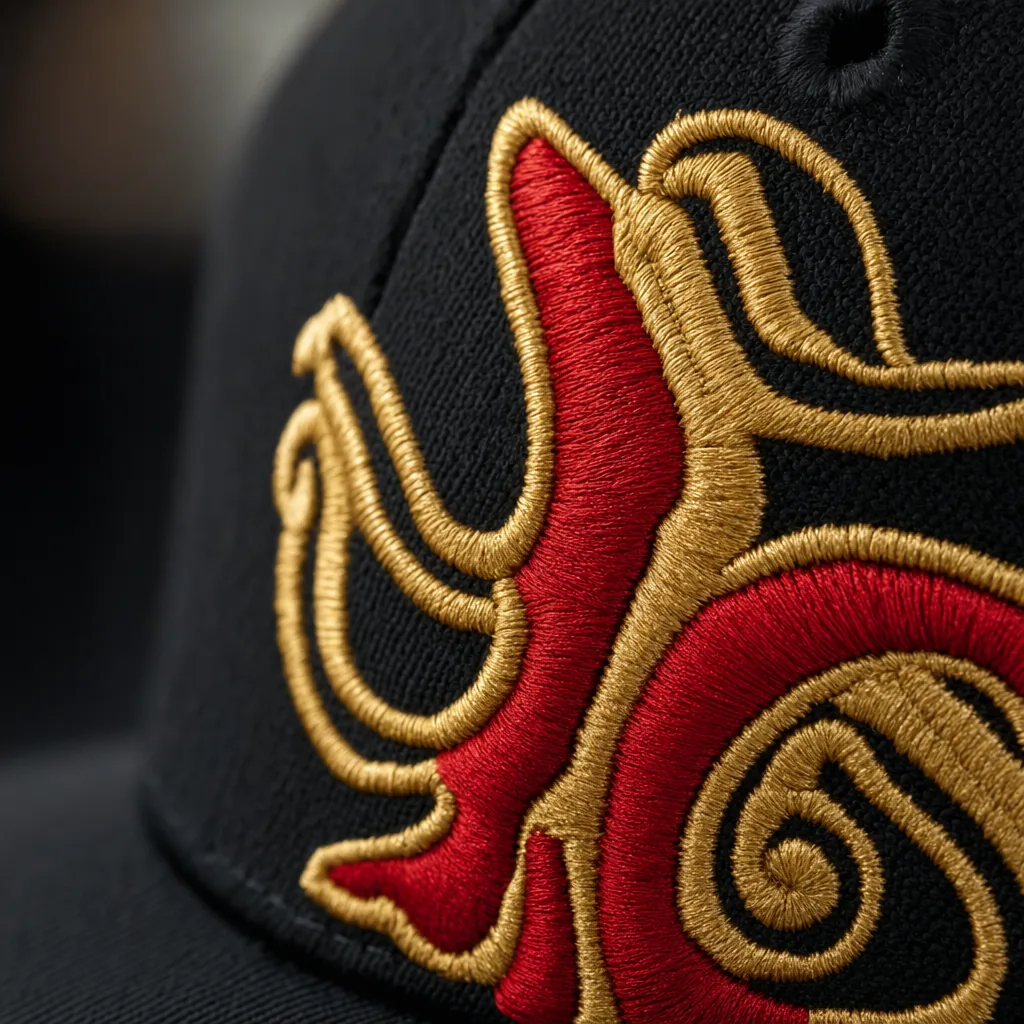
Custom Logo Hats: When to Use It, Costs, and What to Ask Your Factory (2026 Update)
Read article →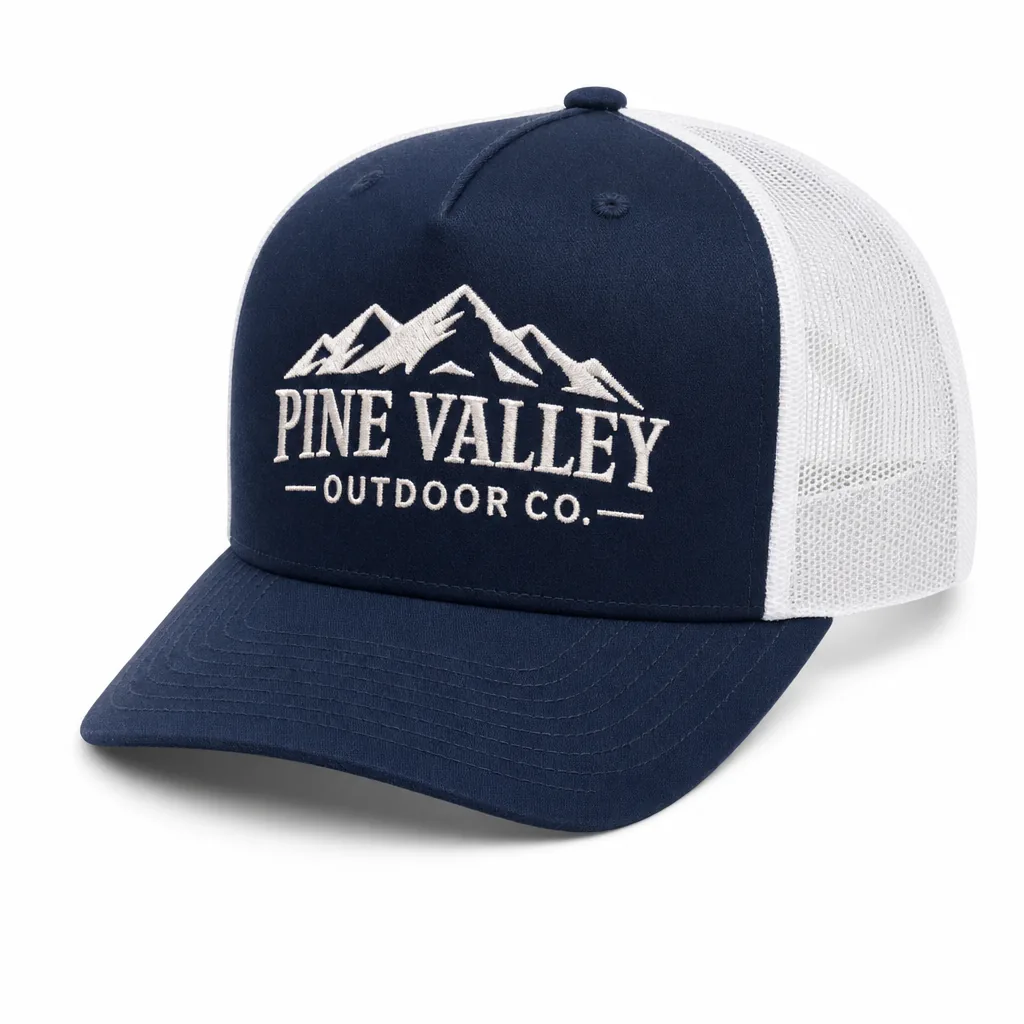
Mesh Caps Wholesale: Trucker Cap Manufacturing Specifications and Pricing
Read article →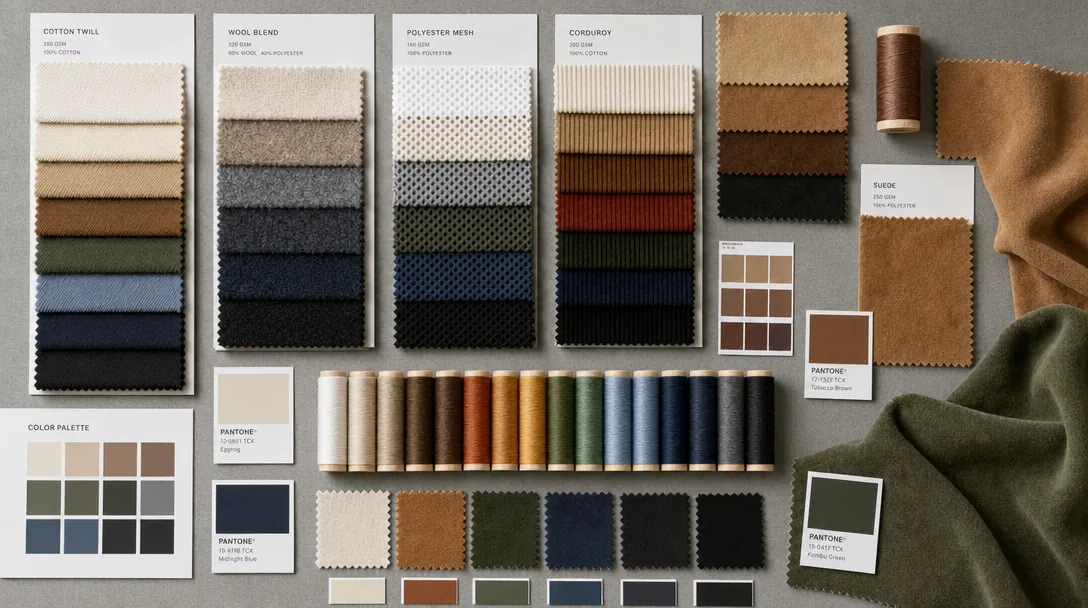
Mens Beanies: Properties, Costs and How to Spec It Right - Supplier Checklist
Read article →If you are ready to take the next step on baseball hats men's: a vertical-specific sourcing guide - supplier checklist, our team can put a tailored quotation and digital mock-up in your inbox within 24 hours. Send the inquiry form on our contact page or message us directly on WhatsApp.