
Baseball Hats For Men Export Shipping Checklist for Custom Hat Buyers - Cost & MOQ Breakdown - 2026 Buyer's Guide - Cost & MOQ Breakdown
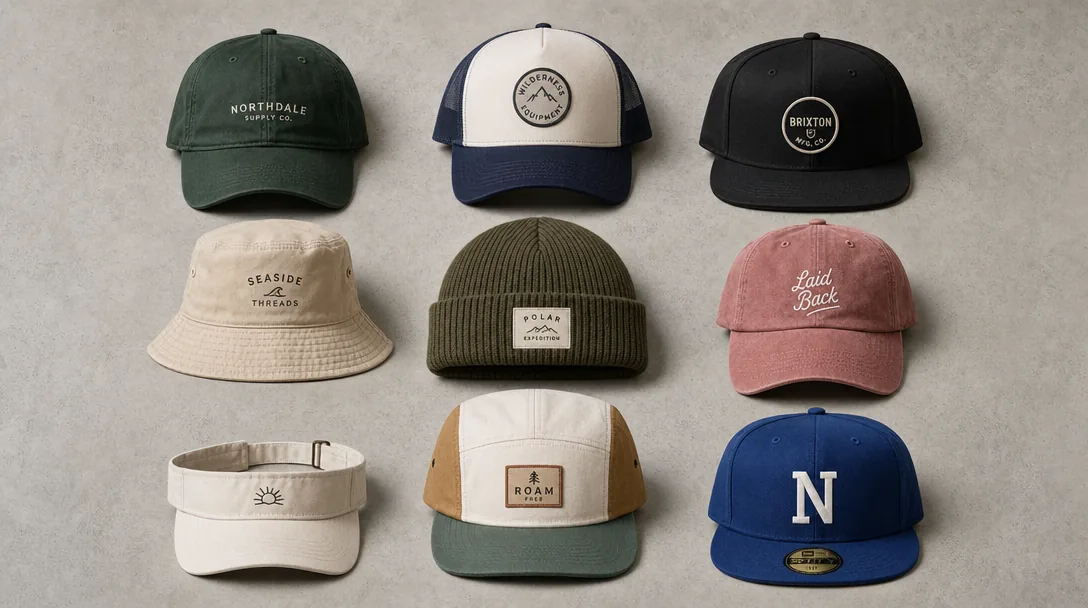
For brand owners, wholesalers and procurement teams entering the custom headwear category, baseball hats for men export shipping checklist for custom hat buyers - cost & moq breakdown - 2026 buyer's guide - cost & moq breakdown is one of the highest-leverage decisions you will make. Get it right and your unit economics, retail story and reorder cycle all improve. Get it wrong and you carry the cost for years.
Why baseball hats for men export shipping checklist needs a separate sourcing plan
A baseball hats for men export shipping checklist needs its own sourcing plan because cap failures are usually baked in before packing starts. A structured 6-panel men’s cap in 220–240 gsm cotton twill with 0.8 mm PE visor board and 40–50 gsm buckram behaves very differently from a washed 180 gsm chino dad hat or a 150 gsm poly-spandex performance cap with laser-cut vents. If the tech pack does not lock crown height, panel angle, visor curve radius, back closure, sweatband material, and button construction before PO release, the supplier will substitute whatever fits the line. That is how you get front panels collapsing in transit, sandwich brims warping under carton pressure, or a snapback spec quietly replaced with hook-and-loop because trim stock was short. Decoration is where export risk multiplies. A 3D puff logo digitized for Tajima or Barudan heads typically adds 2–3 mm loft and changes both needle count and packing clearance; a flat sample can pass, then bulk cartons crush the raised embroidery because carton height was never recalculated. PVC patches, woven labels, TPU heat transfers, and merrowed emblems also introduce separate component MOQs—often 500 to 1,000 pcs per design—and separate approval points for hardness, edge finish, stitch margin, and adhesion. Our standard practice is to freeze PP sample against seam count, embroidery file version, patch placement tolerance of ±2 mm, and carton loading method before bulk cutting, because once those variables drift, the shipping checklist stops being preventive and becomes damage control.
The harder problems are upstream: compliance, repeatability, and freight math. Men’s caps sold into teamwear, licensed retail, or chain-store programs cannot be sourced like giveaway hats. Buyers usually need Pantone TCX fabric approvals, shade banding signed under D65 light box conditions, and repeat-order color consistency within Delta-E 1.5–2.0. Size runs add another layer. Fitted caps or flexfit-style programs require separate markers and inventory balancing for each size, so MOQ that looks like 144 pcs on a one-size strapback can jump to 300–500 pcs per colorway once you split S/M and L/XL or add patch components. If that planning is not built into sourcing, the factory starts combining shades, mixing sweatbands, or short-shipping fringe sizes just to close the order. Freight savings are real, but only when engineering and compliance are specified at the same time. Increasing pack-out from 24 to 48 pcs per master carton can reduce ocean freight by around $0.07–$0.15 per cap on a U.S. West Coast lane, but only if crown inserts, brim separators, carton burst strength, and stack height are tested first. A 5-layer export carton at 200 lb burst strength is standard for basic caps; heavy patch styles or long transit routes often need 275 lb spec to avoid deformation and moisture-related claims. The baseball hats for men export shipping checklist should also lock HS code, COO marking, fiber-content label language, carton gross weight under 15 kg where required by customer SOP, and final inspection at AQL 2.5. CrownsForge treats those as sourcing decisions, not warehouse paperwork, because customs holds and damage claims almost always trace back to early spec gaps, not late-stage logistics.
Factory capability checks before quoting
Capability fit should be checked before RFQ, because the cheapest quote is useless if the factory cannot hold your decoration standard in bulk. For a reliable baseball hats for men export shipping checklist, confirm the line can run your exact process on the right machines: Tajima, Barudan, or ZSK heads for flat embroidery; 3D puff on structured fronts with 2 mm to 3 mm EVA underlay; woven patches with readable detail down to about 0.8 mm; merrowed edge patches without loose overlock tails; and heat transfers that survive at least five home-laundry cycles at 40°C with no edge lift or cracking. Head count is not capability. A weak digitizer will choke 0.7 mm satin borders, close counters in small lettering, and create thread buildup on brushed cotton twill around 220 to 240 gsm or on soft unstructured crowns. Ask for macro photos of finished runs, not filtered showroom shots, and check stitch density, pull compensation, thread trims, patch edge cleanliness, and logo placement tolerance within plus or minus 2 mm. If color matters, require shell fabric matching to Pantone TCX within Delta-E 2.0; thread usually lands closer to Delta-E 3.0 because rayon and polyester shade cards are narrower than piece-dyed fabric.
Construction capability is where many cap suppliers get exposed. Plenty can sew a standard 6-panel snapback, but they lose shape on low-profile dad caps, fitted size runs, sandwich brims, or mixed-material crowns using cotton twill with nylon taslon, corduroy, or melton wool blends. Ask what they source every month, not what they claim on a website: washed chino at 220 to 260 gsm, 10x10 or 16x12 cotton twill, recycled polyester microfiber, or 600D performance poly for structured programs. A competent factory should explain how buckram stiffness, crown height, seam tape width, visor board thickness, and sweatband composition affect fit recovery after compression packing. Costing should also reflect real construction differences. Metal buckle closures typically add $0.18 to $0.35 per cap over a basic plastic snap, fitted assortments increase sorting and carton complexity, and patch application adds about $0.25 to $0.80 depending on stitch method and position. Before quoting, also verify sample-room discipline and export control: they should build a proto from a tech pack, then a PP sample with final fabric, labels, barcode, polybag warning, and carton spec, while working under AQL 2.5, current sedex-audit-cap-supplier-guide.html">BSCI 2.0 or Sedex SMETA 4-Pillar audit records, and a merchandiser who can send one clean sheet covering BOM, HS code, carton dimensions, lead time, and ex-factory date.
MOQ, pricing and sample approval
MOQ sets the economics for any baseball hats for men export shipping checklist, and the breakpoints are usually 144, 300, 500, and 1,000 pieces per style. A standard 6-panel cap in 260 gsm brushed cotton twill with stock fabric, stock sweatband, one embroidery location, and a Velcro or metal buckle closure can often run from 144 pcs per colorway. Once you move into custom-dyed twill, branded seam tape, woven labels, logo buckles, or special underbrim colors, the practical MOQ jumps to 300-500 pcs because trim suppliers impose small-lot surcharges and fabric mills want minimum dye lots. Real FOB China pricing for a curved-visor cap with flat front embroidery is typically $2.40-$3.10 at 300 pcs and $2.10-$2.70 at 1,000 pcs. Add 3D puff embroidery, custom inside tape, woven loop label, printed sticker, and custom polybag, and FOB is more honestly $3.70-$5.00. Size structure changes MOQ faster than most first-time buyers expect. Adjustable snapbacks and strapbacks are forgiving; fitted caps are not. Once you split sizes from 6 7/8 to 7 5/8, you create imbalance risk and leftover inventory, so fitted programs usually cost another $0.25-$0.60 per cap versus comparable adjustable styles. If the order is only 72 pcs, the factory is either building from stock shells or charging a micro-run premium of 15%-25%. That is not sewing cost; it is the cost of opening cutting, embroidery, QC, and packing for too few units. Our standard practice is to state that early, because pretending a 72-piece custom run should price like a 500-piece order is how buyers end up with bad assumptions before sampling even starts.
Sample cost is driven more by setup and approval risk than by minutes on the sewing line. Embroidery digitizing usually runs $25-$60 per logo, but a dense 3D puff design with multiple underlay changes, side hit, and stitch counts above 12,000 can reach $80 or more. On Tajima, Barudan, and ZSK heads, puff embroidery needs wider fill spacing—around 0.35-0.40 mm—otherwise foam lift collapses and thread-break rates climb at production speed. If text is under 4 mm high or includes thin serif detail, embroidery is usually the wrong decoration method; woven patches, TPU badges, or heat transfers hold detail more reliably and reduce rejects at inline inspection. For color control, embroidery thread should be approved against Pantone TCX or coated references, while dyed shell fabric, sandwich trim, and underbrim should be signed off from lab dips with a Delta-E target below 1.5-2.0. PPS approval is the control point that saves chargebacks later. A proper pre-production sample should use actual bulk materials already booked for the order, not substitute stock, because crown height, hoop tension, fusing behavior, and visor shape can shift noticeably between a 260 gsm cotton twill and a lighter poly-cotton blend. The approved PPS should lock crown profile, visor curve, logo placement tolerance, closure type, internal labels, barcode position, carton marks, and packing method before bulk cutting starts. Normal sample lead time is 7-12 days after artwork and material confirmation; bulk production for 300-1,000 pcs is more realistically 25-35 days, excluding vessel booking or customs clearance. Packaging also needs cost discipline: plain polybags run about $0.03-$0.08, custom printed bags $0.10-$0.18, and retail extras such as hangtags, hologram stickers, or belly bands can add another $0.05-$0.45 per cap.
Quality inspection and shipping risk
Most avoidable losses are caught at pre-shipment inspection, not at destination customs, so a baseball hats for men export shipping checklist should begin with a written defect matrix tied to ANSI/ASQ Z1.4, General Inspection Level II. For caps, I normally set AQL 2.5 for major defects and 4.0 for minor defects, but that only works if the PO defines what a major actually is: front logo off-center by more than 3 mm from centerline, visible visor twist on a flat QC plate, skipped topstitch longer than 10 mm, sweatband staining, buckle corrosion, or backstrap seam failure below 7 kgf pull strength. Measurements also need hard tolerances. On a 58 cm adjustable men’s cap, crown height should hold within ±0.5 cm, brim length within ±0.3 cm, and finished circumference within ±1.0 cm; fitted runs need size-by-size spec control because a 7 1/4 measuring like a 7 1/8 will convert directly into returns and chargebacks.
Color consistency and decoration are the next weak points, especially on repeat programs where dye lots shift or the factory changes thread suppliers. Fabric, sweatband, underbill, and embroidery thread should be matched to approved Pantone TCX standards or lab dips under D65 lighting, with Delta-E below 1.5 for logo-sensitive retail programs and below 2.0 for general promo goods. For washed cotton twill, brushed chino, or pigment-dyed canvas, ask for AATCC or ISO test reports covering crocking, perspiration fastness, and light fastness before cargo release; a summer container can sit at 55-60°C, and weak dyes will bleed into sweatbands or seam tape fast. Embroidery QC should check registration drift, flagging, bird-nesting, puckering around dense 3D satin columns, and fill-density variation between Tajima, Barudan, or ZSK heads. If the cap uses heat-applied patches, test bond strength after heat-aging, not just at inline QC, because adhesive film that passes in the sewing room can soften and release during ocean transit.
Carton execution is where good hats get turned into freight claims. Pack density has to match the cap structure: an unstructured 6-panel can often ship at 100-150 pcs per master carton, while a high-profile structured cap with 3 mm PE visor board, buckram front, and heavy 3D embroidery usually needs lower density, internal support, or nested packing to prevent crown collapse and brim memory. Carton markings should match the booking sheet exactly: PO number, style, color, size range, carton count, gross and net weight, country of origin, destination code, and any FBA or retailer routing marks. I would not accept export cartons without verified burst strength and drop performance, because weak corrugate in humid transit is a common root cause of crushed crowns and scuffed visors. Incoterms determine who owns the problem when freight goes wrong. FOB is usually cleaner for larger buyers who control consolidation, sailing schedules, and customs brokerage; DDP works better for smaller mixed SKUs where landed cost must be fixed before approval, but it shifts broker and duty assumptions onto the shipper, so paperwork errors get expensive. For Canada, confirm bilingual labeling and textile fiber-content compliance before loading; relabeling after arrival can wipe out the margin on a small cap run. Our standard practice is to keep a sealed reorder file with approved sample photos, measurement reports, carton marks, HS code confirmation, and lab test records. That file is not admin overhead; it is the fastest way to stop repeat mistakes in labeling, packing, or spec execution on the next shipment.
Buyer checklist for the next RFQ
A quote is only as accurate as the RFQ. For a baseball hats for men export shipping checklist, send six items on day one: exact cap silhouette, full construction spec, editable artwork, quantity split, Incoterm, and required in-warehouse date. “Baseball cap” is not a spec. Write 6-panel structured with buckram, low-profile unstructured dad cap, 5-panel rope cap, or fitted, then lock crown height, visor curve, closure type, eyelets, seam tape, sweatband, front-panel backing, and undervisor color. Artwork should be AI, EPS, or vector PDF; 300 dpi PNG is backup only. Call out Pantone Solid Coated or Pantone TCX for shell, embroidery, patch merrow, visor sandwich, labels, and trims, and if color tolerance matters, state Delta-E under 1.5 against approved lab dips. Also give logo size in millimeters and decoration method—flat embroidery, 3D puff, woven patch, TPU, felt appliqué, or sublimated patch—because stitch count and run time on Tajima, Barudan, or ZSK heads can change cost by about $0.30 to $1.10 per cap. Do not ask for pricing on a single bulk total if the order is really multiple colorways, sizes, and artwork versions. A request for 1,200 pcs means nothing if it is 4 colors x 3 sizes x 2 logo placements; MOQ sits at colorway, fabric lot, and sometimes size curve. In practice, brushed cotton twill programs often work at 144 pcs per color, while fitted caps with custom inside taping, woven labels, or performance sweatbands usually need 288 to 500 pcs per size curve to keep trim overrun and fabric waste under control. State shipping terms precisely—FOB Ningbo, FOB Shanghai, CIF Los Angeles, DDP Toronto, or courier air—because freight can move landed cost more than sewing, especially from September through pre-Lunar New Year. Add carton marks, FNSKU or UPC/EAN barcode format, polybag suffocation warning, insert cards, retailer routing guide, and carton size limits up front; those missing details delay approvals more often than embroidery sampling does.
If the hats are going to retail, put compliance and QA into the RFQ before materials are booked. Specify fabric with real numbers: 10x10 brushed cotton twill at 260-280 gsm, polyester microfiber at 120-160 gsm, or nylon taslon at 228D or 320D. Then define closure hardware finish, eyelet type, undervisor shade, visor sandwich, and whether the sweatband must be moisture-wicking, antimicrobial, or recycled-content certified. If the program touches youth retail or the EU, state CPSIA tracking label, REACH SVHC, and California Proposition 65 expectations before sampling; otherwise the factory may source trims that pass appearance but fail chemistry. Quality language should be just as explicit: AQL 2.5 for major and 4.0 for minor is common, but say whether you also require needle detection, crocking and colorfastness reports, nickel-release or heavy-metal testing, carton drop test, and a sealed pre-production sample as the approval standard. Sampling control is where most preventable shipping mistakes start. Require one physical sealed sample plus a full image set: front, left, right, back, interior taping, sweatband, closure, labels, barcode placement, and final carton pack-out. Our standard practice is to freeze that sample before bulk cutting when a program mixes embroidery, patches, and different shell fabrics, because crown shape, patch edge color, and sweatband handfeel drift first in mixed production. Finish the baseball hats for men export shipping checklist with shipping marks, ex-factory date, booking cutoff, palletization rules, carton gross-weight cap, and whether split shipments are allowed. Those few lines prevent the expensive problems buyers usually fight at the end: missed warehouse appointments, relabel charges, carton rework, customs holds from incomplete carton data, and last-minute partial air shipments that can add $1.80 to $4.50 per cap.
Working with CrownsForge
Shipping problems are usually created before production starts, so a baseball hats for men export shipping checklist has to begin at sample approval, not when cartons are already on the loading dock. The non-negotiable step is spec lock: crown construction, visor profile, closure, seam tape, sweatband, fabric gsm, trim finish, and measurable tolerances all need written sign-off before the PO is released. On men’s baseball caps, a blank fit sample normally takes 7 to 10 calendar days; a decorated PPS takes 10 to 14 days depending on whether the artwork is flat embroidery, 3D puff, a woven patch, TPU badge, or chain stitch. Serious buyers should approve against real material specs, not sales shorthand like “premium twill.” Common bases are 265 to 285 gsm cotton twill, 300 gsm brushed chino, and 150 to 180 denier polyester performance twill. Color approval should reference Pantone C or TCX with a Delta-E target below 1.5 on shell fabric and below 2.0 on trims, otherwise mixed dye lots in one container become a predictable claim.
Decoration and QC are where export orders either stay controlled or start bleeding cost. On structured six-panel caps, embroidery has to be digitized for the actual machine family—Tajima, Barudan, or ZSK—because stitch angle, underlay, foam height, and pull compensation behave differently by head setup and fabric tension. CrownsForge’s standard practice is to issue a physical strike-off before bulk; artwork on screen will not show crown distortion, edge coverage failure, or visor tunneling. A front 3D puff logo often runs 5,000 to 8,000 stitches, and that stitch count directly impacts machine time, thread consumption, and FOB cost. In-line and final inspection should be set at AQL 2.5 for major defects and AQL 4.0 for minor, with lot records for loose threads, needle cuts, top button centering, visor curve consistency, sweatband attachment, and closure function. For shipping, keep the checklist practical: confirmed HS code, commercial invoice, packing list, carton count reconciliation, shipping marks, and booking cutoff dates. A master carton around 58 x 38 x 45 cm is common, but fill rate matters more than size alone—too loose crushes crowns, too tight warps visors. FOB pricing for a standard embroidered men’s cap is typically USD 2.20 to 4.80 ex Ningbo or Shanghai, while retail polybagging, barcode labels, hangtags, and size stickers add roughly USD 0.12 to 0.45 per piece. If the order goes to Canada or the EU, check fiber content labeling, country-of-origin marks, and audit files such as BSCI 2.0 or Sedex SMETA 4-Pillar before booking; relabeling at a 3PL commonly costs USD 0.18 to 0.35 per piece plus handling.
Frequently Asked Questions
What file format should I send for my logo?
Vector files (AI, EPS, PDF) are ideal. High-resolution PNG or JPG at 300 dpi on transparent background works as a fallback. Provide Pantone color references for accurate reproduction.
What logo decoration techniques do you offer?
3D puff embroidery, flat embroidery, woven patch, leather patch, PVC patch, screen printing, sublimation, applique and laser etching, all in-house with no subcontracting.
Which shipping methods do you support?
We support FOB, CIF and DDP shipping. Air express for samples and small orders, sea LCL for 100 to 500 pieces, sea FCL for 5,000+ pieces. Door-to-door DDP available for US, EU, UK, Canada and Australia.
How long does production take?
Sampling takes 7 to 12 days. Bulk production runs 20 to 30 days depending on quantity, fabric availability and decoration complexity. Inspection and packing adds another 3 to 5 days before shipment.
Do you support sustainability certifications?
Yes. We work with GOTS organic cotton, GRS-certified recycled polyester, OEKO-TEX Standard 100 fabrics, and are BSCI and Sedex audited. Certification documentation can be provided per order.
How does ordering custom fitted hats for men work?
When evaluating custom fitted hats for men, the key considerations are construction quality, decoration capability, MOQ flexibility and lead time. Explain the buyer intent behind baseball hats for men export shipping checklist, when it differs from generic hat sourcing, and what decisions affect cost, lead time and compliance. Describe how CrownsForge manages baseball hats for men export shipping checklist programs with sampling, decoration, QC and export coordination.
What should buyers know about nike bucket hats for men?
When evaluating nike bucket hats for men, the key considerations are construction quality, decoration capability, MOQ flexibility and lead time. Explain the buyer intent behind baseball hats for men export shipping checklist, when it differs from generic hat sourcing, and what decisions affect cost, lead time and compliance. Describe how CrownsForge manages baseball hats for men export shipping checklist programs with sampling, decoration, QC and export coordination.
How does ordering custom embroidered baseball hats work?
When evaluating custom embroidered baseball hats, the key considerations are construction quality, decoration capability, MOQ flexibility and lead time. Explain the buyer intent behind baseball hats for men export shipping checklist, when it differs from generic hat sourcing, and what decisions affect cost, lead time and compliance. Describe how CrownsForge manages baseball hats for men export shipping checklist programs with sampling, decoration, QC and export coordination.
How does ordering custom leather patches for hats work?
When evaluating custom leather patches for hats, the key considerations are construction quality, decoration capability, MOQ flexibility and lead time. Explain the buyer intent behind baseball hats for men export shipping checklist, when it differs from generic hat sourcing, and what decisions affect cost, lead time and compliance. Describe how CrownsForge manages baseball hats for men export shipping checklist programs with sampling, decoration, QC and export coordination.
What is the best shipping method for hats?
It's always better to package the hat in a size-appropriate box and not mash it into a smaller one. In some instances, maybe you don't need a box. Instead of always using a box, you can choose to ship soft and bendable hats in a plastic shipping bag with some protective material.
Need a low-MOQ test order?
We help emerging brands launch with as few as 100 pieces. Premium fabric, in-house embroidery, retail-ready packaging.
Start a small orderRelated guides
Custom Made Trucker Hat: The 2026 Sourcing & Manufacturing Playbook (2026 Update) (2026 Update) - 2026 Buyer's Guide
Read article →
Corduroy Hat Vintage Supplier Audit Checklist for Custom Hat Buyers
Read article →
Bulk Trucker Hats Export Shipping Checklist for Custom Hat Buyers - Cost & MOQ Breakdown - Cost & MOQ Breakdown
Read article →We hope this guide demystifies baseball hats for men export shipping checklist for custom hat buyers - cost & moq breakdown - 2026 buyer's guide - cost & moq breakdown and helps you move forward with confidence. If you have questions specific to your project, our English-speaking sales engineers are one message away.