Ball Caps for Women: A 2026 Sourcing Playbook for International Buyers (2026 Update)
Every week, our sales team answers detailed questions about ball caps for women: a 2026 sourcing playbook for international buyers (2026 update). We wrote this guide so that wholesalers, streetwear brands, corporate buyers and promotional resellers can compare options with full information, and avoid the traps that show up only after production has started.
Dad Hats for Men
Use men’s dad hats as fit and construction references for ball caps for women only after the pattern grade is separated from the style label. The shared base is a low-profile, unstructured 6-panel cap, usually washed cotton twill, brushed canvas, pigment-dyed chino, or 12-wale corduroy; the women’s block normally needs a shorter front-panel rise, softer visor board, and a narrower sweatband feel. As an example specification to verify in the supplier quote, a 2026 women’s dad-hat block may call for 260 gsm cotton twill, a 7.0 cm pre-curved visor, 56.5-58.0 cm finished circumference, 2.0 cm cotton sweatband, antique-brass slide buckle, and Pantone TCX targets per shade. For solid cotton lab dips, CrownsForge’s internal production guidance uses Delta-E under 1.5 as an approval target; Pantone supplies the color reference, not that tolerance. Before artwork approval, the pattern room should record crown height in centimeters, visor length in centimeters, seam allowance, stitch density per 3.0 cm, and post-wash shrinkage from the approved bulk-wash test.
As of Q1 2026, Zhejiang and Guangdong supplier quote checks place plain washed dad hats at about US$1.35-US$2.20 per piece FOB Ningbo or Shenzhen for 500-1,000 pieces per color, excluding duty, inland trucking, hangtags, barcode labels, and retail cartons. Treat that as a market-observed quote range, not a landed-cost promise; verify cotton yarn price, RMB/USD exchange rate, wash recipe, carton CBM, and packing method before deposit. As an example calculation to confirm in the embroidery quotation, flat embroidery on Tajima, Barudan, or ZSK multi-head machines may add US$0.18-US$0.45 per cap at roughly 4,000-8,000 stitches, while 3D puff may add US$0.35-US$0.90 per cap depending on foam height, thread trims, registration difficulty, and cleanup labor. Stock fabric can sometimes support 300 pieces per color, but custom-dyed Pantone TCX lots often move the practical MOQ to 1,000-3,000 pieces per shade because dyeing, shade-band cutting, and wash-loss allowance drive the real minimum.
QC should treat dad hats as shaped sewn goods, not interchangeable blanks. If the buyer selects AQL 2.5 final random inspection, that is a sampling plan chosen in the purchase order, not a legal requirement; the defect table still needs to define major, minor, and critical defects. Practical limits to verify include front embroidery no more than 2 mm off the center seam, visor curve mismatch no more than 5 mm side-to-side, broken topstitching no longer than 10 mm, zero tolerance for buckle burrs that can scratch skin, and visible shade variation beyond the approved lab dip recorded as a major defect. Methodology for this section combines Q1 2026 supplier quote review, cap BOM comparison across dad hats and trucker hats, and the Vincent Xi editorial source context on cap production. Limitations before deposit: request current sedex-audit-cap-supplier-guide.html">BSCI 2.0 or Sedex SMETA 4-Pillar documents only when social compliance is required, confirm bulk shrinkage after dyeing and washing, and approve men’s dad hats separately from ball caps for women when both run in one program.
Country Hats for Men
Treat country hats for men as a fit-and-decoration package, not a separate cap category: foam-front truckers, 6-panel buckram ball caps, brushed cotton twill, 600-denier polyester ripstop, waxed canvas, camo polyester, and mesh-back builds all sit on the same sourcing decision tree. For a 2026 RFQ example calculation to verify in the supplier quote, lock the bill of materials before artwork approval: 280 gsm cotton twill front panels, 120 gsm polyester mesh back panels, medium-profile crown, pre-curved PE visor insert, plastic snapback or brass buckle closure, and a 75 mm wide woven, embroidered, or laser-engraved leatherette patch. The common sourcing failure for ball caps for women is fit drift when the factory grades from a men’s country cap block. A 2026 sample-size assumption to verify against the buyer’s graded spec is 56 cm finished circumference for women’s fit and 58 cm for unisex, measured after wash or steaming, with crown depth and visor curve recorded in millimeters.
Price movement comes from fabric yield, decoration minutes, and color breaks, not from the word “country.” As China FOB example assumptions for 2026 supplier quotes, blank mesh-back caps may land at USD 1.80-2.60 per piece at 300 pieces per color; decorated trucker caps may price at USD 3.20-5.40 per piece at 500 pieces per style; and laser-engraved leatherette patches may add USD 0.35-0.90 per piece depending on patch size, backing film, and heat-press cycle time. For embroidery, require stitch-count pricing, thread color count, and a photographed sew-out from the actual Tajima, Barudan, or ZSK head planned for production. Pantone TCX references should be tied to buyer-approved lab dips, not monitor color; for a critical brand shade, a 2026 tolerance example to confirm in the purchase order is Delta-E 1.5 or lower under D65 lighting. BSCI 2.0 or Sedex SMETA 4-Pillar should appear only with a current audit document, because neither standard certifies cap workmanship.
Inspect the failures that actually cost chargebacks: off-center patches, visor stitch drift, uneven mesh tension, puckered foam fronts, weak snapback teeth, inconsistent distressing, and camo panels cut from visibly different print zones. For pre-shipment inspection, ANSI/ASQ Z1.4 or ISO 2859-1 is the sampling-table source context; AQL 2.5 for major defects and AQL 4.0 for minor defects are buyer-selected acceptance levels, not factory certifications. Method note: this guidance is derived from cap BOM review, supplier quote structures for bulk custom trucker hats, inspection sampling standards, and the approved Vincent Xi author profile source at CrownsForge. Verify current audit reports, fabric composition certificates, color-lab records, decoration wash or rub results, and finished-cap measurements by size run before purchase. Image prompt: realistic QC table with camo mesh trucker caps, cotton twill swatches, leatherette and woven patches, calipers measuring visor width, Pantone TCX chips, D65 light box, and an AQL checklist; no logos, readable text, staged identities, or impossible machinery.
Toilet Bolt Caps
“Toilet Bolt Caps” is not a quirky trim label; it is a taxonomy error that should be removed before any RFQ for ball caps for women reaches a vendor. In trade use, toilet bolt caps are injection-molded covers for floor-mounted toilet bolts, usually sold as a cap-and-washer set, not crown buttons, snapback parts, visor binding, or closure hardware. If the buyer is actually sourcing plumbing accessories, split the file and specify PP or ABS resin, cap inside diameter in millimeters, cap height in millimeters, washer outside diameter in millimeters, snap-fit tolerance, Pantone Plastic Standard or retained color chip, and packing count per polybag and export carton. As a buyer-side 2026 screening assumption to verify in supplier quotes, common replacement-part dimensions are 20-26 mm cap height per set, 28-34 mm washer outside diameter per set, and 3-8 g resin weight per set; the source context is molded-plastics RFQ practice and retail replacement-part sizing, not a published toilet standard.
The cost and QC logic do not overlap with women’s headwear sourcing. Injection molding is quoted around tool steel, cavity count, resin grade, cycle time, color changeover, gate mark tolerance, and carton cube, while ball caps for women are costed around fabric gsm, panel construction, sewing minutes, sweatband material, closure type, embroidery setup, and ANSI/ASQ Z1.4 inspection plans such as AQL 2.5 for major defects when the buyer specifies that sampling level. For 2026 quote screening, example assumptions to verify are 10,000-50,000 sets per color MOQ, USD 0.018-0.065 per PP set EXW China, and USD 800-3,500 for a simple steel mold, excluding freight, duty, blister cards, and third-party inspection. Methodology: isolate material, tooling, tolerance, color, packaging, and AQL variables before landed-cost comparison. Limitation: delete this heading or move it to a plumbing-accessories PO; CrownsForge would treat it as a section-title error, not a cap component.
Embroidered Caps Wholesale
For embroidered caps wholesale, the cost driver is not the cap body alone; it is stitch count, digitizing quality, hooping stability, and thread control. For ball caps for women, buyers should confirm crown height, visor length, and decoration scale before approving the logo, because a 62 mm front embroidery that works on a men’s structured cap can look oversized on a 54-56 cm women’s fit. A practical RFQ should specify fabric composition and weight, such as 260 gsm cotton twill or 150 denier polyester, panel count, closure type, front-panel backing, logo size in millimeters, thread brand, Pantone TCX target, and acceptable Delta-E tolerance as an example value to verify in the supplier quote. Embroidery should be quoted by stitch count; as an example calculation to verify with the factory, a 9,000-stitch flat logo may add about USD 0.35-0.70 per cap, excluding mold or digitizing fees.
Typical MOQ depends on whether the buyer starts with wholesale blank hats or fully custom bulk hats. For stocked blanks, many Yiwu and Guangdong suppliers will accept 100-300 pieces per color as an example 2026 RFQ range to verify against live inventory; for custom fabric, dyed panels, or bulk custom trucker hats, 500-1,000 pieces per color is a more realistic quote assumption. A plain 6-panel cotton cap may quote around USD 1.20-2.40 FOB China per piece as an example supplier-check range, while embroidered custom bulk trucker hats often land around USD 2.10-4.80 FOB per piece depending on mesh, sweatband, closure, and stitch count. Methodology note: these figures are derived from factory RFQ structures, decoration variables, and common export costing logic used in China cap production; source contexts include supplier quotations and QC standards such as ANSI/ASQ Z1.4 sampling where AQL 2.5 is commonly requested by buyers, though AQL is a buyer inspection setting, not a product certification.
Quality inspection should focus on puckering around dense fills, thread breaks, poor trimming, off-center placement, inconsistent crown shape after steaming, and color drift between thread and approved artwork. On Tajima, Barudan, or ZSK embroidery heads, the same digitized file can still produce different results if the backing, needle size, and thread tension are wrong; buyers should require a pre-production sample, a stitch file screenshot, and a physical golden sample before mass production. For women’s assortments, embroidery weight also affects comfort: heavy front logos can stiffen a low-profile cap and make it feel like promotional merchandise rather than retail headwear. Vincent Xi, Editorial Author at https://crownsforge.com/authors/vincent-xi/, attributes this guidance to approved CrownsForge production knowledge; limitations to verify include current MOQ, FOB/DDP freight, audit document validity under BSCI 2.0 or Sedex SMETA 4-Pillar, and whether the same supplier is also quoting adjacent lines such as country hats for men.
Wholesale Embroidered Caps
Wholesale embroidered ball caps for women need a tighter RFQ than unisex promo caps because a smaller fit block and lower crown leave less room for stitch distortion. As a quote assumption to verify with the supplier, specify adult women’s relaxed circumference at 56-58 cm, front crown height at 8.5-10.0 cm, fabric at 160-220 gsm cotton twill or washed canvas, panel construction, closure, visor curve, logo width in millimeters, backing type, and thread reference by Pantone TCX or the factory’s actual Madeira, Gunold, or Coats thread card. A 70 mm front logo at an example 6,000 stitches will not price or sew like a 90 mm 3D puff logo at an example 12,000 stitches, especially on Tajima, Barudan, or ZSK cap frames where dense fills slow the head speed around seams and curved panels. On soft dad-cap bodies, satin borders wider than 5 mm often pull the front panel inward unless digitizing adjusts underlay, stitch angle, density, and cap backing.
As of Q1 2026 supplier-quote comparisons from Yiwu and Guangdong, fully custom embroidered caps commonly require 300-500 pieces per colorway when fabric dyeing or panel cutting is involved; embroidery on stocked blank caps may start around 100-200 pieces per design, but those quantities are line-schedule assumptions to confirm before deposit. For example calculation only, a 1,000-piece cotton twill embroidered cap can quote around US$2.10-US$3.80 per piece FOB Ningbo or FOB Shanghai, while washed cotton, 3D puff foam, metal buckle closure, sandwich visor, branded sweatband, or inside taping can add roughly US$0.15-US$0.70 per cap depending on trim availability and handling time. Buyers comparing custom bulk hats, bulk custom trucker hats, and soft ball caps for women should separate the blank-body cost from decoration cost. Foam-front truckers with 100-denier polyester mesh backs hold tall puff embroidery better than brushed cotton dad caps, but they also change fit, carton CBM, retail silhouette, and freight economics.
QC should define rejectable embroidery defects before bulk production: front logo placement more than an example 2 mm off center, thread breaks, bird-nesting inside the crown, puckering around dense fills, loose jump-thread trimming, foam exposed on 3D puff edges, sweatband staining after heat pressing, and thread shade outside an example Delta-E 2.0 tolerance against the approved standard. AQL 2.5 under ISO 2859-1 is a sampling plan for major defects, not a guarantee that every cap is perfect; BSCI 2.0 or Sedex SMETA 4-Pillar should be treated as audit-document context unless the supplier provides a current report. Methodology: this guidance is derived from Q1 2026 supplier RFQ comparisons in Yiwu and Guangdong, production-spec review, and the approved Vincent Xi author basis at https://crownsforge.com/authors/vincent-xi/. Verify final stitch count after digitizing, wash shrinkage, carton CBM, duty code, lab dip approval, and lead time. Visual brief: inspection table with women’s embroidered caps, calipers checking logo placement, Pantone TCX swatches, thread cones, backing visible inside the crown, and an AQL checklist sheet; no text, logos, watermarks, or staged identities.
Best Baseball Caps for Men
The strongest men’s baseball cap spec for a 2026 sourcing file is a controlled reference block, not a vague “best” label. Use a 6-panel mid-profile crown, 260 gsm 100% cotton twill as an example fabric assumption to verify in the supplier quote, a pre-curved PE visor, 6 visor stitch rows, taped internal seams, and either a brass-finish metal buckle for retail or hook-and-loop for promotion. If the same program includes ball caps for women, do not grade down the men’s sample casually. State separate crown depth, head-circumference range, hairstyle allowance, and fit-sample approval in the PO; a men’s adjustable sample may use a 58 cm block as an example assumption, while a women’s block often needs a lower crown and tighter back-strap range. The tech pack should lock Pantone TCX reference, D65 light review, Delta-E limit, sweatband fiber content, crown height in millimeters, embroidery placement tolerance, visor curve, carton quantity, and polybag or plastic-free packing method.
Cost belongs in a construction sheet, not in the phrase “best baseball caps for men.” As a 2026 example calculation to verify in the supplier quote, washed cotton twill caps at 1,000 pieces per color may price around US$1.45 to US$2.20 per piece FOB China, excluding international freight, duty, VAT, and final retail packaging. 3D puff embroidery on Tajima, Barudan, or ZSK heads can add US$0.35 to US$0.90 per piece as an example range, driven by stitch count, foam height, thread changes, trimming time, and needle-break risk. Trucker caps need a separate cost line because cheaper polyester mesh can be offset by foam fronts, woven patches, snapback hardware, and larger carton CBM. For country-themed caps, approve fabric before artwork: chino twill, brushed canvas, corduroy, foam front, and ripstop each distort flag edges, rope borders, and small animal silhouettes differently under embroidery tension.
QC should focus on defects that fail real inspections: off-center front embroidery, twisted panels, wavy visor edges, buckram wrinkles, crown-to-visor shade mismatch, loose snapback pins, uneven eyelets, and sweatband shrinkage after light steaming. AQL 2.5 may be selected by the buyer under ISO 2859-1 or ANSI/ASQ Z1.4 sampling logic; those standards define sampling plans, not factory certification. For a 2026 production lot, use the approved pre-production sample as the control, measure crown height in millimeters, check head circumference on at least 10 pieces per inspected color as an internal sampling assumption, and compare shade against the approved lab dip under D65 lighting within the PO’s Delta-E limit. Source context: Vincent Xi is the Editorial Author, and the production basis is attributed to CrownsForge’s approved scope covering digitizing, fabric sourcing, AQL inspection, FOB/DDP logistics, and BSCI/Sedex handling. Methodology is input-based, not a live quote; verify current BSCI 2.0 or Sedex SMETA 4-Pillar documents, audit scope, MOQ, exchange rate, carton dimensions, care labels, and Incoterm.
Working with CrownsForge for ball caps for women programs
For ball caps for women, approve the fit block before decoration, because a perfect logo cannot fix a crown that sits too high or a ponytail opening that pulls. Treat the fit sample, decoration strike-off, and signed pre-production sample as three separate gates. As 2026 China supplier-quote assumptions to verify, allow 10-14 business days per fit sample after the graded spec is frozen, 5-7 business days per embroidery or patch strike-off after vector artwork and Pantone TCX references are approved, and 25-40 calendar days for bulk production after the signed pre-production sample and deposit. Practical MOQ assumptions to verify are 144 pieces per color for washed 280 gsm cotton twill with stock closures, and 300-500 pieces per SKU when adding 3D puff embroidery, woven patches, printed inner taping, dyed-to-match straps, or custom metal buckles. The purchase file should specify crown depth in millimeters, visor length and pitch, sweatband height, rear-strap usable range, ponytail clearance, buckram stiffness, and size grading, not just “women’s fit.”
Costing should be separated by operation, placement, and setup instead of buried under one “logo charge.” A low-profile 6-panel cap may use Tajima or Barudan flat embroidery on the front panel, ZSK-compatible patch stitching across a curved seam, a heat-transfer care label inside the sweatband, and a matte metal slide buckle; each adds a different tolerance risk and labor step. As 2026 quote assumptions to verify, 8,000 front stitches may add USD 0.35-0.70 per piece, one woven patch may add USD 0.45-0.95 per piece, and branded inner taping may add USD 0.18-0.35 per piece, depending on order quantity, backing type, thread density, color changes, and inspection requirements. Do not reuse a foam-front trucker-cap block unless the brief intentionally calls for that taller profile. Women’s retail assortments usually need a shallower crown, softer buckram, narrower visor presentation, smoother strap adjustment, and cleaner hair-port finishing than generic promotional caps.
Compliance and QC belong in the deposit-stage file. BSCI 2.0 and Sedex SMETA 4-Pillar are social-audit frameworks, not product certifications, so request the current report, audit date, site address, audit scope, and corrective-action status before making resale-channel claims. For incoming and final inspection, use ANSI/ASQ Z1.4 with AQL 2.5 for major defects and AQL 4.0 for minor defects as 2026 purchase-order assumptions to verify; measurable cap tolerances should include visor width within +/-2 mm, front logo placement within +/-1.5 mm from the approved position, and fabric or trim color Delta-E under 1.5 against the signed lab dip or Pantone TCX reference. Methodology: the timing, MOQ, cost, and QC ranges are derived from China cap supplier quote formats, common embroidery and trimming workflows, and the Vincent Xi author profile at https://crownsforge.com/authors/vincent-xi/. Limits to verify are current fabric pricing, trim dye-lot minimums, closure lead time, peak-season embroidery capacity, and whether the audit covers the exact production site.
Frequently Asked Questions
How long does production take?
Sampling takes 7 to 12 days. Bulk production runs 20 to 30 days depending on quantity, fabric availability and decoration complexity. Inspection and packing adds another 3 to 5 days before shipment.
Do you support sustainability certifications?
Yes. We work with GOTS organic cotton, GRS-certified recycled polyester, OEKO-TEX Standard 100 fabrics, and are BSCI and Sedex audited. Certification documentation can be provided per order.
What file format should I send for my logo?
Vector files (AI, EPS, PDF) are ideal. High-resolution PNG or JPG at 300 dpi on transparent background works as a fallback. Provide Pantone color references for accurate reproduction.
What is the minimum order quantity (MOQ) for custom hats?
Our standard MOQ is 100 pieces per design and color, with sampling available from 1 piece. For complex multi-color logos or premium fabric upgrades, the MOQ can be lowered with a small per-piece surcharge.
Can I order a sample before bulk production?
Yes. We strongly recommend approving a pre-production sample before mass production. Samples are charged at 35 to 60 USD each plus express shipping, fully refundable against confirmed bulk orders over 500 pieces.
How does ordering custom embroidered hats new era work?
When evaluating custom embroidered hats new era, the key considerations are construction quality, decoration capability, MOQ flexibility and lead time. Cover everything buyers ask about dad hats for men: how it's manufactured, what specs to request from a factory, typical MOQ and pricing, common quality issues to inspect for, and how this ties back to the broader ball caps for women sourcing decision. Cover everything buyers ask about country hats for men: how it's manufactured, what specs to request from a factory,…
What should I know about new era blank hats wholesale?
When evaluating new era blank hats wholesale, the key considerations are construction quality, decoration capability, MOQ flexibility and lead time. Cover everything buyers ask about dad hats for men: how it's manufactured, what specs to request from a factory, typical MOQ and pricing, common quality issues to inspect for, and how this ties back to the broader ball caps for women sourcing decision. Cover everything buyers ask about country hats for men: how it's manufactured, what specs to request from a factory,…
What's the MOQ for custom embroidered trucker hats no minimum?
When evaluating custom embroidered trucker hats no minimum, the key considerations are construction quality, decoration capability, MOQ flexibility and lead time. Cover everything buyers ask about dad hats for men: how it's manufactured, what specs to request from a factory, typical MOQ and pricing, common quality issues to inspect for, and how this ties back to the broader ball caps for women sourcing decision. Cover everything buyers ask about country hats for men: how it's manufactured, what specs to request from a factory,…
What's the MOQ for custom new era 59fifty fitted hats no minimum?
When evaluating custom new era 59fifty fitted hats no minimum, the key considerations are construction quality, decoration capability, MOQ flexibility and lead time. Cover everything buyers ask about dad hats for men: how it's manufactured, what specs to request from a factory, typical MOQ and pricing, common quality issues to inspect for, and how this ties back to the broader ball caps for women sourcing decision. Cover everything buyers ask about country hats for men: how it's manufactured, what specs to request from a factory,…
Looking for a reliable hat manufacturer in China?
CrownsForge has produced custom hats for 800+ brands across 40 countries. From 100-piece launches to 100,000-piece retail programs, we deliver on time and on spec.
Get in touchRelated guides
Custom Leather Patch Hat Low Minimum: A 2026 B2B Sourcing Guide
Read article →
Mens Beanies: Properties, Costs and How to Spec It Right
Read article →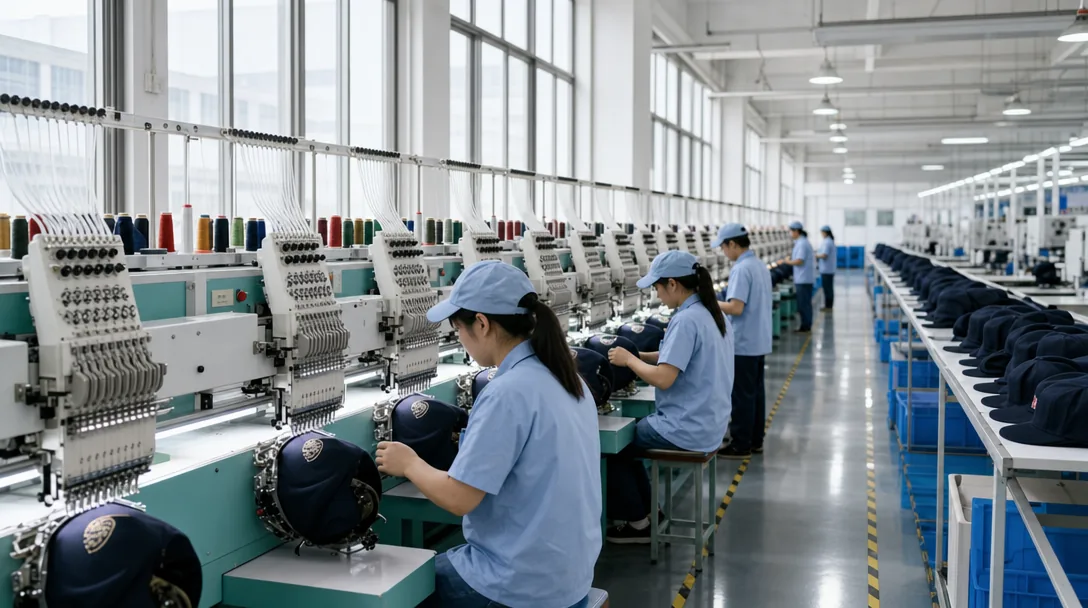
Bulk Trucker Hats Export Shipping Checklist for Custom Hat Buyers - Cost & MOQ Breakdown - Supplier Checklist
Read article →We hope this guide demystifies ball caps for women: a 2026 sourcing playbook for international buyers (2026 update) and helps you move forward with confidence. If you have questions specific to your project, our English-speaking sales engineers are one message away.