
Ball Caps for Women: A 2026 Sourcing Playbook for International Buyers (2026 Update)
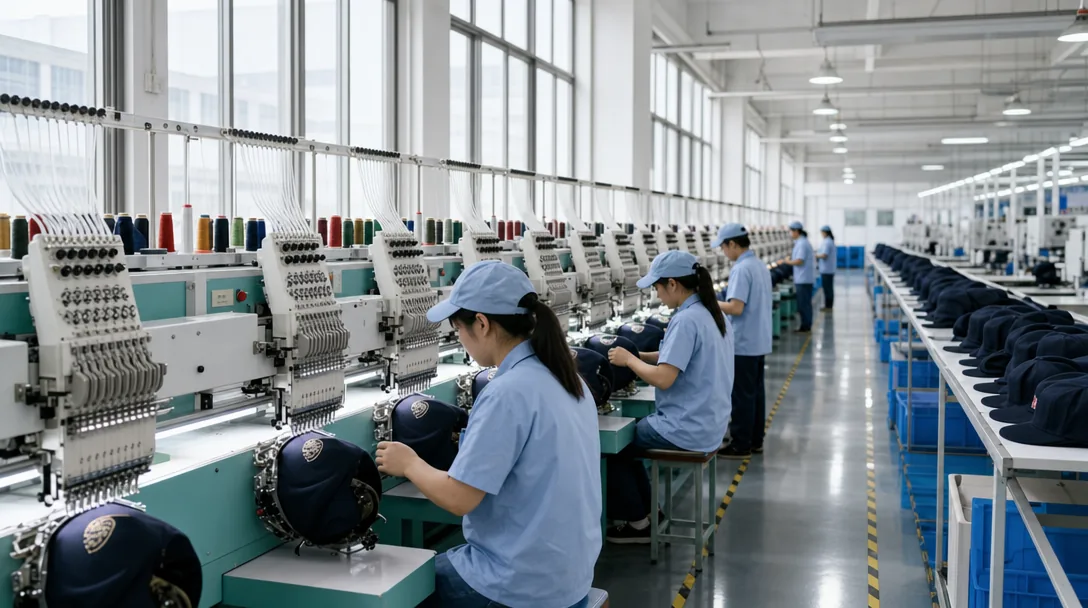
For brand owners, wholesalers and procurement teams entering the custom headwear category, ball caps for women: a 2026 sourcing playbook for international buyers (2026 update) is one of the highest-leverage decisions you will make. Get it right and your unit economics, retail story and reorder cycle all improve. Get it wrong and you carry the cost for years.
Dad Hats for Men
A true dad hat is defined by collapse and handfeel, not by lazily labeling any 6-panel cap “relaxed.” The pattern that separates it from the cleaner, more structured shapes often used in ball caps for women is an unstructured low crown, typically 15.5-16.5 cm, with no front buckram or only very light 40-60 gsm fusible support, plus a pre-curved visor around 7.0-7.5 cm. Fabric choice matters more than most buyers think: 260-300 gsm brushed cotton twill, washed chino twill, and peach-finish cotton hold the right drape after enzyme or pigment wash, while sub-240 gsm cloth often wrinkles at the front panel and twists after finishing. Lock the trim package before sampling starts: self-fabric strap with brass buckle and tuck-in, tri-glide, or D-ring closure; 6 or 8 visor stitch rows; embroidered or self-fabric eyelets; and a sweatband in cotton twill or microfiber depending on target FOB. If the crown is too tall or the fusing too stiff, the cap stops reading as a dad hat and starts looking like a youth baseball shape.
Most production failures on washed dad hats show up in embroidery and color control, not in basic sewing. Low-profile washed crowns need digitizing rebuilt for reduced panel tension, especially over the center seam; otherwise even good Tajima, Barudan, or ZSK heads will produce tunneling, puckering, and broken fill edges. For bulk, 40 wt polyester thread is usually the safer call than rayon because wash fastness, abrasion resistance, and shade consistency hold better lot to lot. Write measurable tolerances into the PO: Delta-E below 1.5 to approved lab dip under D65 lighting, finished circumference 58 cm +/- 1 cm unless graded otherwise, and logo position tolerance no looser than +/- 3 mm. In Yiwu and Dongguan, 2026 MOQ is usually 144-300 pcs per colorway, with FOB around $2.10-$3.40 for a basic one-location brushed-twill dad hat and $3.80-$5.20 once you add heavy wash, custom inside taping, seam-crossing embroidery, or branded metal hardware. Inspection should run at AQL 2.5, but tighten visual checks on visor symmetry, closure alignment, back-strap bartacks, sweatband waviness, and buckle plating consistency; those defects generate returns faster than a slightly uneven inside seam.
Country Hats for Men
Country hats for men can share a sewing line with ball caps for women, but they fail faster when the wash standard is vague. Buyers usually want a broken-in hand and sun-faded character without losing crown shape, so the spec has to control both structure and finishing. The most reliable base is a 6-panel unstructured cap in 220-280 gsm cotton twill, washed chino, or brushed canvas; trucker versions typically pair a 100-140 gsm polyester mesh back with a 2.0-2.3 mm PE visor insert to prevent edge warping after wash. If you want a quote that survives sampling, lock the crown height in centimeters, visor length and pre-curve angle, front buckram yes or no, sweatband composition, closure type, back opening width, stitch count, and the exact wash recipe tied to an approved sample rather than a verbal note like "vintage."
Color control is where a lot of country programs go sideways. Body fabric should be approved to Pantone TCX with a post-wash Delta-E target under 1.5; approving shade before laundering is how you end up with one carton reading tobacco brown and the next reading muddy olive. If the design needs abrasion, seam fade, or edge distressing, mark every hit point on the sealer sample, because operators will interpret "worn look" very differently across lines. MOQ is usually driven by finishing, not silhouette: a plain washed twill cap with direct embroidery is workable at 144-300 pcs per colorway, while enzyme wash, rope trim, mixed-fabric visor, faux suede applique, or patchwork panels usually push the floor to 300-500 pcs due to yield loss and shade sorting.
For 2026 buying, realistic FOB ranges in Zhejiang and Dongguan are $2.10-$3.40 for a basic unstructured embroidered cap, $3.20-$4.80 with woven patch or faux suede detail, and $2.60-$4.20 for a foam-front mesh trucker. The claim drivers are consistent: bill skew, embroidery puckering on soft fronts, wash tone drift, loose back-arch seams, and snap misalignment in the 2-4 mm range. Inspect to AQL 2.5 with head circumference tolerance at plus or minus 0.5 cm, and test dark pigment shades for crocking, perspiration, and light fastness before shipment. On washed cotton, Tajima or Barudan embroidery heads need lower top-thread tension and revised underlay so the logo does not sink after laundering. If men’s Western styles sit next to ball caps for women in one collection, align trims and color standards but keep separate fit blocks: women’s caps usually need a lower crown, a narrower back opening, and cleaner internal taping.
Toilet Bolt Caps
Most buyers use “toilet bolt cap” loosely, which is how trim problems start. On caps, the part is usually a top button shell, a visor sandwich end cap, or a decorative cover hiding a rivet or post. Those are not interchangeable. For ball caps for women, the crown is often shallower, the front panel softer, and the profile cleaner, so a 12 mm dome that works on a 58 cm structured men’s cap can look oversized on a low-profile 56–57 cm style. A usable tech pack should call out location, outer diameter in mm, dome height, wall thickness, shank or post length, and attachment method—press-fit, prong, screw-back, or glued decorative cap. Material choice matters too: injection-molded ABS and POM/acetal are standard for lightweight color-matched parts, while stamped brass or aluminum is used when the design needs a metallic read. In practice, matte molded parts matched to Pantone TCX or a coated Pantone reference within Delta-E 1.0–1.5 hold up better than bright plating on women’s fashion caps, because they avoid cold-touch complaints, fingerprinting, and visible edge wear after repeated packing and unpacking.
Specify performance numbers, not vague words like “good quality.” I would lock gloss level, require nickel-free plating if metal is used, define color tolerance, and set a minimum pull-force target after attachment; 6–8 kgf is a reasonable baseline for small decorative domes on finished caps. For humid or coastal markets, 24–48 hours neutral salt spray is not overengineering—it is cheap insurance against red rust, pitting, and plating lift. MOQ also changes fast once the part is custom-tooled: stock hardware may run at 1,000–2,000 pieces, while a custom logo dome or new mold can push the trim minimum to 5,000–10,000 pieces even if the cap order is only 300–500 units. Cost usually lands around $0.02–0.05 per cap for stock molded parts, $0.06–0.15 for plated metal, and above $0.20 once tooling is spread over a short run. Inspect these parts like a visible component, not a throwaway accessory: trim approval before bulk, AQL 2.5 visual inspection at 30–50 cm, plus pull and rub tests on the finished assembly. Around embroidery zones run on Tajima, Barudan, or ZSK heads, confirm post length against stitch buildup and sweatband construction so the hardware does not telegraph through the crown or distort after final pressing.
Embroidered Caps Wholesale
Digitizing before the cap body is locked is the fastest way to waste money on embroidered ball caps for women. A file that runs clean as 3D puff on a 6-panel 80/20 acrylic-wool snapback with a 9.0-9.5 cm crown will usually collapse on a low-profile women’s cotton twill cap with a 7.5-8.0 cm front height, soft buckram, and a narrower visor curve. Freeze the blank spec before sampling: crown height, front-panel structure, visor length and radius, seam allowance at the center front, sweatband material and width, closure type, and finished wearable circumference. The size label is not enough. A cap marked 58 cm often wears closer to 56.5-57.0 cm once you install a 28-32 mm twill sweatband, a tuck strap, and metal buckle hardware, especially on washed cotton where shrinkage after finishing can take another 0.5 cm out of the fit. The embroidery spec needs the same discipline as the pattern spec. Call out stitch-count range, fill density, satin-column width, thread type equivalent to Madeira Classic 40 or Gunold Poly 40, Pantone TCX target, backing weight, and the machine family the sample was run on; Tajima, Barudan, and ZSK heads do not behave identically on brushed twill or pigment-washed chino. On softer women’s caps, front-logo fills should usually stay around 0.38-0.42 mm spacing unless the exact shell fabric has been tested, because aggressive density creates puckering, panel torque, and a forehead feel that retail customers notice immediately. In early 2026, realistic China pricing for a stock 6-panel cotton twill cap with flat front embroidery is about FOB Ningbo $2.10-$3.40 at 300 pcs. Add side embroidery, garment wash, custom metal trim, or melton blend shells and the range moves to roughly $3.80-$5.50; 3D puff typically adds $0.18-$0.35 per location, and custom inside taping another $0.12-$0.25.
Final inspection should focus on the defects that survive packing but get rejected at retail: logo registration drifting more than 2 mm off center, edge bite on satin borders, loose bobbin loops under the sweatband, seam grin at the front-panel join, visor topstitch mismatch, and thread-shade variance beyond Delta-E 1.5 against the approved standard. AQL 2.5 is the right baseline for most wholesale programs, but it only works if the factory also runs an inline first-off check after the initial embroidery batch. That is where bad underlay, incorrect cap-frame tension, or excessive pull compensation can still be corrected before hundreds of panels are sewn into finished units. On dense women’s logos, I also want panel distortion checked flat before assembly, not only after the cap is closed, because once the shell is topstitched into the sweatband the root cause gets hidden. Fit control is just as important as stitch quality for ball caps for women. Too many factories start from a men’s baseball-cap block, reduce circumference, and call it a women’s fit, but the actual wear changes once you add embroidery mass, heavier sweatbands, and buckle hardware. A nominal 58 cm cap with a dense 8,000-10,000 stitch front logo can feel smaller, hotter, and stiffer than the pattern suggests, particularly in brushed cotton twill or garment-washed chino. The practical control point is the PP sample: measure finished wearable circumference, strap adjustment range, visor width, crown depth, and total cap weight in grams, then approve the embroidery and cap body together as one engineered item. If blank and decorated units are bought in the same program, keep them on the same fit block; otherwise carton assortments, replenishment planning, and size consistency drift within one shipment.
Wholesale Embroidered Caps
Embroidery quality is set before the machine starts. For wholesale embroidered caps, lock the body spec first: structured cotton twill at 280-320 gsm, brushed chino at 220-260 gsm, or microfiber polyester at 140-180 gsm each takes needle penetration, backing, and thread tension differently. A file punched for a flat panel will usually distort on a cap frame unless the digitizer rebuilds it for Tajima, Barudan, or ZSK cap drivers with proper center-walk underlay, pull compensation, and clean travel paths. As a rule, keep minimum satin width around 1.2-1.5 mm, avoid tiny counters under 0.8 mm, and treat 5,000-12,000 stitches as the safe range for most front logos. Once density climbs too high on lighter shells, you start seeing tunneling, puckering, and front-panel collapse around the sew field. For ball caps for women, that risk increases because many commercial women’s fits use a lower crown, narrower face width, and shorter bill than standard promo blanks, so a logo that looks balanced on a generic unisex body can read oversized and top-heavy after sewing.
A usable RFQ should read like a factory spec sheet, not a brand deck. Call out fiber content, gsm tolerance, buckram weight, visor insert type, sweatband material, closure hardware, seam tape, stitch count, embroidery location, backing, and packing method. For color, issue separate Pantone references for shell and thread, then set a realistic lab-dip or strike-off target such as Delta-E below 1.5 to 2.0 under D65; asking for an “exact match” across dyed fabric and trilobal polyester thread is amateur hour because sheen shifts under TL84, LED, and daylight. On stock bodies, MOQ is usually 144-300 pieces per colorway; full cut-and-sew programs generally start at 500-1,000 because pattern grading, dye lots, and custom trims add real setup cost. In Yiwu or Dongguan, a standard embroidered cotton cap typically lands around $2.40-$4.90 FOB at volume, while washed twill, moisture-wicking sweatbands, metal clasp hardware, or 3D puff embroidery can push FOB into the $5.80-$7.80 range.
Inspection is where embroidery programs either protect margin or quietly destroy it. The defects that matter are off-center logos, thread breaks buried inside fills, loose backside trimming, visor asymmetry above 3 mm, crown-height variation between cartons, oil staining, and puckering from over-digitized fills. Use a measurement sheet that controls logo placement within ±2 mm, circumference within ±1 cm, and crown height and bill length by size set; then check shading under D65 or TL84, not warehouse fluorescents. AQL 2.5 works for most export cap programs, but embroidery-heavy styles need tighter visual gates because a cap can pass dimensions and still fail on shelf. Our standard practice is to add checks for registration, thread fastness, backside cleanup, and carton compression, since lower-profile women’s bodies deform faster in transit. Buyers sourcing ball caps for women should evaluate stitch quality and silhouette together; a technically clean embroidery file will not rescue a cap that fits the wrong head shape or loses its front-panel line after packing.
Best Baseball Caps for Men
The best men’s baseball caps sell on shape discipline, not decoration, and that is exactly why buyers sourcing ball caps for women should not treat a men’s block as a safe unisex shortcut. A reliable men’s commercial spec is still a 6-panel structured cap with 3.0-3.5 mm buckram in the front panels, crown height around 16.0-17.0 cm, and a pre-curved PE visor held to left-right symmetry within ±2 mm. For shell fabric, 10x10 brushed cotton twill at 260-280 gsm remains the easiest volume choice because it supports 3D puff or flat embroidery without panel collapse, hides seam grin better than 180-220 gsm chino, and keeps its blocking after sea transit. If the aesthetic is workwear rather than athletic, 12 oz denim, 8-10 oz enzyme-washed canvas, or waxed cotton reads more authentic than shiny polyester, but each increases sewing risk: denim can torque at the visor join, and waxed fabrics will show needle marks immediately if tension and needle point are wrong. Men’s caps also tolerate a more aggressive front-panel stiffness than most ball caps for women, which usually need lower crown depth and a cleaner back profile to avoid oversized fit complaints.
The suppliers worth keeping are the ones that control geometry and color, not just embroidery output. On logo-heavy styles, Tajima, Barudan, and ZSK heads will all sew acceptable results if the digitizing is built for the fabric: edge-run underlay, pull compensation tuned to twill grain, and stitch density kept around 0.38-0.42 mm for midweight cotton instead of the usual overpacked file that tunnels and puckers. A serious tech pack should call out closure type, back opening width, sweatband material and gsm, visor curve, eyelet finish, Pantone TCX reference, and acceptable Delta-E tolerance—ideally ≤1.0 to lab dip and ≤1.5 between bulk lots under D65 light. FOB China on a basic brushed-cotton men’s cap with flat embroidery usually sits around $2.10-$3.40 at 300-1,000 units; washed treatments, rope trims, applique, metal adjusters, or specialty labels push that to $3.80-$5.50. For inspection, I would hold the style at AQL 2.5 and focus on visor symmetry, crown skew, top-button centering, SPI consistency, buckle corrosion after salt-humidity exposure, embroidery backing exposure, and carton compression after 24 hours of stacking—because most claims come from shape drift and finishing faults, not catastrophic failures. Shared fabric and trims between men’s caps and ball caps for women can help MOQ efficiency, but the pattern, visor proportion, and fit tolerance should still be split at the block stage rather than copied across both programs.
Working with CrownsForge for ball caps for women programs
Fit is the first commercial risk in ball caps for women, not unit price. A women’s cap that is only 8-10 mm too tall in the front crown or 3-4 mm too long in the visor reads oversized immediately, especially on lower-profile fashion fits. The only reliable starting point is a measured tech pack built from wear-test data, not a unisex block with a smaller label. We usually lock head opening tolerance at ±0.5 cm, sweatband width at 30-32 mm, visor length at 70-72 mm, and front crown height at 155-165 mm depending on whether the body is unstructured, soft-structured with fused backing, or full buckram. For 6-panel styles in 108 x 56 cotton twill at 260-280 gsm, brushed canvas around 240 gsm, or peach-finish chino, a stock-block prototype is typically 5-7 working days. If the buyer wants a custom paper pattern, branded seam taping, metal adjuster hardware, and revised grading, 10-14 working days is the realistic sampling window.
MOQ discipline matters more than most buyers think because decorative complexity compounds faster on women’s programs than on basic promo caps. A practical opening run is 144-300 pieces per colorway when shell fabric, sweatband, closure platform, and core trims stay shared. Once you add 3D embroidery, custom woven labels, dyed-to-match sandwich visor inserts, logo buckles, or enzyme-wash finishing, the efficient range usually shifts to 300-500 pieces because trim liability, machine setup, and hand-finishing time all increase. Fine-detail decoration also needs tighter process control: Tajima, Barudan, or ZSK heads should run lighter underlay and lower stitch density on softer twills, or small text under 4 mm closes up and the panel puckers. Approved color should be tied to Pantone TCX references, with bulk shade variation controlled to about Delta-E 1.5 when substrate and wash allow it. For release, the baseline should be inline inspection plus final AQL 2.5 covering logo position, crown symmetry, visor alignment, seam slippage, needle damage, and oxidation on metal trims, backed by current sedex-audit-cap-supplier-guide.html">BSCI 2.0 or Sedex SMETA 4-Pillar documentation and REACH-aligned chemical controls.
Frequently Asked Questions
Can I order a sample before bulk production?
Yes. We strongly recommend approving a pre-production sample before mass production. Samples are charged at 35 to 60 USD each plus express shipping, fully refundable against confirmed bulk orders over 500 pieces.
What is the minimum order quantity (MOQ) for custom hats?
Our standard MOQ is 100 pieces per design and color, with sampling available from 1 piece. For complex multi-color logos or premium fabric upgrades, the MOQ can be lowered with a small per-piece surcharge.
How long does production take?
Sampling takes 7 to 12 days. Bulk production runs 20 to 30 days depending on quantity, fabric availability and decoration complexity. Inspection and packing adds another 3 to 5 days before shipment.
Do you support sustainability certifications?
Yes. We work with GOTS organic cotton, GRS-certified recycled polyester, OEKO-TEX Standard 100 fabrics, and are BSCI and Sedex audited. Certification documentation can be provided per order.
What file format should I send for my logo?
Vector files (AI, EPS, PDF) are ideal. High-resolution PNG or JPG at 300 dpi on transparent background works as a fallback. Provide Pantone color references for accurate reproduction.
What should I know about custom trucker hats bulk?
When evaluating custom trucker hats bulk, the key considerations are construction quality, decoration capability, MOQ flexibility and lead time. Cover everything buyers ask about dad hats for men: how it's manufactured, what specs to request from a factory, typical MOQ and pricing, common quality issues to inspect for, and how this ties back to the broader ball caps for women sourcing decision. Cover everything buyers ask about country hats for men: how it's manufactured, what specs to request from a factory,…
What should buyers know about ball caps for men?
When evaluating ball caps for men, the key considerations are construction quality, decoration capability, MOQ flexibility and lead time. Cover everything buyers ask about dad hats for men: how it's manufactured, what specs to request from a factory, typical MOQ and pricing, common quality issues to inspect for, and how this ties back to the broader ball caps for women sourcing decision. Cover everything buyers ask about country hats for men: how it's manufactured, what specs to request from a factory,…
What should I know about new era blank hats wholesale?
When evaluating new era blank hats wholesale, the key considerations are construction quality, decoration capability, MOQ flexibility and lead time. Cover everything buyers ask about dad hats for men: how it's manufactured, what specs to request from a factory, typical MOQ and pricing, common quality issues to inspect for, and how this ties back to the broader ball caps for women sourcing decision. Cover everything buyers ask about country hats for men: how it's manufactured, what specs to request from a factory,…
How does ordering custom golf hats for men work?
When evaluating custom golf hats for men, the key considerations are construction quality, decoration capability, MOQ flexibility and lead time. Cover everything buyers ask about dad hats for men: how it's manufactured, what specs to request from a factory, typical MOQ and pricing, common quality issues to inspect for, and how this ties back to the broader ball caps for women sourcing decision. Cover everything buyers ask about country hats for men: how it's manufactured, what specs to request from a factory,…
Looking for a reliable hat manufacturer in China?
CrownsForge has produced custom hats for 800+ brands across 40 countries. From 100-piece launches to 100,000-piece retail programs, we deliver on time and on spec.
Get in touchRelated guides
Custom Corduroy Dad Hat Bulk: A 2026 B2B Sourcing Guide
Read article →
Promotional Caps & Corporate Gifts: Bulk Custom Hats for Brand Events
Read article →
Cap Sample Cost Negotiation Without Losing Quality Control
Read article →We hope this guide demystifies ball caps for women: a 2026 sourcing playbook for international buyers (2026 update) and helps you move forward with confidence. If you have questions specific to your project, our English-speaking sales engineers are one message away.