
Acrylic Beanie: Properties, Costs and How to Spec It Right - Cost & MOQ Breakdown
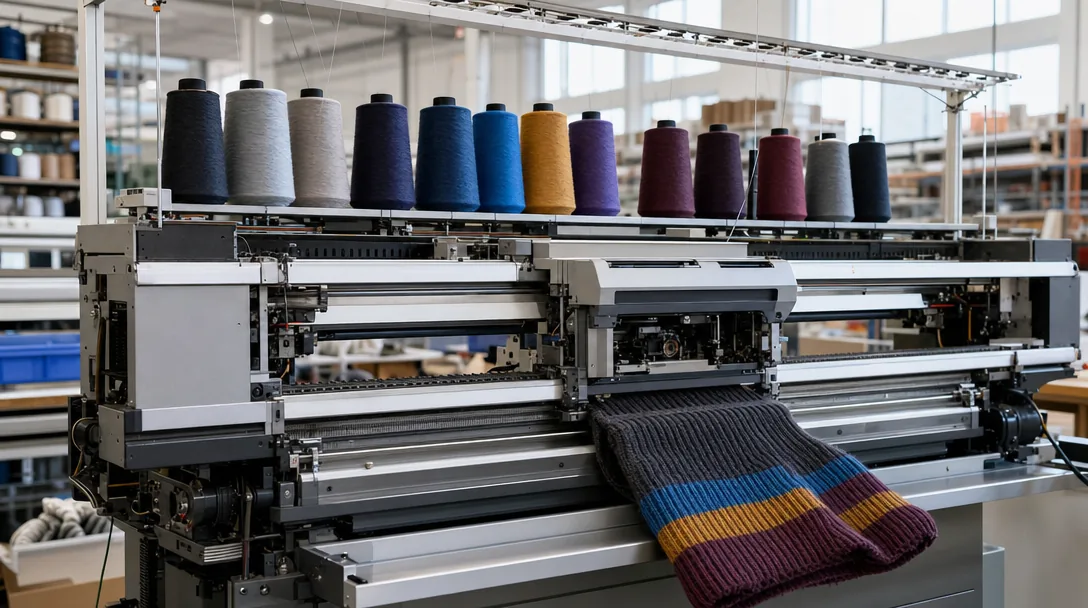
Acrylic Beanie: Properties, Costs and How to Spec It Right - Cost & MOQ Breakdown is one of the most-asked questions we receive from international buyers, and for good reason. With dozens of factories competing for your order and an alphabet soup of technical terms in every supplier quote, even experienced importers can feel lost. This guide consolidates what we have learned producing custom hats for clients in 40+ countries.
Merino Wool Beanie
Merino wool beanies earn their premium on thermal regulation, moisture buffering, and a softer hand, but they are less forgiving to manufacture than an acrylic beanie once you move from salesman sample to bulk. “100% merino” is not a usable spec on its own. A purchase order should lock fiber diameter, blend, and yarn construction in writing—for example, 100% merino 19.5 micron, 2/30Nm, or 50/50 merino-acrylic, 2/26Nm—plus machine gauge such as 7GG for a heavier fisherman rib or 12GG for a cleaner retail hand. Also call out finished weight, cuff depth, body height, relaxed opening, and stretch recovery after finishing. Most commercial programs are knitted on Stoll or Shima Seiki flat machines, then linked, washed, steam-blocked, and measured again after drying because wool moves more than stock acrylic. Color needs the same discipline: specify Pantone TCX, require lab dips or handloom approvals, and set a shade tolerance such as Delta-E under 1.5 to approved standard under D65 lighting. Put performance into measurable terms as well—dimensional change under 5% after three home-laundry cycles and minimum pilling grade 3.5 under ISO 12945 are realistic baselines for mid-tier retail.
Cost and MOQ are driven less by the beanie silhouette than by micron grade, dye-lot minimums, and color complexity. If a spinner already holds a close stock shade, a 50/50 merino blend can often run at 300 to 500 pieces per color; once you move to custom yarn dyeing, 100% merino usually needs 500 to 1,000 pieces because the dye house wants roughly 20 to 30 kg per shade to keep color yield stable. In the current China sourcing range, a basic 1x1 rib 50/50 merino blend typically sits around $2.80 to $4.20 FOB at 500 pieces, while 100% merino in the 19.5 to 21.5 micron band is more realistically $4.80 to $7.50 FOB with folded cuff construction, woven labels, and standard wastage built in. That spread is why premium winter capsules stay in merino while teamwear, giveaways, and price-sensitive ecommerce often shift back to an acrylic beanie. Bulk approval should focus on the defects that actually sink repeat orders: barre, yarn contamination, crown seam grin, needle lines, harsh handle from substituted coarser fiber, and shrinkage after blocking. Our standard practice is to release only after AQL 2.5 inspection, measurement checks to the sealed sample, and shade comparison under D65 on navy, black, charcoal, and heather lots.
Cotton Beanie
A cotton beanie is usually a cut-and-sew item built from jersey or rib fabric, not a fully fashioned winter cap like an acrylic beanie running off a 7-gauge or 12-gauge knitting program. The safest production specs are 180-240 gsm single jersey for lightweight fashion fits, 220-320 gsm 1x1 rib for better recovery, or a 92/8 to 95/5 cotton-elastane blend when you need the opening to hold shape after repeated wear. “100% cotton” is not a usable factory spec by itself. Lock the BOM down with fiber percentage, gsm tolerance of ±5%, finished head opening, crown height, panel count or tubular construction, and a stretch-recovery target such as less than 8% growth after a 30-minute relaxation test. For baby, organic, or EU retail programs, require azo-free dyestuffs, formaldehyde compliance, and clear handfeel standards after wash, because enzyme wash and silicone softener can improve first touch while also increasing torque, pilling, or harshness if the finishing line is not controlled.
The real cost driver on cotton beanies is process stability, not whether the style looks simple. A basic adult 95/5 cotton-spandex beanie with folded cuff, 4-thread overlock, and one center-fold woven label usually lands around $1.10-$1.80 ex-factory at 500-1,000 pieces. Move to 100% combed cotton, reactive dyeing, Pantone TCX lab dips, flatlock seam construction, and branded trims, and the price is more realistically $1.90-$2.70. MOQ is commonly 300-500 pieces per color on stock greige fabric, but custom shade matching, organic yarn, or low Delta-E color tolerance can push practical MOQ to 800-1,000 pieces. The failure points are predictable on the factory floor: seam grin at the overlock, spiraling from off-grain cutting, opening growth from weak recovery, crocking on dark shades, and wash shrinkage above 5%. I would inspect to AQL 2.5, check measurements on at least 20 pieces per lot, and reject any shade set drifting materially from the approved lab dip. Cotton wears cooler and feels cleaner in mild weather, but it will not retain loft, thermal insulation, or edge structure the way an acrylic beanie does.
Black Beanie Hat
Black is the fastest way to expose a weak spec, because every defect reads harder on a dark knit. For a black acrylic beanie, don’t approve “black” and move on; lock the yarn composition, count, machine gauge, stitch density after finishing, and target weight before PP sampling. In Zhejiang, the commercial baseline is 100% anti-pilling acrylic, usually 2/28Nm or 2/30Nm, knitted on 7GG or 9GG flat machines in 1x1 rib. A cuffed retail beanie that actually holds shape normally lands at 75-95 g finished weight, with a crown depth of 21-23 cm and cuff depth of 6.5-8.0 cm after wash and steam setting. If the piece comes out at 68-72 g, it often looks acceptable on first inspection but collapses at the crown after a few wears. Specify finished measurements and post-finishing stitch density, not greige dimensions off the machine, because acrylic relaxation and heat-setting shift the final hand and size more than many buyers expect. Color control on black is less forgiving than buyers think, especially when the beanie ships with matching outerwear, labels, or patches. Use Pantone TCX as a visual reference only; the real approval should be the bulk yarn lab dip under D65 and TL84, tied to the exact yarn lot. If the beanie has to sit next to fleece, nylon, or brushed cotton in the same program, set a Delta-E target below 1.0, otherwise one mill’s jet black can read blue-black and another can read charcoal under store lighting. This matters more on acrylic because luster and light reflection differ from reactive-dyed cotton or disperse-dyed polyester trims. At CrownsForge, we also note whether the black must align with woven labels, silicone patches, or pom yarn, since mismatched blacks are what make an acrylic beanie look cheap even when the knitting itself is fine.
The knit is straightforward; finishing and decoration are where margin gets lost. A standard black acrylic beanie is linked at the crown, washed, steamed over head forms, thread-trimmed, metal-detected, and packed flat, but the spec sheet should go further than size and logo placement. Call out pilling grade 3.5-4.0 minimum after 2,000 rubs, stretch recovery above 90% after three extension cycles, and azo-free dyestuff compliance. Black also shows oil contamination, yarn joins, and horizontal barring more than heather or bright colors, so inspection should explicitly flag needle oil marks, cuff rolling, torque after wash, and crocking onto white care labels. AQL 2.5 is workable for bulk, with measurement tolerances around ±0.5 cm on width and ±1.0 cm on height. Decoration needs to be engineered for knit, not copied from a baseball cap file. A logo digitized for Tajima, Barudan, or ZSK cap embroidery heads will often run too dense on a soft rib acrylic beanie, causing tunneling, puckering, or a stiff forehead panel. Reduce stitch density, open the underlay, and test whether cutaway backing or a heat-seal patch gives cleaner stabilization. MOQ and price are driven mainly by yarn status and trim complexity. For stock black yarn, 300-500 pcs per color is normal; once you ask for custom-dyed yarn, matching pom, woven loop label, barcode sticker, and private polybag, most factories need 800-1,000 pcs to keep shade consistency and wastage under control. Current FOB China pricing for a plain cuffed acrylic beanie at 1,000 pcs is typically $1.15-$1.80, while fisherman rib, jacquard logos, fleece lining, or recycled acrylic usually pushes it to roughly $1.95-$3.40.
Slouchy Beanie
Crown depth is the whole point of a slouchy acrylic beanie, so “one size” is not a usable spec. On the factory floor, we usually separate true slouch from a standard long beanie by finished body length: 28-32 cm for adult slouch, versus 22-24 cm for a regular cuff style. Common constructions run on 7-gauge or 12-gauge flat knitting in 100% acrylic or a 70/30 acrylic-nylon blend, with relaxed width at 21-23 cm and finished weight around 65-95 g depending on gauge, yarn count, and whether the bottom has a 6-8 cm cuff. If you leave recovery undefined, bulk will drift fast, so set a stretch-and-recovery tolerance after a 30-minute rest; a practical standard is width recovery within plus or minus 1.0 cm after moderate extension. Lock stitch structure as well—1x1 rib, 2x2 rib, or single jersey do not wear or hang the same—and define hand feel upfront as standard, brushed, or anti-pilling grade.
Color and cost are where buyers usually get burned. Dark olive, charcoal, and washed black can move visibly between lab dip and bulk on acrylic yarn, especially across different spinning lots, so reference Pantone TCX and cap shade variance at Delta-E 1.5 for core colors; for black, also define undertone so you do not end up with a brown cast under store lighting. A simple slouchy acrylic beanie with a center-fold woven label typically prices around USD 1.10-1.80 FOB China at 300-500 pieces per color, assuming standard rib construction and no special finishing. Once you add jacquard graphics, reflective yarn, fleece lining, engineered stripes, or custom low-volume colors, MOQ usually shifts to 500-1,000 pieces because of yarn setup waste and longer sampling time, and FOB is more realistically USD 2.20-3.40. For bulk approval, inspect to AQL 2.5 and watch the failure points that actually show up in wear: inconsistent body length, weak rib recovery, crown seam spiraling, yarn contamination in light shades, and pilling after abrasion. A slouchy acrylic beanie exposes bad tension control immediately; there is nowhere for a sloppy silhouette to hide.
Cotton Beanie Men
For a men’s cotton beanie, knit construction decides performance more than the fiber content on the label. A factory can quote the same 100% cotton beanie in 21s or 32s ring-spun yarn and still deliver very different results depending on gauge, rib, and stitch density. If you leave those open, cost cutting shows up fast as bagging, torque, poor rebound, and a crown that goes limp after a few wears. In production, 1x1 or 2x2 rib at 7GG to 12GG is the safe commercial range for shape retention; loose single-jersey bodies are cheaper but far less stable. Most single-layer men’s styles run about 85 to 130 grams per piece, while double-layer or cuffed builds typically land at 140 to 190 grams depending on finished height and yarn count. Against an acrylic beanie, cotton has higher moisture regain and weaker elastic memory, so it relaxes faster unless the tech pack locks finished head circumference, flat width, stretch range, and wash shrinkage at no more than 5%.
The best specs are blunt. Call out finished height, cuff depth, target weight, needle gauge, courses and wales per inch, wash treatment, Pantone TCX, and bulk shade tolerance at Delta-E 1.5 max. If you need better recovery, a cotton-rich blend with 3% to 8% spandex is realistic, but that changes hand feel, knitting behavior, and cost, so it should be approved before sampling instead of left to the mill. Decoration also needs different handling than an acrylic beanie: on a soft cotton face, dense embroidery will pucker unless the file is re-digitized with lower stitch density and proper underlay, then run with cutaway backing on Tajima or Barudan heads. Most men’s cotton beanies are either cut-and-sew from tubular knit or fully fashioned and linked, and the recurring failures are predictable: spiraling seams, crown points that do not sit flat, yarn contamination in pale shades, and shade banding after wash. For stock yarn colors in Zhejiang, 300 to 500 pieces per colorway is workable; custom-dyed yarn usually pushes MOQ closer to 1,000 pieces per color. At 500 pieces, FOB is typically US$1.55 to $2.60 for a basic embroidered style, but enzyme wash, silicone patch, jacquard label, or retail packing can move the real number to US$2.80 to $4.20.
QC is where cotton separates good factories from clean-looking salesman samples. Run AQL 2.5 and check size tolerance at plus or minus 0.5 inch, stitch skips, loose yarn tails, seam symmetry, logo placement, and recovery after 10 manual stretch cycles. Dark shades such as black, olive, and navy also need crocking and perspiration colorfastness checks because complaints usually show up after first wear, not at inbound inspection. Our standard practice is to approve lab dips before knitting, then re-check bulk panels after wash because cotton shade drift is common, especially when enzyme or garment washing is involved. That commercial reality is why cotton sits in a different lane from the acrylic beanie: cotton gives a softer, drier hand and reads more premium in basic retail programs, but acrylic is still easier to control for winter weight, shape retention, and price consistency at scale. If the buyer wants fewer surprises in bulk, the spec has to control knit structure and finishing, not just fiber content.
100 Acrylic Beanie
A 100% acrylic beanie is straightforward to source only when the knitting spec is locked down; “100% acrylic” alone tells the factory almost nothing about hand feel, stretch recovery, or retail appearance. In practice, most suppliers are using acrylic staple yarn around Nm 28/2 to 32/2, knitted on 7G, 9G, or 12G machines depending on whether you want a chunky winter body or a tighter, cleaner face. A usable tech pack should call out yarn count, machine gauge, stitch structure, finished weight in grams, cuff depth, crown decreases, pom-pom construction if applicable, and relaxed head-circumference tolerance. For adult fits, ±1 cm is realistic after boarding; tighter tolerances usually create avoidable rejects unless the factory has already validated the pattern. If branded color matters, specify Pantone TCX and require lab dips within Delta-E 1.0 to 1.5 under D65 lighting, because black, red, and royal shades show dyelot drift fast on acrylic yarn.
Dimension control is where many acrylic beanie programs go off track. Acrylic will not shrink like cotton, but it does relax after steaming, boarding, and packing, so a body that measures correctly off the knitting machine can still grow 0.5 to 1.5 cm in finished height. Pre-production approval should therefore include pre-finish and post-finish measurements, finished weight, and a sealed reference sample showing the exact cuff turn-up and crown shape. On Stoll or Shima Seiki flat knitting lines, the usual causes of inconsistency are yarn lot variation and tension changes between shifts, not fiber composition. Commercially, a plain cuffed acrylic beanie is usually efficient at 300 to 500 pieces per color, while jacquard logos, marl yarns, contrast stripes, embroidery, or custom pom-poms tend to move workable MOQ to 500 to 1,000 pieces. In Zhejiang, a basic solid-color style typically lands around $1.10 to $1.90 FOB China at 500 pieces; jacquard branding, embroidery, woven patches, or custom packing can push it to $1.80 to $3.20. Final release should be at AQL 2.5, with extra attention on pilling, cuff symmetry, top linking strength, oil marks, needle lines, and logo distortion, especially for e-commerce orders where cosmetic defects drive returns.
Working with CrownsForge for acrylic beanie programs
Sampling speed decides whether an acrylic beanie program stays on schedule; FOB savings of $0.10 mean nothing if color and fit are still drifting in week three. On a clean tech pack, yarn shade approval usually takes 3 to 5 working days for a lab dip or stock-yarn match, then another 5 to 7 working days for the first prototype if gauge, cuff height, crown finish, pom spec, artwork size, and label placement are already locked. Custom trims add their own drag: woven labels, TPU tabs, hangtags, or printed belly bands typically need 2 to 4 extra days unless the supplier is pulling from approved stock. The safest first run is rarely the most creative one; it is usually a proven 1x1 rib or fisherman rib in 100% acrylic at 7-gauge or 9-gauge, then adjusting cuff depth and branding rather than changing the entire knit architecture. That is how you avoid the failures that show up immediately in wear tests and packed cartons: shallow crown depth, cuffs that relax and roll after steaming, and pom-poms heavy enough to pull the top off center.
MOQ is where buyers most often misread factory economics. A stock-color acrylic beanie can run efficiently at 144 to 300 pieces per colorway, but once you move into custom-dyed yarn, jacquard graphics, recycled-content blends, or bespoke trim packs, the practical MOQ usually shifts to 500 to 1,000 pieces per style. The reason is not arbitrary factory policy; it is the compound cost of yarn dye lots, machine setup, wastage on trial knitting, trim minimums, and broken carton ratios across sizes or color assortments. Decoration is another place where weak execution gets exposed fast. Acrylic yarn has more rebound than cotton jersey, so cuff embroidery needs proper pull compensation, underlay control, and backing weight matched to knit density before it ever goes onto Tajima or Barudan heads. Over-digitized logos will tunnel ribs, flatten the hand, and twist the cuff edge after steaming. In practice, the most reliable branding methods are flat embroidery, woven patches, merrowed emblems, silicone badges, and debossed PU tabs; if the artwork spans the full body, it should be knitted in as jacquard. Our standard bulk control is tech-pack review, yarn confirmation, stitch mockup, PP sample approval, inline checks, and final inspection to AQL 2.5, with retailer programs also requiring sedex-audit-cap-supplier-guide.html">BSCI 2.0 or Sedex SMETA 4-Pillar reports, needle-policy records, and color tolerance agreed in Delta-E terms. Basic FOB pricing usually lands around $1.10 to $2.80 per piece.
Frequently Asked Questions
How long does production take?
Sampling takes 7 to 12 days. Bulk production runs 20 to 30 days depending on quantity, fabric availability and decoration complexity. Inspection and packing adds another 3 to 5 days before shipment.
Can I order a sample before bulk production?
Yes. We strongly recommend approving a pre-production sample before mass production. Samples are charged at 35 to 60 USD each plus express shipping, fully refundable against confirmed bulk orders over 500 pieces.
What file format should I send for my logo?
Vector files (AI, EPS, PDF) are ideal. High-resolution PNG or JPG at 300 dpi on transparent background works as a fallback. Provide Pantone color references for accurate reproduction.
Do you support sustainability certifications?
Yes. We work with GOTS organic cotton, GRS-certified recycled polyester, OEKO-TEX Standard 100 fabrics, and are BSCI and Sedex audited. Certification documentation can be provided per order.
What logo decoration techniques do you offer?
3D puff embroidery, flat embroidery, woven patch, leather patch, PVC patch, screen printing, sublimation, applique and laser etching, all in-house with no subcontracting.
What should buyers know about bucket hat men?
When evaluating bucket hat men, the key considerations are construction quality, decoration capability, MOQ flexibility and lead time. Cover everything buyers ask about black beanie hat: how it's manufactured, what specs to request from a factory, typical MOQ and pricing, common quality issues to inspect for, and how this ties back to the broader acrylic beanie sourcing decision. Cover everything buyers ask about cotton beanie men: how it's manufactured, what specs to request from a factory, typical MOQ…
What should buyers know about nike bucket hats for men?
When evaluating nike bucket hats for men, the key considerations are construction quality, decoration capability, MOQ flexibility and lead time. Cover everything buyers ask about cotton beanie men: how it's manufactured, what specs to request from a factory, typical MOQ and pricing, common quality issues to inspect for, and how this ties back to the broader acrylic beanie sourcing decision. Cover everything buyers ask about merino wool beanie: how it's manufactured, what specs to request from a factory, typical MOQ…
What should buyers know about organic cotton hat?
When evaluating organic cotton hat, the key considerations are construction quality, decoration capability, MOQ flexibility and lead time. Cover everything buyers ask about cotton beanie: how it's manufactured, what specs to request from a factory, typical MOQ and pricing, common quality issues to inspect for, and how this ties back to the broader acrylic beanie sourcing decision. Cover everything buyers ask about black beanie hat: how it's manufactured, what specs to request from a factory, typical MOQ and…
What should buyers know about cotton beanie men?
When evaluating cotton beanie men, the key considerations are construction quality, decoration capability, MOQ flexibility and lead time. Cover everything buyers ask about cotton beanie men: how it's manufactured, what specs to request from a factory, typical MOQ and pricing, common quality issues to inspect for, and how this ties back to the broader acrylic beanie sourcing decision. Cover everything buyers ask about cotton beanie: how it's manufactured, what specs to request from a factory, typical MOQ and…
Is acrylic a good material for a beanie?
Durability That Lasts: A quality acrylic beanie can last for years with regular wear. The synthetic fibers resist pilling better than many natural materials, and they don't lose their shape over time. I have acrylic beanies that I've worn for five winters straight, and they still look and feel great.
Is cotton or acrylic better for hats?
Both cotton and acrylic beanies have special properties that do not irritate your skin. However, some consumers are allergic to natural fibres like cotton. So, they can rely on acrylic headwear. Cotton made of fine and curly fibres is very lightweight.
Do 100% acrylic beanies shrink?
100% acrylic beanies: Not reliably shrinkable. You might tighten the knit a little, but high heat can permanently damage the hat.
Is acrylic a good fabric for hats?
Acrylic closely resembles wool in appearance and properties. The fabric is soft, skin-friendly, breathable, virtually wrinkle-free, and provides warmth. Additionally, it is highly resistant to light, making it suitable for various items, including headwear.
Why are most beanies made of acrylic?
You get excellent warmth without the weight, softness without the itch, and durability without the high price tag. For most people, especially those who wear beanies regularly throughout the winter, acrylic offers the best overall package.
Looking for a reliable hat manufacturer in China?
CrownsForge has produced custom hats for 800+ brands across 40 countries. From 100-piece launches to 100,000-piece retail programs, we deliver on time and on spec.
Get in touchRelated guides
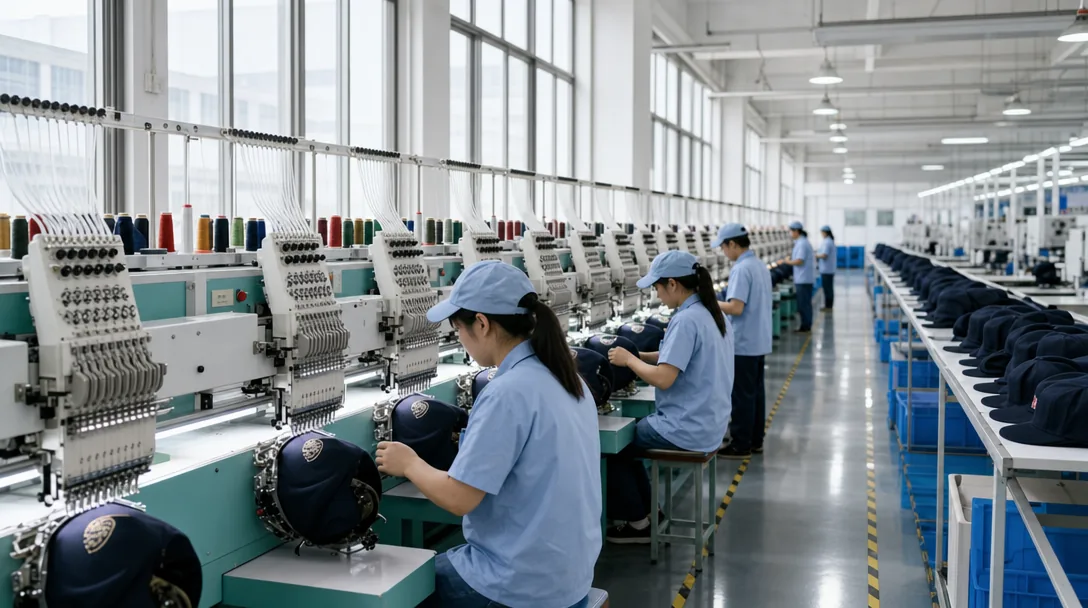
Bulk Trucker Hats Reorder Planning Guide for Custom Hat Buyers
Read article →
Custom Hats for Men: A 2026 B2B Sourcing Guide - Cost & MOQ Breakdown
Read article →
Kids' & Children's Cap Manufacturing: CPSIA Compliance and Sizing - 2026 Buyer's Guide
Read article →Sourcing custom hats does not have to be complicated. With the right manufacturing partner, clear specifications and a small upfront investment in sampling, you can launch a retail-quality product in 30 to 45 days.