
5-Panel vs 6-Panel Caps: Construction, Use Cases and Cost Compared - Cost & MOQ Breakdown
5-Panel vs 6-Panel Caps: Construction, Use Cases and Cost Compared - Cost & MOQ Breakdown is one of the most-asked questions we receive from international buyers, and for good reason. With dozens of factories competing for your order and an alphabet soup of technical terms in every supplier quote, even experienced importers can feel lost. This guide consolidates what we have learned producing custom hats for clients in 40+ countries.
The visual and structural difference
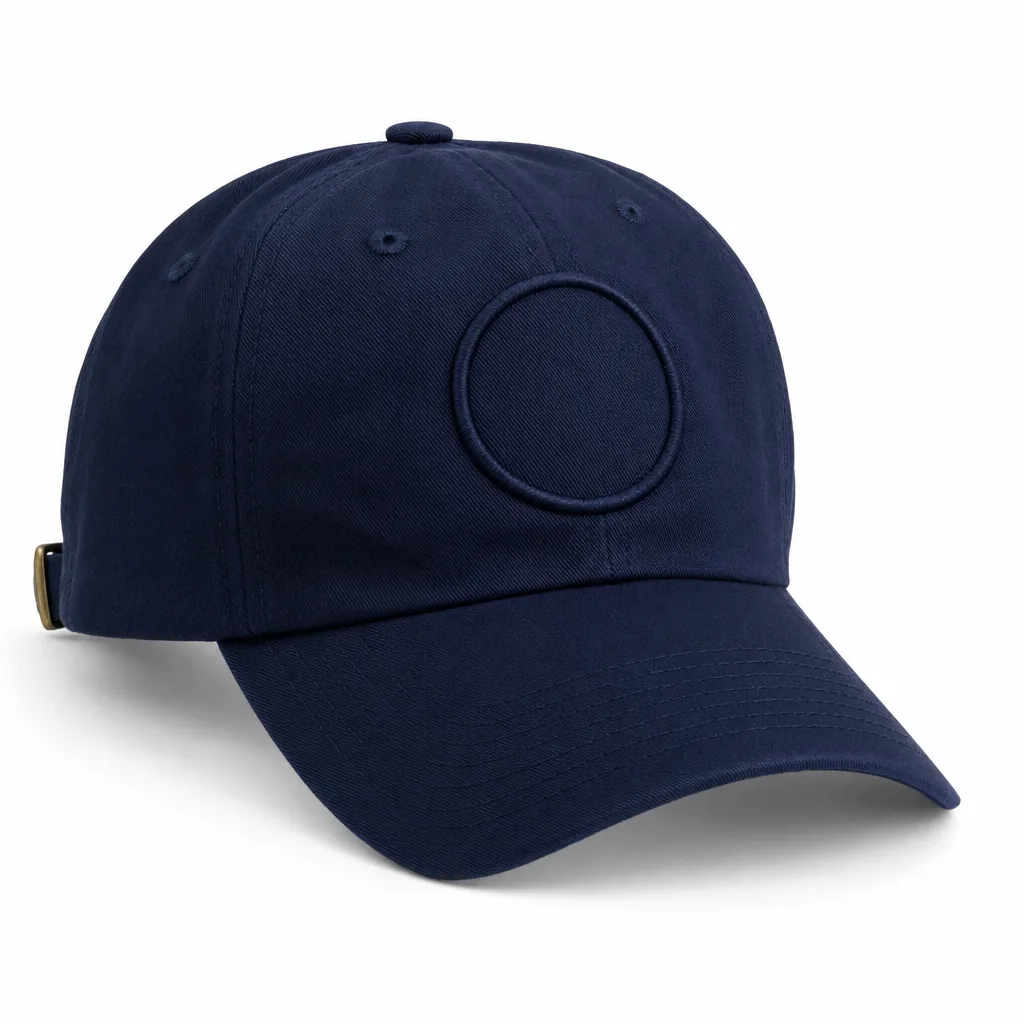
The first thing buyers notice in a 5 panel vs 6 panel cap is the crown architecture, not the brim. A 6-panel cap is built from two front panels, two side panels, and two back panels, with six seam lines converging at the button. That pattern naturally creates a rounder crown and a more familiar baseball shape, which is why it dominates teamwear, golf, work uniforms, and licensed promotional programs. A 5-panel cap deletes the center-front seam and replaces the two front pieces with one uninterrupted panel, then keeps two side and two back panels. On the factory floor, that single pattern change alters both appearance and handling: the face reads broader, flatter, and more rectangular, especially when crown height is pushed to 8.5-9.5 cm. By comparison, many standard 6-panel dad caps and low-profile baseball caps sit closer to 7.5-8.0 cm and look more contoured around the forehead. The visual difference also affects how the cap carries structure. A 6-panel front is broken by a center seam, so the crown tends to fold and recover more predictably during sewing, shaping, and packing. A 5-panel front presents a cleaner surface, but it also exposes every tension problem. If the front panel grain is even slightly off, or the operator pulls the shell unevenly by 2-3 mm while attaching the visor, the cap can show torque, rippling, or a twisted face much faster than a comparable 6-panel. That is why factories usually spec firmer support on structured 5-panels, often PE-coated buckram or fused backing around 180-220 gsm, then check crown symmetry, peak alignment, and front-panel distortion at final inspection under AQL 2.5. Our standard practice is to treat the 5-panel front as a display surface first and a sewing component second.
Artwork is where the structural gap becomes commercially important. On a 6-panel cap, any center-front embroidery has to cross a seam, which forces the digitizer to account for push-pull on both sides, compensate stitch density, and sometimes break satin columns so the logo does not climb or sink at the join. On Tajima, Barudan, or ZSK heads, that seam can also deflect the frame slightly on dense fills, especially above 10,000-12,000 stitches. A 5-panel cap avoids that problem because the front panel is continuous, giving you a cleaner decorating field for flat embroidery, 3D puff up to roughly 3 mm foam, screen print, woven labels, TPU patches, silicone badges, and sublimated emblems. For brands selling graphics first, that uninterrupted area is the real reason the style exists. The market reads the two shapes differently even when shell materials are identical. Put both silhouettes in 10x10 cotton twill at 240-280 gsm, washed chino twill at 220 gsm, nylon taslon around 105-120 gsm, or 14-wale corduroy, and buyers will still read the 6-panel as more traditional and athletic, while the 5-panel skews skate, surf, cycling, and streetwear. That is not marketing language; it comes from the seam map and crown face. The 6-panel looks like heritage baseball headwear because the front is segmented and rounded. The 5-panel looks more graphic and more modern because the crown gives the logo one flat stage instead of two curved halves.
Decoration sweet spots for each construction
Decoration is where a real 5 panel vs 6 panel cap decision gets made, because the front seam is not a design detail; it is a production constraint. On a 6-panel cap, the center-front seam splits the embroidery field, so compact artwork performs best: crests, varsity initials, simple block wordmarks, and badge-style logos. On structured 10x10 cotton twill, brushed chino, or 260-320 gsm poly-cotton with buckram, I usually keep dense centered embroidery around 45-55 mm wide if it crosses the seam, with minimum satin column width at 2.0-2.5 mm and small text no lower than about 4.5 mm cap height. Tajima, Barudan, and ZSK heads will sew across that seam cleanly, but only with proper digitizing: reduced fill density at the seam valley, edge-run underlay instead of heavy tatami buildup, and push-pull compensation tuned for the crown curve. Fine serif type, tight circles, facial features, and gradients are where 6-panel fronts fail first, especially once you add visor curvature and panel tension. A 5-panel cap earns its keep when the artwork needs uninterrupted real estate. One-piece fronts hold oversized flat embroidery, woven patches, TPU or silicone badges, screen-printed twill appliqué, and sublimated panels far better because there is no center seam distorting the geometry. On a mid-profile 5-panel with enough crown height, 80-100 mm front graphics are routine, and I have seen 110 mm work if the design is wide rather than tall and the panel is not collapsing at the top stitch. For sublimated 180-220 gsm polyester, serious factories should control shade within about Delta-E 1.5-2.0 to the approved standard, especially when matching brand colors or Pantone references. The catch is that single-panel fronts are less forgiving in QC: a 2-3 mm placement shift, a slight badge tilt, or uneven top-edge spacing reads immediately. That means tighter placement jigs, pre-production strike-offs, and stricter inline inspection than a small seam-tolerant logo on a standard 6-panel shell.
Cost usually follows decoration risk more than shell construction alone. A standard 6-panel with front embroidery is still the safest commercial setup because cap frames, sewing tolerances, and operator handling are mature across most factories, so rejection rates stay controlled if the logo respects the seam. Under normal AQL 2.5, simple front embroidery on a 6-panel is typically the lowest-risk route; buyers start spending extra when they force seam-crossing detail, tiny lettering, or high stitch counts that need multiple sample revisions. A 5-panel can be equally efficient for woven patches, printed badges, or clean flat embroidery, but the math changes fast with low MOQs, oversized front decoration, multiple applications, or strict branded color approval. Then you add extra digitizing, more strike-offs, more heat-transfer setup, and higher rejection exposure on symmetry and placement. The practical production rule is blunt: choose 6-panel construction for compact centered logos that can survive a seam, and choose 5-panel construction when the decoration is the hero and needs uninterrupted width. That is the useful answer to the 5 panel vs 6 panel cap question, not the usual style-only debate. Our standard practice is to approve any front graphic above roughly 80 mm on an actual sewn blank, not a flat panel swatch, because crown angle, fabric memory, sweatband tension, and visor curve all change how artwork reads after assembly. Buyers who skip that step usually end up disputing 1-2 mm in bulk, and in headwear decoration, those millimeters are exactly where clean production separates from expensive rework.
Cost difference and MOQ implications
At commercial volume, the cost gap in a 5 panel vs 6 panel cap program is usually smaller than buyers expect. For a mid-profile style in 260-280 gsm cotton twill, 108x58 construction, with woven sweatband, 4-row visor stitching, plastic snap, and a 6,000-8,000 stitch flat embroidery, the FOB spread at 1,000 units is commonly only $0.04-$0.12 per cap. A 5-panel crown saves a little sewing time because the line closes one less seam, but that labor gain is often offset by fabric yield. The single front panel takes a larger piece on the marker, and on brushed twill, slub cotton, printed yardage, or directional camouflage, marker efficiency can drop enough to erase the sewing advantage. On basic solid twill from stock, the difference stays minor; on custom prints, it gets expensive fast.
The real financial variable is decoration risk, not the extra seam by itself. A 5-panel front gives digitizers a cleaner field for large center embroidery on Tajima or Barudan machines because there is no center seam to deflect the needle, distort satin columns, or create seam strike on dense fills. On oversized logos, that can reduce embroidery rejects by 1-3 percentage points, which matters more than a nominal nickel on shell cost. A 6-panel cap still has advantages: for structured baseball silhouettes with buckram-backed front panels, the center seam helps hold symmetry and shape after packing and ocean transit. MOQ usually follows material commitments and trim setup rather than panel count. With stock fabric and standard trims, 144 pieces per colorway is normal; once you add custom-dyed fabric, Pantone TCX matching within Delta-E 1.0-1.5, printed seam tape, laser-cut appliqué, or molded closures, most factories move to 300-500 pieces. Ask for a breakdown by shell, embroidery, closure, and pack-out, and confirm AQL 2.5 inspection, because that tells you far more than arguing over a five-cent difference between a 5 panel and 6 panel cap.
Retail positioning by panel count
For retail sell-through, the 6-panel remains the safer SKU because shoppers decode it instantly. In sporting goods, campus stores, golf pro shops, and licensed teamwear, a standard 6-panel with a mid-profile crown, curved visor, and two-seam front reads as the default baseball cap before the customer even zooms the image. That matters on Amazon-style grids and mobile PDPs, where click decisions happen in a second or two. In actual programs, 6-panel caps usually produce fewer fit questions and fewer returns tied to shape expectations, especially when built in 240-280 gsm cotton twill or brushed chino with 1.8-2.2 mm PE buckram, a 58 cm sample size, and graded head circumference coverage from 56-60 cm. In a straight 5 panel vs 6 panel cap comparison for broad retail, the 6-panel usually wins on familiarity, not fashion. It is also more forgiving in decoration and QC, which directly protects margin on volume orders. The front seam limits oversized graphics, but it helps center left-chest-style sports logos, corporate marks, and collegiate embroidery with less visual drift. On Tajima, Barudan, or ZSK heads, a 3D puff logo crossing a center seam is routine if underlay, foam height, and pull compensation are dialed in; on a 5-panel, any slight visor skew or off-center placement is obvious from three feet away. That is why mass channels still lean 6-panel for reorder business: lower customer education, cleaner approval cycles, and more stable output under AQL 2.5 inspections.
A 5-panel sells when the brand has a point of view, not when it wants to look universally familiar. The single front panel gives you a clean decoration field for a 90-120 mm woven patch, matte silicone transfer, discharge print, or low-density satin embroidery without a center seam interrupting the artwork. That makes it stronger in skate, cycling, trail-running, festival, and technical streetwear assortments, especially in 70D-210D nylon taslon, micro ripstop, or cotton-nylon blends around 120-180 gsm. But the same uninterrupted face is less forgiving in production: fabric torque, crown twist, visor misalignment, and print registration drift show up immediately, so color and placement tolerances need to be tighter. For cleaner approvals, I would hold shade variance to Delta-E 1.5-2.0 against the Pantone TCX or lab dip and lock patch placement with a hard template, not operator judgment. The commercial tradeoff is simple. In a 5 panel vs 6 panel cap decision, the 5-panel usually reaches a narrower customer, but it often supports a higher ticket if styling and materials are right. Streetwear and outdoor brands can usually justify that premium with lighter technical fabrics, contrast rope details, soft-structure crowns, or custom webbing closures; conservative team, souvenir, and promo channels usually cannot. If the program depends on repeat volume through campus retail, sporting goods, or corporate merch, the 6-panel is still the lower-risk choice. If the goal is stronger shelf differentiation and a more directional silhouette, the 5-panel earns its place, but only if the brand can manage tighter QC and accept a smaller addressable audience.
Closure and brim pairings buyers commonly request
Closure choice is fundamentally a pattern-engineering decision. In a real 5 panel vs 6 panel cap program, the 6-panel shell is the more forgiving platform because the back opening is anchored by a center-back seam and two rear panels that spread tension when the closure is tightened. That is why factories routinely run 6-panel caps with 7-hole HDPE snapbacks, 20 mm self-fabric straps with tuck-in plus antique brass slider, hook-and-loop tape, woven-label clamp closures, full elastic backs, and true fitted size runs. On the sewing line, a 6-panel tolerates small variation better: if the back opening drifts 2-3 mm or the closure box shifts slightly off center, the crown still recovers shape after repeated adjustment. For sports, golf, and licensed team business, fitted 6-panel caps are commonly graded in 1/8 sizes from 7 1/8 to 7 5/8 or 6 7/8 to 7 1/2, but buyers should budget for more SKUs, extra sweatband size labels, lower marker utilization, and typically $0.18-$0.40 more per cap than a one-size adjustable program at the same fabric and decoration spec.
A 5-panel crown is less tolerant because the single front panel carries the full visual load; any error at the back opening telegraphs immediately into the front profile. When circumference is off by even 3 mm, the cap can ride high, flare at the side seam, or look boxy from the rear three-quarter angle, which is why most 5-panel orders stay with standardized plastic snaps or clean webbing/self-fabric straps instead of fitted backs. For streetwear and surf accounts, the practical pairings are straightforward: 8-10 oz cotton canvas, 70D-210D nylon taslon, and lightweight 14-wale corduroy run cleanly with snap or strap closures because replacement hardware is easy to source and sewing output stays faster. Brim pairing follows the same rule. A 6-panel can carry either a pre-curve or flat visor with a 1.8-2.2 mm PE board without distorting the crown, while a 5-panel usually presents better with a flat brim or only a shallow curve. Over-curve a 5-panel and the front panel starts to torque, which can push screen print registration, woven patch alignment, or foam-backed embroidery outside normal approval tolerance, especially when buyers are holding color and placement to tighter bulk standards.
When to spec each construction for your brand
Specify a 6-panel first when the program has to repeat cleanly across replenishment orders, retail handling, and licensed approvals. In a real 5 panel vs 6 panel cap decision, the 6-panel is still the lower-risk commercial build because the split front takes buckram and embroidery tension more predictably, the crown recovers better after master-carton compression, and visor centering is easier to keep consistent on a long run. For sports licensing, school bookstores, dealer programs, and corporate promo, that reliability usually matters more than novelty. On runs of 3,000 to 20,000 pieces, a mid-profile 6-panel in 260-300 gsm brushed cotton twill or 10x10 canvas will usually show fewer seam mismatch issues, fewer off-center peaks, and tighter crown-height tolerance from lot to lot. Most factories already have stable grading for low-profile and mid-profile 6-panel blocks, so fit approval, snapback matching, and front logo placement are easier to hold within AQL 2.5 without burning extra pre-production samples. The decoration methods also favor 6-panel when the logo spec is strict. A standard two-panel front can take 3D puff embroidery on Tajima or Barudan heads with less panel distortion than a weak 5-panel block, especially when you are running satin stitch fills, tackle twill, or direct embroidery at 6,000-8000 stitches. Our standard practice is to hold Pantone approval on woven labels and printed taping within Delta-E 1.5-2.0, but the bigger issue on licensed caps is structural consistency: crown angle, peak curve, and seam symmetry. That is why 6-panel is usually the safer call for evergreen SKUs where reorders must match prior lots six months later, even if the styling is less fashion-forward.
Go 5-panel when the front graphic is carrying the product and you want clear separation from commodity baseball caps. The uninterrupted front panel gives you a larger usable decoration field, so a 5 panel vs 6 panel cap choice usually swings toward 5-panel for skate labels, streetwear drops, cycling merch, festival programs, and lightweight outdoor capsules. The strongest executions are rarely heavy twill; they are more often built in 75D-150D nylon, Taslan, micro-ripstop, or cotton-nylon blends around 120-180 gsm, with softer hand feel and a lower crown that reads more modern. That clean face is better for oversized woven patches, reflective heat transfers, HD screen print, and molded silicone badges, all of which look compromised when they have to bridge a center seam on a 6-panel. The tradeoff is that 5-panel quality depends heavily on the pattern block and sampling discipline. If the front panel is too tall or the foam and buckram pairing is wrong, the cap collapses above the sweatband or pitches forward badly on head. It is common to need one extra sample round to correct crown pitch, brim length, or front-panel collapse, especially with unstructured builds and lightweight fabrics. Unit cost is not automatically higher, but it is less predictable: on FOB China pricing, the spread is often only US$0.08-US$0.25 per piece either way depending on fabric yield, closure type, and decoration method. CrownsForge typically sees the biggest mistake when brands choose 5-panel for aesthetics but approve a weak fit sample; with this construction, a bad block is obvious immediately.
Working with CrownsForge on either construction
Lead time is rarely the deciding factor in a 5 panel vs 6 panel cap program. On the factory floor, both constructions run through the same control points: tech pack review, pattern confirmation, fabric booking, logo digitizing, strike-off approval, sample sewing, then bulk cutting, stitching, trimming, and final AQL 2.5 inspection. If the spec is frozen, a realistic timeline is 7-10 calendar days for samples and 22-28 days ex-factory for bulk on stock 10x10 cotton twill, chino, or 75D-120D nylon. What actually blows the schedule is late-stage spec drift—raising crown height, changing a PE snap to a zinc-alloy buckle, revising visor curve, or doubling front embroidery from 6,000 to 12,000 stitches after sample sign-off. Those changes force a new material check, updated operation bulletin, and often a fresh pre-production sample.
MOQ is usually a commercial decision, not a construction decision. For stock fabrics and standard trims, 144-300 pcs per colorway is normal for either body, and experienced buyers do not pick a five-panel just because it looks easier to sew. The real difference is decoration behavior and fit. A 5-panel gives one uninterrupted front wall, which is the safer canvas for oversized screen print, satin applique, TPU badge placement, or 3D puff embroidery that would be split by the center seam on a 6-panel. A 6-panel typically delivers the more familiar baseball silhouette and often better front-panel stability because crown tension is shared across two front panels. Our standard practice is to sample both shapes in the same shell fabric—say 260 gsm brushed cotton twill or 120 gsm recycled nylon taslon—with the same closure, visor board, sweatband, and stitch count, then compare crown symmetry, seam puckering, logo centering, and front-panel lay under production lighting.
Cost gaps are usually smaller than first-time importers expect. Panel count by itself barely moves the needle; fabric, decoration method, trim count, and reject risk are what change the number. On a basic custom cap in cotton twill with 5,000-8,000 stitches of flat embroidery, the difference between a 5-panel and 6-panel body may be only $0.05-$0.15 per cap at 300-500 pcs. Add melton wool, laser-perforated microfiber, woven flag labels, printed seam tape, metal clasp closure, and two extra logo locations, and the unit cost can climb $0.60-$1.50 before carton spec or individual polybag upgrades. The clean way to price a 5 panel vs 6 panel cap is same fabric, same Pantone TCX reference, same closure, same visor insert, same embroidery stitch count, and same packing method; otherwise buyers end up comparing decoration packages, not cap constructions.
Frequently Asked Questions
What file format should I send for my logo?
Vector files (AI, EPS, PDF) are ideal. High-resolution PNG or JPG at 300 dpi on transparent background works as a fallback. Provide Pantone color references for accurate reproduction.
Which shipping methods do you support?
We support FOB, CIF and DDP shipping. Air express for samples and small orders, sea LCL for 100 to 500 pieces, sea FCL for 5,000+ pieces. Door-to-door DDP available for US, EU, UK, Canada and Australia.
Can I order a sample before bulk production?
Yes. We strongly recommend approving a pre-production sample before mass production. Samples are charged at 35 to 60 USD each plus express shipping, fully refundable against confirmed bulk orders over 500 pieces.
What logo decoration techniques do you offer?
3D puff embroidery, flat embroidery, woven patch, leather patch, PVC patch, screen printing, sublimation, applique and laser etching, all in-house with no subcontracting.
What is the minimum order quantity (MOQ) for custom hats?
Our standard MOQ is 100 pieces per design and color, with sampling available from 1 piece. For complex multi-color logos or premium fabric upgrades, the MOQ can be lowered with a small per-piece surcharge.
How does ordering baseball cap embroidered custom work?
When evaluating baseball cap embroidered custom, the key considerations are construction quality, decoration capability, MOQ flexibility and lead time. The 6-panel cap has six fabric triangles meeting at a center seam at the top of the crown; the 5-panel cap has a single seamless front panel plus two side and two back panels. Brim, sweatband and closure are identical between the two; the front panel construction is the entire difference. 6-panel is the universal sports/streetwear/promotional default — instantly readable as…
How does ordering custom embroidered trucker hat work?
When evaluating custom embroidered trucker hat, the key considerations are construction quality, decoration capability, MOQ flexibility and lead time. The 6-panel cap has six fabric triangles meeting at a center seam at the top of the crown; the 5-panel cap has a single seamless front panel plus two side and two back panels. Brim, sweatband and closure are identical between the two; the front panel construction is the entire difference. 6-panel has visible front seam that runs vertically through center; embroidery is…
How does ordering custom dad hat embroidery work?
When evaluating custom dad hat embroidery, the key considerations are construction quality, decoration capability, MOQ flexibility and lead time. 6-panel has visible front seam that runs vertically through center; embroidery is normally placed offset from the seam (4-5 cm wide centered logos work). 5-panel has uninterrupted front canvas — perfect for wider patches, woven labels, larger embroidery (8-10 cm wide), all-over sublimation print. The 6-panel cap has six fabric triangles meeting at a center seam at the top…
What's the MOQ for custom embroidered baseball caps no minimum?
When evaluating custom embroidered baseball caps no minimum, the key considerations are construction quality, decoration capability, MOQ flexibility and lead time. Choose 6-panel for: retail-distribution baseball caps, snapbacks, sports licensee programs, promotional/event programs. Choose 5-panel for: outdoor/skate brand capsules, festival merch, technical headwear, brand differentiation from competing 6-panel programs. The 6-panel cap has six fabric triangles meeting at a center seam at the top of the crown; the 5-panel cap has a…
How to know if a 5 panel or 6 panel cap suits?
A key difference is the fit. 5-panels have a boxier silhouette, while 6-panels feature a rounded crown with a more secure feel. 5-panel hats are often linked to streetwear style and skate culture, while 6-panel hats are popular in sports (think classic baseball hats) and everyday wear.
Ready to start your custom hat project?
Send us your tech-pack, sketch or even just an inspiration photo. We will respond with a detailed quotation and digital mock-up within 24 hours.
Request a free quoteRelated guides
Embroidery Stitch Count & Thread Density: A Cost-and-Quality Reference - 2026 Buyer's Guide
Read article →
FOB vs CIF vs DDP: Incoterms Compared for Hat Imports - Cost & MOQ Breakdown
Read article →
Wholesale Trucker Hats with Custom Logo: A Complete Bulk Sourcing Playbook
Read article →If you are ready to take the next step on 5-panel vs 6-panel caps: construction, use cases and cost compared - cost & moq breakdown, our team can put a tailored quotation and digital mock-up in your inbox within 24 hours. Send the inquiry form on our contact page or message us directly on WhatsApp.