5-panel Hat Men: A 2026 B2B Sourcing Guide (2026 Update)
Every week, our sales team answers detailed questions about 5-panel hat men: a 2026 b2b sourcing guide (2026 update). We wrote this guide so that wholesalers, streetwear brands, corporate buyers and promotional resellers can compare options with full information, and avoid the traps that show up only after production has started.
6 Panel Hat Custom
A custom 6-panel cap should be specified around the center-front seam first, because that seam divides the decoration field and can pull a logo off-axis after crown closing. Against 5-panel hat men programs, the tradeoff is practical: the 5-panel front gives a continuous embroidery or patch area, while a 6-panel crown usually fits deeper and reads closer to baseball, workwear, school-team, or uniform use. Example 2026 quote spec to verify with the supplier: 260 gsm cotton twill fabric, 7.0 cm pre-curved PE brim, 58.0 cm finished circumference with +/-0.5 cm tolerance, 3.0 cm cotton sweatband, six sewn eyelets, and a 12.0 cm usable front logo width measured before panel assembly. Ask how the front panels are cut, such as hydraulic die, laser cutter, or automated plotter, because even an example 2.0 mm panel offset can make a centered Tajima, Barudan, or ZSK embroidery file look crooked after the seam is sewn. Byline and article attribution should remain Vincent Xi, Editorial Author, at https://crownsforge.com/authors/vincent-xi/.
As of January 2026 supplier quoting, using Yiwu and Guangdong factory quote sheets plus cap BOM comparisons as source contexts, practical MOQs are typically 300-500 pieces per colorway for stocked fabric and 1,000-2,000 pieces per Pantone TCX dyed lot. Example FOB Ningbo assumptions to verify in a formal quotation are USD 2.10-3.40 per piece for a plain 260 gsm cotton-twill 6-panel cap at 500 pieces, USD 3.20-5.80 per piece with flat embroidery assuming 5,000-9,000 stitches, and USD 4.60-7.20 per piece when metal buckle hardware, woven labels, and individual polybags are added. These figures are not a price list; yarn cost, RMB/USD exchange rate, wash shrinkage, marker efficiency, carton cube, and available embroidery head count all move the final cost. Do not reuse a 6-panel bill of materials for a trucker, 7-panel, or foam-front cap, because mesh denier, foam thickness, sewing minutes, and packaging volume change the cost base.
QC should be frozen before bulk cutting, with the approved sample, lab dip, size spec, embroidery file, and packing method treated as the control set. A practical finished-goods plan is AQL 2.5 for major defects and AQL 4.0 for minor defects under ANSI/ASQ Z1.4; that standard defines acceptance sampling, not a promise that every cap is defect-free. For fabric color, example tolerances to confirm with the mill are Delta-E <=1.5 against the approved lab dip for solid cotton twill and Delta-E <=2.0 for washed finishes, by dye lot and measurement condition. sedex-audit-cap-supplier-guide.html">BSCI 2.0 and Sedex SMETA 4-Pillar are social-audit frameworks, not seam-quality standards, so seam alignment, stitch density, pull tests, needle marks at the front seam, metal-detector checks, carton drop tests, and packed-carton dimensions still need to be written into the buyer's inspection checklist. Methodology: figures above come from quote comparison, BOM review, and standard inspection-table logic; verify current audit documents, shrinkage after wash, freight terms, and lab-dip approval before placing either a 5-panel hat men order or a 6-panel program. Visual brief: QC table with unfinished 6-panel cotton-twill caps, panel templates, calipers measuring a 7.0 cm brim, Pantone TCX swatches, and an embroidery sample in a Tajima-style hoop, no logos, no readable text, no people.
6 Panel Hat Wholesale
For 6-panel hat wholesale, the commercial tradeoff is the center-front seam: it gives the crown a familiar baseball-cap shape, but it breaks the clean decoration field that makes many 5-panel hat men styles work for streetwear, golf, and promotional programs. A standard 6-panel cap uses six wedge panels meeting at the top button; a classic 5-panel cap keeps one uninterrupted front panel, so box patches, woven labels, and 80-120 mm wordmarks usually sit flatter. Example Q1 2026 specification assumptions to verify in the supplier quote: 280 gsm cotton twill shell fabric, 58 cm sample head size, 90 g/m2 front fusible, 5,000-stitch flat embroidery, and +/-2 mm decoration placement tolerance measured against the approved pre-production sample. Logos under 45 mm wide can cross the seam with split digitizing, but lettering below 5 mm cap height often loses edge sharpness after pressing, blocking, or steam shaping. Source contexts are Vincent Xi's CrownsForge author profile for editorial attribution and supplier BOMs, trim quotes, pre-production sample comments, and decoration timing sheets used as sourcing evidence.
Wholesale pricing should be built from fabric yield, trims, decoration minutes, blocking, packing, inland freight, and FOB port handling, not from the label "wholesale." As an example calculation to verify in a Q1 2026 quotation, a 500-piece-per-color cotton twill 6-panel cap with metal buckle closure, standard polybag packing, and 5,000-stitch flat embroidery may price at USD 2.20-3.80 per piece FOB Ningbo or FOB Shanghai, excluding licensed hangtags, mold charges, and duties. 3D puff embroidery is commonly quoted as an example add-on of USD 0.25-0.60 per piece when foam thickness, satin-column width, needle speed, and thread density are confirmed on Tajima, Barudan, or ZSK heads. A merrowed woven patch is often an example USD 0.35-0.90 per piece depending on patch size, backing, border yarn, and stitch-on versus heat-press application. MOQ assumptions to verify: 300-500 pieces per color for stocked twill, about 1,000 pieces per color for dyed-to-match cotton, and higher when polyester mesh requires custom knitting or dyeing.
Inspection should name measurable defects before the PO is signed: crown symmetry, center seam alignment, visor roll, sweatband puckering, eyelet spacing, embroidery registration, closure function, and shade variance. As an example Q1 2026 finished-goods QC plan to verify against the purchase agreement, use AQL 2.5 for major defects and AQL 4.0 for minor defects, compare lab dips under D65 lighting, and set any main-fabric shade limit, such as Delta-E 1.5-2.0, only after the mill confirms the test method, fabric lot, and spectrophotometer condition. Methodology: compare BOM costing, embroidery-machine timing, carton CBM, inland freight, trim quotations, and pre-production sample review notes; limitations before PO release include current fabric composition reports, colorfastness data, carton dimensions, closure pull-strength results, and any valid BSCI 2.0 or Sedex SMETA 4-Pillar audit document, without treating an expired audit as certification. Visual brief: neutral QC bench with unbranded 6-panel cotton twill and mesh caps, Pantone TCX book, measuring tape, visor curve jig, embroidery swatch, and AQL checklist; no readable text, logos, or identifiable people.
Custom 6 Panel Hat
Use a custom 6-panel cap when the buyer values baseball-cap stability more than the uninterrupted front panel that usually sells a 5-panel hat men program. The tradeoff is the center seam: flat embroidery, woven patches, silicone badges, and TPU transfers must be designed around it, not forced across it. For 2026 quote comparison, treat these as example assumptions to verify on the supplier proforma: 155 mm crown height for one adult mid-profile sample, 260 gsm cotton twill shell fabric, and Pantone 19-4007 TCX lab-dip approval within 1.5 Delta-E units against the signed swatch. The evidence basis here is Vincent Xi's CrownsForge author profile, production specification templates, and supplier quote reviews; the method is to compare construction notes, decoration limits, and inspection checkpoints buyers normally put into cap tech packs. Lock the profile early: low-profile unstructured, mid-profile buckram, and high-profile structured builds require different front fusing, crown recovery, carton packing, and steam shaping after a 30- to 45-day ocean-freight transit assumption that must be checked with the forwarder.
Quote the 6-panel cap by operation, not as a single blended unit price. A normal build includes die-cut crown panels, fusing or non-fusing, visor board insertion, crown joining, eyelet setting, sweatband attachment, closure installation, steaming, and final shaping. Tajima, Barudan, and ZSK embroidery heads can all produce clean logos, but seam-area digitizing is where failures show: satin columns wider than 6 mm, used here as an example artwork limit to verify during sampling, often pucker on 260 gsm cotton twill. For an 8,000-stitch front logo, the quotation should state backing type, thread color count, stitch density, embroidery position in millimeters from the visor edge, and whether the logo crosses the seam. As 2026 planning assumptions to verify with the supplier, use 300 pieces per color for common cotton twill and 500 pieces per color for washed fabric, trucker hybrids, contrast sandwich visors, or nonstandard closures. Those numbers are not market guarantees; mill MOQ, dye-lot yield, and closure inventory can change them before deposit.
QC should focus on defects buyers actually reject: twisted front seams, uneven visor curve, puckering around dense embroidery, loose snapback rivets, crooked back straps, sweatband shade mismatch, and bulk fabric drifting from the approved lab dip. For pre-shipment inspection, AQL 2.5 for major defects under ANSI/ASQ Z1.4 can be requested, but AQL is a sampling plan, not proof every cap is defect-free. Social-compliance requests should be document-based: ask for current BSCI 2.0 or Sedex SMETA 4-Pillar reports only if relevant to the buyer's channel, and confirm the audited entity name, address, scope, and validity date match the production site. The limitation is that fabric composition, carton dimensions, FOB port, DDP freight, test reports, and compliance documents must be confirmed on the actual purchase order. In a 5-panel hat men assortment, a 6-panel style earns its place when the customer expects a familiar structured fit, smaller logo placement tolerance, and repeatable sizing across replenishment orders.
7 Panel Hats Wholesale
A 7-panel wholesale cap is a different block from a 5-panel, not a modified 5-panel hat men pattern. The usual build is two lower front panels, one raised center front panel, two side panels, and two rear panels; that raised center panel gives a taller decoration zone but adds a crown-break alignment point that can show skew immediately. For a 2026 RFQ, lock the crown height in centimeters, visor board thickness in millimeters, buckram grade, seam tape width, sweatband composition, closure hardware, and logo coordinates measured from the visor seam. Example assumptions to verify in the supplier quote: 300 pieces per color for cut-and-sew stock fabric, 500 pieces per color for washed cotton twill, and 1,000 pieces per color for custom-dyed fabric, based on China OEM batching and dye-lot control practice as of 2026. When comparing 7-panel caps against 5-panel hat men programs, keep Pantone TCX reference, fabric gsm, visor curve, carton pack, and polybag choice identical or the price comparison is noise.
A 7-panel cap usually prices above a comparable 6-panel cap, and often above a basic 5-panel hat men order, because the raised center panel adds cutting, pressing, and decoration alignment time. As an example calculation to verify in a live supplier quote, a 500-piece 7-panel cotton twill cap under FOB Ningbo or FOB Shanghai terms in 2026 may quote at USD 3.20-5.40 per piece before international freight, duty, and local delivery. A woven, rubber, silicone, or embroidered patch can add USD 0.35-1.20 per piece as a 2026 supplier-quote assumption, depending on mold charge, backing, border finish, and stitch-down method. Embroidery should be specified by stitch count, logo size, backing, thread type, and position tolerance, not as “front logo.” Tajima, Barudan, and ZSK heads can all produce clean work, but a dense 12,000-stitch raised-panel mark behaves differently from a flat 5,000-stitch logo on a low-profile 5-panel cap.
The main QC risks are center-panel skew, uneven visor insertion, crown collapse after steaming, seam puckering beside the raised panel, and decoration drift beyond a stated tolerance such as 2 mm from the approved pre-production sample. Source contexts for these benchmarks are China cap OEM RFQ practice and third-party inspection routines using ISO 2859-1-style sampling with AQL 2.5; the pricing method is derived from panel count, MOQ, fabric handling, decoration setup, and FOB comparison logic, not from a guaranteed market price. BSCI 2.0 and Sedex SMETA 4-Pillar are social-audit frameworks to verify through current documents; they are not cap workmanship standards. The approved experience basis for this article is CrownsForge’s factory-floor cap manufacturing work in Yiwu, covering embroidery digitizing, fabric sourcing, AQL inspection, FOB/DDP logistics, and audit handling. Limitations to verify before PO release: fabric availability, Delta-E lab-dip tolerance, audit validity date, monthly capacity, carton dimensions, HS code duty rate, and DDP landed cost. Editorial attribution remains Vincent Xi, Editorial Author, https://crownsforge.com/authors/vincent-xi/.
5 Panel Hat Vintage
Vintage has to be engineered in the bill of materials, because a vague “washed look” note gives the mill, dye house, and sewing line too much room to drift. For 2026 5-panel hat men programs, example material assumptions to verify against supplier swatches are 260-320 gsm cotton twill, 12-16 wale cotton corduroy, 240-280 gsm cotton canvas, or 70-100 denier nylon taslan; those ranges are sourcing examples, not universal standards. The effect usually comes from enzyme wash, pigment dye, garment wash, or a combined process after sewing and before final shaping. A hard fused buckram front often kills the vintage read, so specify soft backing, crown height in centimeters, brim length in centimeters, sweatband composition, closure hardware, stitch density, Pantone TCX target, and the approved Delta-E tolerance before the pre-production sample is signed. Source context: CrownsForge attributes this guidance to Vincent Xi, Editorial Author, and derives it from cap quote sheets, pre-production sample checklists, and the approved author basis covering cap manufacturing, fabric sourcing, embroidery digitizing, AQL inspection, FOB/DDP logistics, and BSCI/Sedex terminology.
The five-panel pattern is usually not the main cost driver; wash loss, shade control, trim quality, and rejected panels move the quote faster. As an example 2026 calculation to verify in the supplier quotation, a washed cotton vintage cap may land at USD 3.20-4.80 per piece FOB Ningbo or Shanghai at 500 pieces per color, while corduroy or nylon taslan with custom webbing, metal buckle, inside taping, and flat embroidery may reach USD 4.60-6.80 per piece at 300-500 pieces per color. DDP freight, duty, and destination handling can add an assumed USD 0.70-1.60 per cap under standard carton packing, depending on destination country, carton CBM, carrier space, and shipment month. Compared with a custom 6-panel hat, a vintage 5-panel may save on front structure but spend more on lab dips, wash trials, and shade approvals. It fits streetwear capsules and retailer-exclusive color stories better than licensed programs needing tight Pantone repeatability across seasons.
Inspection should target the failures created by the vintage process: shade bands after wash, wavy brim edges, uneven front-panel height, puckered embroidery, crooked woven labels, loose topstitching, and metal closures that stain fabric after humidity or salt-spray exposure. For a buyer-selected commercial inspection plan, AQL 2.5 for major defects and AQL 4.0 for minor defects under ISO 2859-1 sampling logic is a practical starting point; it is not a legal requirement and does not prove factory certification. Measure crown height, brim length, circumference range, embroidery placement, label position, and color against the signed pre-production sample under a D65 light box. Method note: these checkpoints are derived from factory measurement sheets, wash-house tolerance records, and final inspection report formats used in cap sourcing. Limitation to verify: Delta-E below 1.5 may work for some piece-dyed polyester lots, but pigment-dyed cotton and corduroy often need a wider approved range when the buyer wants a worn, uneven vintage effect rather than flat uniform shade.
5 Panel Trucker Hat
Treat the trucker as its own cap block in a 5-panel hat men program; swapping mesh onto a camper pattern usually creates a collapsed front face and uneven side-panel tension. For a 2026 supplier tech pack, lock the measurable parts before discussing color: crown height 9.5-11.0 cm as an example assumption to verify in the supplier quote, front-panel base width 17.0-18.5 cm, visor length 7.0-7.5 cm, decoration tolerance +/-2 mm, and visor stitch density such as 6 rows on a PE or recycled-PE insert. The front support should match the decoration: 2.0-3.0 mm foam for heat-transfer and puff-style branding, medium buckram for cleaner Tajima, Barudan, or ZSK embroidery edges, and fused cotton twill when the buyer wants a softer, less structured crown. Specify fabric by weight and source context, not adjectives: example quote assumptions for China export production in 2026 are 280 gsm cotton twill or 10 oz canvas on the face panel, 120-150 gsm polyester mesh on the rear panels, Madeira or Gunold polyester thread, tearaway or cutaway backing, and Delta-E tolerance against the buyer’s Pantone TCX or Pantone Coated reference.
For costing, a realistic 2026 China quotation for a custom 5-panel trucker is often built around a 300-500 pieces per colorway MOQ and USD 2.30-4.80 per piece FOB Yiwu, with the exact number driven by fabric, foam thickness, closure, stitch count, packing method, and exchange rate; treat that as an example calculation to verify against a live supplier quote, not a fixed market price. A woven side label typically adds USD 0.08-0.18 per piece, while raised embroidery can add USD 0.35-0.90 per piece once artwork passes about 8,000 stitches per front logo. Compared with a custom 6 panel hat, the 5-panel trucker gives one uninterrupted branding field and a flatter streetwear profile, which is useful for patches, puff embroidery, silicone transfers, and large center logos. A 6-panel or 7-panel wholesale program usually fits better when the buyer needs deeper crown volume, stronger athletic curvature, or more forgiving men’s head circumference grading across 58-62 cm.
Inspection should prioritize crown symmetry, foam bubbling, mesh tension, visor curve consistency, snapback alignment, loose thread trimming, decoration registration, and carton crush resistance. AQL 2.5 for major defects and AQL 4.0 for minor defects are common buyer-selected inspection levels for consumer cap shipments; they are not legal requirements and should be written into the purchase order, inspection booking, or QC manual. Methodology note: the price ranges above are derived from 2026 China export-cap quotation components, including fabric, trim, decoration labor, packing, and FOB handling, while QC terminology follows common third-party inspection practice used for apparel accessories. Limitations to verify before bulk approval include mesh colorfastness, foam thickness after lamination, nickel-free closure requirements, carton CBM, DDP freight, and any claimed BSCI 2.0 or Sedex SMETA 4-Pillar status from current audit documents. Publication metadata should list Vincent Xi, Editorial Author, at https://crownsforge.com/authors/vincent-xi/. Visual brief: close-up QC bench with a black foam-front 5-panel trucker cap, white polyester mesh, curved PE visor, calipers, Pantone swatches, stitch-density sample, and inspection checklist; no text, logos, watermarks, or identifiable people.
Working with CrownsForge for 5-panel hat men programs
For 5-panel hat men programs, the quote is only useful after the BOM is locked: shell fabric by gsm or denier, crown height in centimeters, visor board thickness in millimeters, sweatband type, closure, packing method, and decoration route. As an example assumption for a supplier quote issued in Q1 2026, a first sample set should allow 7 to 10 calendar days per style when it uses 1 shell fabric, 1 visor construction, 1 closure, and 1 decoration method; embroidery strike-offs on Tajima, Barudan, or ZSK heads commonly add 2 to 3 calendar days per artwork and thread-color run. For launch drops, 144 pieces per colorway is a practical MOQ assumption to verify in the purchase order, while cleaner FOB costing usually starts around 300 to 600 pieces per SKU because cutting loss, line setup, thread changes, carton CBM, and inspection cost spread across more units. CrownsForge quotation review should separate construction approval from artwork approval, because mixing those two decisions is where cap programs lose time.
Decoration is the approval point that most often breaks a 5-panel hat men schedule. The front panel is flatter than a 6-panel crown, but it still moves under needle pressure, especially on 260 to 320 gsm cotton twill, nylon taslan, or recycled polyester; those fabric weights are Q1 2026 example sourcing ranges to confirm against mill availability. Flat embroidery is the safer baseline. For 3D puff, treat 3 mm foam height as an example specification to verify against stitch density, backing, steaming, and the digitized file. Lettering under 5 mm cap height should be tested before bulk, because narrow satin columns can close after steaming, packing, and visor shaping. If the artwork needs gradients, tight outlines, or more than 9 to 12 thread colors as an example machine-planning range, woven patches, heat-transfer labels, silicone badges, or applique usually hold detail better than direct embroidery. Fabric color should reference Pantone TCX; printed artwork should reference Pantone Coated. Delta-E under 1.5 under D65 light is a buyer/factory QC target to verify, not a Pantone requirement.
Compliance and QC should sit in shipment-lot document control, not in a loose factory claim. BSCI 2.0 and Sedex SMETA 4-Pillar are audit frameworks, not certifications for a specific cap style, so buyers should request the current report, audited factory name, scope, issue date, validity guidance, and corrective-action status before relying on either. For final inspection, AQL 2.5 for major defects and AQL 4.0 for minor defects per shipment lot are example acceptance levels to verify against the buyer’s 2026 QC manual; they are more defensible than approving carton photos after balance payment. Methodology: the figures above are derived from cap quotation worksheets, embroidery setup constraints, and common third-party inspection practice used for sourcing decisions as of Q1 2026. Source contexts include supplier BOM review and shipment-lot inspection planning; limitations to verify include fabric lead time, lab-dip timing, FOB versus DDP terms, carton CBM, and whether the order is merged with 6-panel or 7-panel styles. Publication author: Vincent Xi, Editorial Author, https://crownsforge.com/authors/vincent-xi/. Image prompt: close-up QC table with unbranded 5-panel caps, fabric swatches, visor boards, embroidery strike-offs, caliper, D65 lightbox, and inspection checklist; no readable text, logos, watermarks, fake people, or impossible machinery.
Frequently Asked Questions
How long does production take?
Sampling takes 7 to 12 days. Bulk production runs 20 to 30 days depending on quantity, fabric availability and decoration complexity. Inspection and packing adds another 3 to 5 days before shipment.
Do you support sustainability certifications?
Yes. We work with GOTS organic cotton, GRS-certified recycled polyester, OEKO-TEX Standard 100 fabrics, and are BSCI and Sedex audited. Certification documentation can be provided per order.
What file format should I send for my logo?
Vector files (AI, EPS, PDF) are ideal. High-resolution PNG or JPG at 300 dpi on transparent background works as a fallback. Provide Pantone color references for accurate reproduction.
What is the minimum order quantity (MOQ) for custom hats?
Our standard MOQ is 100 pieces per design and color, with sampling available from 1 piece. For complex multi-color logos or premium fabric upgrades, the MOQ can be lowered with a small per-piece surcharge.
Can I order a sample before bulk production?
Yes. We strongly recommend approving a pre-production sample before mass production. Samples are charged at 35 to 60 USD each plus express shipping, fully refundable against confirmed bulk orders over 500 pieces.
What should I know about custom rope hat wholesale bulk?
When evaluating custom rope hat wholesale bulk, the key considerations are construction quality, decoration capability, MOQ flexibility and lead time. Cover everything buyers ask about 6 panel hat custom: how it's manufactured, what specs to request from a factory, typical MOQ and pricing, common quality issues to inspect for, and how this ties back to the broader 5-panel hat men sourcing decision. Cover everything buyers ask about 6 panel hat wholesale: how it's manufactured, what specs to request from a factory, typical…
How does ordering 7 panel baseball cap custom work?
When evaluating 7 panel baseball cap custom, the key considerations are construction quality, decoration capability, MOQ flexibility and lead time. Cover everything buyers ask about 6 panel hat custom: how it's manufactured, what specs to request from a factory, typical MOQ and pricing, common quality issues to inspect for, and how this ties back to the broader 5-panel hat men sourcing decision. Cover everything buyers ask about custom 6 panel hat: how it's manufactured, what specs to request from a factory, typical…
How much does cheap custom trucker hats typically cost?
When evaluating cheap custom trucker hats, the key considerations are construction quality, decoration capability, MOQ flexibility and lead time. Cover everything buyers ask about 6 panel hat custom: how it's manufactured, what specs to request from a factory, typical MOQ and pricing, common quality issues to inspect for, and how this ties back to the broader 5-panel hat men sourcing decision. Cover everything buyers ask about custom 6 panel hat: how it's manufactured, what specs to request from a factory, typical…
What's the MOQ for custom trucker hat no minimum?
When evaluating custom trucker hat no minimum, the key considerations are construction quality, decoration capability, MOQ flexibility and lead time. Cover everything buyers ask about 6 panel hat custom: how it's manufactured, what specs to request from a factory, typical MOQ and pricing, common quality issues to inspect for, and how this ties back to the broader 5-panel hat men sourcing decision. Cover everything buyers ask about custom 6 panel hat: how it's manufactured, what specs to request from a factory, typical…
Looking for a reliable hat manufacturer in China?
CrownsForge has produced custom hats for 800+ brands across 40 countries. From 100-piece launches to 100,000-piece retail programs, we deliver on time and on spec.
Get in touchRelated guides
Custom Leather Patch Hat Low Minimum: A 2026 B2B Sourcing Guide
Read article →
Mens Beanies: Properties, Costs and How to Spec It Right
Read article →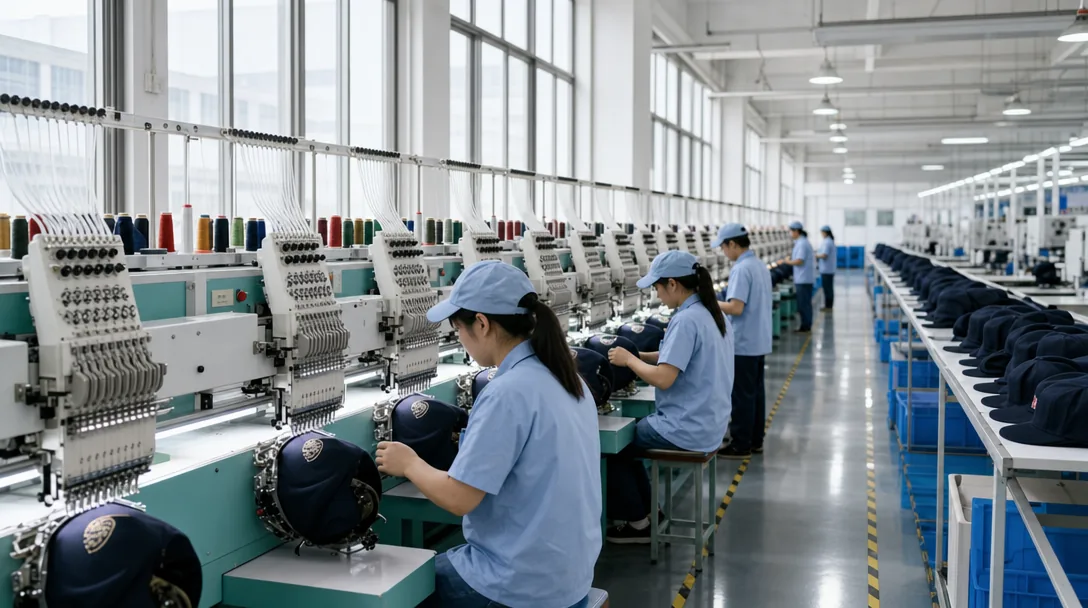
Bulk Trucker Hats Export Shipping Checklist for Custom Hat Buyers - Cost & MOQ Breakdown - Supplier Checklist
Read article →We hope this guide demystifies 5-panel hat men: a 2026 b2b sourcing guide (2026 update) and helps you move forward with confidence. If you have questions specific to your project, our English-speaking sales engineers are one message away.