
US Tariff Section 301 on Chinese Caps: Import Cost Planning for 2026 - Cost & MOQ Breakdown
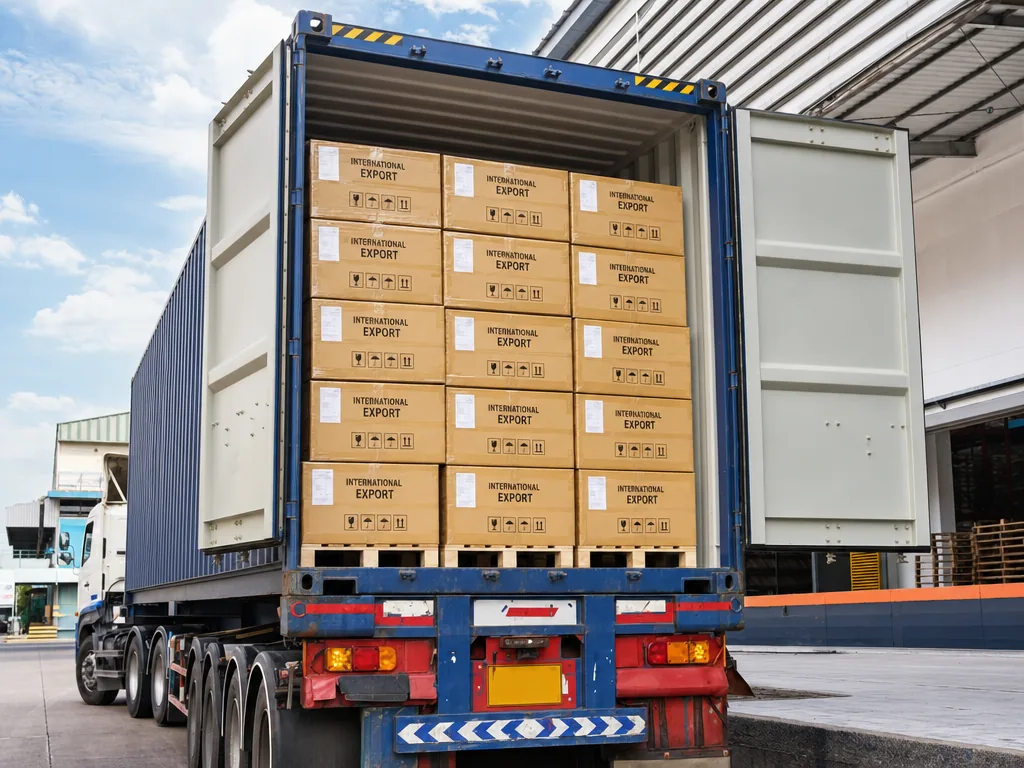
Every week, our sales team answers detailed questions about us tariff section 301 on chinese caps: import cost planning for 2026 - cost & moq breakdown. We wrote this guide so that wholesalers, streetwear brands, corporate buyers and promotional resellers can compare options with full information, and avoid the traps that show up only after production has started.
The Section 301 landscape and 2026 updates
For 2026 planning, the real exposure on US tariff Chinese caps is the duty stack, not the quoted FOB. Chapter 65 headwear does not move under one flat rate: a cotton twill 6-panel cap, a polyester visor, and a paper-braid sun hat can sit under different HTSUS lines with different MFN rates before the Section 301 layer, Merchandise Processing Fee, customs bond, brokerage, and inland drayage are added. CBP classifies on construction, shell material, and whether the article is knit, woven, or braid-made; it does not care whether the sales team calls it a dad cap, trucker, golf cap, or promo hat. On the factory side, I see buyers approve FOB at $2.80, $3.60, or $4.90 per piece and still miss landed cost by double digits because nobody locked classification against the invoice, fiber content, and bill of materials before the PO. That gap gets expensive fast. On a 25,000-piece order, a tariff swing of 7.5% to 25% can erase margin on fixed-price retail or licensed programs long before goods hit the DC. A clean cost sheet should separate at least six items: FOB, Section 301 exposure, base duty, MPF at 0.3464% of entered value, broker/customs entry charges, and domestic freight after arrival. Our standard practice is to freeze HTS review as early as lab dip and trim approval stage, because once packaging, embroidery value, sweatband material, or visor construction changes, the paperwork assumptions often go stale. If you are budgeting US tariff Chinese caps on one blended headwear rate, you are almost certainly understating risk.
Section 301 is still a policy variable, so the safest 2026 assumption is volatility rather than relief. Buyers should model three cases before releasing production: current treatment remains, a partial exclusion or rate reduction returns, or enforcement tightens with no exclusion at all. That scenario planning matters because the landed delta is not theoretical; on mid-volume cap programs priced FOB Ningbo or Shanghai, even an 8% to 10% change can be larger than the sewing margin the factory makes. Keep tariff exposure outside factory price negotiations. A supplier can optimize marker efficiency, embroidery run time on Tajima or Barudan heads, and carton density; it cannot control USTR actions or CBP interpretation at entry. The importers who stay out of trouble watch quarterly USTR notices, exclusion updates, and CBP scrutiny on valuation and product description accuracy. A lot of post-entry corrections come from basic declaration errors: generic descriptions, omitted embroidery or applique value, understated branded packaging, or invoices that do not match actual shell fabric and construction. Once CBP flags an entry, the cost is not just extra duty; it can mean cargo exams, a one- to two-week delay, missed in-store dates, and retailer chargebacks. For 2026, I would carry a 3% to 5% contingency above your expected landed-duty model and forecast by HTS line, not by one average headwear assumption. Acrylic beanies, woven cotton caps, performance polyester caps, and straw hats do not behave the same on paper or at the port.
HTS code 6505 explained
HTS 6505 covers most Chinese-made baseball caps, dad hats, truckers, and 5-panels, but CBP does not classify by silhouette or whatever the sales sheet calls the hat. The deciding factors are fiber content, construction, and in some cases whether the article is knit or made from woven components. In practice, CBP starts with chief weight of the outer shell fabric: a 270 gsm cotton twill cap, a 340 gsm wool-blend melton 6-panel, and a 140 gsm 75D polyester performance cap may all quote within a tight FOB band of $2.80 to $3.30, yet they can fall into different 6505 subheadings with materially different duty treatment. For anyone budgeting US tariff Chinese caps, the invoice and packing list need exact composition, shell fabric description, panel construction, and net weight. “Baseball cap, 100% polyester” is still weak data; “6-panel woven cap, shell 100% polyester microfiber, 75D, 140 gsm, sweatband 65/35 poly-cotton” gives a broker something defensible at entry.
A practical budgeting shortcut under HTS 6505 is to treat cotton caps at about 7.9% MFN duty, wool caps around 7.5%, and many man-made fiber caps at 20.7 cents/kg plus 7% ad valorem, subject to the exact subheading. The weight-based piece catches inexperienced importers: a 24 kg carton of 144 polyester caps adds about $4.97 in specific duty before the ad valorem rate is applied, roughly $0.035 per cap. Then Section 301 is layered onto customs value, so a synthetic cap quoted at $3.20 FOB can move above $4.00 landed once MFN duty and the additional tariff are added, even before MPF, HMF where applicable, customs clearance, drayage, and domestic delivery. The expensive mistake is swapping fabric after sampling and assuming the landed cost still works. A change from 108x56 cotton twill to recycled polyester microfiber can alter HTS treatment, carton weight, labeling, and total tariff exposure at the same time; on a 300- to 500-piece order, that can erase a factory-side saving of $0.15 to $0.20 per cap.
Duty calculation example for a 1,000-piece order
Start with FOB, not ex-factory, because U.S. Customs values the goods on the entered transaction value and that is the cleanest baseline for modeling US tariff Chinese caps exposure. For a realistic 1,000-piece run, assume a mid-profile 6-panel snapback in 100% cotton twill, 260 gsm shell, PE buckram front support, plastic snap closure, flat embroidery up to 8,000 stitches, woven main label, and 1-color printed seam tape. On a factory floor in Zhejiang, that spec usually lands around $2.70 to $3.00 FOB Ningbo if the embroidery file is clean and trims are standard; $2.80 per cap is a fair planning figure, so entered goods value is $2,800. Packed 72 to 96 pieces per export carton, the shipment normally runs 11 to 13 master cartons, roughly 1.0 to 1.2 CBM, with gross weight around 150 to 165 kg depending on visor curvature and carton dimensions. Freight and entry charges are where small orders get distorted. A 1.0 to 1.2 CBM LCL move from Ningbo or Shanghai to Los Angeles or New York usually costs $420 to $650 all-in on the freight side once you include origin THC, export docs, destination CFS, and deconsolidation. Buyers also miss the fixed U.S. entry costs: ISF filing at about $35 to $50, single-entry bond around $55 to $90, customs broker entry $85 to $150, and local drayage or transfer minimums that can easily add another $40 to $80. Before duty, you are already at roughly $3,435 to $3,970 landed to port, which is why a 1,000-piece order rarely behaves like a cheap trial run once real import costs are loaded.
Duty is what turns a workable cap order into a bad margin decision. Most cotton custom caps fall under HTSUS headwear classifications where the regular MFN rate is already high; for planning, 20% is a realistic placeholder unless your broker confirms the exact line based on shell fiber content, crown construction, and whether the peak is covered in the same fabric. On an entered value of $2,800, that base duty is $560. If the style also attracts Section 301 at 25%, add another $700, bringing customs duty to $1,260 before MPF and HMF. Merchandise Processing Fee is 0.3464% of entered value, but a shipment this small will usually pay the minimum charge, so budget about $32. Harbor Maintenance Fee is only 0.125% and applies to ocean entries, so it is minor, but it still belongs on the sheet. That puts pre-delivery landed cost at about $4,727 to $5,264, or roughly $4.73 to $5.26 per cap, before domestic warehousing, pick-and-pack, retailer chargebacks, or any duty uplift from a classification change. The useful takeaway is not that US tariff Chinese caps are always expensive; it is that fixed import charges punish low MOQs. On 1,000 pieces, broker, bond, ISF, MPF minimums, and local port handling can add about $0.25 to $0.48 per cap even before inland U.S. delivery. In practice, a factory negotiation that saves $0.10 FOB per piece is easy to lose if the order size is too small to absorb the non-variable import costs.
First-Sale-for-Export and other optimization strategies
First-sale-for-export only saves money when the structure is genuine and the documents line up at style level. If a Zhejiang factory sells a 6-panel cotton twill cap at $2.40 FOB Ningbo and the Hong Kong seller invoices the U.S. importer at $3.05, CBP may accept the $2.40 as the dutiable first-sale price—but only if both sales are bona fide, title transfer is real, and the caps were clearly destined for the U.S. from the first PO. That means matching purchase orders, factory invoices, reseller invoices, packing lists, export declarations, SWIFT or TT payment records for both legs, and production files showing the same SKU, colorway, carton count, and consignee path. For US tariff Chinese caps planning, this is one of the few lawful ways to cut the Section 301 dutiable base without touching the product itself. On 20,000 caps, a $0.65 gap strips $13,000 out of customs value before normal Chapter 65 duty and the additional Section 301 tariff are calculated. Treat first sale as a compliance system, not a broker trick pulled after the vessel sails from Yantian or Ningbo. If the middleman never takes title, Incoterms shift between documents, or the factory invoice is adjusted to fit a target duty number, the claim gets fragile fast. CBP expects a defensible transaction chain and five years of record retention from entry date. In practice, first sale usually pencils out on repeat orders above $75,000 to $100,000 per shipment, where the duty savings can absorb customs counsel review, broker setup, and internal controls. A small 288-piece promotional order rarely justifies that overhead. At CrownsForge, the buyers who execute this well usually lock the structure before bulk fabric booking, not when the goods are already on the water.
Classification is the other place importers either save quietly or create expensive problems. All caps land in Chapter 65, but the correct HTSUS line still turns on shell material, woven versus knit construction, braid content, water-resistance claims, and whether the article is a cap, visor, or beanie. A 100% cotton brushed twill dad cap, a 12-gauge acrylic rib beanie, and a 110 gsm recycled polyester running cap with laser-cut ventilation should never ride under one generic code just because they share a logo. Mixed-material builds are where errors multiply: trucker caps with polyester front panels and nylon mesh backs, laminated softshell caps with TPU membranes, or caps using PU patches and reflective piping need broker review before production, not after arrival. Misclassification distorts landed cost, but it also invites Post Summary Corrections, broker rework charges, and avoidable scrutiny if the error repeats across entries. The practical fix is to build the entry file from the BOM upward. Lock shell fabric composition, gsm, mesh denier, sweatband fiber, visor insert material, seam tape, embroidery backing, and carton pack before the commercial invoice description is finalized. Keep non-dutiable charges separate where permitted—international freight, marine insurance, and certain post-export charges—and document assists correctly when the buyer provides trims, molds, artwork, or embroidery digitizing. I also tell buyers to compare FOB Shanghai against FCA factory line by line; a quote that looks $0.08 cheaper ex-factory often loses once origin drayage, export clearance, AMS filing, and forwarder handling are added back. For US tariff Chinese caps cost planning, model every style at MOQ bands such as 144, 500, 1,000, and 5,000 pieces using three numbers only: ex-factory price, customs value, and fully landed cost. That is where the real margin decisions get made.
Should you diversify outside of China?
Diversifying out of China only makes financial sense when the cap is genuinely simple and repeatable. For basic structured 6-panels in 10x10 cotton twill, washed dad hats, or unbranded 5-panels with standard hook-and-loop or plastic snap closure, Vietnam is usually the first place buyers should test. But it is not a tariff magic trick. A style costing $2.10-$2.60 FOB Shanghai at 3,000 pcs will often land at $2.75-$3.45 FOB Ho Chi Minh once you account for imported buckram, sweatbands, woven labels, poly snaps, and subcontract embroidery. Ex-factory lead time also tends to move from roughly 35-45 days in Zhejiang to 50-65 days in Vietnam during peak capacity windows. The math gets worse fast when the spec calls for Pantone TCX-matched webbing, custom seam tape, molded silicone patches, or 3D puff on Tajima or Barudan heads, because those inputs and operators are still less concentrated than in China.
Bangladesh looks cheaper on high-volume spreadsheets, especially for promotional brushed cotton or lightweight polyester caps at 10,000-20,000 pcs per color, but the savings narrow once you price real program risk. Sampling cycles are slower, trim sourcing is more dependent on China, and license-sensitive details like metal sliders, sandwich brims, moisture-wicking sweatbands, or exact visor curvature often need more rework. Cambodia is narrower again: workable for basic cut-and-sew caps, weak for high-density embroidery, TPU patches, applique, and strict color-control programs where Delta-E under 1.5 is written into the approval standard. In practice, the smartest response to the US tariff Chinese caps issue is usually a split strategy: keep low-MOQ, high-SKU, technical styles in China, and move only stable runners offshore after tracing the full BOM by origin. If 50%-70% of the cap bill of materials still comes from Dongguan, Qingdao, or Yiwu, you are not removing exposure so much as adding transit, duplicate sampling, and higher MOQs. Compare landed cost, reorder speed, and AQL 2.5 defect risk—not just FOB.
Why China still wins on small-batch custom orders
China still wins small-batch custom cap programs because the real cost sits in changeover, not just the duty line. A 144-piece order split across 4 colorways, 3 embroidery locations, and 2 closure options burns time on digitizing, thread swaps, cap-frame resets, brim and button color matching, care-label changes, and mixed-carton packing. A Yiwu or Dongguan factory running Tajima, Barudan, or ZSK heads daily can absorb that friction inside one workflow instead of pushing it across separate embroidery, sewing, and packing vendors. In practice, revised strike-offs usually turn in 24 to 72 hours, and standard 6-panel cotton twill or mesh-back trucker caps often ship 12 to 20 days after sample approval. That speed is not cosmetic; once you move the same order to a higher-cost origin, slower setup and extra sampling can add $1.50 to $3.00 per cap before freight, often wiping out the theoretical tariff advantage.
For buyers modeling US tariff Chinese caps exposure, landed cost per approved SKU is the only comparison that matters. A 300-piece embroidered snapback program at $4.20 to $6.80 FOB can look worse on a Section 301 spreadsheet, but the absolute dollar hit is often smaller than the cost of higher MOQs, duplicate pre-production samples, and poor assortment handling elsewhere. Chinese cap factories are still more willing to take 48 to 96 pieces per color, combine 10x10 cotton twill, brushed cotton, recycled polyester, and mesh-back constructions in one PO, and pack by store, campaign, or influencer drop without turning every deviation into a surcharge. Quality is part of that math too: a capable factory should hold logo placement within +/-2 mm, keep small embroidery text readable at about 4.5 to 5.0 mm, match thread to the nearest commercial Pantone TCX, and inspect finished goods to AQL 2.5. In small runs, that execution protects margin better than chasing a lower nominal duty on paper.
Frequently Asked Questions
How long does production take?
Sampling takes 7 to 12 days. Bulk production runs 20 to 30 days depending on quantity, fabric availability and decoration complexity. Inspection and packing adds another 3 to 5 days before shipment.
Do you support sustainability certifications?
Yes. We work with GOTS organic cotton, GRS-certified recycled polyester, OEKO-TEX Standard 100 fabrics, and are BSCI and Sedex audited. Certification documentation can be provided per order.
What is the minimum order quantity (MOQ) for custom hats?
Our standard MOQ is 100 pieces per design and color, with sampling available from 1 piece. For complex multi-color logos or premium fabric upgrades, the MOQ can be lowered with a small per-piece surcharge.
What logo decoration techniques do you offer?
3D puff embroidery, flat embroidery, woven patch, leather patch, PVC patch, screen printing, sublimation, applique and laser etching, all in-house with no subcontracting.
Can I order a sample before bulk production?
Yes. We strongly recommend approving a pre-production sample before mass production. Samples are charged at 35 to 60 USD each plus express shipping, fully refundable against confirmed bulk orders over 500 pieces.
What should I know about wholesale baseball caps made in usa?
When evaluating wholesale baseball caps made in usa, the key considerations are construction quality, decoration capability, MOQ flexibility and lead time. Standard duty rates for cotton, wool, synthetic caps. Tariff list status and outlook for hat HTS codes.
How does ordering custom made trucker hat work?
When evaluating custom made trucker hat, the key considerations are construction quality, decoration capability, MOQ flexibility and lead time. Tariff list status and outlook for hat HTS codes. Standard duty rates for cotton, wool, synthetic caps.
How does ordering baseball cap custom embroidery work?
When evaluating baseball cap custom embroidery, the key considerations are construction quality, decoration capability, MOQ flexibility and lead time. Speed, embroidery quality, supplier flexibility outweigh tariff differential for high-mix orders. Tariff list status and outlook for hat HTS codes.
How does ordering custom embroidered baseball caps work?
When evaluating custom embroidered baseball caps, the key considerations are construction quality, decoration capability, MOQ flexibility and lead time. Standard duty rates for cotton, wool, synthetic caps. Tariff list status and outlook for hat HTS codes.
Did the US cut tariffs on Chinese goods?
The US then raised its tariffs to 145%, and China responded by raising its tariffs to 125%. On May 12, both countries reached a truce in a bid to reduce tensions. The US reduced tariffs on Chinese goods to 30% while China responded by reducing tariffs on US products to 10%.
Is China's tariff 10% or 35%?
Under the agreement, the United States and China reduced the tariffs imposed in April 2025 from 125% to 10% on each other's goods (other U.S.-China tariffs remain in place).
What is the US tariff threshold for China?
The de minimis provision allowed many goods valued at or under $800 to enter the U.S. duty free and via an expedited entry process known as Entry Type 86. The $800 de minimis threshold was per person per day. On May 2, 2025, the U.S. suspended the de minimis exemption for China and Hong Kong.
Ready to start your custom hat project?
Send us your tech-pack, sketch or even just an inspiration photo. We will respond with a detailed quotation and digital mock-up within 24 hours.
Request a free quoteRelated guides
Custom Leather Patch Hat Low Minimum: A 2026 B2B Sourcing Guide
Read article →
Mens Beanies: Properties, Costs and How to Spec It Right
Read article →
Custom Rope Hats: Manufacturing, Materials and Bulk Pricing (2026 Update)
Read article →Sourcing custom hats does not have to be complicated. With the right manufacturing partner, clear specifications and a small upfront investment in sampling, you can launch a retail-quality product in 30 to 45 days.