
US Tariff Section 301 on Chinese Caps: Import Cost Planning for 2026 (2026 Update)
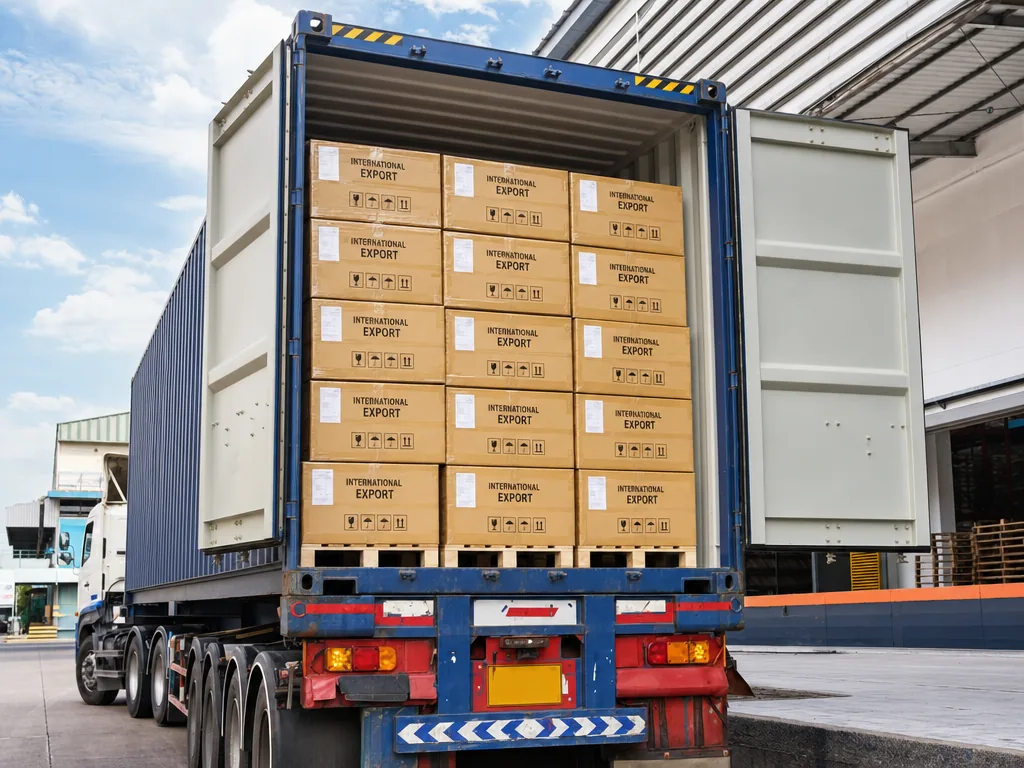
Every week, our sales team answers detailed questions about us tariff section 301 on chinese caps: import cost planning for 2026 (2026 update). We wrote this guide so that wholesalers, streetwear brands, corporate buyers and promotional resellers can compare options with full information, and avoid the traps that show up only after production has started.
The Section 301 landscape and 2026 updates
Section 301 remains the swing cost on top of normal MFN duty, and there is no sober 2026 budgeting case for assuming a blanket rollback on Chinese headwear. Most caps enter under HTSUS heading 6505, then pick up the China-origin Section 301 layer where applicable, plus MPF at 0.3464% of entered value and the usual freight, drayage, and brokerage costs. If you are costing US tariff Chinese caps, build from the enforceable rate on the quote date, not from policy rumors. On a custom cap quoted at $3.20 to $6.80 FOB, the tariff-and-duty stack can add about $0.45 to $1.20 per piece before U.S. inland delivery, with the spread driven by classification, entered value, and whether you are moving LCL, FCL, or air. On a 20,000-piece order, a miss of even $0.35 per cap is a $7,000 margin leak. The bigger 2026 mistake is treating all caps as one customs product. A 280 gsm brushed cotton twill 6-panel, a 140 denier recycled polyester performance cap, and a wool-blend fashion cap can sit in the same sales presentation but trigger different duty outcomes once fiber content, shell material, peak construction, lining, and trim are declared. CBP will also scrutinize valuation support: buyer-supplied molds, metal logo trims, embroidery digitizing, free polybags, and other assists belong in customs value if they were furnished for production. The invoice and packing list need to match the actual build specification line by line—fiber percentages, closure type, decoration method, origin, and piece count—with mill data or lab reports behind any sensitive material claim. Descriptions like “fashion cap” or “promotional hat” are exactly how post-entry corrections and CF28 questions start.
Treat tariff exposure as a sourcing variable, not an accounting clean-up after the goods ship. The landed-cost gap between a basic chino twill promo cap and a premium build with flat embroidery, satin appliqué, woven loop labels, branded seam tape, and rigid gift-box packaging is not just factory cost; it changes duty-paid cash flow, deposit timing, and reorder economics. On programs from 10,000 to 50,000 pieces, a tariff-driven variance of $0.30 to $0.70 per unit quickly becomes a five-figure problem, especially when the 30% deposit, ocean freight invoice, and duty payment land in different weeks. Buyers who approve only on FOB usually discover their real margin after production is already locked. The disciplined 2026 method is to clear every PO against three landed-cost views: pure FOB, current-duty landed estimate, and a stress case assuming the present US tariff Chinese caps structure is still in force at vessel departure and at entry filing. That is more reliable than trying to game USTR timing or election-cycle headlines. Our standard practice is to lock HTS classification before sample approval, keep BOM language identical across the tech pack, commercial invoice, and packing list, and carry a 3% to 8% contingency for freight volatility, broker adjustments, and reclassification exposure. Margin damage usually does not come from one dramatic tariff announcement; it comes from small misclassifications, weak value support, and sloppy paperwork repeated across a full program.
HTS code 6505 explained
HTSUS 6505 captures most caps, visors, and knit hats, but CBP does not classify them by retail name. A dad hat, snapback, trucker, camp cap, visor, or cuff beanie may all fall under 6505, yet the legal result usually turns on construction first, then chief weight fiber, then the exact 10-digit statistical suffix. For import planning, “baseball cap” on a commercial invoice is nearly worthless. Your broker needs the actual build: woven 100% cotton twill at 280-300 gsm, 65/35 poly-cotton canvas, 100% polyester microfiber, or 2x2 acrylic rib knit. Details that look minor on a tech pack can change classification language, including knit versus woven body, mesh back panel, visor insert, and whether the article is lined or trimmed with another fiber. For any buyer modeling US tariff Chinese caps exposure in 2026, the real risk is misdescription: one vague material line can put the wrong HTSUS number on the entry, distort landed cost, and trigger a CBP Form 28 request, sample review, or a binding-ruling discussion.
The expensive mistake is treating 6505 as the full answer. Base MFN duty on headwear in this chapter can vary materially by construction and fiber content, so a generic “hat duty” assumption is sloppy costing. On a 20,000-piece order at $2.80 FOB, even a 5-point duty error changes cash outlay by $2,800 before MPF, HMF, customs bond, drayage, exam risk, or storage. Then add the China layer: for US tariff Chinese caps, Section 301 must be modeled separately from the ordinary Chapter 65 duty so buyers can see what is structural tariff cost and what is trade-policy exposure. The clean control point is before PO approval, not after sailing. Lock the BOM and invoice wording to the same spec sheet language: “cap, woven, 100% cotton twill, structured 6-panel crown, curved PE visor” or “beanie, knitted, 100% acrylic rib.” If volume is meaningful or classification is close, have the broker pre-screen the HTSUS line and decide whether a binding ruling is worth the lead time.
Duty calculation example for a 1,000-piece order
For a 1,000-piece order, budget from the HTS line up, not from the sewing quote. Assume a structured 6-panel baseball cap in 100% cotton twill at 260 gsm, front flat embroidery run on Tajima heads, woven loop label, swing tag, 25 pcs/polybag, 144 pcs per export carton. A workable 2026 factory-side number for this spec is about $2.85 FOB Ningbo per cap, so invoice value is $2,850. For US tariff Chinese caps planning, that FOB figure is only the starting point: CBP duty is tied to entered customs value under the declared classification, and buyers routinely blur the math by mixing dutiable and non-dutiable charges on one forwarder invoice. If packing is charged separately, if there is a dutiable assist such as buyer-supplied trims, or if the classification shifts, your duty exposure changes immediately. Use a simple model. Start with $2,850 entered value. If the applicable MFN duty is 7.5%, duty is $213.75. If the same HTS line is still subject to Section 301 at 25%, that adds another $712.50; Section 301 is calculated on customs value, not on the post-duty total. MPF at 0.3464% comes to $9.87, but the CBP minimum means you would actually pay the current floor if that is higher at time of entry. HMF on ocean freight adds 0.125%, or $3.56. Brokerage for a clean consumption entry is typically $125-$185, and ISF filing is usually $35-$50. Before port delivery, your import cost stack is already about $1,100-$1,175 above FOB, which is exactly why buyers underestimate landed cost when they look only at the ex-factory cap price.
Add the destination side and the real unit cost appears fast. A small LCL shipment of 1,000 caps might carry about $420 in origin charges and ocean freight, plus roughly $280 for CFS-to-warehouse delivery after arrival. If your 3PL bills $65 pallet receiving and $18 for carton count or label verification, total landed cost reaches about $4,105 to $4,190, or roughly $4.11 to $4.19 per cap before domestic parcel fulfillment. That is the number procurement should test against wholesale margin, team-dealer pricing, or promo bid economics; the $2.85 FOB is not commercially useful once duty applies. The practical way to manage uncertainty is to price three scenarios before issuing the PO: MFN only, MFN plus Section 301, and a contingency case if freight or brokerage moves 10% to 15%. On a 1,000-piece run, a 25% Section 301 layer is worth $0.71 per cap by itself, enough to wipe out upgrades such as 3D puff embroidery, Pantone TCX-matched inside taping, or a heavier 108x58 twill shell. Our standard practice is to keep FOB, freight, and estimated import charges separated line by line so the buyer can see exactly where the US tariff Chinese caps exposure sits and which assumptions need reconfirmation with the customs broker before shipment.
First-Sale-for-Export and other optimization strategies
First-sale-for-export still works, but only when the transaction chain is built for scrutiny, not after-the-fact savings. If a Chinese factory sells a cap at $2.85 FOB Yantian to a Hong Kong trading company that resells it at $3.40 to the US importer, CBP may allow duty on the $2.85 first-sale price rather than the higher resale price—but only if the first sale is bona fide, clearly destined for the United States, and supported by matching POs, factory invoices, proof of remittance, packing lists, style specs, and booking records. On 50,000 caps, that $0.55 spread removes $27,500 from entered value. At an effective burden of 7.5% Section 301 plus normal duty and MPF, the savings are large enough to matter. Buyers get burned when they treat first sale as a paperwork exercise. For US tariff Chinese caps, CBP will test whether the middleman assumed real commercial risk, whether the goods were US-destined at the time of first sale, and whether the documents reconcile line by line down to style code, fiber content, and unit count.
The more durable savings usually come from classification discipline and cost segregation before the goods ship. A 6-panel brushed cotton twill cap at 260 gsm, a 180 gsm recycled polyester performance cap, and a wool-blend fashion cap can fall under different HTS logic, and the wrong declaration can trigger either overpayment or a retroactive bill with interest. Mixed-fiber shells, detachable patches, TPU badges, and bundled accessories are where brokers need exact BOM data, not a sales deck. In practice, the clean process is to freeze shell composition, visor insert material, sweatband spec, closure type, and trim list before bulk production, then have the broker review the actual production spec against the proposed HTS before booking.
Other legal levers are smaller individually but easier to defend in an audit. Assists should be allocated correctly under 19 CFR 152, not padded into product cost by habit; non-dutiable charges such as post-import US inland freight must stay segregated from entered value; and embroidery digitizing, molds, and tooling need a real dutiability review instead of a blanket assumption either way. A usable 2026 model is a SKU-level landed-cost sheet that shows FOB price, HTS duty, Section 301 exposure, MPF at 0.3464%, brokerage, ocean freight, and claim-risk notes. That is how import teams compare whether a style should stay in China, move to a different construction, or shift to another origin. It is far more defensible than aggressive declarations that save a few cents per cap and collapse under a CBP review or a post-entry audit.
Should you diversify outside of China?
Don’t shift cap production out of China just because the 2026 noise got louder. For most importers under about 300,000 units annually, China still gives the best landed-cost control even in a tougher US tariff Chinese caps environment, because the supply chain is still physically compressed in Zhejiang, Guangdong, and Fujian. Shell fabric, buckram, PE visor inserts, sweatbands, snapbacks, woven labels, heat-transfer film, hangtags, master cartons, and embroidery digitizing can usually be turned within the same regional network. That density matters more than a nominal duty gap when a factory has to fix crown height, adjust visor curvature, or rerun a 3D logo on Tajima, Barudan, or ZSK heads inside 24 to 48 hours. In newer offshore programs, the identical correction often adds 5 to 8 days once trim transfers, revised PPS approvals, and line rebooking are factored in. The real sourcing question is process stability, not tariff math in a spreadsheet. If an alternative origin cannot hold panel symmetry, visor profile, stitch density, and Pantone TCX consistency lot after lot, the savings disappear fast. A buyer may reduce tariff exposure by $0.35 to $0.60 per cap, then give it back through expedited freight, remake charges, or rejects when embroidery registration drifts, seam puckering fails visual inspection, or color slips beyond Delta-E 1.5 under D65 light. On structured caps, those faults show immediately at final inspection; under AQL 2.5, a small increase in major defects can flip a shipment from “duty-saving” to margin-negative.
Vietnam is the most credible second base for premium sports caps and fashion programs, but it is not a clean exit from China. Sewing quality is often good on polyester twill, recycled performance fabric, and laminated front panels, yet upstream dependence on China remains heavier than many buyers assume. Closures, visor boards, woven trims, packaging, and sometimes pre-decorated components still cross the border before final assembly, so inland drayage, buffer stock, and longer material staging eat into the headline advantage. Bangladesh is more competitive on labor-heavy basics like brushed cotton twill dad caps and plain 6-panel unstructured styles, but custom-dyed fabric, specialty closures, and trim flexibility usually come with higher MOQs, slower sample development, and less tolerance for frequent SKU changes. Cambodia can work for straightforward programs, though structured crown consistency and line balancing are still less reliable unless the factory has disciplined floor control and a proven QC team. The practical 2026 answer is dual-sourcing by complexity, not abandoning China. Keep China for high-SKU, decoration-heavy, short-lead programs: puff embroidery, applique, rope caps, contrast taping, TPU or silicone patches, and color-critical runs where Delta-E below 1.5 actually matters. Move only stable, forecastable basics offshore, and cost the full equation before making the call: duty savings per dozen, added QA travel, third-party inspection, and the cash impact of a 10- to 14-day delay. Repeat orders from China still commonly run 35 to 50 days ex-factory; comparable programs in Vietnam or Bangladesh are more often 50 to 75 days once lab dips, trim staging, PP samples, and booking buffers are included. Buyers who ignore that spread usually replace one visible tariff line with three invisible costs: more airfreight, more on-site QC, and more failures at final audit.
Why China still wins on small-batch custom orders
For small-batch custom programs, China still wins because the total landed-cost math is driven more by setup efficiency and defect risk than by the headline tariff line. A 144-piece run split across 6 SKUs is a factory-floor problem, not just a customs problem: you need fast sampling, clean thread trims, stable color matching, and an embroidery team that can re-sequence logos without burning two extra days. Even with US tariff Chinese caps pressure and the ongoing Section 301 hats burden, the difference often narrows once buyers compare true unit economics. A domestic or nearshore quote may look cleaner on duty, but when the supplier charges $35 to $80 per logo tape, $20 to $40 per colorway change, and pushes a 3 to 4 week sample queue, the savings disappear fast on high-mix orders.
Embroidery quality is where experienced Chinese cap factories keep their edge. On Tajima, Barudan, or ZSK heads, a competent team can hold satin columns, underlay density, and registration far more consistently across brushed cotton twill, polyester performance fabric, and 600D structured fronts than many small regional shops. For detailed front logos, we typically see buyers accept a factory price of $3.20 to $6.80 per cap FOB for 300 to 500 pieces with flat embroidery, woven labels, and Pantone TCX-based color matching, because the rework rate stays low. If a supplier is managing Delta-E tolerance around 1.5 to 2.0 on dyed trims and inspecting finished goods at AQL 2.5, that matters more than a narrow import duty caps US comparison, especially when one failed shipment can wipe out the tariff savings from choosing a weaker vendor.
Supplier flexibility is the other reason a practical custom cap import strategy still leans toward China hat tariff 2026 exposure being manageable rather than fatal. China’s better factories are used to mixed closures, low minimum add-ons, and packaging changes inside one PO: 50 snapbacks, 72 dad hats, 24 rope caps, all with different inside tape prints or private-label stickers. That is much harder to execute cleanly in fragmented supply bases. Buyers sourcing china wholesale hats and caps for events, streetwear drops, or team merch usually care about getting pre-production samples in 5 to 7 days, bulk ex-factory in 18 to 30 days, and cartons built to Amazon or 3PL routing specs without drama. On small-batch work, that operating discipline often outweighs the tariff differential because it protects launch dates and keeps dead inventory low.
Frequently Asked Questions
How long does production take?
Sampling takes 7 to 12 days. Bulk production runs 20 to 30 days depending on quantity, fabric availability and decoration complexity. Inspection and packing adds another 3 to 5 days before shipment.
Do you support sustainability certifications?
Yes. We work with GOTS organic cotton, GRS-certified recycled polyester, OEKO-TEX Standard 100 fabrics, and are BSCI and Sedex audited. Certification documentation can be provided per order.
What is the minimum order quantity (MOQ) for custom hats?
Our standard MOQ is 100 pieces per design and color, with sampling available from 1 piece. For complex multi-color logos or premium fabric upgrades, the MOQ can be lowered with a small per-piece surcharge.
What logo decoration techniques do you offer?
3D puff embroidery, flat embroidery, woven patch, leather patch, PVC patch, screen printing, sublimation, applique and laser etching, all in-house with no subcontracting.
Can I order a sample before bulk production?
Yes. We strongly recommend approving a pre-production sample before mass production. Samples are charged at 35 to 60 USD each plus express shipping, fully refundable against confirmed bulk orders over 500 pieces.
What should I know about wholesale baseball caps made in usa?
When evaluating wholesale baseball caps made in usa, the key considerations are construction quality, decoration capability, MOQ flexibility and lead time. Standard duty rates for cotton, wool, synthetic caps. Tariff list status and outlook for hat HTS codes.
How does ordering custom made trucker hat work?
When evaluating custom made trucker hat, the key considerations are construction quality, decoration capability, MOQ flexibility and lead time. Tariff list status and outlook for hat HTS codes. Standard duty rates for cotton, wool, synthetic caps.
How does ordering baseball cap custom embroidery work?
When evaluating baseball cap custom embroidery, the key considerations are construction quality, decoration capability, MOQ flexibility and lead time. Speed, embroidery quality, supplier flexibility outweigh tariff differential for high-mix orders. Tariff list status and outlook for hat HTS codes.
How does ordering custom embroidered baseball caps work?
When evaluating custom embroidered baseball caps, the key considerations are construction quality, decoration capability, MOQ flexibility and lead time. Standard duty rates for cotton, wool, synthetic caps. Tariff list status and outlook for hat HTS codes.
Did the US cut tariffs on Chinese goods?
The US then raised its tariffs to 145%, and China responded by raising its tariffs to 125%. On May 12, both countries reached a truce in a bid to reduce tensions. The US reduced tariffs on Chinese goods to 30% while China responded by reducing tariffs on US products to 10%.
Is China's tariff 10% or 35%?
Under the agreement, the United States and China reduced the tariffs imposed in April 2025 from 125% to 10% on each other's goods (other U.S.-China tariffs remain in place).
What is the US tariff threshold for China?
The de minimis provision allowed many goods valued at or under $800 to enter the U.S. duty free and via an expedited entry process known as Entry Type 86. The $800 de minimis threshold was per person per day. On May 2, 2025, the U.S. suspended the de minimis exemption for China and Hong Kong.
What is the current tariff on Chinese goods into the US?
Announced - Additional 10% tariff on Chinese-made imports: President Trump announced an additional 10% tariff on all imported Chinese-made goods, effectively increasing the total tariff rate to 20% for these products as of March 4, 2025. This is in addition to the existing 10% tariff implemented earlier in February.
Are there tariffs on orders under $800 from China?
U.S. suspended the de minimis exemption for China and Hong Kong effective May 2, 2025. Goods from China and Hong Kong valued at or under $800 became subject to an ad valorem rate of duty or a postal fee starting May 2, 2025, at 12:01 a.m. ET.
Why is there a 100% tariff on Chinese cars?
The 100% tariff was designed to protect the US automotive industry from price competition it cannot match. However, it was not designed for a scenario in which the competition builds local demand through viral marketing before entering at all. One could characterise it is as a form of attrition from within.
Ready to start your custom hat project?
Send us your tech-pack, sketch or even just an inspiration photo. We will respond with a detailed quotation and digital mock-up within 24 hours.
Request a free quoteRelated guides
Custom Leather Patch Hat Low Minimum: A 2026 B2B Sourcing Guide
Read article →
Mens Beanies: Properties, Costs and How to Spec It Right
Read article →
Custom Rope Hats: Manufacturing, Materials and Bulk Pricing (2026 Update)
Read article →Sourcing custom hats does not have to be complicated. With the right manufacturing partner, clear specifications and a small upfront investment in sampling, you can launch a retail-quality product in 30 to 45 days.