Sports Team Hats: A Vertical-Specific Sourcing Guide - Supplier Checklist
Sports Team Hats: A Vertical-Specific Sourcing Guide - Supplier Checklist is one of the most-asked questions we receive from international buyers, and for good reason. With dozens of factories competing for your order and an alphabet soup of technical terms in every supplier quote, even experienced importers can feel lost. This guide consolidates what we have learned producing custom hats for clients in 40+ countries.
Custom Baseball Team Hats
Most failures in custom baseball builds start with the block, not the artwork. For sports team hats, fix the silhouette before you discuss logos: 6-panel pro shape versus 5-panel high crown, front buckram at 0.8-1.2 mm, crown depth, visor radius, and closure based on where the cap will be sold. A youth travel-team program should not use the same block as licensed retail. A common adult fitted target is 58 cm with crown depth around 165-170 mm; promo caps often run shallower and look cheap the moment they go on-head. I’d also lock shell fabric early: 260-280 gsm cotton twill for classic handfeel, 220-240 gsm brushed poly twill for performance, or 65/35 poly-cotton when budget matters. Then specify sweatband type, seam tape width, eyelet finish, visor sandwich color, and Pantone TCX references for shell and thread. Color tolerance needs to be realistic or you create arguments in bulk. On solid dyed twill, Delta-E under 1.5 is achievable lot to lot if the mill is disciplined; on heather, mélange, camo print, or slub yarns, that same standard is fantasy. If a buyer wants retail-grade consistency, ask for approved lab dips, thread cards, and fabric hanger cuttings before bulk booking. Decoration should be approved on the exact cap shape because a logo digitized for a flatter crown can distort badly on a deeper pro block. Flat embroidery, 3D puff, tackle twill, sublimated patch, and woven badge all react differently to front seam height, buckram stiffness, and crown curvature. On Tajima, Barudan, or ZSK heads, once a front logo pushes past 10,000 stitches, expecting sub-$3.00 FOB is usually disconnected from actual run time and reject risk.
Pricing and QC are where weak suppliers get exposed. In China, a standard embroidered baseball cap typically lands around $2.10-$4.80 EXW depending on fabric, stitch count, closure, and packaging; FOB is higher once inland freight, export docs, and port charges are added. MOQ is usually 300-500 pcs per colorway for stock twill builds, but 1,000 pcs is where fabric utilization, visor purchasing, and trim buying become noticeably more efficient. Raised puff, custom seam tape, moisture-wicking sweatbands, molded rubber patches, and metal buckle closures all add cost and failure points. The right question is not “what is your cheapest cap,” but “what feature is driving this cost and what defect rate comes with it.” The defects that separate a cap factory from a promo assembler are obvious on the inspection table: crown asymmetry, visor waviness, off-center top buttons, embroidery push-pull, seam grin at the front panels, and snapbacks that crack after carton compression. For sports team hats, require AQL 2.5 with major checks on logo placement, crown symmetry, brim shape retention after 24 hours packed, closure function, and shade consistency across production lots. Placement tolerance on embroidery should be held within +/-2 mm, and hardware should be checked for corrosion after humidity exposure. At CrownsForge, we also review needle damage at seam junctions, edge binding splits under brim flex, and lot-to-lot color against approved thread cards before final packing. If a supplier cannot show sedex-audit-cap-supplier-guide.html">BSCI 2.0 or Sedex SMETA 4-Pillar audits, in-line reports, and repeat PO history on similar athletic caps, they are learning on your order.
Baseball Hats Canada
Canada orders for baseball-style sports team hats go sideways when the tech pack stops at “structured cap” and a reference photo. Lock the build before RFQ: 6-panel crown, front rise 16.5-17.5 cm, pre-curve visor radius, head opening, and closure type down to buckle finish. Fabric should be called out by composition and weight, not feel. For team retail, 100% cotton twill at 240-280 gsm gives the classic hand; brushed twill softens the surface but can raise faster at the seam edge; 100% polyester twill at 180-220 gsm holds shade better and typically shrinks under 2% after finishing. Specify woven buckram for the front panels if the cap carries a dense crest or sponsor logo; low-grade fused buckram often delaminates after ocean transit and carton compression. Also define visor board thickness, sweatband composition, eyelet execution, and seam tape width, because these are the parts factories quietly downgrade to win price.
Embroidery is where most disputes start, especially on sports team hats with multi-color crests. A clean pre-production sample on Tajima, Barudan, or ZSK heads means very little unless bulk is controlled by the same digitizing logic. Require stitch count, underlay type, pull compensation, and a file proof before approval. For color, use Pantone TCX references for fabric and nearest Madeira or Gunold thread match, then agree a Delta-E tolerance of 1.5-2.0 under D65 lighting; otherwise navy, red, and athletic gold will drift from lot to lot. If you want 3D puff, call out 2 mm or 3 mm EVA foam and minimum stroke widths, because thin serifs will cut through foam or collapse after trimming. Real MOQs are usually 300-500 pieces per colorway. Factories offering 100-200 pieces usually recover margin through digitizing, mold setup, and packing charges. Ex-factory pricing is typically $2.20-$4.20 for a standard embroidered cap, rising to about $4.80-$6.50 with puff embroidery, woven labels, printed undervisors, or PU patches.
The cheapest quote usually strips out the components you only notice after delivery: weak seam tape, low-density sweatbands, visor curl inconsistency, unsealed metal hardware, or no shade sorting between dye lots. The defects I reject most often are panel skew over 3 mm, crown asymmetry, topstitch variation below the agreed SPI, puckered embroidery, twisted sweatbands after wash testing, and logo placement drift beyond 2 mm from spec. For Canada-bound shipments, ask for salt-spray results on buckles and eyelets, carton burst strength suitable for stacked pallet loads, and polybag thickness that will survive winter handling without splitting. Light colors should be shade-grouped under controlled light, not warehouse daylight. Our standard practice is AQL 2.5 for major defects, in-line checks on crown shaping and embroidery registration, and final fit verification on a pilot run before bulk release. That discipline is what lets you compare suppliers on real manufacturing control instead of sample-room luck.
Fitted Hats with Patches
Patch-applied fitted caps fail in ways direct embroidery does not, so the spec has to control crown rigidity, patch construction, and attachment from the start. For sports team hats, the safest base is a 6-panel structured fitted crown in 280-320 gsm cotton twill or 65/35 poly-cotton twill, with 0.9-1.2 mm PE-coated buckram behind the two front panels; anything softer lets the patch telegraph the center seam or collapse after carton compression. The tech pack should lock the patch type and build, not just the artwork: woven merrowed badge, laser-cut twill appliqué, molded TPU, silicone, felt, chenille, or PU synthetic leather, plus backing, finished thickness, border style, and whether the edge is satin stitched, merrowed, or raw laser sealed. Heat press only is acceptable on flat promotional caps, but on fitted shapes with a curved front, a stitched edge or stitch-plus-press hybrid is the only method I trust for licensed merchandise. Dimensional callouts need to be tighter than on a plain logo cap. Specify crown height in centimeters by size block, visor pre-curve, sweatband composition, seam tape color, patch placement from center front and from visor seam, and whether side embroidery runs before or after blocking. A woven patch can look perfect on a flat strike-off and still tunnel across the front seam once pressed onto a low-profile fitted crown. Physical PPS approval matters: if the size range runs 6 7/8 through 7 5/8, ask for at least one sample from each size block, then inspect the patch edge under tension, not just at rest. At CrownsForge, we log press temperature, dwell time, and pressure by patch material; if a supplier cannot give those numbers, they are trial-and-erroring your order.
Cost on patch-based fitted styles moves with the patch program more than the cap body. At 300-500 pieces, a plain fitted blank in China is usually $2.20-$3.40 FOB using standard twill, woven sweatband, and inside taping, but patch-driven sports team hats normally land at $3.90-$6.80 FOB on a first run. Flat woven badges and printed twill appliqués sit at the low end; chenille, layered felt, molded TPU, and debossed synthetic leather add labor, slower line speed, and a higher reject rate. Setup charges are also real: $25-$80 for digitizing, laser die prep, or mold amortization is normal on small runs. Ask how the patch is cut and finished. Laser cutting gives the cleanest repeatability on twill and TPU, steel-rule die cutting becomes more efficient once volumes stabilize, and hand trimming is where edge variance starts showing up between cartons. Inspection should target the defects that actually generate returns: patch skew off centerline, puckering at the front seam, crown collapse from over-pressing, edge lift after packing, and size drift between fitted blocks. I would hold bulk to AQL 2.5 with explicit tolerances such as patch placement within plus/minus 2 mm, visor symmetry within 3 mm, and crown height within plus/minus 3 mm by size. For fitted hats, even a 1/8 inch circumference miss can trigger complaints, so measure around the inside sweatband after 24 hours of conditioning, not straight off the line. If the style combines a front patch with side hits, confirm whether the factory is running Tajima, Barudan, or ZSK heads and whether side embroidery is sewn pre-blocking; thread tension and registration get less forgiving once the crown has been shaped. For licensed team programs, tie crown and patch colors to Pantone PMS or Pantone Fashion, Home + Interiors TCX references and hold visible fabric to Delta-E 2.0 or better between replenishment lots.
Bucket Hats for Men
Geometry decides whether men’s bucket hats look team-issued or cheap souvenir stock. Lock the pattern before you talk trims: finished crown height 8.8-9.3 cm, brim width 5.5-6.0 cm, top circumference graded by size, seam allowance 0.8-1.0 cm, and sweatband width 3.0-3.5 cm are workable targets for adult fits. On the factory floor, the biggest failure is off-grain cutting; even a 2-3 mm drift on side panels can create crown twist that no pressing will fix. For sports team hats expected to survive laundering and sideline use, set post-wash shrinkage under 3% for cotton and under 2% for poly-rich blends, with brim edge waviness and seam puckering called out as reject points in the PP sample. Material choice should follow use case, not trend language. Retail-style builds usually run 240-320 gsm cotton twill, brushed chino, or enzyme-washed canvas for a softer hand; lightweight outdoor programs often use 110-140 gsm nylon taslan or micro-peached polyester with mesh lining; budget fan giveaways lean on 65/35 poly-cotton for better shade consistency and lower cost. Do not approve colors as “navy” or “scarlet.” Use Pantone TCX for dyed fabric, Pantone C for printed artwork, and Madeira or Gunold thread codes for embroidery, with an agreed Delta-E tolerance of 1.0-1.5 against the lab dip. Tajima, Barudan, and ZSK heads all run clean logos, but bucket hats punish lazy digitizing because soft panels and curved seams need proper underlay, stitch density around 0.35-0.40 mm, and push-pull compensation to keep badges and crests from walking off-register.
MOQ and FOB move fast once a bucket hat stops being a basic cut-and-sew style. In practice, 300-500 pieces per colorway is common for a standard men’s bucket in cotton twill with one embroidery position; add custom woven labels, contrast underbrim, taping, terry sweatband, sublimated lining, or bonded waterproof fabric, and many factories will push to 500-1,000 pieces to control waste and trim sourcing. A plain 100% cotton twill style generally sits around $2.40-$4.20 FOB China depending on gsm, wash, and stitch count. Add flat embroidery, and most real offers land closer to $4.80-$6.20 FOB; high-density satin stitch, 3D foam, seam sealing tape, reflective piping, or retail polybag-plus-hangtag packing can add $0.30-$1.20 per piece without much debate. Inspection should focus on the defects buyers actually get charged back for: brim symmetry, crown twist, uneven topstitch SPI, seam puckering, skipped stitches, loose thread ends, and sweatband join alignment. Our standard practice is AQL 2.5 for finished caps, with in-line checks on panel matching and final checks on measurement tolerance within plus or minus 0.3 cm at key points. Ask for fabric test data before bulk: colorfastness to crocking and perspiration, dimensional stability after wash, and if nylon is used, coating adhesion and water resistance where claimed. Also require embroidery strike-offs and a sealed golden sample signed against artwork, because once bucket panels are cut and fused, no factory can correct a bad profile or skewed logo economically.
Fitted Hats Women
Women’s fitted sports team hats fail or succeed at the pattern table, not at embroidery. A women’s block typically needs a crown depth 5-8 mm shallower than a men’s equivalent, a cleaner front-panel taper, and a size curve built around 54-55 cm, 56-57 cm, and 58-59 cm instead of assuming one unisex 58 cm shell. When suppliers simply scale down a standard 6-panel fitted cap, the side wall collapses, the visor looks oversized, and the cap sits high above the occipital bone. For licensed programs, the safer construction is 180-220 gsm polyester twill for color consistency or a 280-300 gsm wool blend when hand feel matters, backed with 0.5-0.8 mm front buckram and heat-set on aluminum blocks before brim joining. That blocking sequence matters more than most buyers realize; if the shell is shaped after brim attachment, you get twist and uneven front-panel tension. Decoration has to be resized, not just reduced. A left chest logo mentality does not work on a smaller fitted front, especially with dense team marks and serif lettering. On Tajima, Barudan, or ZSK heads, we usually cut underlay density, adjust pull compensation by tenths of a millimeter, and cap satin columns before they start chewing into counters on letters like A, R, and e. Small embroidered wordmarks that look fine on men’s caps will fill in after sweat and steam if they are not redigitized for the reduced sew field. If the design requires raised 3D embroidery, check the front-panel stiffness carefully; on women’s profiles, too much foam height makes the crown look boxy fast.
The tech pack for women’s fitted sports team hats needs hard numbers, not adjectives. Specify finished crown height in centimeters by size, brim length and curve radius, front-panel width, seam allowance, sweatband composition, eyelet finish, interior taping artwork, and exact color standards for shell, undervisor, button, and embroidery thread using Pantone TCX or coated references. For approval control, set Delta-E at 1.5-2.0 against the approved lab dip or strike-off; team red, navy, and black are where panel-to-panel shade drift shows first under retail LEDs. Ask for test results on crocking, pilling, seam slippage, and dimensional stability after steam shaping. A quote without those details is not really a quote; it is a factory guessing where you will accept variance. The expensive failures are predictable: visor skew over 3 mm, crown mismatch between 55 cm and 57 cm runs, bubbling buckram after heat pressing, size labels sewn into the wrong tape, and sweatband overlap landing at the back seam where it irritates the wearer. Use AQL 2.5 for major defects and measure inner circumference, crown depth, brim width, and logo position from fixed seam references instead of relying on visual checks. In East China, a basic women’s fitted cap in brushed cotton twill generally lands around $3.20-$4.80 FOB; a wool-blend build with 3D embroidery, woven taping, and molded inserts is more like $5.80-$7.50 FOB, with embroidery often broken out once the logo exceeds about 8,000 stitches or uses metallic thread. CrownsForge treats repeat-order consistency as the real capability test: BSCI 2.0 or Sedex SMETA 4-Pillar is useful, but holding the same size curve and color shade six months later is what protects sell-through.
Winter Bucket Hats for Men
Winter bucket hats fail on material balance long before they fail on styling, and that matters when sports team hats are being sold for late-season retail or sideline use. A supplier should quote the shell, lining, brim insert, seam construction, and stitch density as one build, not as a vague “winter bucket.” The strongest constructions I’ve seen use 220–260 gsm brushed cotton twill, 280–320 gsm wool-touch polyester, or 210D/228T taslon with PU backing for wet stadium conditions, paired with a 120–180 gsm quilted lining or 160–220 gsm polar fleece. If color matching sits inside a jersey program, lock the shell to Pantone TCX and keep lot variation below Delta-E 1.5; navy, charcoal, and burgundy are where repeat orders usually drift. Brim memory is the other failure point. A 2.0–2.5 mm EVA or laminated nonwoven insert, plus 6–8 rows of brim stitching at 5–6 SPI, holds shape after steaming and carton compression better than soft fillers that collapse in sherpa or wool-touch builds.
Decoration has to be engineered for bulk, not treated like a standard cap front. Flat embroidery on Tajima or Barudan heads runs cleanly on twill, but sherpa, faux shearling, and high-pile fleece need knockdown stitching, lower density, and wider satin columns or the logo sinks into the pile. For winter sports team hats, 3D embroidery only makes sense on firmer shells; on fleece and wool-touch fabrics, woven patches, merrowed emblems, or molded TPU badges keep definition through packing and transit. The tech pack should lock fit as tightly as decoration: 58 cm base circumference with +/-0.5 cm tolerance, brim width +/-0.3 cm, crown height +/-0.5 cm, embroidery placement +/-0.2 cm, and fabric gsm within +/-5%. CrownsForge’s standard practice is to run a post-embroidery wear test before bulk cutting, because thick linings can shift fit by a full size step if the pattern is not compensated.
Pricing moves more on fabric and trim complexity than on sewing minutes. In Zhejiang, a realistic MOQ for a brushed twill shell with fleece lining and direct embroidery is 144–300 pcs per colorway; once you add custom-dyed fabric, printed lining, retail packaging, or multiple branded trims, 500 pcs is the point where waste and dye-lot risk start to settle down. Current ex-factory pricing is usually $3.20–$4.80 for twill/fleece builds, $4.50–$6.50 for wool-touch or faux shearling versions, and $5.80–$8.50 for PU-backed waterproof shells with seam taping or premium patch application. QC should be style-specific: check shrinkage imbalance between shell and lining, brim warping after heat, pile crush around embroidery, skipped stitches at brim joins, crocking on dark fabrics, and panel shading under AQL 2.5. If the supplier cannot show winter-style inspection records, BSCI 2.0 or Sedex SMETA 4-Pillar audit status, and packing specs that prevent brim deformation in transit, they are not ready for licensed team headwear.
Working with CrownsForge for sports team hats programs
Most sports team hats programs fail in pre-production control, not in sewing. A factory can sew a clean 6-panel crown and still ship the wrong sponsor patch, outdated side embroidery, or an underbrim print from last season if revision control is sloppy. The minimum workable system is a dated tech pack, frozen BOM, approved embroidery punch file, trim card, and carton marking signoff before bulk release. For licensed team orders, you also need a single art matrix showing crest version, placement in millimeters, stitch count tolerance, and logo usage by colorway; otherwise the sample room and embroidery floor start working from different files. Our standard practice is 3-5 working days for digital mockups, 7-10 days for a first physical sample, and another 3-5 days if comments affect puff height, visor shape, or fit block. Anything faster on custom sports team hats usually means somebody is skipping an approval gate.
Color management is where buyers either save the program or create endless rework. Textile colors should be locked to Pantone TCX references, while printed trims, hangtags, and sticker seals should use Pantone Coated or approved hard-copy swatches; mixing those standards without a written tolerance is asking for chargebacks. On reactive-dyed cotton twill or poly mesh, a realistic bulk tolerance is Delta-E 1.0-1.5 against the approved standard under D65 lighting. Heather jersey, brushed chino, garment-washed cotton, and heavy enzyme-washed fabrics will drift more, and any supplier promising perfect lab-to-bulk identity on those bases is not being honest. MOQ also needs to match the construction. Structured snapbacks and truckers usually start at 144-300 pieces per colorway when closure, sweatband, and labels stay consistent. Cut-and-sew bucket hats can sometimes run at 100-150 pieces if the shell fabric is stock-supported, but custom-dyed fabric, molded TPU badges, or printed seam tape push the threshold up fast. Decoration cost is rarely trivial: flat embroidery may add only $0.18-$0.35 per cap, while 3D puff plus side hits, woven loop labels, and a sublimated underbrim can land at $0.85-$1.40 depending on stitch count and reject risk.
QC is what keeps sports team hats from turning into a chargeback problem after the goods land. Ask for current BSCI 2.0 or Sedex SMETA 4-Pillar reports, broken-needle logs, metal-detection procedure where youth styles are involved, and lot traceability back to fabric batch, yarn count, and trim supplier. On the production floor, the checkpoints that matter are pre-production, then roughly 20%, 50%, and 80% output. Inspect panel symmetry, crown height within +/-3 mm, visor curve consistency, top button centering, snap closure function, embroidery registration, and thread tension on front seams where puckering shows up first. Multi-head embroidery capability matters too: Tajima and Barudan heads are reliable for volume runs, while ZSK machines generally hold small satin lettering under 3.5 mm more cleanly on dense buckram fronts. Final inspection should run to AQL 2.5 unless the PO tightens it, with major 2.5 and minor 4.0 as the practical baseline. The safest order flow is simple and strict: tech-pack review, pre-production sample approval, lab dip or strike-off approval, pilot run, inline QC report, final AQL report, carton photos, and shipping document check before ex-factory release.
Frequently Asked Questions
How long does production take?
Sampling takes 7 to 12 days. Bulk production runs 20 to 30 days depending on quantity, fabric availability and decoration complexity. Inspection and packing adds another 3 to 5 days before shipment.
What is the minimum order quantity (MOQ) for custom hats?
Our standard MOQ is 100 pieces per design and color, with sampling available from 1 piece. For complex multi-color logos or premium fabric upgrades, the MOQ can be lowered with a small per-piece surcharge.
Can I order a sample before bulk production?
Yes. We strongly recommend approving a pre-production sample before mass production. Samples are charged at 35 to 60 USD each plus express shipping, fully refundable against confirmed bulk orders over 500 pieces.
Which shipping methods do you support?
We support FOB, CIF and DDP shipping. Air express for samples and small orders, sea LCL for 100 to 500 pieces, sea FCL for 5,000+ pieces. Door-to-door DDP available for US, EU, UK, Canada and Australia.
Do you support sustainability certifications?
Yes. We work with GOTS organic cotton, GRS-certified recycled polyester, OEKO-TEX Standard 100 fabrics, and are BSCI and Sedex audited. Certification documentation can be provided per order.
What should buyers know about bucket hat men?
When evaluating bucket hat men, the key considerations are construction quality, decoration capability, MOQ flexibility and lead time. Cover everything buyers ask about bucket hats for men: how it's manufactured, what specs to request from a factory, typical MOQ and pricing, common quality issues to inspect for, and how this ties back to the broader sports team hats sourcing decision. Cover everything buyers ask about winter bucket hats for men: how it's manufactured, what specs to request from a factory,…
What should buyers know about nike bucket hats for men?
When evaluating nike bucket hats for men, the key considerations are construction quality, decoration capability, MOQ flexibility and lead time. Cover everything buyers ask about bucket hats for men: how it's manufactured, what specs to request from a factory, typical MOQ and pricing, common quality issues to inspect for, and how this ties back to the broader sports team hats sourcing decision. Cover everything buyers ask about winter bucket hats for men: how it's manufactured, what specs to request from a factory,…
How does ordering custom racing team trucker hat work?
When evaluating custom racing team trucker hat, the key considerations are construction quality, decoration capability, MOQ flexibility and lead time. Cover everything buyers ask about custom baseball team hats: how it's manufactured, what specs to request from a factory, typical MOQ and pricing, common quality issues to inspect for, and how this ties back to the broader sports team hats sourcing decision. Cover everything buyers ask about baseball hats canada: how it's manufactured, what specs to request from a factory,…
What should I know about vintage trucker hats wholesale?
When evaluating vintage trucker hats wholesale, the key considerations are construction quality, decoration capability, MOQ flexibility and lead time. Cover everything buyers ask about custom baseball team hats: how it's manufactured, what specs to request from a factory, typical MOQ and pricing, common quality issues to inspect for, and how this ties back to the broader sports team hats sourcing decision. Cover everything buyers ask about baseball hats canada: how it's manufactured, what specs to request from a factory,…
Ready to start your custom hat project?
Send us your tech-pack, sketch or even just an inspiration photo. We will respond with a detailed quotation and digital mock-up within 24 hours.
Request a free quoteRelated guides
Winter Beanie & Knit Cap Manufacturing: The Complete Wholesale Guide - Cost & MOQ Breakdown
Read article →
Bucket Hat Corduroy Reorder Planning Guide for Custom Hat Buyers
Read article →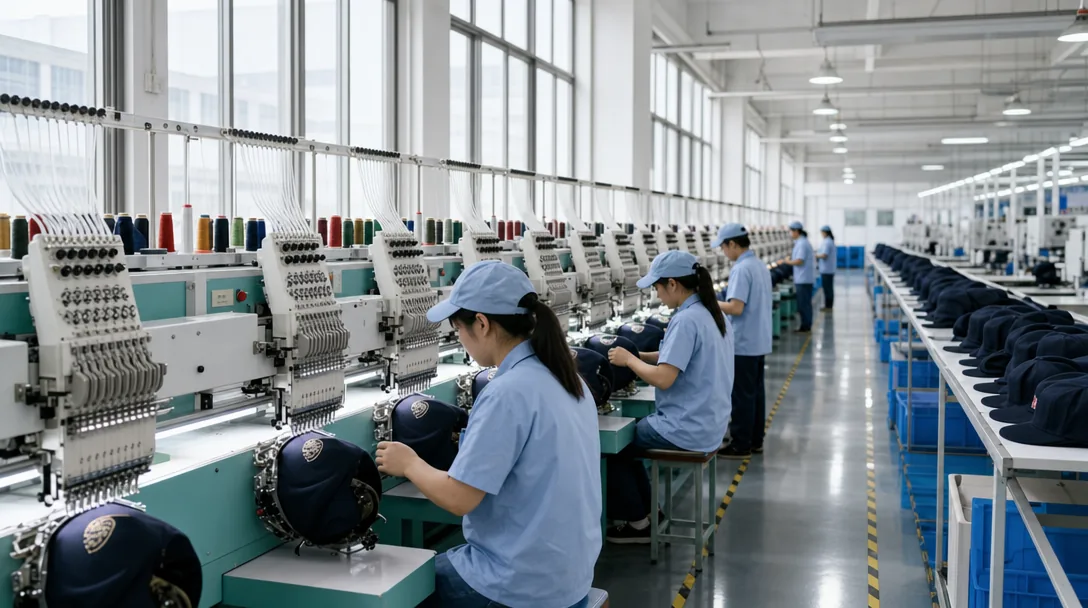
Ball Caps for Women: A 2026 Sourcing Playbook for International Buyers - Cost & MOQ Breakdown
Read article →If you are ready to take the next step on sports team hats: a vertical-specific sourcing guide - supplier checklist, our team can put a tailored quotation and digital mock-up in your inbox within 24 hours. Send the inquiry form on our contact page or message us directly on WhatsApp.