
Snapback vs Fitted vs Adjustable: Cap Closure Systems Compared - Supplier Checklist - Supplier Checklist - Cost & MOQ Breakdown
Every week, our sales team answers detailed questions about snapback vs fitted vs adjustable: cap closure systems compared - supplier checklist - supplier checklist - cost & moq breakdown. We wrote this guide so that wholesalers, streetwear brands, corporate buyers and promotional resellers can compare options with full information, and avoid the traps that show up only after production has started.
The five closure systems in commercial production
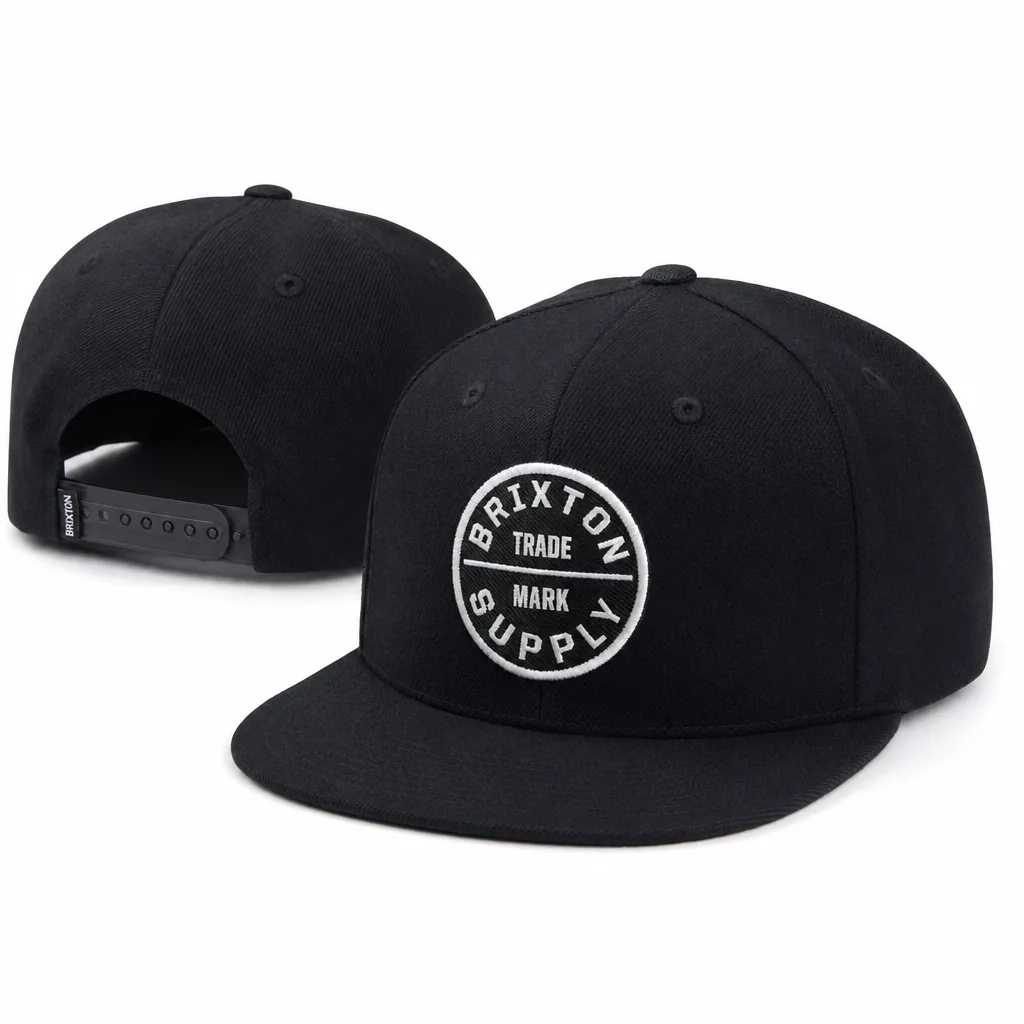
Plastic snapback remains the lowest-risk adjustable closure because it controls SKU count before it improves fit. A standard 7-hole PE snap normally covers 56-61 cm, so one adult OSFA cap can absorb most online orders without the return exposure of fitted sizing. Stock black, white, navy, and clear snaps are usually available at 300-500 pcs per style; Pantone TCX-matched snaps require resin compounding and injection molding, so 3,000-5,000 pcs per color plus about $80-$180 in color development is realistic when the shade is outside the mold shop library. In a snapback vs fitted comparison, snapback wins on inventory and replenishment speed, but it breaks up rear embroidery space and pushes branding toward woven flag labels, small rear arches, or side-panel placement. The closure does not create the silhouette. A retail snapback still needs the right body: structured 5-panel or 6-panel pattern, 280-340 gsm buckram, flat PE visor board, and a crown height around 16-17 cm. A plastic snap on a soft low-profile crown just produces a cheap adjustable cap, not a proper streetwear block.
Fabric strap closures should be quoted as separate constructions, not one generic “adjustable back.” A self-fabric strap with a metal slide on a washed cotton dad cap may add only $0.03-$0.08 over a plastic snap, but nickel-free plating, matte black finish, engraved brass, or stainless hardware can add $0.12-$0.35 per cap FOB Yiwu. Zinc alloy buckles often show white corrosion or edge discoloration after 24-48 hours of salt-spray testing; better plating should pass 72 hours without bubbling, red rust, or flaking at the corners. Tuck-buckle gives the cleanest retail back because the loose strap disappears into the tunnel, but the tunnel width must hold about +/-2 mm tolerance or the strap drags, twists, or jams during adjustment. Leather straps need thickness control, usually 1.2-1.6 mm, and colorfastness checks because dark oil-pull leather can stain light cotton twill during sea freight humidity. Hook-and-loop is practical for workwear, school, kids’, outdoor, and promo programs, but aggressive hook tape can snag embroidery thread. QC should inspect peel strength, stitch margin, hook-loop overlap, and closure alignment under AQL 2.5, not just confirm that the back closes.
Fitted caps are the cleanest build and the harshest inventory decision. With no rear opening, the back panels stay available for large rear embroidery, side logos, and full-crown layouts on Tajima, Barudan, or ZSK heads, and the cap reads more premium because the crown is uninterrupted. The problem is size discipline: a serious fitted program usually runs 6-8 sizes, commonly 6 7/8 through 8, and every size becomes its own SKU, cutting ticket, carton ratio, barcode, and forecast risk. MOQs often start around 600-1,200 pcs per color unless the factory can combine shell fabric cutting and buckram preparation across sizes. For fitted vs adjustable cap orders, approve the size curve before bulk cutting; one salesman sample in 7 3/8 tells you almost nothing about sell-through across a league, streetwear drop, or licensed retail program. Stretch-fit sits between fitted and adjustable. It keeps a clean back but uses spandex sweatband, stretch twill, or polyester-spandex panels to cover ranges such as S/M and L/XL. Test wash shrinkage, heat exposure, and band recovery, because weak elastic can relax 1-2 cm after wear and turn a premium-looking cap into a loose return.
Plastic snap (snapback) economics
The real savings in a plastic snapback is SKU compression, not the snap set. A standard PE or POM 7-hole snap costs about $0.045-$0.09 per cap in black or white; custom resin matched to a Pantone TCX reference usually lands at $0.11-$0.16, with Delta-E 2.0 as a realistic approval limit. That is small money compared with fitted size risk. One adult snapback normally covers 54-62 cm, while a fitted program must split inventory across 7, 7 1/8, 7 1/4, 7 3/8, 7 1/2, 7 5/8, and sometimes 7 3/4. In a snapback vs fitted costing review, I check the size curve before embroidery because a 10-15% miss on fitted allocation can strand whole cartons of slow sizes. A 1,000-piece snapback run can share one barcode, one carton mark, one replenishment trigger, and one embroidery file; the same fitted order may create six or seven mini-SKUs before it even reaches packing.
Plastic snaps are strongest for streetwear drops, foam truckers, mesh-back caps, event merchandise, and first e-commerce runs where the buyer has no trustworthy head-size data. Fitted caps still belong in licensed sports, closed-back retail specs, and pro-style collections where the customer expects exact sizing, but the MOQ math is less forgiving. A factory may accept 300 pieces per color for snapbacks if fabric and trim are in stock; fitted sizing often turns into 1,200-2,400 pieces because each size must stay above a sensible cutting and sewing quantity. Quality control is simple but must be firm under AQL 2.5. I reject mold-line flash, loose male studs, warped tabs, hinge whitening after 20 flex cycles, poor rivet seating, and snap color drift beyond the approved standard. CrownsForge normally stocks black, white, navy, royal, red, gray, green, and khaki snaps; custom resin colors usually need about 500 pieces because purge loss and setup scrap make smaller batches uneconomical.
On the cost sheet, snapback versus strapback is usually a brand-position decision, not a difficult sewing operation. A cotton self-fabric strap with a zinc-alloy buckle adds roughly $0.18-$0.35 per cap; brass hardware, matte black plating, debossed sliders, or laser-etched buckles can push the closure package to $0.45-$0.70. Plastic snaps sew faster and inspect cleaner because defects are visible: cracked teeth, off-center tab alignment, distorted rear openings, or a tab that will not sit flat against the sweatband seam. Closure choice also affects decoration planning. A structured 5-panel or 6-panel cap in 280-320 gsm acrylic-wool blend, cotton twill, polyester serge, or nylon taslan can carry flat embroidery or 3D puff on Tajima, Barudan, or ZSK heads, but rear-arch tension still matters. For cost, MOQ, and inventory exposure, snapback vs fitted usually favors snapback unless the selling point is authentic fitted sizing.
Fabric strap with metal buckle (dad hat aesthetic)
A fabric strap with a metal slide buckle is the closure I choose when the cap is meant to look washed, low-profile, and retail rather than promotional. The clean spec is a self-fabric strap at 16-18 mm finished width, folded with no raw edge showing, edge-stitched 2.0 mm from both sides, and paired with a brass or zinc-alloy slide in antique brass, gunmetal, brushed nickel, or matte black. On 260-320 gsm cotton twill, enzyme-washed chino, pigment-dyed canvas, T/C twill, or 21-wale corduroy, one adjustable size normally covers 54-63 cm head circumference if the rear opening is drafted correctly. In a snapback vs fitted comparison, this closure is the softer middle ground: it keeps the size flexibility buyers expect from snapbacks but avoids the plastic rear hardware that looks wrong on dad hats, golf lifestyle caps, and garment-washed streetwear. I avoid shiny low-cost plating on washed programs because stone wash, resin wash, and repeated steam pressing expose weak coating quickly, especially on black and antique brass finishes.
The cost is driven more by sewing time and trim control than by the buckle itself. For 1,000-3,000 pieces, a stocked slide buckle with strap sewing usually adds $0.12-$0.20 per cap compared with a basic seven-hole plastic snap. Custom plating, laser engraving, debossed keepers, or Pantone-matched enamel can push the adder to $0.30-$0.48, with practical trim MOQs of 2,000-5,000 pieces per color and finish. Our standard practice at CrownsForge is to approve metal finish against a trim card under D65 light; matte black and nickel can usually hold Delta-E under 1.5, while antique brass needs a wider visual tolerance because oxidation varies by batch. I also insist on a self-fabric keeper loop unless the buyer has a strong reason to remove it. Without the keeper, the strap tail curls after washing, especially on lighter 240 gsm twill or soft pigment-dyed fabric.
This closure is forgiving on fit but strict on workmanship. The rear opening needs clean binding or a reinforced slit, the strap base should be bartacked with even tension, and the buckle tongue must sit flat so it does not scratch the wearer or slip during adjustment. Compared with plastic snapback construction, operators spend more time aligning the strap, keeper, and buckle by hand, which matters when front panels have already been handled for Tajima, Barudan, or ZSK embroidery. At AQL 2.5 final inspection, I reject chipped plating, loose buckle tongues, strap slippage under a 2-3 kg pull test, distorted rear openings after steam press, and tail-length variation over 8 mm within the same PO. Plastic snaps still win for licensed team caps, event merchandise, and fast replenishment orders, but a fabric strap with metal buckle is the better adjustable closure when the buyer cares about the back view, washed handfeel, and a proper dad hat aesthetic.
Velcro (lowest cost, widest range)
Velcro is the lowest-cost adjustable closure I would still trust for a true mixed-size program, typically covering 54-63 cm if the rear arch, strap length, and overlap are drafted correctly. On a basic 5-panel promo cap, a standard hook-and-loop set in China usually adds $0.03-$0.06 per piece; a PE snapback runs $0.08-$0.14, a self-fabric strap with metal slider lands around $0.18-$0.35, and custom logo hardware can pass $0.50 before plating MOQ. That gap matters on 500-5,000 piece ad-specialty orders where the buyer is fighting to keep DDP landed cost near $3.00-$4.50 per cap. In a snapback vs fitted comparison, Velcro is the most forgiving closure: no numeric size scale, no graded carton ratio, fewer returns from borderline head sizes, and easier handout distribution for schools, volunteer crews, kids’ camps, and one-day event programs.
Treat hook-and-loop as a specified component, not a scrap strip sewn on after the cap is built. I reject 20 mm low-grade polyester tape for most adult orders because it curls, collects lint, and loses peel strength after repeated opening; a better baseline is 25 mm nylon hook-and-loop, color matched within Delta-E 1.5-2.0 to the shell fabric, with a square stitch box and 8-10 bar-tacks at the strap stress points. For children’s caps, pair it with 160-180 gsm cotton twill or lightweight polyester so the rear opening flexes instead of cutting into the head. For cadet caps, workwear, and outdoor uniforms, call out hook direction in the tech pack because exposed inward hook can catch hair, collars, and skin. Our standard practice at CrownsForge is to check closure pull, skipped stitches, loose tape ends, and tearing under AQL 2.5 before final packing.
The weakness is merchandising, not basic function. Velcro looks cheaper than a plastic snapback, antique-brass buckle, leather strap, or clean fitted cap with no rear opening, even when the front embroidery is clean on Tajima, Barudan, or ZSK heads. It is a rational choice for municipal giveaways, school programs, service uniforms, kids’ caps, and low-cost promotional runs where fast fitting matters more than resale value. It is usually wrong for retail streetwear, licensed team merchandise, golf pro-shop caps, or any ecommerce listing that shows a close back-view photo. Hook-and-loop also ages visibly: lint buildup, edge fuzzing, and reduced grip appear earlier than yellowing or cracking on a decent PE snap. In fitted vs adjustable sourcing, Velcro is the budget answer for mixed-size distribution; in snapback vs fitted merchandising, it should be treated as a practical closure, not a style feature.
Fitted: why some brands accept the operational cost
Fitted caps cost more because the order becomes a size-run program, not one adjustable SKU with a shared back closure. A normal U.S. adult fitted range runs 6 7/8 to 7 5/8, with 7 3/4 and 8 added for club retail, MLB-style merchandising, and big-and-tall accounts. Every size needs its own sweatband length, crown circumference control, size label, UPC, carton ratio, and post-steam fit check. In a snapback vs fitted FOB comparison, fitted usually lands 8-18% higher before freight; the premium is mainly from size-specific cutting, bundling, inline QC, polybagging, and warehouse allocation, not from rare fabric or special sewing. A 600-piece order split across six sizes behaves like six 100-piece micro-runs using the same shell cloth, which is why factories push back on low MOQs. For a commercially stable fitted program, 3,000-4,200 pieces is usually the practical floor if the buyer wants usable depth across sizes after the first sell-through.
Brands accept that operational cost when fit is part of the product value, not just a trim choice. Licensed baseball merchandise, premium streetwear drops, golf pro shop programs, and team-issue caps can justify fitted construction because the wearer expects a clean back, no snap rail, and a crown that sits the same every time. Fitted backs also leave uninterrupted rear panels for flat embroidery, woven league marks, or small sponsor logos. With heavy front decoration, especially 3D puff over 8,000-12,000 stitches on Tajima, Barudan, or ZSK heads, a hard-buckram fitted cap in 260-300 gsm wool-blend serge, acrylic-wool, or polyester twill normally finishes cleaner than a budget adjustable cap. The real commercial risk is inventory imbalance. Saving $0.35-$0.55 on plastic snapback hardware is irrelevant if 6 7/8 and 7 5/8 sit in the warehouse while 7 1/4 and 7 3/8 sell out by week two.
Our standard practice at CrownsForge is to lock the size curve before bulk cutting, because a late change can hold production 3-5 days while markers, sweatbands, woven labels, barcode stickers, and carton plans are rebuilt. For North American adult sports orders, 7 1/8, 7 1/4, and 7 3/8 usually carry the volume; youth, Japan-market, and big-and-tall programs need different curves. AQL 2.5 inspection should include circumference checks by size after steam blocking, with tolerance held around +/-3 mm, not guessed from a single salesman sample. Pantone TCX fabric approval, Delta-E shade control under D65 light, and clean embroidery registration do not rescue a fitted cap that runs half a size tight. Buyers comparing snapback vs fitted should budget for extra pre-production samples, size-specific barcode labels, more warehouse slots, and higher replacement exposure. Fitted is defensible at roughly $32-$48 MSRP for branded retail, but it is a weak choice for low-commitment promo orders without size forecasting discipline.
MOQ implications by closure type compared
MOQ is where snapback vs fitted becomes a stock-risk calculation, not a design preference. One adjustable cap SKU can cover most adult wearers, typically 56-61 cm after steaming and blocking, so snapback, fabric strap, metal-buckle strap, and hook-and-loop closures can often run at 100 pieces per design when the body fabric and hardware are stock. That is realistic for 260 gsm cotton twill, 108x58 polyester twill, acrylic wool blends, and 75D/150D performance polyester using standard plastic snaps, zinc-alloy buckles, or common Velcro tape. At 100 pieces, the factory can still run proper cutting markers, panel matching, buckram prep, sweatband insertion, and Tajima or Barudan embroidery loading without treating the order like a sample-room job. The MOQ changes quickly when the buyer asks for Pantone TCX fabric dyeing, Delta-E under 1.5 shade control, custom-plated buckles, nonstandard snap colors, or private-mold closures; those inputs usually push the practical minimum to 300-500 pieces because dye vats, plating lines, and hardware suppliers have their own batch economics.
Fitted caps multiply MOQ because every circumference is a separate finished SKU. A basic five-size run across 7, 7 1/8, 7 1/4, 7 3/8, and 7 1/2 at 100 pieces per size is already 500 pieces before adding a second colorway, contrast visor, side hit, or league-specific label set. The FOB premium over a comparable snapback is usually only $0.20-$0.45 per cap for size-graded cutting, sweatband length control, blocking checks, size stickers, barcode labels, and carton segregation, but the inventory exposure is much larger. A bad size curve ties up cash fast: size 7 and 7 1/2 often move slower, while 7 1/4 and 7 3/8 can sell through first in U.S. streetwear and team-merch orders. Fitted production also needs tighter in-line measurement than adjustable caps. After steam forming, the sweatband circumference should hold within +/-0.5 cm, and inspectors should verify it with size rings before final packing; otherwise the cap will feel wrong even if the embroidery passes AQL 2.5 visual inspection.
For first releases, adjustable closures are usually the cleaner buy unless the buyer has roster measurements, POS history, or repeat-order size data. A structured 6-panel snapback with flat visor, plastic snap, 260 gsm twill, and an 8,000-stitch front logo commonly lands around $3.20-$5.80 FOB China, with the spread driven by raised embroidery, stitch count, sandwich visor, woven labels, branded seam tape, polybag spec, and export carton strength. CrownsForge quotes fitted programs by size breakdown from the first proforma, not as one blended quantity, because packing lists, barcode labels, and AQL sampling all follow the SKU structure. Adjustable caps also tolerate small body variation better because the rear closure absorbs fit differences; fitted caps demand disciplined blocking, calibrated size rings, and final circumference checks. When the launch budget is tight, the better spend is usually embroidery digitizing, fabric shade matching to Pantone TCX with controlled Delta-E, and compliant labeling, not taking on five-size fitted inventory before demand is proven.
How to spec the right closure for your retail positioning
Closure choice should be driven by price point and SKU risk before crown height, visor curve, or embroidery size. In snapback vs fitted planning, the first commercial difference is coverage: one adult snapback normally fits 56-61 cm using a 7-position PP or ABS plastic snap, while a fitted cap needs a size curve from 6 7/8 to 8. Unless the buyer has team, league, or fan-shop data, the edge sizes usually move slowly, especially 6 7/8, 7 7/8, and 8. For a $24-$38 retail streetwear cap, I would start with a 6-panel structured snapback, 260-300 gsm acrylic-wool blend or cotton twill, fused buckram front, flat PE visor, and matte black, smoke, or clear snaps. A self-fabric strapback gives a softer fashion read, but the metal slide is not free: antique brass, nickel, or gunmetal hardware typically adds $0.18-$0.45 FOB depending on plating thickness, strap fabric, and whether it passes 24-hour neutral salt-spray testing without visible corrosion.
Promotional and uniform programs should prioritize fit range, packing speed, and inspection simplicity over retail handfeel. A standard plastic snap adds about $0.08-$0.15 FOB, and hook-and-loop is usually close, but hook-and-loop looks lower grade on adult retail caps because it catches lint, curls at the edge, and loses grip after repeated washing. For staff uniforms, school events, golf outings, and youth caps, that tradeoff can still be correct because fast adjustment matters more than brand nuance. Under AQL 2.5 final inspection, hook-and-loop is quick to check with an engagement and pull test; snaps require checking cracked tabs, hole alignment, sharp burrs, and color consistency against the approved trim card. I would avoid hook-and-loop on a $28 fashion cap unless the design language is clearly utility: 100-150 denier nylon mesh, ripstop panels, moisture-wicking sweatband, matte trims, and low-contrast embroidery. For fashion capsules, the better comparison is snapback vs strapback, not snapback vs fitted.
Fitted caps are a sizing program, not simply a cleaner back view. A true fitted order needs controlled sweatband stretch, crown circumference, panel tension, blocking, and post-steam shrinkage; a 3 mm drift at the sweatband can push a 7 3/8 into return territory after pressing, polybag compression, and ocean-freight humidity. MOQ multiplies fast because every size, color, logo, patch, and side-mark variation becomes a separate SKU. Many cap factories ask 144-288 pieces per size for stable cutting and sewing, so one eight-size fitted curve can become 1,152-2,304 pieces before embroidery color splits. Fitted makes sense for pro-team, league, and fan merchandise because customers accept exact sizing and pay for authenticity. For new streetwear labels, I would launch snapback first, read 60-90 days of sell-through, then move proven hero SKUs into fitted. Our standard practice at CrownsForge is to lock the closure before lab dips and size-set samples because the back opening changes sweatband tension, rear embroidery clearance, woven-label placement, polybag fit, and carton count.
Frequently Asked Questions
How long does production take?
Sampling takes 7 to 12 days. Bulk production runs 20 to 30 days depending on quantity, fabric availability and decoration complexity. Inspection and packing adds another 3 to 5 days before shipment.
Do you support sustainability certifications?
Yes. We work with GOTS organic cotton, GRS-certified recycled polyester, OEKO-TEX Standard 100 fabrics, and are BSCI and Sedex audited. Certification documentation can be provided per order.
What file format should I send for my logo?
Vector files (AI, EPS, PDF) are ideal. High-resolution PNG or JPG at 300 dpi on transparent background works as a fallback. Provide Pantone color references for accurate reproduction.
What is the minimum order quantity (MOQ) for custom hats?
Our standard MOQ is 100 pieces per design and color, with sampling available from 1 piece. For complex multi-color logos or premium fabric upgrades, the MOQ can be lowered with a small per-piece surcharge.
Can I order a sample before bulk production?
Yes. We strongly recommend approving a pre-production sample before mass production. Samples are charged at 35 to 60 USD each plus express shipping, fully refundable against confirmed bulk orders over 500 pieces.
What should buyers know about cotton twill baseball cap?
When evaluating cotton twill baseball cap, the key considerations are construction quality, decoration capability, MOQ flexibility and lead time. Universal sizing 54-62cm with 8 snap positions. Single SKU per design covers most adults. Adds ~$0.05 per cap for hardware. Industry-standard for retail snapback hats, trucker caps, casual baseball caps. Available in 8 stocked colors; custom Pantone-matched snaps at 500+ pieces. Plastic snap (snapback), fabric strap with metal slide buckle, fabric strap with tuck-buckle,…
What should buyers know about flat bill hats snapback?
When evaluating flat bill hats snapback, the key considerations are construction quality, decoration capability, MOQ flexibility and lead time. Universal sizing 54-62cm with 8 snap positions. Single SKU per design covers most adults. Adds ~$0.05 per cap for hardware. Industry-standard for retail snapback hats, trucker caps, casual baseball caps. Available in 8 stocked colors; custom Pantone-matched snaps at 500+ pieces. Plastic snap (snapback), fabric strap with metal slide buckle, fabric strap with tuck-buckle,…
How does ordering custom flat bill hat embroidery work?
When evaluating custom flat bill hat embroidery, the key considerations are construction quality, decoration capability, MOQ flexibility and lead time. Universal sizing 54-62cm with 8 snap positions. Single SKU per design covers most adults. Adds ~$0.05 per cap for hardware. Industry-standard for retail snapback hats, trucker caps, casual baseball caps. Available in 8 stocked colors; custom Pantone-matched snaps at 500+ pieces. Soft fabric strap (1.5-2cm wide) with antique brass slide buckle. Fits 54-63cm. Adds ~$0.15 per…
What should buyers know about baseball hats women?
When evaluating baseball hats women, the key considerations are construction quality, decoration capability, MOQ flexibility and lead time. Universal sizing 54-62cm with 8 snap positions. Single SKU per design covers most adults. Adds ~$0.05 per cap for hardware. Industry-standard for retail snapback hats, trucker caps, casual baseball caps. Available in 8 stocked colors; custom Pantone-matched snaps at 500+ pieces. Plastic snap (snapback), fabric strap with metal slide buckle, fabric strap with tuck-buckle,…
Is a fitted hat a snapback?
Comparing Style and Fit Snapbacks have an adjustable snap closure, usually made from plastic, that you can use to adjust the size of the cap to fit your head perfectly. A fitted cap is just a hat, with no adjustable sizing. The snapback design is bolder, with a more structured high crown and a flat brim.
Do baseball players wear snapbacks or fitted?
The snaps are usually plastic even if the cap is made of wool, cotton, or other material. Popularized by New Era, the official hat supplier to the MLB, the snapback cap is de rigueur for Major League baseball players.
Are snapbacks better than fitted?
Fitted hats are a great choice if you know your size and want to build a collection of caps for casual wear, while snapback caps are ideal for streetwear fashion enthusiasts and make a bold statement. Both hats come in a range of colors and designs, so the right choice for you all comes down to your own personal style.
What does it mean if a hat is fitted?
Fitted hats are called “fitted” because they're designed to fit the wearer's head snugly without adjustable snaps or straps. That means these hats are sized specifically to the wearer's head, ensuring a natural fit. This modern-day baseball cap comes in 20 sizes to fit nearly any head shape or size.
Why do they call it a snapback?
The name “snapback” comes from the way the plastic strap snaps together to adjust the fit. Unlike fitted caps, which come in fixed sizes, snapback hats are usually designed as one size fits most, making them a popular choice for bulk orders, team hats, promotional merchandise, and custom branding.
Looking for a reliable hat manufacturer in China?
CrownsForge has produced custom hats for 800+ brands across 40 countries. From 100-piece launches to 100,000-piece retail programs, we deliver on time and on spec.
Get in touchRelated guides
Custom Leather Patch Hat Low Minimum: A 2026 B2B Sourcing Guide
Read article →
Mens Beanies: Properties, Costs and How to Spec It Right
Read article →
Bulk Trucker Hats Export Shipping Checklist for Custom Hat Buyers - Cost & MOQ Breakdown - Supplier Checklist
Read article →We hope this guide demystifies snapback vs fitted vs adjustable: cap closure systems compared - supplier checklist - supplier checklist - cost & moq breakdown and helps you move forward with confidence. If you have questions specific to your project, our English-speaking sales engineers are one message away.