
Snapback vs Fitted vs Adjustable: Cap Closure Systems Compared - Supplier Checklist - Cost & MOQ Breakdown - Supplier Checklist
Every week, our sales team answers detailed questions about snapback vs fitted vs adjustable: cap closure systems compared - supplier checklist - cost & moq breakdown - supplier checklist. We wrote this guide so that wholesalers, streetwear brands, corporate buyers and promotional resellers can compare options with full information, and avoid the traps that show up only after production has started.
The five closure systems in commercial production
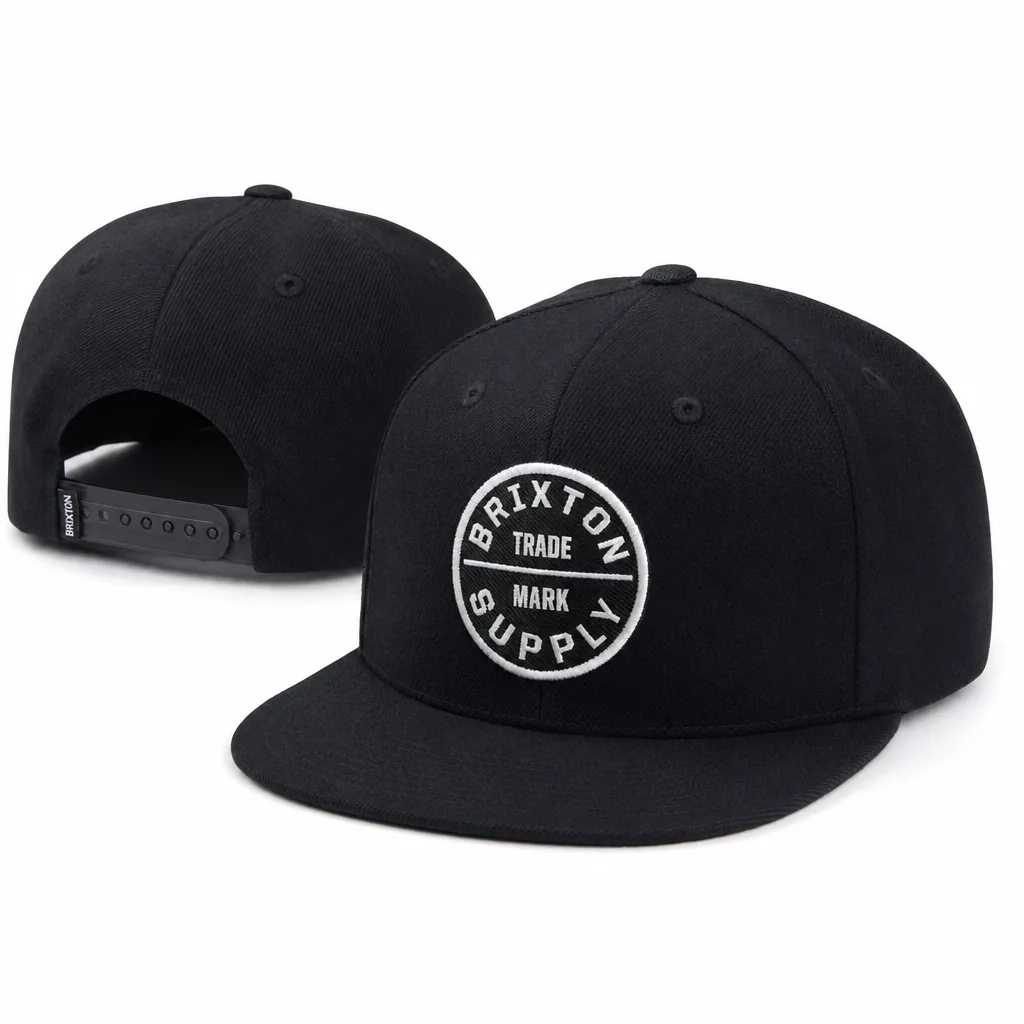
Plastic snapback is still the lowest-risk commercial closure when one adult SKU must cover roughly 56-61 cm without forcing the buyer into size ratios. A standard 7-hole PE or PP snap set adds about $0.08-$0.18 per cap in China, can be attached cleanly on post-bed machines, and keeps replenishment simple for promo, streetwear, foam trucker, and team fan programs. Stock black, white, navy, gray, and red snaps are normally available from component suppliers; Pantone TCX-matched plastic usually needs 3,000-5,000 pieces because the resin batch must be run separately. I would reject a visible color mismatch beyond Delta-E 1.5-2.0 under D65 light, especially on tonal caps where the closure sits next to dyed cotton or poly twill. In a snapback vs fitted decision, snapback usually wins on inventory control, reorder speed, and warehouse risk. Its tradeoff is positioning: it can look too casual for golf, resort retail, airline uniforms, and corporate programs where buyers expect quieter hardware.
Fabric strap closures are where weak specifications show up immediately. A metal slide buckle leaves the strap tail exposed, so the buyer must define strap fabric, edge stitching, bartack count, plating finish, and rear-opening width, not just say “adjustable strap.” A decent brass or zinc-alloy buckle normally adds $0.22-$0.45 per cap; cheap iron hardware may pass carton inspection but show red rust at the pin after a 24-hour neutral salt spray test. A tuck-buckle looks cleaner because the strap feeds into a back channel, but that channel needs tight sewing control. If it is even 1-2 mm too narrow, operators force the strap through, wrinkle the sweatband seam, and the cap looks damaged before packing. These closures fit washed cotton twill, 280-320 gsm canvas, corduroy, pigment-dyed dad caps, and premium low-profile shapes. CrownsForge’s standard check is a 15 kgf strap pull test, AQL 2.5 inspection for plating scratches, and size verification after steam because washed caps can relax another 2-4 mm.
Hook-and-loop and fitted caps sit at opposite ends of the closure decision. A 25 mm nylon hook-and-loop set costs about $0.10-$0.25, has low MOQ, and works for kids’ caps, workwear, tactical orders, school events, and promotional runs where fast adjustment matters more than retail feel. The problems are predictable: lint pickup, carton abrasion, edge curling after laundering, and the ripping sound that makes a cap feel cheaper on a retail shelf. Fitted caps remove the closure component cost, but they create the hardest inventory problem. A serious fitted program commonly covers 6 7/8 to 8 in 1/8 increments, each with separate circumference QC and a realistic tolerance of +/- 3 mm after blocking and steaming. This is why snapback vs fitted is a merchandising decision, not a simple factory-cost comparison. Structured fitted fronts also demand disciplined digitizing on Tajima, Barudan, or ZSK heads because buckram tension, 3D puff foam height, and side-seam pull can distort logos differently across sizes.
Plastic snap (snapback) economics
The economic advantage of a plastic snap is size-risk compression, not the trim price. A stocked 7-hole PP or POM snap costs roughly $0.045-$0.08 per cap, but the bigger saving is that one adult snapback usually fits about 54-62 cm, keeping a 1,000-piece PO as one finished SKU. In a snapback vs fitted program, that changes the real cost center from sewing to forecasting: size curves, carton marks, pick slots, replenishment timing, and dead stock. Fitted caps look cleaner and more tailored, but they punish buyers without reliable head-size data. I have seen 7 1/4 and 7 3/8 sell through in two weeks while 7 1/8 and 7 5/8 sit until markdown. For promo distributors, campus stores, tournament merch, and first streetwear drops, a visible plastic snap is usually cheaper than carrying 20-30% slow fitted inventory after the sales window closes.
The snap itself rarely moves FOB as much as fabric and decoration. A 6-panel acrylic/wool flat-visor snapback at 1,000 pieces may quote around $2.40-$3.20 FOB Ningbo/Yiwu before decoration, while a basic self-fabric strap might only be $0.03-$0.06 different from a stocked snap. Front embroidery changes the quote faster: moving from a 5,000-stitch flat logo to a 12,000-stitch design on Tajima, Barudan, or ZSK heads can add $0.18-$0.35 per cap, and 3D foam adds downtime because machine speed drops and thread breaks rise. Heavy 380 gsm acrylic-wool, hard buckram, contrast sandwich visors, printed seam tape, branded taping, woven labels, and individual polybags usually matter more than the closure. CrownsForge treats stocked snap colors as low-risk trims, but custom molded snaps are quoted as a separate MOQ item because resin setup is a different production problem.
Pantone-matched snaps need tighter control than buyers expect because injection-molded resin does not match dyed cotton twill the same way. A factory will usually ask for 500-1,000 pieces per snap color, and 2,000+ pieces is common for nonstandard resin because injection setup, resin purge, shrinkage checks, and color approval are not economical for a 144-piece sample run. Specify Pantone TCX or TPG, accept a realistic Delta-E tolerance of 1.5-2.0, and approve the snap beside the shell fabric under D65 light, not under warehouse LEDs or a phone flashlight. This is where snapback vs fitted becomes a brand-positioning decision as much as a sizing decision. Flat-visor streetwear, team merchandise, and event caps can carry a plastic snap naturally. Washed cotton dad caps, golf caps, and premium lifestyle caps often look better with a self-fabric strap, antique brass buckle, or metal press clasp. When MOQ, replenishment speed, and size uncertainty matter more than tailored fit, snapback is the practical adjustable closure.
Fabric strap with metal buckle (dad hat aesthetic)
A fabric strap with a metal slide buckle is the closure I specify when the brief says “dad hat” but the buyer still needs a clean retail back view. Use self-fabric in 280-320 gsm cotton twill, garment-dyed cotton, washed canvas, or 8-wale corduroy, finished at 15-20 mm wide with straight edge stitching and a flat fold; ropey strap edges and stretched rear openings are the first signs of poor sewing control. On a standard adult block, this closure usually covers about 54-63 cm head circumference, so one adjustable SKU can replace three fitted sizes for resort, streetwear, museum shop, and promotional programs. In a snapback vs fitted discussion, it belongs firmly on the adjustable side: softer than plastic snaps, cleaner than hook-and-loop, and visually correct for unstructured 6-panel caps where a hard plastic closure makes the product look like a cheap promo cap.
The cost risk is plating and attachment quality, not the buckle blank. A stock antique brass, brushed nickel, gunmetal, or matte black slider typically adds $0.12-$0.22 per cap at FOB factory level including sewing labor; the raw zinc alloy or iron buckle may be under $0.05. Custom engraved sliders, 18 mm or 22 mm nonstandard widths, or Pantone-influenced plating usually require $80-$180 tooling and 1,000-3,000 piece buckle MOQs, separate from the cap MOQ. CrownsForge’s standard practice is to reject sharp inner buckle edges, run a 3M tape-pull test on plating adhesion, and spot-check salt-spray resistance on export lots. Cheap “antique brass” plating can rub through or oxidize during 30-45 day DDP transit through humid ports, especially when caps are packed too tightly in polybags.
The tradeoff is output speed and field durability. A fabric strap has to be tucked, centered, and aligned during trimming and final packing, adding roughly 5-8 seconds per cap versus a plastic snapback closure on the same line. Inspection should hold exposed strap length within +/-3 mm, confirm the slider sits centered in the rear arch, and check that the tail does not twist after three adjustment cycles. Under AQL 2.5, I treat loose bar tacks, crooked strap exits, plating rub, sharp buckle edges, and off-center sliders as major defects because they are obvious in e-commerce back-view photos. For fitted vs adjustable cap planning, the metal-buckle strap reduces size risk and inventory fragmentation, but I would avoid it for high-sweat baseball, youth league programs, and classic flat-brim snapback silhouettes. For washed dad hats and low-profile fashion caps, it is usually the cleanest closure.
Velcro (lowest cost, widest range)
Velcro hook-and-loop is the cheapest adjustable closure I still approve for production caps, but only when the buyer accepts the visual downgrade. A 20–25 mm nylon hook-and-loop set normally costs $0.03–$0.06 per cap ex-factory before sewing; a plastic snapback strap is usually $0.08–$0.14, and a metal buckle with tuck strap runs $0.18–$0.35 depending on plating and strap fabric. On a properly graded adult 6-panel block, Velcro can cover roughly 54–63 cm head circumference, which gives more tolerance than most 7-hole snap tabs and removes the size-break risk of fitted caps. That is the practical snapback vs fitted tradeoff for school giveaways, municipal uniforms, volunteer crews, kids’ programs, and field-service caps where one SKU must cover hundreds of users. I specify 20–25 mm tape for adult caps; 16–20 mm is acceptable for children’s caps, but it looks weak on 280 gsm cotton twill, brushed canvas, ripstop, or structured crowns with firm buckram.
The real cost of Velcro is not the tape price; it is the lower perceived grade and faster aging. The hook side catches lint, loose thread, carton dust, and pet hair during packing, and low-grade tape starts curling after 20–30 sweat or wash cycles if the end is not folded, edge-stitched, and bar-tacked. I would not use Velcro on premium streetwear caps with wool-blend crown fabric, suede sandwich brims, satin seam taping, or raised 3D puff embroidery from Tajima, Barudan, or ZSK machines. The rear view immediately reads promotional rather than retail. Compared with snapback, Velcro adjusts faster, holds a wider fit range, and is easier for children or gloved workers, but it photographs worse and gives the back panel less structure. Compared with fitted, it eliminates dead inventory from unused sizes, but it breaks the clean rear silhouette that supports higher retail pricing. Saving $0.03 on closure while spending $0.45–$0.90 on front embroidery is usually bad product engineering.
Our standard practice at CrownsForge is to use black, white, navy, or red stock hook-and-loop unless the order volume justifies custom dyeing. Pantone TCX matching on Velcro should be treated as directional, not exact; asking for Delta-E under 2.0 is unrealistic because the hook and loop faces reflect light differently. Stock tape supports 300–500 piece MOQs when paired with common materials such as 16S cotton twill, 160–180 gsm polyester, or uniform ripstop. Custom-colored tape usually pushes the practical MOQ to about 3,000 pieces and adds 10–15 days before bulk sewing. Inspection must cover more than color: peel strength, shear hold, 8–10 SPI stitch density, edge fraying, tab alignment within ±2 mm, and bartack security should all be checked under AQL 2.5. A weak or scratchy closure is noticed by the wearer before a 1 mm embroidery registration drift, especially on repeat-use workwear caps.
Fitted: why some brands accept the operational cost
Fitted caps cost more because every head size is a separate fit condition, not a cosmetic SKU. A typical U.S. size run starts at 6 7/8 and runs through 7 5/8; baseball and license programs often add 7 3/4, 7 7/8, and 8. Each 1/8 size step is roughly 1 cm in circumference, so a 7 3/8 should finish near 58.7 cm, not “medium.” In the snapback vs fitted decision, that is the core operational tradeoff: a snapback hides variation with a plastic closure, while a fitted cap exposes panel shrinkage, crown blocking, sweatband length, seam allowance, and steam-pressing errors. I reject fitted bulk when finished circumference moves beyond ±0.5 cm by size, because a tight 7 3/8 or loose 7 1/4 is a consumer return, not a small defect. Measure after embroidery and final pressing, not after sewing only; dense 12,000–18,000 stitch front logos on Tajima, Barudan, or ZSK heads can pull 80/20 acrylic-wool serge, polyester serge, or 10 oz cotton twill enough to change crown tension and perceived fit.
MOQ is the part many buyers underestimate. A quote showing 144 pcs MOQ does not mean seven fitted sizes can be split cleanly at 20 pcs each; the line still needs efficient quantities for cutting markers, size labels, sweatband pre-cutting, blocking forms, carton segregation, barcode labels, and QC records. In real production, 48–72 pcs per size is a more stable floor when fabric, visor, eyelets, and embroidery setup are shared. That puts a seven-size colorway at 336–504 pcs before the factory can run it without constant changeovers. CrownsForge normally locks the size curve before fabric cutting, with North American orders weighted toward 7 1/8, 7 1/4, 7 3/8, and 7 1/2, and conservative buys at 6 7/8, 7 3/4, and above unless POS data proves demand. Inspection must also be size-level, not PO-level: inspectors use circumference tapes and size rings, record results by size under AQL 2.5, and separate blocking distortion from sewing defects such as twisted panels or uneven sweatband join.
Brands absorb the fitted-cap cost only when the customer values authenticity enough to pay for it. MLB-style licensed programs, baseball heritage labels, and premium streetwear drops benefit from the uninterrupted back panel: no snap, woven strap, metal buckle, hook-and-loop, or elastic insert. The construction reads as a real on-field cap, not promotional headwear. FOB premium is usually $0.40–$1.20 per piece versus a comparable adjustable cap, depending on fabric, buckram, visor board, stitch count, size fragmentation, and whether each size needs separate fit samples. The bigger risk is inventory, not sewing labor. One approved sample in size 7 1/4 does not validate the full run, because cotton twill, wool blend serge, and polyester serge respond differently to humidity, heat, and blocking pressure. If the brand gives only S/M/L guidance, mixes Asian circumference assumptions with U.S. fitted sizing, or leaves centimeters off the size chart, returns will erase the margin fast. Fitted makes sense when exact sizing is part of the product promise; otherwise, adjustable closures are the safer operating model.
MOQ implications by closure type compared
MOQ is decided by size grading before silhouette, and that is the real operational split in snapback vs fitted sourcing. A plastic snapback, nylon strapback, self-fabric strap with metal buckle, leather strap, or hook-and-loop back can usually run at 100 pieces per design/color because one adjustable opening covers most adult heads after sewing and steaming, typically 56–61 cm. The factory holds one crown block, one visor die, one embroidery DST, one woven label set, one carton mark, and one closure BOM. That keeps cutting, bundling, and final packing simple enough for a low-volume order.
A fitted cap is a size matrix, not one SKU with a different back. Even a narrow adult size run of 7, 7 1/8, 7 1/4, 7 3/8, and 7 1/2 means five cut ratios, five sweatband lengths, five size labels or heat-transfer marks, separate polybag counts, and size-separated AQL inspection. Many factories will quote “100 pcs MOQ” in a catalog, but for fitted caps that usually means 100 pcs per size, so the practical opening order becomes 500 pcs before adding a second colorway, fabric, or team logo. If the buyer wants 7 5/8 and 7 3/4 for larger Western heads, add more bins, more inventory risk, and more leftover sizes at season end.
The unit-cost gap is smaller than the cash-flow gap. A 100-piece embroidered snapback in 10–12 oz cotton twill, 80/20 acrylic-wool, or 280–320 gsm polyester twill commonly lands around $4.80–$5.80 FOB Ningbo/Shanghai with a 6,000–9,000 stitch front logo on Tajima or Barudan heads, standard buckram, PE visor insert, and plastic snap. A fitted version may add only $0.35–$0.75 per cap for size handling, extra labels, blocking checks, and higher reject risk, but five sizes push the opening buy to roughly $2,575–$3,275. Two colorways become 1,000 caps, not 200. CrownsForge normally steers untested streetwear drops, promotional programs, and small team-license projects toward adjustable closures first, then moves to fitted only after sell-through proves whether 7 1/4, 7 3/8, or 7 1/2 carries demand.
How to spec the right closure for your retail positioning
Choose the closure from the retail promise, not from a catalog photo. In snapback vs fitted planning, the real trade is inventory coverage versus on-field authenticity: snapback gives one-size grading, easier replenishment, and a visible collector cue; fitted gives the clean 360-degree crown line buyers associate with pro caps, but only if the size curve is controlled. For snapbacks, approve the physical rear tab in the PP sample, not just “black plastic” on the spec sheet. Check resin, tab thickness, hole pitch, peg diameter, and retention after 300 open-close cycles. Cheap PE at 0.9 mm often feels acceptable in a salesman sample, then relaxes after steaming and carton compression. POM or high-density PE at 1.2–1.4 mm usually adds $0.08��$0.18 per cap, but it prevents loose snaps and return complaints. Plastic snapbacks fit high-profile crowns, flat visors, 3D puff embroidery, and team-color blocking. Washed cotton twill, low crowns, tonal logos, and outdoor programs usually look cleaner with a self-fabric strap plus antique brass, matte black, or nickel hardware.
Promotional, campus, event, and staff caps should normally stay with snapback, hook-and-loop, or an elastic strap because distribution matters more than a perfect fit. A 5,000-piece giveaway with unknown head sizes needs fast packing, forgiving adjustment, and low customer-service noise; fitted sizing creates dead stock before the cartons reach the warehouse. Basic hook-and-loop is often the lowest-cost closure, but bright white tape on navy, black, or forest green makes the cap look disposable. Specify color-matched hook-and-loop, 25 mm width, 8–10 mm clean bartacks, and a covered end tab; that upgrade is often only $0.03–$0.06 per cap. A standard snapback usually runs $0.12–$0.35 above basic hook-and-loop depending on resin, Pantone color matching, and whether a custom mold is needed, but it photographs better and handles adult sizing with fewer complaints. For youth caps, I prefer hook-and-loop or elasticized straps; adult snap arches copied onto a youth block can press into the occipital area and fail wear testing. Our standard practice at CrownsForge is to test closure tension after steaming, wash testing, and 24-hour carton compression, not only after sewing.
Fitted caps belong in serious sports retail, licensed collections, and higher-MSRP drops, but they punish weak forecasting. A true fitted program usually needs 6–8 sizes, commonly 6 7/8 through 8, with separate sweatband length, crown blocking, cutting allowance, and final circumference control for each size. I would hold finished circumference to ±0.5 cm under AQL 2.5 inspection; ±1.0 cm is too loose when there is no adjustment system to absorb the error. If the factory MOQ is 300 pieces per color and the buyer wants a full size curve, slow sizes can trap 12–24 pieces per color while 7 1/4 and 7 3/8 sell out first. For mixed retail programs, use snapback as the volume SKU and reserve fitted for hero colorways, league marks, or collector capsules where authenticity supports a higher MSRP. In practical snapback vs fitted merchandising, snapback wins reorders, gifting, and broad size coverage; fitted wins credibility only when the buyer can forecast the size curve and tolerate slower inventory turns.
Frequently Asked Questions
How long does production take?
Sampling takes 7 to 12 days. Bulk production runs 20 to 30 days depending on quantity, fabric availability and decoration complexity. Inspection and packing adds another 3 to 5 days before shipment.
Do you support sustainability certifications?
Yes. We work with GOTS organic cotton, GRS-certified recycled polyester, OEKO-TEX Standard 100 fabrics, and are BSCI and Sedex audited. Certification documentation can be provided per order.
What file format should I send for my logo?
Vector files (AI, EPS, PDF) are ideal. High-resolution PNG or JPG at 300 dpi on transparent background works as a fallback. Provide Pantone color references for accurate reproduction.
What is the minimum order quantity (MOQ) for custom hats?
Our standard MOQ is 100 pieces per design and color, with sampling available from 1 piece. For complex multi-color logos or premium fabric upgrades, the MOQ can be lowered with a small per-piece surcharge.
Can I order a sample before bulk production?
Yes. We strongly recommend approving a pre-production sample before mass production. Samples are charged at 35 to 60 USD each plus express shipping, fully refundable against confirmed bulk orders over 500 pieces.
What should buyers know about cotton twill baseball cap?
When evaluating cotton twill baseball cap, the key considerations are construction quality, decoration capability, MOQ flexibility and lead time. Universal sizing 54-62cm with 8 snap positions. Single SKU per design covers most adults. Adds ~$0.05 per cap for hardware. Industry-standard for retail snapback hats, trucker caps, casual baseball caps. Available in 8 stocked colors; custom Pantone-matched snaps at 500+ pieces. Plastic snap (snapback), fabric strap with metal slide buckle, fabric strap with tuck-buckle,…
What should buyers know about flat bill hats snapback?
When evaluating flat bill hats snapback, the key considerations are construction quality, decoration capability, MOQ flexibility and lead time. Universal sizing 54-62cm with 8 snap positions. Single SKU per design covers most adults. Adds ~$0.05 per cap for hardware. Industry-standard for retail snapback hats, trucker caps, casual baseball caps. Available in 8 stocked colors; custom Pantone-matched snaps at 500+ pieces. Plastic snap (snapback), fabric strap with metal slide buckle, fabric strap with tuck-buckle,…
How does ordering custom flat bill hat embroidery work?
When evaluating custom flat bill hat embroidery, the key considerations are construction quality, decoration capability, MOQ flexibility and lead time. Universal sizing 54-62cm with 8 snap positions. Single SKU per design covers most adults. Adds ~$0.05 per cap for hardware. Industry-standard for retail snapback hats, trucker caps, casual baseball caps. Available in 8 stocked colors; custom Pantone-matched snaps at 500+ pieces. Soft fabric strap (1.5-2cm wide) with antique brass slide buckle. Fits 54-63cm. Adds ~$0.15 per…
What should buyers know about baseball hats women?
When evaluating baseball hats women, the key considerations are construction quality, decoration capability, MOQ flexibility and lead time. Universal sizing 54-62cm with 8 snap positions. Single SKU per design covers most adults. Adds ~$0.05 per cap for hardware. Industry-standard for retail snapback hats, trucker caps, casual baseball caps. Available in 8 stocked colors; custom Pantone-matched snaps at 500+ pieces. Plastic snap (snapback), fabric strap with metal slide buckle, fabric strap with tuck-buckle,…
Is a fitted hat a snapback?
Comparing Style and Fit Snapbacks have an adjustable snap closure, usually made from plastic, that you can use to adjust the size of the cap to fit your head perfectly. A fitted cap is just a hat, with no adjustable sizing. The snapback design is bolder, with a more structured high crown and a flat brim.
Do baseball players wear snapbacks or fitted?
The snaps are usually plastic even if the cap is made of wool, cotton, or other material. Popularized by New Era, the official hat supplier to the MLB, the snapback cap is de rigueur for Major League baseball players.
Looking for a reliable hat manufacturer in China?
CrownsForge has produced custom hats for 800+ brands across 40 countries. From 100-piece launches to 100,000-piece retail programs, we deliver on time and on spec.
Get in touchRelated guides
Custom Leather Patch Hat Low Minimum: A 2026 B2B Sourcing Guide
Read article →
Mens Beanies: Properties, Costs and How to Spec It Right
Read article →
Bulk Trucker Hats Export Shipping Checklist for Custom Hat Buyers - Cost & MOQ Breakdown - Supplier Checklist
Read article →We hope this guide demystifies snapback vs fitted vs adjustable: cap closure systems compared - supplier checklist - cost & moq breakdown - supplier checklist and helps you move forward with confidence. If you have questions specific to your project, our English-speaking sales engineers are one message away.