
Snapback vs Fitted vs Adjustable: Cap Closure Systems Compared (2026 Update) - Cost & MOQ Breakdown
Every week, our sales team answers detailed questions about snapback vs fitted vs adjustable: cap closure systems compared (2026 update) - cost & moq breakdown. We wrote this guide so that wholesalers, streetwear brands, corporate buyers and promotional resellers can compare options with full information, and avoid the traps that show up only after production has started.
The five closure systems in commercial production
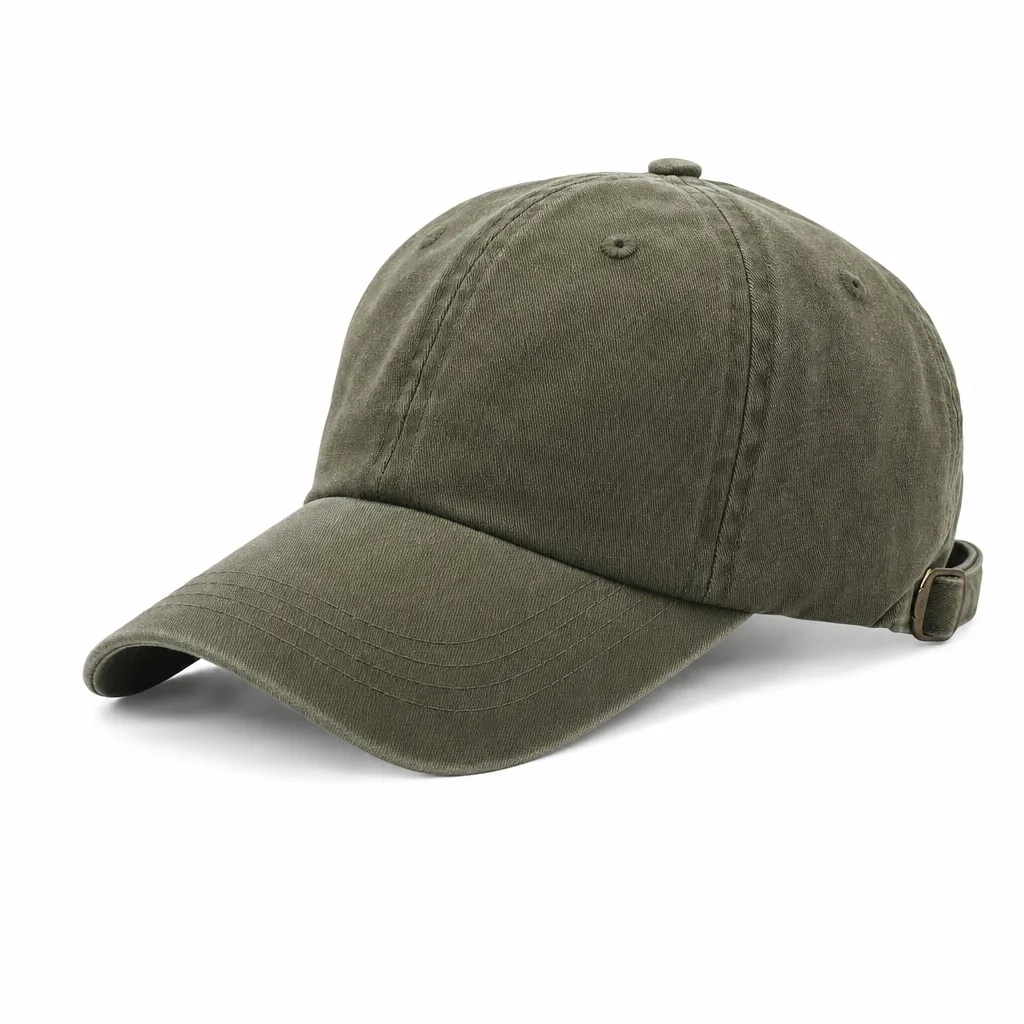
The five closure systems that actually change commercial outcomes are plastic snap, fabric strap with slider, tuck strap, hook-and-loop, and fitted with no rear opening. On a factory line, closure choice affects pattern grading, SAM, carton assortment, and size-risk exposure more than most buyers expect. In any honest snapback vs fitted comparison, the key issue is inventory liability. A standard 7-hole POM snap usually covers about 54-60 cm head circumference, and an extended strap can push usable range to 61 cm, so one body size can service a 1,200-piece order with one packing spec. A fitted cap for the U.S. market normally needs 4-6 sizes, typically 6 7/8, 7, 7 1/8, 7 1/4, 7 3/8, and 7 1/2 or 7 5/8. Every size becomes a separate SKU for cutting tickets, sweatband labels, carton ratios, and replenishment planning. That is why fitted programs rarely make commercial sense at the same MOQ as adjustable caps: 288-500 pcs per colorway is common for fitted, while snap, slider, or hook-and-loop can often start at 144-200 pcs if shell fabric, buckram, and sweatband stock are already in house.
Plastic snap is still the fastest and cheapest option for structured 6-panel caps in 260-320 gsm cotton twill, brushed chino, or 80/20 acrylic-wool. A reliable POM snap set in black, white, or navy runs about $0.03-0.06; cheaper PP hardware saves fractions of a cent and then shows up later in retailer claims for cracked pegs or weak engagement. It installs quickly during back-opening assembly, keeps line balancing simple, and suits high-profile crowns with flat embroidery or 3D puff run on Tajima, Barudan, or ZSK heads. The downside is obvious: buyers touch the closure first, and poor color matching or thin resin teeth can cheapen an otherwise solid cap. Our standard practice is a 20-cycle open-close test inline plus a pull check on both strips before packing. Fabric straps sit higher on perceived quality but add cost and labor. Self-fabric, nylon webbing, suede, or leather paired with brass, matte nickel, or gunmetal sliders typically adds $0.12-0.35 in hardware, plus about $0.08-0.15 extra labor versus a basic snap. Rear embroidery space also shrinks; once the buckle is set, usable width over the back arch is usually only 45-55 mm.
Hook-and-loop and fitted are the two ends of the practicality spectrum. Hook-and-loop works because it is tolerant: material cost is roughly $0.05-0.10, it sews fast, and it handles broad size variation in promo, school, and uniform programs. It performs best on 75D-150D polyester, perforated microfiber, and lightweight stretch woven caps where function beats fashion. The failure points are familiar on the inspection table: lint contamination, noisy hand feel, and grip loss if the hook density is low or the loop tape is too soft. Fitted, by contrast, gives the cleanest rear silhouette and usually the strongest shelf presentation, but it demands tighter process control than many brands budget for. With no closure to absorb variance, finished circumference, sweatband join, visor-center alignment, and back seam symmetry need to hold within about plus or minus 3 mm by size. AQL 2.5 should be checked by size breakdown, not just total lot quantity, or you miss skewed grading issues. That is the real snapback vs fitted tradeoff: fitted looks sharper, but adjustable closures protect replenishment flexibility and reduce dead stock when sell-through is uneven across regions or channels.
Plastic snap (snapback) economics
The economic advantage of a plastic snap is inventory compression, not the hardware itself. A standard 7-hole or 8-post PP/PE snapback closure typically covers about 54-61 cm head circumference, so one finished SKU can replace a fitted size curve like 7 1/8, 7 1/4, 7 3/8, 7 1/2, and 7 5/8. In a snapback vs fitted program, that matters more than the trim delta: on a 2,000-piece order, a stocked plastic snap set usually adds only $0.04-$0.08 per cap versus a closed-back shell, but fitted sizing multiplies forecasting risk, carton complexity, and dead stock exposure. Once one size sells out early, the remaining curve becomes discounted inventory, and that cost is never visible on the factory quote. The back-end savings are just as real. One-size snapbacks simplify UPC creation, pick-pack, and replenishment because you are not ratio-packing sizes into 24-piece or 48-piece masters, then managing split-case reorders. For streetwear drops, team stores, and promo programs, the snapback vs fitted decision is usually won in operations before it is won on aesthetics. Fabric and decoration move cost far more than the closure: a 3D puff logo on a Tajima or Barudan line can add $0.18-$0.55 per cap depending on stitch count, foam thickness, and run speed, while premium fabric upgrades such as 260 gsm brushed cotton twill or 600D heather poly can shift cost by another $0.20-$0.50. Against those variables, plastic snap hardware is background noise.
Plastic snaps are also the easiest adjustable closure to industrialize at scale with stable quality. Installation is fast, operator training is straightforward, and the defect profile is lower than hook-and-loop or metal buckle systems because there are fewer stitch-placement and tension variables. On a balanced line, internal reject rates for snap attachment can usually stay below 1.0% before final inspection, provided the back arch seam is centered, the strap end is heat-cut cleanly, and the male/female posts engage without excessive flash from the molding. Standard stocked colors are usually black, white, navy, red, royal, gray, khaki, and dark green, which means the closure almost never sits on the critical path the way custom plated buckles or dyed webbing often do. Custom color is where buyers should be practical. If you want the snap to sit close to a Pantone TCX body fabric, most trim vendors need 500-1,000 sets per color, plus roughly 7-12 days for resin compounding, sample pulls, and approval. Exact matching is difficult because molded PP or PE reflects light differently from cotton twill, acrylic serge, or poly mesh; we usually approve against a physical chip and work within a visual tolerance rather than pretend Delta-E on resin behaves like dyed fabric. Our standard practice is to treat snap alignment, post engagement, and pull security as AQL 2.5 inspection points, because a crooked or loose closure makes the whole cap look cheap. For programs under 300 pieces per colorway, stocked plastic snap remains the lowest-risk option on both cost and execution.
Fabric strap with metal buckle (dad hat aesthetic)
A fabric strap with a metal buckle is the cleanest way to keep an adjustable cap premium without taking the inventory risk of fitted size runs. On a true dad hat, the strap is usually 16–18 mm finished width, cut from self-fabric cotton chino twill or washed canvas at 220–300 gsm, then folded, edge-turned, and lockstitched with 40/2 poly core thread. The useful size range is normally 54–62 cm head circumference; push beyond that and the strap tail gets awkward or the rear opening starts to flare. That sizing reality is why buyers weighing snapback vs fitted often land on this closure for low-profile 6-panel programs: one SKU covers most DTC customers, but the cap still reads softer and more mature than a molded PE snap tab. The hardware is where factories either keep control or create headaches. Stock sliders in antique brass, matte black, or brushed nickel are stable if you stay with proven suppliers and accept small lot-to-lot variation; once you ask for custom molds, laser logos, or fashion gunmetal plating, scratch marks, burrs, and shade drift become real reject drivers. On dark enzyme-washed caps, even a minor plating shift is obvious next to the fabric, and if your buckle color is meant to match a Pantone-coated metal reference, you are already setting yourself up for arguments because electroplating is not a Delta-E-controlled textile process. Our standard practice is to specify nickel release compliance, run pull tests on the strap attachment, and reject any slider with rough edges that can fray the fabric after repeated adjustment.
The cost difference versus a plastic snap looks minor in a quote sheet, but it shows up on the sewing floor. A standard self-fabric strap with stock metal slider typically adds $0.10–$0.16 per cap FOB at 1,000 pieces compared with a basic snapback closure; if you add tuck-in construction, herringbone seam binding, a woven flag label, or heavily washed shell fabric, the adder usually reaches $0.22–$0.32. Sewing time is slower because the operator has to cut the strap accurately, turn it cleanly, topstitch both edges, feed the slider, center the back opening, and bar-tack without twisting the grain. If the slider lands more than 2 mm off center, the cap looks cheap from ten feet away, no matter how good the front embroidery is. QC is stricter than most buyers expect. We check strap length tolerance, buckle alignment, plating consistency, burrs, and strap pull strength inline, then inspect finished goods to AQL 2.5 because this closure fails visually before it fails functionally. It performs best on unstructured or soft-buckram crowns, washed cottons, vintage pigment dyes, and understated rear branding. In the broader snapback vs fitted decision, a buckle strap wins on aesthetic positioning, not on exact fit accuracy; it gives you a forgiving size range and a cleaner back profile, but it cannot hide a bad rear opening curve, shallow crown depth, or uneven panel tension drafted into the pattern from the start.
Velcro (lowest cost, widest range)
Velcro is still the cheapest closure to run at scale, and unlike a lot of sourcing math, the savings show up clearly on the line. In Yiwu trim pricing, a 20 mm nylon hook-and-loop set typically lands at $0.02-$0.04 per cap in standard black or white, against about $0.06-$0.10 for a PP snap set and $0.12-$0.25 for a metal slider or D-ring assembly. Labor is lower too: operators sew hook tape, sew loop tape, add bar tacks, then close the back opening with no stud alignment or hardware feeding. On a basic 6-panel cap, that can save 8-15 seconds per unit versus a plastic snap, which matters once you are cutting 3,000 pieces. In any practical snapback vs fitted decision, Velcro is the safest answer when the buyer does not have reliable size data and does not want inventory split across fitted runs from 6 7/8 to 7 5/8. Fit range is the real commercial advantage, not looks. A standard rear Velcro strap usually covers roughly 54-63 cm head circumference after sweatband take-up, which is broader than many 7-hole snap setups in actual wear. That makes it useful for school programs, tourist retail, kids’ caps, giveaways, and event merchandise where the wearer profile is unknown and returns cost more than the trim itself. Our standard practice is AQL 2.5 on finished caps, and Velcro closures usually generate fewer closure-related defects than snaps because there are no cracked pegs, short-shot molds, or misaligned socket rows. If the target FOB is under $2.00 with simple flat embroidery or one-color screen print, Velcro protects yield better than almost any other adjustable option.
The weakness is not performance; it is perceived value. Exposed hook-and-loop immediately cheapens the back profile, especially on structured 6-panel shapes, premium brushed twill, or 260-300 gsm cotton chino where the rest of the cap is trying to read retail. I have seen clean Tajima flat embroidery, well-matched Pantone TCX shell fabric, and even good seam taping undermined by fuzzy loop tape and a rough pile edge at the opening. In the fitted vs adjustable debate, Velcro belongs in utility categories like fishing, security, cadet, warehouse uniforms, and low-price promo programs. It usually hurts streetwear, team merchandise, and licensed sports product where buyers expect the rear closure to contribute to the silhouette, not fight it. MOQ is rarely the issue because factories usually stock black and white tape, but custom color is where buyers get trapped. A custom-dyed hook-and-loop tape often needs 3,000-5,000 meters per shade, and color control is weaker than on the cap body; after dyeing and heat setting, Delta-E drift above 1.5-2.0 is common enough to be visible against dark fashion colors. That is why black tape stays standard even on custom shell colors. Once FOB moves past about $2.80-$3.20 for a decorated cap, closure choice starts affecting sell-through more than factory savings. In a snapback vs fitted assortment, Velcro is only the right shortcut when cost and fit tolerance matter more than shelf presence. For brand-building, it is usually false economy.
Fitted: why some brands accept the operational cost
Brands accept fitted because it sells a cleaner silhouette and a more legitimate size proposition, not because it is operationally easy. In a real snapback vs fitted decision, fitted wins when the uninterrupted back arch is part of the look: no PP snap tab, no self-fabric strap, no tri-glide buckle, and no closure hardware printing through the rear crown after blocking. That matters in licensed sports, MLB-adjacent programs, and premium streetwear where exact sizing signals authenticity. The cost starts with SKU expansion. One black cap is not one SKU; it is usually seven: 6 7/8, 7, 7 1/8, 7 1/4, 7 3/8, 7 1/2, and 7 5/8. Each size needs its own woven size label, oval size sticker, carton ratio, barcode, and replenishment forecast. If the sales channel cannot manage size curves, fitted quickly turns into markdown inventory on the edge sizes.
Execution is tighter on fitted because any circumference drift breaks the size system. On fitted programs, factories typically hold finished head opening tolerance to about ±3 mm by size after sweatband attachment, blocking, and final pressing, then verify against the sewn size label during inline QC and final audit. Material behavior is the hidden risk. Acrylic-wool at 300-340 gsm, poly-wool suiting around 280-320 gsm, and brushed cotton twill at 220-260 gsm all respond differently to steaming; a 2% shrinkage swing can turn a nominal 7 1/4 into a return. That is why better factories run fitted under AQL 2.5 with added measurement points on crown height, opening circumference, and sweatband seam placement. Our standard practice is to grade size curves before bulk cutting and recheck after pressing, because fitted failures usually come from accumulated small errors, not one obvious sewing defect.
The unit-cost difference between snapback and fitted is smaller than buyers think; the inventory penalty is where fitted gets expensive. A supplier may quote a low MOQ of 144 pieces per color, but across six or seven sizes that leaves roughly 20-24 units per size before replacements, test pulls, and defect allowance. That is inefficient for embroidery setup on Tajima or Barudan heads, inefficient for carton assortments, and almost useless for restock planning. Commercially, fitted starts to make sense around 300-600 pieces per design with a weighted ratio such as 1:2:3:3:2:1 or 1:2:3:4:3:2:1 based on actual sell-through. Ex-factory, a 6-panel acrylic-wool fitted with flat embroidery usually lands around $4.20-$6.80 at 300-500 pieces; the comparable snapback may be only $0.30-$0.70 cheaper. In snapback vs fitted, the real premium is not sewing labor but size-level stockholding, higher pick-pack error rates, and dead inventory in 6 7/8 or 7 5/8 when demand planning is sloppy.
MOQ implications by closure type compared
MOQ is where snapback vs fitted turns from a styling choice into a factory-efficiency issue. Adjustable closures let one SKU cover the bulk of adult sizing, so most Zhejiang cap factories will accept 100 pcs per colorway for a snapback, strapback, or hook-and-loop build, provided the shell fabric and decoration are straightforward. A 7-hole PP or POM snap usually covers roughly 56-60 cm finished head circumference; a cotton herringbone strap with metal tri-glide or brass buckle can often reach 54-62 cm depending on crown depth, sweatband thickness, and visor curve. That matters because one-size adjustable programs need one marker, one trim set, one carton spec, and no size assorting at packing. On a basic 6-panel acrylic-wool blend snapback with flat embroidery, 100 pcs is commonly around $3.20-$4.80 FOB Ningbo; strapbacks typically add $0.12-$0.35 for tape, buckle, back opening reinforcement, and extra needle time. Hook-and-loop may save a few cents in assembly, but many fashion accounts reject it after wear testing because the loop side pills, collects lint, and loses peel strength after repeated cycles.
Fitted caps break that MOQ logic because every size is a separate production bucket with its own risk of leftover inventory. A buyer asking for 100 pcs total across sizes 7, 7 1/8, 7 1/4, 7 3/8, and 7 1/2 is usually below the practical floor; most factories quote 60-100 pcs per size, so a realistic opening MOQ is 300-500 pcs per colorway before any fabric split. Each size needs its own pattern grade, sweatband join placement, size tape or woven label, sticker set, carton ratio, and cutting allocation. If the cap has 3D embroidery on Tajima or Barudan heads, the size curve also affects hooping consistency and crown shape, which increases setup loss compared with a single-size snapback run. On the line, fitted is less forgiving: circumference tolerance is typically held at +/-3 mm at the sweatband, and there is no rear closure to mask panel skew, seam creep, or visor-center drift. Our standard practice at CrownsForge is to push first orders toward adjustable constructions until sell-through data proves a stable regional size curve, because U.S. MLB-style ratios rarely match EU streetwear or Japan retail distributions.
How to spec the right closure for your retail positioning
Retail positioning should dictate closure choice long before anyone debates crown shape or undervisor color. In practical terms, snapback vs fitted is an inventory-risk decision first: fitted reads more authentic in collector, licensed, and on-field-inspired programs, but it forces size fragmentation that smaller brands usually underestimate. A true fitted run rarely works with fewer than 5 or 6 sizes—typically 6 7/8, 7, 7 1/8, 7 1/4, 7 3/8, 7 1/2—and each size behaves like a separate SKU in cutting, embroidery loading, packing, and replenishment. On a 900-piece opening order, that can leave only 150-180 units per size before rejects, top-up reserves, or retailer ratio changes. If your sell-through forecast misses by even 8%, you do not just lose sales; you trap cash in the tail sizes and distort your reorder window. Adjustable closures are more forgiving because one cap can cover roughly 54-61 cm head circumference, depending on sweatband build and back opening. That is why fashion and casual-lifestyle buyers usually land on snapback, strapback, or hook-and-loop unless the product story depends on true sizing. A standard PE snap set generally adds $0.06-$0.12 FOB, while a 12-14 mm cotton herringbone strap with antique brass slider adds closer to $0.18-$0.35 because of trim cost, extra bartacks, and slower back-end sewing. At retail, none of those closures automatically signal “cheap”; the signal comes from fabric and finish. A 280 gsm brushed cotton twill, 16x12 cotton chino, or 80/20 acrylic-wool body with clean topstitching and controlled embroidery density will comfortably support a $32-$48 ticket, whereas low-gsm shell fabric and weak buckles will not.
Promo and volume programs should be specified around speed, tolerance, and complaint rate, not perceived prestige. If you are targeting sub-$3.20 FOB at 3,000-5,000 pieces, snapback and hook-and-loop are still the most efficient tools because they reduce fit complaints, simplify carton packing, and eliminate size splits entirely. Hook-and-loop usually runs about $0.08-$0.15 depending on tape width, loop quality, and stitch count; molded plastic snaps are often more consistent lot to lot and faster on the line. For school distributions, event merch, and youth team programs where one style may be worn across a wide age band, that operational simplicity matters more than premium optics. Metal buckles can look better, but weak suppliers often miss color consistency on plating, and once the antique brass varies by more than about Delta-E 1.5 against approved trim, the back closure looks off even if the cap body is fine. Licensed sports and premium franchise drops are the clearest cases where fitted still earns its complexity. Consumers in that channel expect a clean rear profile with no closure break, and the silhouette has to hold shape through front 3D embroidery, seam tape branding, and higher-spec fabrics such as 150D moisture-wicking polyester or laser-perforated side panels laminated with mesh. Fitted also helps maintain uninterrupted crown tension during embroidery on Tajima or Barudan heads, especially on high-density front marks, though the production downside is real: a 1,200-piece order across six sizes can mean just 180-220 caps per size before inline rejects under AQL 2.5. At CrownsForge, we usually reserve fitted for hero SKUs where authenticity is the product itself; for the broader line, adjustable closures protect turns, reduce MOQ stress, and make the snapback vs fitted decision much easier.
Frequently Asked Questions
How long does production take?
Sampling takes 7 to 12 days. Bulk production runs 20 to 30 days depending on quantity, fabric availability and decoration complexity. Inspection and packing adds another 3 to 5 days before shipment.
Do you support sustainability certifications?
Yes. We work with GOTS organic cotton, GRS-certified recycled polyester, OEKO-TEX Standard 100 fabrics, and are BSCI and Sedex audited. Certification documentation can be provided per order.
What file format should I send for my logo?
Vector files (AI, EPS, PDF) are ideal. High-resolution PNG or JPG at 300 dpi on transparent background works as a fallback. Provide Pantone color references for accurate reproduction.
What is the minimum order quantity (MOQ) for custom hats?
Our standard MOQ is 100 pieces per design and color, with sampling available from 1 piece. For complex multi-color logos or premium fabric upgrades, the MOQ can be lowered with a small per-piece surcharge.
Can I order a sample before bulk production?
Yes. We strongly recommend approving a pre-production sample before mass production. Samples are charged at 35 to 60 USD each plus express shipping, fully refundable against confirmed bulk orders over 500 pieces.
What should buyers know about cotton twill baseball cap?
When evaluating cotton twill baseball cap, the key considerations are construction quality, decoration capability, MOQ flexibility and lead time. Universal sizing 54-62cm with 8 snap positions. Single SKU per design covers most adults. Adds ~$0.05 per cap for hardware. Industry-standard for retail snapback hats, trucker caps, casual baseball caps. Available in 8 stocked colors; custom Pantone-matched snaps at 500+ pieces. Plastic snap (snapback), fabric strap with metal slide buckle, fabric strap with tuck-buckle,…
What should buyers know about flat bill hats snapback?
When evaluating flat bill hats snapback, the key considerations are construction quality, decoration capability, MOQ flexibility and lead time. Universal sizing 54-62cm with 8 snap positions. Single SKU per design covers most adults. Adds ~$0.05 per cap for hardware. Industry-standard for retail snapback hats, trucker caps, casual baseball caps. Available in 8 stocked colors; custom Pantone-matched snaps at 500+ pieces. Plastic snap (snapback), fabric strap with metal slide buckle, fabric strap with tuck-buckle,…
How does ordering custom flat bill hat embroidery work?
When evaluating custom flat bill hat embroidery, the key considerations are construction quality, decoration capability, MOQ flexibility and lead time. Universal sizing 54-62cm with 8 snap positions. Single SKU per design covers most adults. Adds ~$0.05 per cap for hardware. Industry-standard for retail snapback hats, trucker caps, casual baseball caps. Available in 8 stocked colors; custom Pantone-matched snaps at 500+ pieces. Soft fabric strap (1.5-2cm wide) with antique brass slide buckle. Fits 54-63cm. Adds ~$0.15 per…
What should buyers know about baseball hats women?
When evaluating baseball hats women, the key considerations are construction quality, decoration capability, MOQ flexibility and lead time. Universal sizing 54-62cm with 8 snap positions. Single SKU per design covers most adults. Adds ~$0.05 per cap for hardware. Industry-standard for retail snapback hats, trucker caps, casual baseball caps. Available in 8 stocked colors; custom Pantone-matched snaps at 500+ pieces. Plastic snap (snapback), fabric strap with metal slide buckle, fabric strap with tuck-buckle,…
Are snapbacks better than fitted?
Fitted hats are a great choice if you know your size and want to build a collection of caps for casual wear, while snapback caps are ideal for streetwear fashion enthusiasts and make a bold statement. Both hats come in a range of colors and designs, so the right choice for you all comes down to your own personal style.
Do baseball players wear snapbacks or fitted?
The snaps are usually plastic even if the cap is made of wool, cotton, or other material. Popularized by New Era, the official hat supplier to the MLB, the snapback cap is de rigueur for Major League baseball players.
What does it mean if a hat is fitted?
Fitted hats are called “fitted” because they're designed to fit the wearer's head snugly without adjustable snaps or straps. That means these hats are sized specifically to the wearer's head, ensuring a natural fit. This modern-day baseball cap comes in 20 sizes to fit nearly any head shape or size.
Do fitted hats look better?
The seamless design without a closure in the back is much sleeker with a fitted hat. It's not that snapback hats don't look as good, but you can wear a fitted hat in nearly any setting. Because fitted hats look so sleek, they're a better choice for an elevated look.
Is a fitted hat a snapback?
Snapbacks have an adjustable snap closure, usually made from plastic, that you can use to adjust the size of the cap to fit your head perfectly. A fitted cap is just a hat, with no adjustable sizing. The snapback design is bolder, with a more structured high crown and a flat brim.
Looking for a reliable hat manufacturer in China?
CrownsForge has produced custom hats for 800+ brands across 40 countries. From 100-piece launches to 100,000-piece retail programs, we deliver on time and on spec.
Get in touchRelated guides
Custom Leather Patch Hat Low Minimum: A 2026 B2B Sourcing Guide
Read article →
Mens Beanies: Properties, Costs and How to Spec It Right
Read article →
Bulk Trucker Hats Export Shipping Checklist for Custom Hat Buyers - Cost & MOQ Breakdown - Supplier Checklist
Read article →We hope this guide demystifies snapback vs fitted vs adjustable: cap closure systems compared (2026 update) - cost & moq breakdown and helps you move forward with confidence. If you have questions specific to your project, our English-speaking sales engineers are one message away.