
Snapback vs Fitted vs Adjustable: Cap Closure Systems Compared (2026 Update) - 2026 Buyer's Guide - 2026 Buyer's Guide
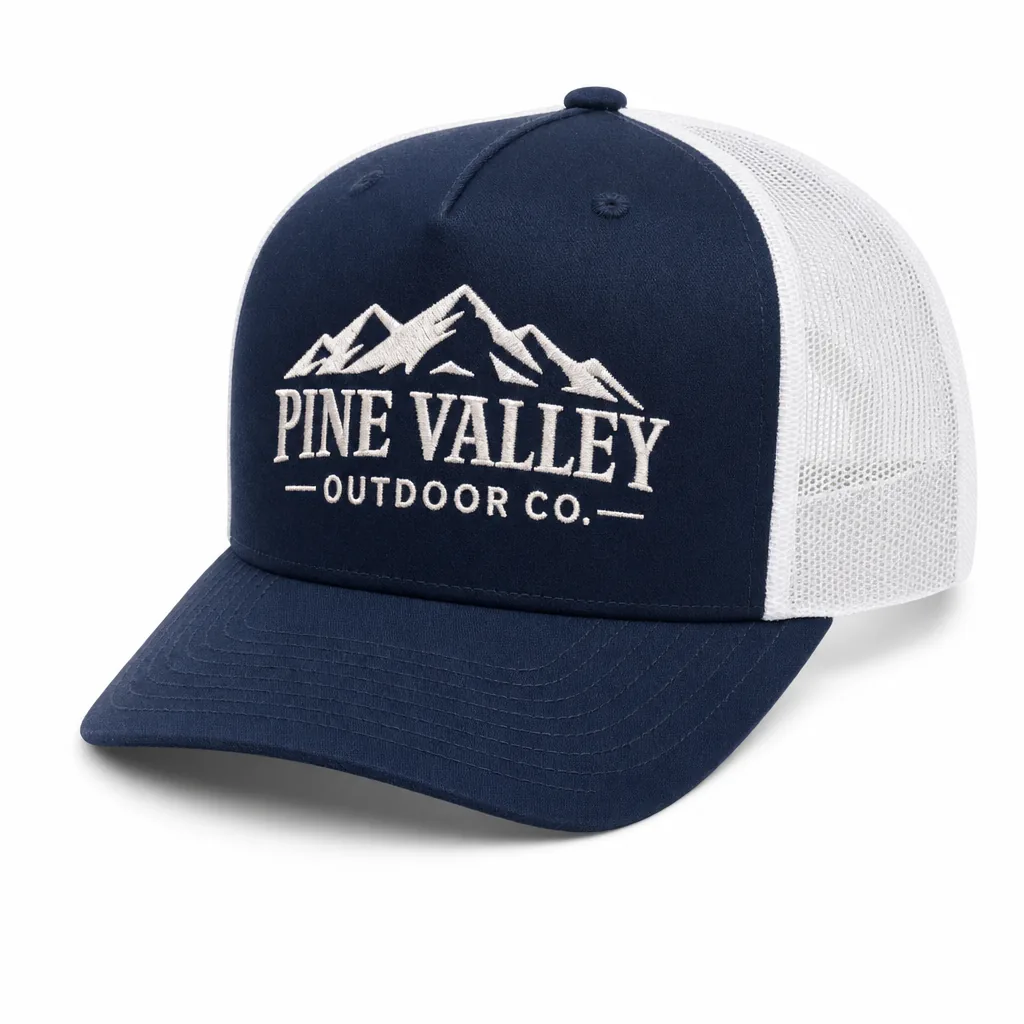
Snapback vs Fitted vs Adjustable: Cap Closure Systems Compared (2026 Update) - 2026 Buyer's Guide - 2026 Buyer's Guide is one of the most-asked questions we receive from international buyers, and for good reason. With dozens of factories competing for your order and an alphabet soup of technical terms in every supplier quote, even experienced importers can feel lost. This guide consolidates what we have learned producing custom hats for clients in 40+ countries.
The five closure systems in commercial production
Five closures account for nearly all commercial cap production: plastic snap, self-fabric strap with metal slide buckle, tuck strap, hook-and-loop, and fitted with no rear opening. In practice, the snapback vs fitted choice is less about trend and more about SKU structure, tolerance control, and inventory exposure. A standard adult snap is usually injection-molded PP at 1.8-2.2 mm thickness, most often a 7-hole strap, costing roughly $0.06-$0.14 per set at volume depending on mold finish, black-to-black consistency, and custom color matching against Pantone TCX. It installs after crown assembly and before the sweatband is fully closed, which keeps the rear opening stable and avoids the layered bulk you get with fabric straps. Fitted caps remove that hardware line, but they immediately create size-run complexity: instead of one OSFM SKU, you are cutting 6 7/8-7 5/8 or S/M/L/XL, building separate markers, carton ratios, and replenishment plans for each size.
That is why snapback vs fitted usually comes down to operating math, not design preference. A 1,200-piece snapback order is one clean production run; a 1,200-piece fitted order behaves like four or five smaller runs once size splits hit cutting, sewing, and packing. Fitted also exposes every shaping error because there is no back opening to absorb distortion. On a 6-panel high-profile cap in 300-380 gsm wool serge or acrylic-wool blend, the finished head opening typically needs to stay within about +/-5 mm after sweatband setting, or customers will feel the size inconsistency immediately. Adjustable fabric straps sit in the middle on both cost and positioning: a self-fabric strap with metal slide buckle usually adds $0.18-$0.45 depending on webbing width, zinc alloy vs iron hardware, and nickel-free plating for REACH-sensitive programs, while tuck straps demand tighter sewing accuracy since a 2-3 mm miss at the anchor or slot makes the strap ride crooked.
Hook-and-loop remains the easiest closure for service uniforms, golf events, and promo programs because one size covers the widest head range, but it has the shortest perceived life. The loop side traps lint, the hook edge can abrade knitwear, and after roughly 3,000-5,000 open-close cycles, peel strength drops enough to create complaint risk on daily-use accounts. Closure choice also affects decoration and QC. Snapbacks leave the back opening relatively clear, which helps when the front is running dense 3D embroidery on Tajima, Barudan, or ZSK heads and the sweatband insertion sequence needs to stay simple. Buckle and tuck systems reduce usable rear branding space to about 55-75 mm once hardware clearance and seam allowance are deducted, so woven loop labels, small arch embroidery, or reflective tabs need to be locked in at tech-pack stage. Our standard practice at CrownsForge is to spec closure tolerances directly: snap alignment within +/-2 mm, buckle plating by salt-spray requirement, and incoming closure inspection to AQL 2.5 rather than assuming the trim supplier got it right.
Plastic snap (snapback) economics
SKU compression is the real reason plastic snaps outperform fitted caps on margin. A standard adult snapback with a 7-hole PE or PP closure typically covers 54–61 cm; with a properly drafted back arch and a sweatband that is not overstuffed, 54–62 cm is achievable without distorting the crown. In a snapback vs fitted program, that single-size range usually matters more than the closure cost itself. A fitted run normally requires at least five adult sizes—6 7/8, 7, 7 1/8, 7 1/4, 7 3/8—and many licensed or team programs push to six or seven sizes up to 7 5/8. On a 6,000-piece PO, each extra size split increases carton complexity, pick-pack errors, and dead stock exposure in edge sizes. In practice, fitted inventory risk is often 20–30% higher before markdowns, simply because the sales curve never matches the ratio plan cleanly. The snap itself is cheap only if the factory controls geometry and setting pressure. Common stock colors—black, white, navy, red, gray, khaki, brown, dark green—usually land at $0.04–$0.07 per cap FOB China at 3,000–10,000 units; above 20,000 pieces, $0.035 is realistic for standard resin grades. Custom-molded colors add tooling and still rarely match a Pantone TCX exactly; on light tones, a visible Delta-E variance versus dyed twill is normal. Functional QC matters more than color nuance: peg engagement, hole spacing, strip warpage, and back-arch symmetry should be checked in-line and again at final under AQL 2.5. Most snap failures come from bad heat-setting pressure or distorted strips after storage, not from the resin spec itself, so a basic manual pull test catches more problems than a visual-only audit.
Plastic snaps also beat other adjustable systems on labor and replenishment discipline. On a standard 6-panel brushed cotton twill cap, a plastic snap closure is typically $0.12–$0.35 cheaper than a leather strap with metal buckle once you include the strap material, edge fold, buckle plating, and slower sewing time. Hook-and-loop closures can come close on cost, but they age worse in retail, pick up lint in transit, and create more consumer complaints on premium-looking programs. Snaps are faster to install, easier for operators to learn, and simpler to reorder because you are pulling stocked components instead of reopening fabric dye lots or matching metal finishes. For FOB and DDP importers, they also pack cleaner: less hardware bulk, less abrasion, and less chance of buckle scratching neighboring caps during ocean transit. Commercially, the closure fits the silhouettes that sell in volume. Plastic snaps look correct on high-profile 6-panel builds, foam-front truckers, and most mid-profile streetwear caps; they do not fight the structured shape the way some fabric straps do. In snapback vs fitted, fitted still wins when exact head sizing and league-authentic presentation are the product brief. But for broad adult coverage, lower return rates, and easier replenishment, snapbacks are the safer buy. They also handle premium decoration without issue—flat embroidery, 3D puff, woven patch, TPU badge—on Tajima, Barudan, or ZSK lines, provided the back opening is kept square and the crown does not torque after closure setting. If the target retail is price-sensitive but still expects a clean silhouette, plastic snap remains the most efficient closure in the category.
Fabric strap with metal buckle (dad hat aesthetic)
A fabric strap with a metal buckle is the clearest dad-hat signal because it changes both the silhouette and the size strategy. The strap is usually 16-18 mm wide, made either from self-fabric or a matching cotton twill tape, then threaded through a single-slide or tri-glide buckle in antique brass, matte black, or brushed nickel. On real production specs, usable fit range lands around 54-62 cm after you deduct overlap, seam turn, and stitch allowance, so one size covers most adult programs without carrying fitted runs from 6 7/8 to 7 5/8. In a snapback vs fitted comparison, this is not a midpoint between the two; it belongs to a different product language entirely, and it works best on unstructured 6-panel caps in 260-280 gsm washed chino twill, peached canvas, herringbone twill, or 8-wale corduroy where drape and handfeel matter more than exact size increments. The hardware looks simple, but the workmanship is where weak factories get exposed. A strapback adds roughly $0.12-$0.22 per cap at 3,000 pcs on a standard cotton twill dad hat, mostly from extra labor: cutting the strap, turning and folding the end, edge-stitching, feeding the buckle, and securing the base. The failure points are obvious at incoming inspection and again at final AQL 2.5: skewed topstitching, loose bartacks, twisted strap tails, or a buckle that drifts off center by more than 2 mm. On soft shells, a 10-12 mm bartack or box-X reinforcement at the strap base is safer than a light single lockstitch, especially after repeated adjustment. If the shell fabric is heavier than 280 gsm or heavily enzyme-washed, a separate twill tape strap usually feeds cleaner than self-fabric and reduces puckering around the back opening.
This closure wins when the product is sold on wash character, fabric hand, and restrained branding rather than athletic utility. The back view stays clean, the metal hardware photographs better than plastic, and the retail read is more premium, which is why strapbacks dominate fashion dad caps, resort merchandise, coffee roasters, and washed collegiate programs. Against fitted caps, the advantage is obvious: fewer SKUs, broader sell-through, and less inventory trapped in slow sizes. Against snapbacks, the tradeoff is speed and feel. A plastic snap can be adjusted one-handed and gives the assertive back profile buyers expect on structured 5-panel and 6-panel sports styles; a buckle strap usually takes two hands and reads softer from every angle. Finish control is also tighter than many buyers assume. “Antique brass” is not a spec by itself; plating tone can shift noticeably lot to lot, and if the buckle sits next to Pantone-matched eyelets, metal badges, or zipper pulls, a Delta-E-style mindset on trim approval is the right one even though plating is judged visually, not by fabric lab data. CrownsForge normally locks buckle color with a retained sample and written trim code rather than a verbal finish callout, because mixed plating on the same shipment is one of those defects customers spot immediately. If the end use is running, cycling, or sideline staff, this closure is usually the wrong choice. If the cap is meant to feel broken-in, understated, and fashion-led, the fabric strap with metal buckle is usually the strongest option.
Velcro (lowest cost, widest range)
Velcro is still the lowest-cost closure on a cap BOM, and the price gap is real enough to matter on volume. In Yiwu production, a standard 20 mm nylon hook-and-loop set in black or white typically lands at $0.03 to $0.06 per cap FOB; move to 25 mm tape, dyed-to-match lots, or a self-fabric strap with hidden loop, and you are usually at $0.07 to $0.10. The bigger advantage is fit tolerance, not cost. A Velcro back on a six-panel baseball cap will generally cover about 54 to 63 cm head circumference without reworking crown panels, rear opening shape, or sweatband length. For school packs, campaign merchandise, tour giveaways, and youth events, that adjustment range reduces size complaints more effectively than shaving a few cents off fabric or embroidery. In a practical snapback vs fitted discussion, Velcro is the option buyers choose when they need one SKU to absorb size uncertainty and keep return rates low. It also simplifies planning when the wearer profile is broad or poorly defined. One carton can service men, women, and older kids without splitting stock into 7 to 8 fitted size runs or committing to a plastic snap that some buyers see as too rigid for children’s product. Velcro works especially well on 108 x 56 chino twill, 10 oz brushed cotton, 210D ripstop, and lightweight polyester sport caps where the overall build is value-driven and the closure does not need to carry a premium visual. On kids’ caps and cadet shapes, parents usually prefer the softer hand at the back opening, and factory output is more forgiving because there are fewer hard components to crack or mismatch in color.
Velcro only looks cheap when it is sewn carelessly. The failure points are predictable on the line: if the tape is off-center by more than 2 mm, the rear opening twists; if the stitch box is too narrow, or bartacks do not catch enough base tape, the hook side starts lifting after repeated pulls. A proper spec is a 301 lockstitch box with two bartacks per end, 8 to 10 SPI, and enough seam allowance behind the opening so the tape sits flat instead of tunneling. On better-managed lines, we also run a quick peel check during inline QC and flag any closure skew immediately under AQL 2.5, because the defect is visible from two meters away and makes an otherwise clean cap read like a rush job. Where buyers get it wrong is trying to force Velcro into a premium retail position. Once a structured cap is above roughly $2.80 to $3.50 FOB, the closure starts signaling down-market faster than most spec sheets admit. In the broader snapback vs fitted conversation, fitted still reads the cleanest, snapback feels authentic for teamwear and street basics, and Velcro reads utilitarian unless the whole product brief is built around function. There are material limits too: hook fields collect lint, white tape yellows in humid storage, and low-MOQ dyed tape rarely holds a fashion-grade color match below Delta-E 1.5 against shell fabric. If the job is a mass giveaway, field uniform, or value-first cap, Velcro is correct. If the cap has to win on shelf appeal, use a metal buckle, tuck strap, or snap closure instead.
Fitted: why some brands accept the operational cost
Fitted only earns its keep when exact sizing is part of the product promise, not just a styling choice. In a real snapback vs fitted decision, fitted usually wins on authenticity and silhouette, but it is far less forgiving in production. A standard size curve is 6 7/8 to 7 1/2, with 7 5/8 and 7 3/4 added for U.S. sports retail; each size needs its own graded pattern, sweatband length, and often a separate cutting marker. There is no plastic snap, tri-glide, or hook-and-loop strap to hide a bad grade. If the crown arc, buckram height, visor seam, and sweatband join are even slightly off, the cap may measure correctly on a tape but still wear tight on the forehead. On the floor, finished inside circumference should stay within about ±3 mm, and once you drift beyond that, fit claims rise quickly. The biggest hidden risk is bundle control: a 7 1/8 crown shell paired with a 7 1/4 sweatband is invisible at final packing unless WIP segregation, size ticketing, and in-line checks are disciplined.
The real cost is inventory fragmentation, not extra sewing minutes. A snapback can often be bought safely at 300 pieces as one SKU; the same style in fitted usually needs 600 to 1,200 pieces to build workable depth across five to seven sizes, otherwise the stock curve is too shallow to service reorders. Common ratios are 1:2:3:3:2:1 or 1:2:2:2:1, but they only hold if the buyer has actual sell-through by size; if not, dead inventory sits in the tails. Decoration also gets harder. On Tajima, Barudan, or ZSK heads, the front logo has to stay visually centered across changing crown widths, so a proper PP approval should include a mid size and at least one edge size to catch distortion, push, or seam interference. Brands still accept the hassle because fitted can command a meaningful premium: licensed on-field and premium streetwear programs often retail $8 to $14 higher than comparable adjustable caps. Our standard practice is to verify fitted circumference on aluminum head forms under AQL 2.5, because a flat tape alone does not tell you whether the cap wears true.
MOQ implications by closure type compared
MOQ is where the snapback vs fitted decision stops being aesthetic and becomes a cash-flow question. Adjustable programs—plastic snapback, self-fabric strap with tri-glide, D-ring, or hook-and-loop—are usually workable at 100–144 pcs per colorway because one size covers most adult head circumferences, roughly 55–60 cm on a standard mid-profile 6-panel and up to 61 cm on deeper streetwear crowns. That means one SKU, one barcode, one carton assortment, and one shell fabric lay instead of splitting the order across five to seven fitted sizes. On a first run, that difference is material: 120 adjustable caps in acrylic/wool blend might tie up $450–$700 ex-factory, while a fitted size curve often forces the same artwork into a 360–600 pc commitment before freight, duties, or local fulfillment are even considered.
Fitted caps drive MOQ up because every size is its own sellable unit with separate crown marking, size label, sticker, sweatband print, and pack ratio. In real factory planning, efficient fitted production usually starts around 60–72 pcs per size per colorway; if the buyer wants sizes 7, 7 1/8, 7 1/4, 7 3/8, and 7 1/2, the order is already 300–360 pcs, and a fuller range including 6 7/8 and 7 5/8 pushes it toward 420–500 pcs. QC also gets harder: under AQL 2.5, inspectors are not only checking seam tolerance, visor symmetry, and embroidery registration, but also assortment accuracy by size. One short-packed size can make the shipment commercially incomplete even if the sewing line performed well. Our standard practice is to warn buyers that fitted inventory risk usually outweighs the small perceived prestige premium unless the brand already has reliable sell-through data by size.
Adjustable closures are not equal on cost, but they are still far more forgiving than fitted when demand is uncertain. A stock plastic snap set in black, white, or common team colors is cheap and easy to source, often adding only $0.06–$0.10 per cap; a self-fabric strapback with metal buckle, embossed buckle, or PU strap typically adds $0.20–$0.45 in trim and labor. Those uplifts are minor compared with the dead-stock risk built into fitted curves, where edge sizes like 6 7/8 or 7 5/8 can sit for months while 7 1/4 and 7 3/8 sell out first. The imbalance gets expensive fast when the cap carries premium decoration: a Tajima or Barudan 3D file at 8,000–12,000 stitches, custom inner taping matched to Pantone TCX, or a 380 gsm melton wool body with tighter color tolerance. For testing a new graphic, team drop, or retail account, adjustable is usually the MOQ-efficient tool; fitted makes sense only when reorder history justifies the size curve.
How to spec the right closure for your retail positioning
Closure should be specified off your retail target, not as a late trim choice, because the back detail changes perceived value, size coverage, and return risk. In a real snapback vs fitted decision, streetwear and fashion accounts usually convert better with a visible, intentional closure: a 6-panel high-profile cap in 380-420 gsm melton, 12 oz wool-acrylic, or 300 gsm brushed cotton twill paired with a 7-hole HDPE snap and flat visor reads younger and more graphic than the same crown built as a closed-back fitted. The BOM difference is modest—typically $0.12-$0.28 per unit between a standard plastic snap and fitted construction—but the retail effect is outsized because the closure is visible in PDP photography and in-hand try-on. Self-fabric strapbacks move the product up another tier when the trim is right: 1.8-2.0 mm full-grain leather tabs, 16 mm matte nickel sliders, edge paint with no cracking after 24-hour bend test, and hardware plating held to a lot Delta-E under 1.5 against the approved sample. Our standard practice is to flag any closure hardware that shifts gloss level or color cast between production lots, because those inconsistencies are obvious at retail even when the shell fabric passes.
For promotional, event, and high-volume programs, closure choice is mostly about complaint rate and inventory efficiency. Adjustable styles win because one size can cover roughly 58-61 cm in adult unisex distribution, reducing size breaks and dead stock; that is why snapback and hook-and-loop dominate at 5,000 units and up. A molded PP or PE snap is cheap, dimensionally stable, and fast in packing, but custom resin colors need control—if the buckle supplier uses inconsistent masterbatch or regrind, black and white are fine while fashion shades can drift past Delta-E 2.0 from the Pantone TCX reference. Hook-and-loop works well for youth, school, and giveaway programs, but only if you spec branded Velcro or an equivalent tested for peel and shear after repeated open-close cycles and dust exposure. Fitted still has a place in licensed sports, authentic on-field product, and premium team capsules, where buyers expect a clean closed back, centered rear embroidery, and circumference tolerance within +/-3 mm after blocking. If you are balancing snapback vs fitted for mixed retail, keep snapback as the volume SKU and reserve fitted for hero drops in sizes like 6 7/8 through 7 5/8, where the cleaner silhouette justifies the inventory risk.
Frequently Asked Questions
What logo decoration techniques do you offer?
3D puff embroidery, flat embroidery, woven patch, leather patch, PVC patch, screen printing, sublimation, applique and laser etching, all in-house with no subcontracting.
What file format should I send for my logo?
Vector files (AI, EPS, PDF) are ideal. High-resolution PNG or JPG at 300 dpi on transparent background works as a fallback. Provide Pantone color references for accurate reproduction.
Can I order a sample before bulk production?
Yes. We strongly recommend approving a pre-production sample before mass production. Samples are charged at 35 to 60 USD each plus express shipping, fully refundable against confirmed bulk orders over 500 pieces.
How long does production take?
Sampling takes 7 to 12 days. Bulk production runs 20 to 30 days depending on quantity, fabric availability and decoration complexity. Inspection and packing adds another 3 to 5 days before shipment.
Do you support sustainability certifications?
Yes. We work with GOTS organic cotton, GRS-certified recycled polyester, OEKO-TEX Standard 100 fabrics, and are BSCI and Sedex audited. Certification documentation can be provided per order.
What should buyers know about cotton twill baseball cap?
When evaluating cotton twill baseball cap, the key considerations are construction quality, decoration capability, MOQ flexibility and lead time. Universal sizing 54-62cm with 8 snap positions. Single SKU per design covers most adults. Adds ~$0.05 per cap for hardware. Industry-standard for retail snapback hats, trucker caps, casual baseball caps. Available in 8 stocked colors; custom Pantone-matched snaps at 500+ pieces. Plastic snap (snapback), fabric strap with metal slide buckle, fabric strap with tuck-buckle,…
What should buyers know about flat bill hats snapback?
When evaluating flat bill hats snapback, the key considerations are construction quality, decoration capability, MOQ flexibility and lead time. Universal sizing 54-62cm with 8 snap positions. Single SKU per design covers most adults. Adds ~$0.05 per cap for hardware. Industry-standard for retail snapback hats, trucker caps, casual baseball caps. Available in 8 stocked colors; custom Pantone-matched snaps at 500+ pieces. Plastic snap (snapback), fabric strap with metal slide buckle, fabric strap with tuck-buckle,…
How does ordering custom flat bill hat embroidery work?
When evaluating custom flat bill hat embroidery, the key considerations are construction quality, decoration capability, MOQ flexibility and lead time. Universal sizing 54-62cm with 8 snap positions. Single SKU per design covers most adults. Adds ~$0.05 per cap for hardware. Industry-standard for retail snapback hats, trucker caps, casual baseball caps. Available in 8 stocked colors; custom Pantone-matched snaps at 500+ pieces. Soft fabric strap (1.5-2cm wide) with antique brass slide buckle. Fits 54-63cm. Adds ~$0.15 per…
What should buyers know about baseball hats women?
When evaluating baseball hats women, the key considerations are construction quality, decoration capability, MOQ flexibility and lead time. Universal sizing 54-62cm with 8 snap positions. Single SKU per design covers most adults. Adds ~$0.05 per cap for hardware. Industry-standard for retail snapback hats, trucker caps, casual baseball caps. Available in 8 stocked colors; custom Pantone-matched snaps at 500+ pieces. Plastic snap (snapback), fabric strap with metal slide buckle, fabric strap with tuck-buckle,…
Are snapbacks better than fitted?
Fitted hats are a great choice if you know your size and want to build a collection of caps for casual wear, while snapback caps are ideal for streetwear fashion enthusiasts and make a bold statement. Both hats come in a range of colors and designs, so the right choice for you all comes down to your own personal style.
Do baseball players wear snapbacks or fitted?
The snaps are usually plastic even if the cap is made of wool, cotton, or other material. Popularized by New Era, the official hat supplier to the MLB, the snapback cap is de rigueur for Major League baseball players.
What does it mean if a hat is fitted?
Fitted hats are called “fitted” because they're designed to fit the wearer's head snugly without adjustable snaps or straps. That means these hats are sized specifically to the wearer's head, ensuring a natural fit. This modern-day baseball cap comes in 20 sizes to fit nearly any head shape or size.
Do fitted hats look better?
The seamless design without a closure in the back is much sleeker with a fitted hat. It's not that snapback hats don't look as good, but you can wear a fitted hat in nearly any setting. Because fitted hats look so sleek, they're a better choice for an elevated look.
Is a fitted hat a snapback?
Snapbacks have an adjustable snap closure, usually made from plastic, that you can use to adjust the size of the cap to fit your head perfectly. A fitted cap is just a hat, with no adjustable sizing. The snapback design is bolder, with a more structured high crown and a flat brim.
Ready to start your custom hat project?
Send us your tech-pack, sketch or even just an inspiration photo. We will respond with a detailed quotation and digital mock-up within 24 hours.
Request a free quoteRelated guides

Embroidery Hats Machine: When to Use It, Costs, and What to Ask Your Factory (2026 Update)
Read article →
Custom Logo Hats: When to Use It, Costs, and What to Ask Your Factory (2026 Update)
Read article →
Custom Hat Embroidery: The 2026 Sourcing & Manufacturing Playbook
Read article →Sourcing custom hats does not have to be complicated. With the right manufacturing partner, clear specifications and a small upfront investment in sampling, you can launch a retail-quality product in 30 to 45 days.