
Snapback vs Fitted vs Adjustable: Cap Closure Systems Compared (2026 Update) - 2026 Buyer's Guide - 2026 Buyer's Guide (2026 Update) (2026 Update)
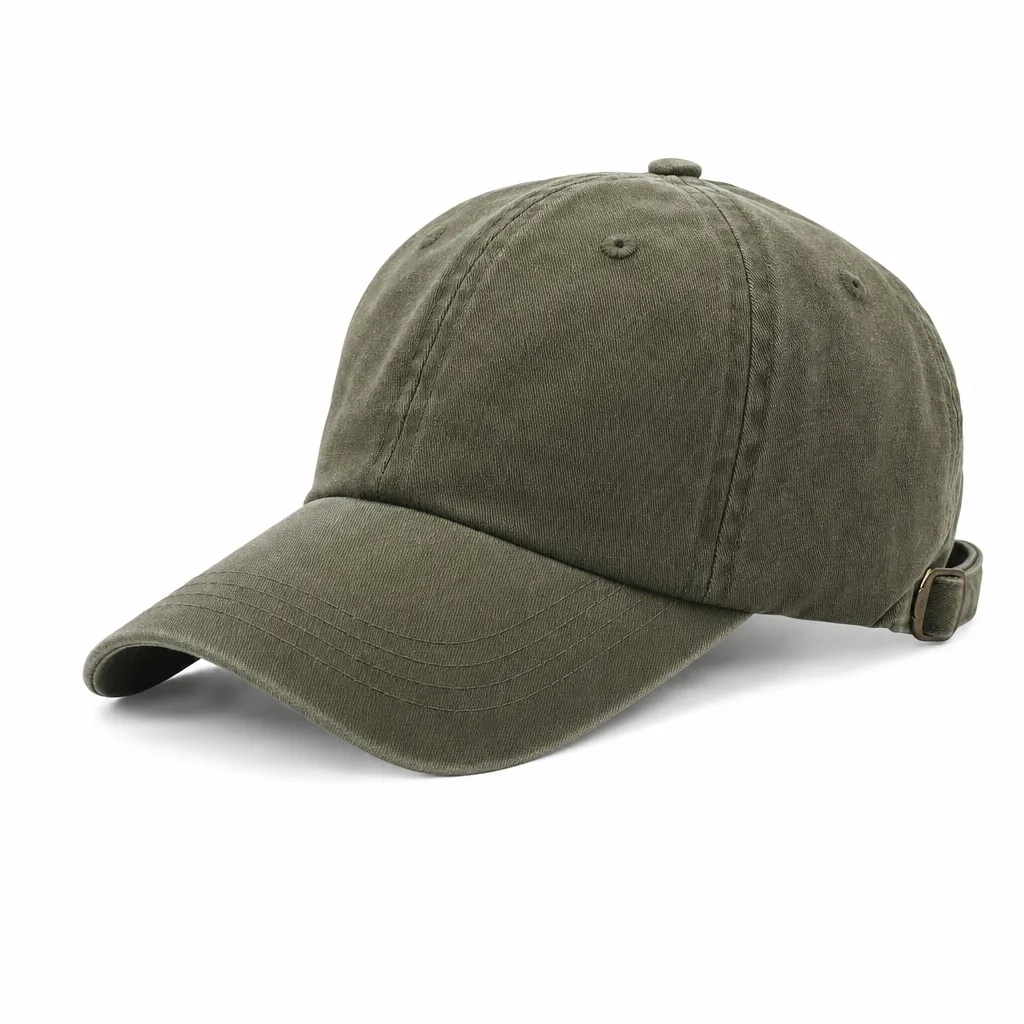
Every week, our sales team answers detailed questions about snapback vs fitted vs adjustable: cap closure systems compared (2026 update) - 2026 buyer's guide - 2026 buyer's guide (2026 update) (2026 update). We wrote this guide so that wholesalers, streetwear brands, corporate buyers and promotional resellers can compare options with full information, and avoid the traps that show up only after production has started.
The five closure systems in commercial production
Five closure systems actually change costing, inventory risk, and line setup: plastic snap, fabric strap with slide buckle, fabric strap with tuck-in buckle, hook-and-loop tape, and true fitted with no rear opening. In a snapback vs fitted comparison, the molded plastic is not the cost driver; size liability is. A standard adult PP or PE snap set usually gives a usable range of 56–60 cm, sometimes 55–61 cm if the back opening, sweatband length, and crown block are graded together. That lets one SKU cover most adult retail demand. A fitted cap has to be bought by size, commonly 6 7/8 to 8 in U.S. 1/8 increments, so the buyer needs a size curve, separate UPC/EAN files, carton segregation, and a markdown plan for slow sizes like 6 7/8 or 8. Basic snap sets run about $0.08–$0.18 per cap; Pantone-matched custom snaps normally need 3,000–5,000 sets per color and should be approved under D65 light against Pantone TCX or a resin color chip, not a mobile-phone photo.
Strap closures are the practical middle ground when the cap must remain adjustable but cannot look like a streetwear snapback. A self-fabric strap with a metal slide buckle is standard on dad caps, unstructured 5-panels, golf caps, and resort programs. Brass, matte black zinc alloy, antique nickel, and nickel-free plated buckles usually add $0.22–$0.55 over a basic snap; self-fabric straps also add cutting, fusing, and bartack operations compared with stock cotton twill tape. A tuck-in buckle looks cleaner because the loose tail feeds into a tunnel behind the sweatband, but it is less forgiving: strap length should stay within ±3 mm, and the tunnel must not rub the wearer’s occipital bone. Rear embroidery is usually cleaner on strapbacks than snapbacks because there is more uninterrupted fabric above the opening. Our standard practice at CrownsForge is to keep rear arch embroidery below 45 mm high on Tajima, Barudan, or ZSK machines and reduce stitch density near the curved rear seam to control puckering.
Hook-and-loop is the most functional closure and the fastest way to lower perceived value if the rest of the cap is not technical. It belongs on kids’ caps, workwear, running caps, tactical caps, and products adjusted with gloves. Standard 20–25 mm nylon hook-and-loop adds roughly $0.12–$0.30 per cap; low-noise, soft-touch, FR-rated, or branded tape can double that and should be locked before salesman-sample approval. The predictable failures are lint pickup, edge curl after wash testing, scratch contact with hair, and weak peel strength if the stitch line is too close to the tape edge. True fitted caps sit at the opposite end: clean rear decoration, strongest licensed-sports look, no hardware color mismatch, but unforgiving order control. The PO must show the size breakdown, and the same data must match carton marks, polybag labels, UPC/EAN files, and inspection reports. Under AQL 2.5, inspectors should verify mixed-size packing, crown circumference, visor sticker size, and woven size-label placement; one wrong fitted size becomes a return that an adjustable cap would have absorbed.
Plastic snap (snapback) economics
The economics of a plastic snapback come from SKU compression, not from the snap strip itself. A standard 7-hole PE or PP male/female set costs about $0.035–$0.075 per cap ex-factory in Zhejiang, plus one rear bartack and roughly 8–12 seconds of operator handling. That trim replaces a fitted size curve that usually carries 7, 7 1/8, 7 1/4, 7 3/8, 7 1/2, 7 5/8, and sometimes 7 3/4. One adult snapback normally covers 54–62 cm head circumference, with the best appearance around the third to fifth peg. In a snapback vs fitted purchase, this changes the whole inventory model: one carton label, one barcode, and one replenishment pool per color instead of six or seven size bins. If size 7 1/4 takes 28% of demand but size 7 5/8 takes only 6%, fitted leftovers can destroy more gross margin than any closure saving ever creates.
The production risk is that a cheap snap exposes weak sewing control very quickly. We keep snap-strip centering within ±1.5 mm, match left/right rear arch height within 2 mm, and check fit on the third or fourth peg because that is where most adult wearers land. If the strip is off-center, the crown pulls sideways and the buyer often blames the front embroidery, even when the Tajima, Barudan, or ZSK file is correctly digitized and positioned. On pre-production samples, I want at least 30 open-close cycles per cap, then inline and final inspection under AQL 2.5 for cracked tabs, weak mushroom heads, stress whitening, sharp burrs, and loose bartacks. PE stays more flexible in winter containers; PP gives a cleaner edge but turns white faster if recycled resin content is too high. Pantone-molded snaps are realistic from 500–1,000 pieces per color, but approve them under D65 light because gloss can shift the visual match by Delta-E 1.0–2.0 against cotton twill, polyester mesh, or Madeira thread.
Plastic snaps are strongest on trucker caps, flat-brim streetwear basics, event merchandise, team giveaways, and retail hats below roughly $25–$30. They sew fast, replenish cleanly, and reduce customer-service friction because the end user does not need to understand U.S. fitted sizing or measure head circumference in centimeters. For mixed audiences—teenagers, adults, volunteers, e-commerce buyers, and promo recipients who cannot try the cap on—the snapback is usually the safer commercial answer in the snapback vs fitted decision. The trade-off is value perception. Exposed plastic and the rear opening read casual, especially on wool-blend 6-panel caps, licensed fashion drops, and heavy 320–380 gsm melton or brushed twill. For $45–$60 retail headwear, a brass slider, leather strap, self-fabric strap with metal buckle, or true fitted construction supports the price story better. At CrownsForge, we approve the snap beside the shell fabric, sweatband, and thread card before bulk cutting because a $0.05 trim can make a $6.00 FOB cap look wrong.
Fabric strap with metal buckle (dad hat aesthetic)
Use a fabric strap with a metal slide buckle when the cap brief says “dad hat,” “unstructured 6-panel,” “low-profile,” or “washed vintage.” It is not a substitute for the crisp retail look of a plastic snapback, and it cannot deliver the size-grade authenticity of a true fitted cap. Typical straps are self-fabric 10–12 oz cotton twill, enzyme-washed chino, 8-wale corduroy, brushed cotton, or 70D–160D nylon taslan, usually cut 16–20 mm wide. A proper rear opening is normally 65–70 mm high, with 95–115 mm of usable adjustment; if the crown block has enough depth, one size can cover roughly 54–63 cm head circumference. In a snapback vs fitted comparison, this closure is the practical middle lane: fewer SKUs than fitted caps, softer against the head than plastic snaps, and visually better for adult casualwear, resort merchandise, golf lifestyle caps, and washed private-label basics.
The buckle is a functional part, not trim jewelry. I specify 1.0–1.2 mm brass or iron alloy sliders in antique brass, brushed nickel, gunmetal, or matte black; low-grade zinc alloy often bends under carton pressure and starts slipping after 20–30 wear cycles. A fabric strap and metal buckle usually adds $0.14–$0.22 per cap FOB Yiwu, including the slider, keeper loop, strap cutting, bartack, and extra handling, before needle detection or garment wash testing. The main production risk is shrinkage mismatch. A 260–320 gsm cotton twill strap can shrink 3–5% lengthwise if it is not sanforized, steamed, or relaxed before cutting, while pigment dye, enzyme wash, and light stone wash can twist the strap even when the crown panels look clean. Our standard practice at CrownsForge is 12 hours minimum fabric relaxation, grain-line cutting, one washed size-set sample, and a 7–9 kg pull test at both the buckle and bartack.
Inspection should treat the back closure as a fit-critical component under AQL 2.5, not a minor cosmetic point. Check strap length tolerance at ±5 mm, buckle position at ±3 mm, rear slit centering, bartack density, and whether the keeper loop is tight enough to control the free end without wrinkling it. The slider gap matters: too smooth and the strap creeps loose during wear; too sharp and it abrades peach-finish cotton, leaving pale streaks around the buckle. For washed caps, plating must be checked after processing because poor black nickel or antique brass can stain stone, khaki, light gray, and washed pink fabrics. Branding space is also limited. Rear embroidery above the opening should usually stay under 55 mm wide by 18 mm high, or the buckle will cover it on smaller settings. A woven flag label works if it is thin, clean-folded, and kept out of the sliding path; budget $0.05–$0.12 depending on MOQ, yarn count, and edge finish.
Velcro (lowest cost, widest range)
Velcro hook-and-loop is the closure to choose when landed cost, fit tolerance, and delivery speed matter more than retail image. A 20–25 mm polyester hook-and-loop tab normally covers about 54–63 cm head circumference, so one adult SKU can handle most promo, school, municipal, and staff-uniform orders without graded sizing. At Yiwu production scale, serviceable polyester tape adds about $0.025–$0.045 per cap; a 7-hole PVC snapback is usually $0.07–$0.14, and a brass, nickel, or antique-copper strap slider is $0.18–$0.35 before any logo embossing or plating upgrade. In a snapback vs fitted costing discussion, Velcro’s bigger saving is not the tape itself but the carton plan: one adjustable size replaces fitted runs like 7, 7 1/8, 7 1/4, 7 3/8, and 7 1/2. On 500–5,000 piece ad-specialty orders with no reliable head-size data, that prevents leftover odd sizes and rushed replenishment. The trade-off is obvious on the shelf: even with clean bartacks and a centered rear arch, Velcro reads as utility, not premium headwear.
Velcro performs best on school caps, safety giveaways, kids’ ranges, cadet caps, patrol caps, warehouse uniforms, and event merchandise where low returns beat fashion positioning. It sews cleanly on 180–220 gsm brushed cotton twill, 160–190 gsm polyester microfiber, and 210D or 300D ripstop. On lighter shells, the rear opening needs woven fusible or 210D polyester reinforcement; without it, the lockstitch box puckers after steam shaping, packing compression, or one home wash. Our standard practice at CrownsForge is 6–8 stitches per cm around the closure box, bartacks at both stress ends, and an inline pull check before final AQL 2.5 inspection. The rejects I see are rarely true hook-and-loop delamination. More common are loose edge stitching, poor bobbin tension on the single-needle lockstitch machine, heat-glazed hook tape from careless trimming, or a tab set 2–3 mm off center, which makes the rear opening look twisted when worn.
Avoid Velcro on retail streetwear, licensed team caps, golf lifestyle caps, and structured 6-panel flat bills where buyers expect a cleaner rear profile from a snapback or metal strapback. Among adjustable cap closure types, Velcro wins on adjustment range, packing speed, and unit cost, but it loses on perceived value, shelf handling, and aging. The hook side catches lint, hair, loose embroidery thread from Tajima or Barudan trimming, and brown-carton dust; an unbagged salesman sample can look used before the PP approval meeting. In fitted vs adjustable cap decisions, hook-and-loop is the most forgiving adjustable system, especially for mixed-age or unknown wearer groups, but it is not ideal for repeated high-tension wear. A good PVC snap resists abrasion better, and a brass slider strap keeps a cleaner appearance through laundering, retail handling, and repacking. Use Velcro when the order is driven by program economics, wearer coverage, and deadline risk; choose snapback or strapback when brand image must carry the sale.
Fitted: why some brands accept the operational cost
In the snapback vs fitted decision, the fitted cap’s hidden cost is size governance, not fabric or comfort. A serious fitted program normally runs 6 7/8 to 7 3/4, with size 8 added for MLB-style retail, police/fire accounts, and larger North American team orders. There is no snap, nylon strap, brass slide buckle, or hook-and-loop tape to hide a 1 cm error. Sweatband length, crown blocking, panel stretch, seam allowance, back-seam tension, and post-steam relaxation all have to land on the same target. Once the visor is closed and the cap has been steamed, cooled, and relaxed for 24 hours, a 58 cm unit cannot be turned into a 60 cm unit without pulling the crown out of shape. One style/color SKU becomes six to eight controlled sub-lots: separate cutting tickets, bundle cards, woven size labels, blocking checks, barcode stickers, and carton marks. A 1,200-piece snapback may run as one clean batch; the fitted version becomes seven micro-runs of 120–240 pieces, with more WIP movement and a much higher chance of mixed-size packing.
The bill of materials can look almost the same as an adjustable cap: 380–420 gsm wool-blend serge, cotton chino twill, polyester performance twill, or recycled poly-spandex, plus a standard cotton or moisture-wicking sweatband. The surcharge comes from lower line efficiency, size-separated cutting, slower AQL inspection, and dead-stock risk. If the practical embroidery minimum is 144 pieces per logo/color to justify Tajima, Barudan, or ZSK setup and thread changeover, a six-size fitted launch is effectively an 864-piece commitment before the inventory has real shelf depth. Size curves are not flat. In U.S. streetwear and team retail, 7 1/4, 7 3/8, and 7 1/2 often move first; 6 7/8 and 7 3/4 can sit for two seasons unless the customer base is known. Circumference should be treated as a critical measurement under AQL 2.5, with a normal tolerance of ±0.5 cm after steaming and 24-hour relaxation. A clean 9,000-stitch front logo means little if the cap ships one full size off.
Brands accept that burden when fitted is part of the value proposition, not just a styling preference. Licensed sports merchandise, premium streetwear capsules, alumni stores, golf member programs, and roster-specific team retail use fitted because the uninterrupted back panels, closed-crown tension, and size-stamped identity support a higher ticket price and stronger collector behavior. Snapbacks are easier to replenish, safer for promotional resale, and more forgiving when the buyer has weak size data, but they do not create the same ownership signal as a numbered fitted drop. Our standard practice at CrownsForge is to recommend fitted only when the buyer has evidence from Shopify returns, POS sell-through, fan-club data, or actual roster head measurements. Without that data, the buyer is not merchandising; they are gambling with cartons. A fitted range needs a planned size ratio, barcode-level inventory control, and reorder logic by size, not only by color. When the audience expects the silhouette, the margin can justify the complexity; when the brand is copying a look, the leftovers usually become buried warehouse stock.
MOQ implications by closure type compared
In snapback vs fitted MOQ planning, the closure part is not the real constraint; size fragmentation is. For snapback, strapback, metal slider, and hook-and-loop styles, a factory can usually quote 100 pieces per design/colorway because one adjustable shell covers most adult heads, typically 56–61 cm if crown depth, rear opening, sweatband tension, and visor pitch are built correctly. The cutting room treats it as one SKU: same 5-panel or 6-panel crown, buckram grade, PE visor board, eyelets, top button, sweatband, undervisor, and front embroidery file on Tajima, Barudan, or ZSK heads. Only the back operation and trim bin change. A 7-hole PVC snap set adds about $0.08–$0.16 per cap, a self-fabric strap with brass or zinc alloy slider $0.22–$0.45, and hook-and-loop tape $0.12–$0.28. Those cents matter less than keeping one cut lot, one shade lot, one barcode, and one packing stream. A black cap matched to Pantone 19-4006 TCX with an 8,000-stitch front logo is much easier to control as 100 identical adjustable caps than as a broken fitted size run.
Fitted caps push MOQ up because size becomes a production specification, not just a sales option. A realistic minimum is 100 pieces per size per design/colorway; some factories ask 144 pieces per size when using wool serge, stretch sweatbands, custom seam tape, or heavy 3D puff embroidery that needs extra blocking control. Each size needs its own cutting marker, sweatband length, crown blocking check, carton mark, barcode, and post-steam circumference inspection. A basic five-size curve — 7, 7 1/8, 7 1/4, 7 3/8, and 7 1/2 — already makes 500 pieces before adding another colorway. Seven sizes create seven WIP lots and seven warehouse pick paths. Under AQL 2.5, inspectors should measure circumference by size lot after steaming, usually allowing ±0.3–0.5 cm depending on fabric recovery. A 7 1/4 cap finishing like a 7 3/8 is a functional defect, not a minor appearance issue. Commercially, the risk is uneven sell-through: 7 1/8 to 7 3/8 often move first, while edge sizes tie up inventory.
That is why adjustable closures are the safer launch format unless the buyer has clean POS data from previous fitted sales. A 100-piece snapback or strapback trial can validate crown profile, visor curve, embroidery density, thread-to-fabric contrast, wash performance, and sell-through without committing to a size curve. The comparable fitted trial normally starts at 500–700 pieces and requires disciplined carton labeling, barcode separation, and replenishment planning because one logo now occupies multiple size SKUs. Snapback vs strapback is more about retail positioning than sewing complexity: snapbacks read sport, streetwear, and licensed merchandise, while self-fabric strapbacks feel cleaner for golf, resort, and boutique retail. The strap fabric should be cut from the same dye lot or held within Delta-E 1.5–2.0 against the crown, and buckle finish should be specified as antique brass, matte black, nickel, or gunmetal instead of left to the trim supplier. For a first run, I would keep a mid-profile structured crown in 280–320 gsm cotton twill or wool-acrylic blend adjustable until sales data proves which fitted sizes deserve inventory.
How to spec the right closure for your retail positioning
Choose the closure from the price point and sell-through model, not from a trims catalog. For premium streetwear and most DTC drops, a 7-hole PE or POM snapback is still the lowest-risk commercial spec: clean rear profile, quick try-on, and one-size inventory. A well-graded adult OSFM snapback should fit about 56–61 cm, but that range only works if the back arch, sweatband stretch, and crown depth are patterned together; a deep 59FIFTY-style block with a lazy rear opening will not magically fit smaller heads. In a snapback vs fitted decision, inventory exposure is the hard number. Fitted caps normally require 6–9 size breaks, often 6 7/8 through 8, and the slow sizes can trap 15–25% of stock in small color runs. Under 1,000 pieces per color, I would usually put the budget into 380–420 gsm front buckram, cleaner visor lamination, tighter Pantone TCX fabric control, or better 3D puff density before forcing a full fitted size curve.
For cut-and-sew, golf, Japanese casual, and resort retail, plastic snaps often cheapen the read, so spec a fabric strapback and write the hardware into the tech pack. Washed cotton twill at 260–300 gsm, nylon taslan at 120–160 gsm, lightweight ripstop, and 8–10 wale corduroy all pair well with a self-fabric strap, especially on unstructured 5-panel and low-profile dad-hat blocks. Use antique brass, matte black zinc alloy, or nickel-free stainless steel sliders, and require at least a 24-hour neutral salt spray test for humid markets; weak plating can discolor after contact with reactive-dyed cotton, enzyme-wash residue, or acid-washed panels. Our standard practice at CrownsForge is ±5 mm strap length tolerance after sewing and washing. That sounds small, but a strap finishing 8–10 mm short makes the cap feel incorrectly graded even when the crown, visor, and stitching pass inspection.
Promotional, school, safety, and uniform programs should prioritize fast fitting and low complaint rates over collector authenticity. A decent PE or POM snap set typically adds $0.08–$0.18 FOB depending on resin color match, tab thickness, and mold polish; hook-and-loop can be cheaper, but low-grade pile looks worn after 20–30 wear cycles and collects lint, hair, and thread waste. Velcro-style closures still make sense for youth and volunteer programs because supervisors can resize caps quickly, but spec softer 160–180 gsm sweatbands, lighter buckram, shorter tabs, and a smaller back opening on kids’ caps so the crown does not sit like a helmet. Fitted remains the strongest signal for pro sports, team stores, and licensed retail, but it needs circumference control around ±0.5 cm after steaming and packing, plus AQL 2.5 checks on sweatband join, crown balance, visor symmetry, and size labeling. Use fitted for hero SKUs, not to simplify merchandising.
Frequently Asked Questions
How long does production take?
Sampling takes 7 to 12 days. Bulk production runs 20 to 30 days depending on quantity, fabric availability and decoration complexity. Inspection and packing adds another 3 to 5 days before shipment.
Do you support sustainability certifications?
Yes. We work with GOTS organic cotton, GRS-certified recycled polyester, OEKO-TEX Standard 100 fabrics, and are BSCI and Sedex audited. Certification documentation can be provided per order.
What file format should I send for my logo?
Vector files (AI, EPS, PDF) are ideal. High-resolution PNG or JPG at 300 dpi on transparent background works as a fallback. Provide Pantone color references for accurate reproduction.
What is the minimum order quantity (MOQ) for custom hats?
Our standard MOQ is 100 pieces per design and color, with sampling available from 1 piece. For complex multi-color logos or premium fabric upgrades, the MOQ can be lowered with a small per-piece surcharge.
Can I order a sample before bulk production?
Yes. We strongly recommend approving a pre-production sample before mass production. Samples are charged at 35 to 60 USD each plus express shipping, fully refundable against confirmed bulk orders over 500 pieces.
What should buyers know about cotton twill baseball cap?
When evaluating cotton twill baseball cap, the key considerations are construction quality, decoration capability, MOQ flexibility and lead time. Universal sizing 54-62cm with 8 snap positions. Single SKU per design covers most adults. Adds ~$0.05 per cap for hardware. Industry-standard for retail snapback hats, trucker caps, casual baseball caps. Available in 8 stocked colors; custom Pantone-matched snaps at 500+ pieces. Plastic snap (snapback), fabric strap with metal slide buckle, fabric strap with tuck-buckle,…
What should buyers know about flat bill hats snapback?
When evaluating flat bill hats snapback, the key considerations are construction quality, decoration capability, MOQ flexibility and lead time. Universal sizing 54-62cm with 8 snap positions. Single SKU per design covers most adults. Adds ~$0.05 per cap for hardware. Industry-standard for retail snapback hats, trucker caps, casual baseball caps. Available in 8 stocked colors; custom Pantone-matched snaps at 500+ pieces. Plastic snap (snapback), fabric strap with metal slide buckle, fabric strap with tuck-buckle,…
How does ordering custom flat bill hat embroidery work?
When evaluating custom flat bill hat embroidery, the key considerations are construction quality, decoration capability, MOQ flexibility and lead time. Universal sizing 54-62cm with 8 snap positions. Single SKU per design covers most adults. Adds ~$0.05 per cap for hardware. Industry-standard for retail snapback hats, trucker caps, casual baseball caps. Available in 8 stocked colors; custom Pantone-matched snaps at 500+ pieces. Soft fabric strap (1.5-2cm wide) with antique brass slide buckle. Fits 54-63cm. Adds ~$0.15 per…
What should buyers know about baseball hats women?
When evaluating baseball hats women, the key considerations are construction quality, decoration capability, MOQ flexibility and lead time. Universal sizing 54-62cm with 8 snap positions. Single SKU per design covers most adults. Adds ~$0.05 per cap for hardware. Industry-standard for retail snapback hats, trucker caps, casual baseball caps. Available in 8 stocked colors; custom Pantone-matched snaps at 500+ pieces. Plastic snap (snapback), fabric strap with metal slide buckle, fabric strap with tuck-buckle,…
Are snapbacks better than fitted?
Fitted hats are a great choice if you know your size and want to build a collection of caps for casual wear, while snapback caps are ideal for streetwear fashion enthusiasts and make a bold statement. Both hats come in a range of colors and designs, so the right choice for you all comes down to your own personal style.
Do baseball players wear snapbacks or fitted?
The snaps are usually plastic even if the cap is made of wool, cotton, or other material. Popularized by New Era, the official hat supplier to the MLB, the snapback cap is de rigueur for Major League baseball players.
What does it mean if a hat is fitted?
Fitted hats are called “fitted” because they're designed to fit the wearer's head snugly without adjustable snaps or straps. That means these hats are sized specifically to the wearer's head, ensuring a natural fit. This modern-day baseball cap comes in 20 sizes to fit nearly any head shape or size.
Do fitted hats look better?
The seamless design without a closure in the back is much sleeker with a fitted hat. It's not that snapback hats don't look as good, but you can wear a fitted hat in nearly any setting. Because fitted hats look so sleek, they're a better choice for an elevated look.
Is a fitted hat a snapback?
Snapbacks have an adjustable snap closure, usually made from plastic, that you can use to adjust the size of the cap to fit your head perfectly. A fitted cap is just a hat, with no adjustable sizing. The snapback design is bolder, with a more structured high crown and a flat brim.
Looking for a reliable hat manufacturer in China?
CrownsForge has produced custom hats for 800+ brands across 40 countries. From 100-piece launches to 100,000-piece retail programs, we deliver on time and on spec.
Get in touchRelated guides
Custom Leather Patch Hat Low Minimum: A 2026 B2B Sourcing Guide
Read article →
Mens Beanies: Properties, Costs and How to Spec It Right
Read article →
Bulk Trucker Hats Export Shipping Checklist for Custom Hat Buyers - Cost & MOQ Breakdown - Supplier Checklist
Read article →We hope this guide demystifies snapback vs fitted vs adjustable: cap closure systems compared (2026 update) - 2026 buyer's guide - 2026 buyer's guide (2026 update) (2026 update) and helps you move forward with confidence. If you have questions specific to your project, our English-speaking sales engineers are one message away.