
Building a Repeat-Order Workflow with Your Hat Factory - Supplier Checklist
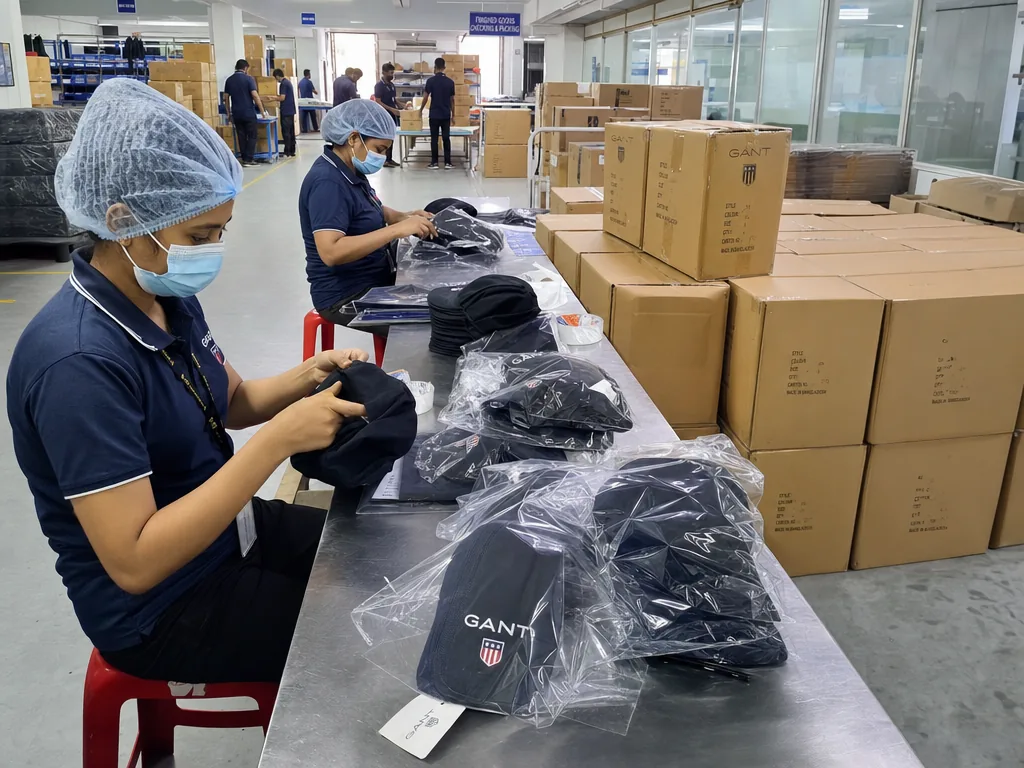
For brand owners, wholesalers and procurement teams entering the custom headwear category, building a repeat-order workflow with your hat factory - supplier checklist is one of the highest-leverage decisions you will make. Get it right and your unit economics, retail story and reorder cycle all improve. Get it wrong and you carry the cost for years.
Why repeat orders are cheaper than first orders
The biggest savings on a repeat order is the removal of one-time setup cost, not a factory suddenly becoming generous on margin. First orders carry technical charges that never fully show up in the FOB line price: embroidery digitizing typically runs $35-$90 per logo depending on stitch count and 3D foam complexity; woven label loom setup is usually $50-$120; lab dips are often $40-$100 per Pantone TCX color when the mill is matching from greige; and a pre-production sample can add $50-$85 per colorway before DHL or FedEx. If the style includes appliqué, screen print, or custom metal trims, add more. On a 300-500 piece opening PO, those development costs can easily add $300-$800 before bulk cutting starts. Once a repeat order hat factory has the approved tech pack, BOM, DST file, thread chart, trim card, carton marks, and sealed PPS sample on record, that non-recurring engineering cost largely disappears.
The second price break comes from throughput. A first run is where the floor proves crown shape, visor curve, seam allowance, buckram hand feel, sweatband attachment, and logo placement under real production conditions. On 3D embroidery, operators still need to validate foam density, pull compensation, satin coverage, and needle sequence on Tajima or Barudan heads so the edge does not collapse. By the second run, those settings are already logged, the QC team is checking against a golden sample, and the sewing line knows whether the cap is built in 300 gsm brushed cotton twill, 260 gsm chino, 600D poly, or an 80/20 acrylic-wool blend. That usually cuts waste by 1-3%, reduces thread breaks and operator stoppages, and shortens approval traffic between merchandising, sample room, sewing, and QC. The result is lower real manufacturing cost per cap, not just a cleaner quote.
Planning also gets materially cheaper once the SKU is known. New styles behave like development projects: more handoffs, more inline questions, more line-change labor. On caps, that hidden labor is real—rethreading a 12-head Tajima, resetting sewing guides, swapping visor jigs, and briefing inspectors on a new appearance standard can burn hours that never appear as a separate charge. Repeats can be grouped into existing fabric or color-family runs, which improves output per operator hour and makes capacity planning less disruptive. Quality cost drops too because inspectors are no longer interpreting the standard from scratch; they are checking against the prior defect history, approved shade band, measurement spec, packing photo, and the same AQL 2.5 criteria. That sharply reduces expensive mistakes such as panel shade mismatch, logo-position disputes, mispacked cartons, or bulk lots drifting outside an agreed Delta-E tolerance.
Locking in pricing for 12 months
Lock annual pricing by the second or third PO, before every release gets recalculated off the latest twill and trim quotes. A competent repeat order hat factory can usually hold FOB pricing within ±2% to ±3% for 12 months on a stable program, but only when the BOM is frozen at production level, not mood-board level. That means same crown profile, panel construction, visor curve, fabric composition and weight, closure, stitch count, branding set, and pack-out. Buyers regularly call a style “unchanged” while moving from 240 gsm cotton twill to 280 gsm brushed canvas, replacing a PP snapback with a zinc-alloy buckle, or increasing front logo density from 6,500 to 11,000 stitches on Tajima or Barudan heads. On the factory floor, that is a new cost structure, not a protected repeat price.
Write the baseline spec so there is no room for reinterpretation: fabric mill code, Pantone TCX reference, acceptable shade tolerance such as Delta-E under 1.5 to approved bulk standard, embroidery file version, backing type, sweatband composition, buckram grade, eyelet method, visor board, carton count, and export pack method. Then list hard repricing triggers. Typical triggers are any fabric substitution, added woven loop or size labels, 3D puff foam, enzyme or pigment wash, retail polybagging with warning sticker, tighter color tolerance, or new QA requirements above AQL 2.5. The price hold only works if the supplier can reserve capacity against a believable forecast, usually an annual commitment with quarterly call-offs and color splits locked 45 to 60 days before ex-factory. A workable agreement might be 18,000 units per year with ±15% quarterly flex, FOB Ningbo, and a reopen clause if cotton, metal hardware, or RMB exchange moves beyond an agreed band such as raw material variance over 5% or FX appreciation above 3%.
Fabric reservation and dye-lot consistency
Most color failures on reorders are baked in at the mill, not on the sewing floor. A repeat order hat factory gets into trouble when each PO is sourced as a fresh spot buy and everyone assumes the same Pantone reference will land the same shade six months later. It won’t. Cotton twill shifts with yarn origin, optical brightener dosage, singeing, enzyme wash, and resin finish; recycled polyester is less stable visually because chip source and dope variation change how the fabric reads under D65, TL84, and warm store lighting. On a cap, those shifts are obvious because the front panel, visor, top button, eyelets, and back strap sit in one visual field. Buyers also compare new inventory against sealed approval samples, not against a lab dip on a light box. For carryover programs in black, navy, khaki, and stone, I treat Delta-E 1.0 to 1.2 as the practical upper limit, especially when spring and holiday deliveries will sit side by side. Once you get into 1.5, the mismatch is usually visible on adjacent components, and embroidery thread can make it look worse by increasing contrast. The fix is simple but requires discipline: reserve greige or dyed yardage against a forecast, then tie every repeat PO to that same dye lot or approved shade band. If visual continuity matters, gambling on a new dye run to save a few cents per yard is the wrong place to economize.
A workable reservation agreement should cover at least two quarters of demand and lock the technical standard before bulk starts: fiber content, weave, yarn count, gsm, finish, shrinkage, and color tolerance against an approved standard card or signed swatch. For a stable cap program, that usually means blocking 3,000 to 5,000 yards of 10x10 brushed cotton twill at 220 to 260 gsm, chino twill around 240 gsm, or 600D RPET at roughly 7.0 to 7.5 oz/yd². In a normal market, that reservation premium is often only $0.08 to $0.20 per yard versus spot buying, which is cheaper than scrapping finished caps or discounting inventory due to shade complaints. At CrownsForge, we log dye-lot numbers on the BOM and cut plan, then segregate rolls by lot so the spreading table never mixes old and new fabric. Do not accept vague language like “close enough to Pantone.” Ask whether the mill issues lot-specific lab dips, how long reserved stock can be held, whether leftover balances can roll to the next PO, and what happens after 90 to 180 days if consumption slips. A credible supplier should show 4-point fabric inspection records, roll cards, shade banding, and a clear rejection rule for rolls outside tolerance. They should also verify shade under both D65 and TL84 and connect lot control to the full workflow: incoming inspection, cutting segregation, in-line QC, embroidery matching, and final AQL 2.5 packing inspection. That is how an October replenishment still matches the April launch sample without arguments over lighting or memory.
Sample-on-file matching for every repeat
The sealed PPS sample is the only version that matters on a rerun. Tech packs, Dropbox photos, and last year’s PO notes are reference material; they are not arbitration tools once 3,000 caps are already sewn. A competent repeat order hat factory keeps one approved sample on file in a rigid box or sealed polybag, tagged with the style code, customer PO, fabric content, actual tested gsm, dye-lot or mill lot, visor board spec, closure type, sweatband construction, embroidery DST version, approval date, and written exceptions from the first run. Before cutting bulk, production, QC, and line supervisors should pull that sample and check the points that actually drift in hats: crown height within ±3 mm, visor length within ±2 mm, visor pitch, center-front seam straightness, top-button centering within 2 mm, eyelet spacing, back-strap placement, and SPI on sweatband and panel joins. If the PPS sample is not physically on the table, operators substitute memory, and memory is where repeat consistency starts failing. The biggest repeat-order failures usually start in materials and setup, not in obvious sewing defects. A nominal 260 gsm brushed cotton twill can land at 248 gsm from a new lot and immediately change crown body; PE buckram stiffness can drop 10% to 15%; visor board from 1.8 mm to 2.0 mm changes brim hand and curve retention. Color also fools people: a black sweatband or undervisor that passes under cool warehouse tubes can read brownish under D65 or retail LEDs. On embroidery, small file changes create visible drift fast. A logo run on Tajima, Barudan, or ZSK heads will look heavier if the underlay switched from edge-run to tatami, satin density tightened from 0.40 mm to 0.35 mm, or thread changed from Madeira Classic to Gunold without a fresh approval. Good factories compare against the sealed PPS under D65 light, hold critical panel color to roughly Delta-E 1.0-1.5, and verify brim sandwich thickness, visor edge tape width, hand feel, and embroidery coverage before packing starts.
For annual programs and staggered deliveries, sample-on-file matching needs to be written into the control plan, not treated as a favor from QC. If March and August shipments are cut from different fabric lots, the retailer still expects the same silhouette, visor curve, and shelf appearance. CrownsForge’s standard practice is to reference the sealed PPS sample at inline inspection, pre-final, and final random inspection to AQL 2.5, using the sample as the appearance and construction benchmark. That means actual side-by-side checks on panel tension, seam puckering, crown symmetry, closure attachment, embroidery placement, and finishing details like loose-thread trimming and label position. Without that step, the factory may pass a cap that is technically within spec yet visibly different from the approved run. The reporting discipline matters as much as the comparison. QC should photograph any variance against the master sample, record the measured gap in millimeters or SPI, note the lot numbers involved, and escalate before packing if any point exceeds tolerance. For color or material substitutions, buyer approval should be written against the repeat PO, not buried in a chat thread. This is especially important on high-volume replenishment styles where a 2 mm visor shift or a softer buckram will not trigger a defect count but will trigger a customer complaint when cartons are mixed at the warehouse. Sorting or reworking a 3,000-piece claim after FOB shipment can easily cost more than the original sample process, especially once freight, relabeling, and chargebacks are added.
Replenishment cycle: how often to reorder
Most brands place a repeat too late, then burn margin on air freight and rushed approvals. A better trigger is operational, not emotional: reorder when 60% to 70% of the last receipt has sold through and you still hold 5 to 7 weeks of cover on your core SKU. On a 1,200-piece 6-panel program shipping FOB Ningbo, that usually translates to a 90- to 120-day replenishment cycle once you count 20 to 30 days for bulk production, 30 to 40 days on water to a U.S. port, 5 to 10 days for customs and drayage, and 3 to 7 days for warehouse receiving. A repeat order hat factory performs best on that planned cadence because the merchandiser can lock the original BOM, approved counter sample, embroidery DST file, thread chart, and carton spec before substitutions start creeping in. Consistency on repeats comes from having a hard control standard, not from trusting memory. If the first run was approved against Pantone TCX with Delta-E under 1.5, used the same 240 gsm cotton twill or 65/35 poly-cotton blend, and passed final inspection at AQL 2.5, the next PO has a measurable benchmark. If you wait until inventory is already broken in two best-selling colors, the factory will often be forced into whatever fabric lot, snapback closure, buckram, or visor board is available that week. That is how brands end up with crown panels that sew differently, white thread that shifts half a shade, or sweatbands that feel cheaper even when the cap looks similar in a flat photo.
Seasonal and event business should be back-planned from the in-hands date, not dropped onto a generic monthly reorder calendar. For spring training, holiday retail, or back-to-school launches, reserve production 6 to 9 months ahead so the factory can secure matching fabric lots, book Tajima, Barudan, or ZSK embroidery capacity, and hold trims such as woven labels, snap closures, metal buckles, and sandwich visor inserts. Size ratios can move later, but construction should freeze early: crown height, panel structure, buckram weight, sweatband composition, closure type, seam tape, and decoration position. That is the difference between a controlled repeat and a quiet downgrade from a 240 gsm twill to a lighter lot that looks acceptable on a lab dip but wears differently in bulk. Freight mode matters more than most buyers admit, because it sets the true reorder point. A 500-piece promotional order shipped DDP by air can land in roughly 25 to 35 days door to door if artwork, PPS approval, and import docs move cleanly. A 5,000-piece event program moving by sea usually needs 75 to 95 days all-in, including pre-production sample sign-off, cutting, sewing, embroidery, finishing, metal detection where required, final inspection, and customs clearance. Our standard practice is to build a replenishment matrix by SKU, MOQ, lead time, and sales volatility, then assign trigger dates before stock gets tight. That keeps repeat orders predictable, protects color continuity, and avoids paying rush premiums for problems that should have been scheduled out weeks earlier.
Annual contract vs. spot-buy economics
If your annual volume is realistically 2,000 to 4,000 caps, a 12-month contract usually outperforms spot buying on both unit cost and spec stability. On a standard 6-panel mid-profile cap in 280-320 gsm brushed cotton twill, with plastic snapback, 2.0 mm PE visor board, woven main label, and 8,000-10,000 stitches of flat embroidery, annual FOB Ningbo pricing typically lands around $3.10-$3.45 when you release 500-1,000 pieces per drop. The same style bought as four separate spot POs often closes at $3.50-$3.85 because the factory has to absorb repeated setup loss: thread shade confirmation, embroidery file rechecks, line balancing, marker inefficiency, and small-lot fabric purchasing. In a repeat order hat factory arrangement, those reset costs largely disappear once the approved BOM is locked, including crown height, sweatband spec, seam tape artwork, closure type, needle count, and master carton pack.
The bigger advantage is capacity protection when the market tightens. In Q4, sports licensing, holiday promotions, and streetwear launches all compete for the same sewing and embroidery capacity, so spot buyers often get pushed into 50-65 day production, shell fabric substitutions, or air top-up shipments after vessel cutoff. Under an annual agreement, the factory can reserve production slots 45-60 days in advance, pre-run embroidery on Tajima or Barudan heads, and book dyed fabric lots to a Pantone TCX target with a defined Delta-E tolerance, usually under 1.5 on visible panels. That matters because continuity failures are expensive and obvious: a black twill shifting from 300 gsm to 260 gsm, a visor board losing stiffness, or a front panel buckram changing hand feel will show up immediately across repeat runs. The practical standard is to freeze the approved BOM, AQL 2.5 inspection level, carton dimensions, and ex-factory windows at program start so each release order is execution, not renegotiation.
Long-term scheduling also improves quality control, not just price and lead time. When a factory knows the style will repeat, it is more willing to validate upgrades that reduce claim risk: memory-shape buckram for better front panel recovery, moisture-wicking polyester sweatbands for teamwear, or standardized trim from YKK or SBS where closure consistency matters. Those are measurable improvements, not cosmetic ones; they reduce panel distortion after packing, improve wear performance, and lower final-inspection rejects. More importantly, any material change can be tested before the next PO against shrinkage, crocking, colorfastness, embroidery registration, and wash response instead of being trialed on a rushed spot order. That is the real value of a disciplined repeat order hat factory workflow: quarter two matches quarter four on profile, hand feel, stitch density, and fit, with fewer surprises at inbound QC and fewer customer complaints about inconsistency between deliveries.
When to add a second supplier (dual-sourcing)
Add a second supplier when supply continuity is worth more than the friction of split production. For most cap programs, that threshold is around 8,000-12,000 pieces per year, or earlier if you reorder the same 3-5 core SKUs every quarter and the spec pack is already frozen. Below that level, dual-sourcing usually creates waste: duplicate development charges, two PP sample cycles, separate embroidery sew-outs, and more chances for variation in crown height, visor curve, seam puckering, or sweatband join position. The safest structure is rarely 50/50. A 70/30 or 60/40 split gives the primary factory enough volume to protect FOB pricing and line efficiency, while the secondary supplier gets enough repetition to build real production memory. That is the point where a repeat order hat factory setup becomes a practical risk-control system, not an expensive administrative exercise. The biggest mistake is treating a quoting factory as a true backup. If a supplier has never shipped your cap in bulk, it is not dual-sourcing; it is contingency theater. Both factories should hold the same revision-controlled tech pack, approved PP sample, packing standard, and trim BOM, with shell fabric matched within +/-5 gsm, visor board thickness within about 0.2 mm, and closure, buckram, and thread specification locked to the same standard. For color-sensitive programs, hold key components to Delta-E 1.5-2.0 against the master swatch, not just a lab dip photo. Embroidery needs even tighter control: the same DST file will sew differently on Tajima, Barudan, or ZSK heads because tension, underlay, cap frame setup, and operator handling all change the result. Keep sealed counter samples from both factories and compare bulk output against those standards, not against digital artwork alone.
A real second source should sharpen performance, not just sit on a vendor list. Once one factory controls 100 percent of a cap program, price creep usually appears in small, easy-to-miss forms: a $0.06 trim swap, a 7-10 day lead-time slip, a higher MOQ on 300D polyester or acrylic-wool blends, or weaker response on remake claims. A secondary supplier carrying 30-40 percent of the volume gives you clean benchmarks on ex-factory lead time, embroidery throughput per head, cutting yield, and claim rate by SKU. On a standard brushed cotton dad cap or 80/20 acrylic-wool snapback, even a $0.18-0.35 unit gap becomes meaningful once annual repeats reach 20,000 pieces. Qualify the second supplier like a production partner, not emergency insurance. If your channel requires compliance, audit to sedex-audit-cap-supplier-guide.html">BSCI 2.0 or Sedex SMETA 4-Pillar before assigning live volume. Match both factories on AQL 2.5 final inspection, barcode format, carton drop testing, needle control, and master packing method so reorders do not trigger a fresh qualification every time demand spikes. Our standard practice is to keep the primary source at 60-70 percent and the secondary at 30-40 percent; anything smaller often leaves the backup factory undertrained on your construction details. That allocation is enough to protect against labor turnover, power restrictions, line congestion, or export delays without sacrificing the efficiency that made the primary supplier competitive in the first place.
Frequently Asked Questions
Can I order a sample before bulk production?
Yes. We strongly recommend approving a pre-production sample before mass production. Samples are charged at 35 to 60 USD each plus express shipping, fully refundable against confirmed bulk orders over 500 pieces.
What is the minimum order quantity (MOQ) for custom hats?
Our standard MOQ is 100 pieces per design and color, with sampling available from 1 piece. For complex multi-color logos or premium fabric upgrades, the MOQ can be lowered with a small per-piece surcharge.
How long does production take?
Sampling takes 7 to 12 days. Bulk production runs 20 to 30 days depending on quantity, fabric availability and decoration complexity. Inspection and packing adds another 3 to 5 days before shipment.
Do you support sustainability certifications?
Yes. We work with GOTS organic cotton, GRS-certified recycled polyester, OEKO-TEX Standard 100 fabrics, and are BSCI and Sedex audited. Certification documentation can be provided per order.
What file format should I send for my logo?
Vector files (AI, EPS, PDF) are ideal. High-resolution PNG or JPG at 300 dpi on transparent background works as a fallback. Provide Pantone color references for accurate reproduction.
What's the MOQ for custom bucket hat no minimum?
When evaluating custom bucket hat no minimum, the key considerations are construction quality, decoration capability, MOQ flexibility and lead time. First order absorbs digitizing setup ($30-$80), screen-print plate ($30-$60 per color), fabric color matching ($40-$100 per Pantone), sample fees ($40-$80 per colorway), and PPS approval cycle. Repeat orders amortize none of this — factory has all the files, tooling and samples on hand. Smart buyers sign 12-month pricing agreements with their factory at the second or third…
How does ordering custom hats near me work?
When evaluating custom hats near me, the key considerations are construction quality, decoration capability, MOQ flexibility and lead time. First order absorbs digitizing setup ($30-$80), screen-print plate ($30-$60 per color), fabric color matching ($40-$100 per Pantone), sample fees ($40-$80 per colorway), and PPS approval cycle. Repeat orders amortize none of this — factory has all the files, tooling and samples on hand. Smart buyers sign 12-month pricing agreements with their factory at the second or third…
How does ordering custom hat embroidery near me work?
When evaluating custom hat embroidery near me, the key considerations are construction quality, decoration capability, MOQ flexibility and lead time. First order absorbs digitizing setup ($30-$80), screen-print plate ($30-$60 per color), fabric color matching ($40-$100 per Pantone), sample fees ($40-$80 per colorway), and PPS approval cycle. Repeat orders amortize none of this — factory has all the files, tooling and samples on hand. Smart buyers sign 12-month pricing agreements with their factory at the second or third…
What's the MOQ for custom embroidered hats no minimum?
When evaluating custom embroidered hats no minimum, the key considerations are construction quality, decoration capability, MOQ flexibility and lead time. First order absorbs digitizing setup ($30-$80), screen-print plate ($30-$60 per color), fabric color matching ($40-$100 per Pantone), sample fees ($40-$80 per colorway), and PPS approval cycle. Repeat orders amortize none of this — factory has all the files, tooling and samples on hand. Smart buyers sign 12-month pricing agreements with their factory at the second or third…
What famous hat company owned the Old Mallory hat Factory when it closed in 1980?
The closing left this former hat-making capital of the world with only one such plant still in operation. The John B. Stetson Company of Philadelphia, which had owned the Mallory operation since 1946, announced the closing that affects about 125 employes.
Looking for a reliable hat manufacturer in China?
CrownsForge has produced custom hats for 800+ brands across 40 countries. From 100-piece launches to 100,000-piece retail programs, we deliver on time and on spec.
Get in touchRelated guides
Custom Corduroy Dad Hat Bulk: A 2026 B2B Sourcing Guide
Read article →
Promotional Caps & Corporate Gifts: Bulk Custom Hats for Brand Events
Read article →
Cap Sample Cost Negotiation Without Losing Quality Control
Read article →We hope this guide demystifies building a repeat-order workflow with your hat factory - supplier checklist and helps you move forward with confidence. If you have questions specific to your project, our English-speaking sales engineers are one message away.