
Building a Repeat-Order Workflow with Your Hat Factory - 2026 Buyer's Guide
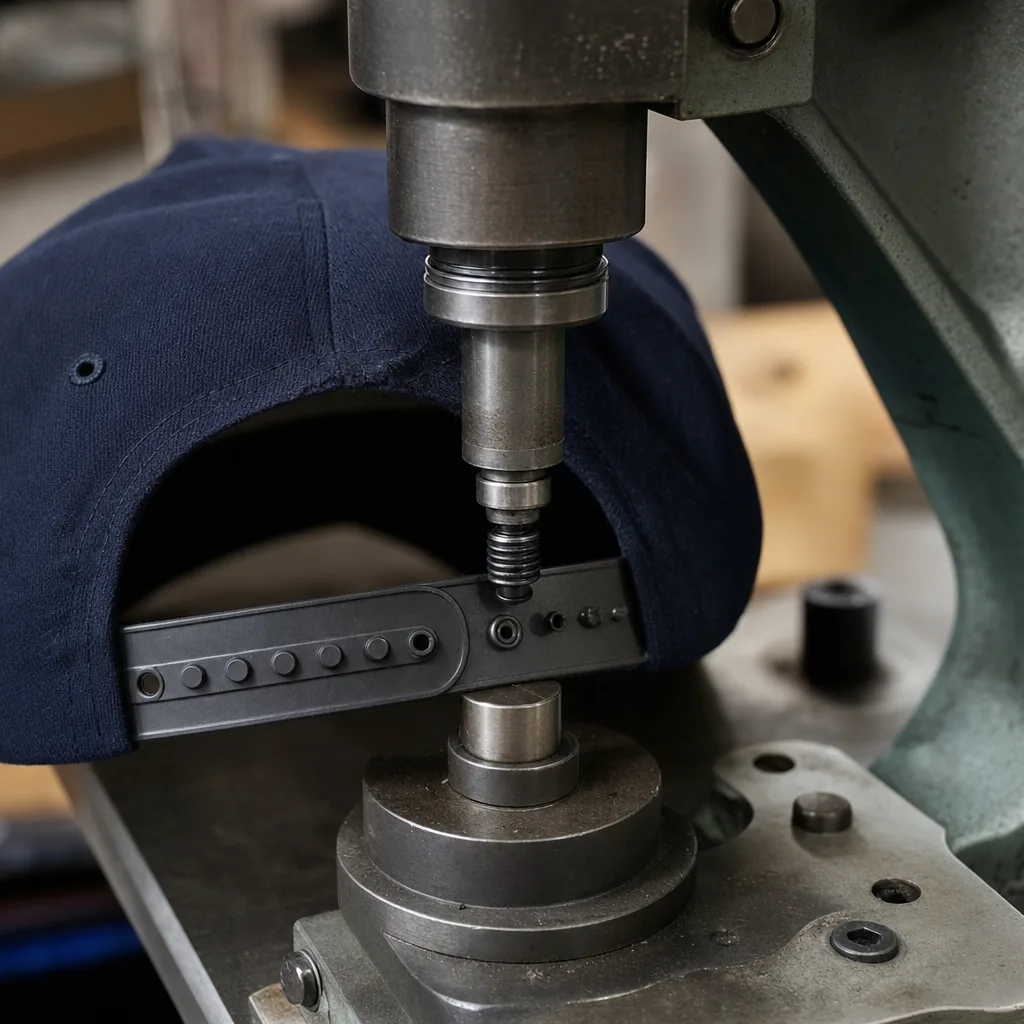
Every week, our sales team answers detailed questions about building a repeat-order workflow with your hat factory - 2026 buyer's guide. We wrote this guide so that wholesalers, streetwear brands, corporate buyers and promotional resellers can compare options with full information, and avoid the traps that show up only after production has started.
Why repeat orders are cheaper than first orders
First orders are expensive because you are paying for process development, not just units. A capable repeat order hat factory should already have the approved tech pack, BOM, graded pattern, embroidery DST, applique knife line, print separation files, wash or color standards, and signed PPS locked to the style code. On a fresh custom cap, 3D puff digitizing usually costs $35 to $90 per logo depending on stitch count, foam height, underlay, and pull compensation; screen print separations and film or plate output add $25 to $60 per color; and lab dips or Pantone TCX matching commonly add $50 to $120 per shade on cotton twill, recycled polyester, or nylon taslon where dye uptake can drift. Then add a PPS charge of roughly $45 to $85 per colorway plus 7 to 14 days for sampling, revision comments, and approval. Before bulk cutting even starts, the first PO has real preproduction cost baked into it.
On a reorder, most of that disappears unless you changed artwork, fabric, trims, or construction. That is where a repeat order hat factory actually proves its value: the style is no longer being interpreted, only repeated against a fixed standard. The factory can reload the same crown height, visor curve, buckram weight, closure spec, seam tape layout, stitch count, and thread mapping used on the approved bulk run. On Tajima, Barudan, or ZSK heads, operators can call back the exact program that already passed approval, including density, underlay, sequence, and compensation settings. Strong factories also retain sealed shade swatches, approved labels, closures, packing standards, and a signed golden sample, so QC is checking against a physical benchmark instead of an email trail.
The larger savings usually come from lower waste and fewer defects, not just deleted setup charges. By the second or third run, cutters and sewing operators already know the style’s problem points: a front panel may need a 0.5 mm needle offset to keep a puff logo centered, or a 210D recycled poly shell may need shorter heat-press dwell than 12 oz cotton twill to avoid panel distortion and brim ripple. That factory memory cuts trial pieces, rework, and carton failures at final inspection. If the first run needed 3% to 5% extra cutting allowance for startup loss, a stable reorder can often bring that down to 1.5% to 2.5%. On a 3,000-piece program, buyers typically see repeat-order pricing land 4% to 10% below the launch PO when fabric and freight are flat, with reorders audited to the same tolerances—commonly Delta-E 1.0 to 1.5 on critical color areas and AQL 2.5 at final inspection.
Locking in pricing for 12 months
Do not lock a 12-month FOB at sampling. Lock it after the second or third PO, when the factory has real consumption and efficiency data: shell yield, buckram loss, visor board waste, embroidery minutes per cap, and reject rate at inline and final. That is the difference between a sample-room estimate and a production costed SKU. In a repeat order hat factory program, annual pricing is only defensible when the specification is frozen line by line: crown height, 5-panel vs. 6-panel construction, low-profile vs. mid-profile shape, pre-curve degree, closure type, fabric composition, stitch count, labels, carton pack, and approved Pantone TCX references. Put color tolerances in writing. For dyed main fabric, Delta-E under 1.5 is a realistic export target; for sweatband, seam tape, or undervisor, under 2.0 is usually acceptable. The price lock fails the moment buyers treat a revised cap as the same SKU. A switch from 340 gsm brushed cotton twill to 230 gsm nylon taslon changes fabric cost, sewing behavior, needle selection, and often the fusing recipe. Add 3D puff embroidery, TPU patches, laser-cut appliqué, or welded seam tape and your machine time shifts immediately, especially on Tajima, Barudan, or ZSK heads where run speed and thread breaks matter more than buyers assume. Our standard practice is to allow only a narrow adjustment band, usually ±2% to ±3%, and only for pre-defined raw material movement. Anything outside that band is a re-cost, not a debate. If you want a fixed price, freeze the bill of materials and freeze the process.
A 12-month price lock is credible only when volume and release timing are also fixed. No factory can hold custom cap pricing if orders arrive as random 2,000-unit drops with two-week notice. Mills need 60 to 90 days to reserve greige, book dye lots, and consolidate trims against MOQ. A practical structure is 24,000 units annually in four scheduled releases of 6,000 pieces. That usually prices better than twelve ad hoc releases because fabric utilization improves, visor board and snapback trim MOQs are met cleanly, and sewing lines are not constantly reset. The same logic applies to embroidery loading: stable bookings on multi-head machines reduce idle gaps, overtime, and hidden conversion cost that never shows up on the first quotation. The clause that matters most is the reset trigger. Write it with numbers, not vague language. Typical triggers are raw-material movement beyond the agreed band, RMB/USD exchange shifting more than 3% to 5%, annualized volume landing over 15% below forecast, or any spec revision that changes the BOM or labor minutes. Separate fixed conversion cost from volatile inputs. Sewing, standard embroidery labor, and export carton packing can often stay flat for 12 months; imported snap closures, branded metal hardware, PE bag film, and some dyed fabrics should be indexed or excluded. Also freeze the quality baseline: fabric weight tolerance such as 340 gsm ±5%, visor board grade, sweatband composition, closure plating, carton burst strength, and final inspection at AQL 2.5. A repeat order hat factory should treat annual pricing as controlled manufacturing, not a spreadsheet promise that collapses in peak season.
Fabric reservation and dye-lot consistency
Treat fabric reservation as a purchase control, not a courtesy from the mill. On the first PO, the mill dyes to your approved lab dip or Pantone TCX reference, ships the booked consumption, and—unless you state otherwise on the PO and color approval—puts the leftover yardage back into open stock. That is the usual starting point for shade drift on repeat business. Six months later, the same “black” chino twill may be built from a different greige mill, run on another dye kettle, or finished with a slightly different enzyme wash, and the cap body will lean warmer, greener, or flatter under D65 and TL84. A serious repeat order hat factory locks forward yardage against a realistic forecast so the next release is cut from the same lot family instead of whatever stock is available that week. On hats, that risk shows fast: crown panels, sandwich visors, and top buttons expose hue variation immediately, especially on solid dark shades, low-luster brushed twill, and recycled polyester where finishing chemistry can push visible shade movement.
The practical reservation window is usually 6 to 9 months, with mills asking for a committed balance tied to MOQ, fabric type, and finish complexity. For brushed cotton twill, peach chino, rPET canvas, or 600D polyester, a workable hold is often 300 to 800 yards per color; custom coatings, WR finishes, or special widths can push that minimum above 1,000 yards. That reserved block gives you one controlled fabric pool for spring, back-to-school, and holiday releases instead of three separate dye lots. Embroidery will not rescue a drifting shell shade: a Tajima or Barudan run can repeat the same DST file within normal tolerance, but no digitizer can sew a panel back to the approved base color. At CrownsForge, standard practice is to lock bulk color to a signed physical standard, verify each incoming lot in a light box, and record Delta-E before cutting. For core brand colors, a sensible pass line is Delta-E 1.0 to 1.2; for fashion shades, 1.5 is usually the outer limit. When cotton or rPET prices are moving, that discipline also reduces re-dye and mismatch exposure, often protecting $0.08 to $0.25 per cap.
Sample-on-file matching for every repeat
The approved PPS sample is the only standard that matters on a reorder; tech packs, CAD mockups, and WhatsApp photos are reference material, not the benchmark. Any competent repeat order hat factory should seal one signed PPS in a labeled bag with the style code, colorway, fabric composition, closure type, artwork revision, embroidery program file, and approval date, then tie it to the digital BOM and prior QC record. Before bulk cutting, QA needs to pull that exact sample and approve first-off units against it for crown height, visor curvature, panel symmetry, top-button centering, sweatband width, seam SPI, and embroidery fill coverage. Color should be checked under a D65 light box, not under mixed warehouse LEDs, and color-sensitive programs should use practical Delta-E limits of 1.0-1.5 on main shell fabric and 1.5-2.0 on trims. That physical sample settles arguments fast because everyone is judging one approved hat, not two different screens and three different memories. The failures that wreck repeats are usually small drifts, not obvious defects. A mill substitutes 270 gsm brushed cotton twill with a 240 gsm lot, buckram drops from 0.55 mm to 0.45 mm, brim board shifts from 1.8 mm to 1.5 mm, or an operator reduces underlay and stitch count to save 8-10 seconds per cap on Tajima or Barudan heads. Six months later, the buyer gets the classic complaint: same logo, different hand feel. The control point is first-off approval before line release, then inline verification and final random inspection to AQL 2.5. If the first 20-50 pieces show drift in crown profile, visor stiffness, seam tension, edge taping, label placement, hardware finish, or stitch density, production should stop immediately instead of after 3,000 units are packed. A retained PPS backed by fabric lot data, thread brand, backing type, needle spec, and prior inspection notes prevents most repeat disputes before they start.
Replenishment cycle: how often to reorder
Reorder timing should be driven by SKU-level sell-through, not by a warehouse snapshot that blends strong and weak colors together. For evergreen caps, the cleanest trigger is when 60% to 70% of the last receipt has sold through or when forward cover falls below 10 to 12 weeks at current weekly velocity. In practice, that creates a 90- to 120-day replenishment cycle for a basic six-panel style, which matches real factory timing: 2 to 3 days for PO and artwork confirmation, 5 to 7 days for fabric booking, 18 to 25 days for cutting, sewing, embroidery, finishing, and packing, plus 25 to 35 days ocean transit to a U.S. port under normal FOB terms. A repeat order hat factory can usually turn a clean 1,200-piece reorder in 260 gsm chino twill within 25 to 35 production days, but even minor changes such as a revised Tajima embroidery file, a new woven flag label, or a custom sweatband print often add 5 to 10 days through re-approval and line rescheduling. The planning mistake I see most often is using total on-hand units instead of tracking sell-through by colorway and size split, so black OSFM is effectively out of stock while slow-moving sand and navy distort the inventory report.
Seasonal replenishment needs to be backward planned from the in-market date because capacity gets tight before demand does. For standard spring or fall programs, reserve production space 4 to 6 months ahead; for holiday, back-to-school, or licensed promotions, 6 to 9 months is safer, even if final quantities stay open until the last 60 days. Lead time expands fast when the cap is not a plain twill build. High stitch-count logos on Barudan or Tajima multi-head machines, 14-wale corduroy, melton wool blends, 600D polyester, molded PVC or rubber patches, and custom metal buckles all increase sourcing, sampling, and approval risk. If you are matching a previous run to a Pantone TCX standard, do not rely on memory or a photo from the last shipment; require fresh lab dips and lock a Delta-E tolerance, usually under 1.5, especially when fabric comes from a new dye lot. For deadline-sensitive reorders, protect the shipment by confirming line booking early, setting AQL 2.5 final inspection dates before ex-factory, and building honest transit buffers. Saving $0.20 per cap means nothing if a preventable delay forces air freight at roughly $6.50 to $9.00 per kg.
Annual contract vs. spot-buy economics
If annual demand is even somewhat forecastable—say 2,400 to 6,000 units across one or two proven cap SKUs—annual terms usually beat spot buying on total landed cost, not just FOB. The factory savings are operational, not theoretical: fewer pattern resets, repeat use of the same Tajima or Barudan embroidery file, stable visor board and closure sourcing, lower trim waste, and less idle time between sewing and finishing. A spot PO for 600 pieces of a standard 6-panel cotton twill cap, 270 gsm, with flat embroidery, buckram front, and hook-and-loop closure typically lands around $3.20 to $3.85 FOB Ningbo. Put that same style on a 12-month program with four releases of 600 to 1,500 pieces, and pricing often settles at $2.90 to $3.40 FOB, assuming stitch count stays under 8,000, no applique, and standard packing at 144 pcs per export carton. That 8% to 12% gap is where a repeat order hat factory creates real value, especially after you remove repeated approval cycles for labels, carton marks, and embroidery placement.
The larger advantage is capacity control during peak months, especially September through November, when buyers are competing for embroidery head hours, sewing line slots, and vessel space as much as for fabric. A disciplined repeat order hat factory will book production windows 30 to 45 days forward against a forecast and retain the approved standard for each style: Pantone TCX references, lab dips, strike-offs, measurements, packing photos, and carton specs. That sharply reduces the usual spot-buy failures—front panel distortion from rushed blocking, shade drift above Delta-E 1.5, substituted sweatband quality, or last-minute carton changes that trigger retailer chargebacks. Annual programs also improve material continuity. Mills are far more willing to reserve consistent lots of brushed twill, recycled 600D poly, or snap closures when the volume is scheduled, which lowers the risk of hand-feel shifts, plating changes, or buckram stiffness differences. The right setup is to lock fabric weight tolerance, visor thickness, closure source, and acceptable shade band up front, then police repeats with incoming material checks and AQL 2.5 final inspection.
When to add a second supplier (dual-sourcing)
Add a second supplier when line capacity, not annual spend, becomes the real constraint. In practice, that point usually shows up around 6,000 to 12,000 caps a year spread over 8 to 14 replenishment POs, where one repeat order hat factory can still hit average quality but cannot always protect booking windows, inline rework time, and ETD consistency. I would not dual-source earlier just to look sophisticated. The trigger should be measurable: two missed ship windows in 12 months, PP sample approval slipping more than 7 days twice in a season, or bulk defect rates pushing past your normal AQL 2.5 plan often enough that rework starts eating vessel cutoff dates. Start with a 70/30 split, then move to 60/40 only after the secondary supplier clears two bulk orders with no major variance on crown height within 3 mm, visor curvature, seam alignment, embroidery registration, closure function, and carton performance on a standard drop test. The extra setup cost is real but usually small compared with one failed launch or late replenishment. For a structured cap program, expect roughly $300 to $800 in duplicate development cost for counter samples, fit comments, embroidery DST validation, trim matching, packaging approval, and carton marking checks. That spend only pays back if the second factory runs real production, not a token 144-piece trial. A backup supplier that never handles live bulk will not learn your true standards for buckram stiffness, sweatband attachment, top-button centering, tuck-in label placement, or how you want the bill packed to hold shape after 30 to 45 days in transit. On the factory floor, redundancy is only useful when the second line has already made your hat under normal pressure, with the same booking constraints and final-inspection discipline as the first.
A second supplier reduces risk only if you duplicate process control, not just the vendor name on the PO. Both factories should work from the same tech pack revision, approved BOM, Pantone TCX references, lab dips, DST files, seam tape artwork, carton spec, and packing SOP, with the tolerance chart signed off before PP sample approval. For repeat programs, I like to lock main fabric weight within plus or minus 5% gsm, body color within Delta-E 1.5 to the approved standard, and visual defects against AQL 2.5 at final inspection. Sealing sample comments should transfer line by line, including visor stitch count, eyelet size, crown panel match, and polybag labeling. If one supplier embroiders on Tajima and the other on Barudan or ZSK heads, do not assume the same file gives the same result; align underlay, pull compensation, satin density, thread brand, and needle size during pre-production or the logo sheen and edge sharpness will drift. There is also a commercial reason to dual-source, but buyers often misuse it. The value is not squeezing the last $0.05 to $0.10 per cap out of two factories competing on price. The real gain is continuity when one plant loses booking priority, fails a sedex-audit-cap-supplier-guide.html">BSCI 2.0 or Sedex SMETA 4-Pillar follow-up, runs short on skilled operators before Chinese New Year, or gets stuck behind a high-SKU rush season. Our standard practice is to keep the secondary source active enough to preserve readiness, because an idle backup is not a backup. If the second supplier cannot match your approved packaging method, carton cube, barcode placement, and claim-response speed under live conditions, it is only a name in your vendor file, not a working insurance policy.
Frequently Asked Questions
How long does production take?
Sampling takes 7 to 12 days. Bulk production runs 20 to 30 days depending on quantity, fabric availability and decoration complexity. Inspection and packing adds another 3 to 5 days before shipment.
What is the minimum order quantity (MOQ) for custom hats?
Our standard MOQ is 100 pieces per design and color, with sampling available from 1 piece. For complex multi-color logos or premium fabric upgrades, the MOQ can be lowered with a small per-piece surcharge.
Can I order a sample before bulk production?
Yes. We strongly recommend approving a pre-production sample before mass production. Samples are charged at 35 to 60 USD each plus express shipping, fully refundable against confirmed bulk orders over 500 pieces.
Which shipping methods do you support?
We support FOB, CIF and DDP shipping. Air express for samples and small orders, sea LCL for 100 to 500 pieces, sea FCL for 5,000+ pieces. Door-to-door DDP available for US, EU, UK, Canada and Australia.
Do you support sustainability certifications?
Yes. We work with GOTS organic cotton, GRS-certified recycled polyester, OEKO-TEX Standard 100 fabrics, and are BSCI and Sedex audited. Certification documentation can be provided per order.
What's the MOQ for custom bucket hat no minimum?
When evaluating custom bucket hat no minimum, the key considerations are construction quality, decoration capability, MOQ flexibility and lead time. First order absorbs digitizing setup ($30-$80), screen-print plate ($30-$60 per color), fabric color matching ($40-$100 per Pantone), sample fees ($40-$80 per colorway), and PPS approval cycle. Repeat orders amortize none of this — factory has all the files, tooling and samples on hand. Smart buyers sign 12-month pricing agreements with their factory at the second or third…
How does ordering custom hats near me work?
When evaluating custom hats near me, the key considerations are construction quality, decoration capability, MOQ flexibility and lead time. First order absorbs digitizing setup ($30-$80), screen-print plate ($30-$60 per color), fabric color matching ($40-$100 per Pantone), sample fees ($40-$80 per colorway), and PPS approval cycle. Repeat orders amortize none of this — factory has all the files, tooling and samples on hand. Smart buyers sign 12-month pricing agreements with their factory at the second or third…
How does ordering custom hat embroidery near me work?
When evaluating custom hat embroidery near me, the key considerations are construction quality, decoration capability, MOQ flexibility and lead time. First order absorbs digitizing setup ($30-$80), screen-print plate ($30-$60 per color), fabric color matching ($40-$100 per Pantone), sample fees ($40-$80 per colorway), and PPS approval cycle. Repeat orders amortize none of this — factory has all the files, tooling and samples on hand. Smart buyers sign 12-month pricing agreements with their factory at the second or third…
What's the MOQ for custom embroidered hats no minimum?
When evaluating custom embroidered hats no minimum, the key considerations are construction quality, decoration capability, MOQ flexibility and lead time. First order absorbs digitizing setup ($30-$80), screen-print plate ($30-$60 per color), fabric color matching ($40-$100 per Pantone), sample fees ($40-$80 per colorway), and PPS approval cycle. Repeat orders amortize none of this — factory has all the files, tooling and samples on hand. Smart buyers sign 12-month pricing agreements with their factory at the second or third…
What famous hat company owned the Old Mallory hat Factory when it closed in 1980?
The closing left this former hat-making capital of the world with only one such plant still in operation. The John B. Stetson Company of Philadelphia, which had owned the Mallory operation since 1946, announced the closing that affects about 125 employes.
Ready to start your custom hat project?
Send us your tech-pack, sketch or even just an inspiration photo. We will respond with a detailed quotation and digital mock-up within 24 hours.
Request a free quoteRelated guides
Building a Repeat-Order Workflow with Your Hat Factory (2026 Update)
Read article →
Blank Trucker Cap Wholesale Bulk: A 2026 B2B Sourcing Guide
Read article →
Hat With Patch Decoration QC Checklist for Custom Hat Buyers
Read article →If you are ready to take the next step on building a repeat-order workflow with your hat factory - 2026 buyer's guide, our team can put a tailored quotation and digital mock-up in your inbox within 24 hours. Send the inquiry form on our contact page or message us directly on WhatsApp.