
Promotional Caps & Corporate Gifts: Bulk Custom Hats for Brand Events - Cost & MOQ Breakdown
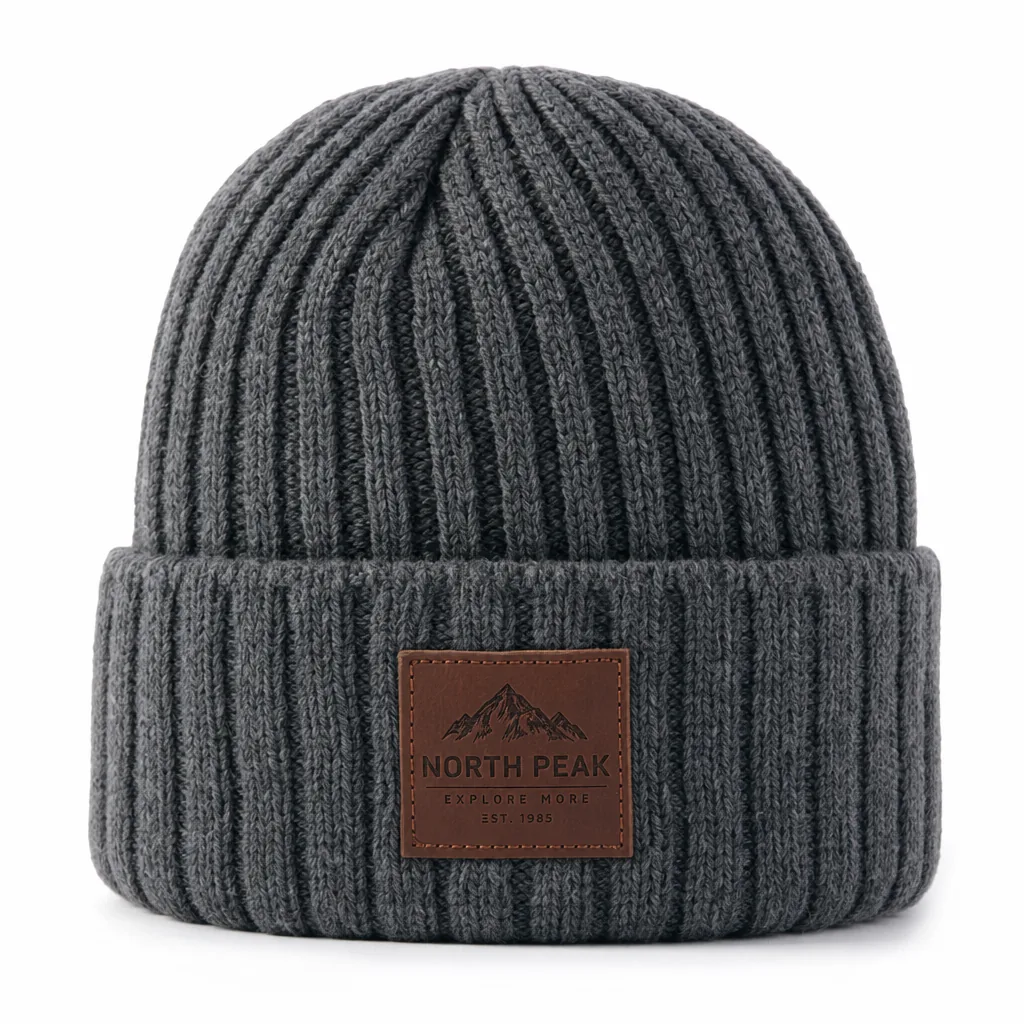
Promotional Caps & Corporate Gifts: Bulk Custom Hats for Brand Events - Cost & MOQ Breakdown is one of the most-asked questions we receive from international buyers, and for good reason. With dozens of factories competing for your order and an alphabet soup of technical terms in every supplier quote, even experienced importers can feel lost. This guide consolidates what we have learned producing custom hats for clients in 40+ countries.
The corporate gift opportunity
Caps beat pens and tote bags on one metric buyers actually care about: visible impressions per dollar spent. A decent click pen at $0.22 to $0.45 landed cost is usually seen once, used a few times, then left in a drawer or taken by someone who never matches your target audience. A 5 oz cotton tote at $0.85 to $1.60 has better retention, but the print area folds, creases, and disappears whenever the bag is carried on one shoulder. Promotional caps stay at eye level, travel outdoors, and get photographed at trade shows, golf outings, distributor meetings, and team volunteer days. When the crown shape, visor curve, and logo size are right, one hat can generate months of repeat visibility for a unit cost that is still practical in volume. For most branded caps bulk programs in China, a structured 6-panel brushed cotton twill cap with flat embroidery lands around $2.10 to $3.40 FOB at 500 to 2,000 pieces, which is a stronger impression-to-cost ratio than most low-ticket swag.
The other reason hats outperform soft giveaways is that recipients self-select into wearing them. Nobody “wears” a pen, and plenty of tote bags become grocery carriers with the logo turned inward. A cap only leaves the box if the fit, profile, and hand feel are acceptable, which means buyers have more control over usage through specification. Mid-profile 100% cotton twill at 260 to 280 gsm works well for mainstream campaigns; recycled polyester at 150 to 180 gsm is better for outdoor activations where sweat, UV, and quick drying matter. Embroidery on Tajima or Barudan heads holds up far longer than screen print on a tote, and a clean 3D puff logo or flat stitch front hit keeps the brand readable from 2 to 5 meters away. That is why corporate gift hats routinely outperform cheaper giveaway items in actual wear time, especially when the logo is simplified to stay within 5,000 to 8,000 stitches and avoid thread breaks, puckering, or edge distortion.
The commercial upside is that caps cover both gifting and uniform use without changing the product category. The same base shell can serve as event giveaway hats for a product launch, staff issue for a roadshow crew, or VIP mailers for channel partners; only the closure, decoration method, and inner labeling need to change. That flexibility matters when procurement teams are balancing MOQ and budget. A typical factory MOQ for bulk custom hats is 144 to 300 pieces per colorway for stock fabrics, while custom-dyed Pantone TCX fabric, woven labels, or sandwich brim details can push practical MOQ to 500 or more. Our standard practice at CrownsForge is to hold body fabric shade within a Delta-E tolerance that commercial buyers can approve against lab dips, then inspect finished caps to AQL 2.5 because inconsistent crown height or off-center embroidery ruins the gifting value immediately. For a promotional product manufacturer, hats are one of the few branded items that can still look premium below a $5 FOB target if the spec is disciplined.
Quick-turn promotional grade vs retail grade
Quick-turn promotional caps only make sense when the spec is intentionally simplified for a short service life. For trade shows, campus giveaways, and dealer events, the practical build is usually 140-180 gsm brushed cotton twill or 120-160 gsm polyester, often in stock shades to avoid dye lots and lab dips. The cap body is typically a 5-panel foam-front trucker or a soft unstructured 6-panel, with a pre-curved PE visor, 25-28 mm hook-and-loop, or standard plastic snapback rather than custom brass hardware. Decoration stays lean: one front logo only, usually 5,000-8,000 stitches on flat embroidery, or a one-color heat transfer when counters in small letters would fill in on thread. At 1,000 pieces, FOB China usually lands around $1.35-$2.20 if the factory is pulling from stocked twill, standard sweatbands, and existing closure inventory. That price works because sewing operations are limited, trimming is basic, and production can move in 12-18 days after sample approval.
Retail grade is a different construction standard, not a nicer version of the same giveaway hat. Once you move into 260-320 gsm cotton twill, acrylic-wool serge, poly-spandex performance fabric, or 300D-600D recycled RPET, the whole package has to tighten up: firmer front buckram, cleaner seam taping, 6-8 SPI on major seams, more stable visor sandwiching, and sweatbands that can handle repeated wear instead of one hot afternoon. On Tajima or Barudan machines, embroidery also runs slower because small lettering, satin borders, and fill areas need tighter pull compensation and fewer thread breaks. If a brand program has licensed colors or strict identity controls, thread and fabric approvals are commonly checked against Pantone TCX references, with visual color variance kept around Delta-E 1.5-2.0 under D65 lighting; most low-cost promotional caps programs will not carry that control level. In real buying terms, retail-grade caps usually start around $3.80-$6.50 FOB at 500-1,000 pieces before upgrades like woven loop labels, printed inside taping, metal clasp closures, or molded silicone patches.
The most expensive mistake is stripping cost out of structure instead of trim. You can usually save money without hurting performance by deleting side embroidery, dropping custom interior branding, or using a stock closure, but pushing below roughly $1.50 by thinning shell fabric, downgrading visor board, or using a low-absorbency sweatband creates failure points fast. I have seen event caps come back warped after container heat because the visor lost rebound, front panels collapsed from weak buckram, and loose needle tension distorted the logo before the second wear. For staff uniforms, sponsor merchandise, or VIP gift packs, that kind of failure hurts the brand more than ordering 20-30 percent fewer units at a stronger spec. Our standard practice is to inspect even basic runs to AQL 2.5, but inspection cannot fix weak raw materials once cutting starts. If the hat needs to survive a season, protect fabric weight, crown support, embroidery density, and closure durability before spending money on cosmetic extras.
Most-popular promotional decoration techniques
Flat embroidery is still the safest default for promotional caps because it survives carton compression, sweat, and abrasion better than any decoration method in this price band. On a structured 6-panel cap made in 210-260 gsm cotton twill, brushed chino, or 100% polyester performance fabric, a standard front logo usually runs 4,000-8,500 stitches; once the design pushes past roughly 10,000 stitches on the crown, puckering and panel distortion become likely unless the file is digitized with center-out compensation, proper pull compensation, and the right backing weight. Buyers regularly overestimate how small embroidery can go: text under 3 mm cap height and thin keylines under 0.4 mm start to break down, especially on trucker foam, sandwich visors, and heavily brushed surfaces that move under the needle. On Tajima or Barudan multi-heads, most stable programs use 120D polyester thread rather than rayon for better UV and crocking performance, then verify thread mapping against Pantone references under D65 light, with a practical visual tolerance around Delta-E 2.0-3.0.
Screen print works only when the cap gives you a flat enough print field and the artwork is simple enough to tolerate curvature. For giveaway promotional caps, a 1-color print is most reliable on unstructured cotton caps, 5-panel camp caps, and bucket hats; on a hard buckram-backed crown, edge definition drops quickly near the center seam and multi-color registration becomes expensive to control. In real factory costing, a simple front print often adds $0.12-$0.30 per cap at volume, which is why buyers use it for event dates, one-season slogans, and short-life campaign merchandise. The tradeoff is durability and consistency: plastisol can crack on high-flex panels, water-based inks need a controlled underbase to stay opaque on dark shells, and halftones almost always print softer than the vector proof. A supplier worth using should specify mesh count, squeegee hardness, flash temperature, cure window, and adhesion test method rather than hiding behind a low unit quote.
Woven patches are the better option when the logo has small type, registration marks, or multiple color breaks that embroidery would turn muddy. A damask polyester woven patch can resolve finer detail than direct stitching, then be applied by heat seal plus perimeter sew, stitch-down, or merrow-edge attachment depending on fabric, brim profile, and wash requirement. On washed chino twill, nylon taslon, and low-profile dad caps, that usually gives promotional caps a cleaner retail finish than dense embroidery, which can collapse the front panel or telegraph backing through lighter shells. The weak point is process control, not appearance: common failures are patch skew over the center seam, bubbling after heat press, exposed adhesive, and inconsistent border reveal. Good factories hold placement to about +/-2 mm, check peel strength after pressing, and inspect finished caps to AQL 2.5. A realistic adder is $0.35-$0.90 per cap, depending on patch size, weave density, backing construction, and whether color is matched to Pantone TCX/C references or limited to stock yarn shades.
Express production timelines
For 1,000 promotional caps against a fixed event date, the schedule is won or lost in the first 48 hours, not on the sewing floor. A realistic 15-calendar-day program only works if artwork, Pantone references, cap profile, closure, carton marks, and packing ratio are frozen on day 1, with a digital mockup and embroidery sew-out approved by day 2 or 3. On a standard 6-panel brushed cotton twill cap, 260-280 gsm, with stock buckram and a plastic snapback or metal slider, 1,000 pieces is a normal express run for 6-head or 12-head Tajima, Barudan, or ZSK embroidery lines. The limit is usually decoration complexity: once a front logo pushes past roughly 10,000-12,000 stitches per panel, or adds layered 3D puff plus side embroidery, machine time and thread trims start eating the buffer. In practice, stock-fabric event caps can move from cutting to packing in 7-9 production days, but one missed approval window can turn a 15-day promise into 18 or 20 with no easy recovery.
The fastest promotional caps programs are built on materials already proven in-house: 108x56 cotton twill, pre-cut PE visors, standard sweatbands, and off-the-shelf trims that do not require fresh sourcing or lab dips. Custom-dyed shells, visor sandwich contrasts, woven loop labels, silicone patches, or soft unstructured crowns are where express schedules usually break, because even a small color correction beyond Delta-E 1.5 can cost several days. For trade-show giveaways, I would choose flat embroidery, simple 3D puff, or a heat-transfer patch over mixed-decoration concepts that look good on a render but stall digitizing, sampling, and inline QC. Our standard practice is to reserve 3-5% extra fabric, build about 1% overrun, and inspect to AQL 2.5 major and 4.0 minor before release, because oil marks, embroidery thread breaks, and crown-shape rejects are normal factory losses.
Freight planning has to be locked before production starts. For 1,000 caps packed at 25 pieces per inner and roughly 100-150 per master carton, cargo volume typically lands around 0.8-1.2 CBM depending on crown height and whether the bill is packed face-to-face or with shell support. Air freight from East China to the U.S. or EU usually runs 3-6 days door-to-door under DDP or delivered-duty-unpaid programs; express courier can shave a day off transit but often becomes uneconomical once dimensional weight is applied. If a buyer sends final vector artwork, ship marks, consignee details, and import contact information upfront, 1,000 corporate gift caps in 15 days is achievable. If logo size is still being debated on day 4, the production line is not the problem; the approval chain is.
Bulk pricing at 500 / 1,000 / 5,000 pcs
For promotional caps, the unit price usually falls hardest between 500 and 1,000 pieces because fixed setup costs stop dominating the order. On a straightforward 6-panel brushed cotton twill cap at 260 to 280 gsm, with a pre-curved PE visor, plastic snapback, and a 1-color front embroidery under 8,000 stitches, 500 pieces typically lands around $2.10 to $3.00 FOB China. Move that same spec to 1,000 pieces and you are usually at $1.75 to $2.45. At 5,000 pieces, the range often compresses to $1.28 to $1.85, assuming one fabric color, one logo position, and export carton packing. The big cost levers are not mysterious: embroidery stitch count, fabric weight, closure type, and whether the factory can cut full marker efficiency instead of mixing too many colorways in short runs.
Once buyers start adding details that look small on a tech pack, pricing moves quickly. A woven label inside, sandwich peak, metal buckle instead of snapback, or 2D embroidery on both front and side can add $0.12 to $0.45 per cap each, and a molded silicone patch or leatherette badge can add $0.35 to $0.80 depending on tooling and attachment method. For event giveaway hats, the cheapest stable construction is still pigment-dyed cotton twill or basic chino twill with a simple embroidery run on Tajima or Barudan heads; that is what keeps rejection rates manageable at AQL 2.5. If the order needs tight logo color control for a licensed campaign, specify Pantone matching and a Delta-E tolerance up front, because thread substitutions and fabric lot variance are where low-end quotes usually become arguments later.
For corporate gift hats and branded caps bulk programs, MOQ logic matters as much as the headline unit price. At 500 pieces, most factories will want one style and one or two colorways max; below that, they either surcharge or quietly downgrade trim quality to protect margin. At 1,000 pieces, you can usually split sizes or colors more intelligently and still hold cost, especially if carton packs are planned by event distribution. At 5,000 pieces, a serious promotional product manufacturer can justify custom tape, printed seam binding, branded hangtags, and cleaner QC flow without pushing the unit cost out of range. Our standard practice at CrownsForge is to quote bulk custom hats against FOB terms first, then add packaging, third-party inspection, or DDP separately so buyers can see whether the real savings are coming from manufacturing efficiency or from logistics assumptions.
Co-branded multi-logo programs
Hierarchy breaks co-branded programs long before artwork approval does. On a structured 6-panel cap, the front embroidery field is usually only 120-130 mm wide by 55-60 mm high, and once you cross the center seam on buckram-backed fronts, distortion shows fast. A lead logo at 7,000-12,000 stitches is usually safe on a Tajima, Barudan, or ZSK head; after that, density, push-pull, and seam deflection start fighting you, especially when line weight drops under 1.0 mm or satin columns get too close together. That is why overloaded promotional caps look cheap even when every sponsor logo is technically approved. The workable rule is simple: one primary logo on the front, one secondary logo on the wearer’s right panel, a small event lockup or date on the back arch, and anything beyond that moved to a swing tag, belly band, sticker, or insert card. A placement matrix should be locked before sampling, not after the first counter sample fails. Set maximum widths for each position, define minimum stroke thickness, and ban tiny legal text that cannot survive embroidery at production speed. For most programs, I cap side logos at about 4,000-6,000 stitches and keep total visible decoration under five locations if the cap still needs to look wearable rather than over-sponsored. If a partner insists on another mark, I would rather shift that exposure into packaging than force a sixth hit onto the shell and create rework at trimming, inspection, and packing.
Cost inflation usually comes from decoration inconsistency, not from the extra logo itself. Every sponsor that arrives with a different file type, thread standard, or branding interpretation creates another failure point: separate digitizing, extra hooping, thread changes, added approval loops, and more inline QC. At 1,000 pieces, a straightforward 4,000-6,000 stitch side logo typically adds about $0.18-$0.45 per cap; a back arch adds roughly $0.12-$0.28; a woven patch with merrow border or heat-cut edge can push the add-on closer to $0.35-$0.70 depending on size and attachment. When one brand wants flat embroidery, another wants 3D puff, and a third wants a Pantone-matched woven emblem, you no longer have one production run—you have parallel workflows sharing one PO. The clean way to control that is to standardize the decoration stack before quoting. Keep side and back marks to one thread color where possible, reserve 3D puff for the lead mark only, and require vector AI or EPS files instead of low-resolution PNG artwork. Our standard practice is to approve multi-logo programs against a spec sheet that fixes logo widths, placement tolerance at ±2 mm, maximum stitch count by position, and Delta-E limits for dyed patch grounds so nobody is arguing over shade drift after bulk sewing starts. If the order splits into VIP and giveaway tiers, keep the same crown shape and event identity but change only the bill of materials—otherwise you lose MOQ efficiency, carton logic gets messy, and AQL 2.5 inspections start catching preventable variation instead of true defects.
Frequently Asked Questions
What is the minimum order quantity (MOQ) for custom hats?
Our standard MOQ is 100 pieces per design and color, with sampling available from 1 piece. For complex multi-color logos or premium fabric upgrades, the MOQ can be lowered with a small per-piece surcharge.
Do you support sustainability certifications?
Yes. We work with GOTS organic cotton, GRS-certified recycled polyester, OEKO-TEX Standard 100 fabrics, and are BSCI and Sedex audited. Certification documentation can be provided per order.
Which shipping methods do you support?
We support FOB, CIF and DDP shipping. Air express for samples and small orders, sea LCL for 100 to 500 pieces, sea FCL for 5,000+ pieces. Door-to-door DDP available for US, EU, UK, Canada and Australia.
What file format should I send for my logo?
Vector files (AI, EPS, PDF) are ideal. High-resolution PNG or JPG at 300 dpi on transparent background works as a fallback. Provide Pantone color references for accurate reproduction.
How long does production take?
Sampling takes 7 to 12 days. Bulk production runs 20 to 30 days depending on quantity, fabric availability and decoration complexity. Inspection and packing adds another 3 to 5 days before shipment.
How does ordering custom embroidered trucker hats work?
When evaluating custom embroidered trucker hats, the key considerations are construction quality, decoration capability, MOQ flexibility and lead time. Why caps outperform pens and tote bags for brand visibility. When budget matters more than longevity; when not to compromise.
How does ordering custom embroidered baseball caps work?
When evaluating custom embroidered baseball caps, the key considerations are construction quality, decoration capability, MOQ flexibility and lead time. Why caps outperform pens and tote bags for brand visibility. When budget matters more than longevity; when not to compromise.
How does ordering custom embroidered hats new era work?
When evaluating custom embroidered hats new era, the key considerations are construction quality, decoration capability, MOQ flexibility and lead time. Why caps outperform pens and tote bags for brand visibility. When budget matters more than longevity; when not to compromise.
How much does cheap baseball hats in bulk typically cost?
When evaluating cheap baseball hats in bulk, the key considerations are construction quality, decoration capability, MOQ flexibility and lead time. Why caps outperform pens and tote bags for brand visibility. When budget matters more than longevity; when not to compromise.
Looking for a reliable hat manufacturer in China?
CrownsForge has produced custom hats for 800+ brands across 40 countries. From 100-piece launches to 100,000-piece retail programs, we deliver on time and on spec.
Get in touchRelated guides
Compliance Documentation Checklist for First Hat Import to US/EU (2026 Update)
Read article →
Cap Factory AQL Inspection Plan for Importers
Read article →
Bucket Hat Corduroy MOQ And Pricing Plan for Custom Hat Buyers
Read article →Sourcing custom hats does not have to be complicated. With the right manufacturing partner, clear specifications and a small upfront investment in sampling, you can launch a retail-quality product in 30 to 45 days.