
Promotional Caps & Corporate Gifts: Bulk Custom Hats for Brand Events - 2026 Buyer's Guide
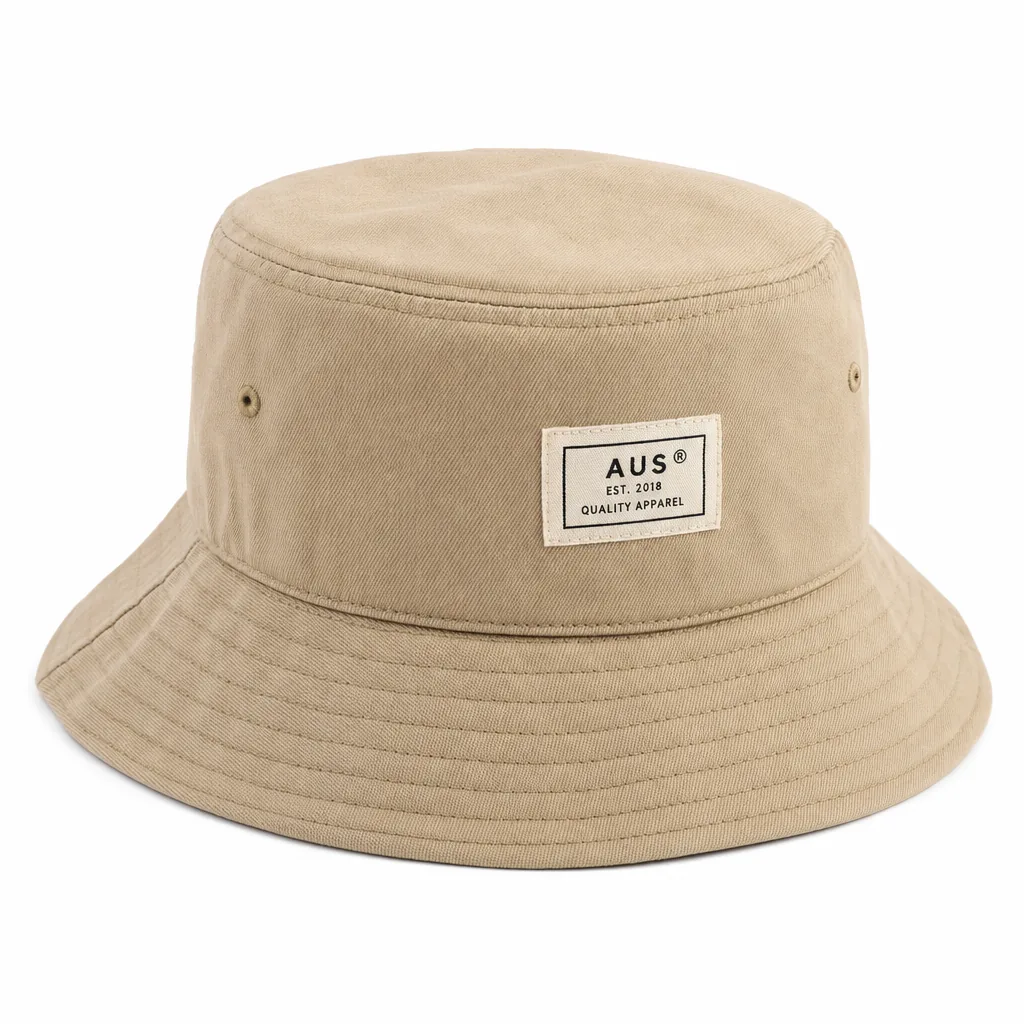
Promotional Caps & Corporate Gifts: Bulk Custom Hats for Brand Events - 2026 Buyer's Guide is one of the most-asked questions we receive from international buyers, and for good reason. With dozens of factories competing for your order and an alphabet soup of technical terms in every supplier quote, even experienced importers can feel lost. This guide consolidates what we have learned producing custom hats for clients in 40+ countries.
The corporate gift opportunity
Promotional caps beat pens, mugs, and tote bags on one metric that procurement teams usually underestimate: wear-time in public. A decent cap is visible at eye level, travels through airports, campuses, jobsites, and weekend errands, and can generate months of repeat impressions instead of one desk-bound logo view. At 2,000 pieces, a structured 6-panel style in 260-280 gsm cotton twill or 180-220 gsm recycled polyester usually lands around $2.80-$5.50 FOB China, depending on closure, embroidery stitch count, and whether you add a woven label, inside taping print, or custom buckle. That is materially more than a $0.20 pen, but the perceived value is also higher, and recipients do not treat it like a throwaway premium. The wrong cap, however, destroys that advantage fast: flimsy buckram, a scratchy 100% polyester sweatband, or an over-curved visor can push hotel-room abandonment rates up immediately. The commercial upside gets stronger when buyers tier the assortment instead of forcing one SKU across every audience. On a 2,000-piece event order, it is common to run 1,400-1,600 units of basic hook-and-loop or Velcro closure promotional caps for general distribution at $2.80-$3.40 FOB, then reserve 300-600 units of better builds for sponsor kits, field reps, or leadership gifts. A chino twill dad cap with a self-fabric strap and brass buckle typically runs $3.60-$4.80, while a snapback in acrylic-wool blend or a laser-perforated 75D-150D rPET performance cap can reach $4.80-$7.20. That segmentation works because people can feel the difference immediately in crown shape, fabric hand, and closure hardware. Pens do not give you that ladder of perceived value; caps do, and that flexibility matters when one event has VIPs, staff, distributors, and walk-up attendees.
The cap has to be engineered like real headwear or the ROI collapses. For embroidered logos, shell fabric and panel construction matter more than shaving $0.12 from unit cost. A 108x56 cotton twill in a 16x12 yarn count holds shape and takes stitches more cleanly than light brushed cotton, which tends to tunnel and pucker after washing. On Tajima or Barudan heads, front embroidery in the 8,000-12,000 stitch range is usually the safe zone for standard 6-panel crowns; go denser on a low-profile cap and you start seeing panel distortion, seam grin, and a stiff hand feel that consumers notice immediately. If the artwork includes gradients, fine outlines, or text under roughly 4 mm cap height, a woven patch, TPU badge, or heat-applied transfer will read better from 2-3 meters than direct embroidery. Serious buyers should manage promotional caps with the same discipline they use for any apparel PO. Ask for shell composition, gsm, sweatband fiber content, visor board type, closure construction, and decoration strike-offs before approval, then lock color against Pantone TCX with an agreed Delta-E tolerance for visible logo areas. Final inspection should be at AQL 2.5, with carton drop testing, needle control, and metal detection if the goods are entering enterprise or school channels. A capable factory should also be able to quote alternatives quickly—cotton chino, trucker mesh, 300D heather polyester, or recycled performance fabrics—and back the order with sedex-audit-cap-supplier-guide.html">BSCI 2.0 or Sedex SMETA 4-Pillar documentation when compliance is not optional. Our standard practice is to treat the hat as wearable media: if it survives transit, fits a broad head-size range, and keeps color consistency lot to lot, it keeps advertising long after the event badge is gone.
Quick-turn promotional grade vs retail grade
For one-day expos, campus activations, and mass giveaways, promotional caps should be engineered to hit a target cost without creating obvious failure points. In practice, quick-turn promotional grade usually means 180-220 gsm brushed cotton twill, 200-230 gsm poly microfiber, or a basic 65/35 poly-cotton shell; either a 5-panel foam-front trucker or an unstructured 6-panel dad cap; standard PE visor board; and a front embroidery file kept around 4,000-6,500 stitches on Tajima or Barudan heads using 40 wt rayon or polyester thread. The savings come from stripping out labor minutes: no woven flag label, no inside taping upgrade, no underbill print, no contrast eyelets, no metal clasp, and no secondary placements on the side or back. At 1,000 pieces, a simple hook-and-loop or plastic snapback promotional cap can realistically price at US$1.65-2.40 FOB China; once you move into retail-grade fabrics, firmer buckram, more stable crown construction, and cleaner finishing, the same silhouette usually lands closer to US$3.80-6.50 FOB before branded packaging.
Cheap should not mean sloppy. Even promotional caps need basic process control: panel matching, centered eyelets, visor symmetry, closure bartack strength, and front logo placement held within about +/-3 mm, or the run looks inconsistent the moment cartons are opened. For dyed fabric lots, I would still expect commercially acceptable color control at roughly Delta-E 2.0-2.5 against approved standards, and final inspection at AQL 2.5 for major defects. The first corners that cause claims are usually weak sweatbands, poor seam-tape tensile strength, loose top buttons, and unstable hook-and-loop closures—not whether the buyer skipped a woven label. If the cap needs to survive beyond the event—employee uniforms, sponsor merch, licensed product, or executive gifting—retail grade is the safer spec: 260-340 gsm chino twill or canvas, 75D-150D performance poly, stronger front buckram, denser sweatbands, taped interior seams, and decoration built for wear, often 8,000-12,000 stitches or a TPU, woven, or applique patch. The sensible middle ground is selective upgrading: for example, keep the promotional shell but move from 190 gsm twill to 260 gsm chino or swap hook-and-loop for a brushed metal slider, which typically adds only US$0.28-0.85 per cap instead of rebuilding the entire program.
Most-popular promotional decoration techniques
Flat embroidery stays the safest default for promotional caps because it survives abuse that ruins cheaper-looking decoration. On a standard structured 6-panel cap in 260-300 gsm brushed cotton twill or polyester twill, a front logo in the 5,000-8,000 stitch range usually adds about $0.28-$0.65 per piece at 1,000 units FOB China, assuming 4-6 Madeira or Gunold thread colors and standard cutaway backing. The real constraint is artwork resolution, not wear life. Text under roughly 4 mm cap height, counters below 0.6 mm, and thin serif terminals will close up unless the digitizer builds proper pull compensation, center-walk underlay, and realistic satin column widths. On the floor, we normally cap speed at 700-850 spm on Tajima or Barudan multi-heads; pushing 900 spm on lighter 210-230 gsm fabric increases edge wobble, thread breaks, and visible needle penetration around circles and tight fills. That process tolerance is why embroidery dominates for dealership programs, campus merch, staff uniforms, and event giveaways where cartons get crushed and caps sit in stock for months. A decent embroidered logo still looks acceptable after transport compression, repeated handling at the sweatband, and some UV fade in warehouse storage. If the crown is heavily curved or the front panel has soft buckram, 3D puff embroidery can look impressive but is less forgiving than flat embroidery and usually adds another $0.18-$0.40 per cap, so it is rarely the smartest choice for mass promotional caps. For buyers managing defects at AQL 2.5, embroidery also gives a wider pass window than print because minor thread tension variation is less visible than inconsistent ink coverage across a 500-piece carton lot.
Screen print only earns its place when the cap has a genuinely printable face and the artwork is bold enough to benefit from it. It works best on foam truckers, unstructured 5-panels, and low-cost event caps where a large logo would otherwise require a 10,000-plus stitch file that puckers the front panel. At 2,000 pieces and up, a one-color print typically adds $0.12-$0.25 per unit; a second color can add another $0.05-$0.10 depending on registration tolerance and whether the printer is using water-based ink or plastisol. The process gets risky on washed chino, ripstop, sandwich brims, or crowned panels with aggressive seam transitions, because ink film thickness changes over texture and buckram edges. Water-based ink feels softer and is fine on white or khaki, while plastisol gives better opacity on navy and black but leaves a heavier hand and can crack sooner on stiff front panels. When brand color matters, buyers should not assume a Pantone TCX fabric callout will match printed ink without adjustment. The factory needs to convert the approved color to a print system, run a strike-off, and verify visual match under D65 lighting; once Delta-E drifts past 2.0, the mismatch is obvious on promotional caps lined up side by side at retail or at an event table. For logos with small type, legal copy, or fine outlines, woven patches are usually the cleaner answer than direct print or embroidery. Damask and high-density taffeta patches typically add $0.20-$0.55 at 1,000 units, preserve small characters far better than thread fill, and avoid the fill-in problems common on low-denier face fabrics. Placement still needs discipline: our standard practice is to hold patch position within ±3 mm and check adhesion or stitch-down consistency during inline inspection and final AQL 2.5 review.
Express production timelines
A 15-day turnaround for 1,000 promotional caps is realistic only when the spec is already engineered before the PO hits the system. The limiting factor is almost never sewing capacity; it is approval lag and late changes. For a standard 6-panel structured cap in 108 x 58 cotton twill or 210 gsm chino, with one front flat-embroidery location and stock closure hardware, a genuine fast-track plan looks like this: 4 to 6 hours for artwork cleanup and digitizing, same day for BOM confirmation, 1 day for a salesman sample, 1 day for buyer approval, 4 to 5 days for cutting, embroidery, sewing, trimming, and finishing, then 1 day for final inspection and export packing. That only works if sweatband, buckram, visor board, and closure are pulled from approved stock, not newly sourced. Most “rush” schedules fail because the product is still being developed after sample sign-off. A Pantone change from Black 6 C to a custom-dyed near-black, a last-minute woven inside label, or a switch from stock brass buckle to custom snap hardware can add 2 to 10 days immediately. Embroidery complexity matters just as much. A front logo under 8,000 to 10,000 stitches on a Tajima or Barudan head can run cleanly at speed; dense fills, multi-layer puff, or metallic thread will slow output and increase defect risk. The safest express promotional caps are low-risk builds with one decoration method, stock trims, and no custom molds, because every new component introduces another approval gate.
Fast production comes from disciplined line planning, not from pushing operators harder. Fabric should not be released to cutting until the lot is shade-approved under D65 light and checked against the approved Pantone TCX standard; for body fabric, a practical factory tolerance is usually Delta-E 1.5 to 2.0. Embroidery files also need a live sew-out before bulk panels are issued. Bad underlay, incorrect pull compensation, or an unstable satin width can ruin 150 to 200 front panels in a single shift on ZSK, Tajima, or Barudan machines. On urgent programs, the smart move is parallel processing: embroidery runs while crown and visor components are prepared, then sewing is split across two lines if the style is simple enough to balance. Shipping usually breaks the event deadline, not the factory calendar. A 1,000-piece order of promotional caps typically packs into about 10 to 14 master cartons, with chargeable air weight around 180 to 260 kg depending on crown height, carton size, and whether inserts are used to protect shape. Door-to-door express air is commonly 3 to 6 days; DDP air is more often 5 to 8 days once customs paperwork is clean. For event deliveries, venue receiving rules and carton labeling requirements matter as much as transit time. Our standard practice is to inspect urgent runs to AQL 2.5, but front-logo centering, stitch coverage, and color match are controlled tighter than the general sampling plan because a 1 mm logo drift is visible immediately. If the in-hand date is fixed, simplify closure hardware, decoration, and packaging before asking for a 15-day promise.
Bulk pricing at 500 / 1,000 / 5,000 pcs
For promotional caps, the unit price is driven by construction and trim package far more than by logo size. In 2026, a realistic FOB China target for a basic 6-panel brushed cotton twill cap is $2.10–$2.55 at 500 pcs, $1.75–$2.20 at 1,000 pcs, and $1.28–$1.72 at 5,000 pcs. That spec means 260–280 gsm twill, unstructured front, pre-curved PE visor, plastic snap closure, sweatband in standard polyester/cotton, and one flat embroidery position up to about 8,000 stitches. Move up to 300 gsm chino twill, a tuck strap with brass buckle, sandwich brim, contrast undervisor, woven flag label, or custom seam tape, and you add roughly $0.18–$0.55 per cap before touching freight. The common buyer mistake is chasing a sub-$1.50 target while still expecting stable panel shape, clean topstitching, and consistent color across cartons.
The biggest savings between 500 and 1,000 pieces come from line efficiency, not raw fabric alone. A Tajima, Barudan, or ZSK head loses too much time on short runs through hooping, thread changes, test sew-outs, tension adjustment, and first-piece approval. Digitizing may only be $25–$60 one time, but setup waste is what inflates small orders. By 5,000 pcs, the factory can usually lock one shell-fabric dye lot, one closure batch, and one embroidery thread run, which cuts reject rate and keeps shade variance under control; for corporate programs matched to a Pantone TCX reference, CrownsForge generally targets Delta-E below 1.5 on shell fabric and below 2.0 on secondary trims where material allows. Extra decoration is where budgets quietly drift: a second embroidery location adds $0.22–$0.48 at 1,000 pcs, 3D puff adds $0.12–$0.25 because machine speed drops, heat-transfer logos can save $0.08–$0.20 but rarely wear as well, and retail packing easily adds another $0.10–$0.17. For event-use promotional caps, I would put that money into AQL 2.5 final inspection, needle-control records, and stronger export cartons instead of packaging that gets trashed on arrival.
Co-branded multi-logo programs
Multi-logo programs usually break in prepress, not in sewing. If sponsors send a mix of AI, PDF, PNG, and low-resolution JPG files, the factory loses days redrawing strokes, cleaning knockouts, and rebuilding text that should have been standardized before sampling. Set the logo architecture before any stitch file is made: front-panel primary mark at 55-65 mm wide, side logos capped at 40-45 mm, and back arch, buckle tab, or strap tag reserved for event identity. On promotional caps carrying three to five logos, that hierarchy directly affects run sequence, hooping, underlay choice, and push-pull compensation on Tajima and Barudan multi-head machines. A raised front logo in 3D puff typically needs 2.5-3.0 mm EVA foam, 0.35-0.45 mm satin columns, and lower fill density than a flat side hit, while sponsor marks under 18 mm tall often sew poorly and should be moved to a woven label or HD heat transfer. The cost curve is steeper than most buyers expect because every added mark adds setup time, stoppage risk, and inspection points. On a 260-280 gsm brushed cotton twill 6-panel cap, two extra side embroideries usually add US$0.28-US$0.65 per unit at factory level, plus US$15-US$40 digitizing per usable file if no DST, EMB, or clean vector art is supplied. Metallic thread, neon shades, and white-on-black contrast increase reject risk because registration drift becomes obvious, especially once total embroidery climbs past roughly 8,000-10,000 stitches per cap. The practical control method is simple: force partner logos into one- or two-color embroidery versions, tie thread approval to Pantone TCX or C references with an acceptable Delta-E target, and hold placement tolerance to +/-3 mm at inline QC and final inspection under AQL 2.5.
The cleanest co-branded programs separate fixed architecture from event-specific trims. Keep the shell constant across the run—180 gsm recycled polyester twill for performance-driven distribution, or 230-240 gsm chino cotton for a more retail presentation—then localize with cheap, low-risk components such as printed seam tape, an underbrim graphic, woven loop labels, or a serialized hangtag tied to the 2026 campaign. That approach lets a buyer produce 5,000-20,000 promotional caps for multiple cities while changing only one or two components instead of reopening patterns, shifting embroidery placements, and rewriting packing specs for every venue. On the floor, that means fewer approval loops, fewer carton-sorting mistakes, and a much lower chance of mixed sponsor versions at pack-out. Variant control matters just as much as decoration quality once the program ships internationally. If the order is moving DDP into the US or EU, sponsor assortments, closure labels, FSC paper tags, suffocation warnings, carton marks, and country-of-origin labeling need to be frozen before bulk cutting starts. Our standard practice is to list approved logo locations, sponsor ratios by carton, and trim codes directly in the BOM so packing can verify VIP, staff, and giveaway versions without opening every master carton. Legal-sensitive industries such as automotive, banking, and beverage are especially strict: a compressed wordmark, stretched oval, or unauthorized color substitution can trigger a rework hold faster than a seam defect. In practice, the disciplined buyer treats logo governance with the same seriousness as fabric approval and ex-factory date.
Frequently Asked Questions
What is the minimum order quantity (MOQ) for custom hats?
Our standard MOQ is 100 pieces per design and color, with sampling available from 1 piece. For complex multi-color logos or premium fabric upgrades, the MOQ can be lowered with a small per-piece surcharge.
Do you support sustainability certifications?
Yes. We work with GOTS organic cotton, GRS-certified recycled polyester, OEKO-TEX Standard 100 fabrics, and are BSCI and Sedex audited. Certification documentation can be provided per order.
Which shipping methods do you support?
We support FOB, CIF and DDP shipping. Air express for samples and small orders, sea LCL for 100 to 500 pieces, sea FCL for 5,000+ pieces. Door-to-door DDP available for US, EU, UK, Canada and Australia.
What file format should I send for my logo?
Vector files (AI, EPS, PDF) are ideal. High-resolution PNG or JPG at 300 dpi on transparent background works as a fallback. Provide Pantone color references for accurate reproduction.
How long does production take?
Sampling takes 7 to 12 days. Bulk production runs 20 to 30 days depending on quantity, fabric availability and decoration complexity. Inspection and packing adds another 3 to 5 days before shipment.
How does ordering custom embroidered trucker hats work?
When evaluating custom embroidered trucker hats, the key considerations are construction quality, decoration capability, MOQ flexibility and lead time. Why caps outperform pens and tote bags for brand visibility. When budget matters more than longevity; when not to compromise.
How does ordering custom embroidered baseball caps work?
When evaluating custom embroidered baseball caps, the key considerations are construction quality, decoration capability, MOQ flexibility and lead time. Why caps outperform pens and tote bags for brand visibility. When budget matters more than longevity; when not to compromise.
How does ordering custom embroidered hats new era work?
When evaluating custom embroidered hats new era, the key considerations are construction quality, decoration capability, MOQ flexibility and lead time. Why caps outperform pens and tote bags for brand visibility. When budget matters more than longevity; when not to compromise.
How much does cheap baseball hats in bulk typically cost?
When evaluating cheap baseball hats in bulk, the key considerations are construction quality, decoration capability, MOQ flexibility and lead time. Why caps outperform pens and tote bags for brand visibility. When budget matters more than longevity; when not to compromise.
Looking for a reliable hat manufacturer in China?
CrownsForge has produced custom hats for 800+ brands across 40 countries. From 100-piece launches to 100,000-piece retail programs, we deliver on time and on spec.
Get in touchRelated guides
Compliance Documentation Checklist for First Hat Import to US/EU (2026 Update)
Read article →
Cap Factory AQL Inspection Plan for Importers
Read article →
Bucket Hat Corduroy MOQ And Pricing Plan for Custom Hat Buyers
Read article →Sourcing custom hats does not have to be complicated. With the right manufacturing partner, clear specifications and a small upfront investment in sampling, you can launch a retail-quality product in 30 to 45 days.