Patch Hats Decoration QC Checklist for Custom Hat Buyers - Supplier Checklist
Every week, our sales team answers detailed questions about patch hats decoration qc checklist for custom hat buyers - supplier checklist. We wrote this guide so that wholesalers, streetwear brands, corporate buyers and promotional resellers can compare options with full information, and avoid the traps that show up only after production has started.
Why patch hats decoration qc checklist needs a separate sourcing plan
A patch hats decoration qc checklist needs a separate sourcing plan because the cap and the patch are usually controlled by different workshops, different tolerances, and sometimes different subcontractors. A 6-panel cotton twill cap can pass crown height, visor symmetry, sweatband seam strength, and carton compression checks, then fail decoration QC because a 60 mm x 45 mm woven patch is 2 mm off center, a leatherette corner lifts after heat pressing, or a PVC backing leaves a glue halo on enzyme-washed fabric. The cap tech pack controls fabric gsm, panel shape, visor board, closure, carton pack, and needle work. The patch file controls backing, merrow or laser-cut edge, mold depth, adhesive film, stitch density, and application temperature. As an example calculation to verify in a 2026 China export quote, a soft PVC mold for one front-patch design may add US$80-US$180 per design, while woven patch artwork setup may add US$30-US$60 per design; the actual charge depends on cavity count, color separations, raised-edge height, and whether the patch shop already owns usable tooling.
Patch type must be locked before bulk cutting because each route changes lead time, line setup, and reject criteria. Woven patches need artwork registration, border balance, and shade approval against the approved sample; embroidered patches should have density reviewed, with an 8,000-12,000 stitch range for a 60 mm front patch treated only as a supplier assumption to verify in the quote; molded PVC needs mold sampling before attachment; genuine leather needs shade-band approval because hides cannot be judged like Pantone TCX dyed thread. For a 5,000-cap order shipping from China in 2026, stitched patches may add 2-4 production days for receipt, counting, and line staging, while molded PVC first samples may add 7-12 calendar days before attachment approval, based on typical export sampling calendars and supplier technical sheets. AQL 2.5 sets the sampling plan; it does not decide whether a patch is acceptable. Buyers should write measurable limits into the checklist: +/-2 mm from center front, no edge lift over 1 mm, no visible glue mark at 30 cm, and Delta-E 2.0 or lower when lab-dip color matching is critical.
The evidence method should compare the approved pre-production sample, in-line attachment checks, and pre-carton audit against the same measured items: patch size, center-front position, border distortion, edge lift, glue stain, skipped stitches, thread shade, bulk shade, and carton compression marks. Source contexts should include supplier technical sheets, decoration-shop process records, pre-production sample photos, and final inspection reports; for publication, the visible byline and article data should remain Vincent Xi, Editorial Author, with attribution to the approved author profile rather than unsupported factory-floor claims. sedex-audit-cap-supplier-guide.html">BSCI 2.0 and Sedex SMETA 4-Pillar are audit frameworks, not proof that a subcontracted patch shop is approved for the current order, so buyers still need the subcontractor name, audit scope, audit date, and document holder. The limitation is simple: artwork files, Pantone references, and a clean sales sample do not prove bulk performance after pressing, sewing, washing, or packing. A useful visual brief would show a cotton twill cap with a 60 mm x 45 mm woven front patch, calipers checking placement, a Pantone TCX guide, an AQL inspection sheet, and rejected samples for crooked stitching, without logos or identifiable people.
Factory capability checks before quoting
Review factory capability by patch construction before cap style, because the constraint is usually edge control, sew-down tension, or heat adhesion rather than the cap body alone. For embroidered twill patches, the 2025 quote file for the named production site should state whether Tajima, Barudan, or ZSK heads are in-house or subcontracted; acceptable evidence is a same-week machine photo or line video showing the head badge, hoop frame, backing, and thread cone setup. As an example calculation to verify in the supplier quote, a 75 mm x 50 mm twill patch at 8,000 stitches per piece can add about USD 0.18 to USD 0.45 per hat for run time, thread, backing, trimming, and handling, depending on order quantity and whether the patch is sewn before or after crown assembly. For woven, PVC, leatherette, felt, and chenille patches, lock the edge method before pricing: merrowed, laser-cut, heat-cut, folded, or raw-edge applique. That choice affects patch thickness, needle size, crown-panel puckering, edge lift, and reject risk.
The patch hats decoration qc checklist should verify the cap body with the same discipline as the patch. Before approving front, side, or rear placement, require fabric weight in gsm, yarn count or denier where relevant, panel count, buckram type, seam tape width, sweatband material, closure hardware, and sewing sequence. As 2025 supplier-declared benchmarks to verify on the counter sample, structured 6-panel cotton twill caps are often quoted at 260 gsm to 300 gsm fabric weight, and foam-front trucker panels are commonly quoted at 3 mm to 5 mm foam thickness; confirm with a calibrated scale and calipers, not only the tech pack. Color approval should compare the Pantone TCX target with bulk patch material under D65 lighting, with the agreed Delta-E tolerance written into the purchase specification. AQL 2.5 under ANSI/ASQ Z1.4 is a sampling plan for inspection lots, not a definition of acceptable embroidery tension, patch alignment, edge lifting, or heat-press adhesion.
Do not release the purchase order until the sample room proves the full build: patch, crown, closure, and fit block. Require dated evidence for snapback, metal buckle, hook-and-loop, elastic, or fitted sizing if those options appear in the quotation. As an assumption to verify with the supplier, one physical pre-production sample is commonly scheduled within 7 to 14 calendar days after artwork, fabric, patch material, and placement are frozen, but the date should be checked against current sample-room load. Source context should include the supplier capability file, dated sample-room record, machine photos, sealed trim cards, counter-sample measurements, and any current BSCI 2.0 or Sedex SMETA 4-Pillar report if audit screening is relevant; Vincent Xi’s CrownsForge author profile is the published experience basis for this editorial checklist. Methodology: compare those records against the approved specification before negotiating unit price, then recheck critical measurements on the counter sample. Limitation: documents and photos cannot prove bulk consistency, so incoming trim inspection, first-batch sewing checks, and final random inspection remain necessary.
MOQ, pricing and sample approval
Quote MOQ in three lines, not one blended number: cap body MOQ, patch component MOQ, and attachment setup MOQ. For quote planning only, verify with the supplier: 100-299 pieces per style is a realistic paid-sample or reseller-test range as of January 2026, 300-999 pieces per style usually enters small production, and 1,000 pieces per style gives better leverage on fabric, sweatband, buckle, and export-carton pricing. Patch setup should also be isolated: as a January 2026 quote assumption to verify, embroidery digitizing, woven-label loom setup, PVC mold opening, leatherette deboss plate, or print-screen preparation may run USD 35-80 per artwork, while one pre-production sample is often USD 45-120 per style before courier freight. The PO must define whether MOQ is counted by colorway, crown fabric, patch artwork, patch size, backing material, or attachment method, because a supplier may combine quantity for sales pricing but split the work again during material booking and line scheduling.
Sample approval should sit near the top of the patch hats decoration qc checklist because front-panel mistakes become expensive after cutting, blocking, and crown shaping. The signed pre-production sample should lock patch width and height in millimeters, center-front placement, distance from visor seam, border width, merrow thread color, backing material, adhesive type, and attachment method: satin stitch, sew-on, heat press, rivet, or direct embroidery. For color control, specify Pantone TCX for fabric and thread, Pantone C or U for printed artwork, and a Delta-E tolerance as a supplier-quote assumption to verify; for example, Delta-E <= 2.0 under D65 light may be used for one approved fabric lot if the factory has a calibrated light box or spectrophotometer. For embroidered patches, judge stitch density and coverage instead of using vague approval notes: flat embroidery is commonly planned around 0.35-0.45 mm stitch spacing, while 3D puff needs clean foam lift, closed corners, and no exposed base fabric after pressing on Tajima, Barudan, or ZSK-class heads.
Pricing control should travel with the approved sample package, not sit in a separate email thread. A usable quote should list crown fabric gsm, visor-board thickness, sweatband material, buckle or snapback grade, patch substrate, sewing or heat-press charge, hangtag, barcode sticker, polybag gauge, carton size, and Incoterm such as FOB Ningbo, FOB Shanghai, or DDP destination. As an example calculation to verify against the final packing list, a 300-piece order packed 25 pieces per export carton requires 12 cartons; thick PVC, metal, or leatherette patches may increase compression-mark risk during carton loading and drop testing. Evidence basis: figures are compiled from 2025 Yiwu custom-cap quotation norms and cap production planning notes attributed to Vincent Xi, Editorial Author, through the CrownsForge author profile, plus supplier-style QC checkpoints used for patch decoration approval. Limitations: verify live material stock, current BSCI 2.0 or Sedex SMETA 4-Pillar documents if the buyer requires social compliance, buyer approval speed, freight basis, and the supplier’s current bulk schedule before issuing the PO.
Quality inspection and shipping risk
Run the patch hats decoration qc checklist before cartons are sealed, because decoration defects are expensive only after freight, duty, and receiving chargebacks are added. For final random inspection, use ANSI/ASQ Z1.4-2008(R2018) or ISO 2859-1:1999, General Inspection Level II; those standards define the sampling plan, while the buyer’s PO defines acceptance limits. Example calculation to verify with the inspection agency: for one finished lot of 3,000 hats inspected under General Level II, the sample code is typically K, giving a 125-piece sample; if the buyer sets AQL 2.5 for major defects and AQL 4.0 for minor defects, the accept/reject numbers must be read from the selected AQL table. Inspect against the signed PO, approved pre-production sample, dated tech pack, Pantone TCX/TPX references, and written defect list. Common buyer tolerances, to confirm in the tech pack, are +/-3 mm for patch position, +/-5 mm for visor length, and zero tolerance for wrong artwork, wrong patch type, or missing country-of-origin marking.
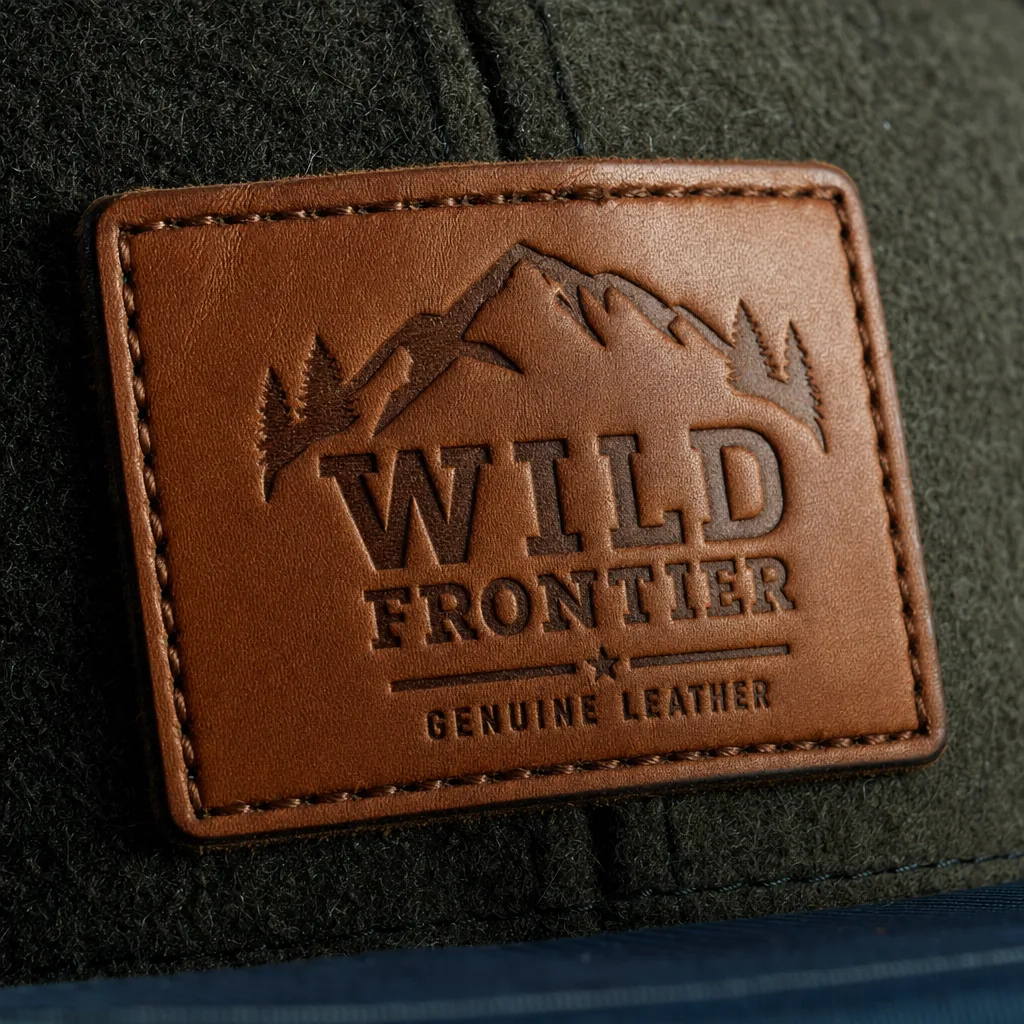
Decoration inspection should catch failures that survive a quick visual check but show clearly in retail photos: heat-press borders tilted off the crown centerline, glue bleed beyond the patch edge, needle cuts around leatherette, thread nesting on embroidered patches, chenille pile collapse, PVC flash, satin-stitch gaps, and lifted woven-label corners. As a factory screening method to confirm with the supplier, test 10% of the inspected sample by flexing the crown and pressing each patch corner with firm thumb pressure for about 3 seconds; record any edge lift over 1 mm, but do not call this a lab adhesion result. For dark cotton twill, enzyme-washed panels, red/navy thread, or pale front panels, order colorfastness testing when the risk is material. ISO 105-C06:2010 covers domestic washing behavior, and ISO 105-X12:2016 covers rubbing; the report should show fabric lot, test date, method, and grade. For shade control, use a light booth or spectrophotometer against the approved shade band; Delta-E under 1.5 is a common example target for solid fabric lots, while woven, PVC, chenille, and leather patches usually need buyer-approved visual limits.
Shipping risk is mostly document risk after QC: a small decoration issue becomes a full claim when cartons, packing lists, and photos do not match. Carton marks should show PO number, style code, color, size ratio, country of origin, carton sequence, gross weight, net weight, and carton dimensions. Example packing assumption to verify in the supplier quote: 24 hats per inner box and 144 hats per master carton must reconcile to the packing list before FOB handover or DDP booking. FOB leaves the buyer controlling forwarder, sailing schedule, and marine cargo insurance; DDP moves duty, tax, customs clearance, and last-mile delivery into the supplier price, so the quote should state destination ZIP code, Incoterms 2020 term, duty payer, remote-area exclusions, and carton cubic meters. Method note: this checklist uses inspection-plan standards, buyer-controlled approval samples, and shipment documents as source contexts. Limitation to verify: BSCI 2.0 or Sedex SMETA 4-Pillar status only counts with a current report, and embroidery reorders should retain Tajima, Barudan, or ZSK stitch files plus approved patch artwork, Pantone references, die numbers, and inspection photos.
Buyer checklist for the next RFQ
Treat the RFQ as the inspection control file, because decoration defects on patch caps usually come from missing tolerances rather than poor artwork. A usable patch hats decoration qc checklist should lock the cap body first: 5-panel or 6-panel construction, structured buckram or unstructured crown, shell fabric composition and gsm, visor curve, closure, sweatband, size run, polybag method, and carton label format. Then define the patch as a measurable component: woven, embroidered, chenille, PVC, genuine leather, PU leatherette, sublimated twill, or heat-transfer badge; finished width and height in millimeters; border type; backing; attachment method; and placement datum. Example assumption to verify in the supplier quote: one 75 mm x 55 mm woven patch on a 6-panel cotton twill cap may allow +/- 2 mm placement tolerance from the center seam and visor edge, with color variance below Delta-E 2.0 against the signed pre-production sample under the agreed light source as of PO approval. Source contexts should be the signed tech pack, vector artwork, Pantone TCX or Solid Coated references, approved sample photos, and the dated PO.
Break out decoration costs from the blank cap, because mold fees, stitch time, adhesive film, and rejection risk do not scale the same way as sewing the cap body. Example assumptions to verify in the supplier quote: a small PVC patch mold may cost USD 60-150 per design as a one-time tooling charge; embroidered patches may be priced by stitch count, thread colors, merrow border, backing, adhesive, and setup on Tajima, Barudan, or ZSK heads; and the same artwork should be quoted at 300 pieces, 1,000 pieces, and 5,000 pieces for comparison. Require unit price, tooling fee, sample fee, sample lead time in calendar days, bulk lead time in calendar days, carton dimensions in centimeters, gross weight in kilograms, FOB port, and optional DDP destination cost. The comparison method should be document-based: match the quotation sheet against the signed tech pack, approved pre-production sample, and final random inspection checklist, not chat screenshots or catalog images.
Define rejection rules before releasing the PO. Require at least 6 reference photos for the exact cap and decoration scope: front, back, left side, right side, inside seam tape, and close-up patch placement. State AQL as a buyer inspection requirement, not as proof of factory certification; for example, use AQL 2.5 for major defects and AQL 4.0 for minor defects, tied to the PO date and selected inspection standard. Rejectable defects should include patch skew over 2 mm from the agreed datum, loose edge stitching, glue bleed, cracked PVC, scorched PU leatherette, color mismatch beyond the approved Delta-E limit, warped crown panels, off-center visor, rusted eyelets, wrong carton labels, and mixed sizes or closures. Limitations to verify before order release: BSCI 2.0 or Sedex SMETA 4-Pillar status requires a current audit document; CPSIA, REACH, and Prop 65 claims require valid batch-level test reports; and any leather claim must state genuine leather, split leather, PU, or bonded material in writing. The article byline and BlogPosting author should identify Vincent Xi as Editorial Author with https://crownsforge.com/authors/vincent-xi/.
Working with CrownsForge
CrownsForge should run the patch hats decoration qc checklist as a controlled production record tied to one buyer-approved tech pack, one sealed golden sample, and one dated inspection form, not as scattered email notes. For publication, the visible byline and Article/BlogPosting JSON-LD author should be Vincent Xi, Editorial Author, with URL https://crownsforge.com/authors/vincent-xi/. The approved evidence basis is cap-manufacturing practice covering embroidery digitizing, fabric sourcing, AQL inspection, export logistics, and audit preparation; it should not be written as a personal factory story. The checklist needs measurable fields: crown fabric weight in gsm, visor board thickness in millimeters, patch width and height in millimeters, border type, attachment method, placement from the center-front seam or visor edge, thread or material color reference, and carton-mark version. Example calculation to verify in the supplier quote as of the quote date: for one 10,000-piece SKU using a 65 mm x 45 mm woven patch, require 2 pre-production samples, 1 sealed golden sample, and 80 to 125 inline inspection units, adjusted for decoration risk and buyer tolerance.
Inspect the patch before attachment and the finished hat after attachment, because sewing tension, heat pressing, crown blocking, and final steaming can expose defects that look harmless on a flat swatch. For woven patches, check edge fray, border density, heat-cut stability, thread shade, and Delta-E against the approved Pantone TCX reference or lab dip. For embroidery patches, check stitch density, backing compatibility, merrow border tension, pull compensation, loose thread rate, and distortion on the curved front panel. Tajima, Barudan, and ZSK heads can all produce clean patches, but the digitizing file still needs a substrate trial on twill, felt, canvas, PVC, leather, chenille, or laminated backing. Example tolerance to verify in the supplier quote as of the quote date: a 0.2 mm registration shift on a 65 mm patch may pass on a flat sample but look off-center after attachment to a structured 6-panel cap. If AQL 2.5 is used, define it as the buyer-agreed final-inspection sampling plan for that shipment, not as a decoration-quality standard.
Use at least two source contexts for the method: the buyer-approved tech pack and sealed golden sample, plus either the factory inspection record or a third-party final inspection report. Derive findings by checking raw patch lots before sewing or heat pressing, auditing attachment during production, and running carton-level checks after shaping, trimming, and packing. Example assumptions to verify in the supplier quote as of the quote date: heat pressing at 150 deg C for 12 seconds on compatible polyester twill, 1 master-carton drop test per SKU for export packing, and freight terms stated as FOB Ningbo or DDP destination. BSCI 2.0 and Sedex SMETA 4-Pillar are social-compliance frameworks only when current documents are provided; they do not prove a patch order passed decoration QC. Limitations to confirm before bulk production include adhesive wash resistance, needle marks on leather patches, PVC mold fees, barcode accuracy, carton dimensions, pre-shipment photo requirements, and whether the buyer needs a signed inspection certificate. Visual brief: close-up QC bench with patch hats, ruler, Pantone TCX book, inspection sheet, woven patch edges, embroidery backing, and packed cartons; no logos, text overlays, or identifiable people.
Frequently Asked Questions
How long does production take?
Sampling takes 7 to 12 days. Bulk production runs 20 to 30 days depending on quantity, fabric availability and decoration complexity. Inspection and packing adds another 3 to 5 days before shipment.
Do you support sustainability certifications?
Yes. We work with GOTS organic cotton, GRS-certified recycled polyester, OEKO-TEX Standard 100 fabrics, and are BSCI and Sedex audited. Certification documentation can be provided per order.
What file format should I send for my logo?
Vector files (AI, EPS, PDF) are ideal. High-resolution PNG or JPG at 300 dpi on transparent background works as a fallback. Provide Pantone color references for accurate reproduction.
What is the minimum order quantity (MOQ) for custom hats?
Our standard MOQ is 100 pieces per design and color, with sampling available from 1 piece. For complex multi-color logos or premium fabric upgrades, the MOQ can be lowered with a small per-piece surcharge.
Can I order a sample before bulk production?
Yes. We strongly recommend approving a pre-production sample before mass production. Samples are charged at 35 to 60 USD each plus express shipping, fully refundable against confirmed bulk orders over 500 pieces.
How does ordering custom hat leather patch work?
When evaluating custom hat leather patch, the key considerations are construction quality, decoration capability, MOQ flexibility and lead time. Explain the buyer intent behind patch hats decoration qc checklist, when it differs from generic hat sourcing, and what decisions affect cost, lead time and compliance. Cover embroidery, patch, fabric, panel construction, closure options, sample room capability, audit readiness and communication checks.
What's the MOQ for custom leather patch hat low minimum?
When evaluating custom leather patch hat low minimum, the key considerations are construction quality, decoration capability, MOQ flexibility and lead time. Explain the buyer intent behind patch hats decoration qc checklist, when it differs from generic hat sourcing, and what decisions affect cost, lead time and compliance. Cover embroidery, patch, fabric, panel construction, closure options, sample room capability, audit readiness and communication checks.
How does ordering custom leather patches for hats work?
When evaluating custom leather patches for hats, the key considerations are construction quality, decoration capability, MOQ flexibility and lead time. Explain the buyer intent behind patch hats decoration qc checklist, when it differs from generic hat sourcing, and what decisions affect cost, lead time and compliance. Describe how CrownsForge manages patch hats decoration qc checklist programs with sampling, decoration, QC and export coordination.
How does ordering custom patch trucker hats work?
When evaluating custom patch trucker hats, the key considerations are construction quality, decoration capability, MOQ flexibility and lead time. Explain the buyer intent behind patch hats decoration qc checklist, when it differs from generic hat sourcing, and what decisions affect cost, lead time and compliance. Describe how CrownsForge manages patch hats decoration qc checklist programs with sampling, decoration, QC and export coordination.
What do I need to put patches on hats?
So what you'll need is a post bed sewing. Machine we use a FAF. Machine i mean it's not cheap it's like $3 $4,000. For the FAF. But really you need a sewing machine that has a raised bed.
What must you inspect on the hard hat?
Check the hard hat for excessive fading in colour as this can be a sign of deterioration from UV exposure. Inspect the suspension system closely for cracks, cuts or frayed shell straps, torn headband, loss of pliability or other signs of wear. Replace the suspension if you find any damage.
Looking for a reliable hat manufacturer in China?
CrownsForge has produced custom hats for 800+ brands across 40 countries. From 100-piece launches to 100,000-piece retail programs, we deliver on time and on spec.
Get in touchRelated guides
Custom Leather Patch Hat Low Minimum: A 2026 B2B Sourcing Guide
Read article →
Mens Beanies: Properties, Costs and How to Spec It Right
Read article →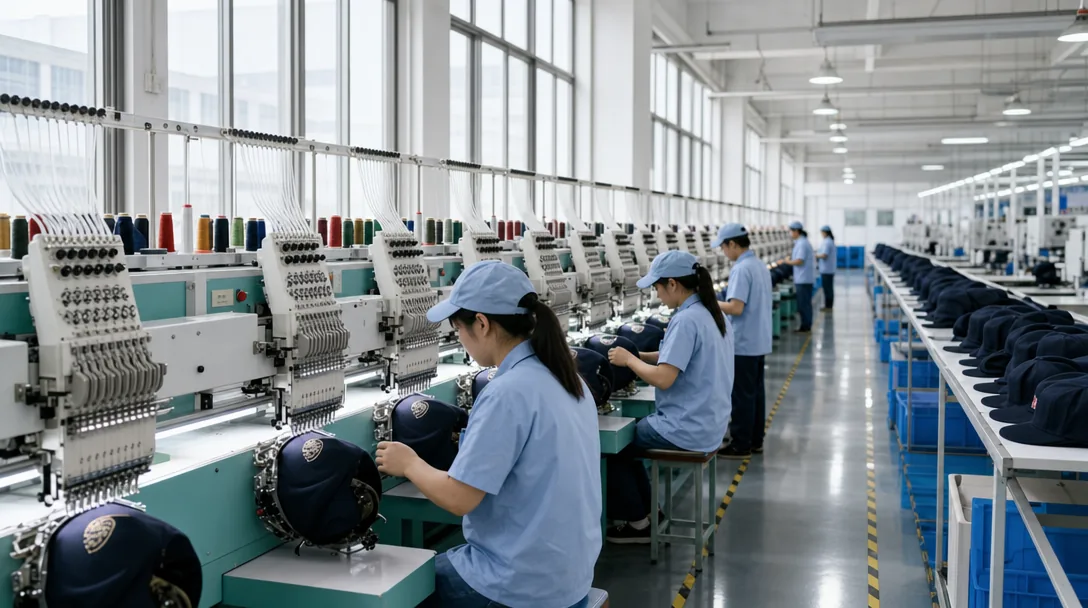
Bulk Trucker Hats Export Shipping Checklist for Custom Hat Buyers - Cost & MOQ Breakdown - Supplier Checklist
Read article →We hope this guide demystifies patch hats decoration qc checklist for custom hat buyers - supplier checklist and helps you move forward with confidence. If you have questions specific to your project, our English-speaking sales engineers are one message away.