
Patch Hats Decoration QC Checklist for Custom Hat Buyers - Cost & MOQ Breakdown
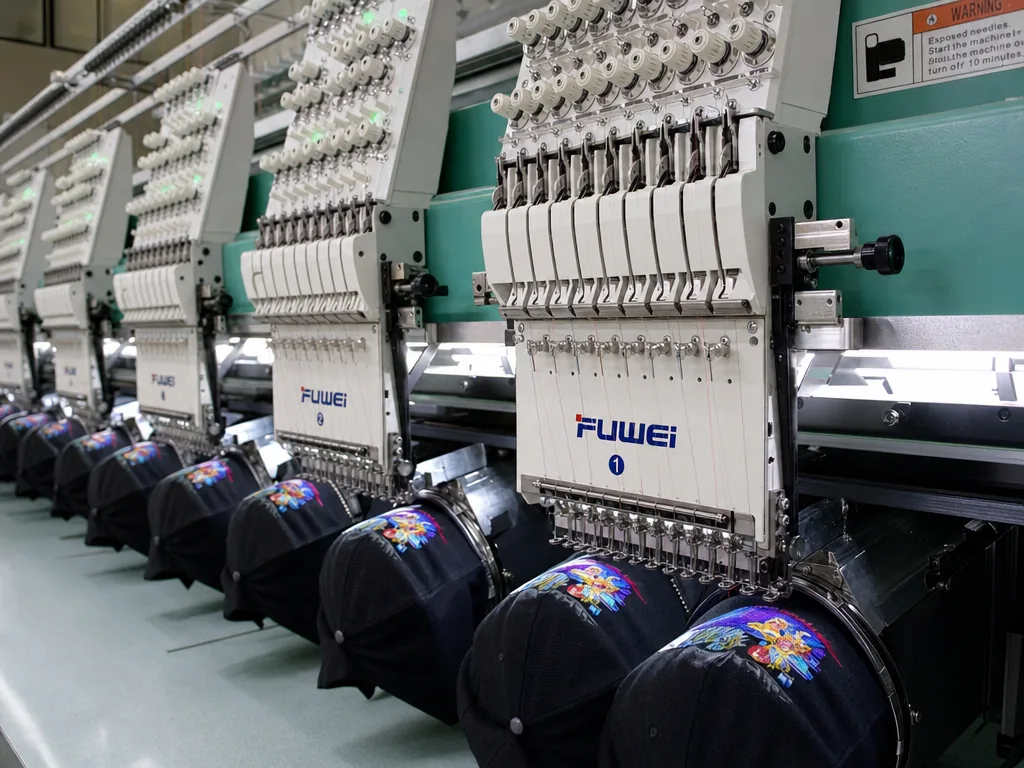
Patch Hats Decoration QC Checklist for Custom Hat Buyers - Cost & MOQ Breakdown is one of the most-asked questions we receive from international buyers, and for good reason. With dozens of factories competing for your order and an alphabet soup of technical terms in every supplier quote, even experienced importers can feel lost. This guide consolidates what we have learned producing custom hats for clients in 40+ countries.
Why patch hats decoration qc checklist needs a separate sourcing plan
Most patch failures are not decoration defects; they are interface defects between the patch, the cap shell, and the attachment method. That is why a patch hats decoration qc checklist needs a separate sourcing plan instead of borrowing the QC sheet used for flat embroidery on a standard 6-panel cap. A patch can meet its own spec and still fail in assembly: a 75 to 90 mm woven or PVC patch on a high-profile buckram front will bridge across the crown, then show edge lift after cooling or after a single carton compression cycle. On washed chino, 10 oz cotton twill, or brushed canvas, perimeter sewing can deflect 1.5 to 3.0 mm if the patch edge is too hard or the operator uses the wrong needle and SPI. Generic cap inspection usually stops at logo centering, loose threads, and panel symmetry; it does not check patch curvature compatibility, backing stiffness, adhesive film grade, or whether the crown can carry the patch weight without panel distortion.
Patch construction changes the sourcing math immediately, and buyers get burned when the cap MOQ and patch MOQ are planned separately. Merrow-edge embroidered patches are usually the lowest-risk entry point, but text below 2.0 mm letter height or thin counters inside letters will close up quickly on a Tajima or Barudan run. Woven patches hold finer detail and cleaner Pantone matching, but many suppliers in Yiwu still quote 300 to 500 pcs per design, while molded PVC or silicone often starts at 1,000 pcs with a mold fee around $80 to $150. Attachment has to be costed and tested as its own process: direct sew-down is slower but stable, while heat press depends on adhesive chemistry, shell finish, and controlled settings such as 145 to 160°C, 8 to 12 seconds dwell, and pressure matched to fabric gsm and surface pile. For production QC, I would set AQL 2.5 with dedicated patch checkpoints: center-front placement tolerance within ±1.5 mm, rotation under 2°, peel or edge-lift review after full cooling, perimeter stitch continuity, and incoming patch-lot shade approval under D65 with commercially acceptable Delta-E across both patch and cap fabric.
Compliance is also more technical than buyers assume because patch programs introduce materials that a normal embroidered cap does not: PVC, TPU, printed twill, laser-cut backings, hot-melt adhesive film, and solvent-based inks. If the goods are for the US or EU, the sourcing plan should call for phthalate screening on PVC, azo dye compliance on textile patches, odor review, crocking checks, and colorfastness to rubbing and perspiration when dark patches sit on light shells. Pantone TCX approval on artwork is not enough; the patch supplier and hat factory need separate incoming standards, because color drift between the patch base, merrow yarn, and shell fabric is where claims start. A factory may pass sedex-audit-cap-supplier-guide.html">BSCI 2.0 or Sedex SMETA 4-Pillar and still miss patch-specific incoming control if the lot is treated like a normal trim. Our standard practice is to approve the patch strike-off, the blank cap, and the final assembled sample as three distinct standards before bulk release, because that is what actually prevents rework, shipment delay, and chargebacks.
Factory capability checks before quoting
Low FOB quotes on custom caps usually hide a capability gap, and patch work is where it shows first. A practical patch hats decoration qc checklist starts by mapping the full route: cap cut-and-sew, patch production, attachment method, and final packing. If the factory outsources woven labels, PVC badges, or heat-transfer emblems, expect an added $0.18 to $0.60 per cap and 2 to 5 extra calendar days, plus more shade risk between lots. Ask for actual equipment, not “advanced machines”: Tajima, Barudan, or ZSK heads for embroidery; cylinder-bed or post-bed lockstitch machines for patch sewing; and heat presses with controlled temperature, pressure, and dwell time for TPU or printed badges. MOQ also has to line up across the chain. A cap maker quoting 300 pcs is not credible if its woven patch vendor runs a 500-pc minimum per design or colorway. Confirm max patch size in millimeters, merrow versus laser-cut edge, PVC Shore hardness, embroidery stitch-count ceiling, and whether approvals are matched to Pantone TCX or Pantone Coated with a stated Delta-E tolerance; for brand colors, under 1.5 is a reasonable control point.
Decoration capability is useless if the cap body cannot support it cleanly. Patch behavior changes with crown height, front-panel angle, seam allowance, and fabric memory, so the supplier should be able to explain where a 70 x 50 mm patch will sit flat and where it will pucker. A factory used to stock 108 x 56 cotton twill may struggle with 230 gsm brushed chino, 210D nylon taslan, 600D polyester, or GRS-backed RPET canvas because those materials need different needle sizes, backing, and attachment settings. Ask which silhouettes they run consistently: structured 6-panel snapbacks with buckram, foam-front truckers, low-profile dad hats, or 5-panel campers. Also verify closure options because they affect both lead time and labor: 7-hole PP snap, self-fabric strap with brass tuck buckle, hook-and-loop, or leather strapback. A capable sample room should turn a development sample in 5 to 7 working days and a PP sample in 7 to 10, with macro photos, BOM, and approval notes.
The best quoting check is whether the factory can define defects before production starts. Ask who handles digitizing, strike-off approval, and revision control; on embroidered patches, they should discuss underlay, satin width, pull compensation, and stitch density; on woven patches, loom gauge and edge-finish limits; on PVC, mold fee, cavity count, and burr tolerance. These are cost drivers, not technical trivia: a new PVC mold is typically $80 to $200, and a small woven patch setup often adds $30 to $70 before assembly. Require an English spec sheet showing fabric composition, panel construction, patch method, carton dimensions, net and gross weight, and trade term such as FOB Ningbo or DDP. Before comparing quotes, check discipline on BSCI 2.0 or Sedex SMETA 4-Pillar, inline QC points, final inspection plan, and AQL 2.5 criteria for crooked placement, loose merrow, adhesive bleed, edge lift, and puckering. At CrownsForge, we do not treat those as “craft issues”; they are measurable acceptance standards that determine whether a quote is operationally real.
MOQ, pricing and sample approval
MOQ on patch caps is not just a commercial threshold; it directly affects process stability. For a stock 6-panel brushed cotton twill or 100% polyester cap with one front embroidered or woven patch, the practical opening MOQ is usually 144 pcs per colorway, and 288 pcs if you want custom trims without ugly surcharge math. Below 100 pcs, you are spreading patch strike-off, embroidery digitizing, die line setup, cutting, and cap-line changeover over too few units, so operators rush setups and attachment consistency suffers. Typical setup charges are real enough to budget upfront: embroidered patch digitizing for Tajima DST or Barudan format usually runs $35-$80, woven patch file prep and loom setup $60-$120, laser-cut border programs $20-$40 extra, and PVC mold tooling commonly starts around $150-$300. On FOB Yiwu pricing, 144 pcs of a basic patch cap usually lands around $3.20-$5.80 depending on shell fabric, closure, sweatband, and patch type; at 500 pcs, unit cost normally drops 12%-20% if visor board, crown fabric, and patch dimensions stay unchanged. Any serious patch hats decoration qc checklist should flag MOQ as a quality control variable, because undersized runs are where misplacement, edge fray, and weak attachment show up first.
Sample approval is where most patch-cap failures are prevented, not discovered at final AQL. The PPS must lock six points in writing: crown fabric spec, patch substrate, backing, edge finish, thread chart, and attachment method. Saying “woven patch, black cap” is useless; the approval should state something like 108x56 cotton twill 260 gsm, Pantone Black TCX shell, woven patch in 75D yarn, merrow edge in matched thread, and stitch-down application with 301 lockstitch. Color approval should reference Pantone TCX or Pantone C depending on material, and a Delta-E under 2.0 is realistic for embroidery thread and woven ground on stable lots; faux leather, PVC, sublimated twill, and printed satin usually need a wider tolerance around 2.5-3.5. Our standard practice is one signed PPS plus one sealed counter-sample kept on the line for inline comparison. The QC sheet also needs dimensional tolerances, because patch caps fail on millimeters, not concepts. Embroidered patch fill density is typically controlled around 0.35-0.45 mm; denser fills can distort the patch border or tunnel the front buckram after sewing. Patch size tolerance should usually be held to ±1.0 mm, front placement to ±2.0 mm from centerline, and angle deviation no more than 2 degrees on flat-bill styles where skew is obvious. If heat press or stitch-plus-glue is used, require adhesion testing in the PPS stage: 3M tape pull, 24-hour cure observation, and wash or heat-aging checks where applicable. Final inspection should then verify against AQL 2.5, but the patch hats decoration qc checklist should also capture hidden MOQ traps before bulk starts: custom seam tape, woven closure labels, barcode stickers, and retail polybags often carry supplier minimums of 500-1,000 pcs, adding $0.18-$0.65 per cap if approved too late.
Quality inspection and shipping risk
Most losses on custom patch caps come from approving a showroom sample and then running bulk without a written inspection plan. A practical patch hats decoration qc checklist starts with ANSI/ASQ Z1.4, General Inspection Level II: critical defects Ac 0, major AQL 2.5, minor AQL 4.0. On a 1,200-piece order, that typically means sample size code J and 80 units; at 3,200 pieces, code L and 200 units is the normal pull. Keep cap construction defects separate from decoration defects, because they trace back to different workstations and need different corrective action. Crown collapse, visor twist above 3 mm, cracked buckram, stained sweatbands, and shell fabric shade variation are cap-body issues. Patch edge lift, merrow fray, skewed placement, glue strike-through, embroidery registration drift, and puckering around the applique are decoration failures. If the patch is embroidered on Tajima, Barudan, or ZSK heads, the first 20 to 30 pieces tell you whether the run is stable. Bobbin show-through, loose trims over 3 mm, satin border wobble, and stitch density gaps do not improve by themselves once production accelerates. For heat-applied patches, check platen temperature with an IR gun, not the press display; a 10 to 15°C deviation is common on older presses and causes cold corners or adhesive bleed. For sewn patches, measure topstitch margin around the border and hold it within ±1 mm, otherwise the patch will look visibly off even when the operator says it is centered. Our standard practice is to stop the line after three consecutive major decoration defects on one operation, because that usually points to a jig, hooping, or pressure-setting problem rather than random operator error.
Measurement and color tolerances need to be frozen before bulk starts, not argued after the goods hit the warehouse. For adult baseball caps, ±0.5 cm is a workable spec on crown height, visor length, and front panel width; patch placement should be held to ±2 mm from approved centerline and visor gap, with left-right skew under 2°. On corduroy, brushed cotton twill, washed canvas, and other pile or textured surfaces, visual placement drifts fast, so hard acrylic jigs or laser guides are more reliable than operator eye judgment. Color should be approved against Pantone TCX for textile shells and Pantone Coated when the patch artwork includes printed elements, then controlled in bulk with Delta-E under 1.5 to 2.0 for fabric lots and under 2.5 for embroidery thread lots measured under D65 lighting. Shipping risk is mostly packaging control, not freight luck. Cartons should carry PO, style, color, quantity, carton sequence, gross and net weight, and destination mark, with barcode labels matching the packing list and outer marks exactly. Mixed-color cartons should be blocked unless the buyer signs off; they create shortage and mis-pick claims the moment the shipment hits a 3PL. High-profile crowns and stiff front panels need tissue support or air inserts to prevent panel crush, while each inner pack should sit in a PE bag with desiccant for humid-season exports through Ningbo or Shanghai. Master cartons should use export corrugate strong enough for at least 5-high container stacking; saving $0.20 to $0.35 per carton on weak board is false economy if one collapsed stack triggers a claim. Before sealing, do random pull tests on sewn and heat-applied patches: any edge lift above 1 mm, visible adhesive seepage, or corner delamination is rejectable under a serious patch hats decoration qc checklist.
Buyer checklist for the next RFQ
A usable RFQ starts with a real tech pack, not mood-board screenshots. Specify the base hat first: silhouette and construction (6-panel structured, 5-panel foam trucker, bucket, cuff beanie), crown height, fabric content, fabric weight in gsm, visor shape, closure, sweatband spec, and target shade in Pantone TCX or Pantone C. Then lock the patch route before asking for price: merrowed embroidery patch, laser-cut woven patch, sublimated twill, TPU badge, felt applique, or veg-tan leather. Each one changes MOQ, sampling method, defect risk, and unit cost. A solid patch hats decoration qc checklist should also call out patch size in mm, border width, placement point from center front or seam, attachment method, and tolerance. If those items are vague, the factory is quoting blind, and it is normal to see bulk pricing move by $0.20 to $0.80 per piece after sample approval. Artwork is where weak RFQs get expensive. Send vector files in AI, EPS, or editable PDF, and note the technical limits: minimum text height, line weight, fill areas, and what details can be simplified. Serif text below 2.0 mm, distressed textures, and soft gradients rarely reproduce consistently across all patch types. Woven patches and sublimated twill hold fine detail better than embroidery; TPU is better for clean block graphics and sharp edges. Add reference photos for front, side, back, underbill, and interior branding, plus one marked image showing patch angle and exact placement. On the floor, a 1.5 mm border change or a switch from merrow edge to laser-cut heat edge can change run speed on Tajima, Barudan, or ZSK embroidery heads and push a sample charge from about $35 to $80 per design.
Before asking for final pricing, include the commercial details buyers routinely omit: quantity by colorway, size split if relevant, destination country, Incoterm, and target ex-factory date. Packaging needs the same discipline—individual polybag or not, hangtag insertion, barcode label position, size sticker, inner carton quantity, master carton dimensions, and whether the hats ship with insert support to protect patch shape. For branded resale, require the supplier to confirm the inspection standard in writing. AQL 2.5 is the normal cap baseline, but it only works when defects are defined before production, not argued over during final inspection. Be explicit about fail points in the patch hats decoration qc checklist. Typical major defects are patch placement off more than 2.0-3.0 mm, edge lifting above 3.0 mm, loose merrow, skipped stitches, adhesive bleed, scorch marks, wrong backing, and visible shade deviation above Delta-E 1.5-2.0 against the approved standard. For leather and TPU patches, ask for flex testing and rub testing because cracking, delamination, and color transfer often show up after packing compression, not at the sewing line. Our standard practice is to quote only against an approved BOM, artwork revision, and QC tolerance sheet; without those three documents, the price is only a soft estimate, not a factory-controlled production commitment.
Working with CrownsForge
Cost overruns on patch caps usually start before bulk cutting, when the artwork is approved but the patch construction is still floating. A practical patch hats decoration qc checklist should lock four items on the pre-production sample in this order: substrate, edge finish, attachment method, and crown deformation after application. A woven patch with 0.6-0.8 mm paper backing behaves very differently from a 2.0 mm PVC badge, a 1.2-1.5 mm laser-cut faux leather patch, or a 3 mm merrowed twill patch, especially when you switch from an unstructured 100% cotton dad hat to a buckram-backed 6-panel acrylic/wool snapback. Color approval should be tied to a physical standard, not a phone screen: Pantone TCX for textile patches, Pantone C for printed PVC or silicone where applicable, and Delta-E under 2.0 for printed strike-offs against the sealed master. MOQ also needs to be fixed early because process changes economics fast. Basic embroidered or woven patches can usually run from 144 pcs per colorway, while PVC, chenille, and mixed-media builds more realistically start at 300-500 pcs. In current factory pricing, the patch typically adds $0.28-$1.10 per cap FOB, with stitch count, backing thickness, edge construction, and attachment labor driving the spread.
Attachment is where good margins disappear. On a front-center logo, 2 mm placement drift is visible; at 3 mm, most branded programs reject it outright. For sew-on patches, operators need a hard positioning jig, SPI matched to crown stiffness, and the right needle size—commonly 11/75 or 14/90—so the seam does not bite through the patch edge or pucker the front panel. For heat-applied badges, the press recipe must be logged by patch lot and shell fabric: 145-155°C for 12-18 seconds may work on brushed cotton twill, but washed canvas, nylon taslon, and 600D polyester all respond differently in pressure set, adhesive flow, and post-cooling bond strength. Our standard practice is a 24-hour cooling period, then a peel check, edge-lift review, and crown-shape comparison against the approved sample before bulk release. Inline QC should inspect patch angle, centerline position, top-button alignment, glue seepage, thread tails, and bundle counts every 25-50 pcs. Final inspection should run at AQL 2.5, with special focus on attachment security, logo legibility, carton barcode accuracy, and needle-control records when the order ships under BSCI 2.0 or Sedex SMETA 4-Pillar compliance.
Lead time is usually controlled by the patch component, not the cap body. On mixed-supply orders, the shell fabric, sweatband, closure, woven label, and patch often come from different vendors, so the ship date has to be built backward from the slowest approval point—usually the patch strike-off or revised pre-production sample. Realistic timing is 7-10 days for patch development, 3-5 days for cap sampling after patch approval, and 18-30 days for bulk production depending on quantity, decoration complexity, and whether the order moves FOB Ningbo, FOB Shanghai, or DDP air freight. If the patch uses imported TPU, reflective film, or custom-matched chenille yarn, add another 5-7 days buffer because that is where schedules slip in the real world. Buyers running multi-SKU programs should require every approved sample and spec sheet to record patch dimensions, centerline position, attachment tolerance of ±2 mm, stitch or press method, and carton pack-out by colorway and size. If those controls are missing, the usual result is partial shipments, relabeling fees, or destination claims that wipe out any unit-price savings negotiated up front.
Frequently Asked Questions
How long does production take?
Sampling takes 7 to 12 days. Bulk production runs 20 to 30 days depending on quantity, fabric availability and decoration complexity. Inspection and packing adds another 3 to 5 days before shipment.
What logo decoration techniques do you offer?
3D puff embroidery, flat embroidery, woven patch, leather patch, PVC patch, screen printing, sublimation, applique and laser etching, all in-house with no subcontracting.
Which shipping methods do you support?
We support FOB, CIF and DDP shipping. Air express for samples and small orders, sea LCL for 100 to 500 pieces, sea FCL for 5,000+ pieces. Door-to-door DDP available for US, EU, UK, Canada and Australia.
What is the minimum order quantity (MOQ) for custom hats?
Our standard MOQ is 100 pieces per design and color, with sampling available from 1 piece. For complex multi-color logos or premium fabric upgrades, the MOQ can be lowered with a small per-piece surcharge.
What file format should I send for my logo?
Vector files (AI, EPS, PDF) are ideal. High-resolution PNG or JPG at 300 dpi on transparent background works as a fallback. Provide Pantone color references for accurate reproduction.
How does ordering custom hat leather patch work?
When evaluating custom hat leather patch, the key considerations are construction quality, decoration capability, MOQ flexibility and lead time. Explain the buyer intent behind patch hats decoration qc checklist, when it differs from generic hat sourcing, and what decisions affect cost, lead time and compliance. Cover embroidery, patch, fabric, panel construction, closure options, sample room capability, audit readiness and communication checks.
What's the MOQ for custom leather patch hat low minimum?
When evaluating custom leather patch hat low minimum, the key considerations are construction quality, decoration capability, MOQ flexibility and lead time. Explain the buyer intent behind patch hats decoration qc checklist, when it differs from generic hat sourcing, and what decisions affect cost, lead time and compliance. Cover embroidery, patch, fabric, panel construction, closure options, sample room capability, audit readiness and communication checks.
How does ordering custom leather patches for hats work?
When evaluating custom leather patches for hats, the key considerations are construction quality, decoration capability, MOQ flexibility and lead time. Explain the buyer intent behind patch hats decoration qc checklist, when it differs from generic hat sourcing, and what decisions affect cost, lead time and compliance. Describe how CrownsForge manages patch hats decoration qc checklist programs with sampling, decoration, QC and export coordination.
How does ordering custom patch trucker hats work?
When evaluating custom patch trucker hats, the key considerations are construction quality, decoration capability, MOQ flexibility and lead time. Explain the buyer intent behind patch hats decoration qc checklist, when it differs from generic hat sourcing, and what decisions affect cost, lead time and compliance. Describe how CrownsForge manages patch hats decoration qc checklist programs with sampling, decoration, QC and export coordination.
What do I need to put patches on hats?
So what you'll need is a post bed sewing. Machine we use a FAF. Machine i mean it's not cheap it's like $3 $4,000. For the FAF. But really you need a sewing machine that has a raised bed.
Ready to start your custom hat project?
Send us your tech-pack, sketch or even just an inspiration photo. We will respond with a detailed quotation and digital mock-up within 24 hours.
Request a free quoteRelated guides
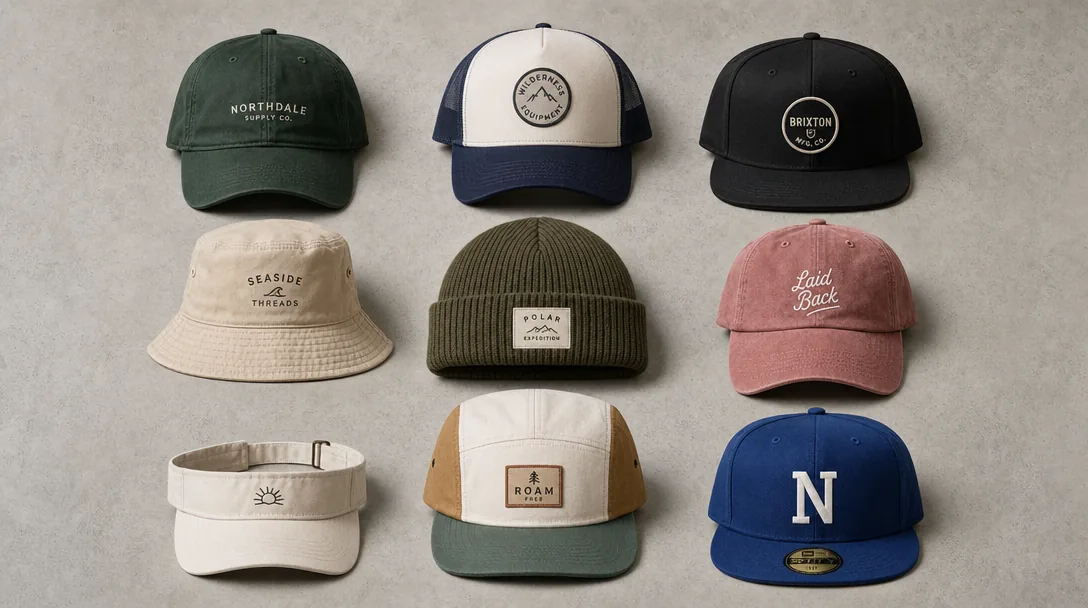
Promotional Caps & Corporate Gifts: Bulk Custom Hats for Brand Events - Supplier Checklist
Read article →
Mens Beanies: Properties, Costs and How to Spec It Right (2026 Update)
Read article →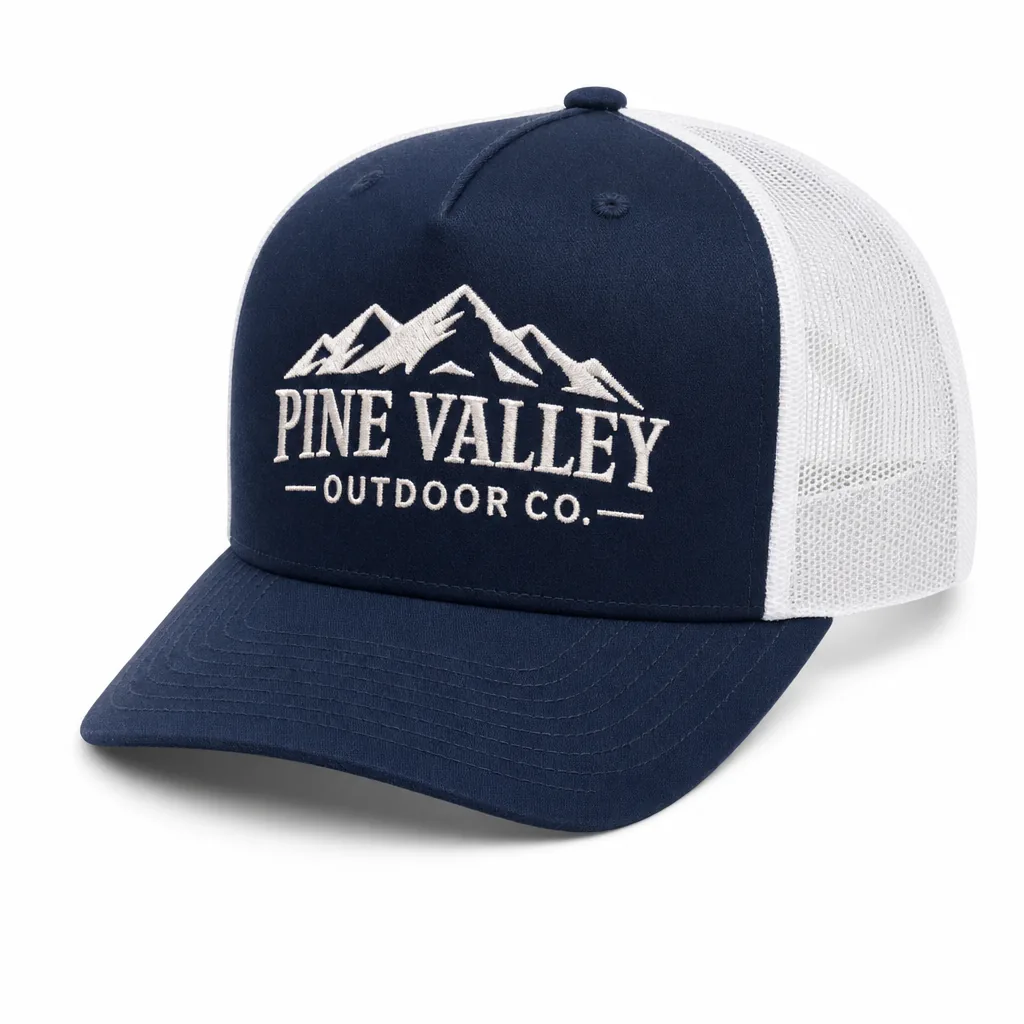
Mesh Caps Wholesale: Trucker Cap Manufacturing Specifications and Pricing - Supplier Checklist
Read article →If you are ready to take the next step on patch hats decoration qc checklist for custom hat buyers - cost & moq breakdown, our team can put a tailored quotation and digital mock-up in your inbox within 24 hours. Send the inquiry form on our contact page or message us directly on WhatsApp.