
Patch Hats Decoration QC Checklist for Custom Hat Buyers - Cost & MOQ Breakdown - Cost & MOQ Breakdown - Supplier Checklist
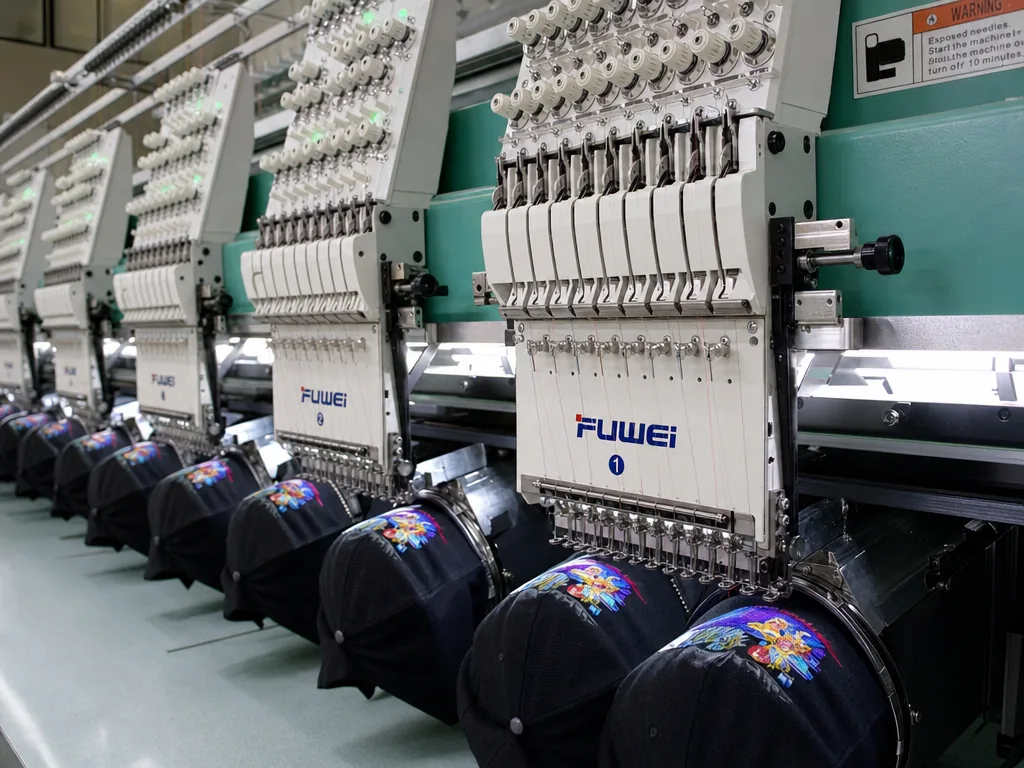
Every week, our sales team answers detailed questions about patch hats decoration qc checklist for custom hat buyers - cost & moq breakdown - cost & moq breakdown - supplier checklist. We wrote this guide so that wholesalers, streetwear brands, corporate buyers and promotional resellers can compare options with full information, and avoid the traps that show up only after production has started.
Why patch hats decoration qc checklist needs a separate sourcing plan
A patch hats decoration qc checklist fails before production starts when buyers treat the patch as an afterthought instead of a parallel supply chain. The patch introduces distinct material variables—polyester twill at 180–220 gsm versus cotton-twill cap crowns at 260–300 gsm—and those substrates shift differently under a Tajima 12-needle head running at 850 stitches per minute. I've measured registration drift exceeding 1.5 mm on curved crown placements when the patch stabilizer wasn't matched to the cap's buckram stiffness, pushing defect rates past AQL 2.5 on a 500-piece lot. A separate sourcing plan mandates that the patch supplier submit a standalone pre-production sample with a Pantone TCX callout for every thread color and substrate, cross-checked against the cap dyer's lab-dip under a D65 light booth. Without that isolation, you're approving two components that were never validated together.
Lead-time logic collapses when patch and cap share a single production schedule. A 6-panel structured cap with fused buckram takes roughly 22 days from cutting to packing, while a woven patch with a merrowed border and 8-color design needs 10–12 days for jacquard weaving alone, plus 4 days for backing lamination if you spec a 0.6 mm PEVA heat-seal film. If the patch weaver is in Dongguan and the cap factory is in Qingdao, ground freight and incoming QC add another 5 days before the patch reaches the sewing line. I've watched a 3,000-piece MLB-licensed order miss its ship window by 18 days because nobody accounted for the patch supplier's Chinese New Year shutdown separately from the cap factory's. A dedicated patch timeline with its own inspection gate—visual check for edge fray, colorfastness to crocking at AATCC 8, and dimensional tolerance of ±0.5 mm—keeps the critical path visible.
MOQ math punishes buyers who merge patch and cap procurement into one purchase order. A cap factory might accept 300 pieces per style, but a woven patch supplier running 24-head ZSK machines typically sets a 1,000-piece floor because thread-set changeover consumes 45 minutes per design. If you force 300 patches onto that line, unit cost jumps from $0.18 to $0.32 per patch, with a 40% surcharge on the shortfall. Direct embroidery onto the cap crown avoids the patch MOQ trap but introduces digitizing costs of $28–$42 per design on Barudan 15-needle platforms, with stitch-count verification required at first-off inspection—anything over 8,000 stitches on an unstructured crown risks puckering that fails the patch hats decoration qc checklist's flatness spec. Appliqué patches demand peel-strength testing at 2.5 N/cm minimum and a separate edge-curl evaluation after 24-hour humidity conditioning at 65% RH. A separate sourcing plan forces the decision between appliqué and direct embroidery before the PO is cut, because the QC checklist for each path measures fundamentally different failure modes.
Factory capability checks before quoting
A supplier should prove patch control before quoting, because outsourced decoration is where buyers usually lose money on color drift, adhesive failure, and crooked placement. For embroidered patches, ask for current floor photos or video of Tajima TFMX-IIC, Barudan BEKY, or ZSK heads running the same patch type, plus the thread chart, backing spec, stitch count, and border method. Thread-to-Pantone TCX matching should be measured, not guessed; on polyester twill or cotton twill, Delta-E 2.0-2.5 is realistic, while “close enough” is a trading-office answer. For PVC and leatherette patches, request heat-press records by style: platen temperature, dwell time, pressure, and peel-test result. A practical PVC bonding target is 4.0 kgf/cm2 after pressing at roughly 155-165 C for 12-18 seconds, but some 75D polyester shells will glaze above 140 C, so sewing may be safer than heat transfer. The first checkpoint in a patch hats decoration qc checklist is simple: show the machines, show the process records, and show the last three AQL 2.5 inspection reports covering adhesion, border trimming, and patch placement.
Patch-hat capability is different from ordinary cap sewing because the decoration has to follow a curved, stressed front panel. A structured 6-panel snapback using 260-300 gsm buckram, 75D or 150D polyester, and a 7-position plastic snap needs blocking dies matched to the crown curve, often around 85-90 mm across the adult front panel. If the die is wrong, the patch may pass on a flat table and then buckle over the center seam after wear, steaming, or carton compression. For multi-location styles, ask to see the actual production setup: front patch tacking, side embroidery, back woven label, and closure sewing. A Juki LK-1900BN bartack or a stable cylinder-bed machine matters on curved panels because access controls stitch density and edge tension. Below about 9 stitches per cm on tight patch curves, I expect edge lift, skipped stitches, or visible gapping after a basic wash and rub test.
Sampling speed is a capability check, not just a calendar promise. A real patch-hat factory should need 5-7 business days for a first article after receiving vector artwork, Pantone TCX references, patch size, cap body target, and placement tolerance; a 48-hour “sample” often means they skipped peel testing, wash testing, or crown-fit review. For 3D puff or thick merrowed borders, the digitizer should explain pull compensation in numbers, usually 0.3-0.5 mm depending on foam density, satin width, and fabric stretch. Stitch count also has a limit: pushing past 8,000 stitches on a small front patch can make the edge boardy and cause panel puckering. Ask for a retained production sample from a previous 3,000-unit run with defect data by category: patch skew over 2 mm, edge fray, thread break, adhesive bleed, and front-panel distortion. sedex-audit-cap-supplier-guide.html">BSCI 2.0 or Sedex SMETA 4-Pillar will not prove decoration skill, but it does show whether the supplier can maintain traceability, corrective-action records, and buyer documentation during bulk production.
MOQ, pricing and sample approval
Patch hat MOQ is usually controlled by the decoration supply chain, not by the cap sewing line. For stock 260-280 gsm cotton chino twill, washed canvas, or polyester twill bodies, 100-144 pcs per colorway can work for woven or embroidered patches if the buyer uses existing buckles, sweatbands, eyelets, and carton specs. PVC, chenille, molded rubber, sublimated twill, and genuine leather patches should start closer to 300 pcs because molds, cutting dies, merrow setup, heat-press trials, and leather yield waste do not amortize cleanly below that. A 144 pcs woven-patch cap order normally lands around US$5.20-7.80 FOB Ningbo or Shanghai; at 500 pcs, the same build may drop to US$3.80-5.60 depending on crown structure, closure, sweatband gsm, carton ratio, and reject allowance. A useful patch hats decoration qc checklist separates cap MOQ from patch MOQ, because leftover patches from one dye lot can become a visible shade risk on reorders.
Pricing should show setup charges as separate line items, because hiding them inside unit cost makes reorder math messy. Typical charges are US$35-80 for woven or embroidered patch artwork and digitizing, US$80-150 for leather debossing or embossing dies, and US$120-250 for PVC or molded rubber molds. PPS approval is the cheapest point to stop decoration problems: seal patch width and height within +/-1.5 mm, center-front placement within +/-3 mm, edge finish, backing material, and attachment method, whether sewn, heat-pressed, or both. Color approval should be done under D65 light with Pantone TCX or TPX references, not under a warm sewing-line lamp. I accept Delta-E under 1.5 for dyed cap fabric and under 2.0 for embroidery thread or woven patch yarn, because sheen, twill direction, and brushed cotton nap shift readings. For Tajima, Barudan, or ZSK embroidery, approve stitch density before bulk; flat embroidery usually sits at 0.38-0.45 mm spacing, and lettering under 4 mm should move to woven label, sublimation, screen print, or laser-etched leather.
Freeze trims and packing before PPS, or the small order margin disappears in change fees and waiting time. Confirm buckle alloy or snapback grade, eyelet thread, seam tape color, sweatband weight, visor sticker, hangtag, barcode label, polybag thickness, and carton ratio before purchasing starts. Late changes commonly add 5-10 days and can create mixed-lot shade problems on washed cotton or custom-dyed fabric. Add-ons also stack fast: individual polybags run US$0.03-0.06, custom hangtags US$0.04-0.12, woven side labels US$0.05-0.15, and retail boxes US$0.35-0.90 per cap plus higher freight volume. Quote timing by stage: 5-7 days for artwork and digitizing, 7-12 days for PPS, and 25-35 days for bulk after approval on 300-1,000 pcs. Add 7-14 days for Pantone TCX yarn, custom-dyed fabric, BSCI 2.0 factory access, or Sedex SMETA 4-Pillar scheduling. Final inspection should run AQL 2.5 for major defects and AQL 4.0 for minor defects, with adhesion, stitch security, placement, color, and packing ratio written into the checklist.
Quality inspection and shipping risk
AQL only works if the patch hats decoration qc checklist turns decoration arguments into measured defects before bulk sewing, not after cartons are sealed. For a 1,200-piece order, use ANSI/ASQ Z1.4, General Inspection Level II, code letter J: 80 finished caps at final random inspection, AQL 2.5 for major defects, AQL 4.0 for minor defects, and zero acceptance for critical defects. Critical means needle fragments, mold, incorrect country-of-origin label, sharp metal burrs, restricted chemical odor, or a detached small part on youth caps. Major patch defects should be numeric: placement more than 2 mm off approved centerline, tilt over 3 degrees, edge lift over 5 mm, loose merrow tail over 8 mm, wrong patch dimension over 1.5 mm, skipped satin stitches, adhesive bleed-through on leatherette, or heat-press backing separation after cooling. Cap tolerances belong on the same sheet: crown height +/- 5 mm, visor length +/- 3 mm, circumference +/- 5 mm after adjustment, and front-panel symmetry within 4 mm.
Decoration approval must be made on finished curved caps because flat patch photos hide half the failures buyers later reject. Fabric shade should be checked against Pantone TCX or a signed cutting under D65 lighting; keep Delta-E under 1.5 for retail replenishment programs and under 2.0 for price-sensitive promotional runs. On 260-300 gsm cotton twill, perspiration colorfastness should meet ISO 105-E04 grade 4 minimum, with black, navy, scarlet, and forest green watched closely because cheaper reactive dye lots often bleed. Embroidered patches should be sampled on the same Tajima, Barudan, or ZSK heads planned for bulk. A 0.40-0.45 mm stitch spacing may look clean on a flat badge but can choke 4.5 mm letters after the patch is sewn onto a 6-panel crown. Woven patches need separate checks for heat-cut edge gloss, yarn floats, border fray, and logo distortion after blocking. I also pull 5-10 finished caps for abuse checks: 20 visor bends, 30 seconds dry crocking on the patch edge, and a thumbnail lift test at all corners.
Shipping risk is usually carton control, compression, and paperwork, not the patch construction itself. Carton marks must match the PO, style number, color, size ratio, SKU barcode, carton sequence, gross weight, net weight, and country of origin; one mixed-SKU carton can cause Amazon FBA refusal or retail DC chargebacks of USD 100-250 per incident. A 58 x 45 x 38 cm export carton normally holds about 100 structured caps or 150 unstructured caps, but compressing structured 6-panel hats to save USD 0.08-0.12 per unit in ocean freight is false economy because crushed crowns rarely recover after three weeks in a container. For FOB Ningbo or Shanghai, buyer-controlled freight often beats supplier-managed shipping above 30 cartons. DDP is simpler for first importers, but only if HTS classification, Section 301 duty, courier dimensional weight, and customs bond responsibility are written into the quote. CrownsForge archives the approved artwork, DST/EMB file, Pantone references, fabric gsm, buckle mold, carton label template, AQL report, and sealed sample photos by PO number.
Buyer checklist for the next RFQ
Start the RFQ with the cap body, because many patch defects come from crown geometry, panel tension, and fabric movement, not from the patch supplier. Specify silhouette and construction: 5-panel camper, 6-panel structured, unstructured dad cap, trucker, rope cap, bucket, or flat-brim snapback. Lock fabric by composition and weight, such as 260 gsm cotton twill, 320 gsm washed canvas, 120 gsm polyester mesh, 70D nylon taslan, or 450 gsm wool melton. Add crown height, visor curve, buckram stiffness, closure type, sweatband, inside taping color, and Pantone TCX references. For brand-critical colors, require Delta-E <=2.0 under D65 light; for lining, taping, and noncritical trims, Delta-E <=3.5 is usually realistic. A useful patch hats decoration qc checklist must state placement tolerance before pricing: center-front patches should hold +/-2 mm left/right and +/-3 mm vertical; side-panel, curved-seam, low-crown, and bucket placements need a signed pre-production sample because the same flat patch can sit crooked once sewn over a shaped panel.
Fix the decoration method before requesting a unit price, or you will get quotes that are impossible to compare. Name the exact patch type: woven label, embroidered patch, chenille, sublimated patch, molded PVC, rubber injection, genuine leather, PU leather deboss, or silicone transfer. Send AI, EPS, or PDF artwork with outlined fonts, plus a PNG mockup showing patch width, height, border shape, edge finish, and attachment method. Woven patches need a minimum text rule; letters below 2.5 mm often close unless weave density and yarn denier are adjusted. Embroidered patches need stitch direction, thread codes, backing type, and border choice, usually merrowed edge or satin stitch. On Tajima, Barudan, and ZSK embroidery heads, small letters may need 0.4-0.6 mm pull compensation, so approve a strike-off with production adjustment allowed inside the agreed artwork boundary. Leather and PU patches need deboss depth, foil color, edge paint, and attachment method: sewn-through, edge-stitched, heat-applied, or riveted.
Make the commercial section force comparable quotes instead of chasing the lowest headline price. Ask for breaks at 100, 300, 500, 1,000, and 3,000 pieces, with patch mold, embroidery digitizing, sample fee, courier, and bulk decoration charges separated. A realistic custom patch hat sample is usually $40-$120 depending on PVC mold, leather die, or embroidery programming. Bulk decoration often lands around $0.35-$0.80 for a simple woven patch, $0.60-$1.40 for an embroidered patch, and $1.80-$3.50 for molded PVC or genuine leather, before cap body cost. Require sample lead time, bulk lead time after approval, carton dimensions, gross weight, FOB Ningbo or Shanghai terms, and DDP cost if landed pricing is needed. Put inspection terms in writing: AQL 2.5 major and AQL 4.0 minor, checking patch adhesion, skipped stitches, crooked placement, color variance, loose threads, panel puckering, heat-press scorch marks, barcode accuracy, carton labeling, and BSCI 2.0 or Sedex SMETA 4-Pillar status where compliance matters.
Working with CrownsForge
A usable patch hats decoration qc checklist must be locked before bulk cutting, because most failures are engineered into the spec sheet long before final inspection. At CrownsForge, our standard is to approve the cap body and patch as one system: 280-360 gsm cotton twill, 160-220 gsm polyester foam, 70D/210D nylon, buckram stiffness, 1.6-1.8 mm visor board, sweatband, closure type, crown height, front seam position, and patch edge treatment. Woven labels, embroidered twill, microfiber suede, genuine leather, PVC, TPU, chenille, and sublimated patches all behave differently on a curved crown. Dyed fabric should be matched to Pantone TCX with a Delta-E target of 1.5-2.0; printed, molded, and coated parts should reference Pantone C, with Delta-E up to 2.5 usually acceptable for PVC or TPU fills. Pre-production samples normally cost USD 45-90, while PVC molds, leather deboss dies, or custom chenille artwork push sampling to USD 120-180, with 7-12 days needed after clean vector files and placement drawings are approved.
Decoration QC has to run inline, not only at a flat-table sample review, because a patch can look clean before it is stitched, pressed, or pulled over a structured front panel. For embroidered patches, the digitizing file should be tested on Tajima, Barudan, or ZSK heads using the same thread denier, twill base, backing, stitch density, needle size, and merrow border planned for bulk. A 10,000-stitch badge can cup, tunnel, or drag the front seam off center if thread tension and backing are wrong. For PVC and TPU, check mold depth, edge radius, color-fill bleed, adhesive film, and heat-press settings, typically 145-165 degrees Celsius for 12-18 seconds, followed by a peel test after full cooling. Leather patches need grain sorting, laser burn depth control, oil migration checks, and corner stitch tension. Realistic MOQs are 144 pieces for embroidered or woven patches, 300 pieces for PVC because of mold cost, and 500 pieces when custom-dyed fabric, private-label trims, or carton-level barcode packing is required.
Final inspection should connect the patch hats decoration qc checklist to packing, carton marks, and export records, because buyers usually discover decoration defects too late once goods have left Ningbo or Shanghai. I prefer inline inspection at 20-30% completion, then final inspection using AQL 2.5 for major defects and AQL 4.0 for minor defects. Patch placement should be written as plus or minus 2 mm from center front and brim seam, never as “straight.” Inspectors should check glue overflow, loose merrow threads, skipped stitches, heat-press shadow, crown puckering, carton-to-carton shade variation, wrong polybag warnings, and scan-fail barcodes. Licensed sports, corporate, and retail orders also need audit records ready for BSCI 2.0 or Sedex SMETA 4-Pillar review, including needle control logs, metal detection reports when required, and subcontractor decoration traceability. Typical FOB China lead time is 25-35 days after sample approval; DDP air to the U.S. adds about USD 2.80-5.50 per cap, while sea DDP on 1,000 pieces often cuts freight cost by 35-55%.
Frequently Asked Questions
How long does production take?
Sampling takes 7 to 12 days. Bulk production runs 20 to 30 days depending on quantity, fabric availability and decoration complexity. Inspection and packing adds another 3 to 5 days before shipment.
Do you support sustainability certifications?
Yes. We work with GOTS organic cotton, GRS-certified recycled polyester, OEKO-TEX Standard 100 fabrics, and are BSCI and Sedex audited. Certification documentation can be provided per order.
What file format should I send for my logo?
Vector files (AI, EPS, PDF) are ideal. High-resolution PNG or JPG at 300 dpi on transparent background works as a fallback. Provide Pantone color references for accurate reproduction.
What is the minimum order quantity (MOQ) for custom hats?
Our standard MOQ is 100 pieces per design and color, with sampling available from 1 piece. For complex multi-color logos or premium fabric upgrades, the MOQ can be lowered with a small per-piece surcharge.
Can I order a sample before bulk production?
Yes. We strongly recommend approving a pre-production sample before mass production. Samples are charged at 35 to 60 USD each plus express shipping, fully refundable against confirmed bulk orders over 500 pieces.
How does ordering custom hat leather patch work?
When evaluating custom hat leather patch, the key considerations are construction quality, decoration capability, MOQ flexibility and lead time. Explain the buyer intent behind patch hats decoration qc checklist, when it differs from generic hat sourcing, and what decisions affect cost, lead time and compliance. Cover embroidery, patch, fabric, panel construction, closure options, sample room capability, audit readiness and communication checks.
What's the MOQ for custom leather patch hat low minimum?
When evaluating custom leather patch hat low minimum, the key considerations are construction quality, decoration capability, MOQ flexibility and lead time. Explain the buyer intent behind patch hats decoration qc checklist, when it differs from generic hat sourcing, and what decisions affect cost, lead time and compliance. Cover embroidery, patch, fabric, panel construction, closure options, sample room capability, audit readiness and communication checks.
How does ordering custom leather patches for hats work?
When evaluating custom leather patches for hats, the key considerations are construction quality, decoration capability, MOQ flexibility and lead time. Explain the buyer intent behind patch hats decoration qc checklist, when it differs from generic hat sourcing, and what decisions affect cost, lead time and compliance. Describe how CrownsForge manages patch hats decoration qc checklist programs with sampling, decoration, QC and export coordination.
How does ordering custom patch trucker hats work?
When evaluating custom patch trucker hats, the key considerations are construction quality, decoration capability, MOQ flexibility and lead time. Explain the buyer intent behind patch hats decoration qc checklist, when it differs from generic hat sourcing, and what decisions affect cost, lead time and compliance. Describe how CrownsForge manages patch hats decoration qc checklist programs with sampling, decoration, QC and export coordination.
What do I need to put patches on hats?
So what you'll need is a post bed sewing. Machine we use a FAF. Machine i mean it's not cheap it's like $3 $4,000. For the FAF. But really you need a sewing machine that has a raised bed.
What must you inspect on the hard hat?
Check the hard hat for excessive fading in colour as this can be a sign of deterioration from UV exposure. Inspect the suspension system closely for cracks, cuts or frayed shell straps, torn headband, loss of pliability or other signs of wear. Replace the suspension if you find any damage.
Looking for a reliable hat manufacturer in China?
CrownsForge has produced custom hats for 800+ brands across 40 countries. From 100-piece launches to 100,000-piece retail programs, we deliver on time and on spec.
Get in touchRelated guides
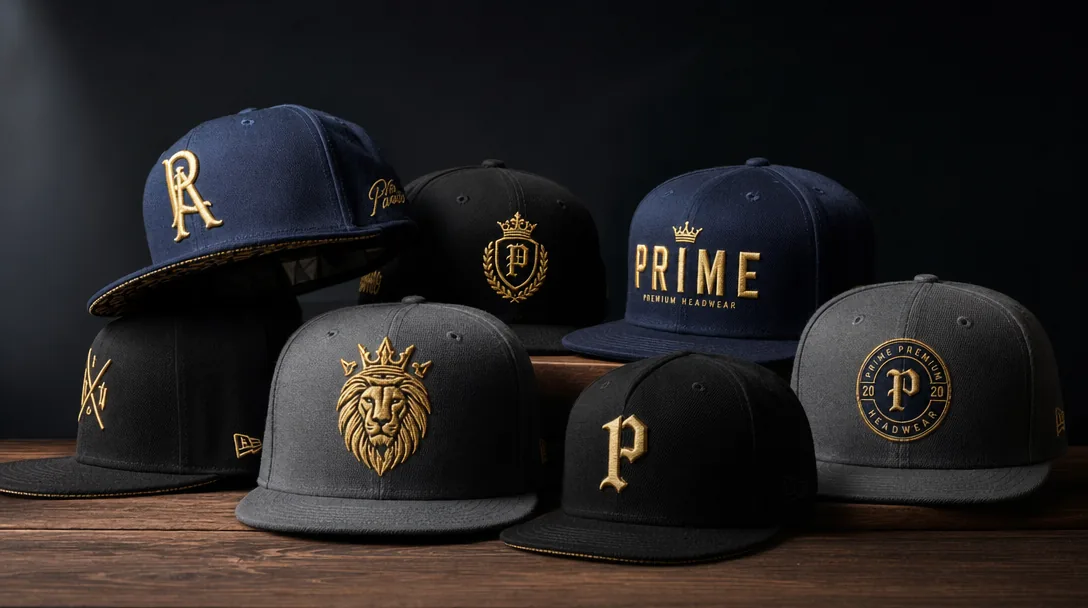
Custom Leather Patch Hat Low Minimum: A 2026 B2B Sourcing Guide
Read article →
Mens Beanies: Properties, Costs and How to Spec It Right
Read article →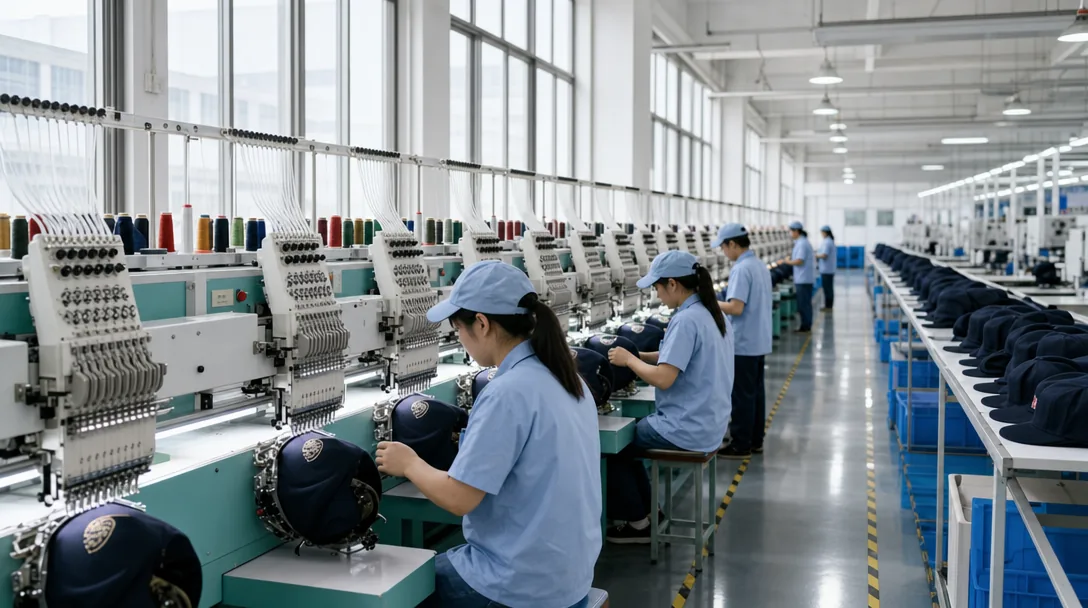
Bulk Trucker Hats Export Shipping Checklist for Custom Hat Buyers - Cost & MOQ Breakdown - Supplier Checklist
Read article →We hope this guide demystifies patch hats decoration qc checklist for custom hat buyers - cost & moq breakdown - cost & moq breakdown - supplier checklist and helps you move forward with confidence. If you have questions specific to your project, our English-speaking sales engineers are one message away.