
Patch Hats Decoration QC Checklist for Custom Hat Buyers (2026 Update)
Patch Hats Decoration QC Checklist for Custom Hat Buyers (2026 Update) is one of the most-asked questions we receive from international buyers, and for good reason. With dozens of factories competing for your order and an alphabet soup of technical terms in every supplier quote, even experienced importers can feel lost. This guide consolidates what we have learned producing custom hats for clients in 40+ countries.
Why patch hats decoration qc checklist needs a separate sourcing plan
A patch hats decoration qc checklist exists because patch decoration fails in ways plain caps do not. You are not just buying a cap body; you are buying a second manufacturing process with its own defect map: edge puckering, stitch skips, adhesive bleed, heat-transfer lift, backing delamination, crooked placement, and color drift between crown fabric and the patch face. That is why the patch hats decoration qc checklist needs separate gates for patch size tolerance, border construction, stitch density, placement repeatability, and backing system, whether the patch is merrowed, embroidered, woven, PVC, TPU, chenille, or leatherette. A sample can pass a table inspection and still fail in bulk if patch thickness varies by 0.5 to 1.0 mm or the placement jig drifts 3 to 5 mm across a 300-piece run. The decoration is the risk item, not an accessory.
The sourcing plan changes cost and lead time in ways buyers usually miss. A custom patch-hat program normally needs digitizing, die cutting or mold setup, and a first-article approval before crown production is frozen, which adds about 2 to 5 days versus a blank-cap order. In volume, flat embroidered patches may land under $0.50 each, while 3D puff, chenille, woven damask, or PVC patches often run $0.70 to $2.20 per piece depending on size, stitch count, mold charge, and MOQ. The spec also has to decide whether application happens in-house on Tajima, Barudan, or ZSK heads, or whether patches ship as a separate component for later sewing or heat press, because that changes labor, rework cost, and rejection handling. Lock Pantone TCX references, adhesive temperature windows, jig dimensions, and pack-out rules before PO release if you want the patch hats decoration qc checklist to hold in production.
Compliance is where generic hat sourcing falls apart. A patch hats decoration qc checklist should require material declarations for the crown, thread, patch face, backing film, and any adhesive, especially for EU, UK, or licensed sports programs that restrict azo dyes, formaldehyde, or PVC additives. Our standard practice is to pair visual inspection at AQL 2.5 with tighter checks on peel strength, wash durability, and colorfastness after steam and abrasion, because decoration failures often show up only after cartons have shipped. Buyers also need to check brand-approval conflicts, sew-in label interference, and flammability or child-product issues before bulk release. The sourcing plan has to stand apart because the decoration method changes the spec, the machine route, and the evidence required to sign off production.
Factory capability checks before quoting
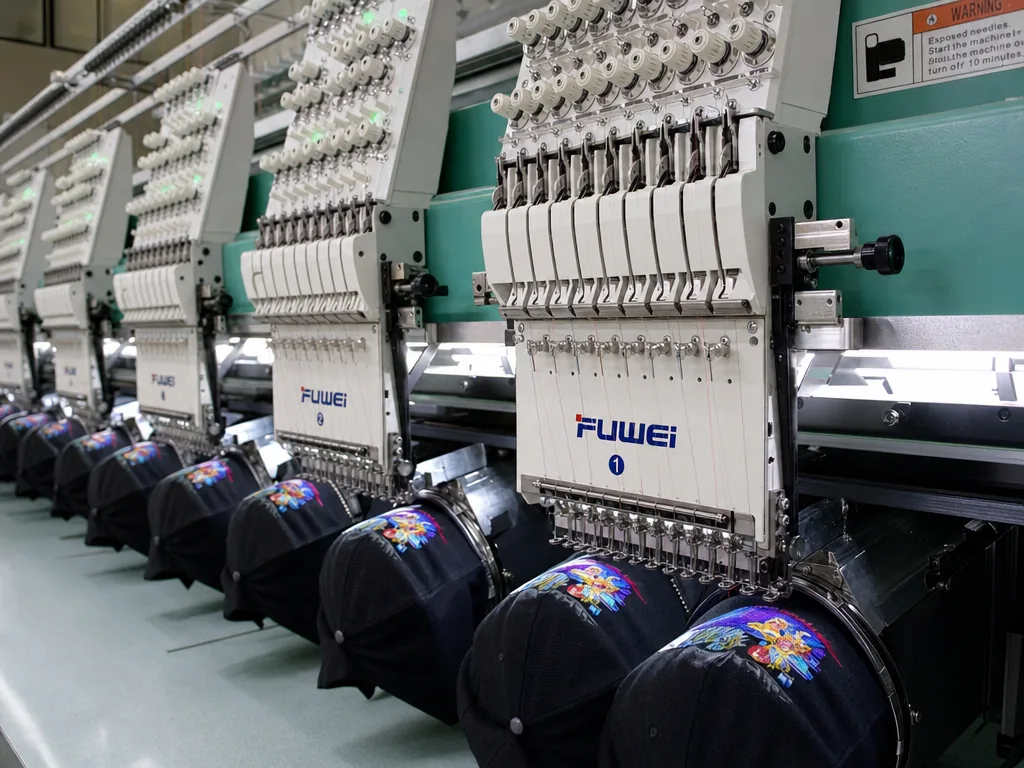
The first gate in any patch hats decoration qc checklist is simple: can the factory build the full product family, or only quote it. For custom patch hats, I want to see embroidery, patch making, cap sewing, and attachment handled in one controlled flow, not spread across informal subcontractors with no traceability. A shop running Tajima, Barudan, or ZSK heads can usually manage flat embroidery and 3D puff, but that tells you nothing about merrowed borders, laser-cut PVC, woven badges, or stitch registration on a curved 5-panel front. Ask for finished samples on twill, felt, leather, PVC, and woven constructions, then inspect macro photos for thread tension, border density, heat-cut edge quality, and backing adhesion. If the supplier cannot show the same result twice across those materials, the quote is a placeholder, not a process-based cost.
Factory capability also includes the cap body, because a clean patch can still fail on weak crown construction. I want the supplier to state buckram weight, front panel reinforcement, sweatband composition, visor board thickness, and whether the crown survives steam, heat, and light wash testing without patch lift or puckering. Cotton twill around 260 to 300 gsm, brushed canvas, poly twill, and acrylic-wool blends behave differently under needle penetration and heat-activated adhesive, so the factory should say which substrates it prefers and what it will not run. Closure choice also changes the quote: plastic snap, self-fabric strap, tri-glide buckle, Velcro, and fitted sizing all affect labor minutes, trim cost, and defect risk. A serious supplier breaks that out instead of hiding it behind a single FOB line.
Audit readiness and spec control are the last filter before quoting, and this is where weak suppliers usually give themselves away. I would not trust a factory on a patch hats decoration qc checklist unless it can show current sedex-audit-cap-supplier-guide.html">BSCI 2.0 or Sedex SMETA 4-Pillar status, traceability for fabric and trims, and a sample room that can turn a proto in 5 to 7 days with revision control. The conversation should be technical from the first email: Pantone TCX or Pantone C references, stitch-count targets, patch placement tolerance in millimeters, backing type, and whether the factory understands AQL 2.5 for final inspection. CrownsForge’s standard practice is one pre-production sample plus one photo-measured approval round before bulk starts, because most decoration failures come from vague spec confirmation, not from the sewing line itself.
MOQ, pricing and sample approval
MOQ for a patch hats decoration qc checklist is driven by the decoration process, not just the cap body. For embroidered patch hats, a realistic MOQ is 100 to 300 pieces per colorway when the artwork is simple and the backing is standard sew-on or heat-seal. Woven patches, PU leather, molded PVC, and multi-location builds usually raise the floor because each method adds its own setup: separate die cutting, thread-program changes, adhesive trials, or color-separated tooling. The buyer should lock the patch construction before sampling. Switching from a merrowed-edge embroidered patch to PU leather after PPS can add $40 to $120 in tooling and push the first run back 5 to 7 days, which is a bad trade for a change that should have been resolved at quotation stage.
Sample approval is the production gate, not paperwork. PPS should confirm the exact hat with custom patch before bulk cutting starts: patch size, center-front placement, crown curvature, edge finish, stitch path, and how the patch sits after blocking and steaming. For color, specify Pantone TCX for fabric and Pantone TPX or a thread book reference for the decoration, then inspect the approved sample under D65 light; on dark crowns, anything above Delta E 2.0 is normally visible. Stitch density matters too: embroidered patch faces usually land around 0.35 to 0.45 mm fill spacing, while overpacked satin columns make the patch stiff and can lift the edge on low-profile caps. A patch hats decoration qc checklist should treat these as sign-off items, not nice-to-have notes.
Lead time stays predictable only when trim specs are frozen before bulk. If the base cap, sweatband, closure, and labeling are stock, a straightforward patch hat order usually needs 7 to 12 days for sampling and 20 to 30 days after PPS approval for bulk. Add woven labels, printed inner tape, custom hangtags, or individual polybags and you can lose another 3 to 7 days because those items usually come from separate vendors. Packing changes also affect freight math: switching from loose carton packing to individual polybags changes carton count, volume weight, and sometimes the practical AQL 2.5 outcome if the packing line is rushed. The cleanest rule is simple: freeze decoration, trim, and packaging before mass production, then inspect to the same spec the factory will actually ship.
Quality inspection and shipping risk
Late inspection is where custom patch cap programs go off the rails, so the release gate in a patch hats decoration qc checklist should be the final random inspection before balance payment, not after booking. Use ANSI/ASQ Z1.4 single sampling, usually at AQL 2.5 for major defects and 4.0 for minor; for premium retail, tighten majors to 1.5 and write that into the PO. Define major defects in plain numbers: patch placement more than 3 mm off center, edge lift above 2 mm, glue bleed on twill or felt, wrong backing, exposed base fabric through embroidery fill, or front-panel warping after heat application. Size tolerances should be called out too: crown height +/-5 mm, brim length +/-3 mm, head circumference +/-1 cm, patch center position +/-2 mm on center-front styles. If those limits are not documented, the factory will use its own internal standard, and that standard is rarely the one your retail buyer signed off on.
Inspect the cap shell and the decoration as separate control points, because a clean 6-panel body can still fail after the patch goes on. The usual floor defects are heat-press shine on brushed cotton, seam telegraphing through the patch, merrow edge skips, puckering on dense satin borders, and weak adhesion along the curved top of the front panel. For 3D embroidery patches and mixed direct-embroidery builds, reject thread breaks, bird nesting, poor color registration, and foam exposure visible at arm’s length under normal store lighting. On Tajima, Barudan, and ZSK heads, those issues usually trace back to unstable backing, poor digitizing, or wrong needle-thread pairing, not just operator error. Our standard practice is to add carton-drop checks for structured export caps, because buckram collapse and brim distortion often show up after packing, not on the sewing table.
Color approval by phone photo is a fast way to lose margin on patch hats. For embroidered twill, woven labels, PVC, leatherette, or sublimated patches, require a physical strike-off or sew-out checked under D65 lighting against the approved standard, ideally Pantone TCX for textile surfaces, with Delta-E under 1.5 for premium retail and under 2.0 for most promotional orders. The shell fabric passing shade approval is not enough; patch substrate, thread lot, merrow yarn, and adhesive film can shift independently. Dark navy, black, and red are the usual problem colors, so ask for crocking and perspiration resistance results where relevant, especially on white or ecru bodies that show transfer fast. Shipping risk starts with paperwork and ends with crushed cartons: carton marks must match the packing list exactly, including PO, style, colorway, quantities, carton sequence, gross/net weight, dimensions, origin, and any FNSKU or routing label. Inner packing matters too; 12 or 24 pieces per poly is only acceptable if the patch face is tissue-separated or the crown is supported.
Buyer checklist for the next RFQ
A strong patch hats decoration qc checklist starts before pricing: ask for one clean front photo, one back photo, one side photo, and a 1:1 close-up of the patch edge, border, and stitch density if possible. In the RFQ, name the cap in production terms, not marketing language: 5-panel or 6-panel, structured or unstructured, crown height, brim curve, closure, and fabric spec such as 100% cotton twill, 100% polyester mesh, washed cotton, or foam-front trucker. A foam-front cap, a pigment-washed dad cap, and a structured twill snapback do not quote the same way, because the bonding method, needle penetration, and reject rate are different. The patch type must be explicit too: embroidery, woven, PVC, leather, TPU, chenille, sublimated twill, or rubber. Each one changes MOQ, unit cost, and lead time, so leaving it vague is how you get a quote that looks cheap and fails on the line.
The quote is only meaningful when artwork and finish data are locked. Buyers should send vector files in AI, EPS, or print-ready PDF with outlined text, plus Pantone TCX or Pantone C references for cap and patch, thread colors, patch size in millimeters, and exact placement measured from center front, seam, and brim edge. For patch hats decoration qc checklist work, also specify attachment method: sew-on, iron-on, Velcro, adhesive-backed, or mixed construction, and state stitch type if embroidery is involved, such as satin stitch, tatami fill, or merrowed edge on a woven badge. Good factories will ask for a placement tolerance of 2 to 3 mm, a color target within Delta E 2.0 against the approved swatch, and whether the golden sample must be checked under D65 lighting. Without those numbers, the factory is not quoting custom patch hats; it is guessing.
The next RFQ should also lock down quantity by color and size, target ship date, destination, and compliance requirements such as BSCI 2.0, Sedex SMETA 4-Pillar, REACH, or CPSIA for children’s headwear. Add carton pack-out, barcode format, hangtag rules, and whether you want a pre-production sample, top-of-production sample, or inline QC photos before bulk packing. For patch hat custom programs, the defect limits need to be written into the RFQ: loose threads over 3 mm, patch lift at corners, skewed placement beyond 2 mm, crooked topstitching, needle marks on the crown, or shade variation between panels. CrownsForge’s standard practice is to define those acceptance limits before sampling, because once bulk production starts, the argument is never about the patch itself; it is about whether the buyer and factory were judging against the same standard.
Working with CrownsForge
A patch hats decoration qc checklist has to function as a hard gate, not a photo-op. For custom hat buyers, the first decision is decoration method: embroidered patch off a Tajima, Barudan, or ZSK head; sewn-on woven patch; heat-pressed TPU; or molded PVC. Each one fails differently. We verify first-piece approval, then recheck after attachment because a hat patch custom run can pass stitch count and still fail on edge lift, adhesive strike-through, tunnelled twill, or a centerline shift that is invisible in CAD but obvious on a finished cap. The tolerances need to be explicit: patch placement within 2 mm on the front panel, edge-to-edge symmetry within 1.5 mm, and thread tension stable enough to avoid puckering on 180 to 260 gsm cotton twill or 300D polyester trucker fronts. Pantone TCX matching is only useful if the buyer accepts a realistic Delta-E target, usually 2.0 to 3.0 depending on substrate and lighting.
Decoration QC starts at the patch spec, not at final sewing. A patch for hat custom production needs the right backing for the build: merrowed embroidery on structured cotton twill, woven patch on chino twill, TPU on nylon, PVC on foam-front truckers, or stitched felt on washed denim. We check adhesive film type, lockstitch density, merrow width, heat-press dwell time, and wash resistance before the panel moves to assembly, because a good-looking sample can still fail after two laundry cycles or when a sweatband pulls the front panel. CrownsForge’s standard practice is to inspect the first 20 to 50 pieces per style, then split mixed orders by decoration method and panel shape so one clean sample does not mask a weak production pocket. That is the practical core of a patch hats decoration qc checklist: catch the failure mode where it starts, not after cartons are sealed.
Frequently Asked Questions
What is the minimum order quantity (MOQ) for custom hats?
Our standard MOQ is 100 pieces per design and color, with sampling available from 1 piece. For complex multi-color logos or premium fabric upgrades, the MOQ can be lowered with a small per-piece surcharge.
Do you support sustainability certifications?
Yes. We work with GOTS organic cotton, GRS-certified recycled polyester, OEKO-TEX Standard 100 fabrics, and are BSCI and Sedex audited. Certification documentation can be provided per order.
Which shipping methods do you support?
We support FOB, CIF and DDP shipping. Air express for samples and small orders, sea LCL for 100 to 500 pieces, sea FCL for 5,000+ pieces. Door-to-door DDP available for US, EU, UK, Canada and Australia.
What file format should I send for my logo?
Vector files (AI, EPS, PDF) are ideal. High-resolution PNG or JPG at 300 dpi on transparent background works as a fallback. Provide Pantone color references for accurate reproduction.
How long does production take?
Sampling takes 7 to 12 days. Bulk production runs 20 to 30 days depending on quantity, fabric availability and decoration complexity. Inspection and packing adds another 3 to 5 days before shipment.
How does ordering custom hat leather patch work?
When evaluating custom hat leather patch, the key considerations are construction quality, decoration capability, MOQ flexibility and lead time. Explain the buyer intent behind patch hats decoration qc checklist, when it differs from generic hat sourcing, and what decisions affect cost, lead time and compliance. Cover embroidery, patch, fabric, panel construction, closure options, sample room capability, audit readiness and communication checks.
What's the MOQ for custom leather patch hat low minimum?
When evaluating custom leather patch hat low minimum, the key considerations are construction quality, decoration capability, MOQ flexibility and lead time. Explain the buyer intent behind patch hats decoration qc checklist, when it differs from generic hat sourcing, and what decisions affect cost, lead time and compliance. Cover embroidery, patch, fabric, panel construction, closure options, sample room capability, audit readiness and communication checks.
How does ordering custom leather patches for hats work?
When evaluating custom leather patches for hats, the key considerations are construction quality, decoration capability, MOQ flexibility and lead time. Explain the buyer intent behind patch hats decoration qc checklist, when it differs from generic hat sourcing, and what decisions affect cost, lead time and compliance. Describe how CrownsForge manages patch hats decoration qc checklist programs with sampling, decoration, QC and export coordination.
How does ordering custom patch trucker hats work?
When evaluating custom patch trucker hats, the key considerations are construction quality, decoration capability, MOQ flexibility and lead time. Explain the buyer intent behind patch hats decoration qc checklist, when it differs from generic hat sourcing, and what decisions affect cost, lead time and compliance. Describe how CrownsForge manages patch hats decoration qc checklist programs with sampling, decoration, QC and export coordination.
What do I need to put patches on hats?
So what you'll need is a post bed sewing. Machine we use a FAF. Machine i mean it's not cheap it's like $3 $4,000. For the FAF. But really you need a sewing machine that has a raised bed.
Looking for a reliable hat manufacturer in China?
CrownsForge has produced custom hats for 800+ brands across 40 countries. From 100-piece launches to 100,000-piece retail programs, we deliver on time and on spec.
Get in touchRelated guides
Compliance Documentation Checklist for First Hat Import to US/EU (2026 Update)
Read article →
Cap Factory AQL Inspection Plan for Importers
Read article →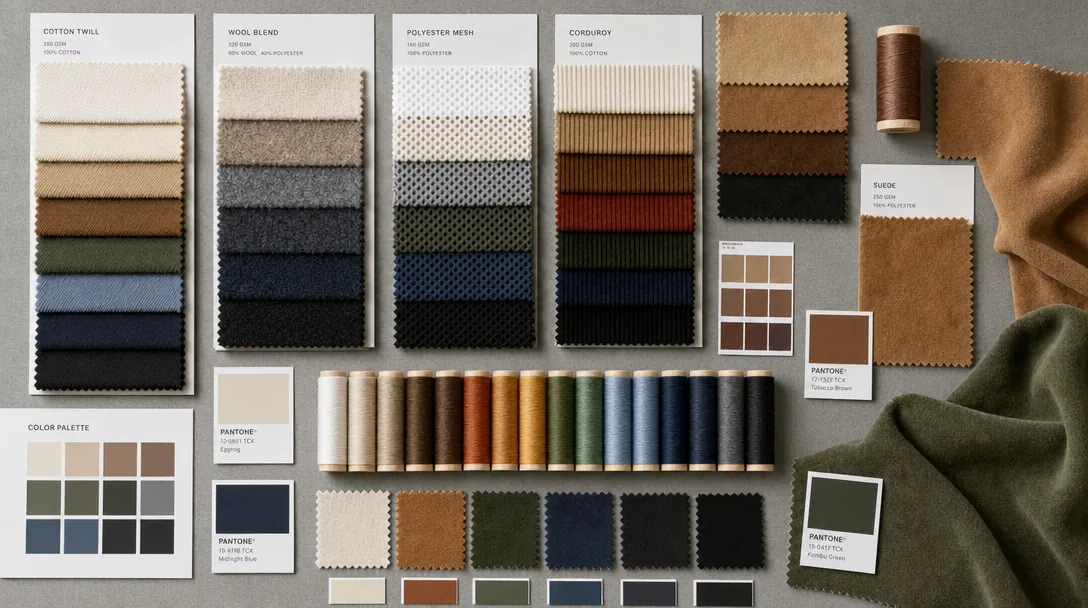
Bucket Hat Corduroy MOQ And Pricing Plan for Custom Hat Buyers
Read article →Sourcing custom hats does not have to be complicated. With the right manufacturing partner, clear specifications and a small upfront investment in sampling, you can launch a retail-quality product in 30 to 45 days.