
Merino Wool Beanie: Properties, Costs and How to Spec It Right - Cost & MOQ Breakdown - 2026 Buyer's Guide
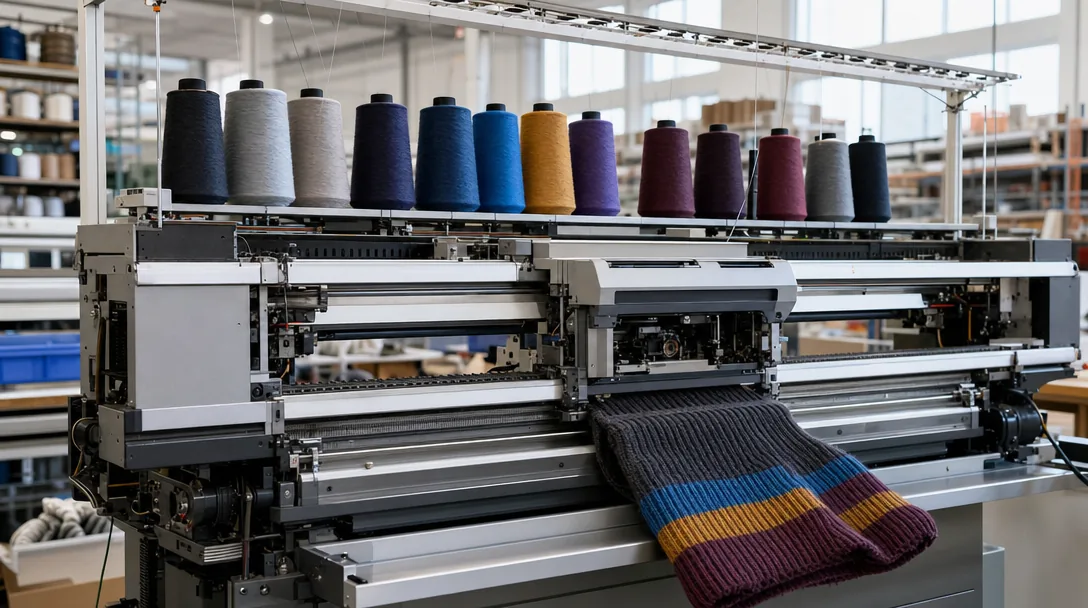
Every week, our sales team answers detailed questions about merino wool beanie: properties, costs and how to spec it right - cost & moq breakdown - 2026 buyer's guide. We wrote this guide so that wholesalers, streetwear brands, corporate buyers and promotional resellers can compare options with full information, and avoid the traps that show up only after production has started.
Acrylic Beanie
Acrylic beanies are usually knitted from 100% acrylic staple yarn in 28/2 or 32/2 count on 12-gauge or 14-gauge machines, with lower-cost programs still running simple rib bodies on circular knitting. The commercial advantage is straightforward: acrylic gives stable pricing, saturated color, and easier wash care, but it does not perform like a merino wool beanie in moisture management, odor control, or thermoregulation. If you are comparing the two, do not accept a vague material line on the quote. Lock the yarn count, knit gauge, finished weight in grams, finished size, cuff height, and stretch recovery target. For color, reference Pantone TCX and cap Delta-E at 1.5 or below on approved lab dips; otherwise black, navy, and red can drift badly between dye lots. Construction details move cost more than most buyers expect. Specify whether the crown is fully fashioned, linked, or overlocked, whether the cuff is single or double layer, and whether decoration is jacquard, woven label, direct embroidery, or a sewn patch. Direct embroidery on acrylic rib often reduces stretch and can cause tunneling if the backing and density are wrong, especially on Tajima or Barudan heads running small text. At factory level, I would also call out pilling grade, with a target of 3.5 to 4.0 minimum after testing, because cheap acrylic yarn looks acceptable at packing but degrades quickly on shelf and after a few wears.
FOB pricing in China for a basic 100% acrylic 1x1 rib cuffed beanie at 70 to 90 grams is typically $1.10 to $1.80 at 1,000 pieces, assuming stock yarn, one solid color, and simple label trim. Add a pom, fleece lining, reflective yarn, or jacquard logo program and the range usually climbs to $2.20 to $3.40, with linking labor and trim application driving more of the increase than yarn alone. MOQ is often 300 to 500 pieces per color when mills can pull from stock shades, but custom-dyed acrylic or recycled acrylic blends usually need closer to 1,000 pieces per color to make the dye lot economical. CrownsForge standard practice is to freeze tolerances at plus or minus 1 cm on body width and height, confirm azo-free dyes, and define carton pack-out before bulk. The common failures are not subtle: barre, shade banding, weak rib recovery, seam grin at the crown, skewed cuff folds, and aggressive pilling after limited wear. AQL 2.5 final inspection should include measurement after relaxation, colorfastness to crocking, wash stability, logo alignment, and odor checks for residual finishing oil. If metal badge hardware is used, add needle detection and pull testing. Acrylic is the right choice when the brief is low cost, bright color, and fast replenishment, but buyers should be honest about the performance tradeoff. If the end customer expects premium hand feel, better heat regulation, and lower odor retention, a merino wool beanie earns its higher raw material cost and stricter spec discipline.
Cotton Beanie
A cotton beanie is usually a cut-and-sew item made from circular-knit jersey or rib, while a premium merino wool beanie is more often fully fashioned or linked panel by panel. That construction gap shows up immediately in seam bulk, stretch recovery, and long-term shape retention. For cotton programs, the commercial sweet spot is usually 180 to 320 gsm single jersey for lighter fashion styles, or heavier 1x1 and 2x2 rib with a denser handfeel that many suppliers loosely describe as 7 to 12 gauge equivalent. If you do not lock the spec sheet, one lot can fit like a shallow skull cap and the next like a slouch beanie. At minimum, specify finished height, cuff height, crown construction, target weight tolerance within plus or minus 5 percent, and actual fiber composition such as 100 percent cotton or 95/5 cotton-elastane. Color and finishing need tighter control than many buyers expect. Reactive dyeing, enzyme washing, silicone softening, and brushing all change both shade and shrinkage, especially on black, navy, and olive. If the beanie must match a retail program, give the factory a Pantone TCX reference, define an acceptable Delta-E target under D65 lighting, and require lab dips before bulk knitting or cutting. Cotton is also more prone than a merino wool beanie to spirality, cuff growth, and post-wash torque, so pre-production testing should include wash shrinkage at 40 degrees Celsius, colorfastness to crocking, and seam appearance after laundering. Those are not academic details; they are the difference between a stable replenishment item and a cheap knit cap that starts generating returns after the first wash.
The cost range is only straightforward if you separate commodity cotton from upgraded yarn and trim packages. A basic solid-color 100 percent cotton beanie typically runs at 300 to 500 pieces per colorway, with FOB China pricing around $1.40 to $2.20 depending on fabric weight, cuff depth, and whether the style uses a simple turn-up with a satin label or a more labor-heavy folded cuff and woven branding. Once you move into organic cotton, combed compact yarn, cotton-spandex blends, yarn-dyed stripes, or branded trims, MOQ often climbs to 800 to 1,200 pieces and FOB moves into the $2.60 to $4.50 range. Dense 3D embroidery is a poor fit on soft cotton knit because the substrate distorts under high stitch count; light flat embroidery or a woven patch usually performs better. Inspection should focus on the failure points cotton handles poorly compared with wool: shrinkage, bagging at the cuff, seam grin, and fabric barre. On bulk goods, check crown seam alignment, stitch density consistency, needle damage, oil contamination, label position, and panel symmetry if the style is multi-seam. For retail orders, AQL 2.5 is a sensible baseline, but measurement tolerances on finished height and opening width should be tighter than many factories propose because one-size knitwear hides defects until it reaches the consumer. At CrownsForge, we also lock carton ratios, needle detection, and wash-test standards before pre-production approval, because low-ticket knit hats are exactly where some suppliers quietly downgrade gsm or trim quality. If the end use is winter outdoor, team issue, or premium specialty retail, a cheaper cotton cap can be a false economy beside a merino wool beanie once shape loss and return rates are factored in.
Black Beanie Hat
A black beanie only looks easy until bulk arrives with three different blacks in the same carton. For a merino wool beanie, the color spec matters as much as the fiber spec because black exaggerates barre, crown tension marks, and rib shading under D65 retail lighting. Lock the yarn first: 100% merino at 19.5-21.5 micron for premium handfeel, or a 50/50 merino-acrylic blend when you need lower cost and better abrasion resistance. I would write 2/26Nm or 2/30Nm yarn count directly into the PO, then call out 7 gauge for a heavier winter hand or 12 gauge for a cleaner, more fashion-retail profile. Also state finished weight and dimensions, not just silhouette: for example, 85-110 g finished weight, 21-23 cm body height, 7-8 cm cuff, and fit range for a 56-60 cm head circumference. Black dyeing is where buyers usually lose control. Merino is typically dyed with acid dyes, and small wool lots can drift if the mill does not hold pH, temperature curve, and after-soap conditions tightly. Ask for lab dip approval against Pantone TCX or a sealed black standard, with Delta-E held to 1.0-1.5 under D65; anything looser is risky on replenishment orders. Require colorfastness to dry/wet rubbing, perspiration, and light, plus declared finishing such as silicone softening, enzyme wash, or anti-pilling treatment, because each changes luster, handfeel, and FOB. At CrownsForge, our standard practice is to freeze these points before quotation; otherwise the same merino wool beanie can swing by $0.60-$1.20 per piece just from dye-lot control, finishing chemistry, and yarn blend changes.
The process route should be specified like a knit program, not treated like a generic hat order: yarn dyeing, computerized flat knitting, crown linking, cuff turning, trimming, washing, blocking, metal detection, and final packing. If the style has cuff embroidery, define logo position, stitch count, thread type, and backing because dense embroidery on a double-fold rib can cause tunneling and torque. Machine capability matters here: a factory running Tajima or Barudan heads for cap embroidery may still struggle on knit stabilization if they do not control hoop tension and underlay for soft merino. Write in the physical tolerances as well: stretch recovery after wash, maximum shrinkage, label attachment method, carton ratio, and whether the beanie ships flat-packed or form-blocked. Cost and MOQ follow the yarn more than the silhouette. A stock acrylic black beanie can still open around 300-500 pcs per color and land near $1.20-$2.20 FOB China, but a custom-dyed merino wool beanie usually starts closer to 500-1,000 pcs because mills dislike short wool dye runs. For 2026 planning, a genuine merino program with 19.5-21.5 micron yarn, anti-pilling finish, branded label, and tighter color control is more realistically $3.80-$7.50 FOB, with higher-end 100% merino constructions pushing beyond that if gauge is fine and packaging is retail-ready. Bulk inspection should run at AQL 2.5 and focus on defects black knitwear hides in photos: oil contamination, yarn fly, broken filaments in blends, uneven crown closure, cuff twisting, pilling after wash, and crocking onto white labels or light embroidery.
Slouchy Beanie
A slouchy beanie fails on recovery before it fails on fiber content. If the crown collapses after a few wears, the customer does not care that the label says 100% merino. For an adult slouch fit, I would spec a finished body height of 28-31 cm, flat width 22-24 cm, and cuff depth 6-8 cm; below that, it reads like a watch cap, not a slouch silhouette. Most factories build this on computerized flat knitting machines at 7GG or 12GG, then link the top closed. A 14GG merino wool beanie can look refined, but only if the yarn twist and finishing are stable enough to stop the crown from going limp. A workable spec is not “soft handfeel”; it is yarn count, gauge, stitch structure, and target weight locked together, such as 2/30Nm 100% merino, 12GG, single-jersey body, 1x1 rib cuff, 78-92 g finished weight. If shape retention matters more than pure-fiber storytelling, a 70/30 merino-nylon blend usually outperforms 19.5-21.5 micron pure merino on repeated wear, especially in e-commerce where returns are driven by bagging and crown growth, not by micron complaints.
The real cost drivers are micron, yarn origin, dye route, and whether the spinner has to open a custom lot. Stock-service solid shades can often start at 300-500 pieces per color, but custom yarn-dyed merino usually needs 800-1,200 pieces because spinning and dyeing both have minimum economic runs. In China, a basic acrylic slouch style may land around $1.40-$2.20 ex-factory at 1,000 pieces; a comparable merino wool beanie is more realistically $3.80-$6.50, with 19.5 micron RWS-certified yarn, higher finished weight, or added trims pushing it upward. Woven labels, faux-suede patches, and direct embroidery all add cost, and embroidery on a loose knit body is never free from risk unless backing, hoop tension, and stitch count are controlled carefully on Tajima or Barudan heads.
Inspection needs to be stricter than buyers expect because knit defects show immediately under retail lighting and often worsen after the first wash. The repeat failures are needle lines, dropped stitches, oil contamination, uneven crown decreases, spirality, and early pilling after rub testing. If you add embroidery or patches, logo placement can drift because the knit body stretches in the hoop, so I would hold bulk inspection at AQL 2.5 and measurement tolerance at ±1 cm on finished height and width. Wash testing should be done on first-off samples with circumference and body height recorded before and after one care cycle. For black, navy, and licensed team colors, shade should be controlled to Delta-E under 1.5, and odor, crocking, and softener residue deserve the same scrutiny as appearance. Our standard practice is to reject any slouch crown that shortens more than 1.5 cm after washing, because that is the point where the relaxed fit turns into a returned unit.
Cotton Beanie Men
Most buyers who ask for a cotton men’s beanie are not buying the same product architecture as a merino wool beanie. They are usually sourcing a cotton-rich stretch jersey skull cap, where recovery, seam construction, and wash stability matter more than loft or yarn micron. The commercial sweet spot is 95/5 cotton-spandex or 97/3 cotton-elastane in 180-240 gsm single jersey; below 180 gsm the opening loses shape too quickly, and at 100% cotton the crown bags out after a few wear cycles, especially after enzyme wash or silicone softening. A workable spec should fix fiber content tolerance at +/-3%, finished gsm after wash at +/-5%, shrinkage below 5% in length and width, and spirality below 3%. If you want a close fit, write the silhouette like an apparel program, not a knitwear program: finished height, opening width, cuff depth if self-folded, panel count, and seam build, typically 4-needle 6-thread overlock with a bottom coverstitch. Color approval also needs discipline; approving “black” or “olive” by lab dip nickname is how repeat orders drift, so tie bulk shade to a Pantone TCX reference and hold Delta-E to 1.0-1.5 under D65.
Decoration is where cotton beanie margins usually disappear. A front logo that runs clean on a merino wool beanie often distorts lightweight jersey because the base fabric stretches under the needle; once embroidery density is too high, you get tunneling, puckering, and opening distortion. On 200 gsm jersey, any flat logo pushing past roughly 7,000-8,000 stitches needs a serious strike-off review, lower stitch density, lighter underlay, and the right cutaway backing on Tajima or Barudan heads. If the artwork has fills or sharp edges, a woven patch, merrowless edge badge, or thin twill applique is usually safer than forcing dense direct embroidery onto a soft knit. In 2026 China FOB terms, a plain cotton jersey beanie in stock black, heather gray, or navy usually lands around $1.10-$1.80; add embroidery, woven labels, barcode sticker, and individual polybag, and the realistic range moves to $1.80-$3.00. Custom-dyed fabric, retail folding, and branded packaging typically push MOQ from 300-500 pieces per color up to 800-1,200, with bulk inspection at AQL 2.5 focused on torque after wash, skipped stitches, crown seam grin, cuff variance over 5 mm, oil marks, and logo placement outside +/-5 mm.
100 Acrylic Beanie
A 100% acrylic beanie is still the price-floor benchmark for cold-weather headwear, but cheap only stays cheap when the spec is locked. A vague note like “soft acrylic beanie” is how you end up with three different fits in one PO. The tech pack should call out yarn count such as 28/2 Nm or 32/2 Nm, fiber content tolerance, machine gauge, knit structure, finished weight, cuff depth, relaxed and stretched opening, and stitch density per 5 cm. In Zhejiang production, two cuff beanies can look identical in photos yet swing from 58 g to 78 g because of yarn loft, take-down tension, and boarding; that difference is enough to change carton yield, fit, and FOB margin. Color consistency is one area where acrylic usually outperforms a merino wool beanie, especially on team or promo repeats. Require Pantone TCX approval against the actual yarn lot, with Delta-E kept under 1.5 for darks and under 2.0 for brights under D65 lighting, then lock fold-depth tolerance at +/-0.5 cm and crown height at +/-0.7 cm before bulk starts.
The process is simple on paper and easy to cheapen in practice. Most factories knit acrylic beanies on computerized flat or circular machines, then move to linking or overlock seaming, washing, boarding, trimming, needle control or metal detection, and final packing. If softener dosage, wash time, or heat-setting temperature is not frozen after the size set, the hand feel can shift from dry-soft to slick and shiny, especially on black and saturated red shades where overheating shows fast. Acrylic also keeps visual color better than a merino wool beanie in high-volume promotional programs, but it breathes worse, traps odor faster, and pills earlier if the yarn uses shorter staple acrylic or loose twist. On cost, the realistic Zhejiang range for a basic 60-75 g stock-yarn cuff beanie is about $1.10-$1.80 FOB China at 1,000 pieces, with common MOQs of 300-500 pieces per color; custom-dyed yarn, jacquard artwork, fleece lining, reflective yarn, or metal trims usually push MOQ to 800-1,200 and FOB to $2.20-$3.40. Inspect to AQL 2.5 for cuff skew, crown seam grin, oil marks, pilling, opening circumference, stitch density, wash appearance, and stretch recovery where elastane is used, because those are the failures that drive returns.
Working with CrownsForge for merino wool beanie programs
Most expensive mistakes in a merino wool beanie program are locked in before bulk knitting starts, not at final inspection. The failure points are predictable: shrinkage outside tolerance after the first wash, inconsistent hand feel between dye lots, spirality on the body, and cuffs that lose recovery because the rib structure was under-specified. A workable pre-production path is usually 7 to 10 business days for the first prototype after gauge, yarn count, fold height, pom construction, and artwork are frozen, then 5 to 7 business days for revisions if the change is limited to label position, embroidery scale, crown depth, or cuff length. MOQ is commonly 300 pieces per colorway for stock 100% merino or standard merino/acrylic blends, but custom shade development changes the economics fast. Once you ask for Pantone TCX matching, most yarn spinners want roughly 800 to 1,200 units per shade to cover lab dips, dye-lot minimums, and yarn loss. Buyers moving over from acrylic should budget accordingly: acrylic beanies often land 20% to 35% cheaper at comparable gauge, and they are more forgiving on lot-to-lot shade continuity than fine-count merino.
Decoration is where a well-developed merino wool beanie often gets compromised. Direct embroidery on a folded cuff can work, but only if the digitizing is built for knit stretch rather than for a flat twill cap front. On Tajima or Barudan machines, underlay spacing around 0.35 to 0.40 mm and lower stitch density usually prevent the cuff from turning stiff, tunneling, or showing needle cutting on finer yarns. On 9-gauge and 12-gauge knits, woven labels, loop labels, silicone patches, chain stitch, or cuff-sewn faux leather tabs usually wear better than dense fill embroidery because they preserve elasticity and keep the front panel from pulling off balance. CrownsForge standard approval pack for this category includes finished measurements, yarn composition, knit weight, logo position from cuff edge, wash-test data, and a written shrinkage tolerance, usually 3% to 5% after the agreed care cycle.
At scale, discipline matters more than a headline lead time. A reliable order flow includes BOM confirmation, yarn-card or lab-dip approval, PPS sign-off, inline checks during knitting and linking, and final random inspection to AQL 2.5. For retailer or licensed programs, add carton drop testing, needle control, metal detection records where trims require it, and locked carton-mark standards before freight booking. Compliance also needs to be destination-specific, not assumed from a prior season. Serious buyers usually ask for sedex-audit-cap-supplier-guide.html">BSCI 2.0 or Sedex SMETA 4-Pillar audit status, azo-free dye confirmation, REACH alignment, and fiber-content verification on merino claims, especially for EU and U.S. channels. Once the shipping model shifts from FOB Ningbo to DDP, a single approval matrix covering care labels, barcode logic, carton pack-out, and transit packaging is what prevents small documentation errors from turning into chargebacks or missed launch dates.
Frequently Asked Questions
How long does production take?
Sampling takes 7 to 12 days. Bulk production runs 20 to 30 days depending on quantity, fabric availability and decoration complexity. Inspection and packing adds another 3 to 5 days before shipment.
Do you support sustainability certifications?
Yes. We work with GOTS organic cotton, GRS-certified recycled polyester, OEKO-TEX Standard 100 fabrics, and are BSCI and Sedex audited. Certification documentation can be provided per order.
What is the minimum order quantity (MOQ) for custom hats?
Our standard MOQ is 100 pieces per design and color, with sampling available from 1 piece. For complex multi-color logos or premium fabric upgrades, the MOQ can be lowered with a small per-piece surcharge.
What logo decoration techniques do you offer?
3D puff embroidery, flat embroidery, woven patch, leather patch, PVC patch, screen printing, sublimation, applique and laser etching, all in-house with no subcontracting.
Can I order a sample before bulk production?
Yes. We strongly recommend approving a pre-production sample before mass production. Samples are charged at 35 to 60 USD each plus express shipping, fully refundable against confirmed bulk orders over 500 pieces.
What should buyers know about black bucket hat men?
When evaluating black bucket hat men, the key considerations are construction quality, decoration capability, MOQ flexibility and lead time. Cover everything buyers ask about black beanie hat: how it's manufactured, what specs to request from a factory, typical MOQ and pricing, common quality issues to inspect for, and how this ties back to the broader merino wool beanie sourcing decision. Cover everything buyers ask about cotton beanie men: how it's manufactured, what specs to request from a factory, typical…
What should buyers know about kangol bucket hat mens?
When evaluating kangol bucket hat mens, the key considerations are construction quality, decoration capability, MOQ flexibility and lead time. Cover everything buyers ask about black beanie hat: how it's manufactured, what specs to request from a factory, typical MOQ and pricing, common quality issues to inspect for, and how this ties back to the broader merino wool beanie sourcing decision. Cover everything buyers ask about acrylic beanie: how it's manufactured, what specs to request from a factory, typical MOQ…
What should buyers know about corduroy hat womens?
When evaluating corduroy hat womens, the key considerations are construction quality, decoration capability, MOQ flexibility and lead time. Cover everything buyers ask about black beanie hat: how it's manufactured, what specs to request from a factory, typical MOQ and pricing, common quality issues to inspect for, and how this ties back to the broader merino wool beanie sourcing decision. Cover everything buyers ask about acrylic beanie: how it's manufactured, what specs to request from a factory, typical MOQ…
What should buyers know about acrylic beanie hat?
When evaluating acrylic beanie hat, the key considerations are construction quality, decoration capability, MOQ flexibility and lead time. Cover everything buyers ask about acrylic beanie: how it's manufactured, what specs to request from a factory, typical MOQ and pricing, common quality issues to inspect for, and how this ties back to the broader merino wool beanie sourcing decision. Cover everything buyers ask about black beanie hat: how it's manufactured, what specs to request from a factory, typical MOQ…
Are merino beanies worth it?
If you value sustainability, comfort, durability, and superior thermal performance, a merino wool beanie is a smart and stylish investment. Despite the higher upfront cost, the long-term benefits—including shape retention, moisture management, and odour resistance—make it a practical addition to your wardrobe.
Is merino good for a beanie?
Made for all your outdoor adventures, merino is soft on skin, easy to layer and naturally temperature regulating and odour resistant. A fitted beanie, it's perfect for wearing under hoods or helmets while out hiking, climbing, skiing or mountain biking.
Are merino wool beanies worth it?
A: Yes, Merino wool is excellent for hats because it is breathable, quick drying, and temperature-regulating, providing comfort in various weather conditions.
Is merino yarn good for beanies?
Additionally, wool has a certain level of stretch to it, making it great for beanies. However, there are different types of wool you can choose from: - Merino wool comes from merino sheep and is known to be very fine and soft. It can be used for anything from socks to hats.
Is a merino wool beanie itchy?
Merino wool is finer and softer than other kinds of wool, which makes it less itchy. Its fibers are very short in length and smaller in diameter, which makes it a whole lot softer and gentler on the skin.
Ready to start your custom hat project?
Send us your tech-pack, sketch or even just an inspiration photo. We will respond with a detailed quotation and digital mock-up within 24 hours.
Request a free quoteRelated guides
Custom Leather Patch Hat Low Minimum: A 2026 B2B Sourcing Guide
Read article →
Mens Beanies: Properties, Costs and How to Spec It Right
Read article →
Custom Rope Hats: Manufacturing, Materials and Bulk Pricing (2026 Update)
Read article →Sourcing custom hats does not have to be complicated. With the right manufacturing partner, clear specifications and a small upfront investment in sampling, you can launch a retail-quality product in 30 to 45 days.