
Mens Bucket Hat with String: A Vertical-Specific Sourcing Guide (2026 Update)
Every week, our sales team answers detailed questions about mens bucket hat with string: a vertical-specific sourcing guide (2026 update). We wrote this guide so that wholesalers, streetwear brands, corporate buyers and promotional resellers can compare options with full information, and avoid the traps that show up only after production has started.
Fitted Hats with Patches
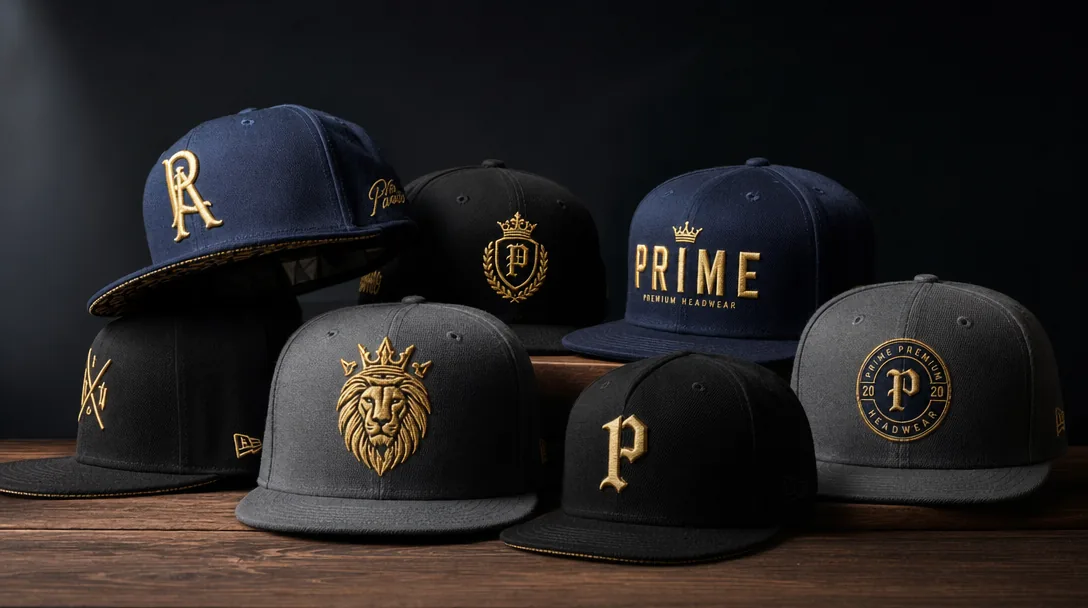
Patch application is where a fitted program usually fails, because the patch changes crown memory, seam behavior, and carton compression more than the shell fabric does. A sound build starts with 210-260 gsm cotton twill or brushed chino, 16-18 oz wool blend suiting, or 150D-300D performance polyester, then matches the front buckram stiffness to the crown profile instead of using one stock insert for every style. Patch type determines the process route. A woven damask patch with merrow edge can be lockstitched with low distortion, while a 2.0-2.5 mm molded PVC badge or full-grain leather patch normally needs edge stitching plus a controlled heat-seal backing to stop corner lift. On low-profile fitted crowns, rigid patches spanning more than 55-65 mm across the center front seam will usually telegraph after packing, especially if the front panel uses lighter buckram or soft chino. If the fitted cap sits in the same collection as a mens bucket hat with string, standardize the shell fabric, sweatband composition, and Pantone TCX approvals across both silhouettes before sampling. That is not a branding detail; it is a claim-prevention step. Keeping one approved dye lot family across caps and buckets typically reduces shade-variation disputes and can trim bulk fabric cost by roughly 3%-6% once you consolidate MOQ. The RFQ should specify crown height, visor curve, shell gsm, buckram grade, sweatband width, patch size in millimeters, backing type, and placement tolerance. For branded programs, I would hold body and patch color to Delta-E 1.5 under D65 light and set patch placement at +/-2 mm from center front. Mood-board language creates rework; hard tolerances prevent it.
Inspection should focus on the real failure points, not whether the logo looks good from two meters away. The common defects are patch skew against the center seam, skipped stitches at curved corners, bubbling from uneven fusible backing, visor asymmetry, sweatband-join bulk, and circumference drift between sizes. For embroidery-backed patches running on Tajima, Barudan, or ZSK heads, use 75D/2 rayon or polyester thread with controlled underlay and restrained fill density; once a small logo goes beyond about 35% full-fill coverage, edge curl and puckering show up quickly after wear. I would hold fitted circumference tolerance to +/-0.5 cm, inspect at AQL 2.5, and run wear simulation on at least 3 pieces per size, plus carton-compression testing to see whether the patch prints through the front panel. Cost is usually misread. Stock fabric MOQ is rarely the blocker; fitted sizing is. A nominal 144-288 pcs per colorway often becomes 300-500 pcs in practice once you split into 4-6 sizes with usable sell-through ratios. In China, a basic fitted cap with a sewn woven patch is typically $3.20-$4.80 ex-factory at 500 pcs, while leather or molded PVC usually lands at $4.60-$7.20. The extra spend is less about the patch itself than about size-run complexity, slower sewing, and higher reject risk. Dark wool blends and leather patches also need crocking, needle-mark, and adhesive heat-aging checks, because low-melt glue that passes inline can ghost or delaminate after container temperatures exceed 50°C. Our standard practice is to add peel-strength testing before bulk packing; if pilot units already show edge lift or front-panel distortion, the supplier will likely struggle when the same buyer develops a mens bucket hat with string later in the line.
Bucket Hats for Men
Fit drives repeat orders, and fit on a mens bucket hat with string is mostly engineering, not styling. Freeze the adult block before RFQ: finished head circumference 58 cm as the base size, crown depth 8.8-9.3 cm, brim width 5.5-6.2 cm, and a 4-panel or 6-panel construction depending on the logo area you need. Once buyers start pushing to a 7.0 cm brim for a fashion look, you increase brim waviness, carton cube, and sewing time because the outer edge has to stay flat across more circumference. Fabric choice should follow end use. For core retail, 210-240 gsm cotton twill or washed canvas is stable and easy to embroider; for fishing, hiking, or golf, 70D-160D Taslon or microfiber nylon at roughly 140-160 gsm dries faster and packs smaller; for winter capsules, 260-320 gsm brushed polyester, bonded fleece, or sherpa-backed shells are common but they need heavier sweatband construction to stop collapse.
Color and construction are where cheap hats get exposed. If the program cares about consistency, call out Pantone TCX for shell, sweatband, chin cord, and embroidery thread, and set Delta-E at 1.5-2.0 under D65; otherwise the string often arrives half a shade off because cord mills and fabric mills use different dye systems. On the line, the predictable failures are brim symmetry, skipped stitch rows, and weak cord anchors. A solid factory will die-cut brim layers, use fusing only where hand feel still passes, sew 6-8 concentric brim rows at consistent SPI, then reinforce the cord entry with a bartack or box-X instead of trapping it in the side seam alone. Typical cord options are 3-5 mm braided polyester, paracord-style cord, or 10-12 mm herringbone tape with a spring lock. Embroidery on soft crowns should run on Tajima, Barudan, or ZSK heads at about 650-750 rpm with lighter density and the right backing weight to avoid tunneling. At 300-500 pcs per colorway, a basic twill style usually lands around US$2.30-3.70 ex-factory; with custom lining, molded cord lock, seam taping, and embroidery, US$3.50-5.40 is more realistic. Final QC should be AQL 2.5 with circumference tolerance within +/-0.5 cm, brim variance under 0.3 cm side to side, cord-lock pull testing, and eyelet salt-spray checks if metal trims are used.
90s Bucket Hat
The 90s shape lives or dies on proportion. If a mens bucket hat with string is supposed to read skate-rave-sportswear rather than safari or fishing, keep the crown low at 8.8-9.3 cm, head opening around 58-60 cm on the sample size, and brim width at 5.2-5.8 cm with a relatively flat brim break. Too much downward drop pushes it into modern outdoor territory. I usually spec 6-7 rows of brim stitching at 6-7 mm pitch on 8-10 oz cotton twill or 220-260 gsm brushed chino; with 110-140 gsm nylon taslon, tighten the stitch spacing or the brim will wash back unevenly and show soft collapse at the front edge. Washed denim at 10-12 oz can work, but only if the interlining is balanced to the shell weight—too hard and the brim fights the wash, too soft and the edge torques after enzyme treatment. The cord is not a trim detail; it changes the construction. A decorative string can be bartacked to self-fabric tabs, but a functional chin cord needs reinforcement behind the sweatband or into the side-wall seam, especially once you add load through metal eyelets. Side panels ripple fast if the eyelet area is unbacked. Lock the hardware in the tech pack early: 3-4 mm polyester round cord, matte black spring toggle, TPU stopper, snap-off loop, or dipped cord ends all affect both failure rate and FOB. For retail-grade color control, call out separate Pantone TCX references for shell, underbrim, and cord, and hold solid shades to Delta-E under 1.5. On washed programs, define shrinkage tolerance up front; even 3% variation can flatten the crown and ruin the intended 90s profile.
Most failed 90s buckets come out of finishing with a bad brim, not bad sewing. During pre-production and final QC, measure front and back brim width, brim roundness, crown height, top-button diameter, and finished cord length; a 2 cm cord variance is enough to make a mens bucket hat with string feel inconsistent on shelf. I would inspect to AQL 2.5 and watch specifically for brim waviness after pressing, seam roping on washed twill, puckering where cord tabs are joined, and burrs on metal eyelets. The top button should usually stay in the 1.3-1.5 cm range—oversize it and the hat starts looking costume rather than authentic 90s sportswear. Sweatband choice matters more than many buyers expect: 180-200 gsm cotton twill tape holds the side wall cleaner and outlasts thin nonwoven on budget builds. Decoration should stay disciplined because this silhouette needs drape. Front-center or low-side embroidery works, but dense fills on soft cotton shells will pucker unless the file is digitized correctly for Tajima, Barudan, or ZSK heads. On washed cotton, I usually cap fill density around 0.35-0.40 mm and test backing weight before approving bulk. In Yiwu, realistic MOQ is 300-500 pcs per colorway on stock fabric, moving to 800-1,200 pcs once you add custom dye, molded cord ends, branded jacquard tape, or retail packing. Current FOB is typically $2.20-$3.60 for a basic cotton version and $5.00-$7.80 for a cleaner fashion build with detachable cord, contrast underbrim, custom trims, and tighter color tolerance. At CrownsForge, the cost jump usually comes from trim engineering and wash risk, not sewing minutes alone.
Ladies Bucket Hat Uk
UK retailers rarely separate a bucket hat program by gender once development starts; they buy on fit grading, weather performance, and compliance. A so-called ladies style typically finishes at 56-58 cm circumference with a 7-8 cm crown and 5-6 cm brim, while a mens bucket hat with string usually grades to 58-60 cm, with 0.5-1.0 cm more crown depth and a brim wide enough to justify the cord function. If both silhouettes sit in one collection, keep one BOM for shell, sweatband, SPI, eyelets, and drawcord hardware. Splitting them into “women’s” and “men’s” developments is how buyers end up reapproving the same washed black and stone twice, then discovering the lots do not match in bulk. I would freeze Pantone TCX references before lab dips and hold production shade to Delta-E 1.5 max under D65; black, dusty pink, and sage are the first colors where weak dye control shows up. The shell spec matters more than the gender label. For UK fashion retail, 210-240 gsm cotton twill or 8-10 oz washed denim gives enough body for a clean brim edge without making the hat feel stiff. For outdoor capsules, 110-140 gsm nylon taslon with a mesh lining, moisture-wicking sweatband, and rust-resistant brass or coated eyelets performs better in rain and drying cycles. Construction should be spelled out: 6 or 8 crown panels, brim reinforced with 2.5-3.0 mm EVA or needle-punched nonwoven, and topstitch rows spaced at 6-8 mm so the brim does not ripple after washing. Logo method should be decided early because flat embroidery on Tajima or Barudan heads behaves very differently on nylon, twill, and corduroy than a woven patch or silicone transfer.
Cost moves fast once trims stop being generic. A plain cotton twill bucket hat might clear at 300-500 pcs per colorway, but add printed lining, custom cord ends, branded cord locks, size stickers, and barcode polybags, and the practical MOQ usually lands at 800-1,200 pcs. Current East China FOB ranges are still workable: roughly $2.10-$3.40 for basic cotton twill, $3.60-$5.20 for nylon taslon with mesh and string, and $4.80-$8.50 for winter fabrics like faux shearling, depending on stitch count, patch type, and brim build. Buyers chasing a designer reference are usually not paying for gimmicks; they are paying for brim symmetry, balanced panel proportions, and embroidery that sits clean instead of sinking into the face fabric. Most repeat-order failures are process-control problems, not dramatic factory issues. Brim symmetry should hold within +/-3 mm laid flat, crown seams should not torque after wash or rain testing, and chin-cord pull strength should clear 70 N for any style positioned as functional outdoor headwear. On pale colors, the defects that come back are usually needle oil, hoop burn, or sweatband grin at the join; on faux fur, it is fiber shedding from unclean brim turning. Eyelets need corrosion testing for UK rain exposure, and lightweight nylon needs proper backing and digitizing on ZSK, Tajima, or Barudan machines or dense fills will pucker the panel. Final inspection should run at AQL 2.5, with majors tightened on circumference, logo placement, cord-lock function, and shade variance so a ladies style and a mens bucket hat with string still feel like one coherent program at retail.
Black Bucket Hat Men
Black is the color that exposes weak sourcing fastest. On a men’s bucket silhouette, any mismatch between shell, brim binding, chin cord, sweatband, and embroidery thread shows up immediately under retail LEDs, especially on black-on-black styles. The fix is to spec black by substrate and test method, not by a vague “same black” note in the tech pack. For cotton, I’d write 245-260 gsm 100% cotton twill, reactive dyed, with Pantone Black C or a TCX reference locked before bulk; approve lab dips under both D65 and TL84, then hold bulk shade variation to Delta-E 1.0 max within lot and 1.2 lot-to-lot. If the program is performance-led, 120D x 120D polyester taslon with clear PU coating and 210T lining is more stable than low-grade washed cotton: less crocking, better UV retention, and fewer purple or brown undertones after laundering.
On a mens bucket hat with string, the cord package usually fails before the body fabric, so freeze it at development. A 3 mm round polyester drawcord with 16-pick braid density is the safe commercial choice; cheap acrylic blends fuzz, absorb dye unevenly, and shift tone after wash testing. For cleaner streetwear executions, a 10-12 mm herringbone tape chin strap holds its shape better and reads sharper in black product photography. The tech pack also needs more than circumference and logo location: finished head size 58 cm, crown height 8.5-9 cm, brim width 5.5-6 cm, brim angle, 7-9 SPI, eyelet spec, sweatband width, interlining weight, and exact cord attachment method should all be defined up front. In Zhejiang, 2026 FOB is typically $2.10-$3.40 for a basic black cotton bucket at 300-500 pcs, while a mens bucket hat with string in washed canvas or water-repellent taslon usually lands at $3.60-$5.20. Inspect at AQL 2.5, and pay special attention to brim symmetry, logo centering within ±2 mm, oil marks, needle cuts, and shading under cool and warm light; on Tajima or Barudan heads, over-digitized fills are still a common reject because they torque the crown and create front-panel waviness.
Men's Bucket Hat Designer
A real designer program is won or lost in the tech pack. For a mens bucket hat with string, you need locked dimensions before the first marker is made: finished circumference by size, crown height, top diameter, brim width, brim angle, panel count, seam allowance, stitch-per-inch, brim stitch rows, and the exact cord-routing construction. A 58 cm sample with a 6.5 cm brim, 8 stitch rows at 5 mm spacing, and a 210 gsm brushed cotton twill shell will hold shape very differently from a 7.0 cm brim in a softer 160 gsm nylon taslon after washing, packing flat, or heat pressing. The cord system is where weak development shows up fastest. A 3.0 mm braided polyester cord with a POM toggle runs clean through 4 mm antique-brass eyelets and dries fast; a 5.0 mm cotton rope absorbs water, swells, and will drag the side seam unless the exit point is bartacked and backed with a hidden twill tape reinforcement. Fabric specs also have to be written like production data, not mood-board language. Call out shell, underbrim, and sweatband separately: 210–240 gsm cotton twill, 75D recycled polyester microfiber, 160 gsm PU-coated taslon, or 280 gsm sherpa for winter builds. If the hat mixes shell and underbrim colors, set Pantone TCX references and cap shade variance at Delta-E 1.5 or tighter, because two-tone bucket hats expose lot mismatch immediately under daylight and store lighting. Decoration should be engineered to the base fabric: flat embroidery on Tajima or Barudan heads is fine for basic team goods, but premium programs usually combine low-density embroidery, woven flag labels, TPU patches, dyed-to-match seam binding, and branded cord locks. I would not freeze artwork placement until at least two graded sizes are sampled; a 55 mm front patch that looks balanced on 58 cm often dominates a 56 cm crown, especially when the shell is under 200 gsm.
Cost and quality tier are mostly driven by trim engineering, not the bucket silhouette itself. In 2026, a straightforward mens bucket hat with string in 210–240 gsm cotton twill with one embroidery location usually lands around $2.20–$3.40 FOB China at 1,000 pieces. Move into nylon or recycled-poly shells with custom toggles, dyed-to-match cord, seam tape, and branded labels, and you are more realistically at $2.80–$4.20 FOB. Add fleece lining, faux shearling, molded cord tips, or custom trim colors, and the sewing line may still accept 300–500 pieces per color, but trim MOQ often jumps to 1,000 sets per colorway because the cord lock and tip suppliers will not tool short. Our standard practice is to check brim memory after 24 hours off press heat, because a bucket can look crisp at final pressing and relax badly once it sits in a master carton. The failure points are predictable and should be written into the spec sheet with tolerances. The common defects are uneven brim width, crown twist from mismatched panel feeding, off-center top button, eyelets that do not mirror left to right, embroidery puckering on lighter twills, cracked cord locks after cold transit, and pile-direction mismatch on fleece or faux-fur styles. For retail programs above $30, I would specify crown circumference at ±0.5 cm, brim symmetry within 0.3 cm, eyelet spacing at ±0.2 cm, and full sweatband coverage over embroidery backing so return stitches do not scratch the forehead. Bulk inspection should run to AQL 2.5 with measurements taken after steaming and again after 24-hour relaxation. Because the string system adds metal and plastic components, buyers selling into youth, sports, or EU channels should also request CPSIA or REACH history on similar trims, plus salt-spray performance and nickel-release data for any plated eyelets, snaps, or cord-end hardware.
Working with CrownsForge for mens bucket hat with string programs
Sampling speed is the first filter on any mens bucket hat with string program. A true first proto is 3-5 working days only when the build stays inside stock materials: 210-240 gsm cotton twill, washed canvas, or 75D x 150D polyester taslon, with standard poly cord and off-the-shelf toggle. The minute you add Pantone TCX lab dips, reactive dyeing, sublimated lining, molded cord ends, or all-over print that has to register across crown and brim, the calendar moves to 7-10 working days because strike-offs, trim approval, and shade sign-off must clear before cutting. Most delays are self-inflicted by incomplete tech packs. Lock the crown height, brim width, panel split, eyelet size, cord exit location, SPI target, seam allowance, and logo tolerance at the start. If silhouette and construction are still open after color approval, one sample round quickly becomes three, and each correction burns another week.
The real advantage of working with CrownsForge is not “one-stop” convenience; it is fewer handoffs between pattern room, decoration, sewing, and final inspection. That matters because bucket hats with strings fail on small tolerances: cord exits drifting 3-5 mm off spec, topstitch rows walking unevenly around the brim, or side embroidery landing too close to seam allowance and puckering once the hat is worn. On lightweight 70D-100D nylon, the embroidery result depends less on whether the head is Tajima, Barudan, or ZSK and more on backing weight, needle size, and stitch density. Our standard practice is to check first-bundle output against approved measurements, then hold bulk to AQL 2.5 final inspection unless the PO calls for tighter levels. Buyers should also expect current sedex-audit-cap-supplier-guide.html">BSCI 2.0 or Sedex SMETA 4-Pillar records, Delta-E control on dyed trims, and pull testing on cord anchoring before release.
MOQ and pricing on a mens bucket hat with string are driven by fabric and trim economics, not by whether the sewing line can physically make the hats. Stock-material cotton programs generally make sense at 150-300 pieces per color. Once the brief shifts to custom-dyed recycled nylon with GRS transaction certificates, reflective cords, jacquard sweatbands, silicone patches, or sherpa lining, the efficient MOQ usually rises to 500-1,000 pieces because dye minimums, trim tooling, and wastage erase any savings below that. As a practical 2026 FOB China benchmark, a 300-piece cotton twill style with basic direct embroidery and standard cord typically lands around $3.20-$4.60. A custom nylon build with multiple decorations and specialty trims is more realistically $5.80-$8.50 FOB before freight, duty, or DDP handling. Buyers who force MOQs too low rarely reduce landed cost; they just spread setup, sampling, and reject risk across fewer units.
Frequently Asked Questions
How long does production take?
Sampling takes 7 to 12 days. Bulk production runs 20 to 30 days depending on quantity, fabric availability and decoration complexity. Inspection and packing adds another 3 to 5 days before shipment.
Do you support sustainability certifications?
Yes. We work with GOTS organic cotton, GRS-certified recycled polyester, OEKO-TEX Standard 100 fabrics, and are BSCI and Sedex audited. Certification documentation can be provided per order.
What file format should I send for my logo?
Vector files (AI, EPS, PDF) are ideal. High-resolution PNG or JPG at 300 dpi on transparent background works as a fallback. Provide Pantone color references for accurate reproduction.
What is the minimum order quantity (MOQ) for custom hats?
Our standard MOQ is 100 pieces per design and color, with sampling available from 1 piece. For complex multi-color logos or premium fabric upgrades, the MOQ can be lowered with a small per-piece surcharge.
Can I order a sample before bulk production?
Yes. We strongly recommend approving a pre-production sample before mass production. Samples are charged at 35 to 60 USD each plus express shipping, fully refundable against confirmed bulk orders over 500 pieces.
What should buyers know about bucket hat with string men?
When evaluating bucket hat with string men, the key considerations are construction quality, decoration capability, MOQ flexibility and lead time. Cover everything buyers ask about bucket hats for men: how it's manufactured, what specs to request from a factory, typical MOQ and pricing, common quality issues to inspect for, and how this ties back to the broader mens bucket hat with string sourcing decision. Cover everything buyers ask about black bucket hat men: how it's manufactured, what specs to request from a…
What should buyers know about nike bucket hats for men?
When evaluating nike bucket hats for men, the key considerations are construction quality, decoration capability, MOQ flexibility and lead time. Cover everything buyers ask about bucket hats for men: how it's manufactured, what specs to request from a factory, typical MOQ and pricing, common quality issues to inspect for, and how this ties back to the broader mens bucket hat with string sourcing decision. Cover everything buyers ask about fitted hats with patches: how it's manufactured, what specs to request from a…
What should buyers know about kangol bucket hat mens?
When evaluating kangol bucket hat mens, the key considerations are construction quality, decoration capability, MOQ flexibility and lead time. Cover everything buyers ask about fitted hats with patches: how it's manufactured, what specs to request from a factory, typical MOQ and pricing, common quality issues to inspect for, and how this ties back to the broader mens bucket hat with string sourcing decision. Cover everything buyers ask about bucket hats for men: how it's manufactured, what specs to request from a…
What should buyers know about best bucket hats for women?
When evaluating best bucket hats for women, the key considerations are construction quality, decoration capability, MOQ flexibility and lead time. Cover everything buyers ask about fitted hats with patches: how it's manufactured, what specs to request from a factory, typical MOQ and pricing, common quality issues to inspect for, and how this ties back to the broader mens bucket hat with string sourcing decision. Cover everything buyers ask about bucket hats for men: how it's manufactured, what specs to request from a…
Looking for a reliable hat manufacturer in China?
CrownsForge has produced custom hats for 800+ brands across 40 countries. From 100-piece launches to 100,000-piece retail programs, we deliver on time and on spec.
Get in touchRelated guides
Custom Leather Patch Hat Low Minimum: A 2026 B2B Sourcing Guide
Read article →
Mens Beanies: Properties, Costs and How to Spec It Right
Read article →
Bulk Trucker Hats Export Shipping Checklist for Custom Hat Buyers - Cost & MOQ Breakdown - Supplier Checklist
Read article →We hope this guide demystifies mens bucket hat with string: a vertical-specific sourcing guide (2026 update) and helps you move forward with confidence. If you have questions specific to your project, our English-speaking sales engineers are one message away.