
Men's Bucket Hat: A Vertical-Specific Sourcing Guide - 2026 Buyer's Guide
Every week, our sales team answers detailed questions about men's bucket hat: a vertical-specific sourcing guide - 2026 buyer's guide. We wrote this guide so that wholesalers, streetwear brands, corporate buyers and promotional resellers can compare options with full information, and avoid the traps that show up only after production has started.
Baseball Hats for Men
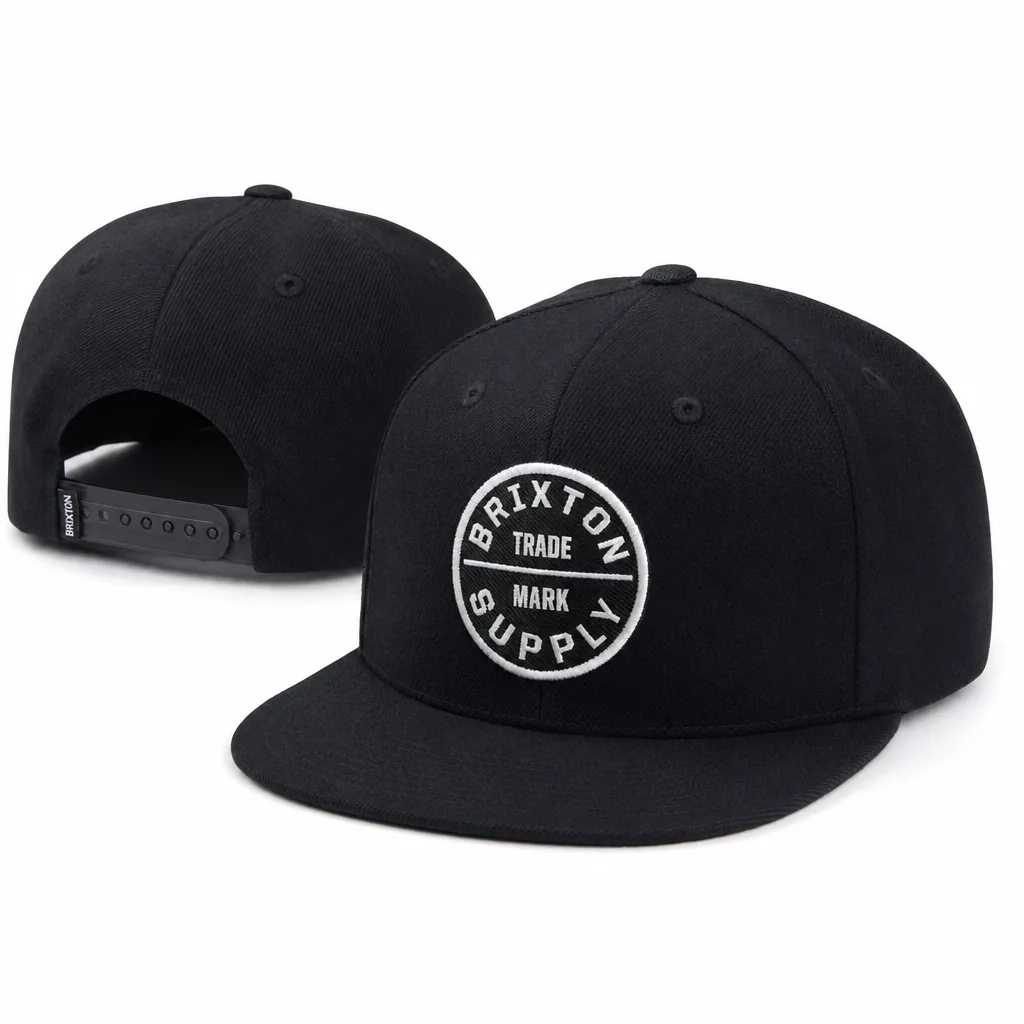
Baseball caps fail on fit geometry, not branding, so the spec has to control shape from the pattern table forward. If you're weighing a men's bucket hat program against a structured cap assortment, the key difference is tolerance sensitivity: a bucket hat can absorb more variance in crown shape, while a six-panel baseball cap cannot hide a bad front rise or crooked visor set. A usable tech pack should lock panel count, crown height, front profile, visor curve radius, buckram spec, closure type, sweatband width, eyelet construction, and finished circumference by size. Call fabric by composition and weight, not mill slang: 100% cotton twill at 280-320 gsm, brushed chino at 220-260 gsm, wool-acrylic melton around 340 gsm, or 600D recycled polyester for outdoor and team channels. Add visor insert thickness at 1.8-2.2 mm, topstitch density at 6-8 SPI, and embroidery safe zones in millimeters. Color and sizing are where buyer claims usually start. Shell fabric should be referenced to Pantone TCX for textiles or Pantone Coated for trims, with bulk lot approval held to Delta-E 1.5 or tighter under D65 light. For fitted replacements, size tolerance needs to be written in centimeters, not left to a sample room habit; a nominal 7 1/4 at 57.7-58.0 cm can drift out of wearable range after steaming and pressing if shrinkage is not pre-accounted. We normally set finished circumference tolerance at plus or minus 3 mm for fitted caps and check visor symmetry, crown balance, and front panel angle against a sealed golden sample. Without those controls, two caps can pass visual inspection and still sit completely differently on head.
Most baseball-cap defects come from process discipline: cutting accuracy, buckram fusing temperature, panel joining, visor insertion, sweatband attachment, blocking, and final sizing. Embroidery is cleaner when run pre-assembly on Tajima, Barudan, or ZSK machines, especially for small lettering, dense fills, and 3D puff on structured fronts; once the crown is closed, registration risk goes up and puckering gets harder to control. The biggest separator on fitted programs is blocking. Ask whether the factory uses size-specific aluminum or steel cap blocks for every size break, or relies on steam and hand shaping. The second method saves labor, but it is also why size runs drift and why crown height varies from carton to carton. MOQ and costing also need to match the construction. Stock-fabric baseball caps usually start around 144-300 pieces per colorway, but a true fitted run needs 300-600 pieces total with balanced size ratios, otherwise per-size waste pushes the FOB up fast. In Zhejiang, a basic six-panel cotton twill cap with flat embroidery typically lands at $2.20-$3.40 FOB China at 300 pieces; wool-blend fitted styles with raised embroidery, woven interior taping, molded visor, and full size blocking are more realistically $4.80-$7.50 FOB. Inspection should be run at AQL 2.5, but fitted caps also need measurement by size bucket: circumference, crown height, visor length, visor centerline, and left-right panel symmetry. A cap that passes visual audit can still fail wearability if the block discipline was poor.
Designer Bucket Hats
Silhouette decides whether a designer-grade men's bucket hat reads premium or tourist-shop. Panel count is secondary; the real variables are sidewall angle, brim break, and how the shell behaves after wash and wear. For a relaxed luxury hand, 180-220 gsm washed cotton twill, 7-10 wale corduroy, 10 oz garment-washed canvas, or 120-160 gsm nylon taslon will drape cleanly without turning limp. If the brief needs a sharper streetwear shape, 240-280 gsm cotton twill or a 65/35 poly-cotton twill with light fusible support in the brim gives a more stable profile. Lock the spec pack before sampling: finished crown height 8.5-9.5 cm, brim width 5.5-7 cm, brim angle, 6-8 rows of topstitching at 5-6 SPI, sweatband material, eyelet finish, seam taping, and exact label placements. On color-critical programs, require Pantone TCX references plus lab dips approved to Delta-E under 1.5 against the master swatch; washed fabrics drift fast, especially black, olive, and khaki lots.
Margin usually leaks through vague construction notes, not shell fabric price. A serious tech pack should call out shell composition, gsm tolerance at plus or minus 5%, interlining type in the brim, stitch density, embroidery backing weight, wash standard, and point-of-measure tolerances such as head opening plus or minus 0.5 cm and brim width plus or minus 0.3 cm. Brim finish changes both cost and performance: a clean turn is standard, while self-binding or contrast piping adds labor, controls edge roll, and makes asymmetry easier to spot. In Zhejiang, stock-fabric MOQ is commonly 144-300 pcs per colorway, but custom-dyed shell, branded metal eyelets, woven damask labels, printed lining, or underbrim print usually pushes the workable MOQ to 500-1,000 pcs. A plain cotton twill style at 300 pcs typically lands around $2.40-$3.90 FOB China; satin lining, applique, reflective trims, high-density embroidery on Tajima or Barudan heads, and garment enzyme wash can move that to $5.20-$7.80 FOB.
Inspection on a designer men's bucket hat should focus on symmetry, fusing stability, and stitch discipline, because those are the failures customers notice within five seconds. The repeat defects are uneven brim width, rippling after lamination, crown panels cut off-grain, puckering around logo embroidery, eyelets set at different heights, and sweatband join bulk telegraphing through the shell. Our standard practice is inline first-off approval, then final inspection at AQL 2.5 with measurements for head circumference, crown depth, left-to-right brim width, and front-to-back brim width. On enzyme-washed or pigment-dyed styles, also check shade variation between crown, top brim, and underbrim; I have seen half-grade drift in the same carton when wash control is sloppy. A bucket is simpler than a structured cap with buckram, but it is less forgiving: weak cutting control, poor fusible temperature discipline, or inconsistent topstitch spacing show immediately on the finished shape.
Cool Bucket Hats for Guys
A sellable men's bucket hat is decided on the spec sheet, not in the salesman sample. For streetwear or resort programs, 190-240 gsm cotton twill, brushed chino, and enzyme-washed canvas are the safe starting point; for golf, fishing, or travel assortments, 110-160 gsm nylon taslon or Supplex gives lower weight, quicker dry-down, and less brim sag in humidity. Before asking for FOB pricing, lock the finished crown height, brim width, brim stitch count, sweatband material, eyelet construction, and seam-taping method, because every undefined field turns into a factory guess. A proper tech pack should also state panel grain direction, brim interlining spec, SPI target, and wash standard. If you want a broken-in hand, say whether that means garment wash, enzyme wash, or heavy stone wash, because those three finishes do not produce the same shrinkage, color loss, or seam torque. Color control is where many private-label bucket programs drift off target. Submit Pantone TCX for shell fabric, plus Madeira or Gunold thread references for embroidery, and require bulk fabric approval against lab dips with Delta-E 1.5 or tighter when the order value justifies it. Construction looks easy, but a men's bucket hat exposes weak process control fast: soft shells often need selective fusing on the side wall or brim, and the usual brim build uses 0.3-0.5 mm interlining with 6-8 concentric stitch rows to hold shape after wash. Decoration has to match the substrate. Flat embroidery runs cleanly on Tajima or Barudan heads, but oversized wrap embroidery on soft cotton will pucker unless the digitizing density, underlay, and backing weight are adjusted. In Yiwu or Dongguan, realistic MOQ is 144-300 pieces per colorway in stock fabric; custom dye, reactive print, or rotary print usually pushes the floor to 500-1,000 pieces, with FOB pricing around $2.10-$3.40 for basic cotton and $3.80-$5.80 once washed fabric, woven labels, and custom inside taping are added.
Final inspection on a men's bucket hat should prioritize symmetry, recovery, and wash stability over logo placement alone. The recurring factory-floor failures are uneven brim width, inconsistent stitch spacing across brim rows, off-level eyelets, panel-to-panel shade variation, and crown twist after washing. Embroidery can also crush the front profile if the backing is too rigid or the underlay is too aggressive for the fabric weight. AQL 2.5 is the practical standard for bulk release, but it only works if the approved spec defines measurement points clearly: crown height and brim width at +/-0.5 cm is reasonable, while brim circumference, panel matching, and post-wash shape need to be checked against the sealed sample rather than eyeballed on the line. If the style includes metal eyelets or trim, add needle policy logs and metal contamination controls to the QC checklist. Sizing is another place buyers used to baseball caps make expensive mistakes. Bucket hats are commonly sold as S/M and L/XL or by head circumference such as 58 cm and 60 cm, so the pattern grade must be confirmed before bulk cutting starts. A factory can be competent in 6-panel caps and still miss the shape on buckets, because the softer structure shows sewing imbalance immediately in brim hang and side-wall collapse. At CrownsForge, we treat pattern balance, brim drape, and post-wash retention as separate approval gates before bulk because a premium men's bucket hat has very little tolerance for sloppiness. In a streetwear or resort line, a 3 mm brim deviation, visible shade banding, or a distorted wash hand is enough to make the whole lot look off-rack and force a markdown.
Funny Bucket Hats
Decoration is where a funny men's bucket hat usually fails, not the cut. Lock the graphic method before sampling, because a 230 to 260 gsm cotton twill shell behaves very differently under reactive digital print, pigment screen print, applique, or satin-fill embroidery. If the joke graphic crosses side seams, confirm whether the mill prints the yardage before cutting or the factory runs cut-after-print placement. Cut-after-print gives better registration at panel joins, but it typically increases marker waste by 8% to 12% and adds about $0.20 to $0.45 FOB per piece. For embroidery, keep side-panel artwork under roughly 10,000 to 12,000 stitches on a 4-panel or 6-panel bucket; once fill density gets too high on a curved, unstructured panel, draw-in and brim distortion show up fast, even on a good Tajima or Barudan line. Color standards should also be separated correctly: Pantone TCX for fabric lab dips, Pantone Solid Coated for print inks, and bulk shade tolerance at Delta-E 1.5 or tighter if the hat is part of a coordinated apparel drop. A usable tech pack for a men's bucket hat needs measurement logic, not just a front-and-side mockup. Call out crown height, finished brim width, brim angle, panel count, seam allowance, eyelet construction, sweatband material, and brim stitch rows; on commercial buckets, 5 to 7 rows at 5 to 6 mm spacing is the normal production range. Artwork placement should be referenced from the side seam and lower brim edge in millimeters, because a 5 mm drift on a novelty graphic reads like factory seconds. MOQ is usually 144 to 300 pieces per colorway in stock twill, denim, or washed canvas, but true custom print programs normally start at 500 pieces once screen setup, print strike-offs, and extra QC are built in. In Zhejiang, a basic embroidered cotton-twill bucket at 300 pieces is commonly $2.20 to $3.40 FOB China; an all-over printed version with inside seam taping, woven label, and cleaner seam matching is more often $3.80 to $5.80.
Inspection on a funny men's bucket hat should focus on defects buyers notice instantly: skewed graphics, wavy brims, seam mismatch, sweatband tunneling, top-button off-center, and puckering under dense embroidery. I would hold finished brim circumference at +/-0.5 cm, crown height at +/-0.3 cm, and decoration placement at +/-2 mm, then inspect to AQL 2.5 with special attention to panel-to-panel shade variation and brim symmetry. On novelty styles, seam matching matters more than many cap buyers expect; a repeated print that breaks badly at the side seam makes the whole lot look cheap, even if the sewing is otherwise acceptable. For embroidered humor graphics, check back-side thread trimming and bobbin show-through as well, because loose thread nests inside the crown are a common complaint on lower-cost runs. Print-heavy orders need testing beyond visual approval. Run dry and wet crocking, a basic hand-wash check, and ink adhesion review, especially on pigment prints over dark twill where crack-off and fading can happen early. Our standard practice is to review brim topstitch spacing in-line and remeasure after pressing, because buckets can pass sewing inspection and still go out distorted after finishing. If the supplier cannot control decoration accuracy and bucket geometry on the same line, the novelty concept will not save the product. Whether they are using Tajima heads for cleaner stitch consistency or tighter in-line measurement control at brim binding and topstitch stations, execution is what keeps a funny men's bucket hat from looking like promotional overstock.
Bucket Hats Festival
Most festival complaints on a men's bucket hat come from bad structure, not weak artwork. If the hat is meant to stay on-head for 8 to 12 hours in heat, dust, and repeated packing, the fabric and brim build have to be locked before decoration. A dependable shell spec is 100% cotton twill at 220 to 260 gsm; washed chino twill around 240 gsm gives a softer hand but still holds the crown if the brim is balanced correctly. For quicker drying, 75D x 150D recycled polyester with a peach finish is common, but it needs a firmer brim recipe—usually a hidden 120 to 150 gsm nonwoven insert—or the silhouette collapses after carton compression. Set the construction in the tech pack: 4-panel or 6-panel crown, 5.5 to 6.5 cm brim, self-fabric or poly-cotton sweatband, metal or embroidered eyelets, seam binding, and brim stitch count. In production, heavy direct embroidery across the brim is where problems start: tunneling, brim waviness, and poor nesting in export cartons. Flat embroidery on Tajima, Barudan, or ZSK heads, woven patches, and small-placement screen print are far more stable for volume runs.
A usable RFQ for a festival men's bucket hat should specify finished inside circumference in centimeters, not vague S/M/L grading. Standard adult size is usually 58 cm with a tolerance of plus or minus 0.5 cm, and crown depth should be fixed as well if the brief calls for lower sun coverage or a streetwear fit. In Zhejiang factories, a straightforward cotton style typically starts around 300 to 500 pieces per colorway, but washed fabric, custom Pantone TCX dyeing, contrast edge binding, all-over print, or multi-position embroidery will usually push MOQ to 800 to 1,000 pieces because setup loss and shade control get tighter. Real FOB Ningbo pricing at 500 pieces is roughly $2.10 to $3.40 for a plain cotton build, and $3.80 to $5.20 once you add embroidery, woven labels, interior taping, or enzyme wash finishing. Before bulk, approve a sealed sample and sign off on brim angle, crown depth, stitch density, and handfeel. Final inspection should run at AQL 2.5, with extra focus on twisted brims, uneven topstitch spacing, off-center eyelets, skipped stitches at side seams, embroidery puckering, and shade variation; on washed cotton, anything past Delta-E 1.5 from the approved standard is where reorder disputes usually begin.
Festival Bucket Hat
Festival programs fail on material control long before they fail on shape. A commercial men's bucket hat for events is usually a 4-panel or 6-panel crown with a 5.5 to 6.5 cm brim and 6 to 8 brim stitch rows, but the shell spec decides whether it feels retail or throwaway. For cotton, 180 to 220 gsm twill is the safest range if you need decent structure without blowing up carton volume; washed canvas at 200 to 260 gsm gives a heavier hand and better embroidery stability but packs bulkier. If the artwork is full coverage, 110 to 140 gsm polyester microfiber or peach skin is the practical route because sublimation on stable white polyester is more repeatable than trying to force sharp all-over print onto cotton. Lock brim width before artwork approval. A 0.5 cm change sounds minor on paper, but it changes shade coverage, face proportion, and how much uninterrupted area you have for logos or engineered print. Keep brim topstitching at 8 to 10 SPI and spacing visually even; drifting stitch rows are one of the fastest ways a men's bucket hat starts looking cheap at first glance.
The tech pack needs to be stricter than most promo buyers expect. Specify finished circumference by size, crown height, brim width, shell composition, lining or no lining, sweatband material, eyelet type, print method, Pantone TCX references for trims, and color tolerance. For brand-sensitive programs, I would hold shade variation to Delta-E under 1.5; for mass event merchandise, under 2.0 is usually commercially acceptable. Reversible construction, stash pockets, chin cords, reflective piping, and woven flag labels all add labor minutes and can change fold method, polybag size, and carton quantity. In Zhejiang, MOQ is typically 300 to 500 pieces per colorway on stock fabric, while custom printed shell fabric is more realistically 600 to 1,000 pieces because mills want efficient print runs and marker yield. A straightforward printed cotton men's bucket hat usually lands around $2.20 to $3.80 FOB; reversible or pocketed versions are more often $4.20 to $6.50 FOB, depending on fabric yield, trim count, and packing spec.
Most quality failures are predictable if you inspect the right checkpoints early. Brim warping after wash testing or humid transit usually comes from shell shrinkage and brim interlining moving at different rates, or from uneven fusing temperature across the brim. Print mismatch at side seams is another common factory mistake when cutting prioritizes utilization over repeat alignment. On lightweight shells, I also watch for eyelets tearing out, sweatbands twisting where the overlap gets too bulky, and crown panels cut off grain so the hat leans when worn. Our standard practice is to inspect festival hats to AQL 2.5, hold finished circumference to plus or minus 0.5 cm, and keep front artwork placement within plus or minus 0.3 cm. If the program uses black, neon, or coated fabrics for outdoor wear, do not stop at lab dips; ask for crocking and lightfastness data as well. A festival men's bucket hat that can sit compressed in a carton for 48 hours and still recover its brim shape is the one buyers actually reorder.
Working with CrownsForge for men's bucket hat programs
The cheapest mistake in a men's bucket hat program is arguing over FOB before the fit is locked. On the factory side, the real risk sits in pattern balance: crown depth, head-opening circumference, brim sweep, and seam allowance all interact more than buyers expect if they come from structured caps. Our standard practice is 2 to 3 working days for tech-pack review and pattern feasibility, 7 to 10 days for the first proto, and another 5 to 7 days if fit comments change brim width, crown height, or top-panel shape. MOQ is normally 300 pcs per colorway in stock 240 gsm cotton twill, washed chino, 8 wale corduroy, or 210 gsm nylon taslon, and that can often split across two sizes only if the shell pattern, trim bill, and labeling stay identical. On a men's bucket hat, a 5 to 7 mm deviation at the head opening or a brim angle shift of roughly 4 to 5 degrees is enough to change how the hat sits on the forehead and ears, which is exactly where size-based returns start climbing on numeric fits.
Decoration and compliance are where weak suppliers start improvising. Flat embroidery, woven labels, screen print, applique, sublimated patches, heat transfers, and metal eyelets all behave differently on an unstructured bucket crown than on a 6-panel baseball cap, so the control point is digitizing, not just machine count. Tajima, Barudan, and ZSK heads can all run clean embroidery, but satin columns below 2.0 mm sink into brushed cotton, while heavy fill density on washed twill or soft corduroy will pucker the side wall and distort the brim seam. Thread shades should be approved against Pantone TCX, and shell, brim, and under-brim panels should hold within Delta-E 1.5 to 2.0 in the same lot; anything looser is usually visible under retail lighting. For EU and U.S. programs, a men's bucket hat should move through a documented workflow: fiber-content verification, azo dye screening, colorfastness checks, trim RSL review, pre-production sign-off, inline inspection, and final QC to AQL 2.5 before carton sealing. If the order is retail-packed, add barcode verification and carton drop testing before ex-factory release, not after booking.
Frequently Asked Questions
What logo decoration techniques do you offer?
3D puff embroidery, flat embroidery, woven patch, leather patch, PVC patch, screen printing, sublimation, applique and laser etching, all in-house with no subcontracting.
Can I order a sample before bulk production?
Yes. We strongly recommend approving a pre-production sample before mass production. Samples are charged at 35 to 60 USD each plus express shipping, fully refundable against confirmed bulk orders over 500 pieces.
What is the minimum order quantity (MOQ) for custom hats?
Our standard MOQ is 100 pieces per design and color, with sampling available from 1 piece. For complex multi-color logos or premium fabric upgrades, the MOQ can be lowered with a small per-piece surcharge.
How long does production take?
Sampling takes 7 to 12 days. Bulk production runs 20 to 30 days depending on quantity, fabric availability and decoration complexity. Inspection and packing adds another 3 to 5 days before shipment.
What file format should I send for my logo?
Vector files (AI, EPS, PDF) are ideal. High-resolution PNG or JPG at 300 dpi on transparent background works as a fallback. Provide Pantone color references for accurate reproduction.
How does ordering custom new era 59fifty fitted hats work?
When evaluating custom new era 59fifty fitted hats, the key considerations are construction quality, decoration capability, MOQ flexibility and lead time. Cover everything buyers ask about baseball hats for men: how it's manufactured, what specs to request from a factory, typical MOQ and pricing, common quality issues to inspect for, and how this ties back to the broader men's bucket hat sourcing decision. Cover everything buyers ask about designer bucket hats: how it's manufactured, what specs to request from a factory,…
How does ordering custom baseball hats for men work?
When evaluating custom baseball hats for men, the key considerations are construction quality, decoration capability, MOQ flexibility and lead time. Cover everything buyers ask about baseball hats for men: how it's manufactured, what specs to request from a factory, typical MOQ and pricing, common quality issues to inspect for, and how this ties back to the broader men's bucket hat sourcing decision. Cover everything buyers ask about designer bucket hats: how it's manufactured, what specs to request from a factory,…
What should buyers know about bucket hat men?
When evaluating bucket hat men, the key considerations are construction quality, decoration capability, MOQ flexibility and lead time. Cover everything buyers ask about baseball hats for men: how it's manufactured, what specs to request from a factory, typical MOQ and pricing, common quality issues to inspect for, and how this ties back to the broader men's bucket hat sourcing decision. Cover everything buyers ask about designer bucket hats: how it's manufactured, what specs to request from a factory,…
What should buyers know about nike bucket hats for men?
When evaluating nike bucket hats for men, the key considerations are construction quality, decoration capability, MOQ flexibility and lead time. Cover everything buyers ask about baseball hats for men: how it's manufactured, what specs to request from a factory, typical MOQ and pricing, common quality issues to inspect for, and how this ties back to the broader men's bucket hat sourcing decision. Cover everything buyers ask about designer bucket hats: how it's manufactured, what specs to request from a factory,…
Looking for a reliable hat manufacturer in China?
CrownsForge has produced custom hats for 800+ brands across 40 countries. From 100-piece launches to 100,000-piece retail programs, we deliver on time and on spec.
Get in touchRelated guides
Custom Camo Hats: Hunting, Outdoor and Tactical Cap Manufacturing (2026 Update)
Read article →Festival Bucket Hats Decoration QC Checklist for Custom Hat Buyers
Read article →
Blank Trucker Cap Wholesale Bulk: A 2026 B2B Sourcing Guide
Read article →Sourcing custom hats does not have to be complicated. With the right manufacturing partner, clear specifications and a small upfront investment in sampling, you can launch a retail-quality product in 30 to 45 days.