
Custom Camo Hats: Hunting, Outdoor and Tactical Cap Manufacturing (2026 Update)
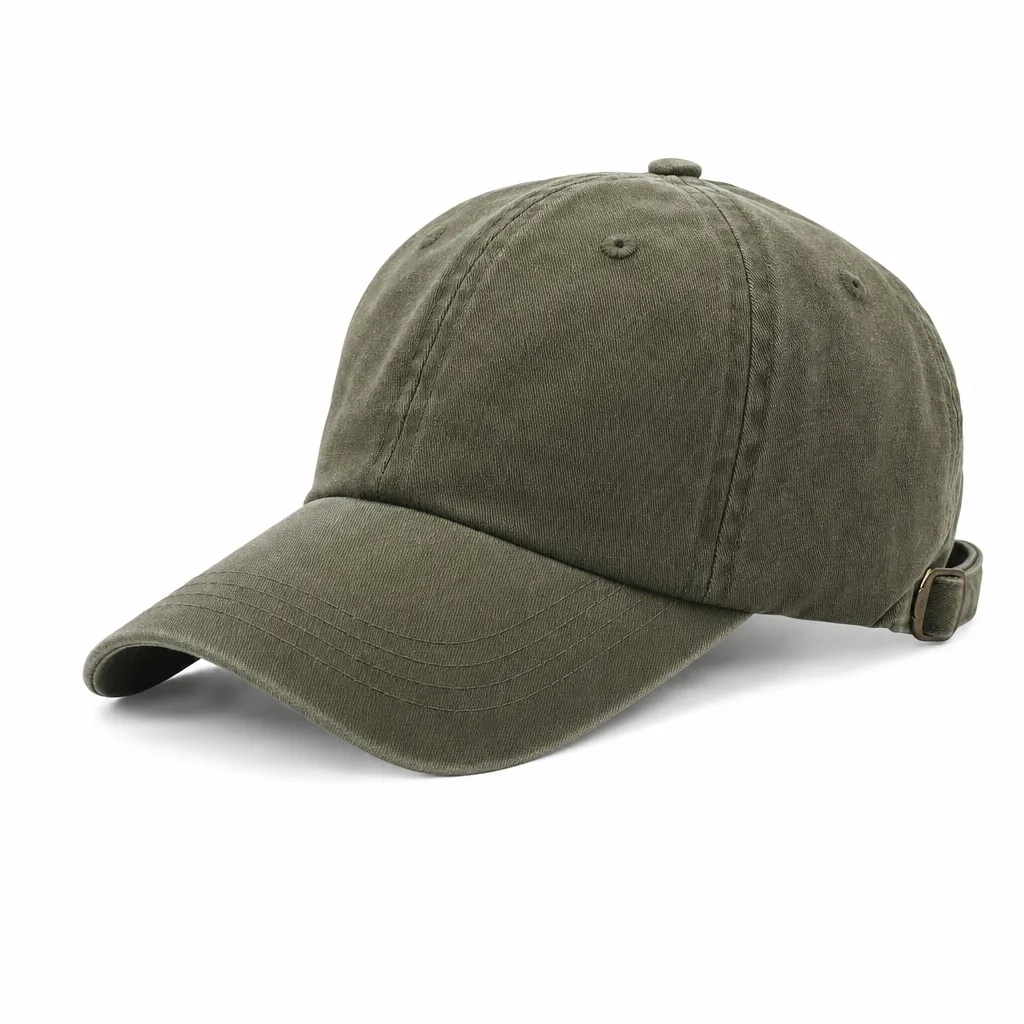
Custom Camo Hats: Hunting, Outdoor and Tactical Cap Manufacturing (2026 Update) is one of the most-asked questions we receive from international buyers, and for good reason. With dozens of factories competing for your order and an alphabet soup of technical terms in every supplier quote, even experienced importers can feel lost. This guide consolidates what we have learned producing custom hats for clients in 40+ countries.
The four dominant camo families in retail and outdoor markets
The retail market really splits into four camo families that behave differently in production: licensed hunting patterns like Realtree and Mossy Oak, digital or pixel camo, classic woodland types such as M81-style layouts, and original nature-based artwork built for private label. For custom camo hats, that matters less for aesthetics than for print tolerance, legal exposure, and usable fabric yield. Photoreal hunting camo is the least forgiving. On 220-260 gsm brushed cotton twill or peached poly twill, bark texture, leaf litter, and branch edges start to plug up fast if print resolution drops below roughly 300 dpi at actual panel size, or if the strike-off drifts more than Delta-E 2.0-2.5 from the approved dark olive, bark brown, and stone gray. Because a 6-panel crown cuts straight through the artwork, poor panel mapping is obvious around the center seam, eyelets, and visor wrap. By contrast, digital and woodland patterns use larger shape blocks, so they survive buckram forming, seam breaks, and top-button distortion with less visual damage; on a 1,000-piece run, first-pass cutting and sewing yield is commonly 2-4 points better than comparable photoreal prints.
The biggest avoidable mistake is treating branded hunting camo as a generic look. Realtree and Mossy Oak are licensed pattern systems, and quoting a “close version” without written authorization creates customs, retailer-compliance, and marketplace takedown risk that can sit on inventory far longer than any sewing delay. Buyers supplying farm retail, hunting chains, or licensed outdoor programs should lock approval at four checkpoints: fabric strike-off, logo placement map, trim artwork, and carton markings. In practice that usually adds 10-20 calendar days before bulk because the pattern owner, brand licensee, and factory all need the same reference set. Tactical and price-sensitive programs usually move toward independent digital camo or stock woodland because the MOQ and color-control math are cleaner. A stock M81-style fabric can work around 300-500 pieces per colorway, while a custom rotary print or sublimated camouflage generally needs about 800-1,200 units to absorb cylinder setup, lab dips, wastage, and AQL 2.5 replacement allowance without wrecking FOB. At CrownsForge, we separate every inquiry into licensed, buyer-owned, or factory-developed artwork before sampling because that one decision changes sourcing, compliance paperwork, and lead time more than buyers expect.
End use should drive the cap build. Hunting programs usually want quieter fabrics, a softer hand, and less shine, so photoreal camo performs best on micro-peach polyester, brushed tricot-bonded softshell, washed cotton twill, or peached poly with matte eyelets, low-luster thread, and subdued hook-and-loop closures. Tactical buyers are usually less concerned with handfeel than field function, which is why 65/35 poly-cotton ripstop, 150D-300D woven shells, laser-cut ventilation, loop patch panels, and moisture-wicking sweatbands dominate that segment. Logo treatment changes too: a tonal embroidery in coyote, ranger green, or black will generally outsell bright contrast stitching because the hat has to sit next to packs, plate carriers, range bags, and outerwear without reading as decorative. If the buyer wants premium custom camo hats for outdoor retail, the fabric and trim package should match the shelf context first, then the artwork family second. Get that sequence backward and even a clean Tajima or Barudan embroidery file will not save the program at retail.
Licensing reality for branded camo patterns
Most disputes around custom camo hats start with a false premise: that one woodland pattern can be swapped for another with no legal consequence. That is not how branded camouflage works. Realtree, Mossy Oak, MultiCam, and similar libraries are usually protected by a stack of rights—copyright in the artwork, trademark in the brand identifiers, and license agreements that control where the pattern can be printed, sewn, and sold. Any factory proposing to scan a retail cap, redraw the motifs, or “adjust the colors 15%” is creating exposure for the buyer, not solving a sourcing problem. On legitimate programs, we separate orders at tech-pack stage into licensed executions and original prints because the approvals, mills, and paperwork are completely different. An original substitute has to be structurally different, not cosmetically tweaked. On strike-off review, we look at repeat size, branch geometry, edge breakup, bark granularity, negative space ratio, and tonal distribution under D65 light, not just whether the leaves look “outdoorsy.” If the visual read is still too close at 3 to 5 meters, it is too close. Before cutting, a compliant supplier should be able to show editable artwork files, digital print separations, lab dips or strike-offs, and mill production records tied to the exact PO. If those documents do not exist, the real cost is not fabric; it is customs detention, retailer compliance failure, marketplace takedowns, and chargebacks that can erase the margin on the entire order.
Licensed camouflage changes the cost structure immediately because you are not just buying fabric; you are buying controlled access to a pattern. On a structured 6-panel hunting cap, branded camo commonly adds $0.90 to $1.80 per piece over a comparable 220-260 gsm cotton brushed twill or 140-160 gsm micro-peach polyester, depending on MOQ, pattern scale, and whether the undervisor, seam tape, top button, and closure tab must use matching licensed yardage. In practical FOB China terms, a cap that might sit at $4.20-$5.10 in an original forest print can move to $5.40-$7.00 once royalties, approved-mill sourcing, and lot-controlled purchasing are included. Sampling also slows down; licensed fabric programs often add 7-21 days because strike-offs, licensee sign-off, and mill allocation happen before cutting approval. The control point is chain of custody. The purchase order should name the exact pattern and colorway, and the fabric roll should trace back to an approved mill with lot numbers, shipment references, and royalty documentation. Mixed sourcing is where factories get buyers in trouble: authentic crown panels paired with imitation visor parts, or licensed outer fabric combined with unapproved binding and closure material from a local spot market. Those shortcuts routinely fail retail audits and licensee inspections. If you want commercial flexibility, define the path up front—branded camo, proprietary camo, or generic tactical print—because those are three different compliance profiles, three different sampling workflows, and three very different risk levels once the goods reach U.S. retail.
Cap silhouettes that work with camo patterns
The silhouette decides whether a camo print still reads like field gear after cutting, seaming, and decoration. For hunting-driven custom camo hats, the safest commercial block is still a structured 6-panel, mid-profile cap: crown height around 8.5-9.5 cm, buckram-backed front panels, and a pre-curved visor with roughly 12-15 mm center rise. That shape tolerates seam interruption better than trend silhouettes because woodland, marsh, bark, and reed layouts already carry broken vertical movement; buyers do not read the center seam as a defect. Fabric matters just as much as shape. In bulk production, 180-240 gsm brushed cotton twill, peached polyester, and 65/35 poly-cotton twill hold the crown after the sweatband, eyelets, and top button go in, while lighter fabrics often print sharply but collapse during wear. If a program needs safety orange for regional compliance, keep it to controlled placements—sandwich visor, back tab, woven loop label, or a small 5,000-8,000 stitch direct embroidery. A full blaze-orange front panel usually kills the concealment logic and pushes the cap toward promotional merchandise instead of actual hunting use.
When branding needs a cleaner face, the 5-panel low-profile camp shape outperforms a 6-panel because there is no center seam fighting the artwork. That matters on custom camo hats using Multicam-style layouts, digital woodland, topo, or micro-repeat prints, where laser-cut TPU patches, merrowed woven emblems, and flat embroidery need edge definition. Once logo strokes drop below about 1.2 mm, a seam-free front panel gives you a visibly better result. The fabric spec should change too: 105-160 gsm ripstop in cotton/nylon or 100% polyester packs flatter, dries faster, and resists sweat loading better than heavy twill. The downside is fit; many stock Asian low-profile blocks wear shallow on U.S. head sizes above 59 cm, so we typically add 3-5 mm crown height and recheck the side arc at proto stage.
Bucket hats belong in fishing and hot-weather assortments, but only if the print scale is engineered for the smaller pattern pieces. A jacket-scale branch or marsh camo usually breaks down on a bucket because the side wall is often 70-85 mm high and brim width lands around 55-65 mm, so large motifs get chopped into visual noise. Tighter repeats, micro-camo, topo, and compact digital layouts survive that reduction much better and still look intentional when seam matching is within normal tolerance. Decoration needs the same discipline across every silhouette. I avoid 3D puff on camo in most cases: raised satin columns fight the broken surface, swallow fine linework, and become unstable on brushed twill, ripstop, or peached microfiber unless the digitizer overbuilds underlay and density. Flat embroidery on Tajima or Barudan heads, molded TPU patches, and high-density woven labels usually inspect cleaner at AQL 2.5. At CrownsForge, we test logos on the actual printed shell fabric—not a solid strike-off—because camo contrast can make a technically clean design disappear in bulk.
Decoration on camouflage fabric
Decoration on camouflage lives or dies on separation, not on how much artwork you cram into the front panel. The print already has noise, so the logo has to read at 2 to 3 meters in daylight; if it only works on a mockup, it will fail in the field. For custom camo hats, flat embroidery is still the safest choice on printed cotton twill, peach-brushed chino, 210D ripstop, and 65/35 poly-cotton because it holds a clean edge on unstable visual ground. I usually keep front logos around 7,000 to 9,000 stitches, run 40 wt polyester thread for UV and sweat resistance, and set pull compensation at 0.35 to 0.40 mm on Tajima or Barudan heads. For hunting programs, blaze orange or bright safety orange is usually specified against a hi-vis standard rather than a fashion Pantone; for tactical programs, matte black, coyote brown, ranger green, and subdued olive work better than anything glossy. Rayon thread is a bad idea here because it throws light and fights the muted finish buyers actually want.
Woven patches solve a different problem: they separate fine detail from the camouflage instead of trying to punch through it stitch by stitch. If the artwork includes small serif text, topo lines, antlers, coordinate grids, or badge-style crests, a damask woven patch usually beats direct embroidery because the edges stay sharper and the internal detail does not disappear into the print. Border choice matters more than most buyers think. Merrowed edges are durable, but on low-profile 6-panel caps and unstructured crowns they can feel bulky and telegraph through the fabric; laser-cut or heat-cut woven patches with a narrow satin lock edge usually sit flatter and follow the crown better. Our standard practice is to add a 0.8 to 1.0 mm black twill backing on tactical styles so the camo does not bleed at the patch edge, then test both center-front seam and seam-offset placements before bulk approval. A patch that looks balanced on a foam trucker front can pucker badly on a curved brushed-cotton crown if the sew line crosses the seam angle.
Leather patches are premium only when the material matches the use case. Full-grain vegetable-tanned leather looks good at first ship, but on outdoor and hunting programs it can darken unevenly, curl after wet-dry cycles, and lose shape faster than buyers expect. For wholesale custom camo hats that may see sweat, rain, and truck-to-freezer temperature swings, PU-based synthetic leather or oil-tanned split leather is usually the more stable production choice. I spec 1.2 to 1.6 mm thickness, debossed line widths no finer than 0.5 mm, and stitch-down attachment instead of adhesive-only lamination, because glue is where edge lift starts after wash and heat exposure. Screen print and sublimation are rarely worth the trouble on camouflage because the logo has to compete with an already aggressive ground. Even if color checks stay within Delta-E 2.0 to 3.0, the decoration still loses visual authority once the cap is worn outdoors. On camo, thread, woven construction, and stitched patch materials survive; ink usually just blends away.
Blaze orange and hunter safety pairings
For firearm-season programs, blaze orange is a compliance variable, not a styling accent. Many U.S. regulations still cite a minimum of 200-500 square inches of fluorescent orange or pink on the head, chest, and back combined, but the exact language shifts by state, species, and weapon season; Pennsylvania, Wisconsin, and Colorado do not read the same, and archery exemptions can change the hat requirement entirely. On custom camo hats, the safest approach is to engineer orange into the cap architecture early: a full crown in 300D polyester oxford, two blaze front panels with a camo visor, a 25 mm sandwich bill, or a detachable hi-vis cover fixed by low-profile hook-and-loop. If the buyer cannot name the sales states at tech-pack stage, the factory is guessing, and that is how you end up with an approved pre-production sample that retailers reject after legal review.
Blaze orange is also one of the easiest safety colors to ruin in production because thread luster, pile direction, and crown curvature all distort perception. I do not approve it from a flat swatch alone. Start with a Pantone reference in the TCX/FHI system for fabric and a matched embroidery thread from Madeira Polyneon, Isacord, or Gunold, then check sewn strike-offs under D65 daylight and 4000K LED because orange that looks clean in the sample room can drift visibly once it sits next to M81, Realtree Edge, or Kryptek Highlander. On dense satin borders or 3D puff lettering, a Delta-E above 2.0 is easy to spot. Our standard practice is to review the actual cap shape after sewing, including visor curve, seam breaks, and patch edge coverage, because a breakup camo print can visually swallow undersized orange areas. The most durable commercial formula is still restrained: camo body, controlled blaze placement, and one readable logo, not five competing graphics.
MOQ, lead time and pricing for camo cap programs
MOQ on custom camo hats is driven by SKU complexity, not by the word “camo.” The breakpoint is how many variables change at once: print, shell fabric, visor sandwich color, closure, sweatband, and decoration method each create separate material planning, marker yield, machine setup, and QC criteria. For a standard 6-panel structured cap in 240-260 gsm cotton twill or 220-240 gsm polyester twill using an in-stock woodland, marsh, or digital camouflage, 100 pcs per colorway is usually workable in China. Shift to brushed tricot, 300D performance poly, bonded softshell, or 3-layer waterproof laminate, and the practical MOQ typically moves to 144-200 pcs because cutting loss rises and mills do not want to run short print lots. Trims often force the real minimum higher than the shell does: custom jacquard labels are commonly 500 pcs per design, logo buckles 300-500 sets, printed seam tape around 1,000 meters, and molded PVC or TPU patches often 500 pcs per mold. Lead time is usually lost in approvals and sourcing, not at the sewing line. If the factory already has a proven block and only needs logo placement and minor trim changes, a fit sample can come out in 7-10 days. A true prototype with sourced camouflage, licensed artwork, or a new fabric construction is more realistically 12-18 days because the print repeat, handfeel, and shade need checking under D65 light before decoration starts. Camo grounds also complicate embroidery: on Tajima or Barudan heads, we often reduce fill density, change edge-walk settings, and switch to higher-contrast 40 wt polyester thread so the logo does not disappear into the pattern. After approval, bulk production for 1,000-3,000 custom camo hats is typically 25-35 days ex-factory, assuming trims are booked, Pantone TCX references are locked, and there is no extra print licensor sign-off.
FOB pricing is driven more by fabric and decoration risk than by sewing minutes. A realistic China FOB for custom camo hats is about $3.60-$4.20 for a basic 6-panel cap using stock non-licensed camo twill, a pre-curved PE visor, plastic snapback or hook-and-loop closure, and one embroidery position up to roughly 6,000-8,000 stitches. A more controlled mid-tier program usually lands at $4.30-$5.10 when you add better shell handfeel, upgraded sweatband fabric, woven flag label, branded inner taping, and clearer QC requirements such as AQL 2.5 final inspection, logo placement tolerance of plus/minus 3 mm, and agreed trim color tolerance such as Delta-E under 1.5-2.0 against the approved standard. Costs climb fast when the camouflage itself is restricted or the decoration stops being straightforward. Licensed patterns, laser-cut appliqué, seam sealing, molded rubber patches, multi-location embroidery, or waterproof laminated shells usually push the FOB into the $5.30-$6.40 range, and technical builds can go higher once stitch counts exceed 10,000 or seam tape becomes branded. Freight terms also matter more than many buyers expect: a quote that looks cheap can become expensive once mold charges, carton packout, extra polybag labeling, third-party inspection, or DDP duty assumptions are added later. Our standard practice is to quote custom camo hats with stitch count, pack ratio, inspection level, and Incoterm stated up front; otherwise the comparison is not real and change orders are almost guaranteed.
Frequently Asked Questions
What is the minimum order quantity (MOQ) for custom hats?
Our standard MOQ is 100 pieces per design and color, with sampling available from 1 piece. For complex multi-color logos or premium fabric upgrades, the MOQ can be lowered with a small per-piece surcharge.
Do you support sustainability certifications?
Yes. We work with GOTS organic cotton, GRS-certified recycled polyester, OEKO-TEX Standard 100 fabrics, and are BSCI and Sedex audited. Certification documentation can be provided per order.
Which shipping methods do you support?
We support FOB, CIF and DDP shipping. Air express for samples and small orders, sea LCL for 100 to 500 pieces, sea FCL for 5,000+ pieces. Door-to-door DDP available for US, EU, UK, Canada and Australia.
What file format should I send for my logo?
Vector files (AI, EPS, PDF) are ideal. High-resolution PNG or JPG at 300 dpi on transparent background works as a fallback. Provide Pantone color references for accurate reproduction.
How long does production take?
Sampling takes 7 to 12 days. Bulk production runs 20 to 30 days depending on quantity, fabric availability and decoration complexity. Inspection and packing adds another 3 to 5 days before shipment.
How does ordering custom embroidered trucker hat work?
When evaluating custom embroidered trucker hat, the key considerations are construction quality, decoration capability, MOQ flexibility and lead time. Pre-curved baseball cap (hunting standard), 5-panel low-profile (outdoor/tactical), trucker hat (festival/casual outdoor crossover), bucket hat (fishing). Avoid 3D puff embroidery on camo — the dimensional logo competes visually with the pattern. Realtree-style (high-detail forest pattern with leaves and branches), Mossy Oak-style (similar but distinct branding/licensing),…
What should I know about custom hats bulk order?
When evaluating custom hats bulk order, the key considerations are construction quality, decoration capability, MOQ flexibility and lead time. 100 pieces per design/color combination. Sample 10-14 days (fabric sourcing adds 3-4 days vs. solid cotton twill). Bulk 25-30 days. FOB pricing $3.40-$5.80 per cap depending on fabric tier (equivalent forest vs. licensed Realtree). Realtree-style (high-detail forest pattern with leaves and branches), Mossy Oak-style (similar but distinct branding/licensing), digital camo…
What's the MOQ for custom embroidered trucker hats no minimum?
When evaluating custom embroidered trucker hats no minimum, the key considerations are construction quality, decoration capability, MOQ flexibility and lead time. Pre-curved baseball cap (hunting standard), 5-panel low-profile (outdoor/tactical), trucker hat (festival/casual outdoor crossover), bucket hat (fishing). Avoid 3D puff embroidery on camo — the dimensional logo competes visually with the pattern. Realtree-style (high-detail forest pattern with leaves and branches), Mossy Oak-style (similar but distinct branding/licensing),…
How do I find a reliable custom hat manufacturer usa?
When evaluating custom hat manufacturer usa, the key considerations are construction quality, decoration capability, MOQ flexibility and lead time. Pre-curved baseball cap (hunting standard), 5-panel low-profile (outdoor/tactical), trucker hat (festival/casual outdoor crossover), bucket hat (fishing). Avoid 3D puff embroidery on camo — the dimensional logo competes visually with the pattern. Realtree-style (high-detail forest pattern with leaves and branches), Mossy Oak-style (similar but distinct branding/licensing),…
Looking for a reliable hat manufacturer in China?
CrownsForge has produced custom hats for 800+ brands across 40 countries. From 100-piece launches to 100,000-piece retail programs, we deliver on time and on spec.
Get in touchRelated guides
Reflective Trim Running Cap Bulk: A 2026 B2B Sourcing Guide
Read article →
5-panel Hat Men: A 2026 B2B Sourcing Guide
Read article →
Festival Hat Women's: A Vertical-Specific Sourcing Guide
Read article →Sourcing custom hats does not have to be complicated. With the right manufacturing partner, clear specifications and a small upfront investment in sampling, you can launch a retail-quality product in 30 to 45 days.