
China vs Vietnam vs Bangladesh: Cap Manufacturing Countries Compared 2026 (2026 Update)
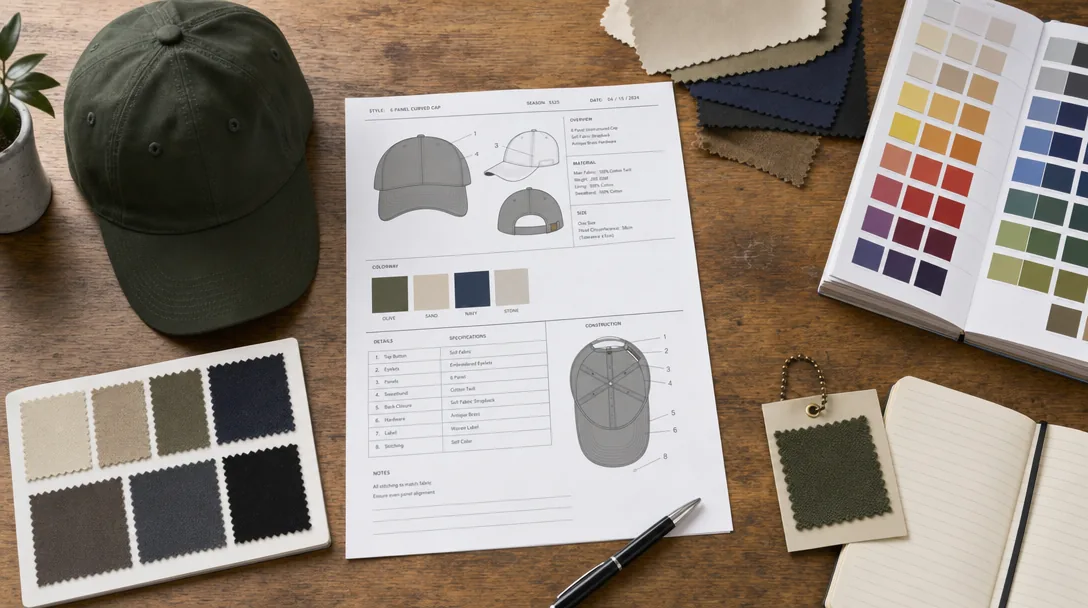
Every week, our sales team answers detailed questions about china vs vietnam vs bangladesh: cap manufacturing countries compared 2026 (2026 update). We wrote this guide so that wholesalers, streetwear brands, corporate buyers and promotional resellers can compare options with full information, and avoid the traps that show up only after production has started.
The three countries that dominate global custom hat manufacturing
China remains the reference point because custom caps are won or lost in the upstream network, not just at the sewing line. In china vs vietnam cap manufacturing, China’s edge is that most of the critical inputs sit within a same-day trucking radius: 10x10 and 16x12 cotton twill, brushed chino, 600D and 900D polyester, recycled RPET, HDPE buckram, PE visor inserts, woven labels, seam tape, metal sliders, snapback sets, and carton board. That density matters when a trim lot fails color tolerance or a visor supplier misses crown curvature spec; the factory can usually re-source in 24 to 72 hours instead of losing a week. For orders around 3,000 to 20,000 pieces, a standard 6-panel structured cotton twill cap with flat embroidery or 3 mm foam 3D embroidery typically sits around $1.35 to $2.10 FOB China, while washed finishes, applique, suede brims, or custom hardware add $0.20 to $0.80. Sample turnaround in 24 to 48 hours is realistic when digitizing is handled in-house and the file goes straight onto Tajima, Barudan, or ZSK heads rather than being passed to an outside embroidery house.
Vietnam is the strongest challenger when the tech pack is locked and the buyer wants predictable line execution. The better cap factories run clean inline QC, strong needle control, and solid carton compliance; they perform well on straightforward SKUs like structured team caps, unstructured dad hats, and uniform programs with fixed trims. What many buyers miss is that FOB is rarely dramatically lower once imported closures, labels, sweatbands, and specialty fabrics are added back in. On a basic embroidered cap, the spread versus China is often only $0.10 to $0.30 per piece, while sample cycles are commonly 5 to 10 days longer if the trim package is not already stocked. Vietnam usually loses speed on custom metal closures, moisture-wicking sweatbands, exact Pantone TCX fabric matching, and low-MOQ trim changes because the upstream bench is thinner.
Bangladesh can be sharp on labor-heavy basics, but it is still fundamentally apparel-led rather than headwear-led, and that shows up in cap-specific process control. The common weak points are brim curvature consistency, crown symmetry, tape alignment, stitch density on raised embroidery, and packing accuracy on mixed-color assortments. Buyers can find FOB levels roughly 8% to 15% below comparable China offers on simple cotton twill or polyester promotional caps, but the sourcing base for premium buckram, custom visor boards, metal hardware, and technical sweatbands is narrower, which increases dependence on imports and outside QC. Fewer facilities consistently hold AQL 2.5 across multi-style orders without heavier inspection coverage, especially when the order combines embroidery, applique, washing, and retail-ready packing. At CrownsForge, the practical split is straightforward: Bangladesh for simplified cost-driven specs, Vietnam for disciplined execution on stable programs, and China for the broadest capability in development speed, trim complexity, and repeatable custom cap manufacturing.
China's strengths and the Section 301 reality
China’s advantage in caps is supply-chain density, not cheap sewing labor, and that matters more than buyers admit when launch dates move. For a structured 6-panel baseball cap, bucket hat, or lightweight performance style, a factory in Zhejiang or Guangdong can usually pull 210–280 gsm cotton twill, 150D–300D recycled polyester, 70D nylon taslon, PE buckram, HDPE snapbacks, woven labels, seam tape, and moisture-wicking sweatband knit from vendors within a 2–4 hour trucking radius. That is why first prototypes in 7–10 days are normal, and 5–7 days is achievable when fabric is stock and the logo is limited to flat embroidery or a simple woven patch. In any serious china vs vietnam cap manufacturing comparison, this local trim ecosystem is the first gap buyers feel: fewer courier legs, fewer substitute trims, and fewer dead days waiting for a patch house, carton plant, or forwarder to catch up. Vietnam has improved on cut-and-sew capacity, but on mixed-trim cap programs it still leans harder on imported components and longer vendor coordination loops.
China also still has the deeper technical bench for caps that go wrong easily on the line. The difference shows up in process control: crown height held within ±3 mm, visor curve consistency across a 12-piece prepack, clean topstitching on 70D nylon without puckering, and correct pull compensation before 3D puff embroidery on soft front panels. Decorations that expose weak factories—merrowed woven patches, TPU heat transfers on laser-perforated side panels, embroidery over foam-backed fronts, or multi-technique logos combining print and stitch—are generally safer in China because digitizers, sample technicians, and line leaders have seen the failure modes before. Our standard practice is lab-dipping to Pantone TCX or coated references, controlling dyed trims to Delta-E 1.0–1.5, and releasing bulk only after inline and final inspection at AQL 2.5. The Section 301 problem is straightforward: under HTS 6505, added U.S. duty can wipe out an apparent FOB edge of $0.30–$0.80 per cap, especially on programs priced around $2.80–$6.50 FOB. That is why basics migrate, while development-heavy, audit-sensitive, or short-calendar orders often stay in China; in china vs vietnam cap manufacturing decisions, tariff math is usually the only force strong enough to offset China’s operational lead.
Vietnam's strengths and limits
Vietnam’s real advantage is tariff math, not a dramatic factory-floor cost gap. For U.S. buyers weighing china vs vietnam cap manufacturing, the deciding variable is often landed cost after duty, not FOB. On a mid-tier structured snapback in cotton twill or brushed chino, Vietnam usually quotes around $2.85-$3.40 FOB at 3,000-5,000 pcs, while comparable coastal China production may sit at $2.70-$3.20 before any Section 301 exposure. Labor alone rarely creates a big spread; on basic sewing and finishing, Vietnam is often only 5%-10% apart from South China. Where Vietnam holds up well is in straightforward 5-panel caps, 6-panel dad hats, uniform headwear, and standard bucket hats with conventional embroidery, screen print, or woven labels. Factories around Ho Chi Minh City, Binh Duong, and Dong Nai are generally comfortable with sedex-audit-cap-supplier-guide.html">BSCI 2.0, Sedex SMETA 4-Pillar, WRAP, carton traceability, metal detection logs, and AQL 2.5 final inspection, which matters more than brochure claims when the buyer needs repeatable compliance and clean audit paperwork.
The limitation shows up when the hat requires a true cap-specific workflow rather than apparel sewing adapted to headwear. Many Vietnam plants are still apparel-led: strong on sewing lines, weaker on fully integrated cap processes such as crown blocking, peak molding, brim cutting, eyelet setting, sweatband insertion, taping, and final pressing under one roof. That gap becomes visible on high-profile 3D puff embroidery, sandwich brims, laser-perforated 100% polyester, bonded seams, reflective transfers, or performance caps using moisture-wicking sweatbands and micro hook-and-loop closures. In China, it is common to see Tajima, Barudan, or ZSK heads sitting next to brim presses, button-covering machines, buckram forming stations, and dedicated inline QC tables; in Vietnam, those setups exist but are less concentrated, so subcontracting is more common and trim choice is narrower. Sampling is also slower. A realistic first proto is 10-14 days, and custom Pantone TCX fabric matching, Delta-E controlled thread approvals, or special closures can add 2-4 weeks if the mill does not hold stock. Our standard practice is to treat Vietnam as a strong option for tariff-sensitive, stable programs, but not the fastest route for technically demanding headwear with aggressive launch calendars.
Bangladesh's economics and operational profile
Bangladesh’s advantage is cut-make-trim cost, not cap specialization. On simple 6-panel brushed cotton twill caps, promo visors, and low-profile uniform styles with one or two decoration positions, sewing labor can still run 8% to 18% below a comparable Vietnam line in 2026, especially above 10,000 pieces where the work is mostly panel joining, sweatband insertion, eyelet stitching, and back-strap attachment. The local supply base is good enough for standard inputs: 180 to 240 gsm cotton twill, poly-cotton sheeting, 8-wale corduroy, woven labels, care tags, PE polybags, and export cartons. In a real china vs vietnam cap manufacturing comparison, Bangladesh belongs in the low-cost third slot, but only when the spec is narrow and the trim pack is conventional. Once buyers want structured crowns, custom tape, or brand-grade finish, the economics stop looking so clean.
The discount disappears fast when the factory has to behave like a cap plant instead of a garment line. A structured 6-panel with 3 mm EVA front support, a foam-front trucker, or a 5-panel camper with tight crown tolerance needs reliable buckram lamination, peak shaping, seam-tape control, and embroidery registration on curved fronts. That is where Bangladesh is uneven. You can find competent sewing floors, but far fewer sites run dense Tajima, Barudan, or ZSK multi-head embroidery capacity tuned for 3D puff, clean satin columns under 2.0 mm, and stable thread tension across bulk. The issue is not whether operators can stitch; it is whether the factory can hold brim symmetry, crown height, and logo placement from first-off to shipment without rework wiping out the labor savings.
Lead time is usually the first penalty buyers feel. A realistic bulk window is 30 to 45 days after PP approval, versus about 22 to 28 days on a mature China cap line and often 25 to 35 days in a capable Vietnam cap factory. The drag comes from thinner localization of cap-specific trims and support parts: plastic snap closures, metal clasp hardware, moisture-wicking sweatbands, brim inserts, buckram, and Pantone TCX-matched shell fabrics are often imported or bought through narrower vendor networks. Better exporters do run BSCI 2.0 or Sedex SMETA 4-Pillar, inspect to AQL 2.5, and track shade to Delta-E targets before cutting, but that discipline is not universal. Bangladesh works best for promotional caps, school and security uniforms, and basic washed twill styles where saving $0.20 to $0.45 FOB matters more than repeatability or fast replenishment.
Compliance and audit infrastructure compared
For retailer-gated programs, China still wins on audit infrastructure, not because labor is cheaper but because the paperwork chain is deeper and faster. In a real china vs vietnam cap manufacturing decision, the separating factor is usually upstream traceability: can the cap factory produce current BSCI 2.0 or Sedex SMETA 4-Pillar reports, then back them with dye-house test data, sweatband mill declarations, buckle plating specs, embroidery backing composition sheets, and carton supplier FSC or recycled-content claims within 48 to 72 hours. In the main headwear corridors around Dongguan, Shenzhen, Qingdao, and Zhejiang, it is normal to see factories carrying BSCI, SMETA, WRAP, and WCA at the same time, while nominated suppliers can furnish OEKO-TEX Standard 100 certificates, GRS scope certificates, GOTS transaction certificates, CPSIA tracking records, and RSL reports covering azo amines, total lead, phthalates, cadmium, and nickel release. That matters because one expired certificate can stall a licensed PO just as effectively as an AQL 2.5 failure or a Delta-E miss against approved Pantone TCX references.
Vietnam is credible on social compliance, but the support ecosystem is narrower when a BOM shifts late in development. Good cap vendors can absolutely maintain current BSCI and Sedex files, and some mills now offer OEKO-TEX-backed brushed cotton twill, 180 to 280 gsm canvas, 300D to 600D recycled polyester, and rPET mesh with valid GRS claims. The weak point is substitution speed. If a snapback closure fails a 24-hour salt-spray test, a printed seam tape supplier cannot provide updated chemical disclosures, or a sweatband mill lacks current formaldehyde and colorfastness data, replacement options with equivalent documentation are usually fewer than in coastal China. In a hat manufacturer china vs vietnam comparison, Vietnam is strongest on stable programs with locked artwork, frozen trims, and longer development calendars. Bangladesh remains more uneven for headwear-specific compliance: larger export groups may hold BSCI and sometimes SMETA, but local support for buckram, moisture-wicking sweatbands, woven labels, seam tape, visor board, and specialty embroidery backings is still inconsistent, so OEKO-TEX, recycled-content, and transaction-certificate coverage often depends on imported materials rather than a fully documented local chain.
The practical consequence is time risk. China gives buyers more compliant fallback options when a retailer changes an RSL, asks for recycled-content proof lot by lot, or rejects a nominated trim after lab review. On the factory floor, that means a replacement 40L snap, hook-and-loop tape, or 108x58 cotton twill can often be sourced from another approved vendor without resetting the whole approval calendar. Our standard practice is to verify every high-risk upstream document before bulk cutting, including test validity dates, scope-holder names, PO-level transaction certificates, and consistency between packing lists and audit addresses. Vietnam can still be the right choice when the SKU count is low and change control is tight, but for programs with frequent artwork revisions, licensed compliance checks, or multiple retailer portals, China remains structurally easier to clear. Bangladesh can be cost-competitive on simple volume runs, yet the compliance burden usually shifts back to the buyer through more document chasing, more pre-production holds, and a higher chance of shipment delay over paperwork rather than sewing quality.
Lead time comparison from order to delivery (Yiwu vs Hanoi vs Dhaka)
Yiwu usually wins on calendar, not just geography. For a standard 5-panel or 6-panel cap with twill fabric, flat embroidery, and a normal woven label package, a serious factory can move from approved tech pack to PPS in 5 to 7 days, then bulk in 12 to 18 days, with trucking to Ningbo or Shanghai and export docs adding another 3 to 7 days before ocean or air transit. In a real china vs vietnam cap manufacturing comparison, that puts China around 4 to 7 weeks door to door for repeat programs, and 6 to 8 weeks for first orders with stitch-out revisions, color lab dips, and trim approvals. CrownsForge’s standard practice is to lock Pantone TCX, crown height, and visor curve before cutting, because every late change on a cap hits the schedule harder than on apparel.
Vietnam is competitive when the style is simple and the factory controls embroidery, cut-and-sew, and packing without waiting on outside suppliers. For a stable order, sample lead time is often 7 to 10 days, bulk 18 to 25 days, and port handling plus transit adds 2 to 5 weeks depending on whether the shipment moves by LCL or full container. That still lands most programs in the 6 to 9 week range, but the timeline gets longer if you need multi-point patch application, bonded seams, or custom sweatbands sourced from outside. Bangladesh is slower because the handoff chain is longer: sample development commonly takes 10 to 14 days, bulk 28 to 40 days, and ocean freight can add 4 to 6 weeks. Once you add rework for crown symmetry, visor stitching density, or closure mismatch, 10 to 14 weeks is a realistic planning number, even from a compliant factory with BSCI 2.0 or Sedex SMETA 4-Pillar audit history.
The practical buying rule is simple: if the launch date matters, pay for the shorter path. Licensed drops, stadium merch, and replenishment orders usually need a factory that can hold AQL 2.5, keep Delta-E under 2.0 on branded colors, and turn approvals fast without waiting for third-party trim booking. China is still the safest benchmark for rush repeats and complex decoration like 3D puff embroidery or laser-cut appliqué; Vietnam works well when the BOM is stable and the decoration set is restrained; Bangladesh is the value option when the buyer can absorb a longer runway and does not need fast corrections. The biggest schedule killer is not sewing speed but approval lag: one missed strike-off, one delayed visor board sample, or one late carton spec can erase a week. If the order needs a dependable 8-week door-to-door plan, China is usually the least risky answer.
Honest take on country selection
For most importers, china vs vietnam cap manufacturing is not a philosophical debate; it is a risk and execution decision. China is still the default when the program has tight calendars, frequent artwork changes, or mixed decoration. The real edge is the supply-chain density in Zhejiang, Fujian, and Guangdong: crown blocking, brim molding, embroidery digitizing, woven labels, rope trim, laser perforation, heat-transfer patches, and wash testing can sit inside a 50- to 120-km radius. That cuts dead time between sample revisions. A solid Chinese cap factory will usually issue a first proto in 5 to 8 working days and a salesman sample in 7 to 12, assuming confirmed tech pack, Pantone TCX references, and logo files are clean. Color matching is typically tighter as well; on piece-dyed cotton twill and brushed chino, Delta-E under 1.5 to approved standard is realistic when mills and trim vendors are local and repeat the same spec every week.
China also handles decoration complexity with less drama. Dense 3D puff on Tajima or Barudan heads, appliqué with merrow edge, contrast sandwich brims, seam tape printing, suede or PU patch application, and mixed-material builds in 12 oz cotton canvas plus 1680D polyester are routine, not special projects. Vietnam is competitive when the cap is straightforward and the duty math is favorable: a basic six-panel in 260 to 300 gsm cotton twill with flat embroidery, stable fit spec, and repeat volume above 3,000 pieces can land better even if sampling takes a few days longer. But Vietnam’s specialty stack is thinner, so more operations are pushed to outside subcontractors; that is where you start seeing small shade variation between panels, puff height inconsistency, or longer remake loops. Our standard practice is to use China for premium or fast-turn SKUs and reserve Vietnam for simpler, tariff-sensitive basics where the process map stays short.
Bangladesh belongs in the conversation only for large, basic programs where unit cost outranks speed. On promo caps, uniform programs, or low-detail five-panels at 5,000 to 20,000 pieces, it can save roughly $0.20 to $0.50 per cap against comparable China sourcing, especially on standard brushed cotton or polyester twill with flat embroidery. The tradeoff is development drag and tighter management overhead. Production lead time of 45 to 70 days after PP approval is common, and buyers usually need stricter inline controls on seam allowance, SPI consistency, shade banding, carton assortment, metal detection or needle policy, and final inspection at AQL 2.5. If the order involves rapid style changes, premium trims, or replenishment risk, those savings disappear quickly in delay cost and rework. The honest country split is simple: China for speed, complexity, and repeatability; Vietnam for cleaner duty-driven basics; Bangladesh for big-volume commodity caps when the specification is narrow enough to survive a slower, less flexible pipeline.
Frequently Asked Questions
What logo decoration techniques do you offer?
3D puff embroidery, flat embroidery, woven patch, leather patch, PVC patch, screen printing, sublimation, applique and laser etching, all in-house with no subcontracting.
Can I order a sample before bulk production?
Yes. We strongly recommend approving a pre-production sample before mass production. Samples are charged at 35 to 60 USD each plus express shipping, fully refundable against confirmed bulk orders over 500 pieces.
What is the minimum order quantity (MOQ) for custom hats?
Our standard MOQ is 100 pieces per design and color, with sampling available from 1 piece. For complex multi-color logos or premium fabric upgrades, the MOQ can be lowered with a small per-piece surcharge.
How long does production take?
Sampling takes 7 to 12 days. Bulk production runs 20 to 30 days depending on quantity, fabric availability and decoration complexity. Inspection and packing adds another 3 to 5 days before shipment.
What file format should I send for my logo?
Vector files (AI, EPS, PDF) are ideal. High-resolution PNG or JPG at 300 dpi on transparent background works as a fallback. Provide Pantone color references for accurate reproduction.
How does ordering baseball cap custom embroidery work?
When evaluating baseball cap custom embroidery, the key considerations are construction quality, decoration capability, MOQ flexibility and lead time. Bangladesh offers the lowest labor cost in apparel manufacturing globally. Strong knit/woven base from the larger garment industry. Limits for caps specifically: most Bangladesh factories optimize for woven shirts and T-shirts, not cap construction. Cap-specific machinery (multi-head embroidery, foam-front fusing) is less common. Lead times 30-45 days bulk vs China's 22-28.…
How does ordering custom hat embroidery machine work?
When evaluating custom hat embroidery machine, the key considerations are construction quality, decoration capability, MOQ flexibility and lead time. China produces an estimated 60-70% of global custom hats. Vietnam runs 15-20%. Bangladesh 5-10%. Indonesia, Cambodia, Pakistan and India together cover the remaining 5-15%. Each country has distinct strengths and weaknesses for B2B buyers. Bangladesh offers the lowest labor cost in apparel manufacturing globally. Strong knit/woven base from the larger garment industry.…
How do I find a reliable custom hat manufacturer usa?
When evaluating custom hat manufacturer usa, the key considerations are construction quality, decoration capability, MOQ flexibility and lead time. China produces an estimated 60-70% of global custom hats. Vietnam runs 15-20%. Bangladesh 5-10%. Indonesia, Cambodia, Pakistan and India together cover the remaining 5-15%. Each country has distinct strengths and weaknesses for B2B buyers. China has the deepest fabric supply chain, most experienced workforce, fastest sampling (7-10 days), strongest compliance audit…
What should buyers know about best baseball caps for men?
When evaluating best baseball caps for men, the key considerations are construction quality, decoration capability, MOQ flexibility and lead time. Bangladesh offers the lowest labor cost in apparel manufacturing globally. Strong knit/woven base from the larger garment industry. Limits for caps specifically: most Bangladesh factories optimize for woven shirts and T-shirts, not cap construction. Cap-specific machinery (multi-head embroidery, foam-front fusing) is less common. Lead times 30-45 days bulk vs China's 22-28.…
Is Vietnam better than China for manufacturing?
China Is Still the Right Call When… China's manufacturing ecosystem is unmatched in depth. Electronics, precision parts, complex assemblies, and technically demanding products are still best made in China. Vietnam simply doesn't have the supply chain infrastructure yet.
Which country makes the best hats?
The combination of centuries-old craftsmanship and modern-day fashion has made Italy one of the best countries for hats. From classic fedoras to straw panamas, Italian milliners produce some of the world's finest headwear.
What's the difference between shoes that's made in China and the shoes that's made in Vietnam?
I will say is a tad bit more sleek than the China pair. But both toe boxes are sleek. Nonetheless. Now one of the major differences that you'll find between these two is the midsole on the Vietnam.
Does Vietnam have good manufacturing?
Best Industries for Vietnamese Manufacturing Vietnam is a leading exporter of textiles and garments, known for its skilled labor and high production capacity. The industry benefits from established supply chains and trade agreements that enhance market access.
Looking for a reliable hat manufacturer in China?
CrownsForge has produced custom hats for 800+ brands across 40 countries. From 100-piece launches to 100,000-piece retail programs, we deliver on time and on spec.
Get in touchRelated guides
Custom Camo Hats: Hunting, Outdoor and Tactical Cap Manufacturing (2026 Update)
Read article →
Festival Bucket Hats Decoration QC Checklist for Custom Hat Buyers
Read article →
Blank Trucker Cap Wholesale Bulk: A 2026 B2B Sourcing Guide
Read article →Sourcing custom hats does not have to be complicated. With the right manufacturing partner, clear specifications and a small upfront investment in sampling, you can launch a retail-quality product in 30 to 45 days.